- The paper introduces a path-independent flow matching framework that extends generative dynamics to multi-parameter domains, ensuring commutative transport.
- The methodology employs neural vector fields and Lie bracket integrability to achieve consistent, simulation-free Wasserstein barycenter approximations, outperforming traditional optimal transport solvers.
- The approach is validated with synthetic and real-world tasks, demonstrating superior performance in high-dimensional image translation and single-cell genomics.
Path-independent Flow Matching for Multi-parameter Generative Dynamics: An Expert Summary
The paper "Path-independent Flow Matching for Multi-parameter Generative Dynamics" (2605.13487) systematically addresses a fundamental limitation in current Flow Matching (FM) and Conditional Flow Matching (CFM) approaches for learning transport maps between probability distributions. Primarily, existing methods are restricted to single-parameter interpolations, implicitly assuming all variations can be captured along a single temporal axis. In contrast, many domains (such as multi-attribute image translation, single-cell genomics, and physical systems) exhibit concurrent, modular processes which require robust modeling of multiple parameters with path-independent transformations.
Path independence is mathematically crucial, guaranteeing that the final transported distribution depends exclusively on the initial and target distributions, irrespective of the integration path chosen in the parameter space. This structural property is essential for commutative composition, consistency in analogy operations, and meaningful geometric reasoning in distributional space.
Path-independent Flow Matching (PiFM): Theoretical Foundations
PiFM extends FM/CFM to higher-dimensional parameter domains by introducing neural vector fields dependent on multiple parameters (e.g., t, s for two parameters). The induced flows over these vector fields are constructed to enforce path independence — i.e., the order in which parameters are traversed does not affect the final distributional outcome.
The model is formalized as follows: For two vector fields ut,s(x) and vt,s(x), the continuity equations hold in both parameter directions,
∂t∂pt,s(x)+∇⋅(pt,s(x)ut,s(x))=0,∂s∂pt,s(x)+∇⋅(pt,s(x)vt,s(x))=0.
Provided there exists a unique probability density path pt,s(x) matching the prescribed boundary conditions, PiFM ensures the associated flows exhibit robust path independence, proven both at the distributional level and, under suitable integrability constraints, at the sample-wise point level.
Commutativity and path independence are guaranteed via structural criteria, specifically the enforcement of Lie bracket-based integrability conditions among vector fields:
∂sut,s−∂tvt,s=[ut,s,vt,s],
where [u,v] denotes the Lie bracket. This ensures the consistency of flows regardless of parameter traversal order.
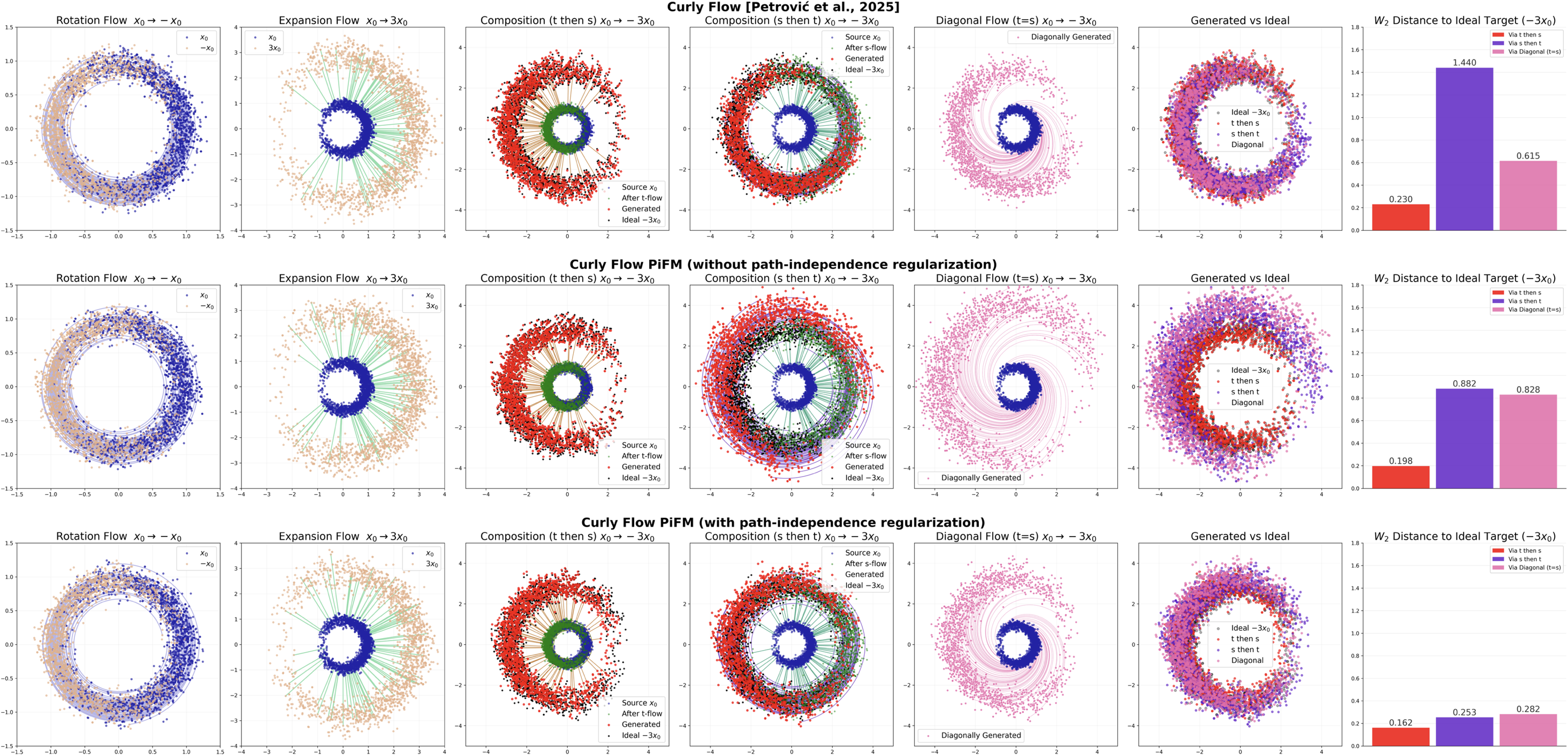
Figure 1: Illustration of PiFM in the Curly Flow Matching setting, demonstrating commutativity and path-independence of composed transformations.
Connection to Wasserstein Barycenters
A significant theoretical contribution is establishing the connection between PiFM and Wasserstein barycenters. It is demonstrated that, under appropriate assumptions (e.g., admissible families of deformations, affine interpolation), PiFM-generated distributions coincide with multi-marginal Wasserstein barycenters. This connection provides a principled, geometrically-founded notion of interpolation and extrapolation in distribution space.
Numerical experiments show that PiFM accurately predicts Wasserstein barycenters both within and outside the simplex defined by distribution weights, outperforming specialized optimal transport algorithms in both accuracy and computational efficiency.
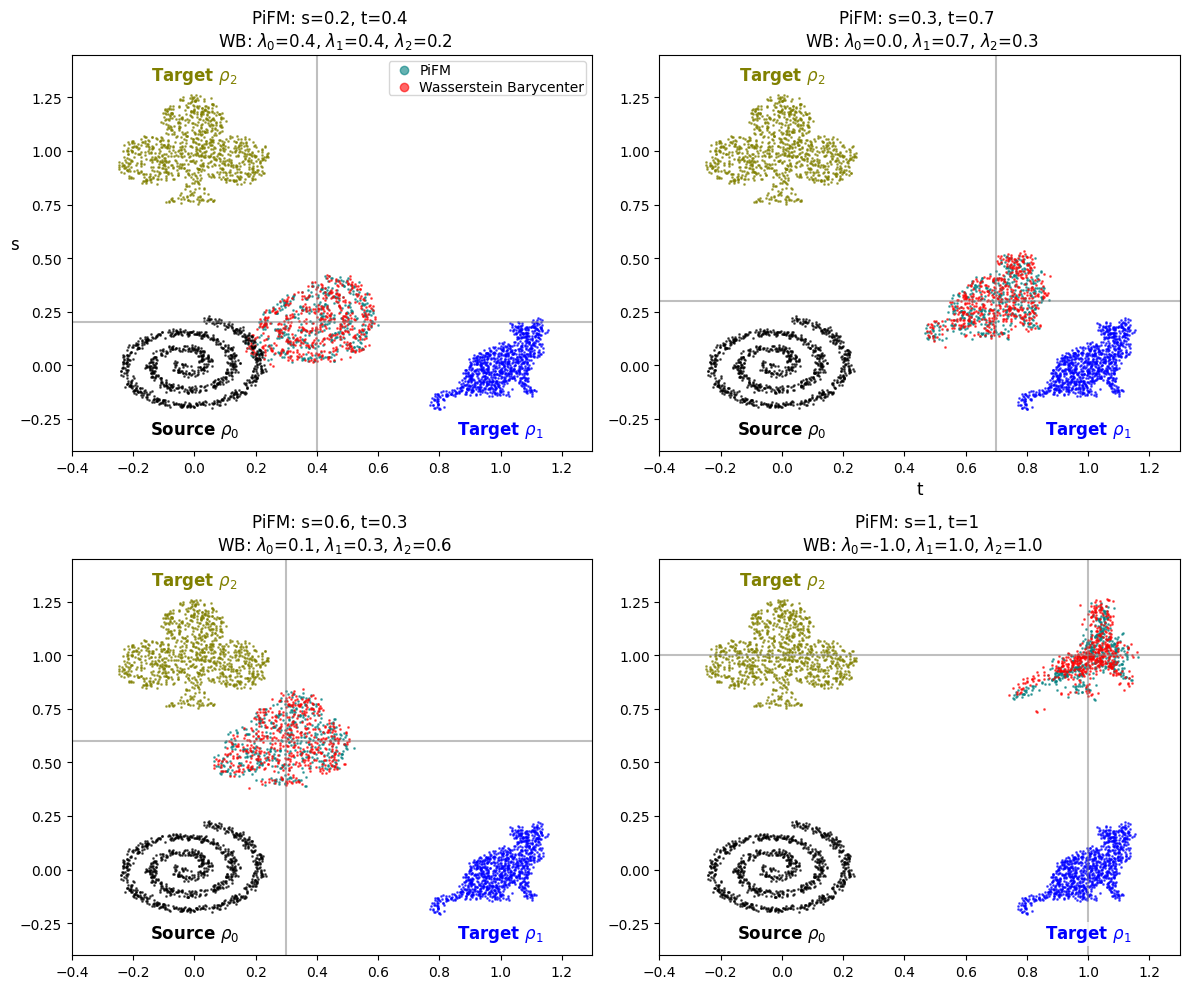
Figure 2: PiFM output distributions coincide with Wasserstein barycenters across several complex synthetic distributions, for both interior and exterior weights.
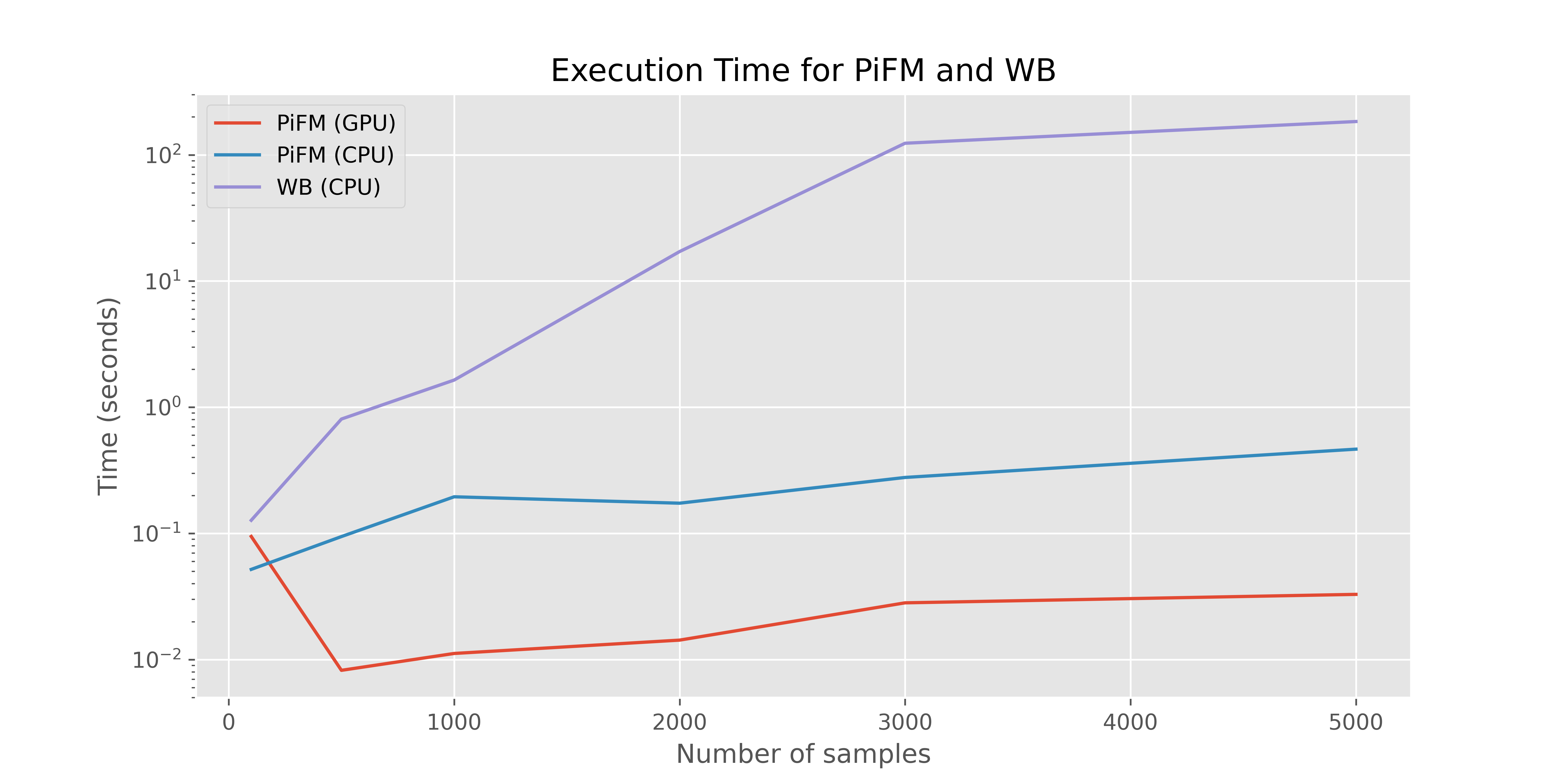
Figure 3: PiFM dramatically reduces computation time compared to the free support barycenter algorithm, highlighting practical advantages for large-scale generative inference.
Training and Implementation
PiFM utilizes a simulation-free objective, regressing parameterized neural vector fields to conditional velocity fields sampled along multi-parameter probability paths. Its loss function combines flow-matching regression with an optional path-independence regularizer (essential when non-affine dynamics are present):
LPiFM(θ;λ)=LFM(θ)+λLPi(θ),
where LPi penalizes violations of the integrability condition. Sampling proceeds over parameter domains and conditioned data triplets, supporting independent or optimally-coupled data pairs.
Empirical Results
PiFM is comprehensively validated across both synthetic and real-world tasks:
- Synthetic Domain Shift: On toy datasets under domain shift, PiFM robustly infers target distributions from unseen source scenarios, achieving lower Wasserstein-2 distances and higher stability versus Meta Flow Matching (MFM).
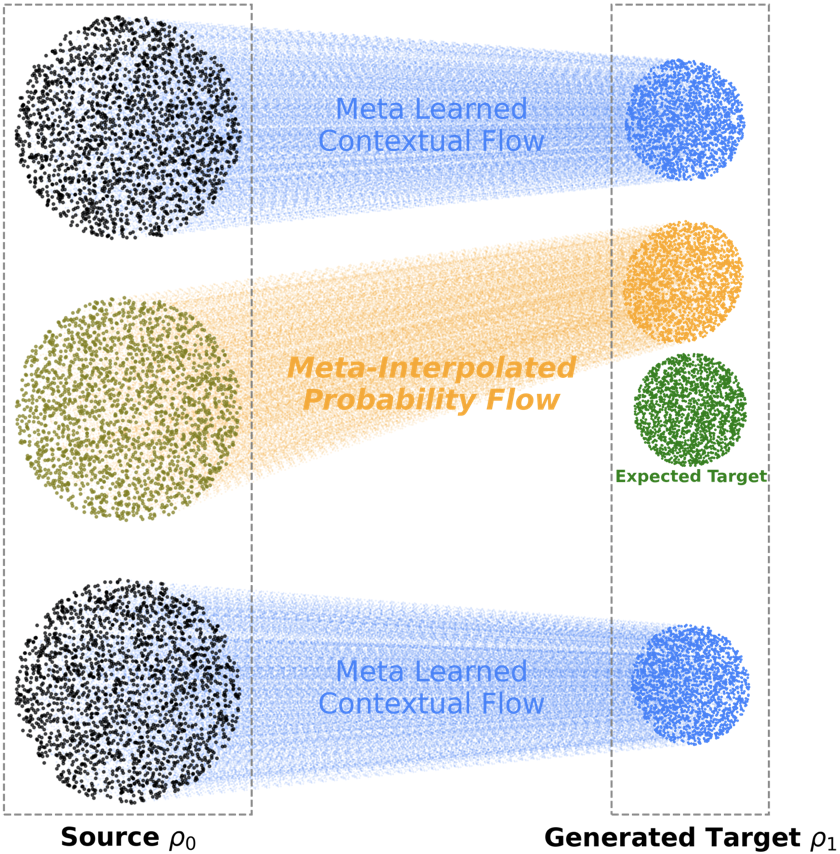
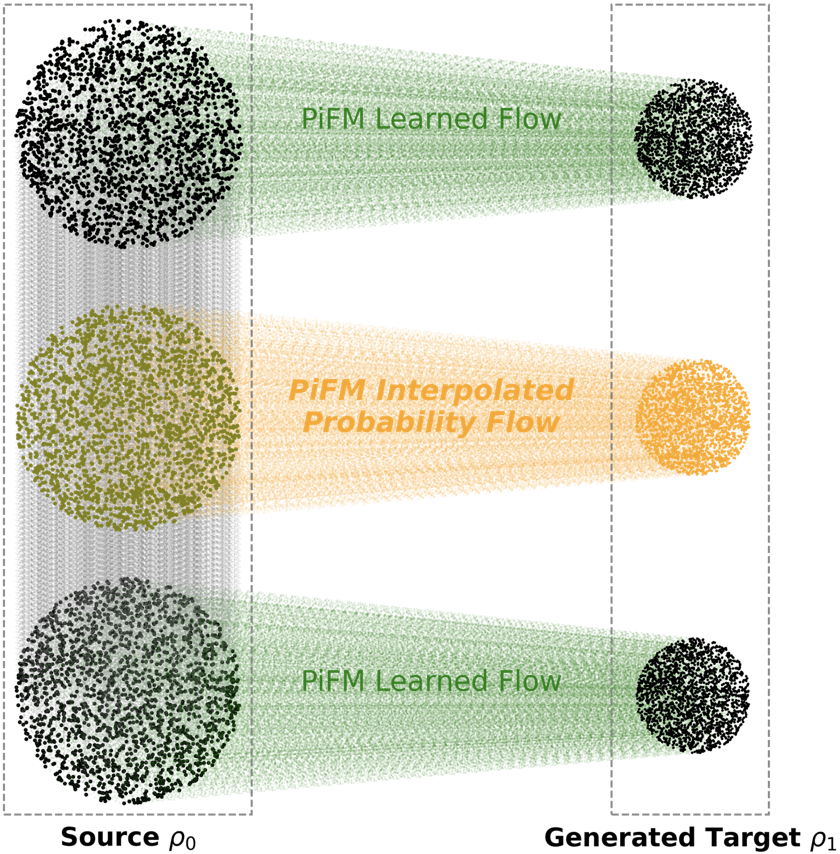
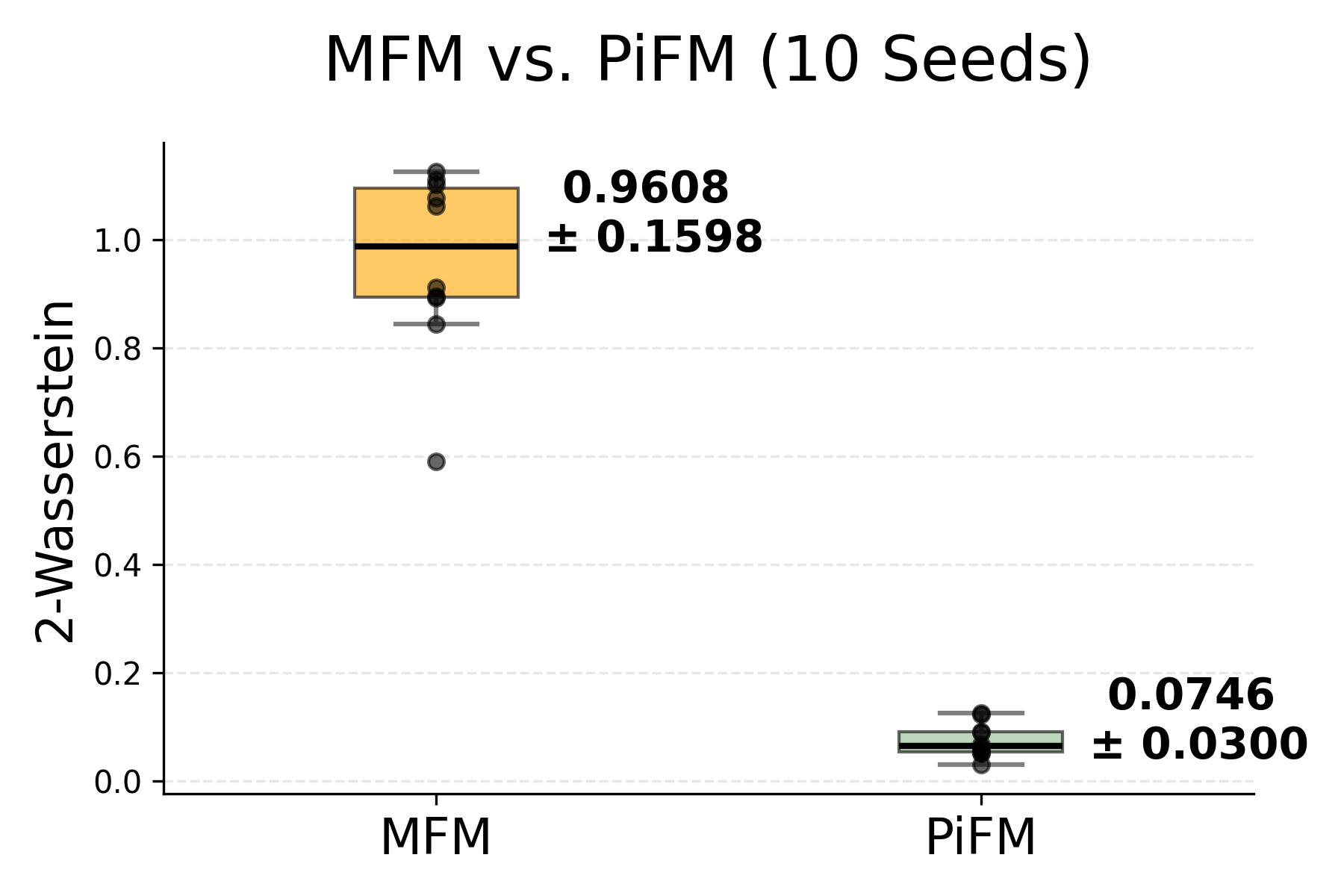
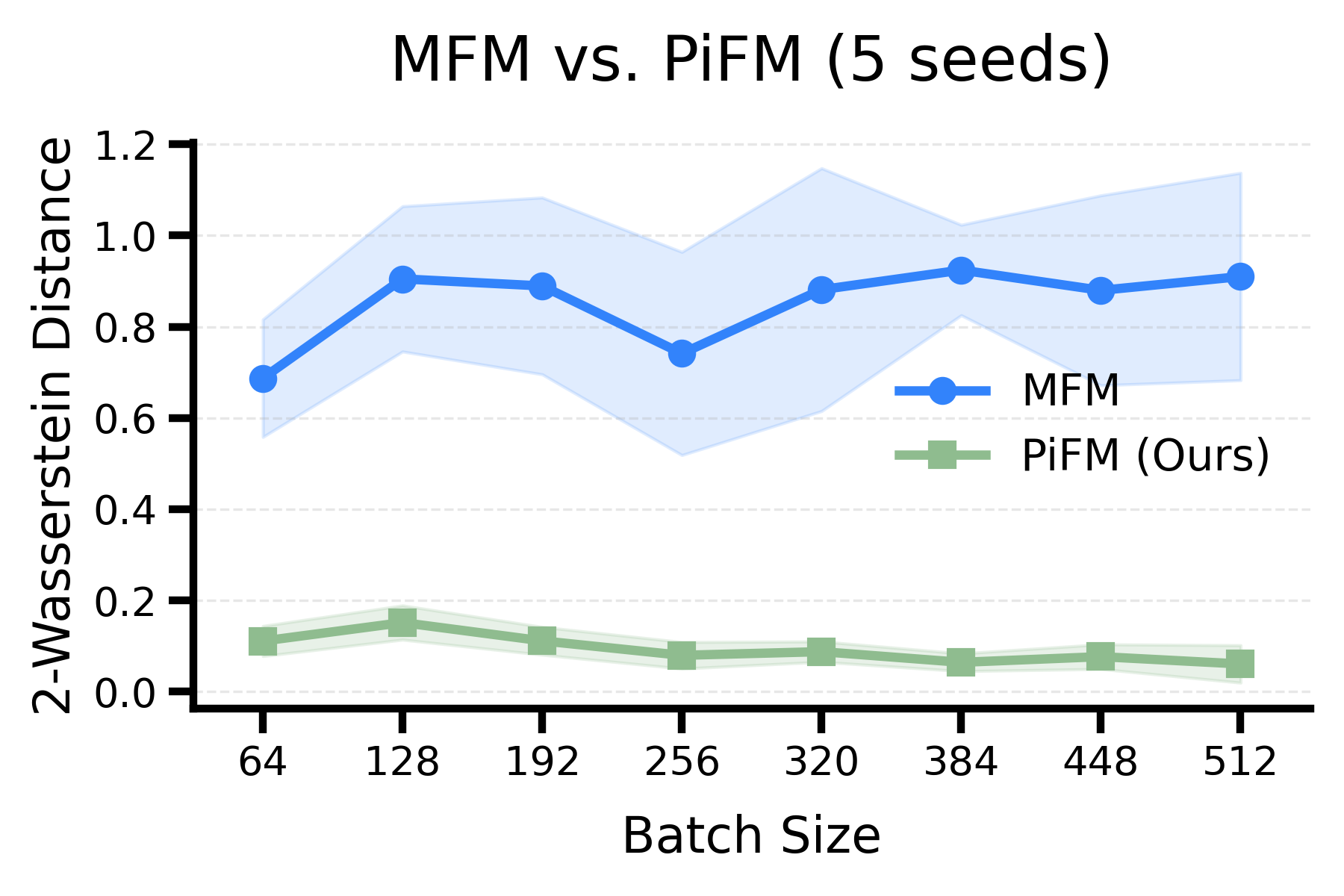
Figure 4: PiFM yields consistent, accurate multi-parameter trajectories where MFM fails to generalize to unseen source embeddings.
- Curly Flow Matching: PiFM, when augmented with path-independence regularization, corrects the path-dependent inconsistencies observed in Curly Flow Matching, ensuring commutative and robust distribution transport.
- High-dimensional Image Translation: For multi-attribute image translation (e.g., CelebA with Smiling and Black Hair), PiFM supports composition of attribute flows, maintaining identity preservation and achieving desired transformations irrespective of integration ordering, whereas CFM fails.
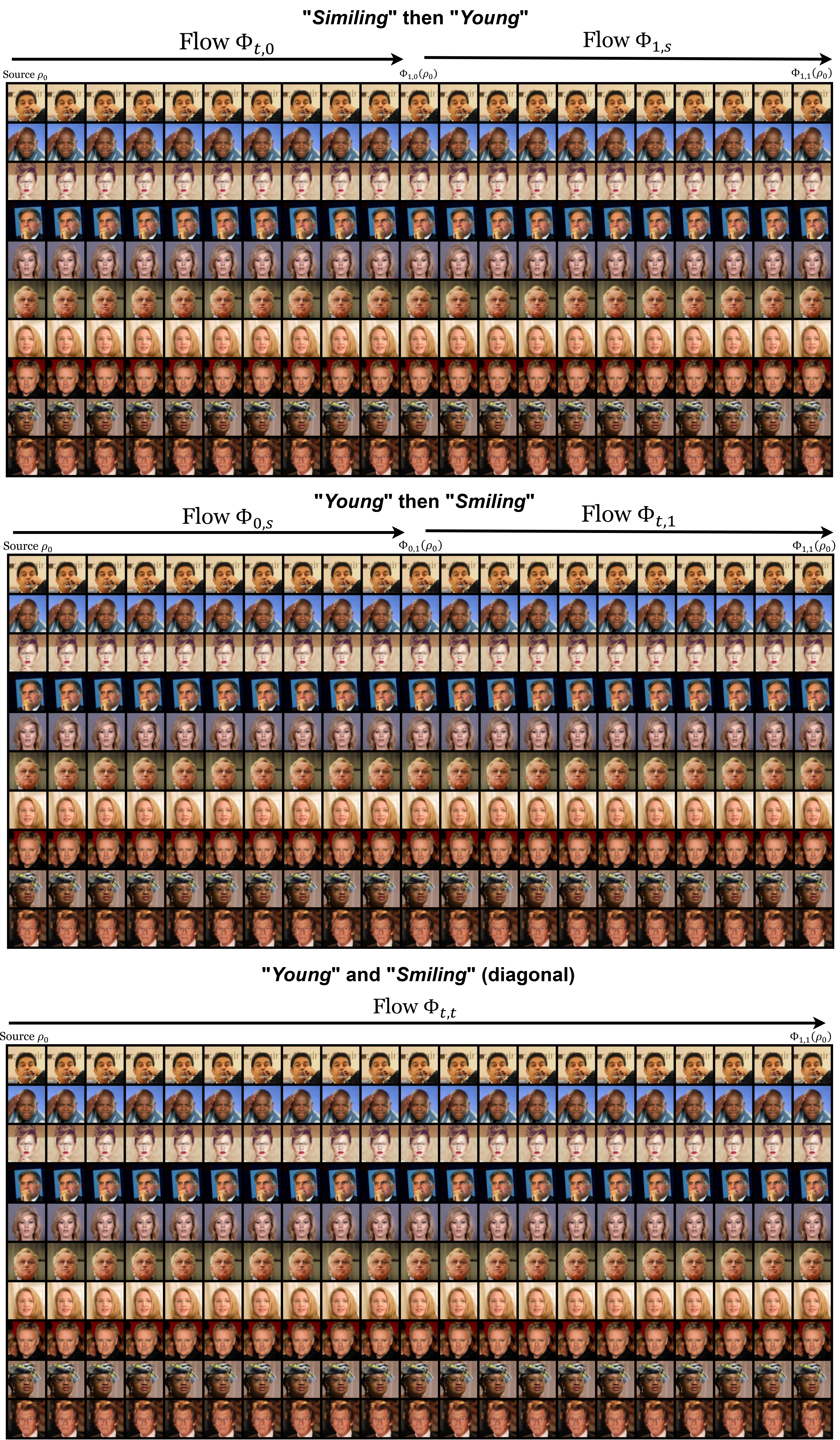
Figure 5: PiFM demonstrates superior image-to-image translation on CelebA, effectively composing attribute edits and preserving global identity features.
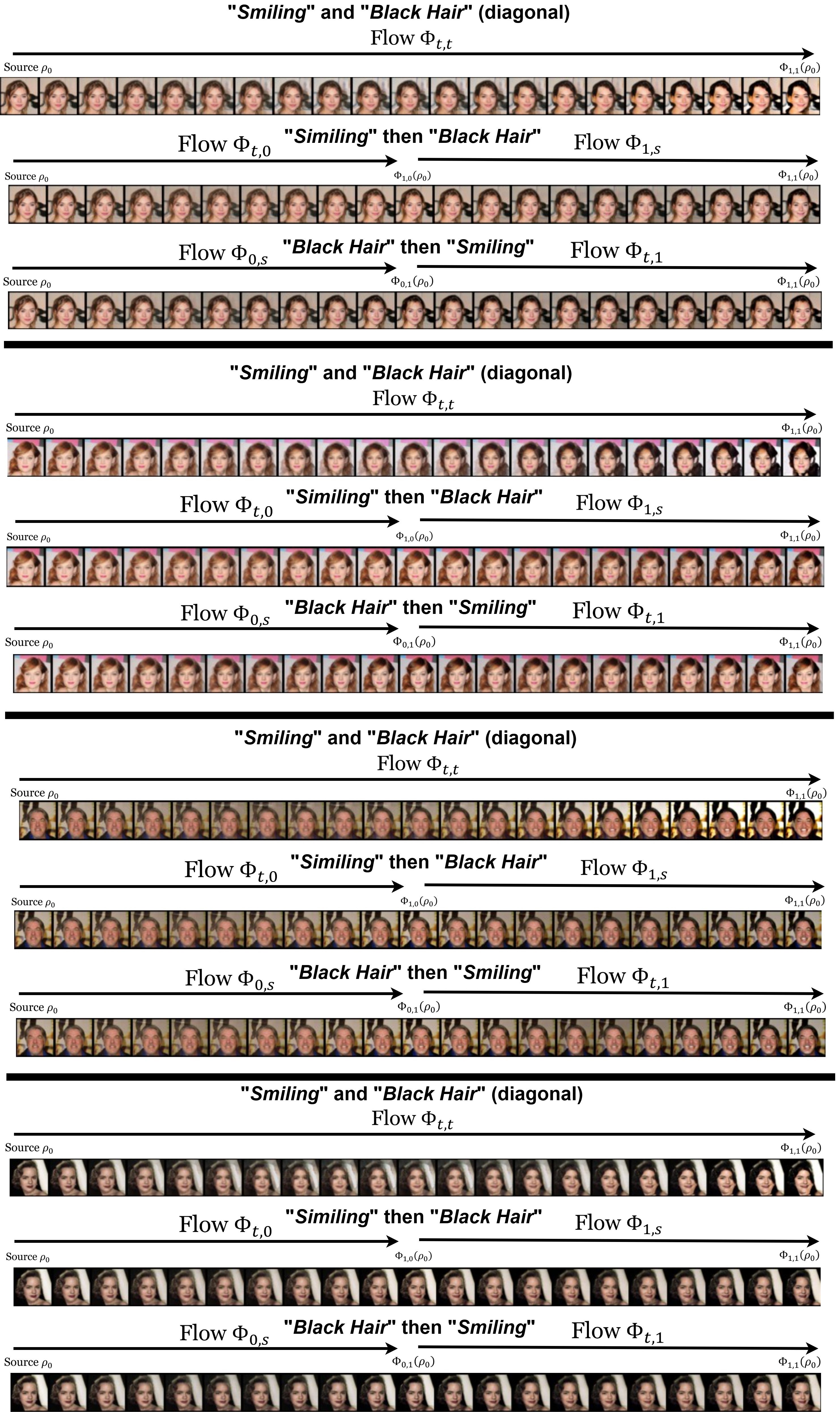
Figure 6: More qualitative results for PiFM on CelebA, consistently generating plausible attribute transformations across different integration strategies.
- Single-cell RNA-seq Trajectory Modeling: PiFM is applied to multi-step biological trajectories, successfully modeling joint evolution along experimental day and pluripotency axes. It demonstrates commutative trajectory inference, aligning synthetic endpoints with empirical targets and supporting sophisticated applications in biological process modeling.
Quantitative and Structural Evaluation
Robustness and accuracy of PiFM are quantified via Wasserstein distances, FID scores, and centroid-based metrics across domains. The model achieves consistently lower transport errors and higher commutativity, with negligible discrepancies across different parameter traversal orders. Ablation studies confirm the necessity of path-independence regularization for non-affine settings.
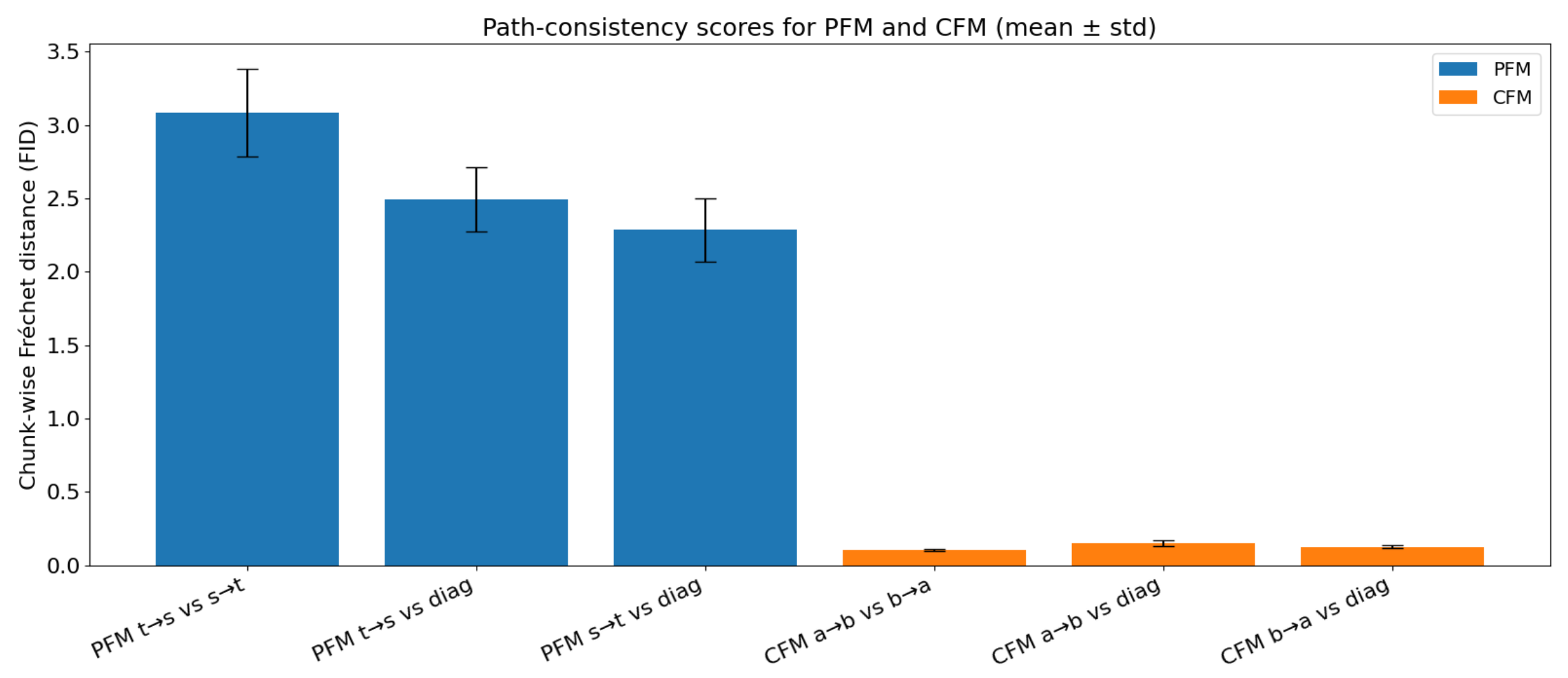
Figure 7: Quantitative commutativity evaluation via FID reveals PiFM's superior consistency compared to CFM, especially in joint attribute composition tasks.
Practical and Theoretical Implications
The PiFM framework provides versatile tools for learned generative dynamics under modular, multi-parameter control. The path-independence structure enables reliable composition, extrapolation, and analogy-like operations in generative tasks, offering:
- Scalable computation: Unlike traditional barycenter solvers, PiFM scales efficiently in both data and parameter dimensions.
- Geometric interpretability: Its link to Wasserstein barycenters situates PiFM within optimal transport theory, facilitating rigorous understanding and extension.
- Applicability: The framework is demonstrated in challenging domains (biological, high-dimensional vision) without loss of structural properties.
Future directions include further generalizing PiFM to complex geometries (e.g., Riemannian manifolds), extending the theoretical barycenter connection to arbitrary numbers of marginal distributions, and deploying PiFM in advanced scientific and engineering inference tasks.
Conclusion
PiFM advances the state of generative modeling by introducing a principled, multi-parameter flow matching architecture that enforces path-independent transport of distributions. The model demonstrates superior empirical and theoretical properties for commutative composition, robust extrapolation, and fast Wasserstein barycenter approximation. It presents a scalable alternative to computationally expensive OT-based solvers, with broad implications for both practical deployment and foundational understanding in machine learning and scientific data analysis.

