- The paper introduces a self-evolving multi-agent LLM approach that abstracts RF amplifier design as a resource allocation problem.
- It integrates multi-fidelity simulation and tool middleware to significantly reduce simulation time and improve sample efficiency.
- Empirical results show robust performance, scalability, and generalizability across complex RF amplifier design tasks.
RFAmpDesigner: A Multi-Agent LLM Framework for Automated RF Amplifier Design
Introduction
Automated design of radio frequency (RF) amplifiers persists as a major bottleneck in electronic design automation (EDA), primarily due to the high-dimensional, tightly coupled parameter spaces and the reliance on domain-specific design heuristics. In contrast to digital and low-frequency analog circuits, the design of multi-stage, wideband RF circuits imposes severe challenges: the solution spaces are sparse, feasible designs are distributed irregularly, and accurate performance evaluation demands computation-intensive electromagnetic (EM) simulations. Traditional optimization and machine learning-based methods exhibit limited scalability, interpretability, and transferability across tasks.
LLMs have demonstrated sophisticated reasoning and tool-use capabilities across scientific domains. However, their direct application to RF circuit sizing is nontrivial due to the numerical and domain-driven nature of the task. The paper "RFAmpDesigner: A Self-Evolving Multi-Agent LLM Framework for Automated Radio Frequency Amplifier Design" (2605.10093) introduces an agentic, LLM-driven methodology that abstracts RF amplifier sizing as a resource allocation problem, integrates domain expertise via middleware, and achieves robust, efficient pipeline automation. RFAmpDesigner demonstrates strong generalizability, substantial improvements in sample efficiency, and end-to-end customization spanning frequencies and bandwidths.
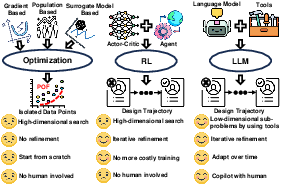
Figure 1: Conceptual overview contrasting prevailing methodologies in RF circuit design—including optimization-based, RL-based, and LLM-driven approaches—with an emphasis on this work.
System Architecture
RFAmpDesigner is organized around three main modules:
- Topology and Knowledge Preparation: Fixed topologies, PDK-compliant script templates, and expert-driven circuit models establish the foundation for agent-tool interaction.
- Resource-Allocation Multi-Fidelity Tool Middleware: This abstraction layer transforms the high-dimensional circuit sizing problem into a tractable, lower-dimensional resource-allocation task—allocating gain, bias, and passband shaping among cascaded stages.
- Two-Tier Multi-Agent Workflow: A Manager-Searcher-Refiner architecture orchestrates goal decomposition, candidate generation, sequential refinement, and knowledge reuse, enhancing search and convergence properties.
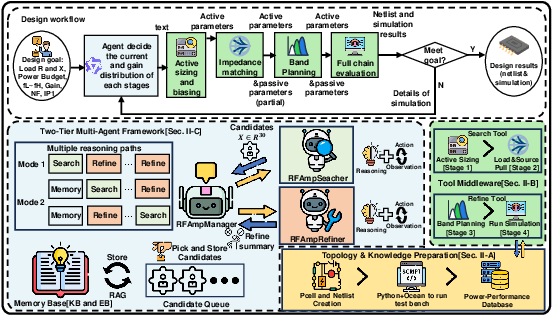
Figure 2: System workflow schematic, highlighting knowledge preparation, tool middleware abstraction, and the two-tier multi-agent pipeline that iteratively compiles LLM decisions into netlists, invokes simulations, and reflects on feedback for guided optimization.
The middleware exposes deterministic, scriptable design tools for active device sizing, impedance matching, band planning, and fullchain evaluation. This modular approach allows LLMs to issue concept-level intents—such as specifying current splits or gain allocations—that are resolved to concrete netlist parameters via expert-driven toolchains. The simulation feedback is looped back to the LLM, enabling human-like iterative reasoning without the need for direct manipulation of raw netlists.
Topology Abstraction
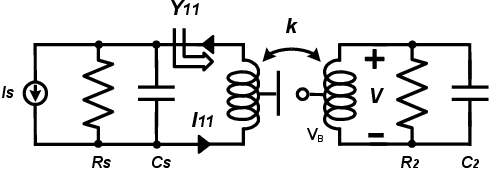
The framework targets multi-stage low-noise amplifiers (LNAs) as proof of concept, leveraging classic topologies such as cascoded and differential common-source amplifiers with neutralization capacitance and magnetically coupled resonator (MCR) passive networks.
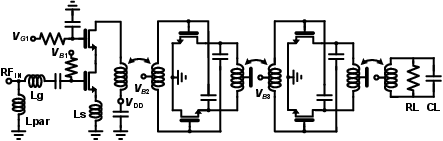
Figure 3: The LNA topology utilized in experimental verification, demonstrating a three-stage cascaded structure.
Domain knowledge is distilled into lookup tables mapping transistor sizes and bias voltages to power, impedance, and noise, which serve as the backbone for tool-driven parameter generation. Passive component modeling leverages both closed-form and simulation-based techniques to capture distributed effects and layout parasitics, especially salient in MCR-based broadband matching networks.
Multi-Fidelity Modeling and Optimization
The sizing workflow proceeds via staged abstraction:
Advanced multi-fidelity techniques interleave analytical computations with simulation-based calibration, drastically reducing the total simulation burden—achieving a reported 88% decrease in runtime for band planning and ripple minimization without loss of fidelity.
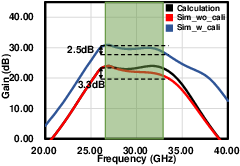
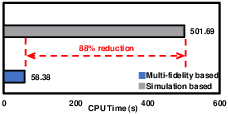
Figure 5: (a) Alignment of calculated vs. simulated MCR frequency response, highlighting the impact of calibration; (b) Runtime comparison between full simulation and the proposed multi-fidelity pipeline.
Hierarchical Agent Collaboration
The LLM-driven optimization decomposes into distinct agent roles:
- Manager: Handles user intent, decomposes design targets, maintains state, and orchestrates subtask delegation.
- Searcher: Enumerates candidate critical-stage configurations exploiting tool abstractions, filters candidates via high-level heuristics, and populates the candidate pool.
- Refiner: Conducts iterative, low-level parameter adjustment, incorporating fullchain simulation feedback to drive search towards strict satisfaction of multi-objective constraints.
Self-evolution is enabled via persistent knowledge and experience bases; design traces and performance metrics are stored for subsequent retrieval-augmented planning.
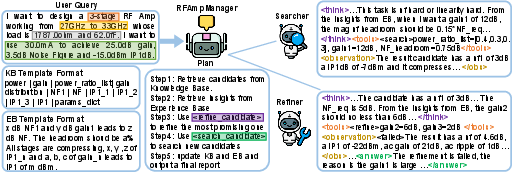
Figure 6: Multi-agent workflow schematic and agent interaction templates, illustrating the decomposition of tasks and communication protocol.
Empirical Evaluation
Benchmarking on a custom suite of wideband LNA design tasks, RFAmpDesigner is compared to optimization-based methods (Genetic Algorithm, Bayesian Optimization) and LLM-driven baselines (AnalogCoder, ADO-LLM).
Highlighted results:
- For moderate-difficulty tasks (fractional BW 10–80%, fc 10–50 GHz), RFAmpDesigner consistently achieves higher success rates and lower average latency than both tool-augmented and vanilla optimization baselines. The advantage widens in high-sparsity regimes.
- On challenging tasks (e.g., requiring aggressive IP1dB or NF constraints), vanilla optimization and single-step LLM prompting baselines typically fail, while the proposed system maintains robust performance (80–100% success).
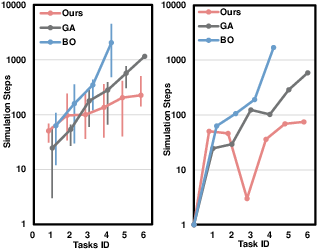
- The sample efficiency is increased by up to 5.5×, as the multi-agent structure and RAG-driven reuse minimize redundant simulations.
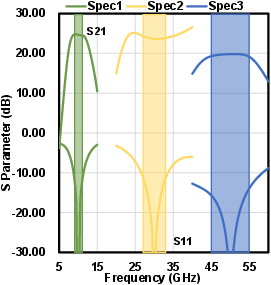
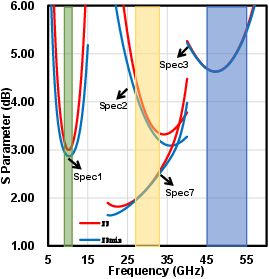
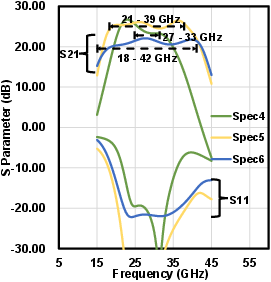
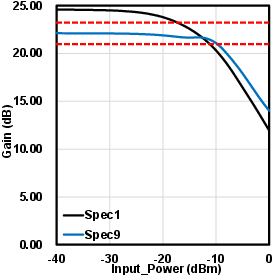
Figure 7: Mean completion time and variance across tasks, illustrating improved efficiency and stability relative to baselines.
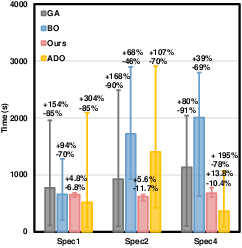
Figure 8: Mean number of search and refine operations per model, indicating the convergence advantage of the multi-agent LLM system.
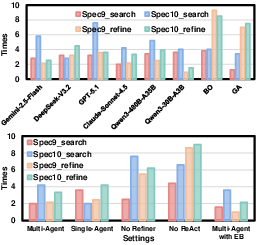
Figure 9: Cumulative and per-task simulation cost comparison, showcasing drastic reductions over state-of-the-art approaches.
The system generalizes across LLMs of different scale and origin (frontier and open-source), with model size and tool-use fine-tuning impacting robustness. Ablation studies reveal:
Discussion and Implications
Key Claims and Impact:
- RFAmpDesigner provides a paradigm shift in LLM-based EDA by operating on design abstractions, not netlist tokens, thus enabling scalable, transfer-friendly, and interpretable agentic workflows. This abstraction supports rapid migration to diverse amplifier topologies and practical integration into existing human-in-the-loop design environments.
- The resource-allocation middleware centralizes domain knowledge and translates abstract intents to actionable tool calls, allowing LLMs of varying size and degree of fine-tuning to robustly interface with high-level circut design tasks.
Potential Future Developments:
- Extension of the workflow to general RF/microwave amplifiers beyond LNAs, including power amplifiers and custom multi-stage topologies, via modular update of design tools and optimization targets.
- Incorporation of closed-loop layout and EM-aware co-design modules, realizing complete specification-to-layout automation.
- Fine-tuning and reinforcement learning on task traces to further enhance efficiency and reasoning depth, particularly for small-scale or domain-specialized LLMs.
Conclusion
RFAmpDesigner presents a significant advance in autonomous analog and RF circuit design, leveraging a multi-agent, tool-integrated LLM system to bridge human-centric reasoning and automated pipeline execution. Strong empirical performance is demonstrated in sample efficiency, generalizability, and robustness, with the architecture readily adaptable for broader EDA challenges (2605.10093). Its approach of abstraction-driven agentic decomposition is poised to influence future frameworks in AI-driven hardware design, suggesting a convergence of language-centric intelligence and domain-explicit automation principles.