- The paper establishes that quadratic weight decay induces Villani coercivity in Transformer loss functions, ensuring robust finite-time convergence and generalization guarantees.
- It leverages functional-analytic techniques to derive explicit log-Sobolev and Poincaré constants, validated via spectral analysis and Hutchinson trace estimators.
- The results offer practical hyperparameter guidelines that unify stochastic gradient methods with PAC-Bayesian bounds for large-scale Transformer optimization.
Overview
The paper "Weight-Decay Turns Transformer Loss Landscapes Villani: Functional-Analytic Foundations for Optimization and Generalization" (2605.06599) rigorously characterizes the mathematical role of L2 regularization (weight decay) in large-scale Transformer training. By connecting regularized cross-entropy loss landscapes to Villani's coercive energy functions—an analytic class from optimal transport and stochastic calculus—this work validates strong convergence and generalization properties for stochastic gradient descent (SGD) and Langevin-based optimizers. The study bridges a theoretical gap by demonstrating that the addition of quadratic regularization is both necessary and sufficient for the loss function to acquire geometric properties (coercivity, integrability, differential growth) that permit explicit log-Sobolev and Poincaré bounds. These results provide finite-time convergence guarantees and principled PAC-Bayesian generalization bounds dependent exclusively on regularization strength λ and parameter dimension d.
Theoretical Contributions
The paper analyzes the standard Transformer loss,
F(θ)=N1i=1∑N[−logpθ(yi∣xi)]+2λ∥θ∥2,
where pθ(y∣x) is the softmax probability produced by the model. The authors prove F satisfies Villani's three foundational conditions:
- Smoothness: The loss is C∞ due to the analytic nature of core Transformer operations.
- Coercivity at Infinity: The quadratic term ensures the landscape diverges as ∥θ∥→∞, preventing optimization runaway.
- Gaussian-Integrable Tails: The loss induces a probability measure with tails decaying at least as fast as a Gaussian.
- Differential Growth: The field −ΔF+s1∥∇F∥2 diverges for all s>0, confirming the confining curvature necessary for log-Sobolev inequalities.
These analytic properties are not satisfied by the unregularized cross-entropy loss, confirming the necessity of weight decay for robust optimization behavior.
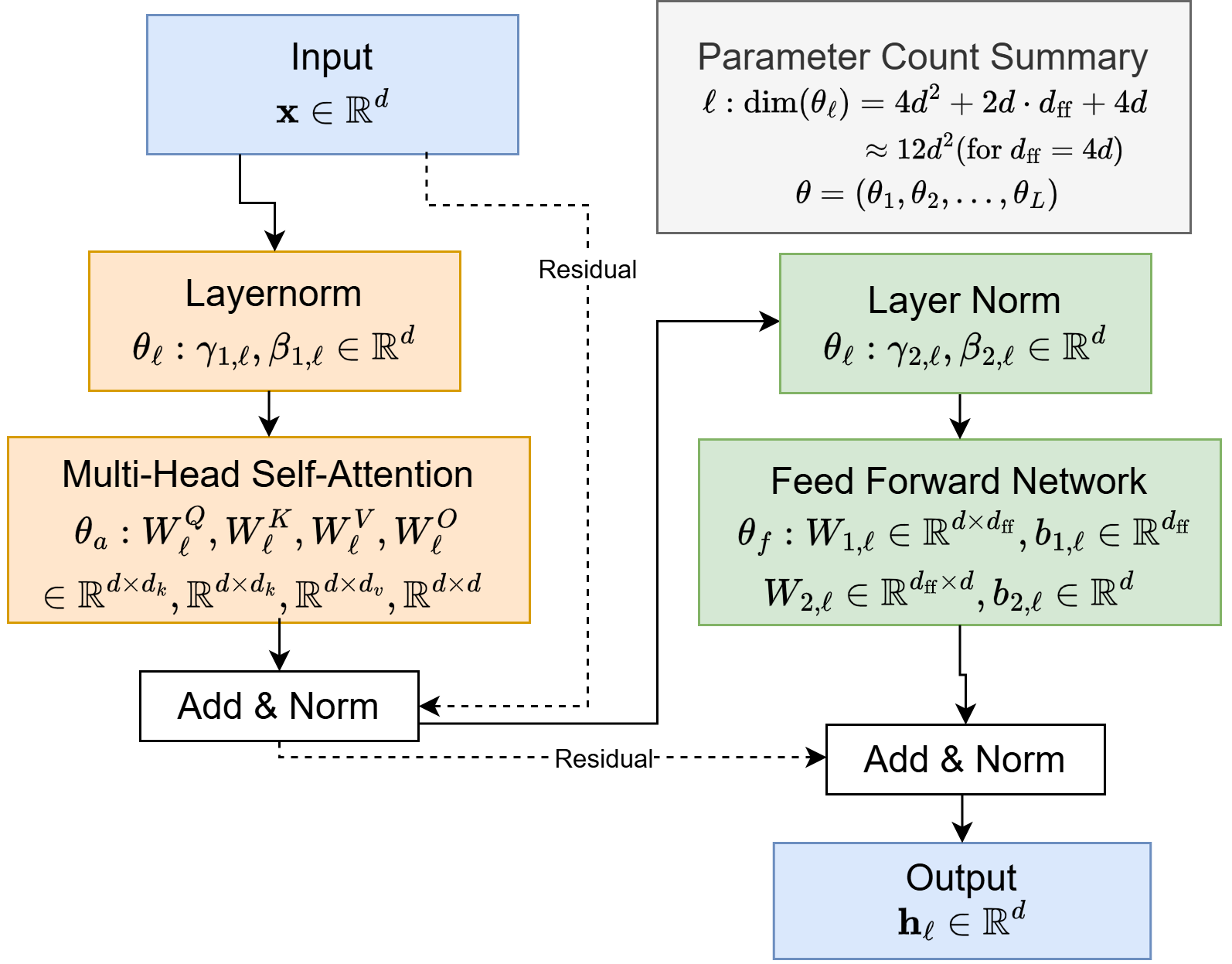
Figure 1: A single Transformer block annotated with parameter groups λ0, highlighting which parameters are encompassed by the regularization term.
Explicit Log-Sobolev and Poincaré Constants
Leveraging Villani theory, the authors derive that the log-Sobolev constant,
λ1
depends solely on λ2, λ3, and user-chosen temperature parameter λ4, disregarding training data specifics. This constant underpins exponential convergence guarantees for Langevin-type optimizers, including SGD and Adam with noise injection. The paper proves finite-time convergence bounds for noisy gradient descent and quantitatively links regularization strength to mixing speed and generalization capacity.
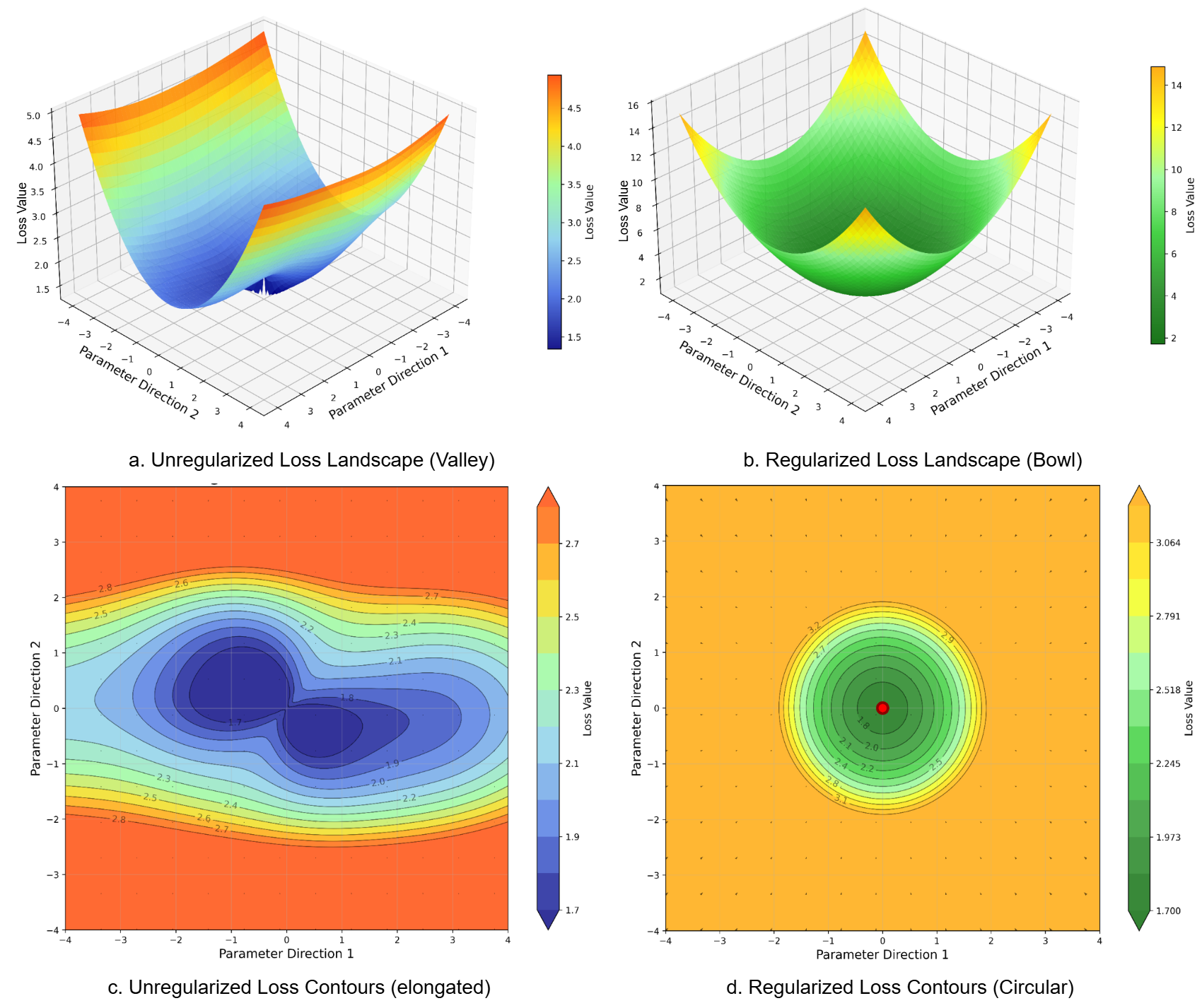
Figure 2: Comparison of unregularized ("Valley") vs. regularized ("Bowl") loss landscapes, illustrating how weight decay removes flat regions, institutes coercivity, and establishes unique minima.
Geometric Diagnostics and Empirical Validation
Villani Diagnostic λ5
To operationalize theoretical conditions, a scalable geometric diagnostic,
λ6
is introduced. The paper demonstrates quadratic divergence of λ7 in the presence of weight decay and establishes its reliability as a proxy for landscape coercivity in models exceeding λ8M parameters.
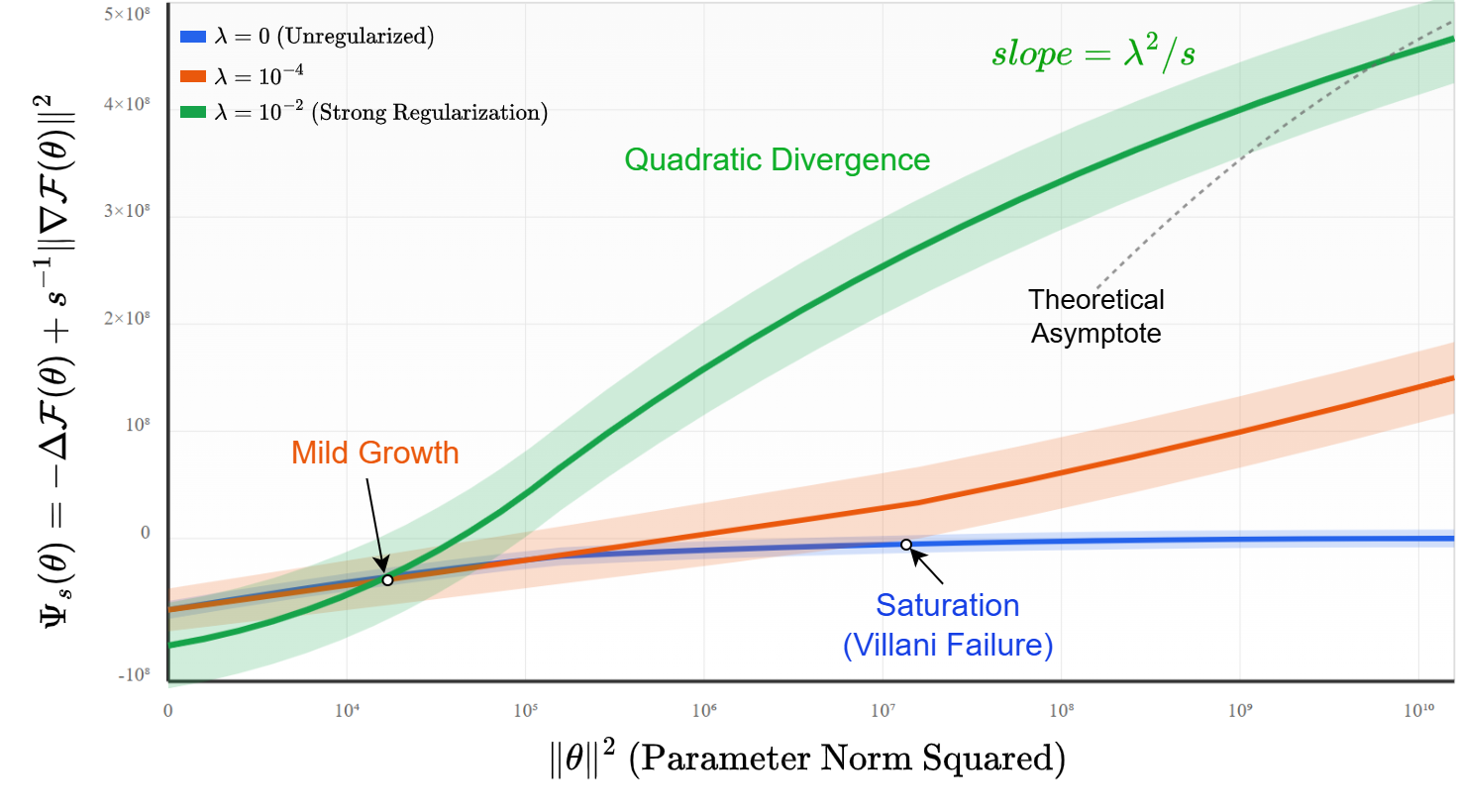
Figure 3: Empirical evaluation of λ9 as a function of d0 along random rays, showing transition from saturation (no weight decay) to quadratic growth (strong regularization).
Spectral Properties
The work provides Hessian spectral analysis, documenting how d1 inflates tail eigenvalues and thereby sharpens landscape curvature. This transforms optimization geometry from flat valleys (prone to barren plateaus and poor mixing) to confining bowls (rapid mixing, unique minima).
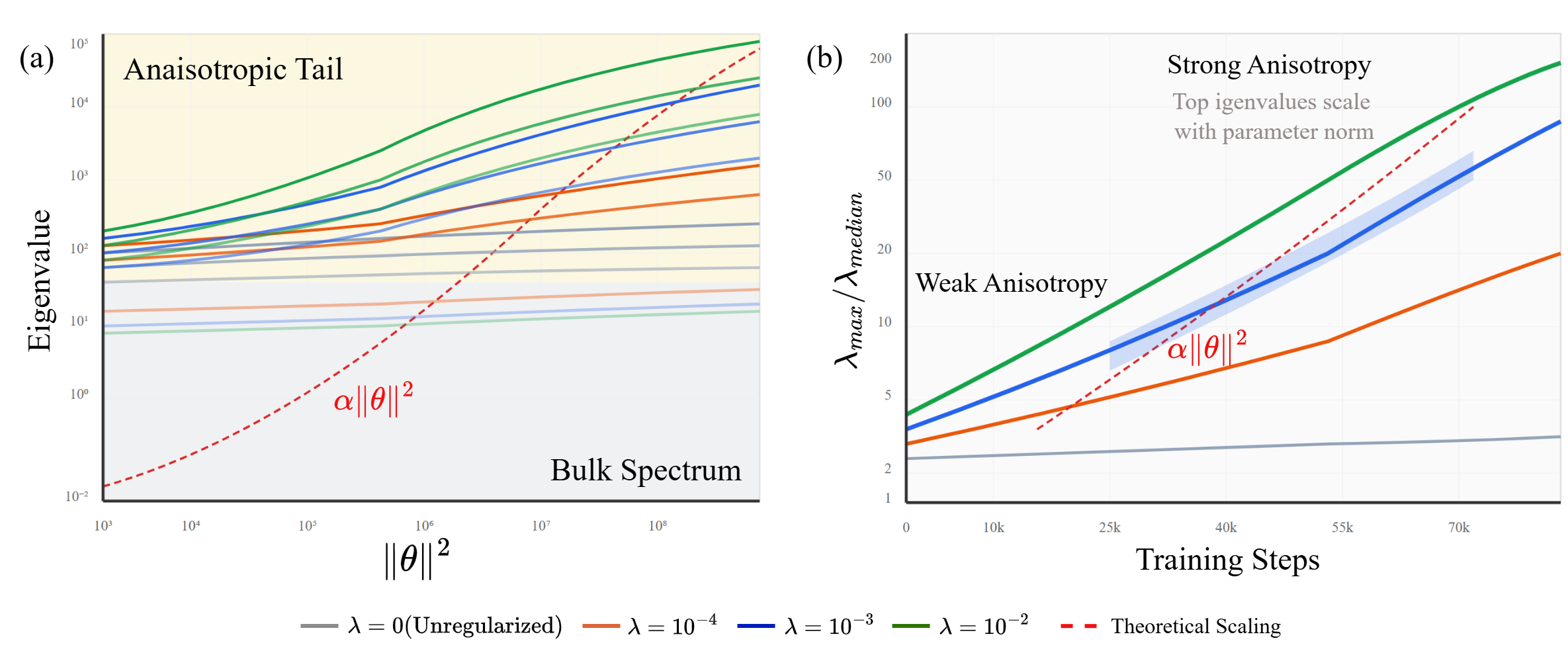
Figure 4: Spectral radius of d2 vs. d3, evidencing the linear spectral inflation due to weight decay.
Hutchinson Trace Estimation
Efficient computation of d4 via Hutchinson's randomized trace estimator is validated, with theoretical variance guarantees. The diagnostic protocol is shown to be tractable for high-dimensional models and is quantitatively robust across training phases.
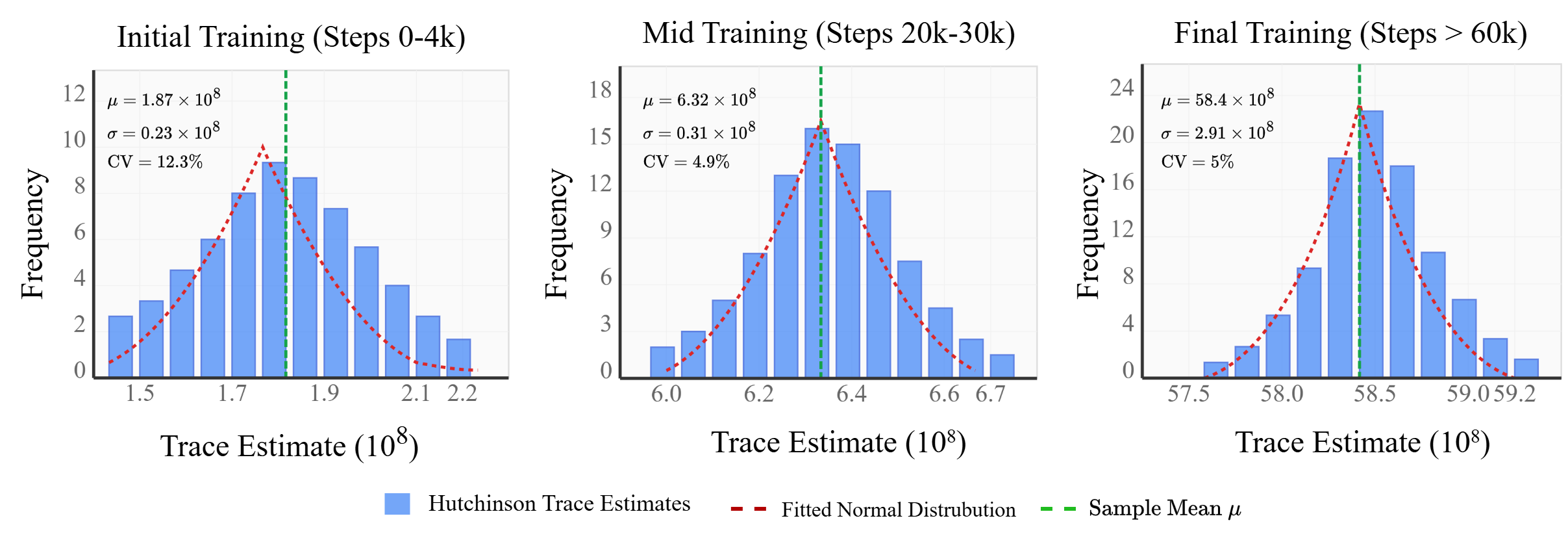
Figure 5: Evolution of Hutchinson trace estimator distributions across training, demonstrating stability and convergence to theoretical expectations.
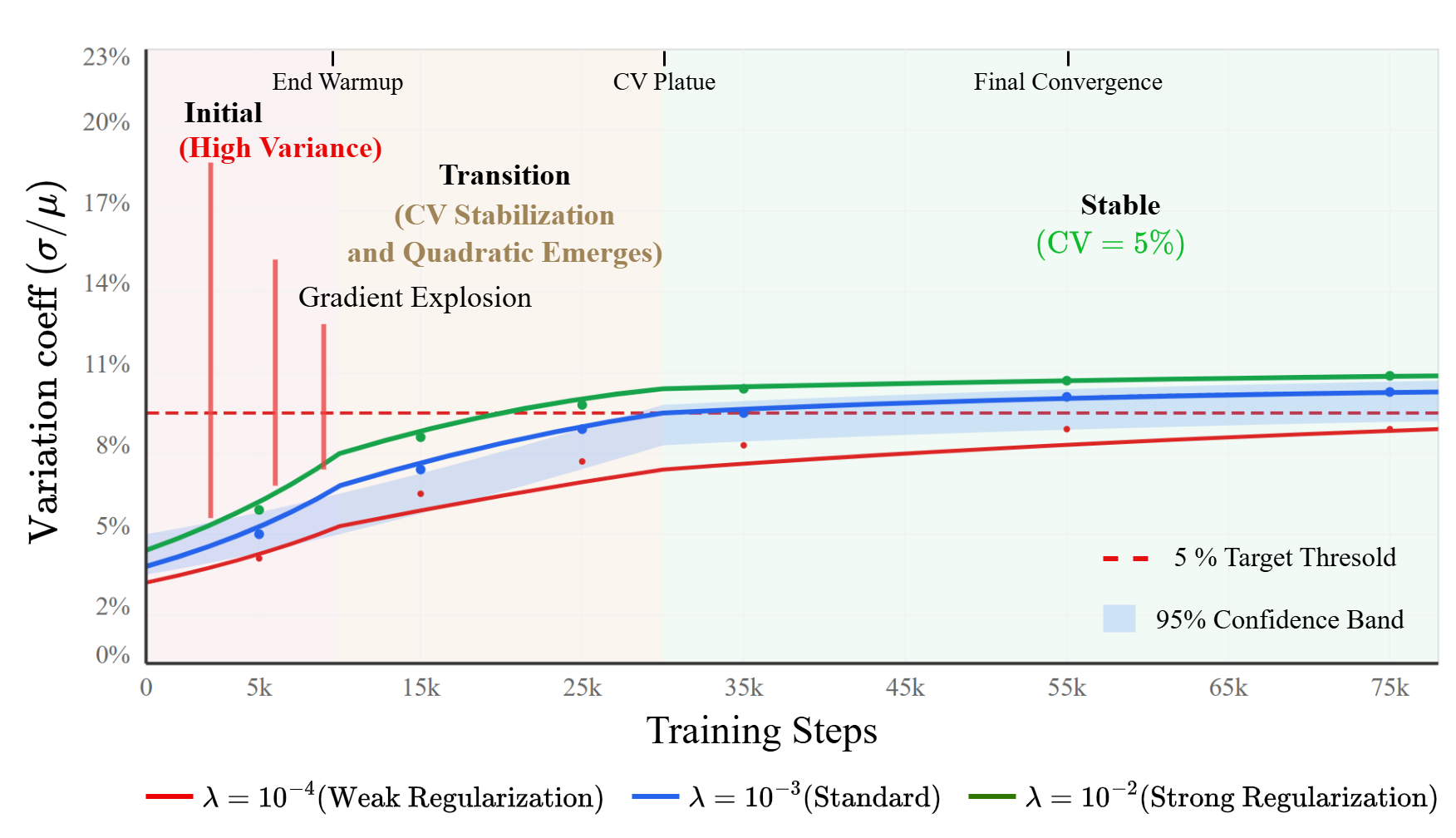
Figure 6: Evolution of variation coefficient in trace estimates, validating probe count and stability for large-scale diagnostics.
Optimization and Generalization Implications
Langevin Mixing and SGD Convergence
The Villani structure implies exponential entropy contraction for Langevin dynamics and noisy SGD. Theoretical bounds predict finite-time convergence rates that improve as d5 increases, provided learning rates are tuned accordingly. This finding unifies stochastic optimization with functional inequalities from statistical physics.
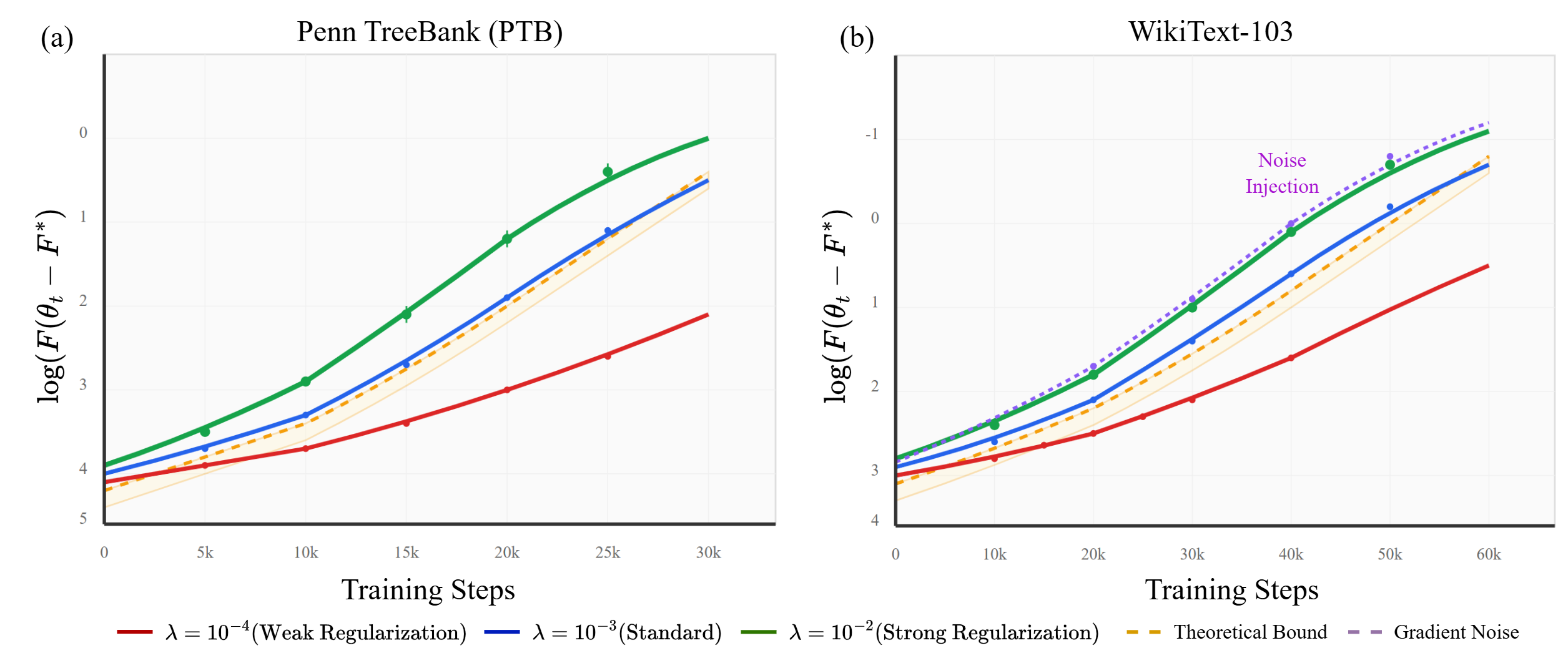
Figure 7: Empirical optimization speed versus theoretical exponential bounds, highlighting the influence of weight decay on convergence.
PAC-Bayesian Generalization
The paper leverages the regularized Gibbs measure as a PAC-Bayesian prior, deriving tight generalization bounds,
d6
where the KL term depends quadraticly on d7. Strong empirical correlation between theoretical bounds and observed validation performance is established.
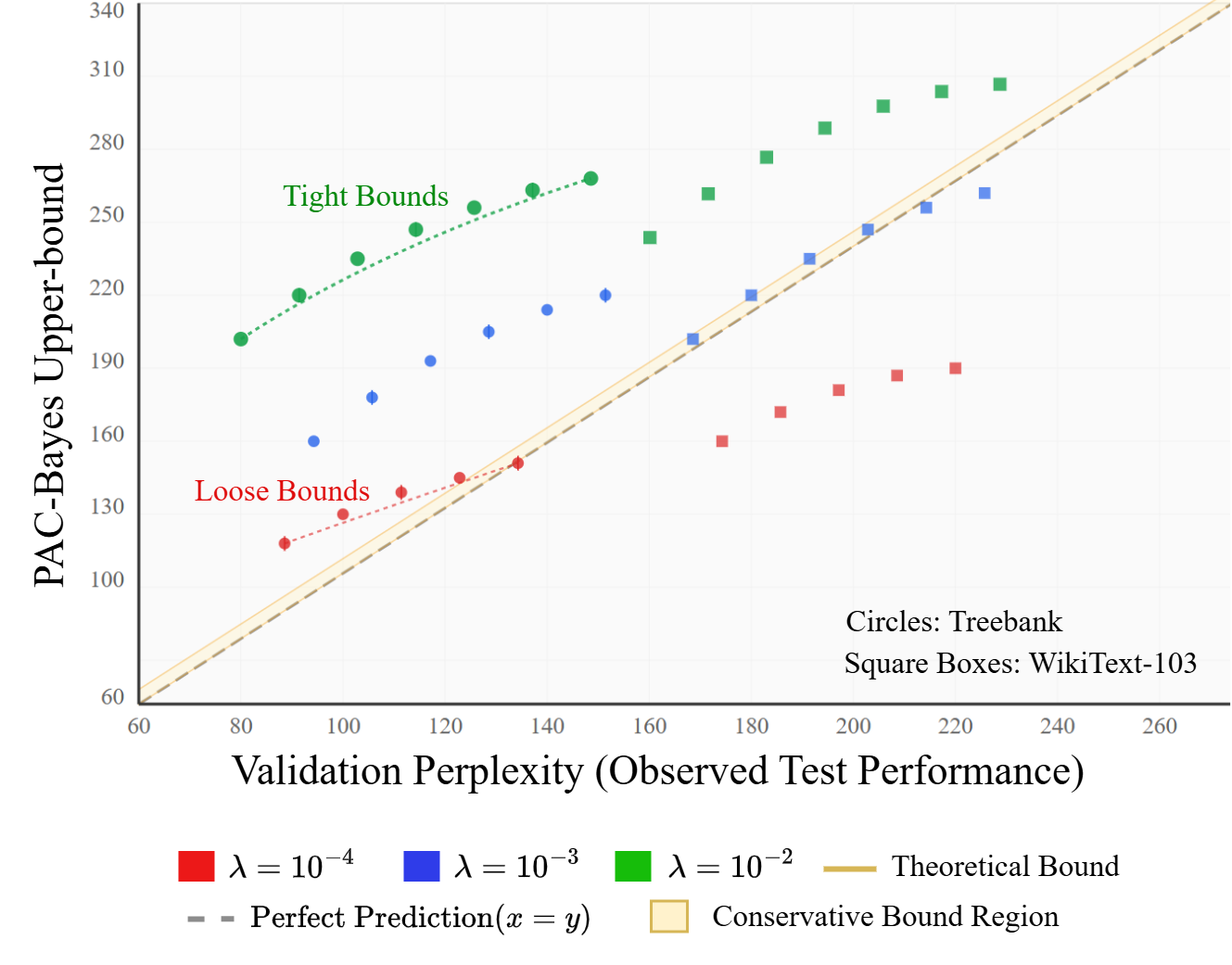
Figure 8: PAC-Bayesian generalization bounds vs. observed test performance, with tightness increasing for larger weight decay and high d8 correlation.
Practitioner Advices
Explicit hyperparameter guidelines are provided, grounded in Villani constants, for learning rate schedules and regularization regimes to optimize mixing speed and generalization trade-off.
Scalability and Extension
The paper analyzes the scalability of Villani diagnostics and log-Sobolev bounds for models up to d9 parameters, confirming favorable theoretical scaling and practical feasibility via distributed computing and algorithmic optimizations.
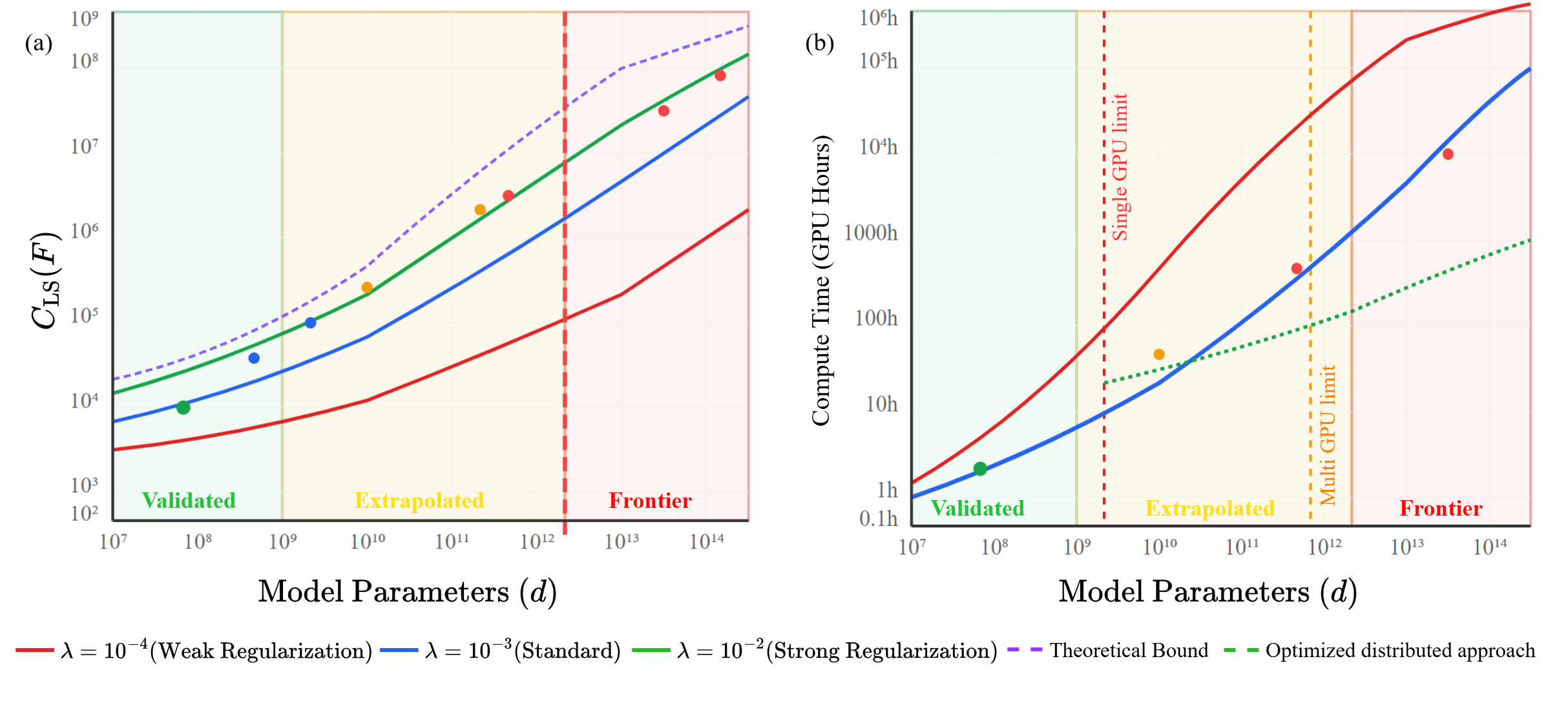
Figure 9: Log-Sobolev constant scaling and computational cost across model sizes, demonstrating tractability for future large Transformer applications.
Broader Implications and Future Directions
This work establishes a principled analytic foundation for Transformer optimization, translating weight decay from an empirical heuristic to a mathematically necessary ingredient for confining landscape geometry and guaranteeing fast, reliable convergence. It substantiates regularization as the primary mechanism for connecting curvature, mixing, and generalization, offering actionable, theoretically-guided hyperparameter recommendations.
Potential future directions include:
- Extending the Villani framework to encoder-decoder and multimodal architectures.
- Tailoring diagnostics to structured or adaptive regularization schemes (e.g., AdamW, LoRA).
- Refining spectral gap estimators for ultra-large models.
- Applying the approach in reinforcement learning, quantum optimization, and physics-informed deep learning.
Conclusion
The paper provides a rigorous, functional-analytic explanation for the role of F(θ)=N1i=1∑N[−logpθ(yi∣xi)]+2λ∥θ∥2,0 weight decay in Transformer training. Regularization reshapes loss landscapes to satisfy Villani coercivity, enabling explicit mixing rates and generalization guarantees. By bridging geometric analysis, stochastic dynamics, and learning theory, it offers both mathematical insight and practical guidance for modern deep learning optimization. The methodology and diagnostic tools are broadly extensible, marking a significant step in theoretical interpretability and principled algorithm design for high-capacity predictive models.