- The paper demonstrates that nonlinear Alfven waves exhibit strong modulational instability, leading to rapid density substructure formation.
- PIC simulations and analytical two-fluid modeling reveal that growth rates scale with magnetization and normalized wave amplitude.
- Results imply substantial energy redistribution in astrophysical plasmas, impacting coherent emission processes in FRB and magnetar environments.
Powerful Parametric Instability of Alfven Waves in Astrophysical Pair Plasma
Summary and Theoretical Framework
This work thoroughly investigates the parametric instability of relativistically nonlinear circularly polarized (CP) and linearly polarized (LP) Alfven (e) waves in highly magnetized pair plasmas, emphasizing conditions relevant to astrophysical contexts such as magnetar magnetospheres and Fast Radio Burst (FRB) environments. The analysis is presented both analytically in the two-fluid framework and through comprehensive particle-in-cell (PIC) simulations.
The canonical setup considers an e-mode (Alfvenic) wave in its own co-moving frame (the "e frame"), where stationary solutions are available and analytic closure is possible. All relevant plasma and wave parameters are explicitly Lorentz-transformed between the e frame and the laboratory (lab) frame, with detailed scaling of magnetization σ, wavenumber k, and normalized wave amplitude δ (relative magnetic field perturbation). The Alfven phase velocity, particle momenta, and dispersion characteristics are rigorously derived, highlighting terminal wavenumber limits for finite amplitude waves—the so-called “end of dispersion” phenomenon.
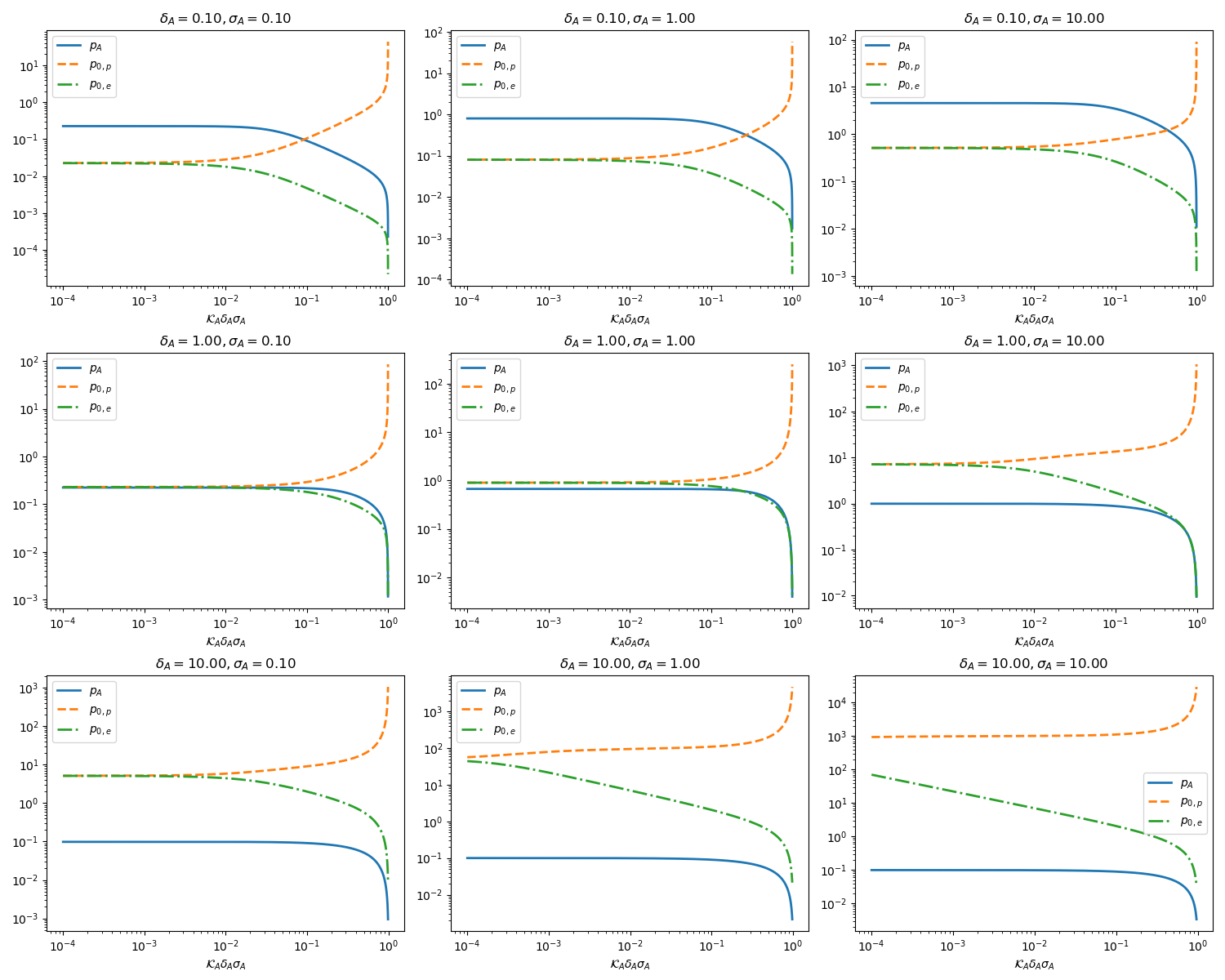
Figure 1: Alfven momentum pA and pairs' momenta p0,± as functions of scaled wavenumber, illustrating the domain where stationary nonlinear e waves exist.
Parametric instability is analytically examined via a reduced set of coupled equations for pump, beat, and scattered wave amplitudes in analogy to the high-gain Compton regime for Free Electron Lasers (FELs). Growth rates are obtained and contextualized within order-of-magnitude estimates for relevant astrophysical regimes.
Simulation Results and Key Observations
PIC simulations reveal that nonlinear e waves in pair plasma are generically unstable to powerful modulational (parametric) instabilities, even at relatively modest amplitudes (δA≪1). The instability mechanism generates strong density perturbations (δn/n0≫1), quickly driving the system far from quasilinear or perturbative treatments. Key dynamical features include:
- Rapid development of density sub-structure: For initial configurations with a single wavelength, the wave decomposes into several persistent sub-waves, each associated with steep density gradients.
- σ-dependence: The number and growth rate of sub-waves scale with magnetization; higher σ leads to faster break-up into a greater number of modes (Fig. 5).
- Nontrivial correlation between density and electromagnetic energy: Peaks in density are anti-correlated with peaks in electromagnetic (EM) energy density, signaling significant ponderomotive expulsion.
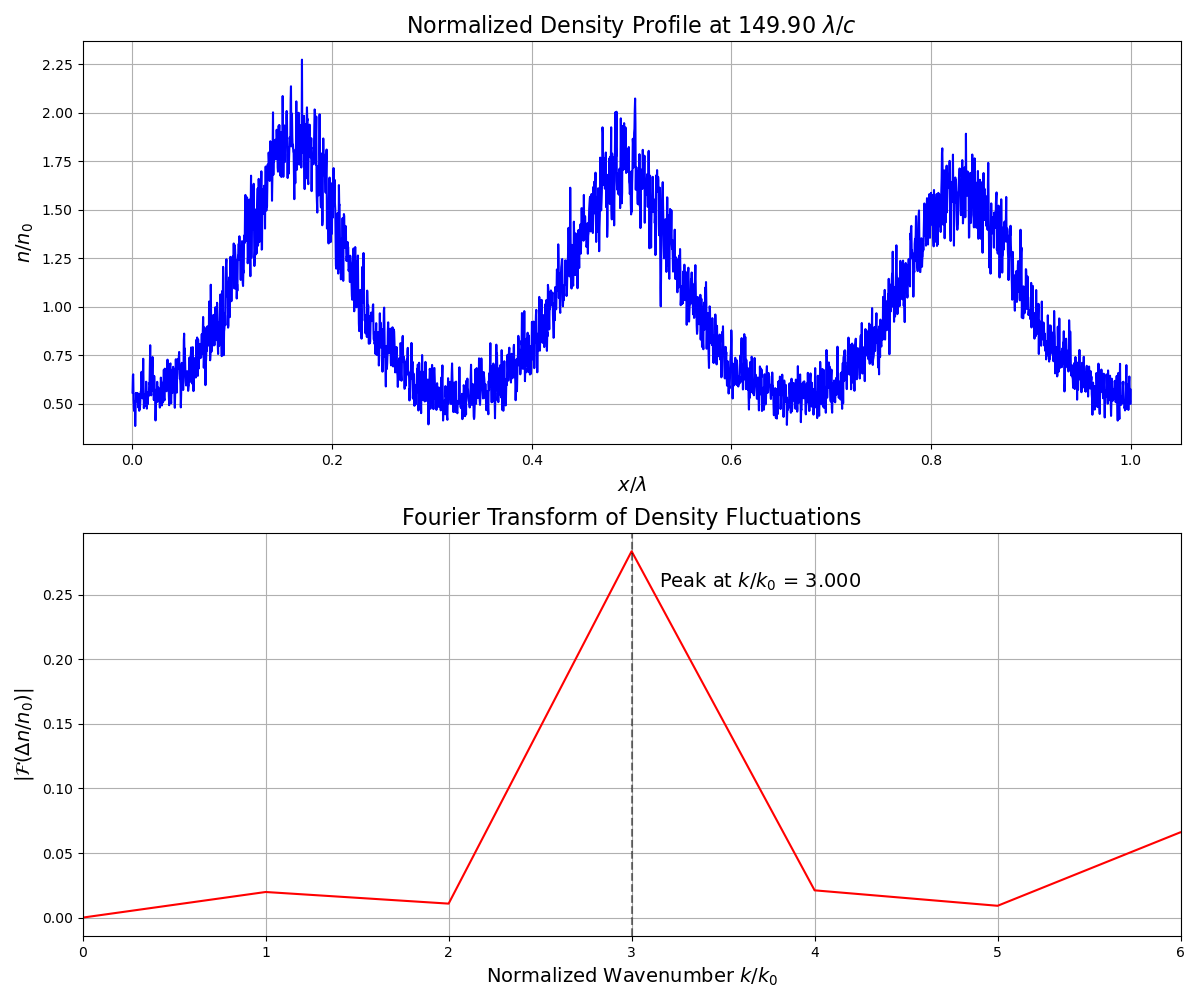
Figure 2: Time evolution for the single-wavelength run, displaying normalized density, its Fourier transform, Poynting flux, and EM energy density; sub-wave formation and polarization persistence are evident.
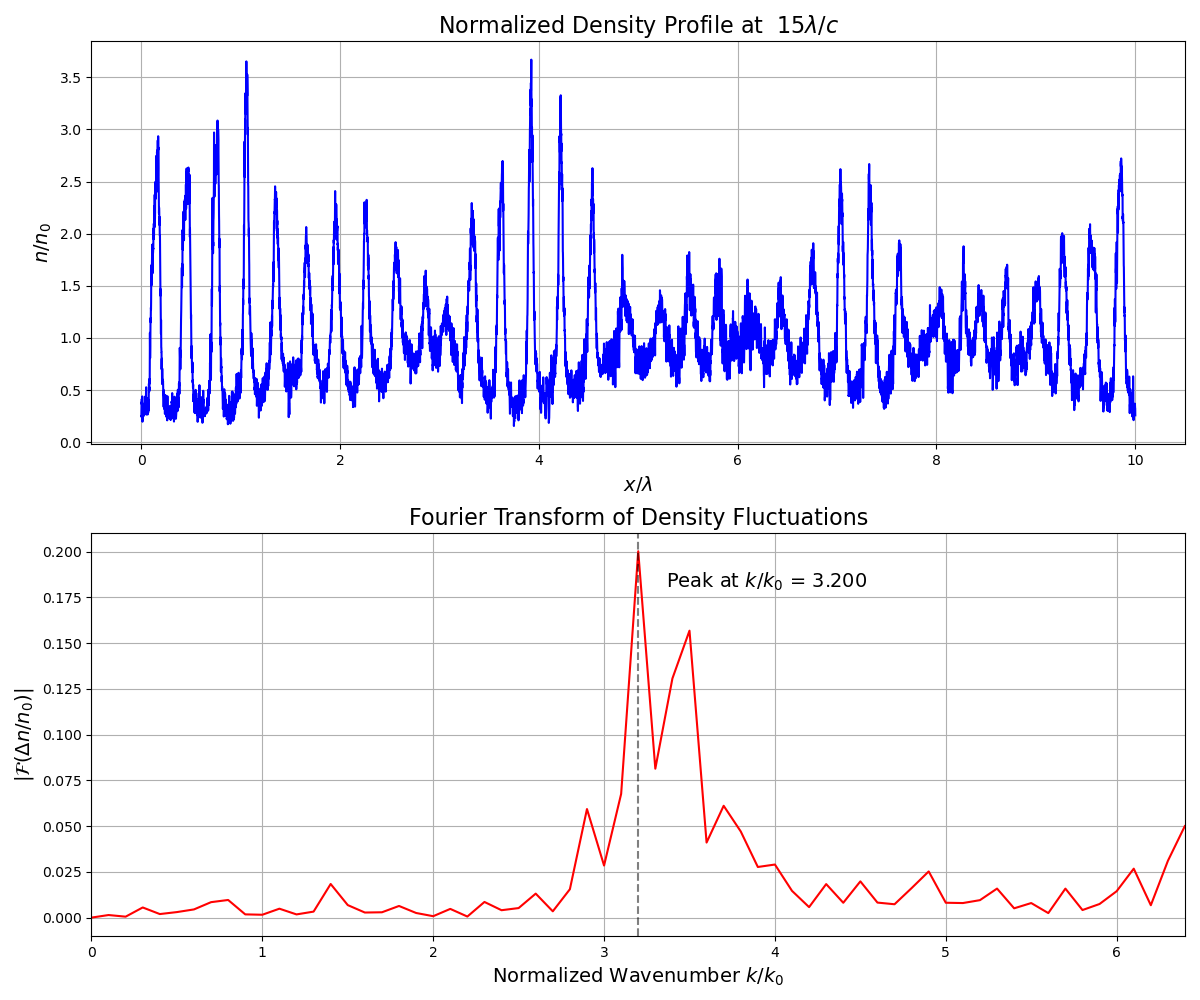
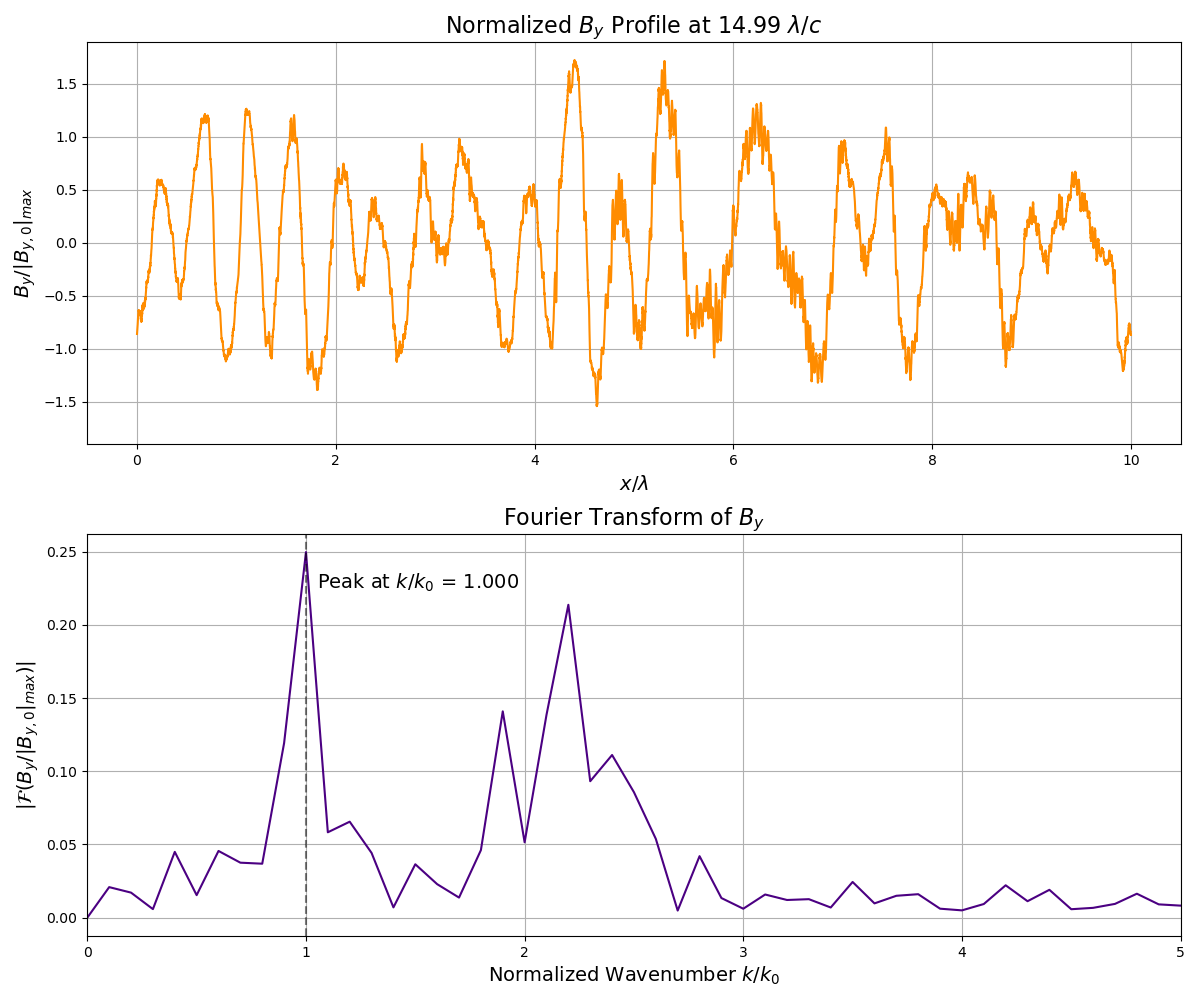
Figure 3: Results for a 10λ wave train simulation, showing consistent multi-modal structure and continued dominance of the k0 density mode—regardless of initial box size.
Resolution studies confirm robustness of the observed instability and substructure formation, with major spectral peaks invariant under increased numerical precision. Thermal effects are found to diminish modulational growth, but not suppress it completely at high wave amplitudes.
Linear Polarization and Transient Phenomena
Simulations and analytic results confirm that both LP and CP waves are subject to similar instability mechanisms. For LP waves, analytic initializations are limited to the linear regime (k1), but long-term evolution converges towards the same phenomenology as for CP waves.
Transient periods of pronounced charge separation and Langmuir-mode excitation are observed during the instability, even in nominally symmetric pair plasmas. These episodes are fast and dissipative, with EM energy spiking locally before relaxing.
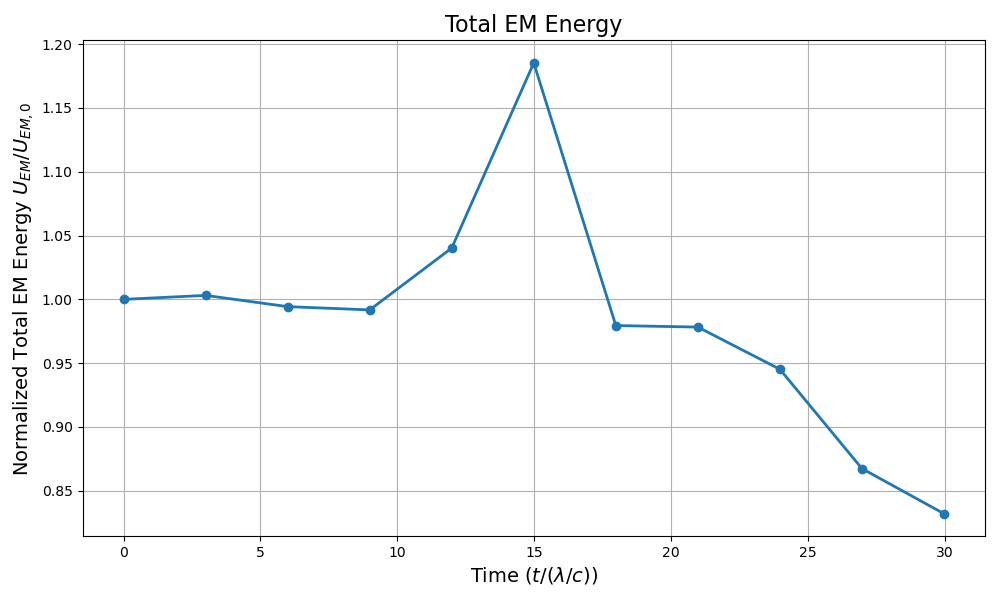
Figure 4: Transient excitation of charge density and Poynting flux, along with spikes in EM energy corresponding to plasma wave generation.
Dispersion, End of Propagation, and Instability Criterion
The analysis identifies a maximum wavenumber (critical k2 or k3) for the existence of nonlinear e waves, set by the wave amplitude and plasma parameters. Beyond this, stationary solutions break down, and waves cannot propagate. The parametric instability grows fastest near this terminal point, with the growth rate scaling as
k4
indicating rapid instability for strong waves and modest magnetizations.
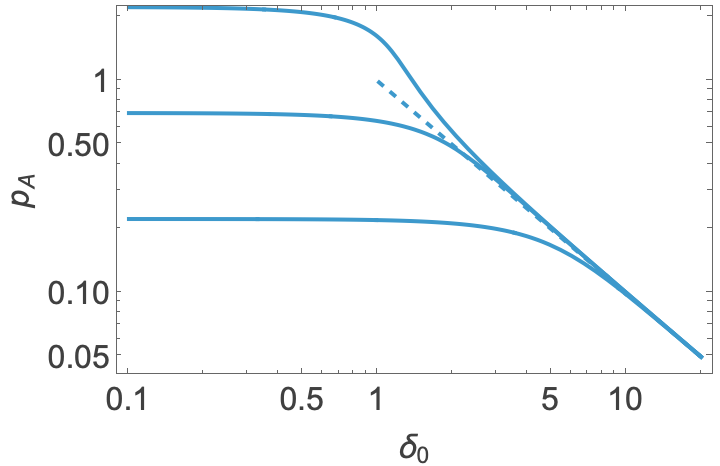
Figure 5: Nonlinear Alfven momentum dependence on nonlinearity for various k5 values, showing increased instability with strong perturbation.
Nonlinear dispersion relations in the lab frame exhibit portions with negative group velocity, but all simulations are initialized on the stable (positive group velocity) branch.
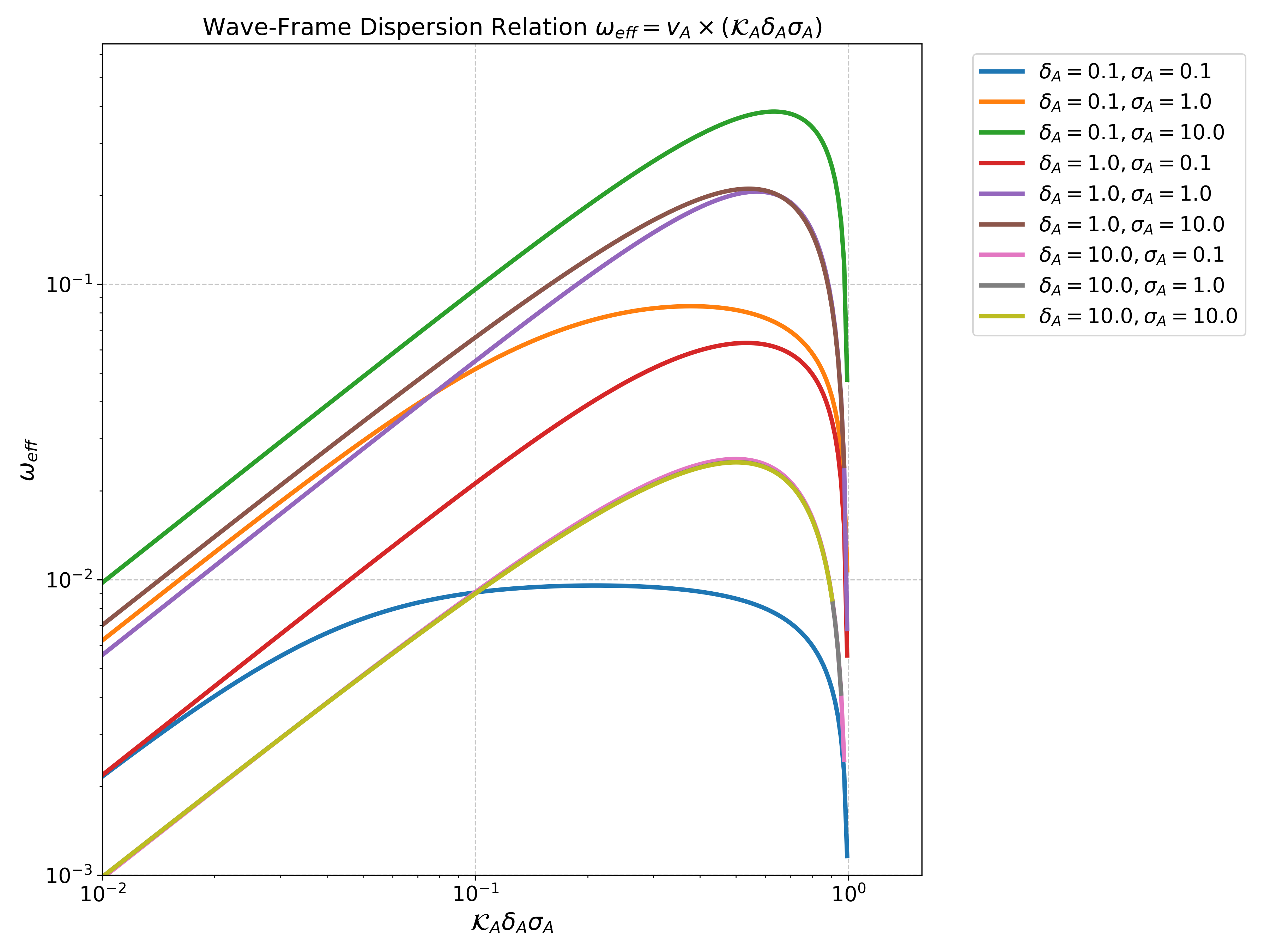
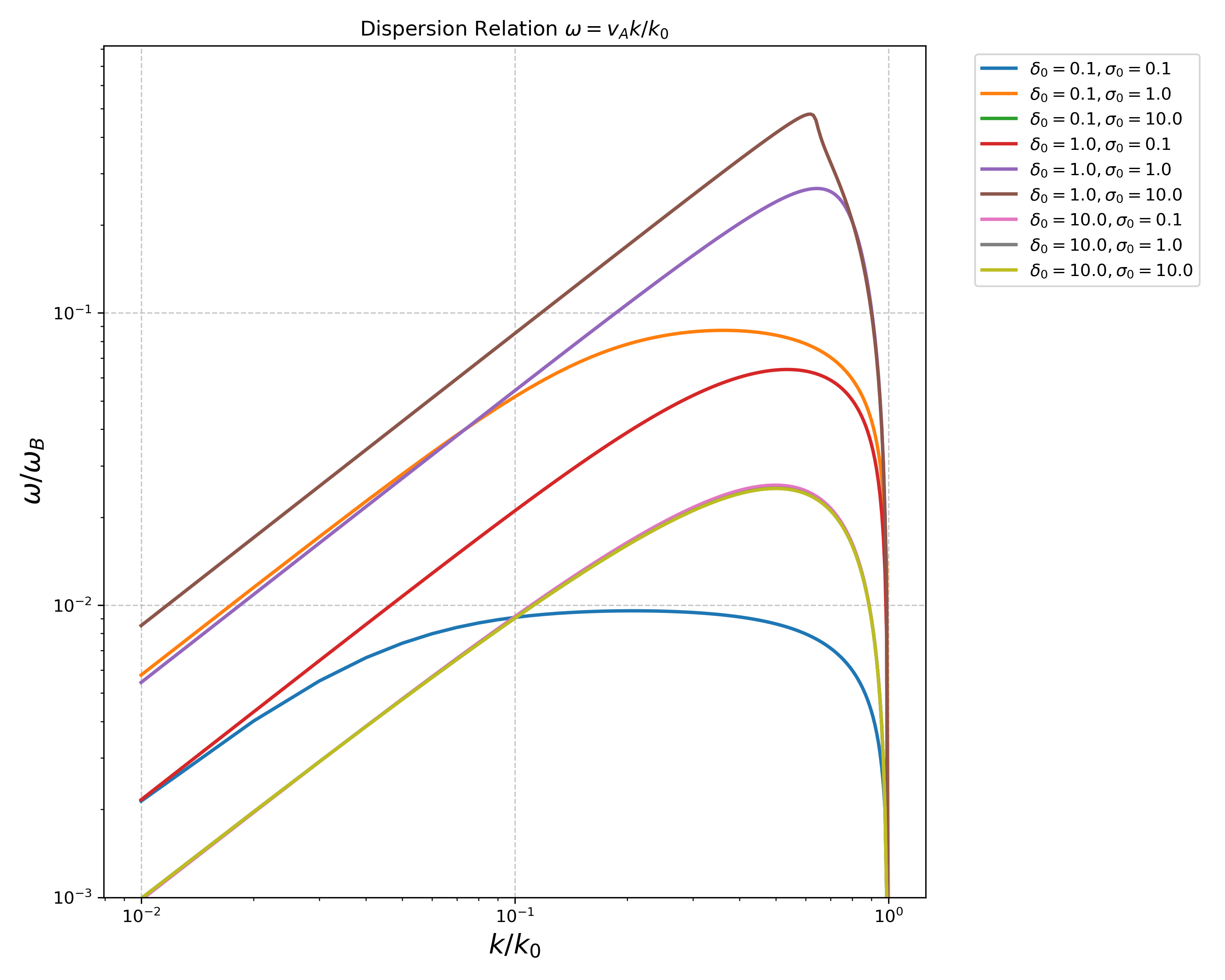
Figure 6: Dispersion curves of nonlinear e waves, highlighting regions with positive and negative group velocity.
Implications for Astrophysical Plasmas and FRBs
The results directly impact models of wave propagation and emission in the magnetospheres of neutron stars, especially magnetars. The analysis predicts that large-scale e waves excited in extended regions (on kilometer scales) would rapidly fragment into much shorter-wavelength structures (meter scale for typical parameters). This provides a natural mechanism for the redistribution of energy into shorter wavelengths and coherent microstructure generation, possibly serving as a seed for coherent emission via scattering mechanisms common in FRB theories.
Furthermore, the instability operates on timescales much shorter than those associated with turbulent cascades, and is robust even in the presence of significant thermal effects. The resulting large, stochastic density fluctuations lead to random modulation of the plasma dielectric properties—an environment reminiscent of Anderson localization in disordered media.
Comparison with Previous Work and Analytical Methodology
The findings contradict several historical analyses based on nonlinear Schrödinger equation approaches, which predicted stability for CP e waves in pair plasmas. Direct simulation and more careful analytic treatments in this work demonstrate instead that the nonlinear regime is inherently unstable, with large non-perturbative density modulations arising quickly—rendering small-amplitude expansions and perturbative treatments inapplicable. The analysis thus demands a fundamentally non-perturbative approach for accurate description of wave dynamics in pair plasmas.
Conclusion
This paper establishes that nonlinear e (Alfven) waves in highly magnetized astrophysical pair plasmas are generically unstable to powerful parametric modulational instability, particularly for wavenumbers at or below a critical cutoff. The instability results in the rapid generation of large-amplitude, stochastic density fluctuations, with the potential to drive Anderson-like localization and initiate coherent emission mechanisms relevant to FRBs. These findings have broad implications for wave propagation, energy redistribution, and radiation processes in magnetized compact objects, and underscore the necessity of non-perturbative, fully kinetic modeling in high-k6 plasma environments. Future developments should extend these results to more complex geometries, inhomogeneous plasmas, and include dissipation and radiative processes to fully capture the range of phenomenology possible in astrophysical contexts.