- The paper presents the parallelisation of HADOF, decomposing large QUBO problems into sub-Hamiltonians to improve scalability on NISQ devices.
- It employs QAOA circuits with Trotterised parameter schedules and benchmarks real-device executions, achieving up to 5× speedup over sequential execution.
- The approach maintains high solution accuracy and robustness, evidenced by effective genome assembly applications even under noisy conditions.
Introduction
The Hamiltonian Auto Decomposition Optimisation Framework (HADOF) represents a progressive approach to scalable combinatorial optimization on quantum hardware, specifically addressing the practical limitations imposed by Noisy Intermediate-Scale Quantum (NISQ) devices. Quadratic Unconstrained Binary Optimization (QUBO) problems, which encode a broad array of NP-hard combinatorial tasks, are inherently well-suited for quantum optimization due to their direct mapping onto quantum Hamiltonians. Algorithms such as the Quantum Approximate Optimization Algorithm (QAOA) and Quantum Annealing (QA) are standard tools for these tasks, but their efficacy is sharply curtailed by device resource constraints, circuit depth limitations, and noise.
This paper demonstrates a comprehensive evaluation and extension of HADOF, focusing on its parallelisation and real-device execution, including benchmarking with IBM QPUs and applications to genome assembly. The study systematically explores sequential, single-QPU parallel, and multi-QPU parallel execution modes, establishing HADOF's role in the emerging paradigm of High Performance Quantum Computing (HPQ) for practical large-scale optimization.
HADOF Framework and Quantum Circuit Construction
HADOF decomposes a global QUBO into smaller sub-Hamiltonians that are independently optimized and subsequently aggregated, bypassing the need for monolithic circuit embeddings and enabling scaling well beyond current device capacities. This strategy is executed via iterative refinement, where expected values of qubits derived from sample distributions inform subsequent subproblem construction, embedding global context efficiently.
The quantum circuits underpinning HADOF employ a standard QAOA formulation with alternating cost and mixer Hamiltonians.
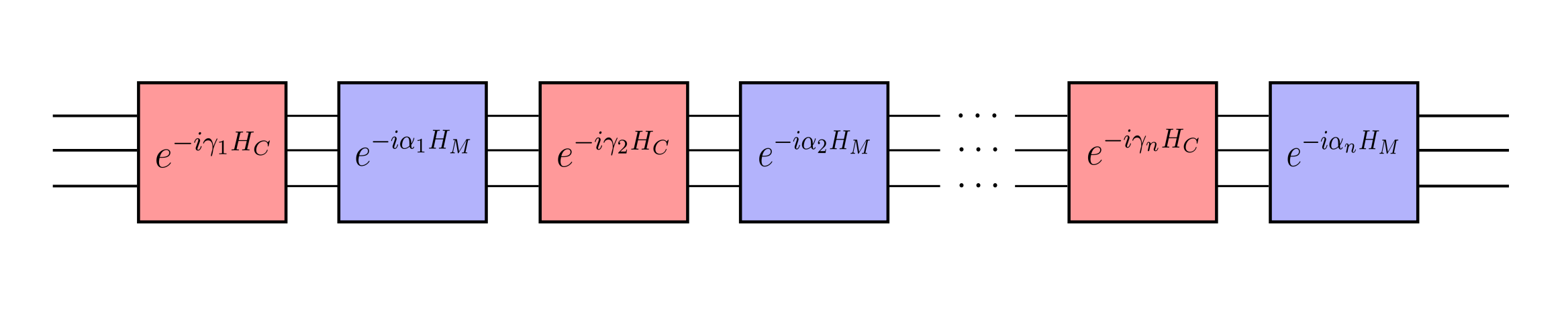
Figure 1: Standard QAOA circuit with alternating cost and mixer Hamiltonians, producing a probability distribution favoring low-cost solutions.
Digitized annealing and Trotterised parameter schedules are adopted to mitigate the classical parameter optimization bottleneck, initializing mixer and cost parameters to maintain proximity to the ground state throughout evolution.
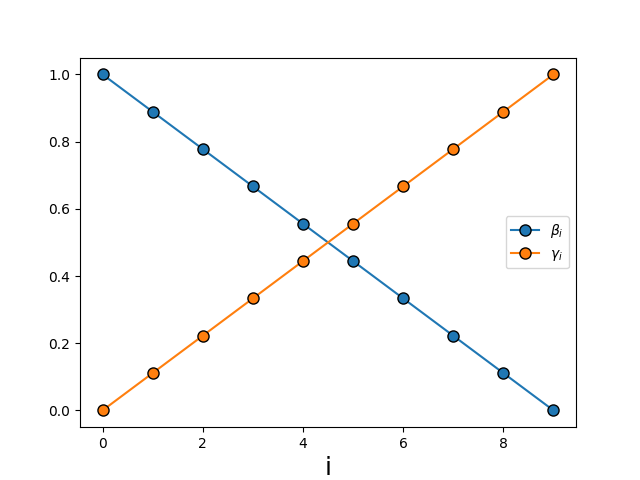
Figure 2: Trotterised QAOA parameters, showing gradual transition in βm and γm to traverse from mixer to cost Hamiltonian.
The HADOF workflow is inherently amenable to parallelisation. Subproblems are constructed at each iteration and solved concurrently, either asynchronously (single QPU) or truly in parallel (multi-QPU), with aggregation policies assembling the global solution distribution.
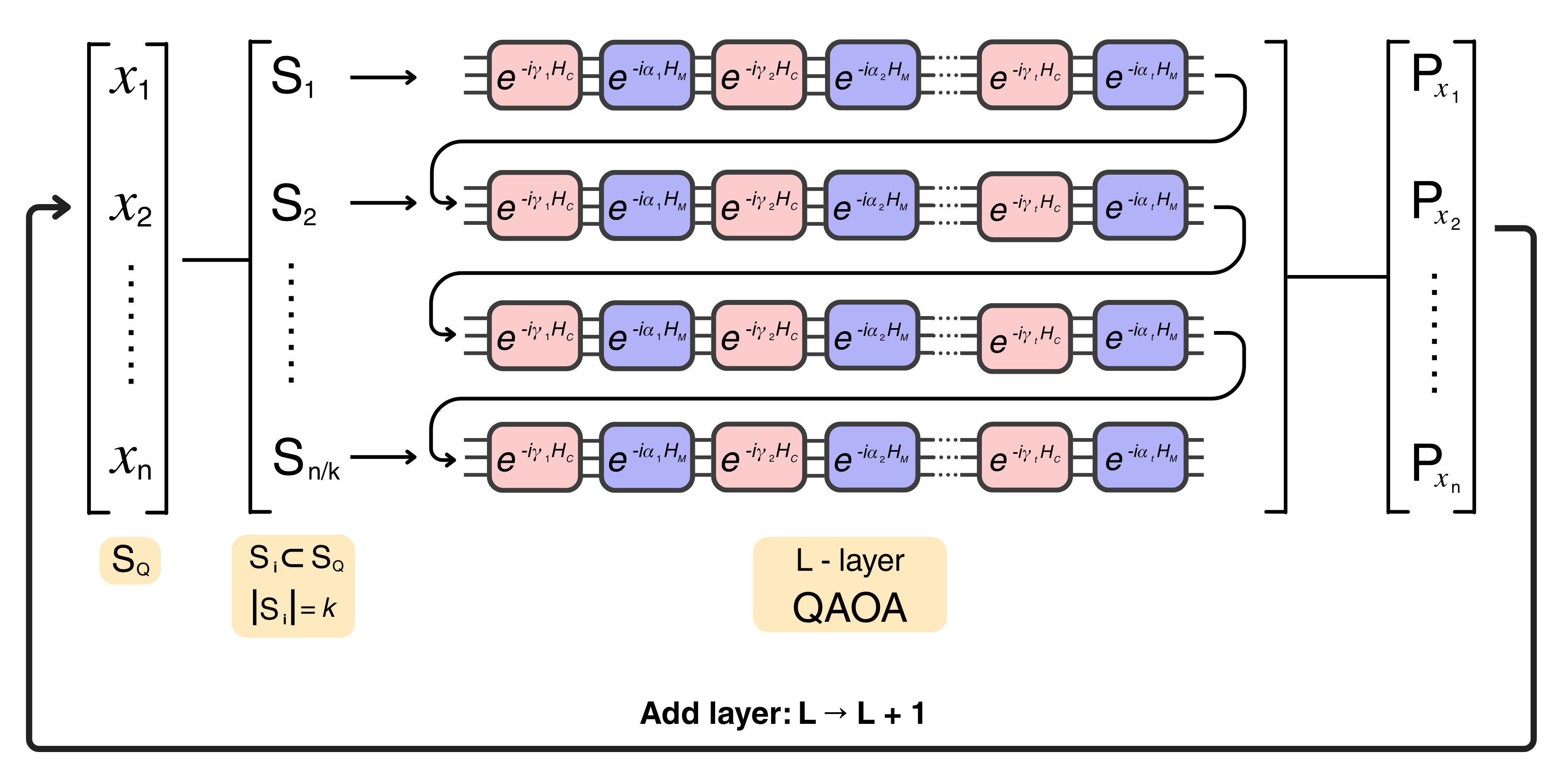
Figure 3: HADOF workflow: decomposition, QAOA circuit application, parallel sub-Hamiltonian optimization, and solution aggregation policy.
Speed
Simulating quantum circuit dynamics is classically challenging, especially for large systems. HADOF simulations for problems up to 500 variables achieve time-to-solution comparable to classical Simulated Annealing, with parallelisation yielding significant reductions in wall clock time.
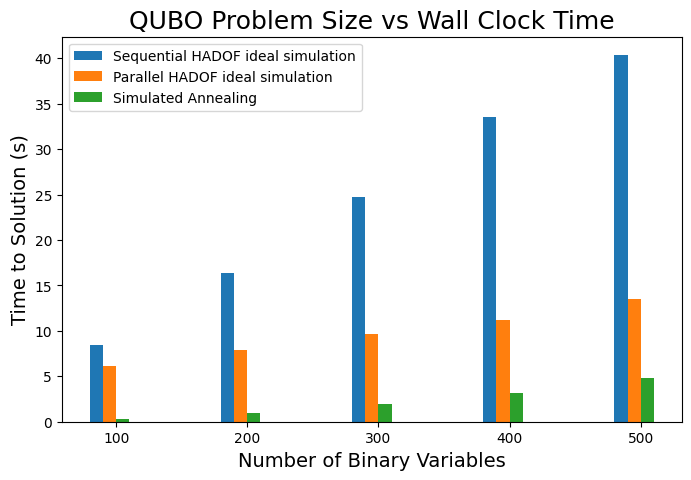
Figure 4: Classical simulation times for HADOF (up to 500 variables) are competitive with Simulated Annealing, with notable parallelisation speedup.
Parallel HADOF achieves up to 4-5× speedup over sequential execution under noisy simulation. On real IBM quantum hardware, parallel submission and execution across QPUs further reduce makespan, achieving up to 3-4× improvement, with pronounced benefits under noise and significant mitigation of queueing delays.
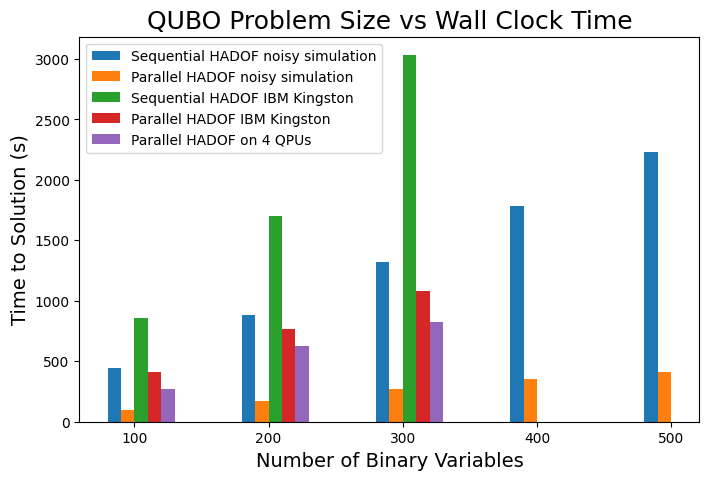
Figure 5: Parallel execution, especially under noise, provides up to 5× faster simulation speed and substantial reductions in queue and wall clock time on real hardware.
Accuracy
Solution quality is measured by both the accuracy of the most probable sampled solution and the mean across the sampled distribution, normalized to classical Simulated Annealing scores. Under ideal conditions, both sequential and parallel HADOF consistently achieve accuracies above 0.95; degradation under noise remains modest, and real device runs maintain most probable accuracies above 0.80.
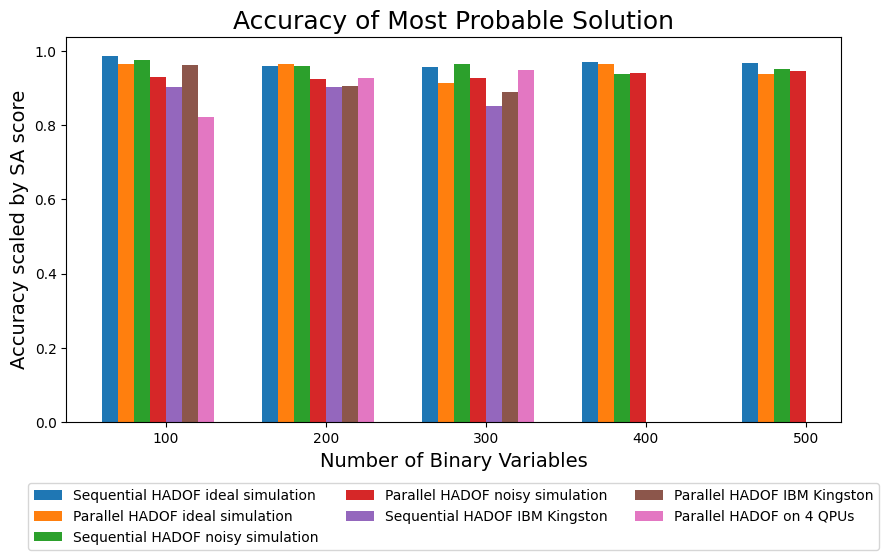
Figure 6: Most probable solutions from HADOF (both sequential and parallel) consistently exceed 82\% of classical annealing accuracy.
Average distribution accuracy is lower, particularly under hardware noise (often around 50-60\%), reflecting solution variance and noise effects. Parallelisation does not substantively compromise solution quality, demonstrating robustness.
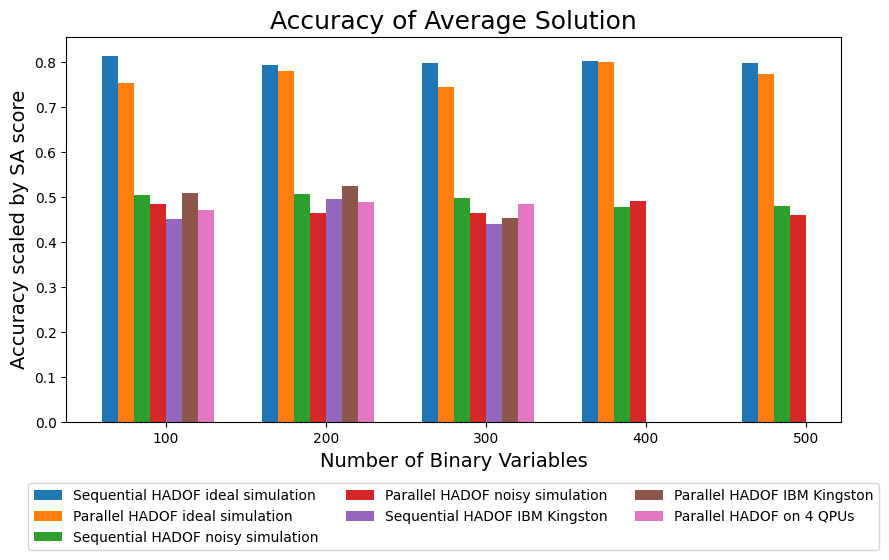
Figure 7: Mean accuracy of sampled solution distributions typically ranges 70-80\% in simulation but decreases to ∼50\% on real hardware.
Comparison to Standard QAOA
Monolithic, full-circuit QAOA embeddings are fundamentally limited by qubit availability and device connectivity. For dense QUBOs, embedding large problems is infeasible, and noise rapidly degrades solution quality and variance. HADOF circumvents these limitations by federating subproblems, maintaining strong best-solution accuracy even when average solution quality deteriorates under hardware constraints. Empirical results demonstrate that HADOF maintains superior robustness compared to full-circuit QAOA, particularly as problem size and noise scale.
Genome Assembly Application
Genome assembly as a combinatorial optimization problem is formulated as a Hamiltonian path problem in an overlap graph, with QUBO encoding enabling direct optimization via quantum algorithms. The ϕX 174 bacteriophage overlap graph, comprising 50 nodes and 248 edges, is encoded and optimized via HADOF without manual partitioning—a substantive advance over previous domain-specific partitioning requirements.
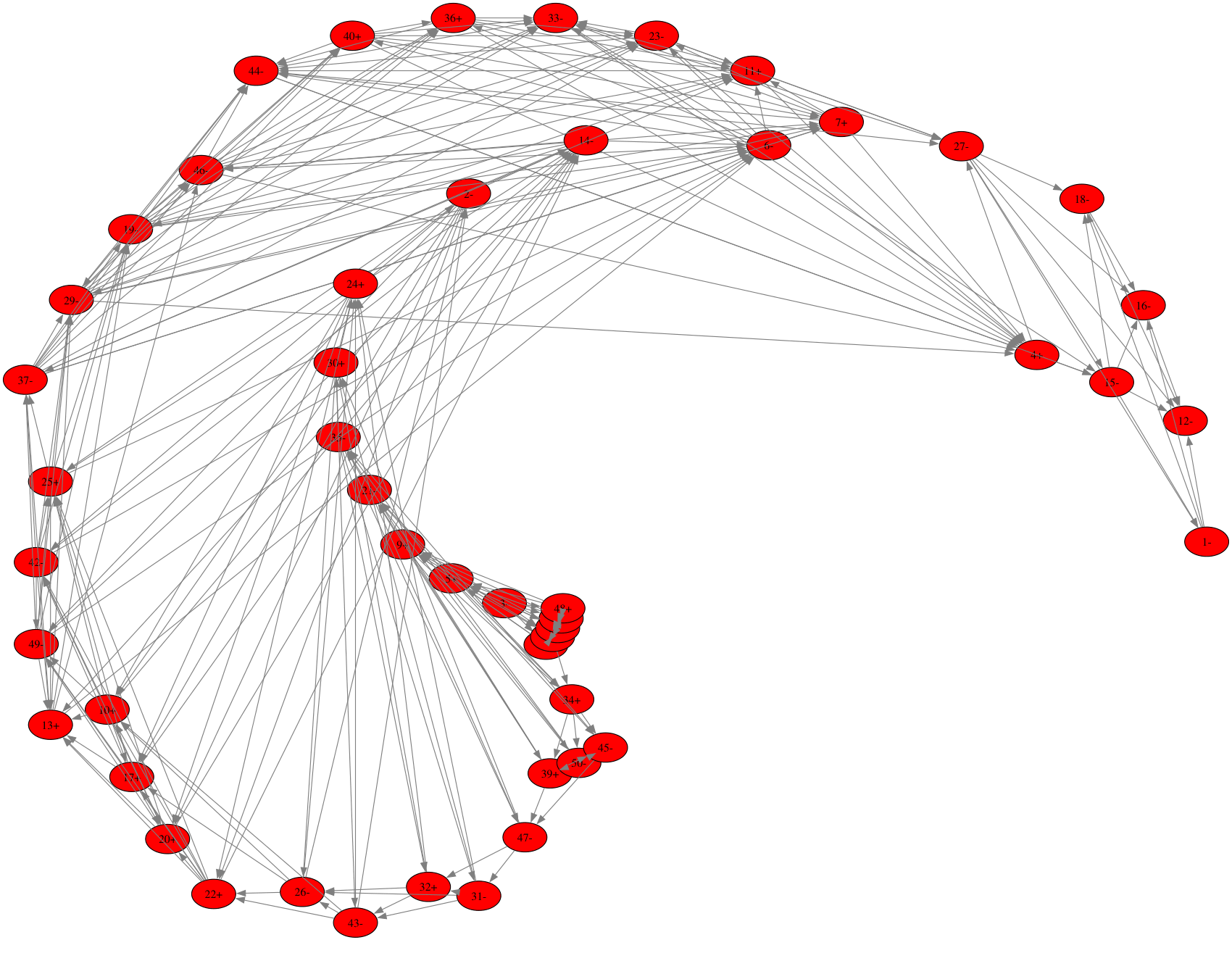
Figure 8: Overlap graph representation of ϕX 174 bacteriophage used for QUBO-based genome assembly.
The correct assembly solution forms a contiguous overlap path, recoverable by QUBO optimization.
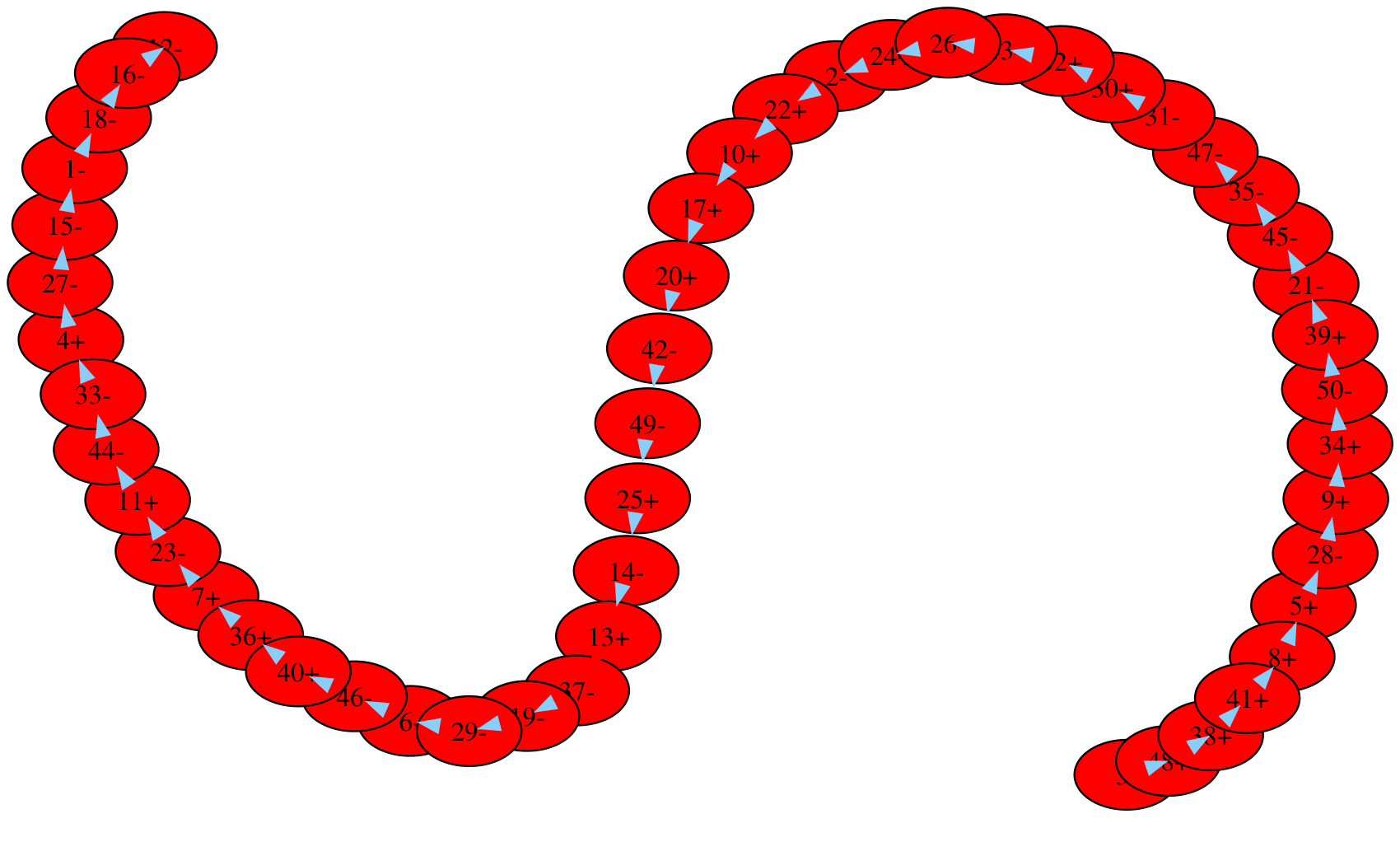
Figure 9: Assembled overlap graph showing the longest path connecting all sequencing reads for contiguous genome sequence reconstruction.
Parallel HADOF achieves comparable optimal solution frequency and accuracy to classical annealing in ideal simulation, while real hardware runs recover a high proportion of correct sequences even when the unique optimum is not easily sampled due to hardware noise. This illustrates HADOF's efficacy and scalability for practical genomics tasks.
Implications and Future Perspectives
The HADOF framework, especially in its parallelised incarnation, marks a substantial step toward scalable quantum optimization aligned with HPQ paradigms. By leveraging federated decomposition, the approach mitigates noise accumulation, enables robust scaling beyond device-imposed bottlenecks, and harmonizes naturally with distributed or hybrid quantum-classical architectures. Demonstrated applications to genome assembly are indicative of broad applicability to other NP-hard tasks in biology, finance, and logistics.
HADOF aligns with recent trends in quantum decomposition and distributed optimization [kim2025distributed], promising future integration with adaptive decomposition strategies, error mitigation, and hierarchical quantum-classical pipelines. System-level advances in orchestration, load balancing, and QPU communication will further unlock performance gains under HPQ. Practical application pipelines, especially in genomics, will benefit from tighter integration of pre/post-processing and hybrid classical modules.
Conclusion
HADOF, augmented by parallelisation, enables practical large-scale quantum optimization well beyond the limits of current hardware, maintaining solution quality and robustness against noise. Its implementation on real devices and application to genome assembly validate its potential as a foundational framework for HPQ, catalyzing advances in scalable, distributed quantum computation. Future work will refine decomposition, integration, and error mitigation strategies to further solidify quantum advantage in real-world optimization domains.
(2604.27836)

