- The paper introduces a novel construction of high-girth quantum LDPC codes using square-base hypergraph products combined with CPM lifts.
- It develops a methodology that enforces regular base matrix design and employs voltage-sum constraints to analyze forced 8-cycles under CSS orthogonality.
- Finite-length decoding experiments demonstrate extremely low frame error rates using degeneracy-aware BP decoding augmented by OSD post-processing.
High-Girth Regular Quantum LDPC Codes from Square-Base Hypergraph Products via CPM Lifts
Overview
The paper "High-Girth Regular Quantum LDPC Codes from Square-Base Hypergraph Products via CPM Lifts" (2604.27817) investigates the construction and properties of quantum LDPC codes derived from square-base hypergraph-products (HGP), focusing on finite-length instances with explicit control of degree-regularity and short-cycle structure. The approach leverages combinatorial design in the form of small-row/column-weight base matrices and analyzes the implications of circulant permutation matrix (CPM) lifts for girth and logical qubit count, culminating in rigorous finite-length decoding experiments. The study systematically develops explicit constructions for both (3,6)- and (4,8)-regular CSS (Calderbank–Shor–Steane) codes, pinpoints CSS-constrained forced 8-cycles, and demonstrates practical decoding performance for large lifted codes with high girth.
Theoretical Construction: Square-Base HGP and CPM Lifting
The foundation of the work is the specialization of the HGP construction—originally due to Tillich and Zémor—to square binary base matrices B∈F2s×s. The CSS check matrices are defined as:
- HX(B)=[B⊗Is∣Is⊗BT]
- HZ(B)=[Is⊗B∣BT⊗Is]
By construction, these always satisfy the CSS orthogonality condition. The code's logical qubit yield is governed by the corank cB of B, with k=2cB2. Critically, the base matrices are required to be regular (equal row and column weight w) and their overlap structure is strictly controlled to limit short cycles in the resulting Tanner graphs.
CPM lifts are then applied: each nonzero entry of the CSS matrices is replaced by a P×P circulant permutation block, potentially increasing blocklength by a factor (4,8)0. However, the voltage-sum constraints stemming from CSS orthogonality (i.e., on overlaps between (4,8)1 and (4,8)2 checks) induce forced short cycles, specifically unavoidable 8-cycles, that cannot be eliminated by increasing (4,8)3.
This is exemplified in the following formal result from the paper: for any (4,8)4-regular square base (4,8)5 of size (4,8)6, every CPM (4,8)7 lift contains at least (4,8)8 Tanner 8-cycles in each of (4,8)9 and B∈F2s×s0. This sets an inherent girth limitation—CPM lifts cannot raise the Tanner girth above 8 when these structures exist.
Base-Matrix Design and Explicit Examples
The authors detail criteria for base-matrix selection:
- Square, binary matrices of fixed row/col weight B∈F2s×s1.
- Positive corank to ensure nonzero logical qubits.
- Exclusion of 4-cycles and simple 6-cycles in the base (except for explicit girth-6 examples).
- Preference for regular, connected, high-distance, and low small-codeword support.
Principal classes of explicit constructions include:
- The Fano plane (B∈F2s×s2): a B∈F2s×s3 incidence structure yielding a B∈F2s×s4-regular base with girth 6 but containing triangles (hence 6-cycles).
- The generalized quadrangle B∈F2s×s5 (B∈F2s×s6): a B∈F2s×s7 girth-8 B∈F2s×s8-regular incidence matrix, yielding high corank with no simple 6-cycles.
- Enlarged and randomized matrices: e.g., B∈F2s×s9 (connected sum of two HX(B)=[B⊗Is∣Is⊗BT]0 with edge swap for increased corank), HX(B)=[B⊗Is∣Is⊗BT]1 and HX(B)=[B⊗Is∣Is⊗BT]2 (low and moderate corank, regular, girth-8), and higher-degree cases like HX(B)=[B⊗Is∣Is⊗BT]3 (projective plane, HX(B)=[B⊗Is∣Is⊗BT]4-regular, girth-6) and HX(B)=[B⊗Is∣Is⊗BT]5 (HX(B)=[B⊗Is∣Is⊗BT]6, HX(B)=[B⊗Is∣Is⊗BT]7-regular, girth-8).
Explicit construction properties can be visualized in the matrix plots below, displaying the support of various bases used.
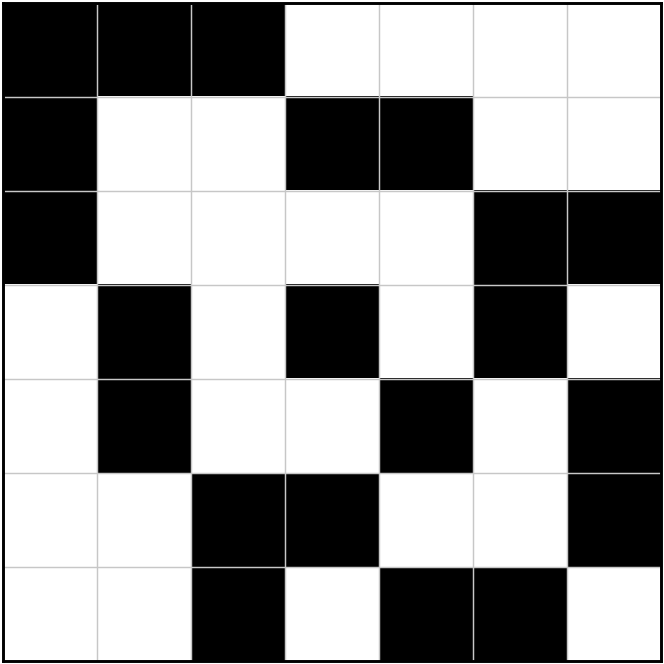
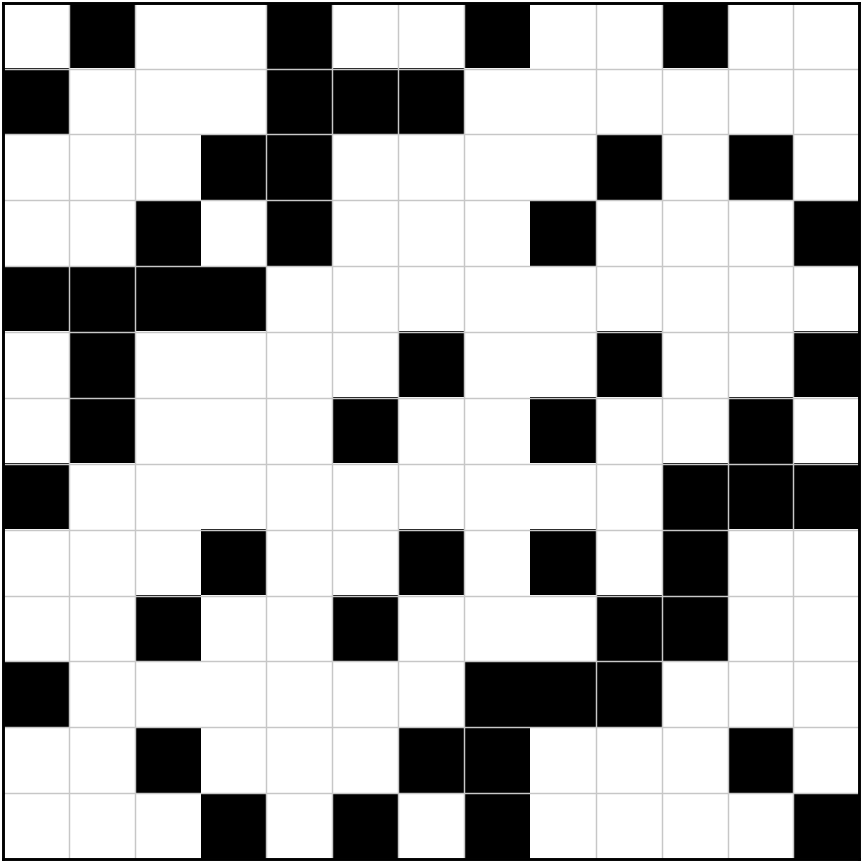
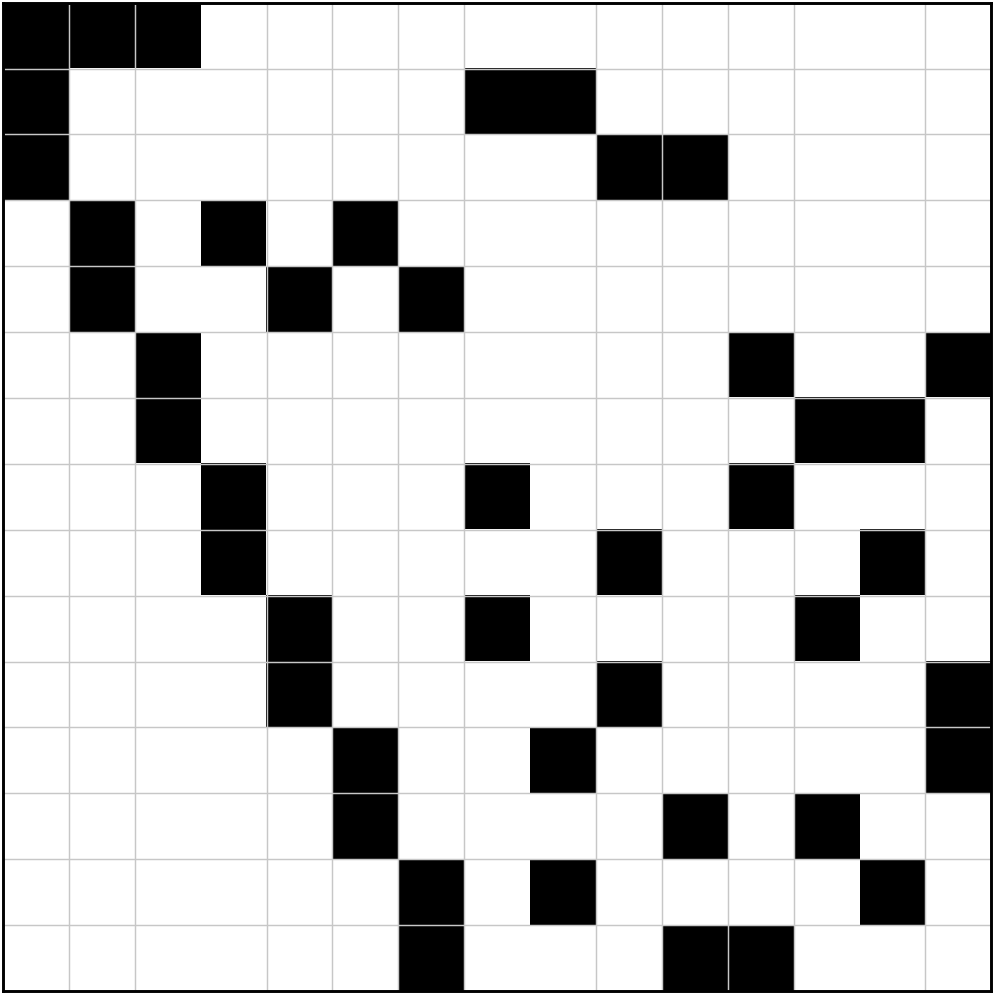
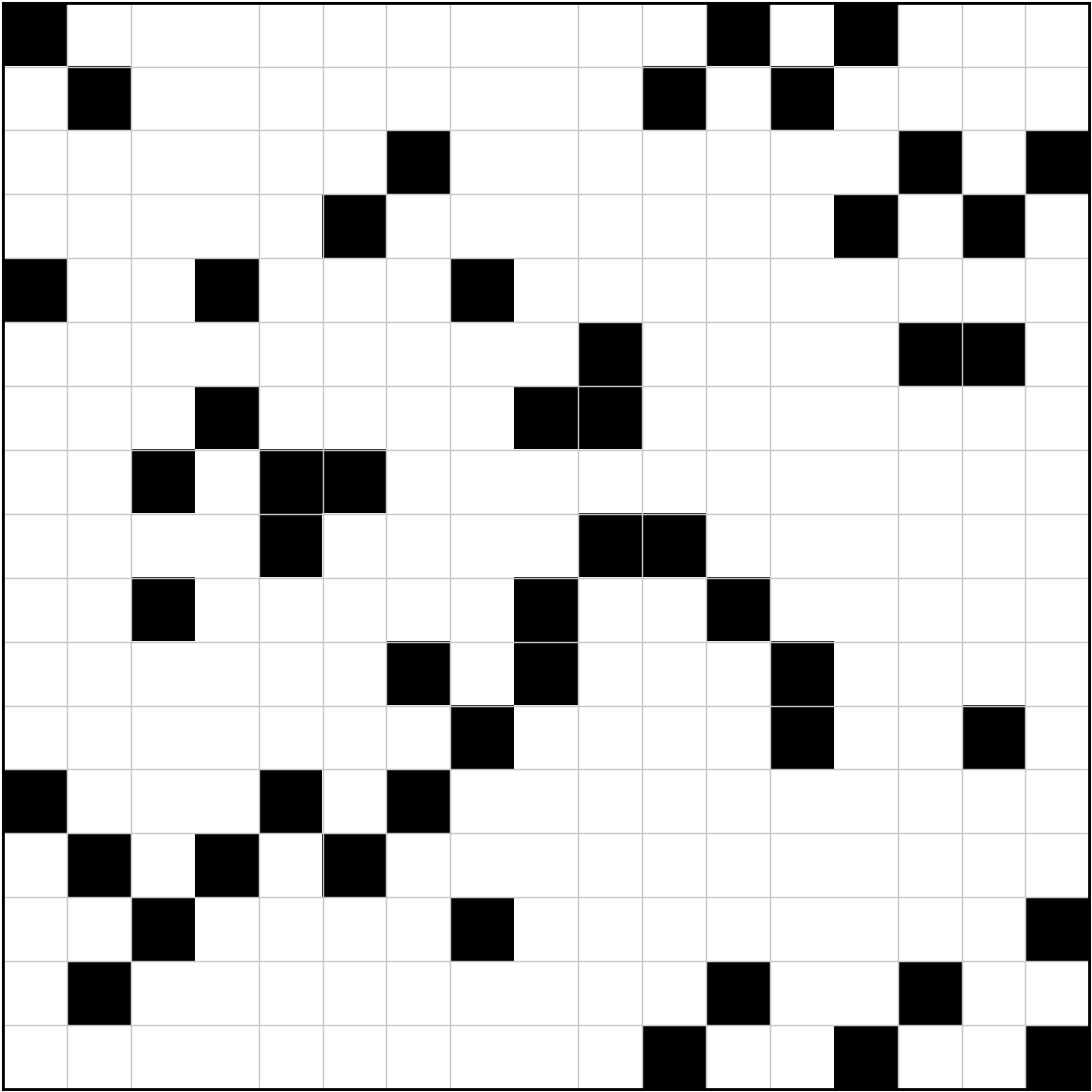
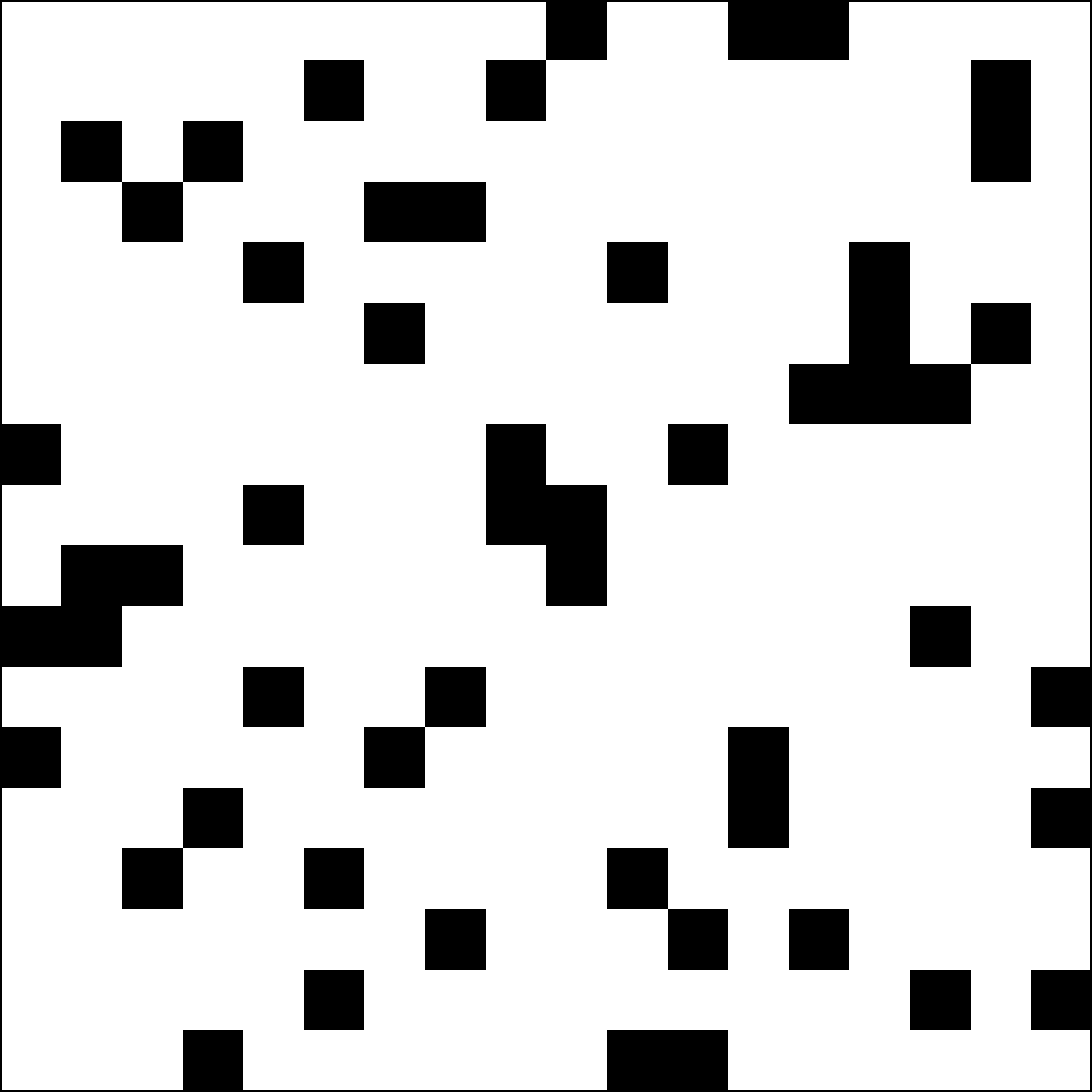
Figure 1: Matrix plots of the smaller square base matrices: HX(B)=[B⊗Is∣Is⊗BT]8, HX(B)=[B⊗Is∣Is⊗BT]9, HZ(B)=[Is⊗B∣BT⊗Is]0, HZ(B)=[Is⊗B∣BT⊗Is]1, HZ(B)=[Is⊗B∣BT⊗Is]2. Each visual displays the binary support pattern (entries equal to 1 in black).

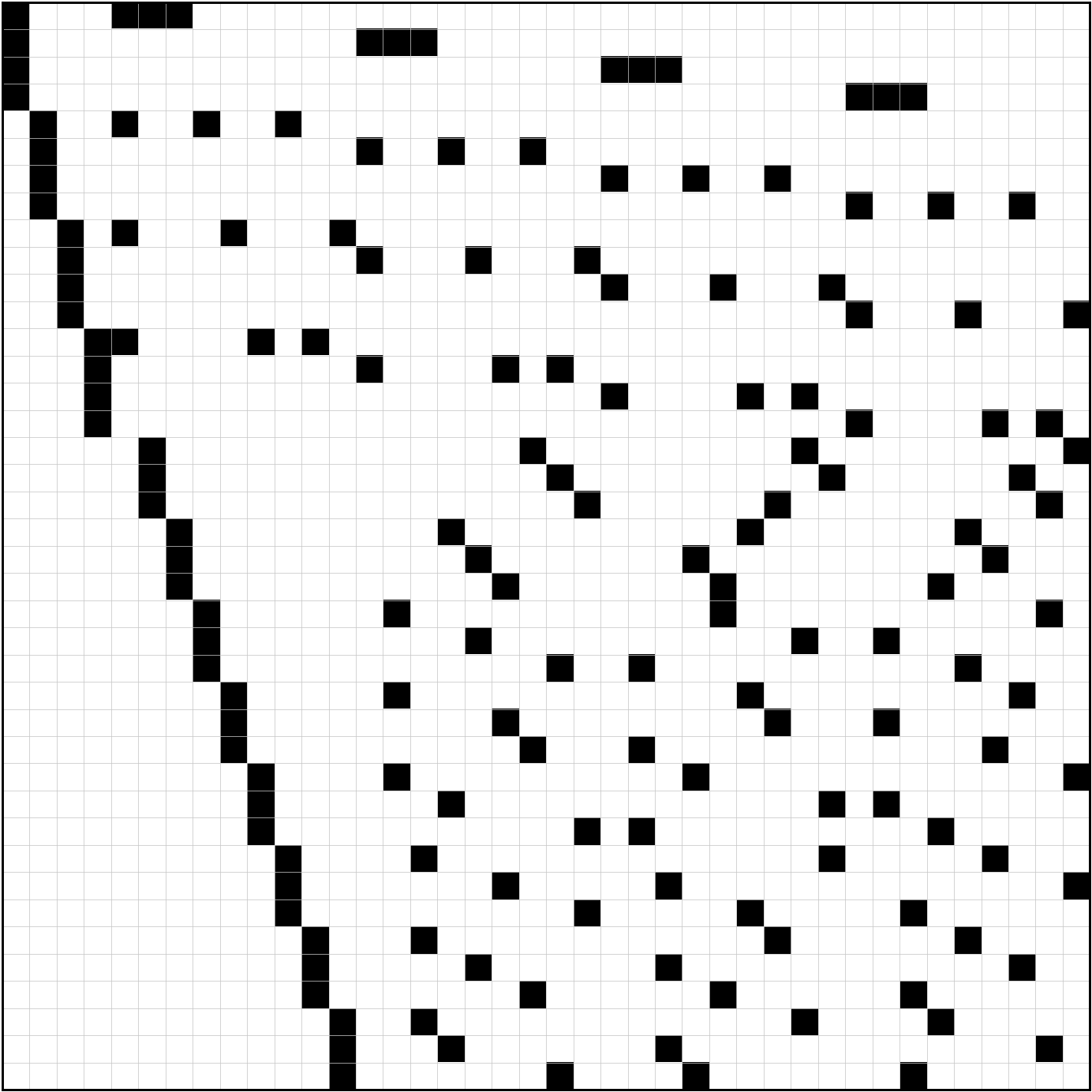
Figure 2: Matrix plots of the larger square base matrices: HZ(B)=[Is⊗B∣BT⊗Is]3 and HZ(B)=[Is⊗B∣BT⊗Is]4. These larger, more complex structures yield higher corank and enable larger codes.
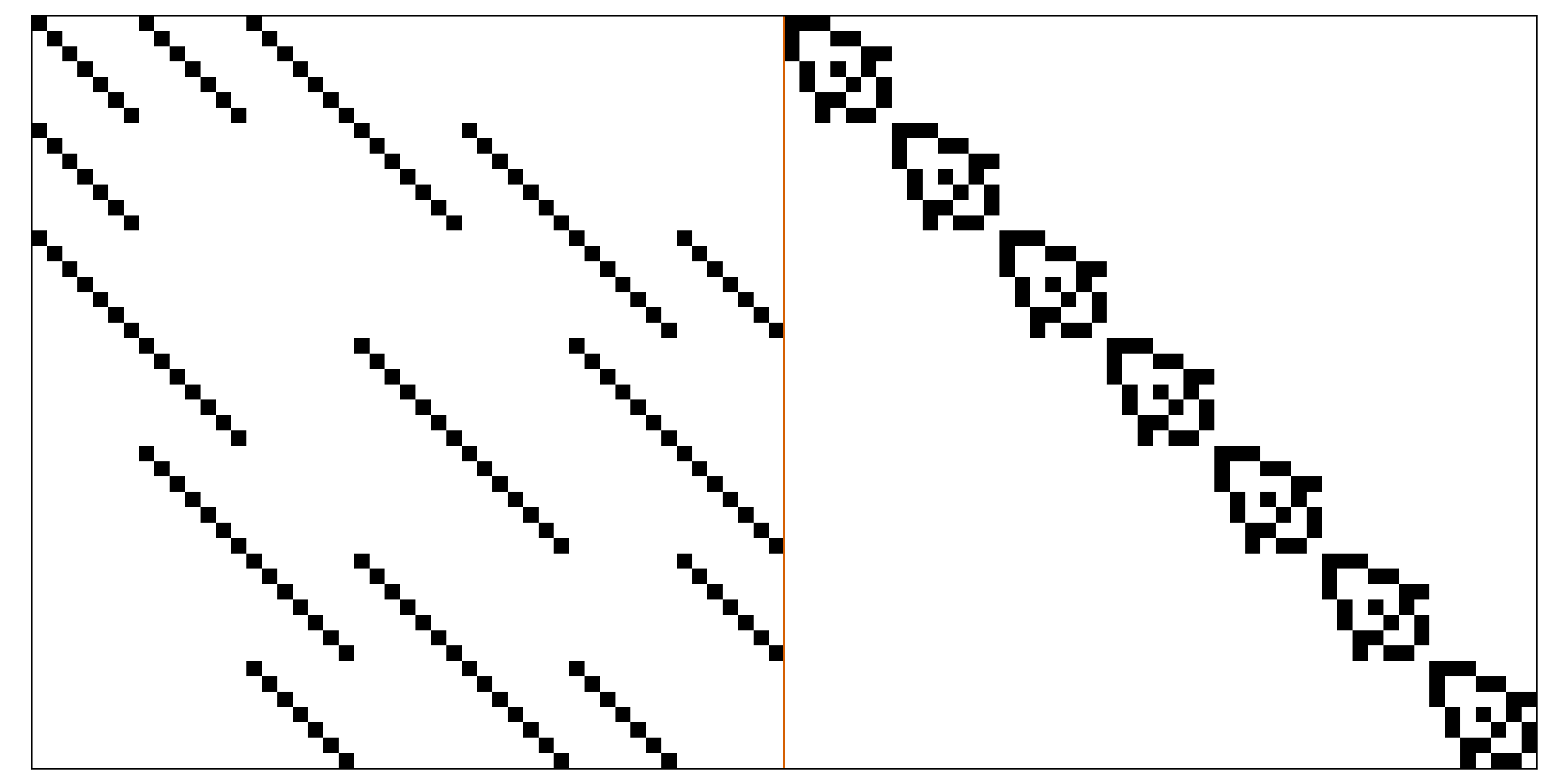
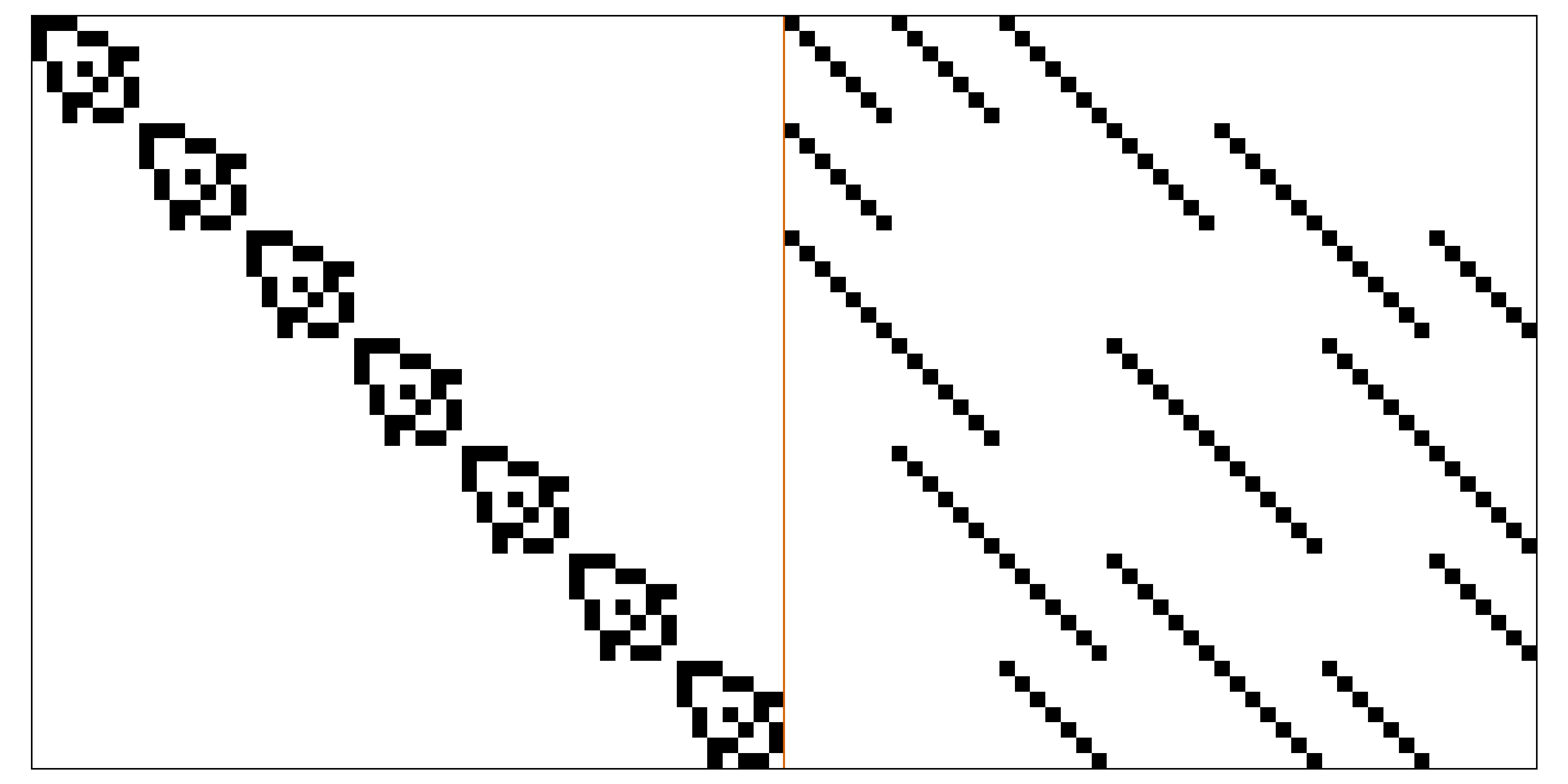
Figure 3: Matrix plots of the HGP check matrices (HZ(B)=[Is⊗B∣BT⊗Is]5, HZ(B)=[Is⊗B∣BT⊗Is]6) derived from the Fano-plane base HZ(B)=[Is⊗B∣BT⊗Is]7, demonstrating the expanded regular structure post-HGP.
CPM Lifts: Forced Cycles and Logical Qubits
A principal contribution is the detailed analysis of CPM HZ(B)=[Is⊗B∣BT⊗Is]8 lifts. The authors prove that certain patterns of overlap in the base matrix, enforced by the CSS orthogonality condition, result in forced 8-cycles in every possible CPM lift, regardless of HZ(B)=[Is⊗B∣BT⊗Is]9. As a consequence, it is impossible to achieve Tanner girth cB0 for the lifted code graphs derived from these square-base designs, a phenomenon rigorously characterized via a voltage-sum criterion.
The logical qubit count in the lift, cB1, satisfies cB2 by construction, but further increases—beyond trivial disconnected lifts—require the emergence of new nonconstant left-kernel vectors, a nontrivial combinatorial condition not generically realized.
The finite-length performance of the designed codes is empirically evaluated for a large lifted code derived from the generalized-quadrangle base cB3 with a randomized CPM cB4 lift, resulting in a cB5 CSS-LDPC code with girth 8 and degrees cB6. The decoding protocol uses a degeneracy-aware belief propagation (BP) decoder, augmented with an OSD-lite post-processing for additional syndrome-based repairs.
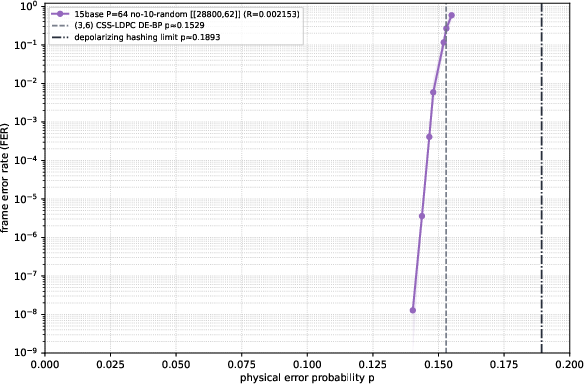
Figure 4: cB7–FER plot for the randomized cB8 lift derived from the generalized-quadrangle base cB9. The plot shows the frame error rate (FER) vs. depolarizing probability B0, including confidence intervals. Vertical lines indicate the BP density-evolution threshold (B1) and the depolarizing-channel hashing limit (B2).
At B3, the code yielded zero observed decoding failures in B4 trials, corresponding to a Wilson 95% confidence upper bound on FER of B5. Notably, all recorded decoding failures were non-syndrome-matching, so the data do not address minimum-distance upper bounds. Degenerate success (correction up to stabilizers) dominated, as expected for CSS codes.
Implications and Future Directions
From a theoretical viewpoint, the paper clarifies inherent girth and degree limitations that arise in quantum LDPC codes constructed via square-base HGP with CPM lifts, notably highlighting indelible short cycles imposed by code commutation structure. This imposes a fundamental tradeoff in design: while degree-regularity and short-cycle suppression in the base can be strictly enforced, lift-induced short cycles limit potential for further improvements in girth or minimum pseudocodeword weight via simple permutation structure.
Practically, the explicit constructions and high-precision decoding experiments demonstrate that quantum LDPC codes of large blocklengths and moderate rate, with provably high girth and regular degree, can achieve extremely low finite-length FERs under efficient BP-type decoding regimes with modest OSD augmentation. However, the inherited short cycles represent a performance bottleneck, and additional logical qubit growth via lifting remains structurally hard to achieve in connected lifts.
Open challenges underscored by the work include:
- Certifying minimum distance for large constructed codes via failure-type analysis rather than exclusively decoding statistics;
- Systematic design of CPM or non-Cartesian lifts that generate nontrivial increases in B6 while retaining connectedness and orthogonality without impacting girth;
- Extending these construction paradigms to yield codes with positive design quantum rate (rather than exclusive reliance on corank);
- Comparative study across different base-matrix structure families (geometric, random, combinatorial designs) for tradeoffs in rate, distance, and decoding thresholds.
Conclusion
This paper provides a rigorous analysis and practical demonstration of high-girth, regular quantum LDPC codes from the square-base HGP construction with CPM lifts, establishing explicit and checkable design criteria for finite-length base matrices and characterizing forced short-cycle effects from code orthogonality. The decoding experiments for large lifted codes confirm the viability of the approach for high-performance quantum error correction under standard Pauli channels. Future advances depend on resolving minimum-distance certification and devising novel lifts or base constructions circumventing present girth and corank limitations.