- The paper introduces a multi-agent framework that translates free-form language prompts into physically valid, printable metamaterial designs.
- It employs symbolic-driven latent evolution on disentangled latent spaces to achieve high structural symmetry (91.31%) and periodicity (98.35%) compared to baselines.
- Empirical evaluations demonstrate robust diversity and low repeat ratio, validating the method’s potential for hypothesis-driven design refinement in materials science.
Motivation and Problem Statement
Metamaterial discovery requires the generation of microstructured materials exhibiting specific, often complex mechanical properties. In practical early-stage workflows, researchers frequently operate under vague or qualitative design intents, typically expressed in natural language, rather than well-defined numerical targets. Current data-driven inverse-design methods—including VAEs, DMs, and GANs—enable candidate generation but are intrinsically limited to explicit numerical conditioning and operate predominantly within known design spaces determined by training data or literature repositories. LLMs can parse conceptual prompts, but lack geometric awareness or the capacity to enforce structural validity, often resulting in designs that are physically infeasible.
MetaSymbO addresses two central challenges:
- C1: Bridging the modality gap among language (qualitative intent), geometry (microstructural design), and properties (targeted mechanical responses).
- C2: Enabling systematic exploration beyond the confines of known samples and training data to foster hypothesis expansion.
Framework Overview
MetaSymbO is a multi-agent system that orchestrates domain-specialized agents for iterative, language-guided metamaterial discovery. The framework embodies a closed-loop workflow that translates free-form language prompts into validated, printable structures through disentangled latent evolution and symbolic manipulation.
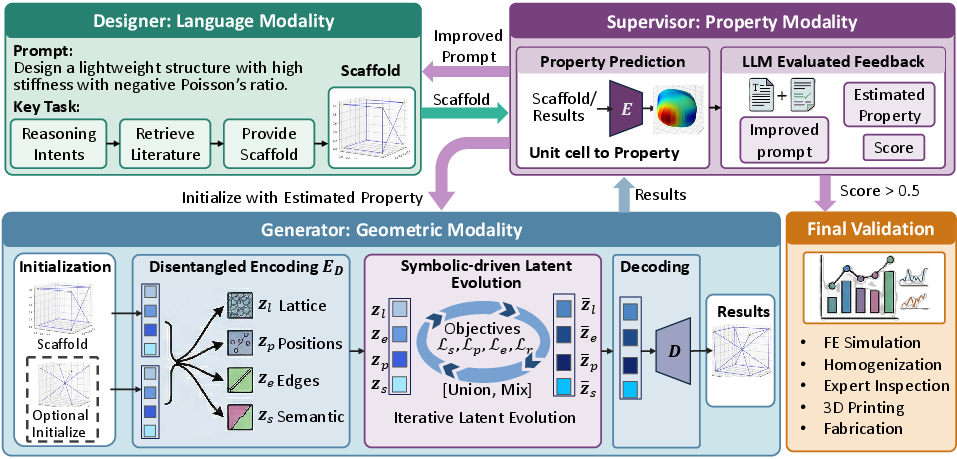
Figure 1: Overview of MetaSymbO. Agent Designer translates the prompt into a scaffold, Agent Generator refines the design in latent geometric space via symbolic-driven latent evolution, and Agent Supervisor evaluates properties to provide fast iterative feedback.
The three principal agents are:
- Agent Designer (Language Modality): Employs LLMs to interpret free-form design intents and retrieve simple, semantically appropriate structural scaffolds by leveraging embeddings and literature. This disambiguates qualitative objectives (e.g., "high stiffness") and anchors them in geometrically meaningful forms.
- Agent Generator (Geometry Modality): Utilizes a disentangled latent generative model to manipulate, compose, and extrapolate geometry beyond the scaffold and existing dataset. This agent features a programmable latent space with explicit factors for lattice, node positions, edges, and semantic properties, supporting symbolic operations including union, mix, intersection, and negation.
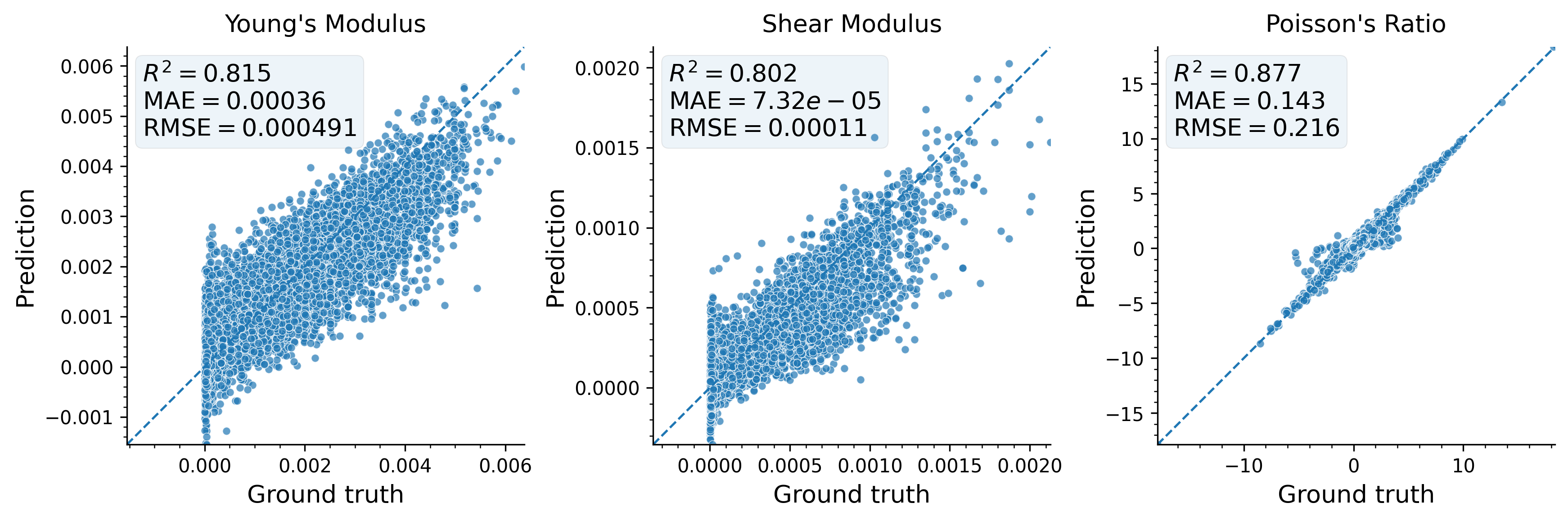
- Agent Supervisor (Property Modality): Integrates a trained property predictor and an LLM-based evaluator to provide rapid, property-aware feedback. This agent approximates mechanical responses and constructs alignment scores to iteratively refine both scaffold and generated structures in light of the design intent.
Symbolic-Driven Latent Evolution
A hallmark of the framework is the formalization and operationalization of symbolic-driven latent evolution within the Generator. The latent variable is decomposed into zl (lattice), zp (positions), ze (edges), and zs (semantics/properties), allowing for highly controllable inference. Rather than direct decoding of LLM outputs, evolutionary symbolic operators (union, mix, intersection, negation) are enacted over the disentangled subspaces using gradient-based optimization anchored in Sinkhorn-based soft-matching.
- Union: Soft node-level fusion of scaffold and initialization, supporting the introduction of critical structural motifs.
- Mix: Weighted interpolation in latent space, enabling smooth, controllable semantic interpolation between initialization and scaffold.
- Intersection/Negation: Latent operations to extract common semantics or suppress scaffold-dominated features, respectively.
These operators, executed via closed-form manipulation of Gaussians in latent space, enable flexible extrapolation and programmable semantic alignment, as shown in the qualitative operator analysis.
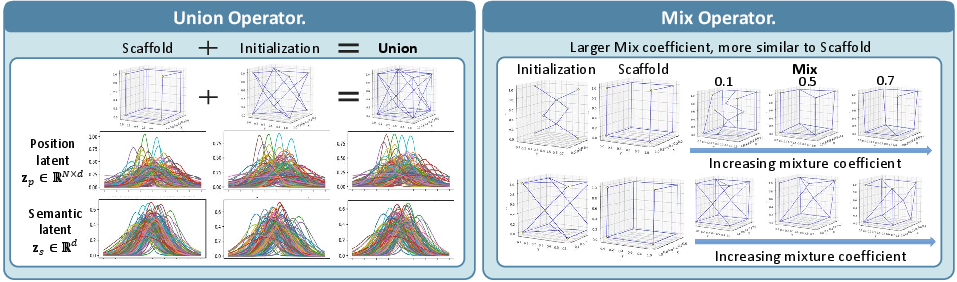
Figure 2: Qualitative analysis shows the proposed operators and latent evolution methods can successfully program the initialized structure towards the semantic of scaffold.
Collaboration and Optimization Loop
MetaSymbO’s collaborative protocol consists of nested Designer–Supervisor and Generator–Supervisor loops. Starting with a user prompt, Designer retrieves a semantically relevant scaffold, which is assessed by Supervisor considering predicted properties and semantic fidelity. This process iteratively refines the input prompt and scaffold until satisfactory alignment is reached, after which Generator conducts guided synthesis and symbolic evolution. The structure is continually evaluated and refined until reaching property and alignment thresholds.
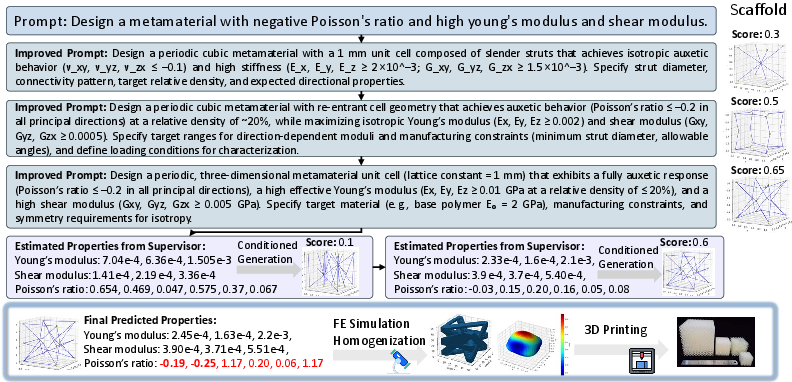
Figure 3: Case study with MetaSymbO. FE simulation denotes finite-element simulation.
Empirical Results
Quantitative Comparison
MetaSymbO delivers significant gains over both state-of-the-art geometric generative models and LLM baselines:
Case Studies and Real-World Validation
MetaSymbO is applied to prompts such as high-stiffness auxetics, demonstrating closed-loop, multimodal optimization resulting in printable, property-validated designs. Structures are validated via both simulation and 3D printing, corroborating the practical soundness of synthesized metamaterials.
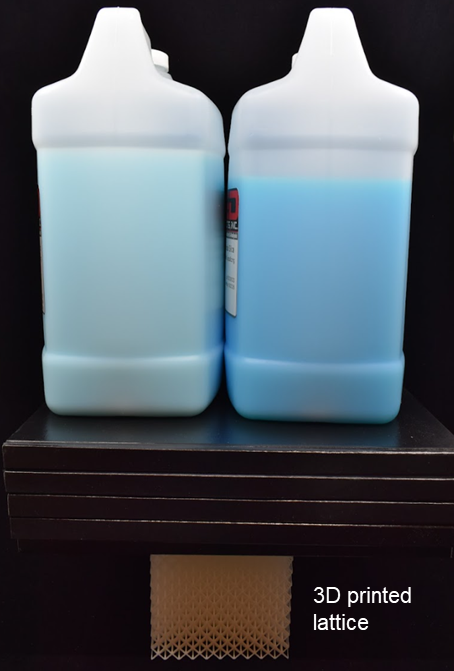
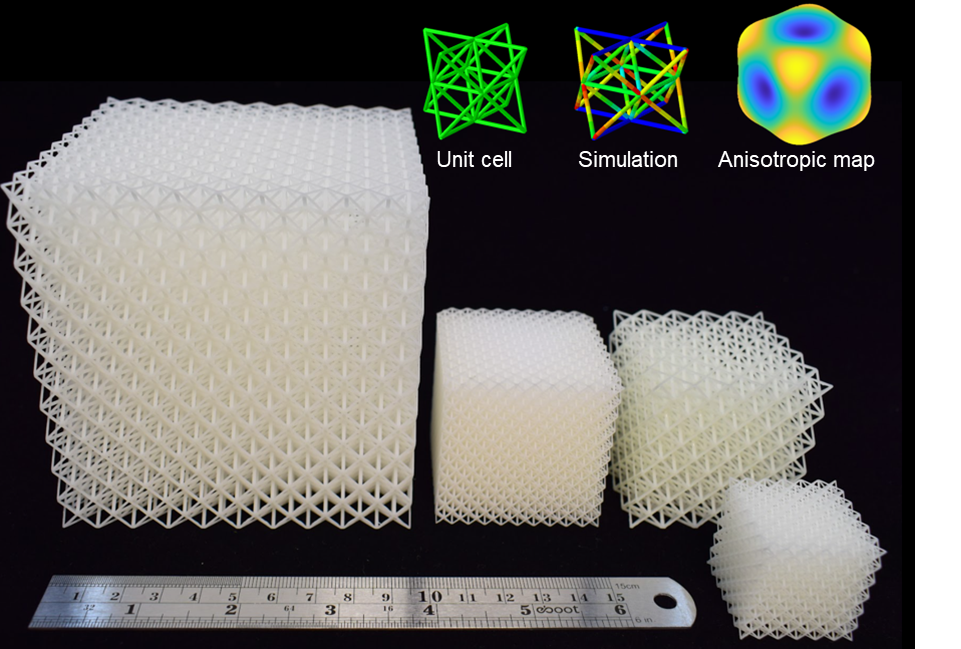
Figure 5: 3D printing and simulation example.
Implications and Future Directions
MetaSymbO establishes a scalable paradigm for language-guided scientific discovery in domains defined by complex, high-dimensional design spaces and weak initial supervision. By integrating symbolic operations over disentangled latents with multi-agent collaboration, the approach bridges the abstraction gap between language and geometry and enables interpretable, modular, and programmable design refinement. Practically, this facilitates hypothesis-driven exploration in materials science and extensible adaptation to other scientific design tasks (e.g., soft robotics, photonic crystal engineering).
On a theoretical level, the latent disentanglement strategy—combined with symbolic Gaussian arithmetic—offers a blueprint for flexible, semantics-aware generation that remains anchored to physically meaningful manifolds. The success of agentic collaboration further supports the integration of LLMs as domain intermediaries rather than monolithic generators.
Future research trajectories include:
- Generalizing symbolic latent evolution to more complex or hierarchical material systems
- Integration of simulation-in-the-loop or active experimental feedback for truly autonomous discovery
- Extension to other property modalities (thermal, optical)
- Unifying prompt-based, property-based, and example-based queries in a single interface
Conclusion
MetaSymbO operationalizes the vision of a language-driven, multi-agent scientist for metamaterial discovery, marrying interpretability, controllability, and practical utility. The framework’s coordinated reasoning over language, geometric, and property domains—anchored by symbolic-driven latent evolution—delivers strong empirical performance on validity, diversity, and semantic guidance, supporting both practical deployment and theoretical innovation in automated materials design.