- The paper proposes a medoid prototype alignment (MPA) framework that advances transfer learning by aligning domain prototypes instead of individual instances to detect unknown attacks in ICS.
- It utilizes independent PCA compression and K-Medoids clustering to extract robust medoid prototypes that mitigate feature heterogeneity and reduce outlier influence.
- Experimental results demonstrate substantial improvements with a mean accuracy of 0.843 and an F1-score of 0.838, ensuring reliable performance across cross-plant deployments.
Medoid Prototype Alignment for Cross-Plant Unknown Attack Detection in Industrial Control Systems
Introduction
Cross-plant unknown attack detection in Industrial Control Systems (ICS) remains a substantial challenge due to pronounced site-dependence, label scarcity, and continual emergence of novel threats. Traditional IDS retraining for each new plant deployment is prohibitive, necessitating effective transfer learning strategies. The discussed manuscript introduces a Medoid Prototype Alignment (MPA) framework, which advances the transfer-learning paradigm by shifting the adaptation focus from global instance-level alignment towards structurally-grounded, prototype-level domain correspondence.
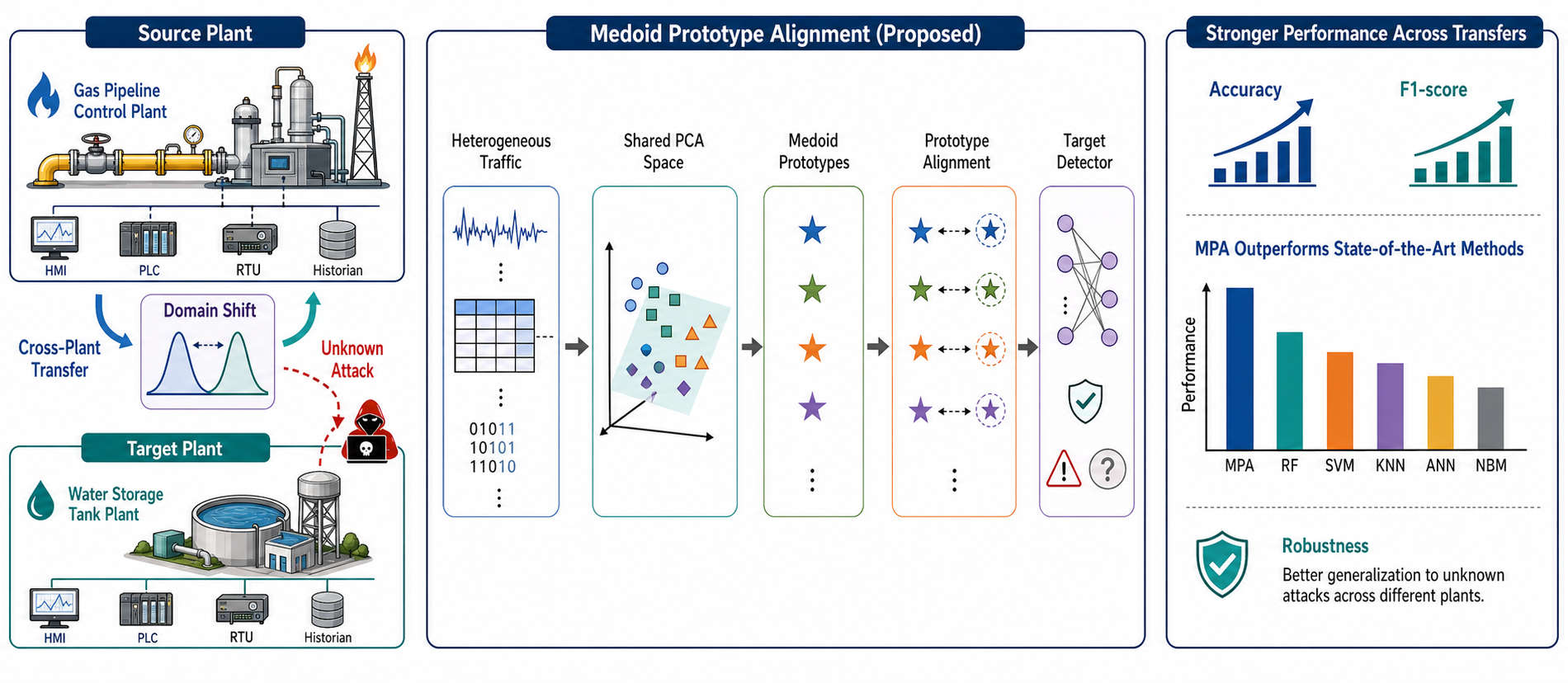
Figure 1: Teaser summary of the MPA concept, including the cross-plant deployment challenge, prototype-guided transfer, and resulting robustness improvement.
Methodology
Problem Formulation and Structural Domain Anchoring
The cross-plant scenario introduces dimensional and semantic heterogeneity, i.e., substantial variations in feature spaces (ds=dt) and distributional properties (Ps(X,Y)=Pt(X,Y)), with the source domain possessing labeled attacks and the target plant containing only unlabeled, potentially unseen attack patterns. Under these conditions, direct global feature alignment is fragile and introduces instability in the presence of class imbalance, bursty communications, and rare corner-case dynamics characteristic of ICS traffic.
MPA reformulates the transfer problem to leverage prototype-level knowledge rather than dense sample-wise correspondence. The approach proceeds in three main stages:
- Independent Standardization and PCA Compression: Both source and target datasets are mapped into a common, low-dimensional linear subspace using independently derived PCA projections, mitigating feature heterogeneity and distilling salient variation.
- Domain Prototype Extraction: Each domain is summarized by K-Medoids clustering, yielding actual traffic observations (medoid prototypes) that robustly encode local operational structure and are less susceptible to outlier influence compared to alternatives like k-means.
- Prototype-Calibrated Adaptation Objective: A composite training objective aligns target prototypes softly to the source prototype set via a differentiable correspondence kernel, preserves discriminability via supervised classification on the labeled source, and promotes confident predictions in the target via entropy regularization.
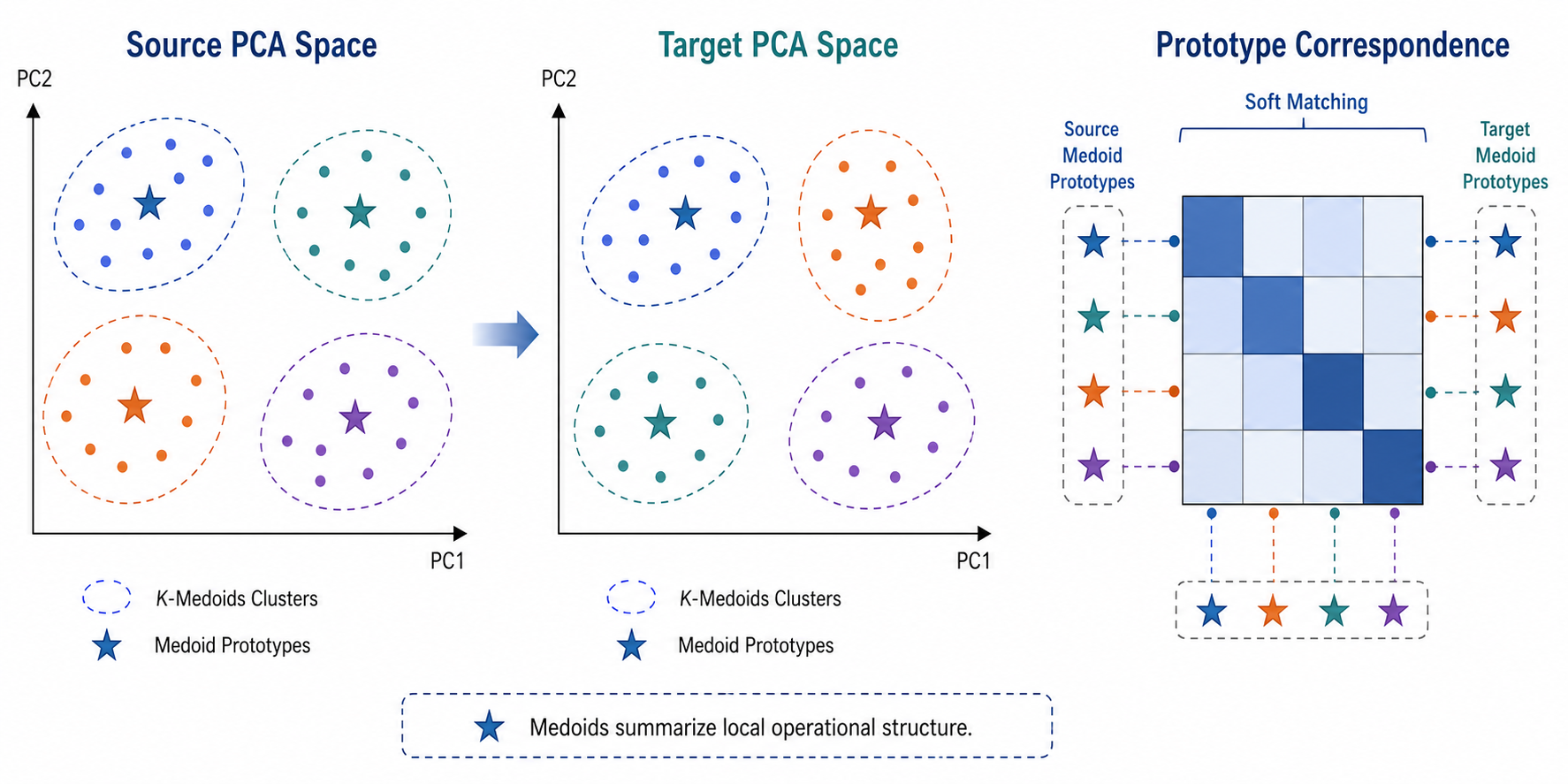
Figure 2: Illustration of prototype extraction and cross-domain matching in the MPA module.
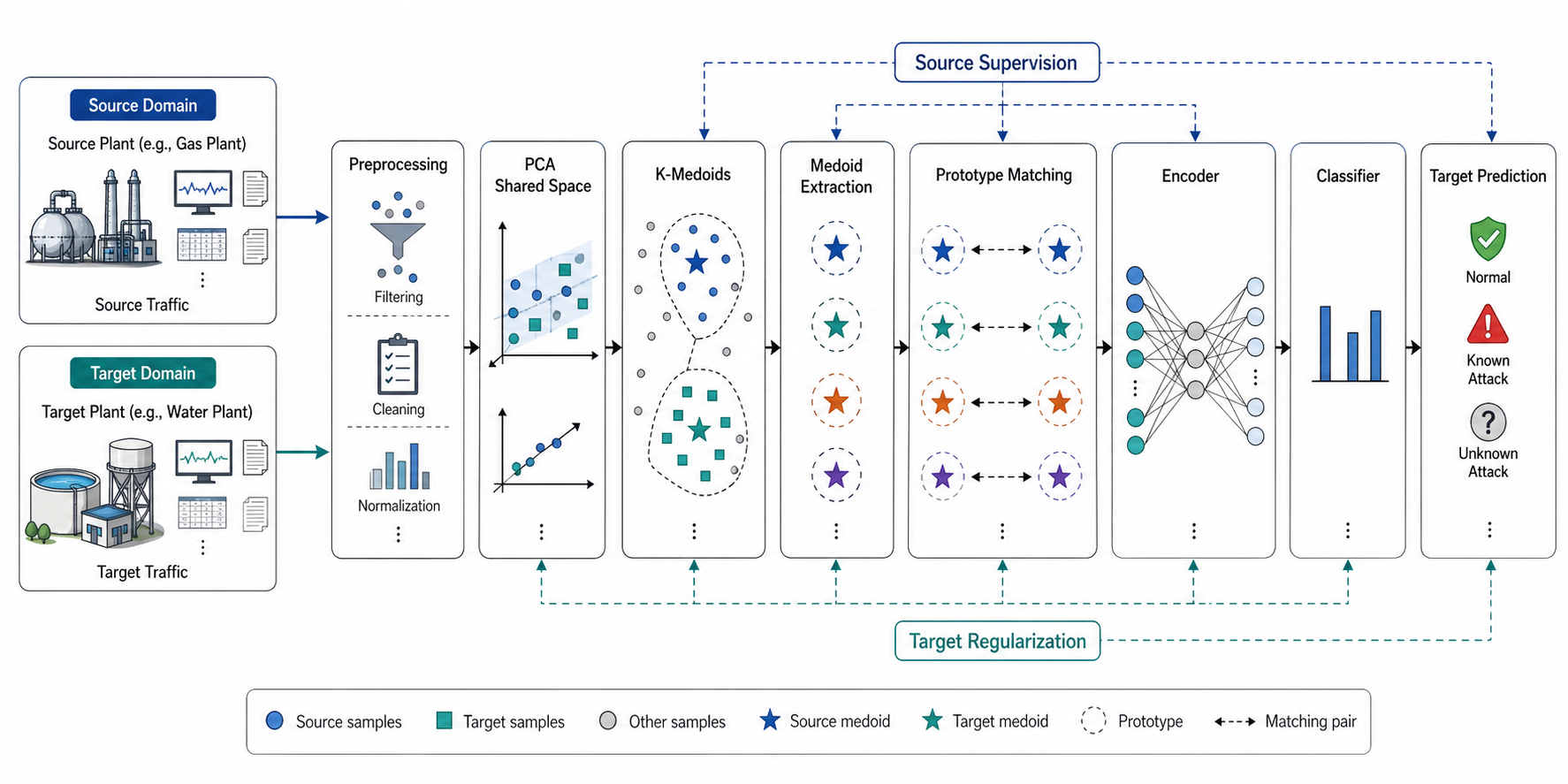
Figure 3: Pipeline of the overall MPA framework applied to cross-plant unknown attack detection.
By integrating global discriminative learning with localized medoid-level matching, the framework avoids the pitfalls of forced direct alignment, offering robustness in the presence of industrial domain shifts and nonstationarities.
Experimental Analysis
Evaluation Protocol and Baselines
Empirical validation utilizes two heterogeneous industrial systems—a natural gas system (G) and a water tank control system (W)—with four cross-domain transfer tasks encompassing unseen unknown attack scenarios. Baselines include Random Forest, SVM, Naive Bayes, KNN, and Artificial Neural Networks (ANN), evaluated on average accuracy and F1-score across tasks, with F1 prioritized due to operational relevance.
MPA achieves mean accuracy of 0.843 and F1-score of 0.838, outperforming all baseline models. The performance elevation is particularly significant relative to ANN (the strongest general-purpose baseline), with gains of 62.8% in accuracy and 109.4% in F1, marking a substantial robustness improvement in real-world deployment settings.
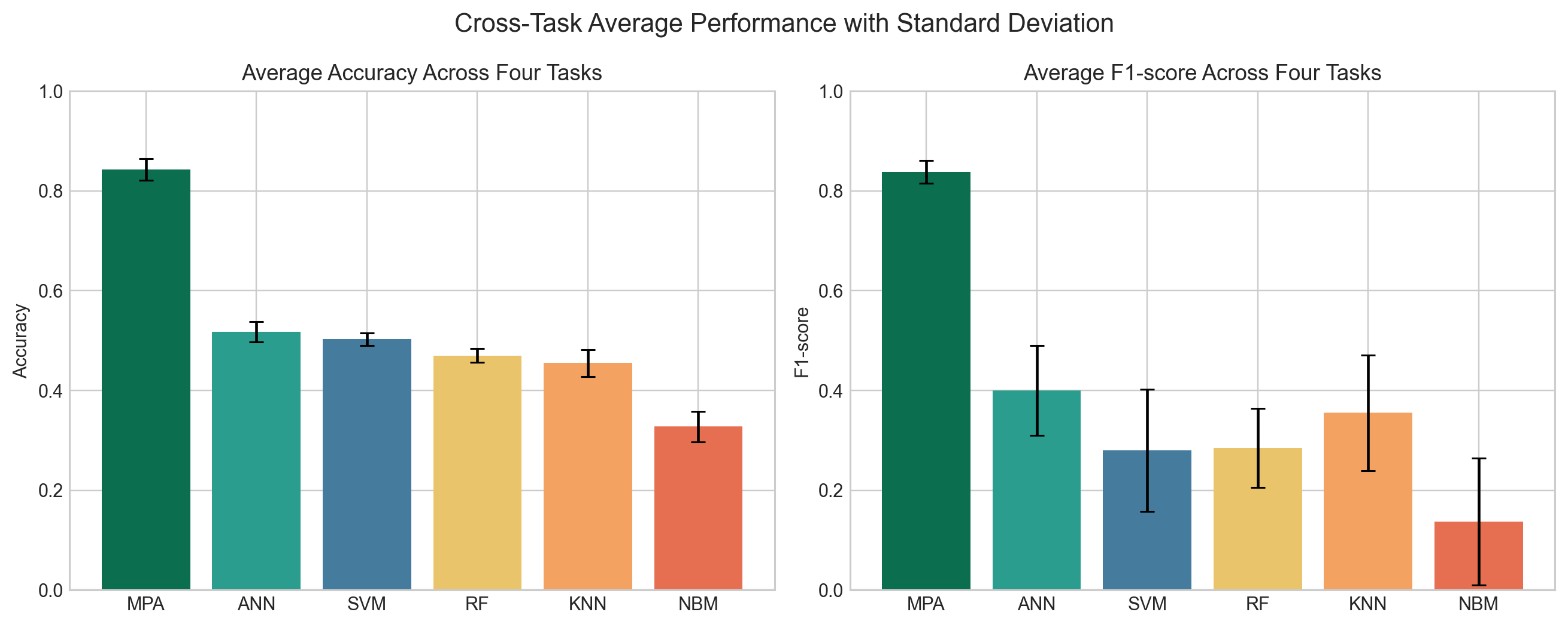
Figure 4: Average cross-task performance with standard-deviation error bars illustrating MPA's low variance and superior mean accuracy/F1.
Robustness: Dispersion and Directionality
MPA's normalized dispersion (coefficient of variation) across tasks is markedly lower than all baselines, signifying strong consistency and reliability under variable cross-plant transfer conditions. Directional analysis demonstrates modest degradation when transferring from less informative to more complex domains, but MPA consistently preserves both accuracy and F1, reducing the composite directional gap and thus mitigating practical deployment risks.
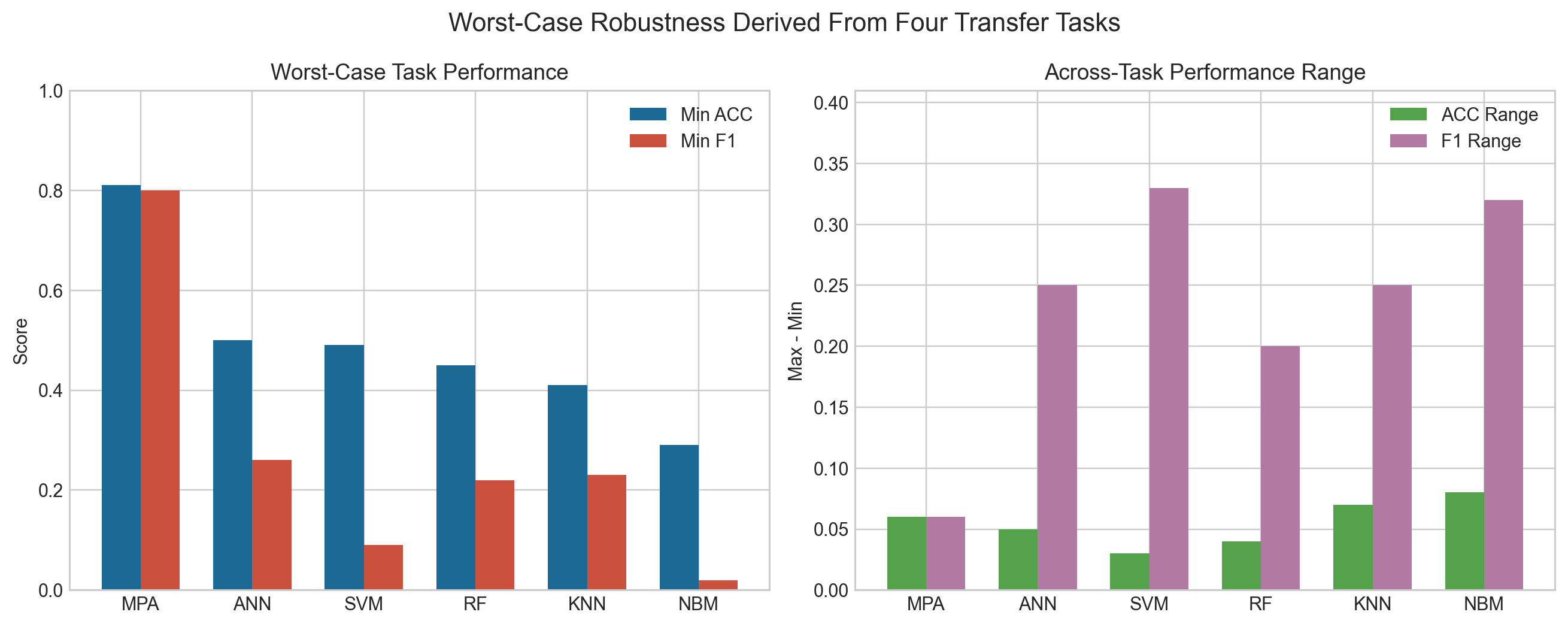
Figure 5: Minimum accuracy/F1 (left) and performance range (right) across tasks, highlighting MPA's robust worst-case behavior.
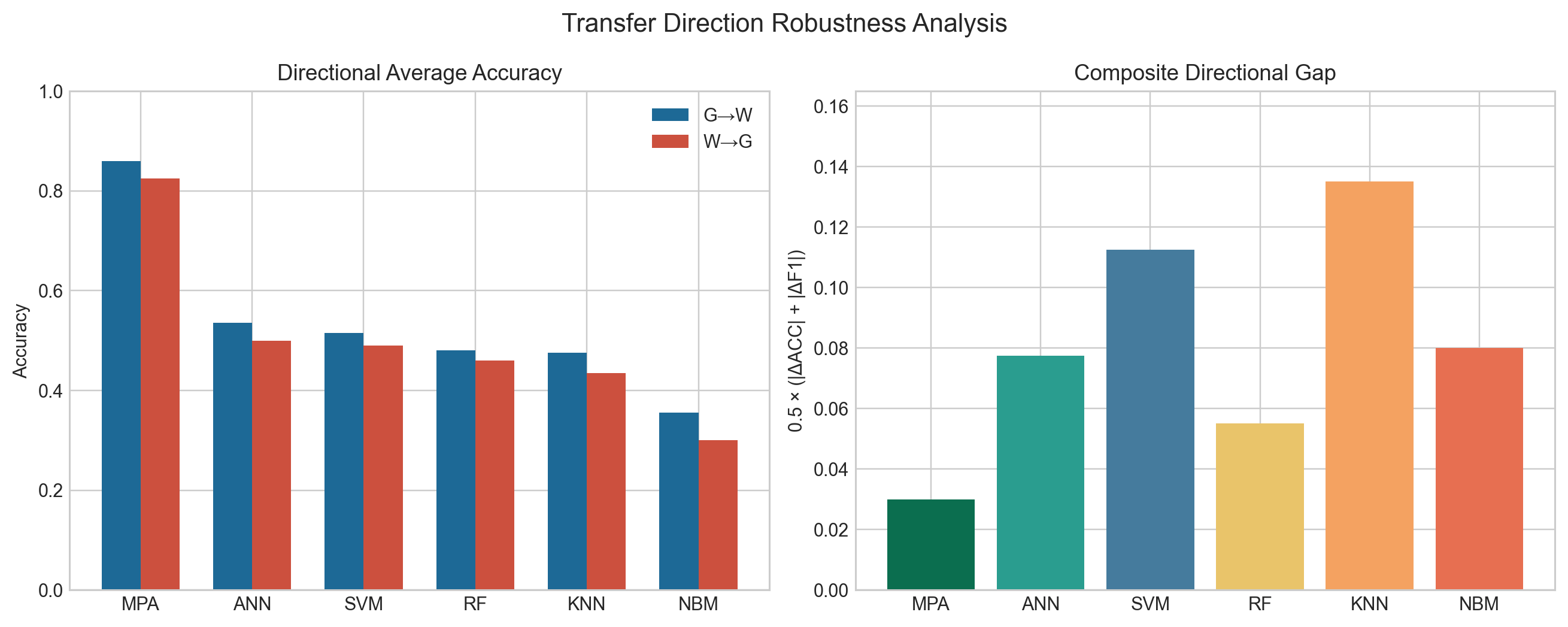
Figure 6: Directional robustness analysis showing MPA's minimal source-target transfer gap.
Worst-Case and Task-Level Analysis
MPA achieves at least 0.81 minimum accuracy and 0.80 minimum F1 across all tasks—substantially higher than conventional baselines whose minima plummet below 0.5. Additionally, the performance range across tasks for MPA is tightly bounded (≤0.06), meeting high-assurance criteria for ICS deployment.
Task-level comparisons further highlight MPA's superiority, especially in reverse (more difficult) transfer settings, validating the hypothesis that prototype guidance stabilizes adaptation in ambiguous or structurally divergent domains.
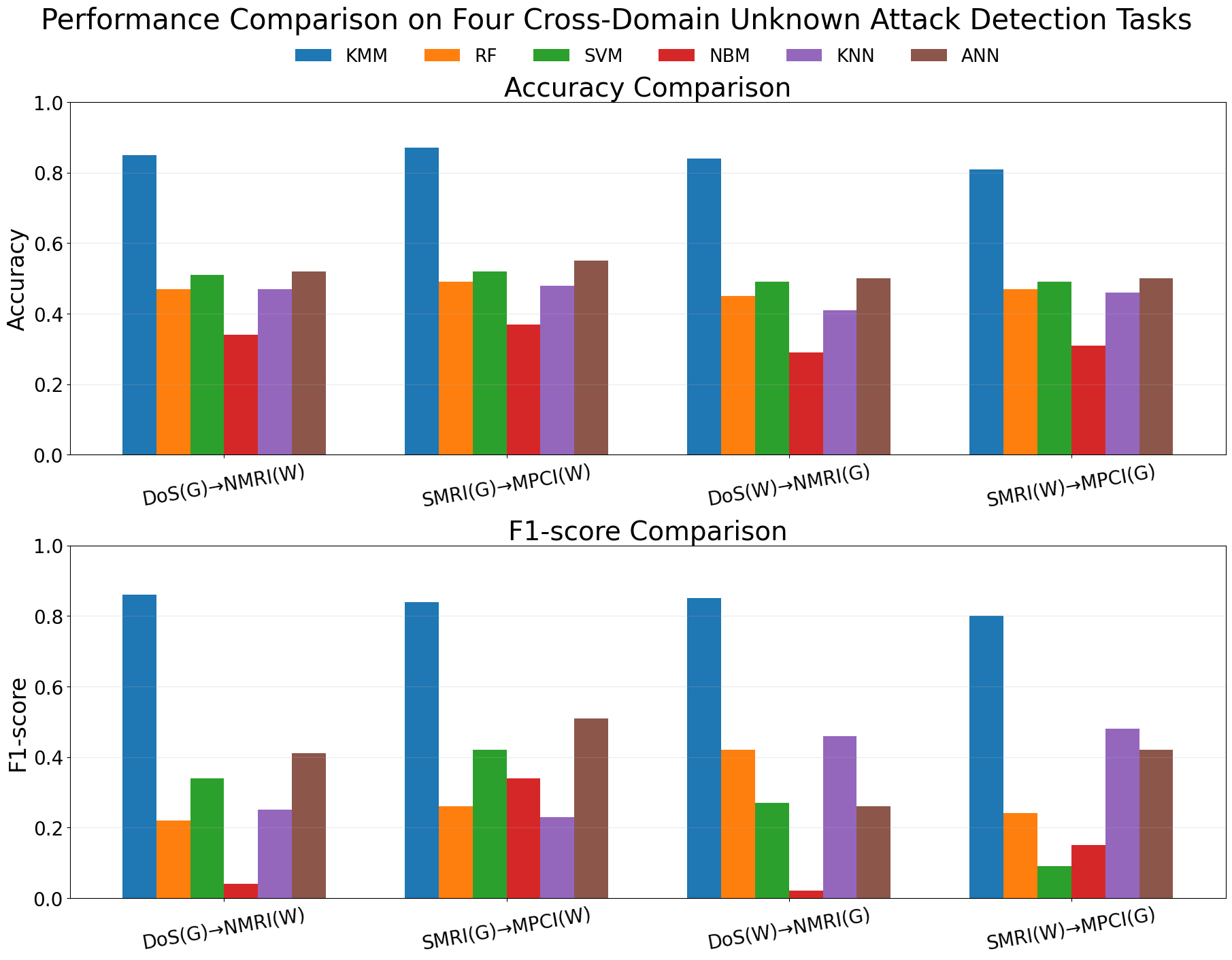
Figure 7: Task-level comparison between MPA and baseline models on the four unknown-attack transfer tasks.
Qualitative Alignment Behavior
Although direct embedding visualizations (e.g., t-SNE/UMAP) are not available, schematic representation illustrates the intended effect of MPA: softening source-target disparities and promoting functional region overlap via medoid matching, rather than rigid instance-level overfitting.
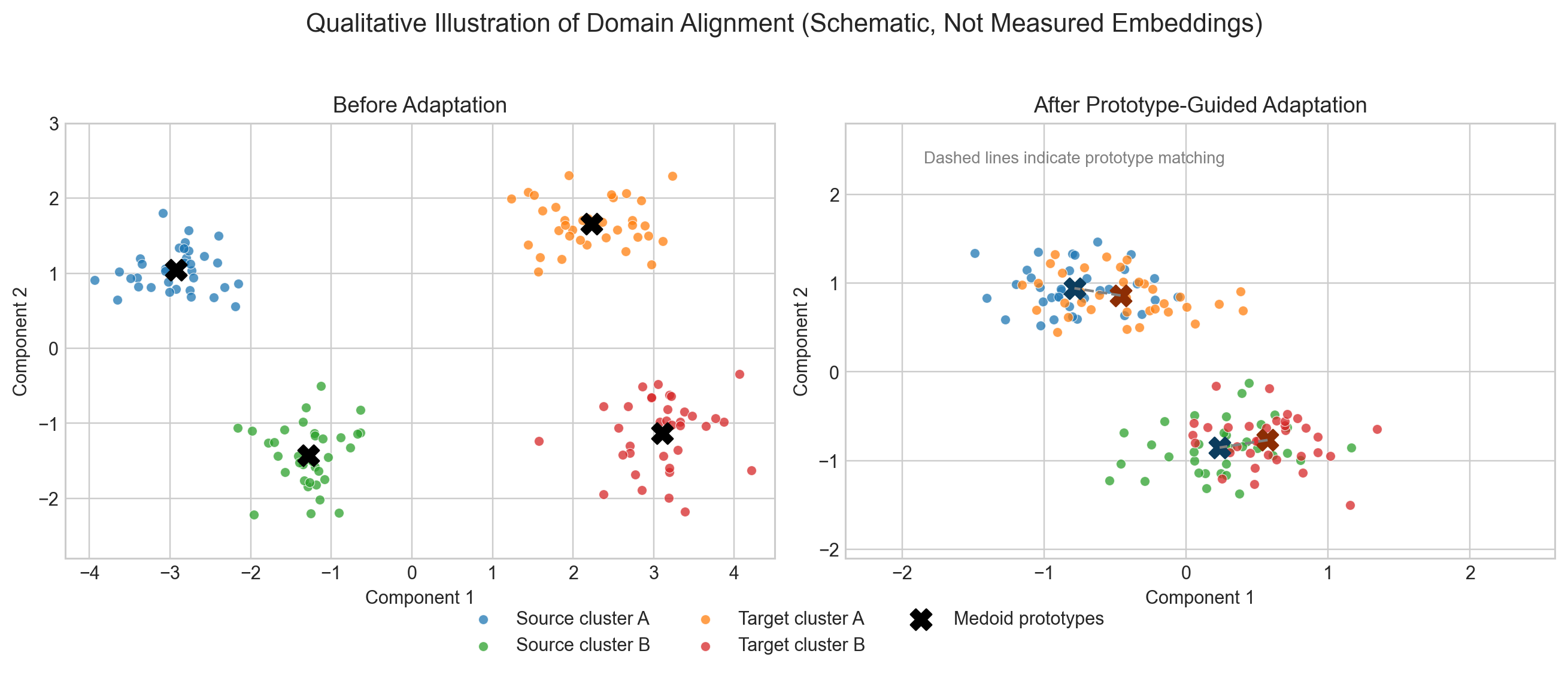
Figure 8: Schematic summary of domain alignment behavior, showing prototype-guided convergence of operational clusters.
Discussion
Strong empirical evidence supports several key claims:
- Prototype-level transfer significantly boosts average intrusion detection performance and drastically improves worst-case robustness, even under severe cross-plant shift.
- Transfer directionality matters: Adaptation from richer to simpler source systems produces systematically better target performance, indicating prototype informativeness is pivotal.
- Medoid prototypes offer an effective mechanism for robust, semantically meaningful cross-domain alignment, outperforming existing popular transfer learning models under practical ICS constraints.
These findings suggest that structural summarization (as opposed to indiscriminate instance alignment) is foundational for reliable adversarial detection in evolving and heterogeneous industrial environments.
Conclusion
The Medoid Prototype Alignment framework introduces a robust, structurally-grounded approach for cross-plant unknown attack detection in ICS scenarios. By distilling and aligning domain information at the medoid prototype level—instead of the sample level—MPA establishes new standards for average and worst-case performance, dispersion, and directionality under label-limited, shifting operational realities. This methodological advance has direct implications for adaptive, low-overhead IDS deployment in real-world critical infrastructure and positions prototype-guided transfer as a central theme for future industrial AI research. Extensions towards open-set detection, online/continual domain adaptation, and integration with streaming analytics are logical next steps.
Reference: "Medoid Prototype Alignment for Cross-Plant Unknown Attack Detection in Industrial Control Systems" (2604.25544)

