- The paper presents a faceted model capturing specific roles of AI from content generation to evaluation at a segment level.
- It introduces three core facets—Form, Generation, and Evaluation—and extends attribution with Intent, Control, and Traceability.
- The methodology enables precise disclosure of AI involvement, supporting reproducibility and alignment with emerging publisher policies.
Faceted Model for Transparent Attribution of AI-Assisted Text Production
Motivation and Context
Modern scientific writing is increasingly interwoven with generative AI systems, making authorship, intellectual contribution, and responsibility ambiguous. Existing AI-use disclosure policies from publishers and societies, while well-intentioned, remain coarse-grained, often failing to identify the specific nature and locus of AI involvement. As AI technologies shift from simple spellcheckers to advanced LLMs capable of content generation, conceptual reframing, and iterative drafting, the risks associated with undisclosed or poorly classified AI intervention—such as bibliographic fabrication, error propagation, and misattribution of intellectual labor—are magnified. In response, this paper proposes a structured, faceted model designed to precisely capture the role of AI in text production down to the segment level (document, chapter, section, paragraph), aiming for operational clarity and extensibility.
Existing provenance and contribution models (e.g., PROV, CRediT), publisher policies, structured disclosure instruments (AID, DAISY), manuscript classification drafts (STM), educational AI-use scales (AIAS), and content authenticity frameworks (C2PA), each target facets of the attribution problem, but none offers a compact, multi-scale model suitable for segment-level annotation across Form, Generation, Evaluation, Intent, Control, and Traceability. Notably, IEEE's policy approaches the segment-level specificity advocated in this paper, requiring authors to disclose affected sections and usage levels; DAISY demonstrates usability in author workflows; STM's drafts facilitate publisher policy, while PROV provides a general provenance template but lacks text-specific nuance.
Core Model: Fundamental Facets
The proposal delineates three primary facets for minimal attribution:
- Form: Captures post-production transformation, from orthographic correction (F1) to structural/rhetorical revision (F4). Crucially, it separates localized expression refinement (F3) from global conceptual architecture changes (F4).
- Generation: Describes the origination process, spanning fully human-authored (G0), AI-assisted completion (G1), prompt-based generation (G2, G3), conversational iterative refinement (G4), and multi-agent pipeline production (G5).
- Evaluation: Registers review intensity, ranging from no revision (E0), automated-only review (E1), partial human intervention (E2), full human evaluation (E3), to multi-stage or independent validation (E4).
This triplet (F,G,E) suffices for lightweight operational disclosure at various scales.
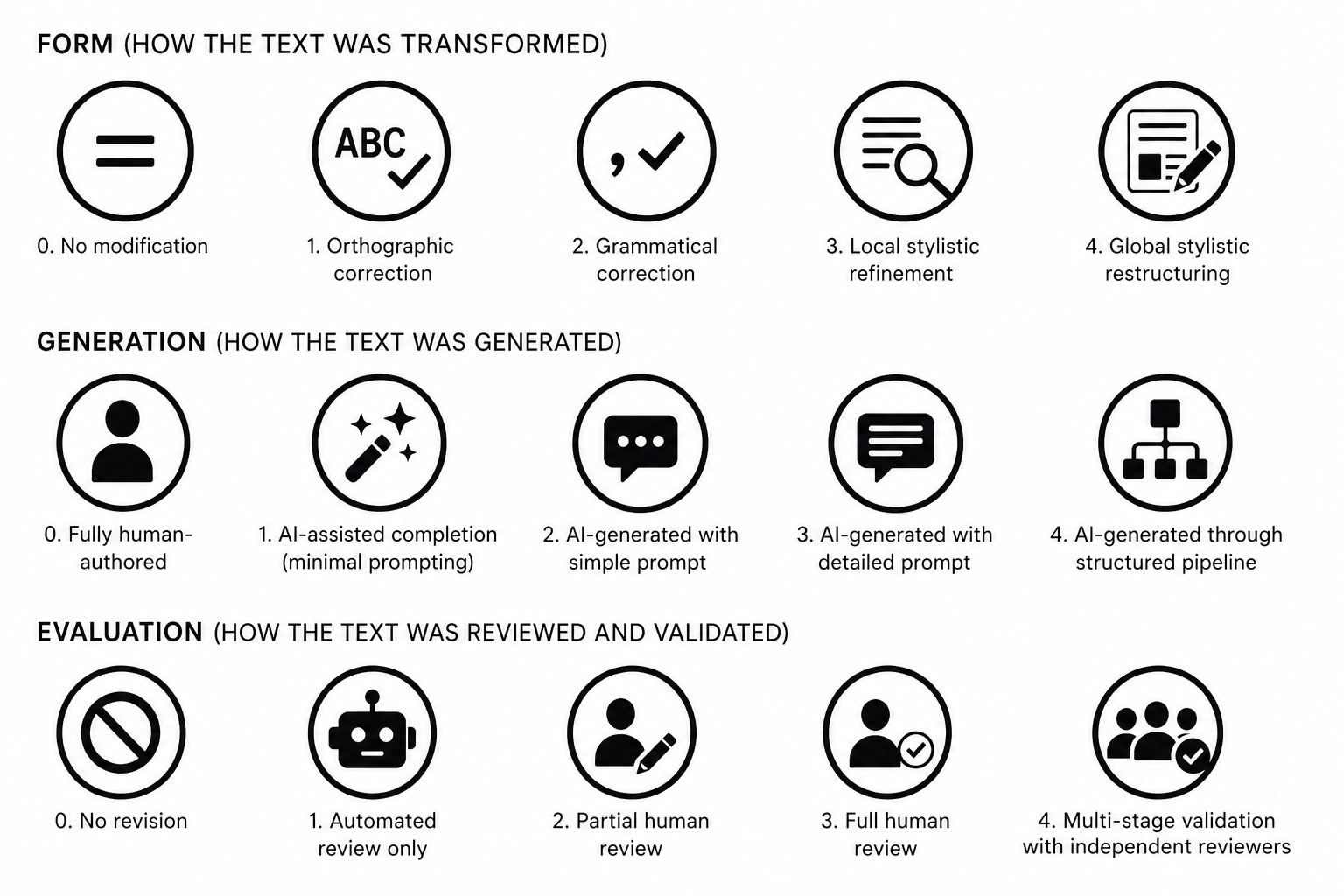
Figure 1: Proposed icons for the core model.
Extended Model: High-Fidelity Annotation
Recognizing the limits of minimal disclosure—especially in high-stakes contexts—the model extends to three additional facets:
- Intent: Documents the rationale for AI use, distinguishing linguistic correction (I1), transformation (I2), generation (I3), and conceptual support/ideation (I4).
- Control: Specifies agency, from fully human-controlled (C0), narrow AI delegation (C1), guided interaction (C2), AI-dominant with human approval (C3), to autonomous pipeline (C4).
- Traceability: Measures auditability, from no trace (T0), informal notes (T1), prompt access (T2), full logs/model/versioning (T3), to independent verification (T4).
Thus, the extended tuple (F,G,E,I,C,Tr) supports rigorous annotation crucial for reproducibility, compliance, and institutional policy.
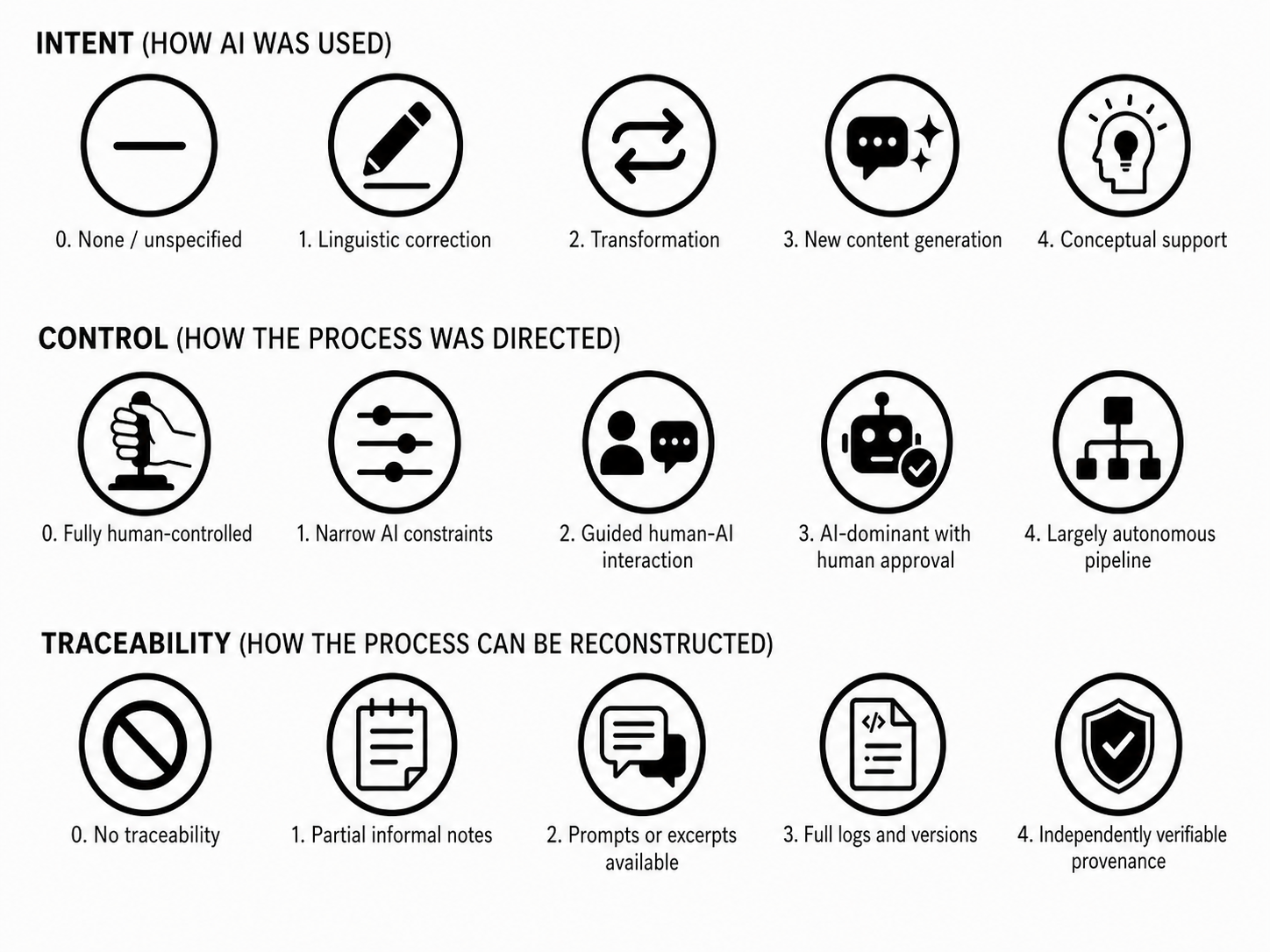
Figure 2: Proposed icons for the extended model.
The model decouples semantic annotation from rendering. Annotations may be formal (tuples for metadata and machine processing), iconic (for visual rapid identification in documents), or textual (for accessibility and compatibility with plain-text environments). For instance, a document-level annotation might be displayed as ∣F4∣G4∣E3∣I4∣C2∣T3∣ (with corresponding icons), and expanded automatically into human- or publisher-facing disclosure statements. This approach is flexible, catering to technical, educational, and editorial workflows, and aligns with metadata practices such as PICS, RDF, and C2PA.
Worked Example: Article Annotation
The model's utility is illustrated by annotating the paper's own production—characterized by global restructuring (F4), iterative human-AI conversation (G4), full author review (E3), conceptual AI support (I4), guided interaction (C2), and traceable conversational records (T3). The document-level annotation:
Sarticle=(F4,G4,E3,I4,C2,T3)
is rendered visually in the article's title page and as a textual grid, and expanded into precise disclosure statements for publisher or repository use.

Figure 3: Classification of this article according to its proposal.
Implications and Future Directions
The proposed faceted model provides an operational language for attributing AI-assisted text production, moving beyond binary disclosure toward nuanced, segment-level annotations. This is theoretically significant: it addresses epistemic, ethical, and practical gaps in current scholarly communication, especially as generative AI becomes an entrenched cognitive tool. Practically, it offers a scalable template for publisher policy, educational assessment, institutional compliance, and tool design—enabling machine-readable provenance, segment-level flags, and reproducibility documentation.
There are important future directions: empirical validation of inter-annotator consistency, extension to other domains (figures, code), integration into provenance metadata and submission systems, adoption in policy guidelines, and community-driven refinement or simplification. The separation between the core and extended model preserves a balance between accessibility and fidelity, adaptable to context and institutional demand.
Conclusion
This paper delivers a compact, extensible model for transparent attribution of AI-assisted text production, articulated through six facets at multiple textual scales and rendered via formal, iconic, and textual representations. It fills a critical operational gap, enabling precise, segment-based disclosure, facilitating accountability and reproducibility, and providing a template for adoption in scholarly and educational contexts. The model should be tested, critiqued, and iteratively refined to ensure usability, expressiveness, and alignment with community standards, policy evolution, and future developments in generative AI and metadata infrastructures.