- The paper introduces a thermodynamic-inspired, info-geometric scoring method that quantifies LLM stability using task utility and external entropy measures.
- It empirically demonstrates that incorporating internal integration and aligned reflective capacity yields consistent stability gains across various high-entropy benchmark scenarios.
- Results indicate that nonlinear damping via structural proxies enhances LLM reliability, offering a robust metric for AI safety and governance assessments.
Motivation and Conceptual Foundation
The paper "An Information-Geometric Framework for Stability Analysis of LLMs under Entropic Stress" (2604.24076) proposes a methodological shift in evaluating LLM behavior. Traditional accuracy-based benchmarks lack granularity in characterizing reliability, particularly under conditions of externally induced uncertainty, ambiguity, or adversarial stress. The authors introduce a thermodynamic-inspired, information-geometric scoring framework, treating stability as a function of beneficial performance (utility), scenario entropy, and internal structural proxies: internal integration and aligned reflective capacity.
The formulation explicitly rejects the claim of a physical law, instead focusing on a compact mathematical abstraction to capture nonlinear attenuation of entropic burden by internal structure. This approach aligns with ongoing AI safety and governance discourses, which emphasize robustness, reliability, and behavior under uncertainty rather than nominal task accuracy.
The baseline stability score, E, is given as a linear combination:
E=αU−βS,
where U reflects task utility and S entropy (external uncertainty), with coefficients α, β. The generalized stability score, E∗, incorporates the internal barrier term, B, combining internal integration (Iint) and aligned reflective capacity (Ca):
E=αU−βS,0
E=αU−βS,1
E=αU−βS,2
This nonlinear denominator formulation attenuates the impact of entropy, implying that the presence of coherent internal structure and self-regulatory proxies increases the effective robustness to disorder. Notably, the proxies operate as operational measures—derived from output metadata—rather than latent variables of cognition.
Empirical Evaluation
The framework is evaluated using the IST-20 benchmark protocol, encompassing 80 observations across four contemporary LLMs (DeepSeek-V3, GPT-4o, Gemini-1.5, Grok-3) and 20 scenario types. Scenarios are designed to induce variable informational stress, including ambiguity and conflicting constraints.
Key findings include:
- Mean generalized stability score (E=αU−βS,3) systematically exceeds the baseline (E=αU−βS,4) in all cases: paired difference E=αU−βS,5 (95% CI: E=αU−βS,6).
- Gains are maximized in high-entropy regimes, supporting the interpretation of structural damping (see below).
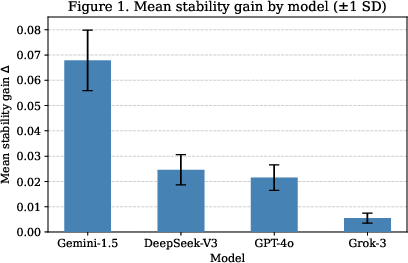
Figure 1: Mean stability gain E=αU−βS,7 by model, with Gemini-1.5 (highest entropy) showing the largest improvement.
- The relationship between entropy and stability remains strongly negative, but the generalized score is visibly buffered, indicating resilience against linear degradation.
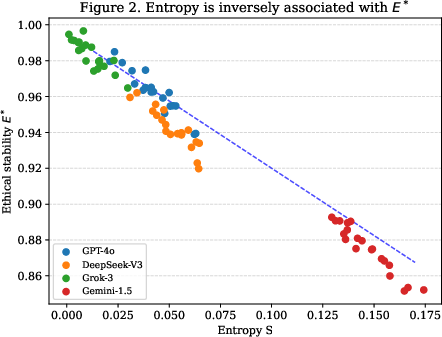
Figure 2: Scatter plot of entropy E=αU−βS,8 vs. E=αU−βS,9, illustrating nonlinear buffering of stability in high-stress scenarios.
- Observation-level comparison shows universal improvement of U0 over U1, with all points lying above the diagonal.
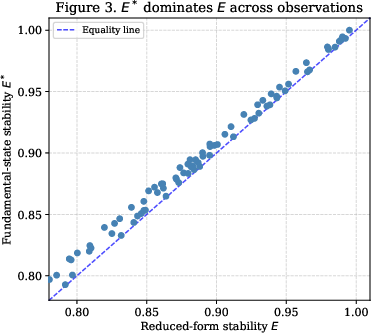
Figure 3: Observation-level U2 vs. U3, confirming universal gain from the generalized formulation.
- The distribution of U4 is both shifted upward and concentrated relative to U5, evidencing tighter dispersion.
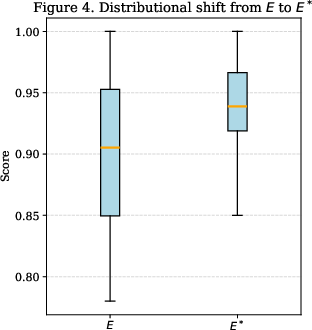
Figure 4: Distributional comparison between reduced-form and generalized stability scores, demonstrating improved concentration and higher mean.
Model-level aggregation reveals that: Grok-3 achieves the highest mean U6 with minimal entropy burden; Gemini-1.5, facing greater entropy, exhibits the largest absolute gain from damping. Sensitivity analysis across damping coefficients U7, U8 confirms qualitative robustness, with positive gains for all non-trivial parameterizations.
Theoretical and Practical Implications
The paper advances the argument that high nominal task performance is insufficient to characterize reliability. Stability—as defined here—is not simply robust accuracy, but resilience to uncertainty, governed by internal structure. The mathematical formulation provides interpretability, operational flexibility, and a practical extension to existing benchmarking strategies.
This has direct implications for AI safety, auditability, and governance:
- Safety and Reliability: Structural moderation mechanisms may serve as benchmarks for risk assessment, particularly in deployment scenarios where behavioral instability or hallucination is unacceptable.
- Evaluation Regimes: The state-style scoring could complement calibration, consistency, and refusal rate metrics, forming a multidimensional reliability profile.
- Governance: Compact nonlinear scoring metrics could be integrated into regulatory reporting requirements for high-stakes AI, as demonstrated by the frameworks referenced (NIST AI RMF, OECD AI Principles, EU AI Act).
The strong empirical result—universal improvement in generalized stability scores—suggests that structural proxies captured by benchmarks meaningfully contribute to resilience. However, as the gain is algebraically dependent on entropy, this should be interpreted as a consistency check of the framework rather than an independent causal discovery.
Limitations and Future Directions
Several caveats temper the scope of the conclusions:
- Benchmark-defined proxies for internal integration and reflective capacity may lack universality; external validation is necessary.
- Dataset size (80 observations) is adequate for methodological illustration but insufficient for broad generalization.
- No externally annotated real-world failure data is included; applicability to operational risk prediction remains speculative.
Recommended future directions include:
- Testing the framework across larger, multi-domain benchmarks (calibration, factuality, tool use, adversarial prompting).
- Incorporating independently measurable proxies (refusal precision, consistency rates).
- Applying stability scoring to time-series deployment telemetry to assess drift and incident risk.
- Moving from fixed to learned or Bayesian parameterization of damping coefficients, enabling adaptive evaluation.
Conclusion
The Kerimov–Alekberli information-geometric framework provides a rigorous, interpretable abstraction for analyzing LLM stability under entropic stress, integrating task utility, external uncertainty, and internal structural moderation. Empirical results demonstrate that nonlinear attenuation of entropy via structural proxies yields consistent, statistically significant improvements in stability scores across benchmark scenarios. These findings advocate for incorporating uncertainty-sensitive and structural moderation metrics in AI evaluation, governance, and audit frameworks.
While currently limited by operationalization and sample scope, the framework establishes a methodological precedent for compact, state-based reliability quantification. Its continued development and validation may facilitate trustworthy AI deployment and oversight, particularly as LLMs enter increasingly varied and high-stakes environments.