- The paper introduces the SUA framework to formally quantify the misalignment between sensitivity to perturbations and predictive uncertainty in LLMs.
- It establishes theoretical bounds linking high SUA scores with increased worst-case risk and calibration error, validated through empirical experiments.
- The proposed SUA-TR training algorithm optimizes likelihood, consistency, and entropy alignment, leading to enhanced robustness, failure prediction, and selective prediction.
The paper introduces the Sensitivity–Uncertainty Alignment (SUA) framework, constructed to unify and analyze model failures arising from both adversarial perturbations and semantic ambiguities in LLMs. The primary assertion is that adversarial sensitivity and ambiguity collapse emerge from a shared underlying failure: misalignment between perturbation-induced instability in predictions and the model's expressed uncertainty. The SUA framework explicates this principle via a formal diagnostic scalar, the SUA score:
SUAθ(x;ε,λ)=S(x;ε)−λHθ(Y∣x)
where S(x;ε) represents expected output distributional sensitivity under a neighborhood of semantics-preserving input perturbations, and Hθ(Y∣x) is the predictive entropy.
The framework is architecture-agnostic and parameterizes uncertainty, sensitivity, and their alignment in terms of conditional distributions and divergences, thus generalizing to any future models inducing a distribution over output variables.
Theoretical Analysis: Bounds, Calibration, and Ambiguity
Theoretical analysis shows that minimizing the positive part of the SUA score directly bounds the model's worst-case risk under adversarial perturbations and simultaneously lower-bounds its calibration error, encompassing the risk due to ambiguous inputs. Specifically, the following results are established:
- Worst-case Robust Risk: The expected SUA risk upper-bounds the model's risk under worst-case, semantics-preserving perturbations. Explicitly, for loss functions Lipschitz in divergence and a suitable entropy-risk link, the robust risk can be upper-bounded by clean risk plus a constant times SUA risk, plus a term for ambiguous interpretation collapse.
- Calibration: Persistent violation of sensitivity-uncertainty alignment (i.e., frequent high SUA scores) lower-bounds the expected calibration error (ECE), even when temperature scaling is applied post-hoc.
- Ambiguity Collapse: The phenomenon where a model outputs overly confident predictions in genuinely ambiguous settings is formally characterized as a low model entropy despite high latent ambiguity (entropy over plausible interpretations). The resulting calibration error is shown to be lower-bounded by the gap between actual and ideal uncertainty.
SUA-TR: Training and Inference Pipeline
The paper proposes SUA-TR, a practical training algorithm optimizing both data likelihood, perturbation-consistency, and entropy alignment via the SUA objective. The infrastructure comprises:
- A task loss (e.g., cross-entropy),
- Consistency regularization (minimizing divergence between output distributions for x and x′),
- Entropy alignment (penalizing large SUA scores, i.e., excess sensitivity over uncertainty).
Perturbations are sampled via a mixture of paraphrasing, token-level edits, and adversarial proposals, designed to cover realistic and adversarial, semantics-preserving variations.
Inference implements an abstention rule—when the estimated SUA score exceeds a threshold, the model abstains, yielding formal selective-risk guarantees (with coverage-risk trade-off) due to the theoretical results.

Figure 1: Overview of the Sensitivity–Uncertainty Alignment (SUA) pipeline.
Empirical Results
Experiments cover question answering, natural language inference, and distributionally shifted text classification tasks. Strong results are reported along several axes:
- Failure prediction AUROC: The SUA score is shown to be a more reliable predictor of individual model failures compared to entropy, self-consistency, or temperature scaling alone, with improvements especially prominent on ambiguous and adversarial subsets.
- Robust accuracy: SUA-TR training outperforms standard adversarial training on robustness metrics, while maintaining or improving clean accuracy.
- Calibration (ECE): SUA-TR models achieve lower calibration error than temperature scaling.
- Selective prediction: SUA-based abstention rules achieve higher selective accuracy at fixed coverage compared to entropy-based methods.
Ablations confirm that both the entropy-alignment term and consistency loss are necessary for optimal outcomes, and that moderate values of K (samples per perturbation estimation) suffice for stable performance.
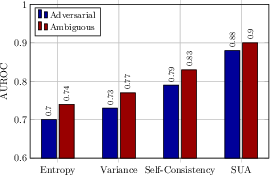
Figure 2: Comparison of AUROC across methods.
Interpretation and Limitations
SUA bridges the gap between post-hoc calibration (e.g., temperature scaling) and robustness methodologies. Unlike entropy alone, SUA is a local metric that detects if the model is unreasonably confident in regions where it responds unstably to small, semantics-preserving perturbations. Self-consistency probes stochasticity but not local input sensitivity. Traditional adversarial training does not induce entropy alignment; SUA-TR integrates both.
A noted limitation is the dependence on the perturbation distribution, Πε, which must be operationally defined and may vary with domain. Computation of latent ambiguity is also an intrinsic challenge—proxy metrics via paraphrase diversity are used. For generalization beyond classification and NLI (e.g., open-ended generation), new divergence measures may be required.
Practical and Theoretical Implications
Practically, the SUA framework offers a direct method for risk stratification, abstention, and model auditing in high-stakes LLM deployment. Its architecture-agnostic nature ensures utility for diagnosing and improving systems as model families and output spaces evolve. Theoretically, SUA reframes core failure modes of LLMs as manifestations of sensitivity-uncertainty misalignment, providing a unified lens across adversarial, ambiguous, and miscalibration failures.
Conclusion
This work establishes Sensitivity–Uncertainty Alignment as both a powerful theoretical framework and a practical diagnostic tool for LLMs, bounding worst-case risk and calibration error via a single, interpretable scalar. The SUA-TR algorithm demonstrates strong empirical performance across robustness, calibration, and failure prediction tasks—a significant advance toward reliable, risk-aware LLMs. Theoretically, the SUA score provides foundational insight for future work on robust, uncertainty-aligned AI systems.

