- The paper demonstrates that engineered boundary deformations in microcavities induce a transition from regular to chaotic ray dynamics, enabling chaos-assisted tunneling for directional lasing.
- It employs a combination of ray dynamics analysis using Birkhoff coordinates and full Maxwell-Bloch simulations to accurately predict lasing thresholds and mode selection.
- Experimental results from semiconductor microcavities validate the theoretical framework by showing selective modal excitation and robust lasing even in fully chaotic regimes.
Chaotic Billiard Lasers: Theory, Experiment, and Implications
Introduction and Motivation
Chaotic billiard lasers represent a rigorous intersection of quantum chaos, nonlinear laser physics, and open resonator theory. By engineering deformations in otherwise integrable microcavity geometries, these systems manifest a transition from regular to mixed to fully chaotic ray dynamics. This induces striking effects in their modal structure, emission characteristics, and lasing thresholds, which are both of fundamental and technological interest, especially in the context of highly directional, low-threshold photonic sources.
An optical billiard laser differs qualitatively from conventional quantum billiards: it is an open, non-Hermitian system where resonant electromagnetic modes are subject to radiative loss, and, with the inclusion of a gain medium, exhibit self-consistent nonlinear dynamics described by the Maxwell-Bloch formalism.
Ray Dynamics and Phase Space Structure
The mapping between billiard geometry and the associated ray dynamics is foundational. Regular geometries (circles, rectangles) yield classically integrable motion, whereas the introduction of carefully designed boundary deformations induces chaos, as in the paradigmatic stadium billiard. The phase space structure of such a system can be succinctly visualized in Birkhoff coordinates, where each reflection point is parameterized by arc-length η and the sine of the incident angle χ with respect to the local tangent.
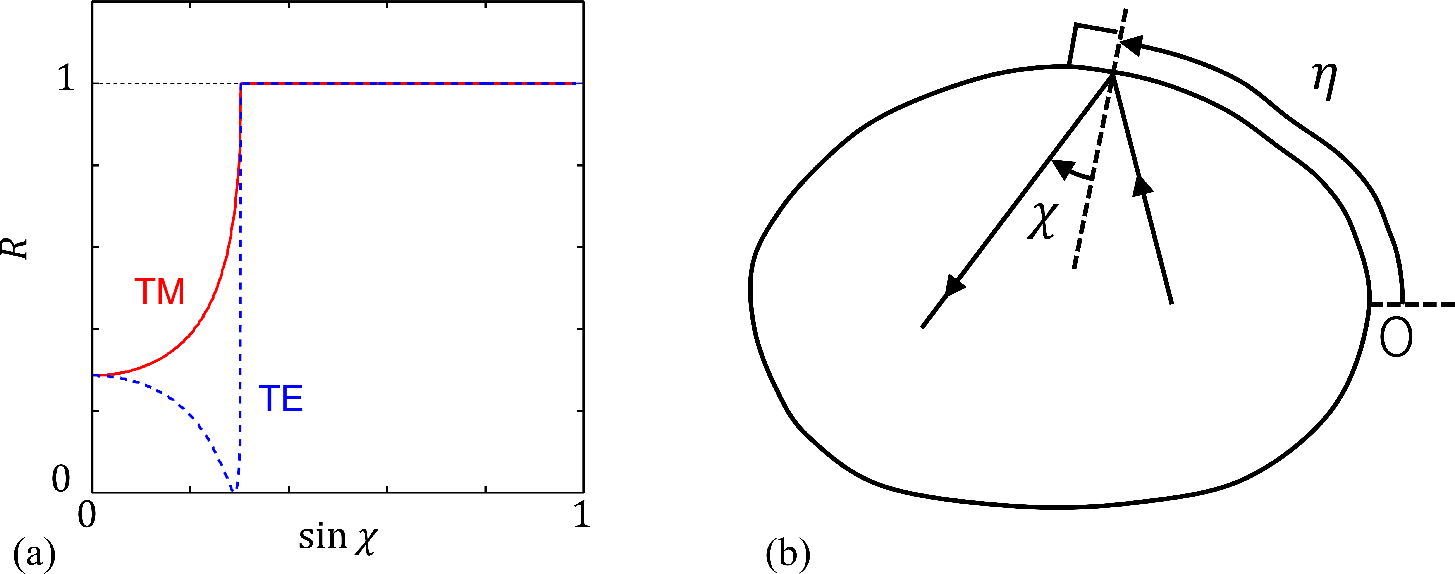
Figure 1: Reflectance as a function of incident angle χ, and definition of Birkhoff coordinates on the billiard boundary.
In the circular case, periodic and quasi-periodic orbits remain above the critical angle for total internal reflection and are thus perfectly confined.
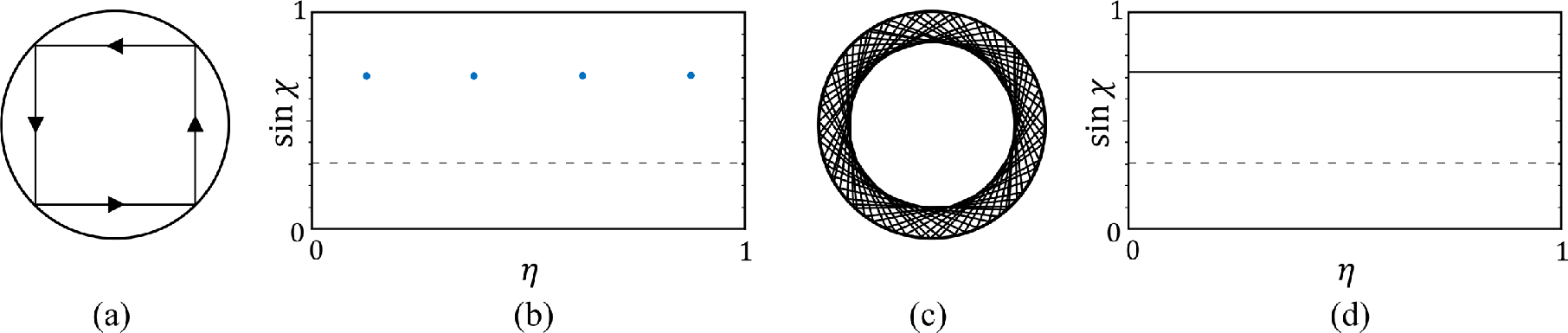
Figure 2: Square periodic orbit in a circular optical billiard, and its invariant line in Birkhoff coordinates.
Upon deformation, the emergence of stability islands and a surrounding chaotic sea is readily evident in the phase space representation.
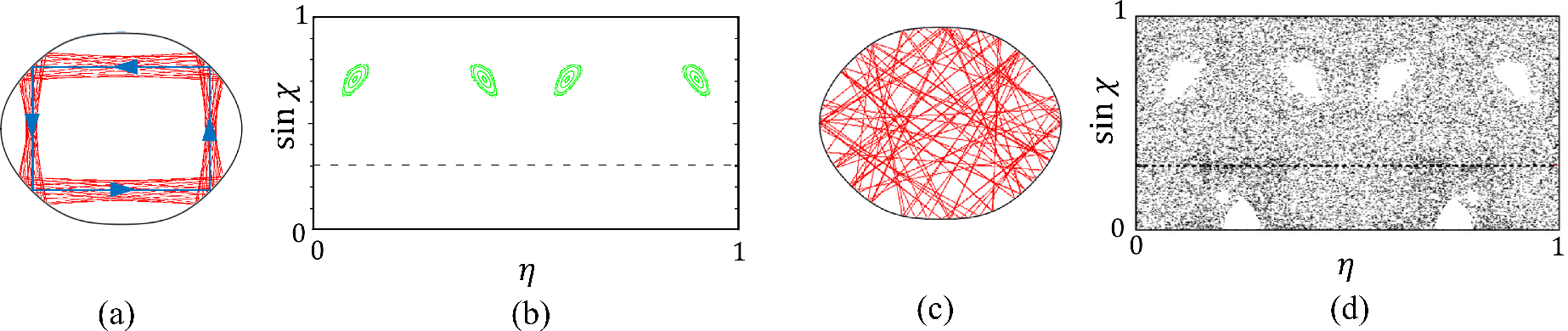
Figure 3: CCW rectangular periodic orbit and neighboring orbits in a deformed billiard; phase space shows stability islands, surrounding invariant curves, and a global chaotic sea.
Within the chaotic regime, initial conditions in the chaotic sea undergo stretching, folding, and diffusion, ultimately reaching the region where total internal reflection is violated.
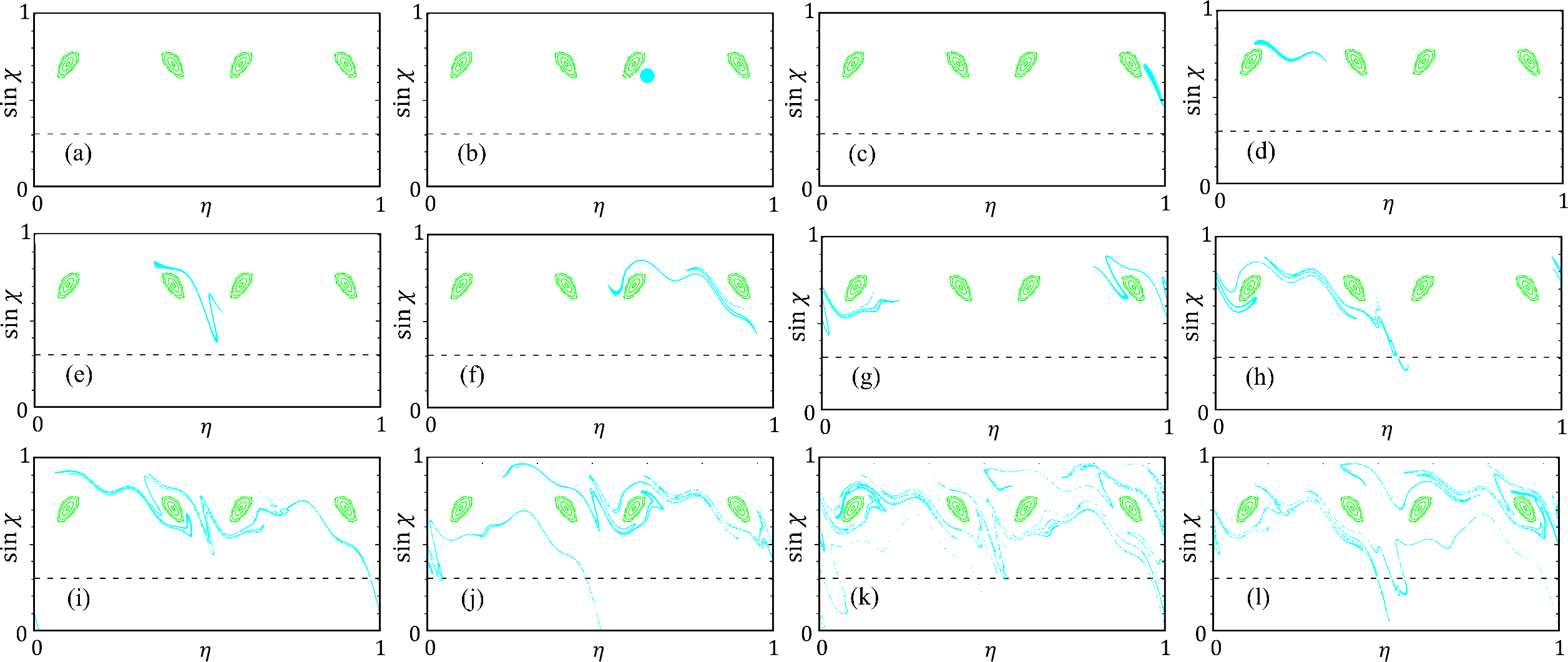
Figure 4: Time evolution of a "droplet" in Birkhoff coordinates, showing mixing and dynamical eclipsing before emission.
Chaos-Assisted Light Emission
A central result is the explicit connection between "chaos-assisted tunneling" and experimentally accessible directional lasing. In mixed systems, lasing modes are primarily localized on stable periodic orbits (stability islands), yet coupling with the surrounding chaotic sea enables tunneling-mediated leakage—termed chaos-assisted light emission (CALE). This mechanism results in highly directional, spatially localized emission points, in stark contrast to the isotropic emission of ordinary whispering gallery modes.
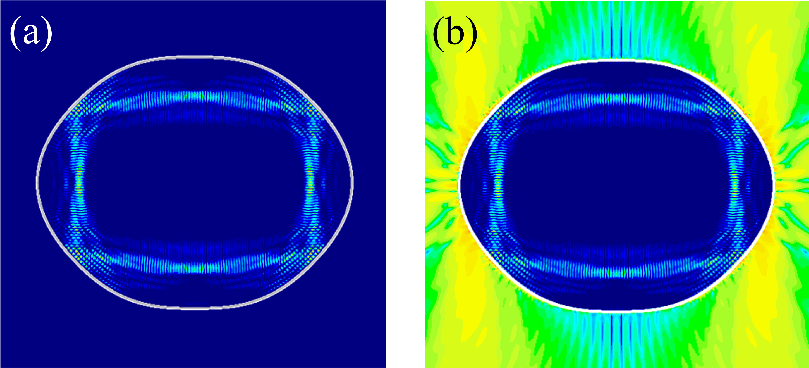
Figure 5: Resonance wavefunction with strong localization along a rectangular periodic orbit and its far-field emission patterns illustrating directional leakage.
Phase-space (Husimi) representations of the mode densities make clear the coupling between stable islands and chaotic regions leading to emission.
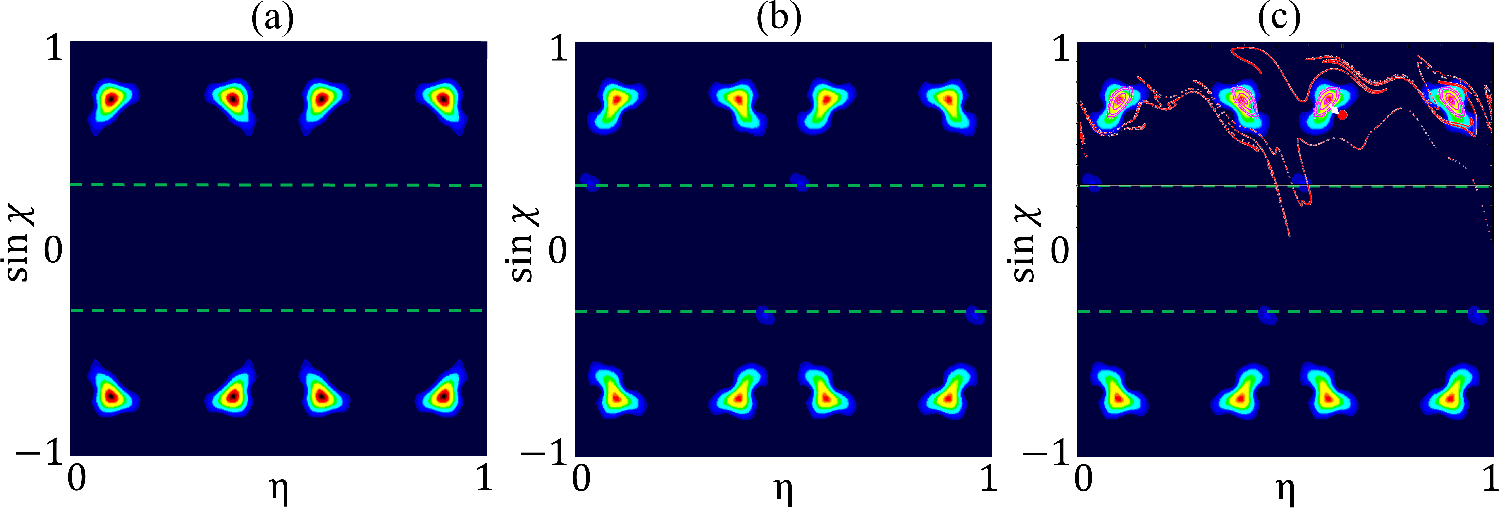
Figure 6: Husimi projections for resonance modes showing localization in stability islands and leakage at phase space locations corresponding to emission.
Flux distributions, calculated via Gaussian smoothing, directly correlate the maximum intensity emission sites with the position/angle pairs at the boundary, predicting observable points of enhanced output.
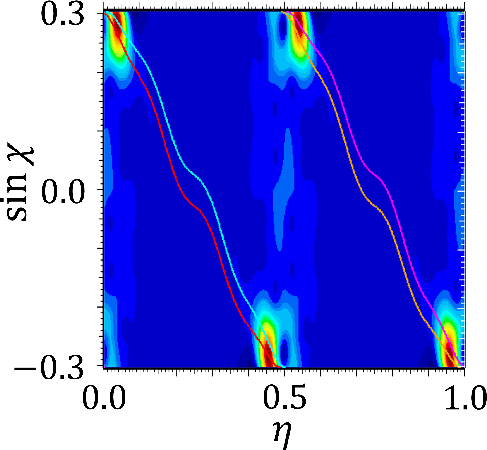
Figure 7: Smoothed flux distribution highlighting boundary positions for extreme directional emission at angles near ±90∘.
Experimental Realization: Semiconductor Microcavities
Semiconductor devices fabricated with appropriately structured electrode contact windows allow for selective excitation of modes localized to certain periodic orbits. Near-field and far-field measurements corroborate theoretical and numerical predictions, with observed emission patterns matching the output predicted by both ray and wave simulations.
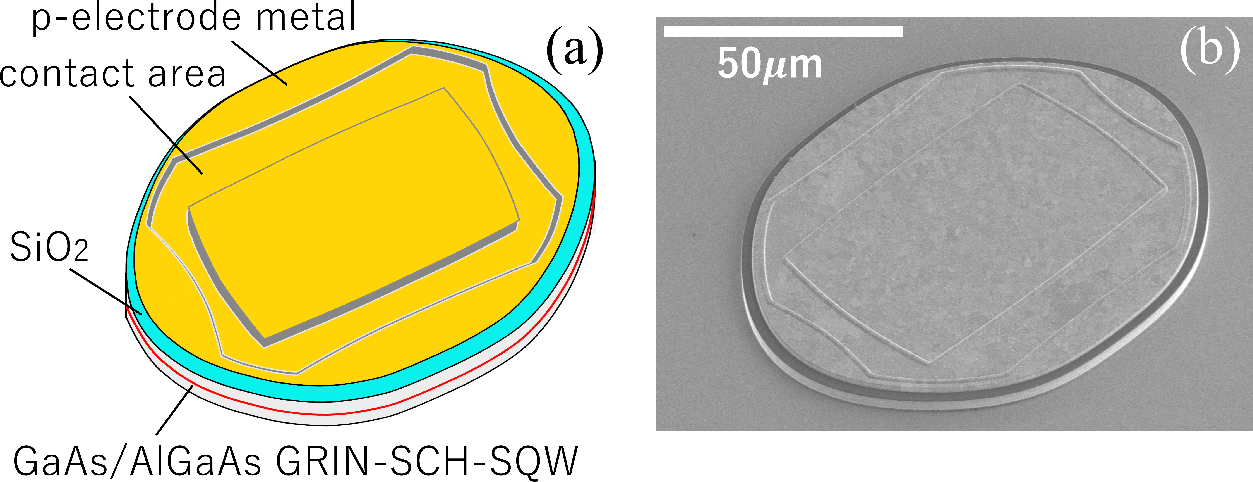
Figure 8: Device structure with patterned electrode for selective orbit pumping; fabricated device SEM image shows recessed structure.
Direct imaging of the near field reveals emission from points coinciding with chaos-assisted tunneling locations.
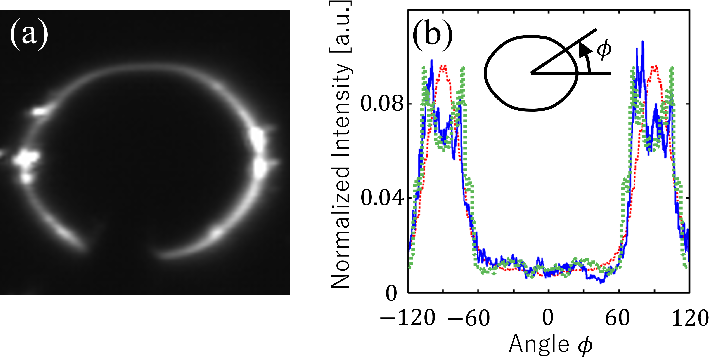
Figure 9: Near-field and far-field emission during lasing operation; emission sites and output patterns match theoretical predictions.
Transparent electrode designs facilitate visualization of modal intensity distributions, confirming that lasing follows the expected rectangular orbits.
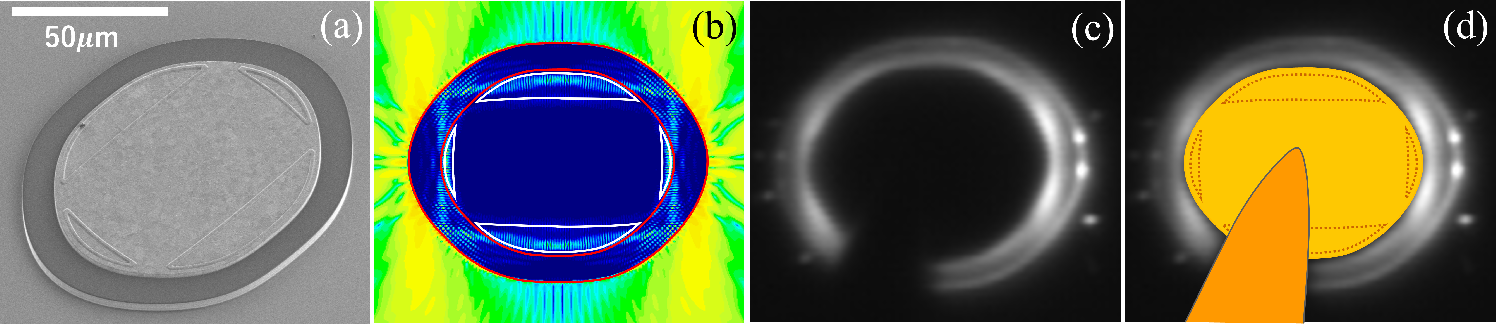
Figure 10: SEM, simulation, and experimentally captured internal modes verifying excitation of rectangular periodic orbits and associated emission sites.
Fully Chaotic Regime and Nonlinear Modal Selection
When the cavity supports no stable periodic orbits—all trajectories are chaotic and ergodic—the classical critical angle condition for lasing is invalidated. Nevertheless, semiconductor microstadium lasers still exhibit robust lasing behavior, necessitating an analysis that incorporates nonlinear gain, gain saturation, and competition among a continuum of spatially extended modes.
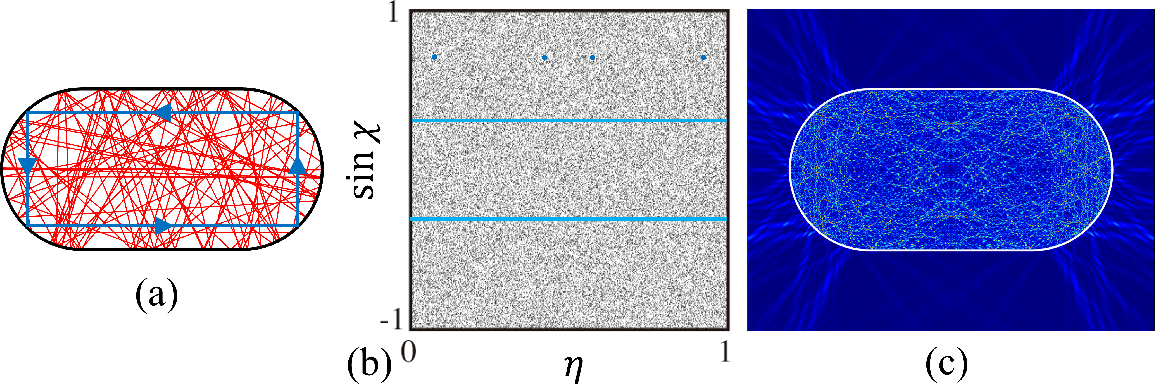
Figure 11: Stadium billiard showing chaotic ray dynamics and spatially delocalized resonance eigenmodes.
Uniform current injection in fully chaotic stadium lasers leads to stabilized laser action, as shown experimentally.
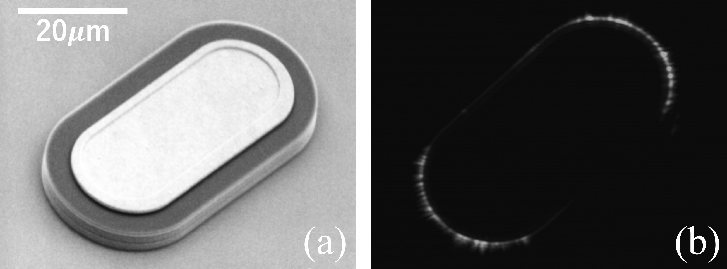
Figure 12: Uniformly pumped stadium laser: SEM of device and near-field emission image demonstrating robust lasing absent stable periodic orbits.
Full nonlinear simulations via the Maxwell-Bloch equations, using FDTD with proper treatment of open boundaries, demonstrate the intensity and frequency selection properties of the system. Despite the initial conditions, the dynamics select a unique stationary lasing mode, observable in both time and frequency domains.
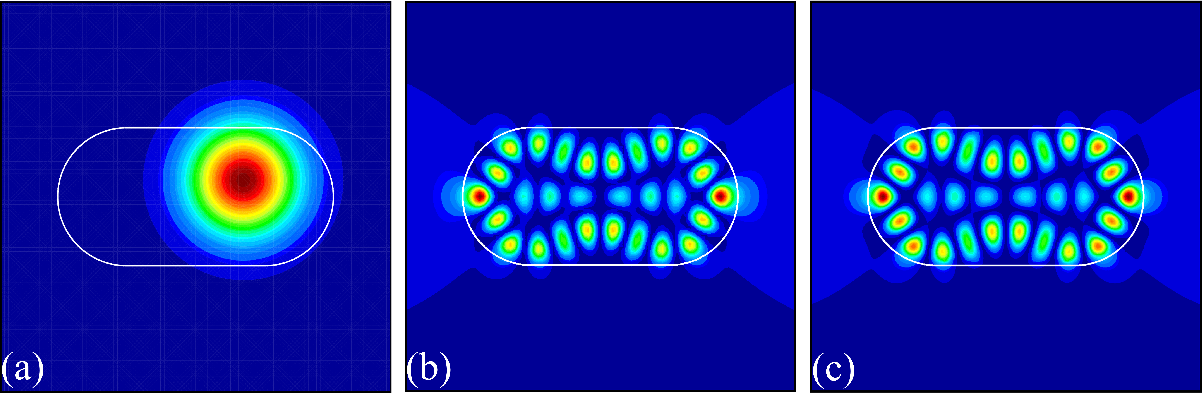
Figure 13: Simulation shows that the final stationary lasing state is robust to initial conditions and matches the eigenmode with the highest effective gain.
The power spectrum of the stabilized field matches the real part of the cold-cavity resonance predicted for maximum gain, as indicated by analysis of the complex resonance spectrum.
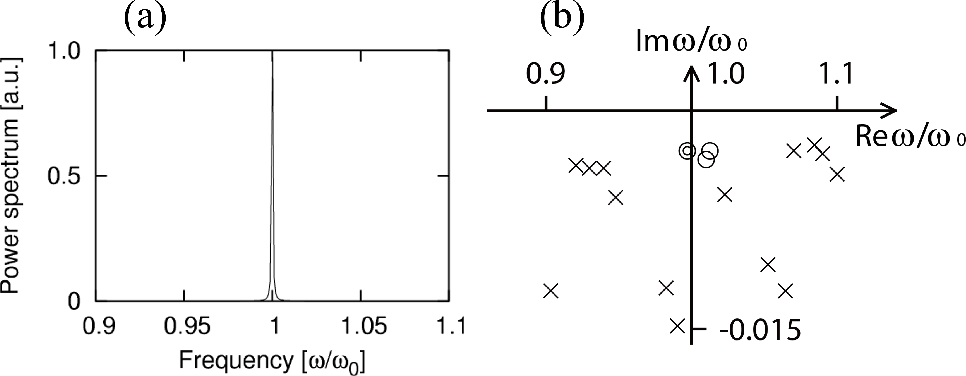
Figure 14: Power spectral density and distribution of resonances showing correspondence of lasing mode frequency and the resonance with the highest effective gain.
Implications and Future Directions
The theoretical formalism advanced in this work bridges quantum chaos and nonlinear laser physics via the Maxwell-Bloch framework, accurately describing lasing thresholds, frequency pulling, and saturation effects. The established correspondence between passive resonance analysis and nonlinear mode selection near threshold imparts significant predictive power for device design.
A notable implication is that open, non-Hermitian, and nonlinear chaotic billiard systems provide a distinct example of double nonlinearity—chaotic (wave/wavefunction) and nonlinear (laser gain competition)—offering routes toward novel functionalities such as spontaneous symmetry breaking, universal single-mode lasing, and dynamically tunable emission.
Moving forward, research on chaotic billiard lasers is expected to elucidate:
- The quantitative role of dynamical tunneling and chaos-induced transport for nonlinear mode competition in larger, more complex cavities.
- Engineering of emission patterns and spectral properties for photonic applications by leveraging both ray and wave chaos.
- Implementation of advanced theoretical tools, including the Schrödinger-Bloch model and Steady-state Ab initio Laser Theory (SALT), for analysis of multimode nonlinear dynamics.
- Application in sensors, on-chip light sources, non-reciprocal devices, and as physical substrates for neural computation architectures.
Conclusion
Chaotic billiard lasers constitute an exceptional physical realization of quantum chaos and nonlinear physics within an experimentally accessible platform. The demonstrated phenomena—such as chaos-assisted emission, selective modal pumping, and robust lasing in fully chaotic regimes—set a foundation for both fundamental exploration of open quantum systems and pragmatic photonic engineering. The integration of experimental and rigorous theoretical techniques underscores the dual importance of chaotic billiard lasers for both the scientific understanding of complex nonlinear dynamical systems and the technological advancement of compact, highly controllable coherent light sources.

