- The paper demonstrates that structured architectures like HVA actively utilize entanglement, contrasting with the model-agnostic HEA.
- It employs a geometric framework, using metrics such as geodesic distance and geometric phase fractions to quantify algorithmic progress.
- The study highlights that embedding problem-specific Hamiltonians in circuit design improves the operational role of entanglement in VQAs.
Calibrating the Role of Entanglement in Variational Quantum Algorithms from a Geometric Perspective
Introduction
The physical origin of quantum computational advantage, particularly the operational role of entanglement within parameterized quantum circuits, remains a foundational question in the theory of quantum algorithms. The paper "Calibrating the Role of Entanglement in Variational Quantum Algorithms from a Geometric Perspective" (2604.23555) conducts a rigorous comparative analysis of entanglement dynamics in variational quantum algorithms (VQAs), leveraging a geometric framework based on geodesic distances and geometric phases in Hilbert space.
The authors address central controversies in the field: whether more entanglement universally correlates with enhanced algorithmic performance, and how the circuit ansatz—problem-inspired versus hardware-efficient—determines the operational use of entanglement as a computational resource. Two paradigmatic ansatz architectures are contrasted: the hardware-efficient ansatz (HEA), which is model-agnostic, and the Hamiltonian variational ansatz (HVA), which is tailored to the problem Hamiltonian—here, the transverse-field Ising model (TFIM).
Methodological Framework
The analysis is grounded in the computation of bipartite entanglement entropy, geodesic distance to the target ground-state subspace, and the geometric phase fraction at each circuit layer. All metrics are evaluated for both randomly initialized circuits and after variational optimization, with substantial statistics (typically 1000 independent trials per configuration) to ensure robustness.
Entanglement entropy is quantified via the half-system von Neumann entropy, efficiently computed throughout the simulations via matrix product state (MPS) representations. The algorithmic trajectory is characterized geometrically: the geodesic distance quantifies shortest-path proximity to the target subspace, serving as a direct proxy for computational progress, while the geometric phase fraction decomposes the total phase accumulated by the state into geometric and dynamical (Hamiltonian-driven) contributions.
Quantum Circuit Architectures
The HVA layers are constructed to mirror the TFIM Hamiltonian, employing parameterized ZZ and X rotations that correspond directly to the Hamiltonian components (Figure 1). This architecture offers a compact, highly structured parameterization and serves as a canonical example of a problem-inspired ansatz.
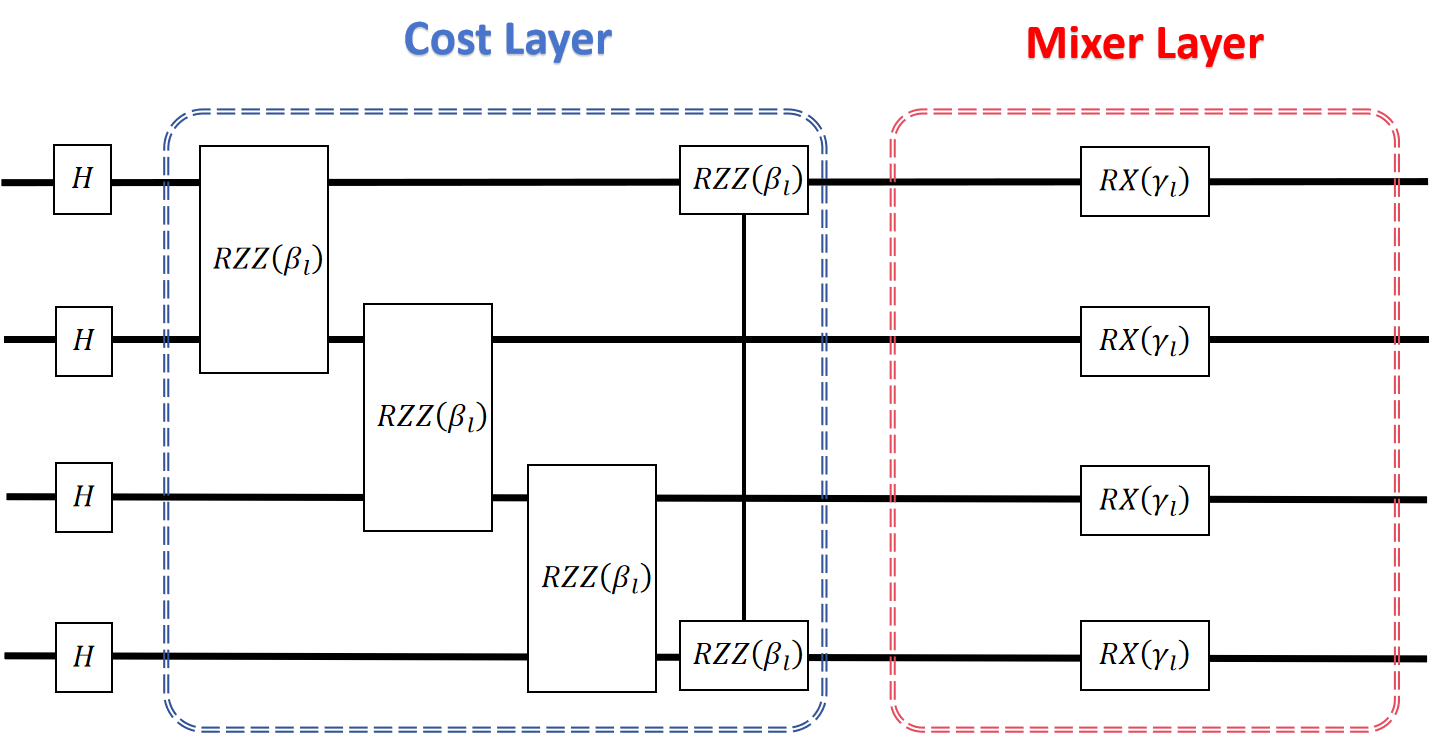
Figure 1: The HVA quantum circuit structure for the TFIM with N=4 and L=1.
The HEA, conversely, comprises generic parameterized single-qubit rotations followed by layers of entangling operations (CNOTs), irrespective of the problem Hamiltonian (Figure 2).
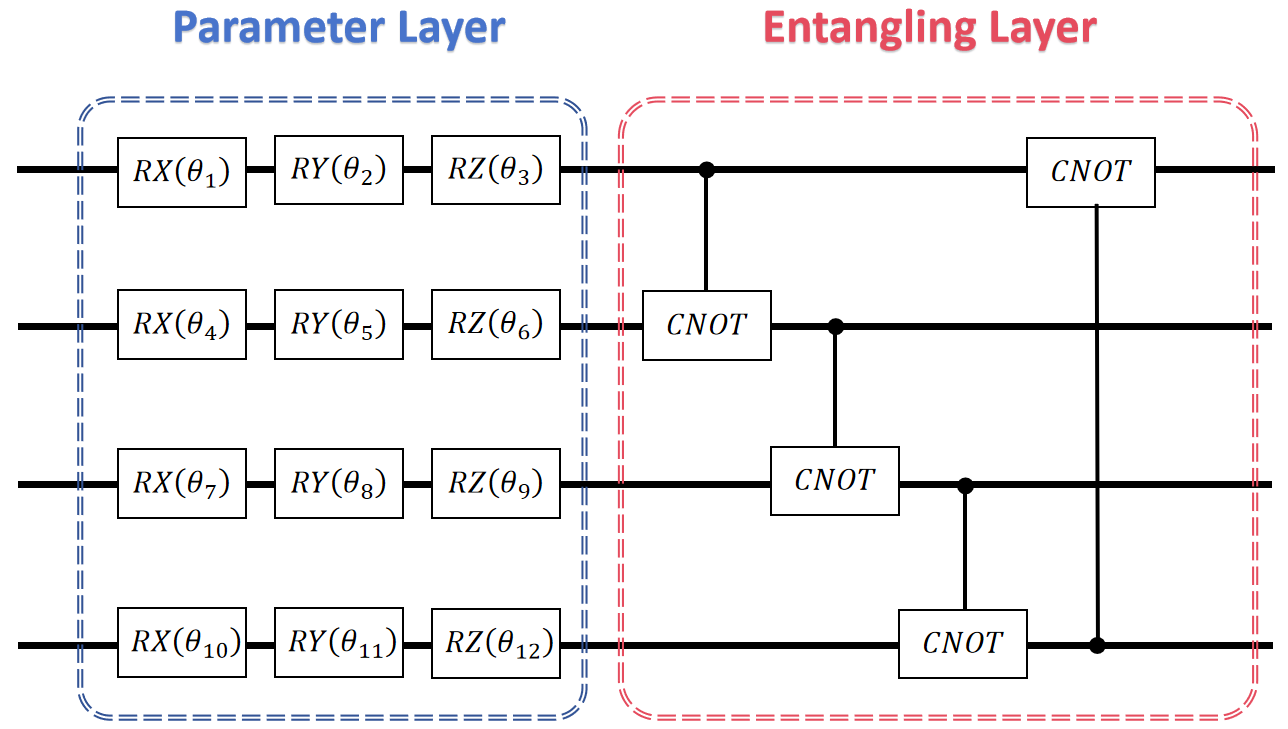
Figure 2: The HEA quantum circuit structure with N=4 and L=1.
The structural contrast between the ansatz families facilitates analysis of the role of inductive bias in leveraging entanglement.
Entanglement and Geometric Trajectories in Randomized Circuits
For both HEA and HVA with random parameters, layer-wise average entanglement entropy exhibits rapid initial growth with circuit depth, saturating at values consistent with random circuit predictions. The geodesic distance to the target subspace decreases modestly, transiently plateauing in intermediate layers before a sharper late-stage descent.
Notably, the geometric phase fraction remains near unity across all layers for HEA circuits, indicating that state evolution is dictated almost entirely by the geometry of Hilbert space—dynamical (Hamiltonian-specific) contributions are negligible (Figure 3c).
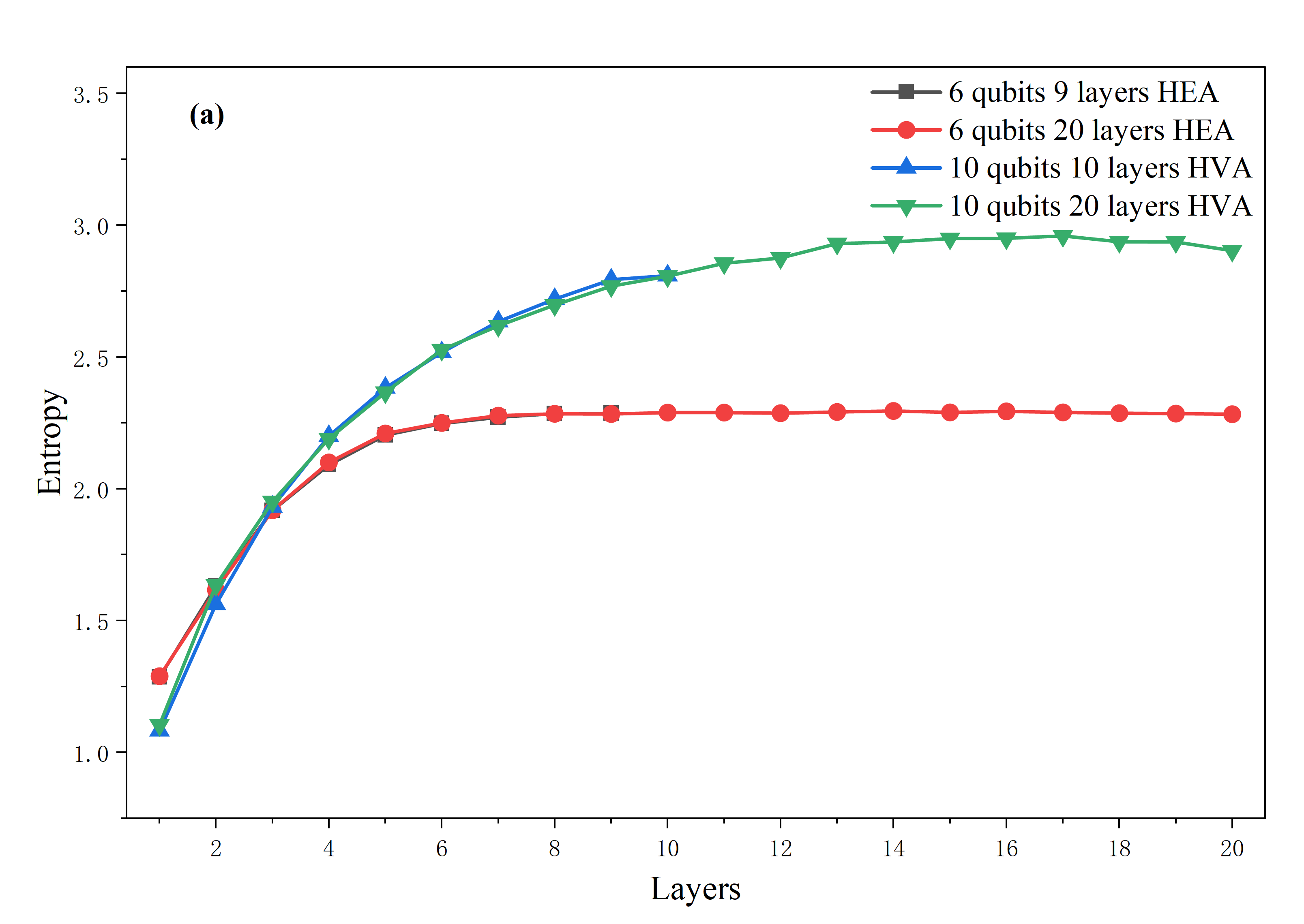
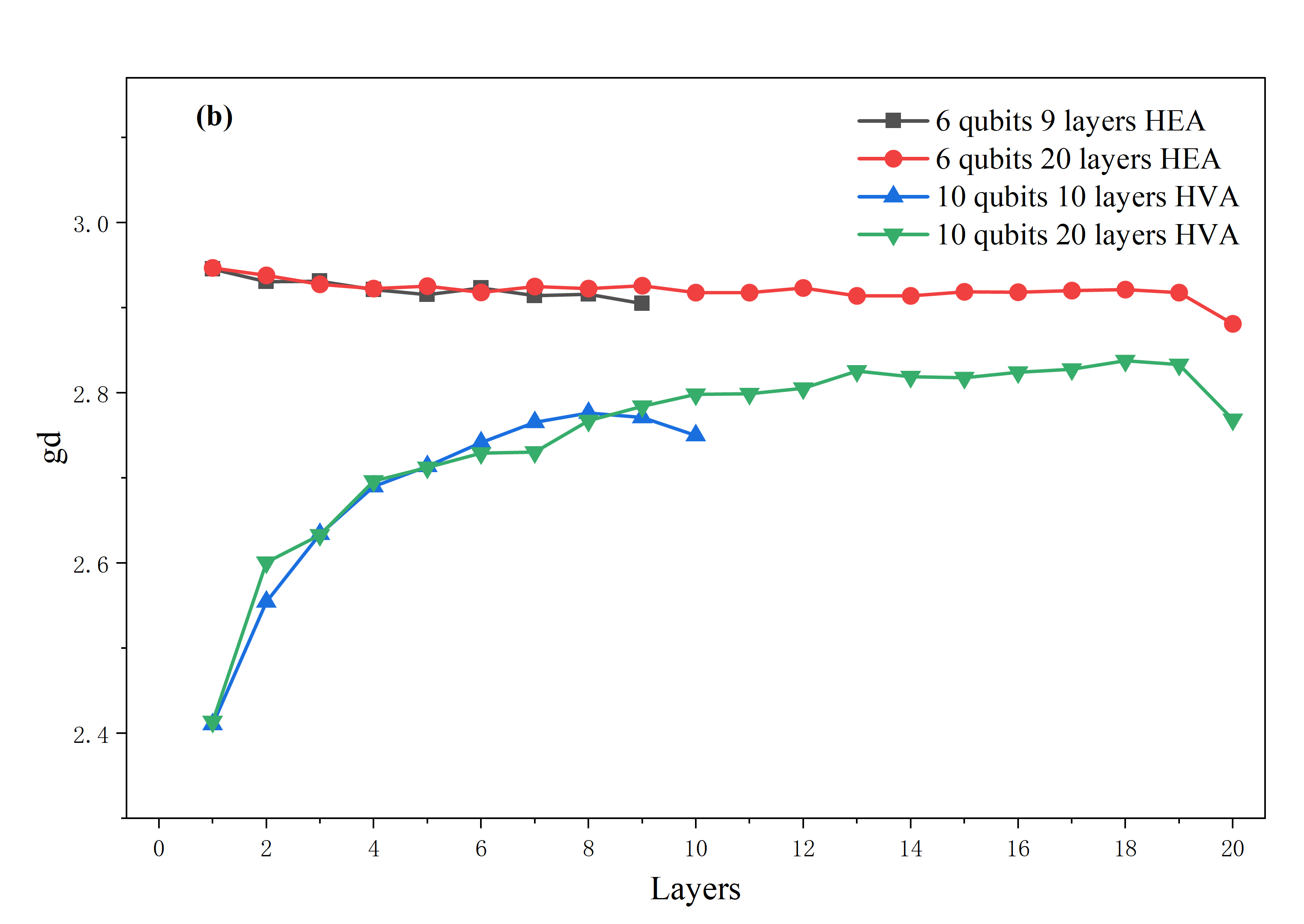
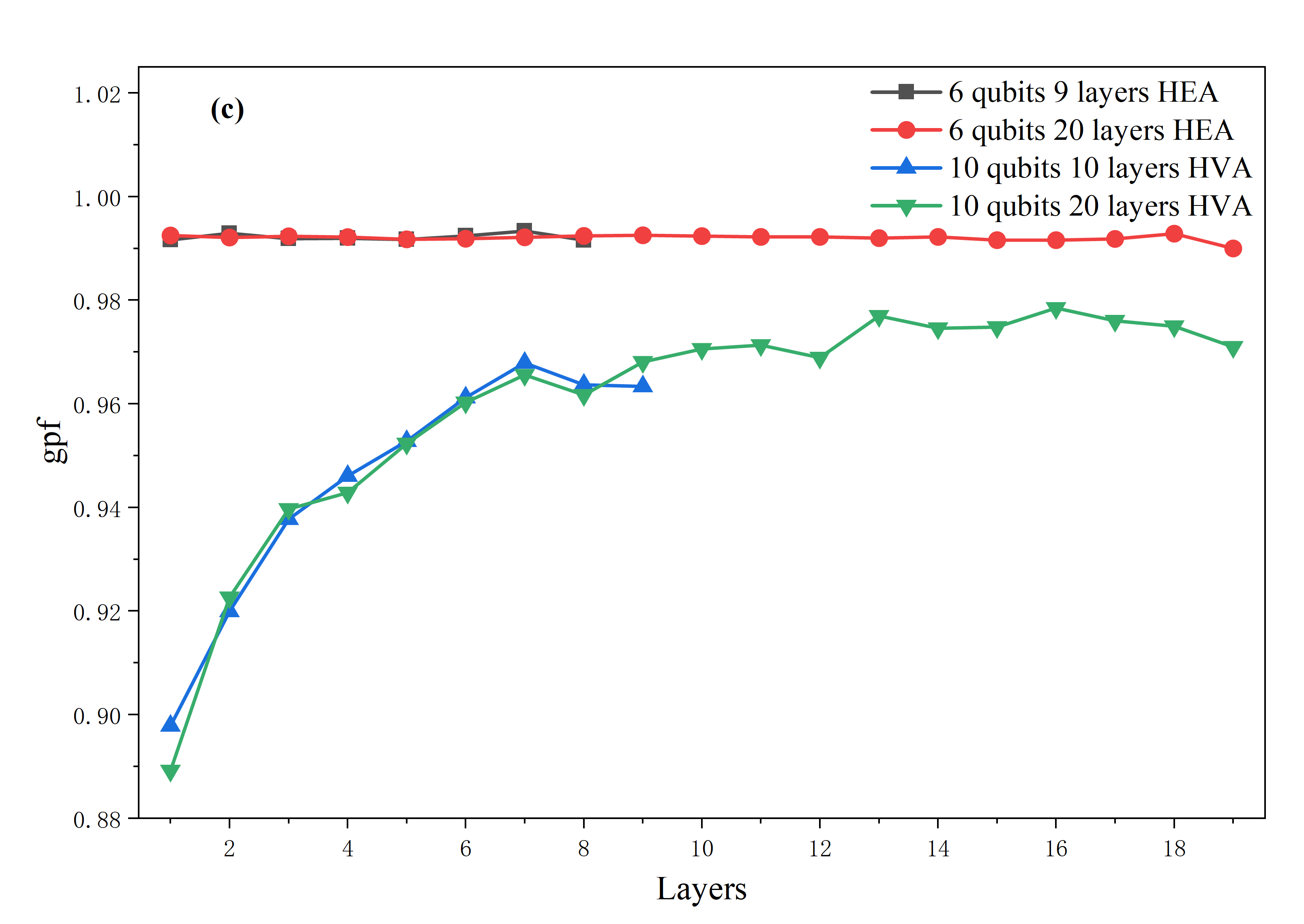
Figure 3: Data averaged over 103 independent trials for HVA and HEA: (a) entanglement entropy, (b) geodesic distance to target space, and (c) geometric phase fraction as functions of circuit layer.
HVA circuits display reduced geometric phase fractions in early layers, suggesting a nontrivial dynamical influence due to the Hamiltonian-aligned structure, though this wanes with depth as randomness dominates.
The statistical analysis further reveals that, in HVA circuits, step-wise increases in entanglement entropy are positively correlated with progress toward the target space (Figure 4c,d) and modulation of the geometric phase fraction (Figure 5c,d). This correlation is absent in HEA circuits (Figure 4a,b and Figure 5a,b), demonstrating a structural decoupling of entanglement generation from algorithmic progress.
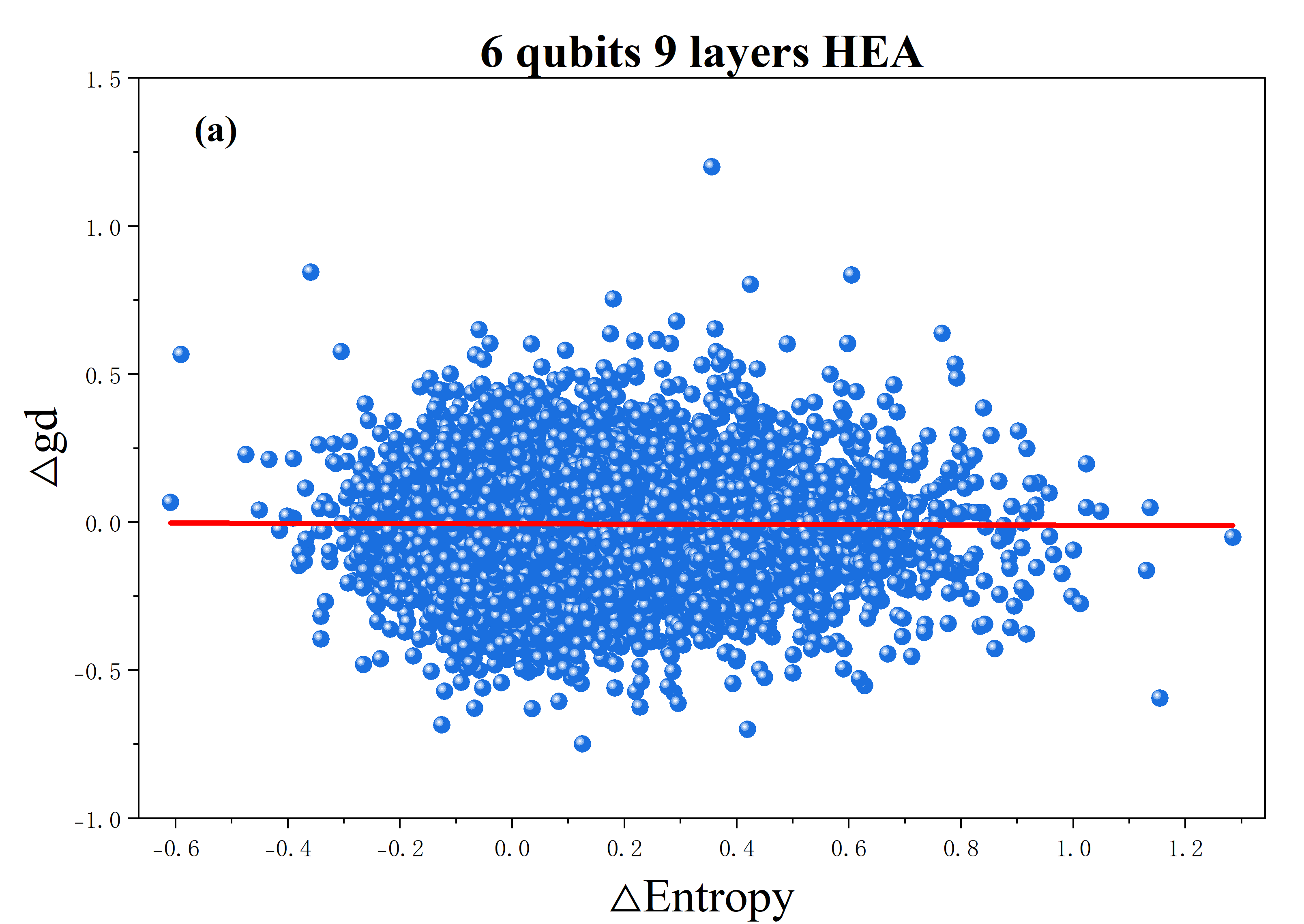
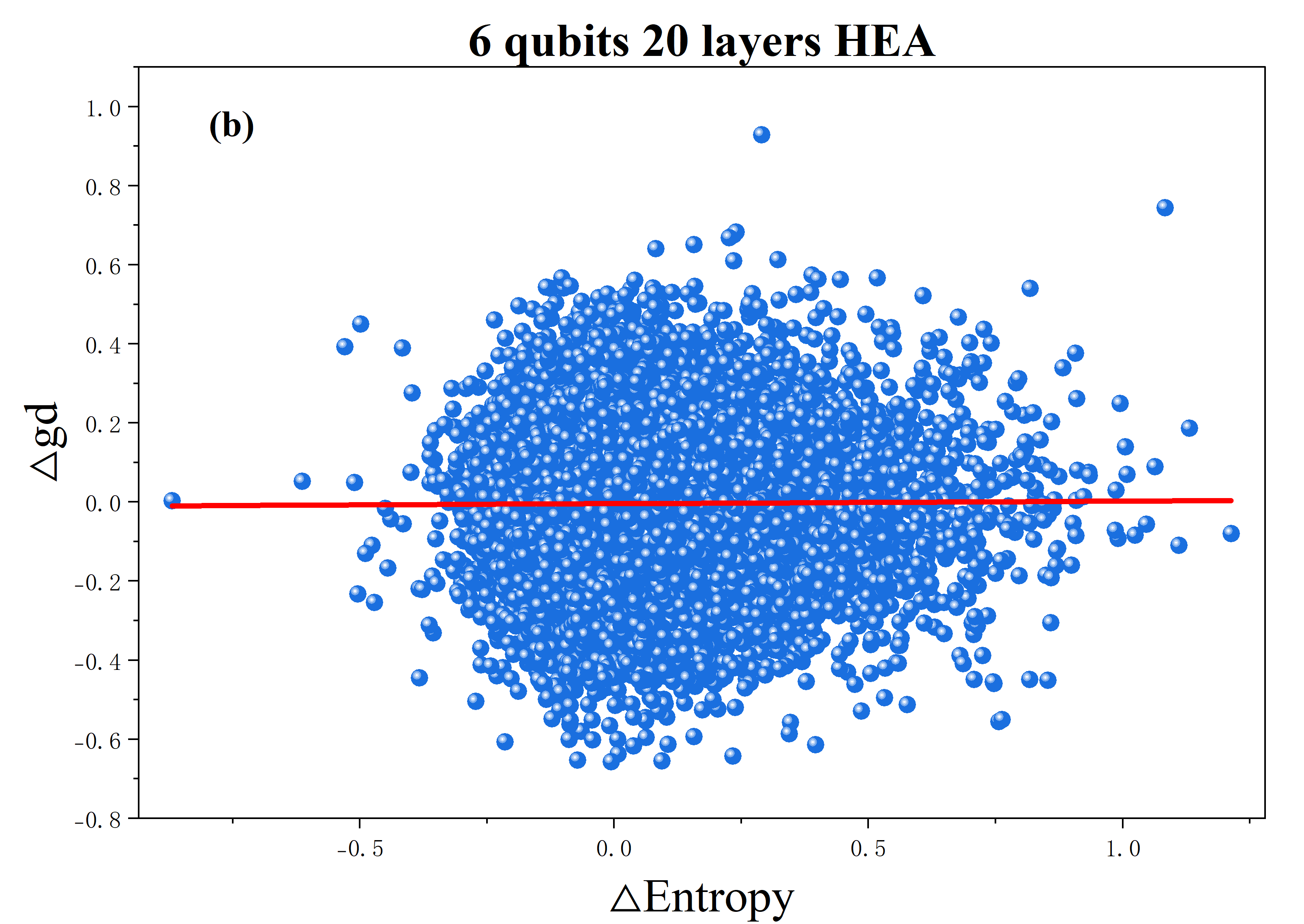
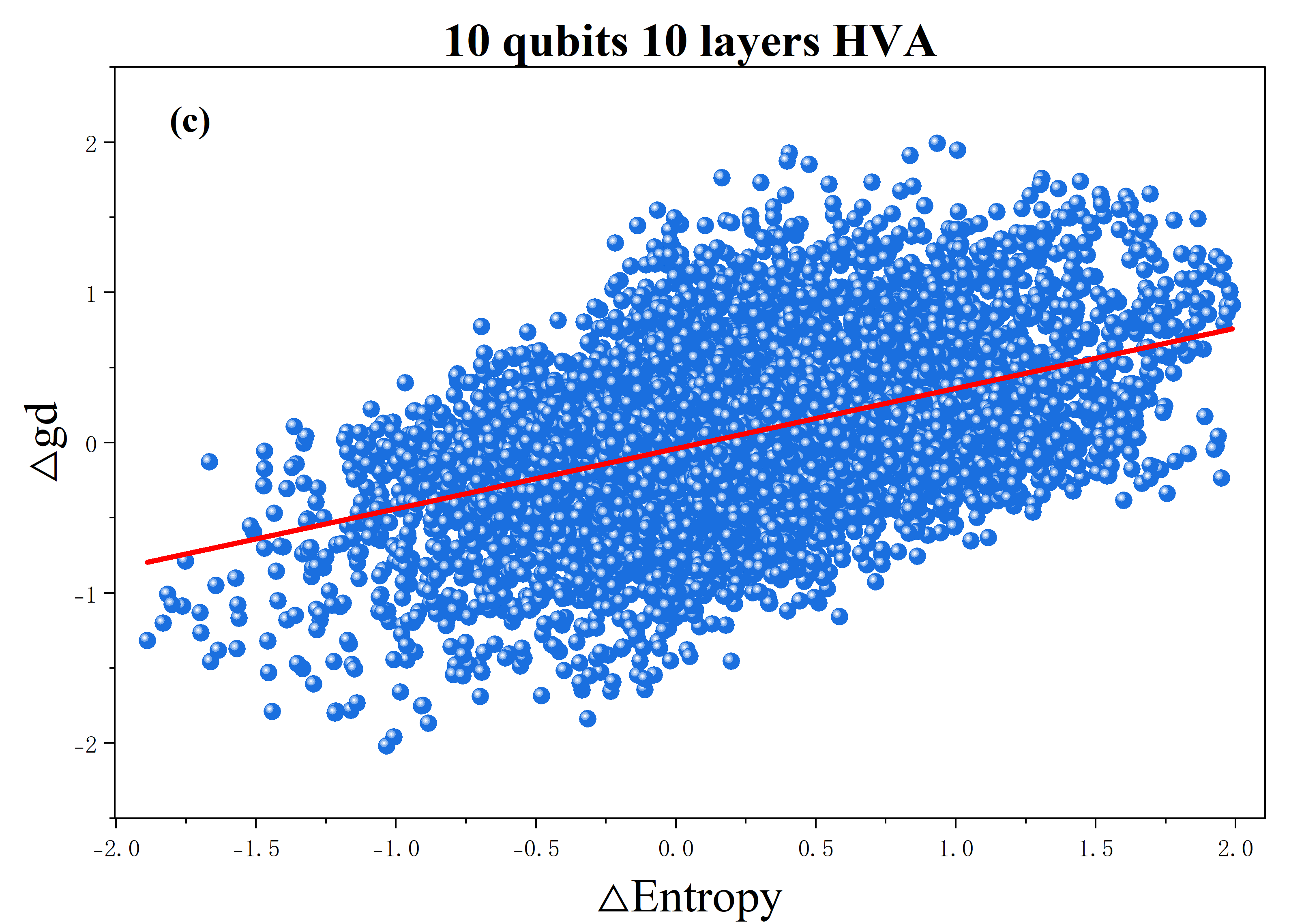
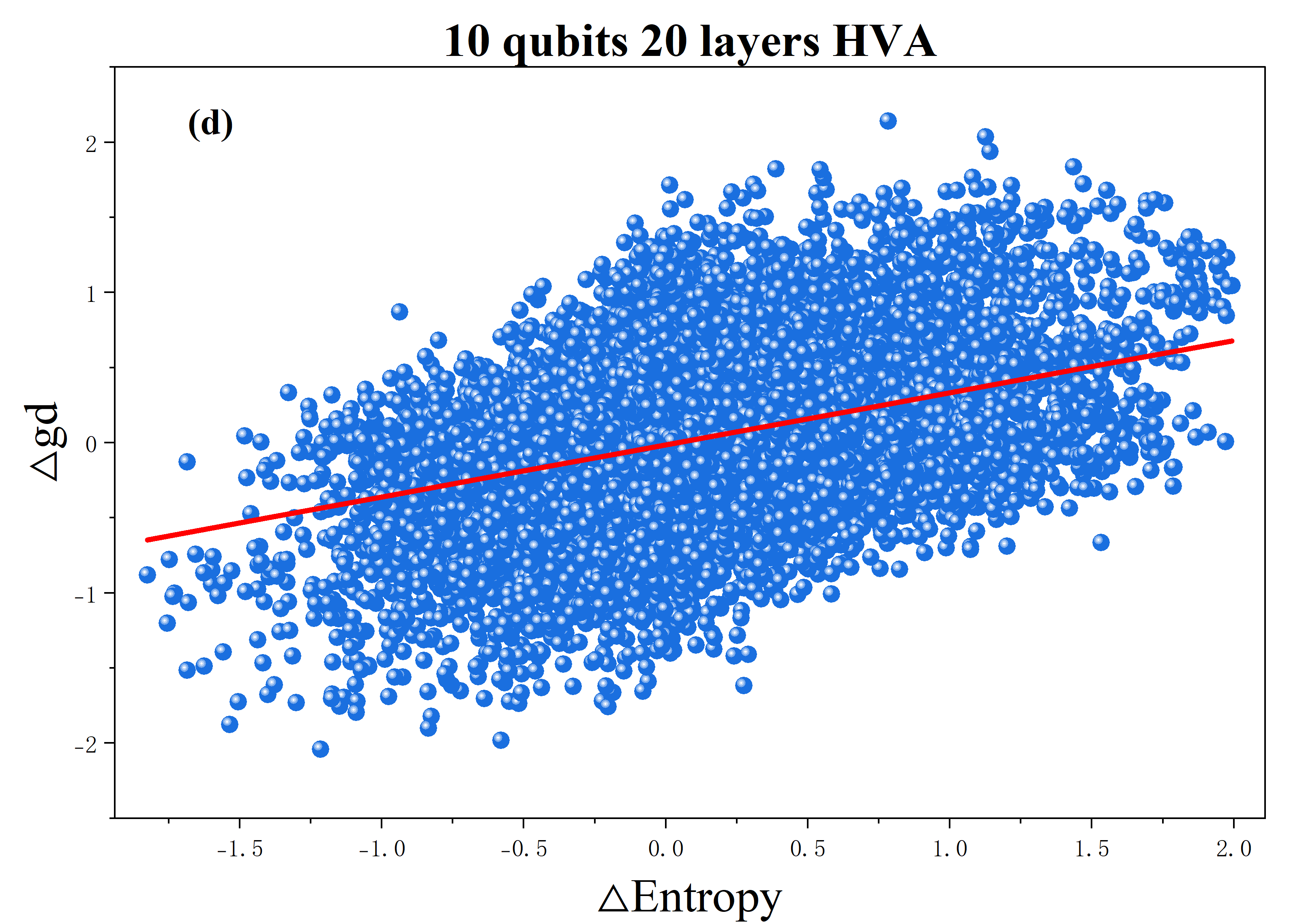
Figure 4: Correlations between step-wise changes in entanglement entropy and geodesic distance for (a,b) HEA and (c,d) HVA circuits with random initialization.
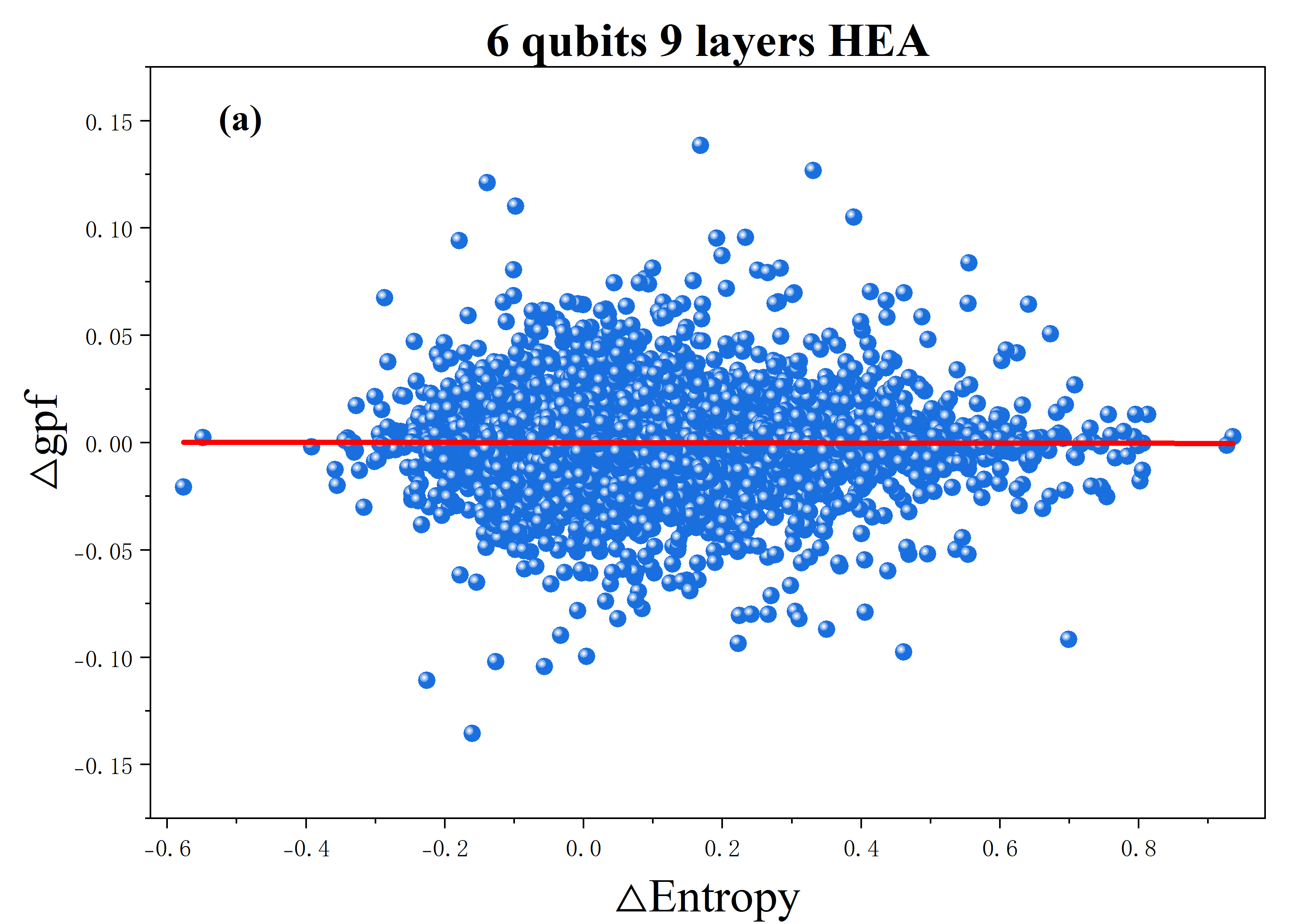
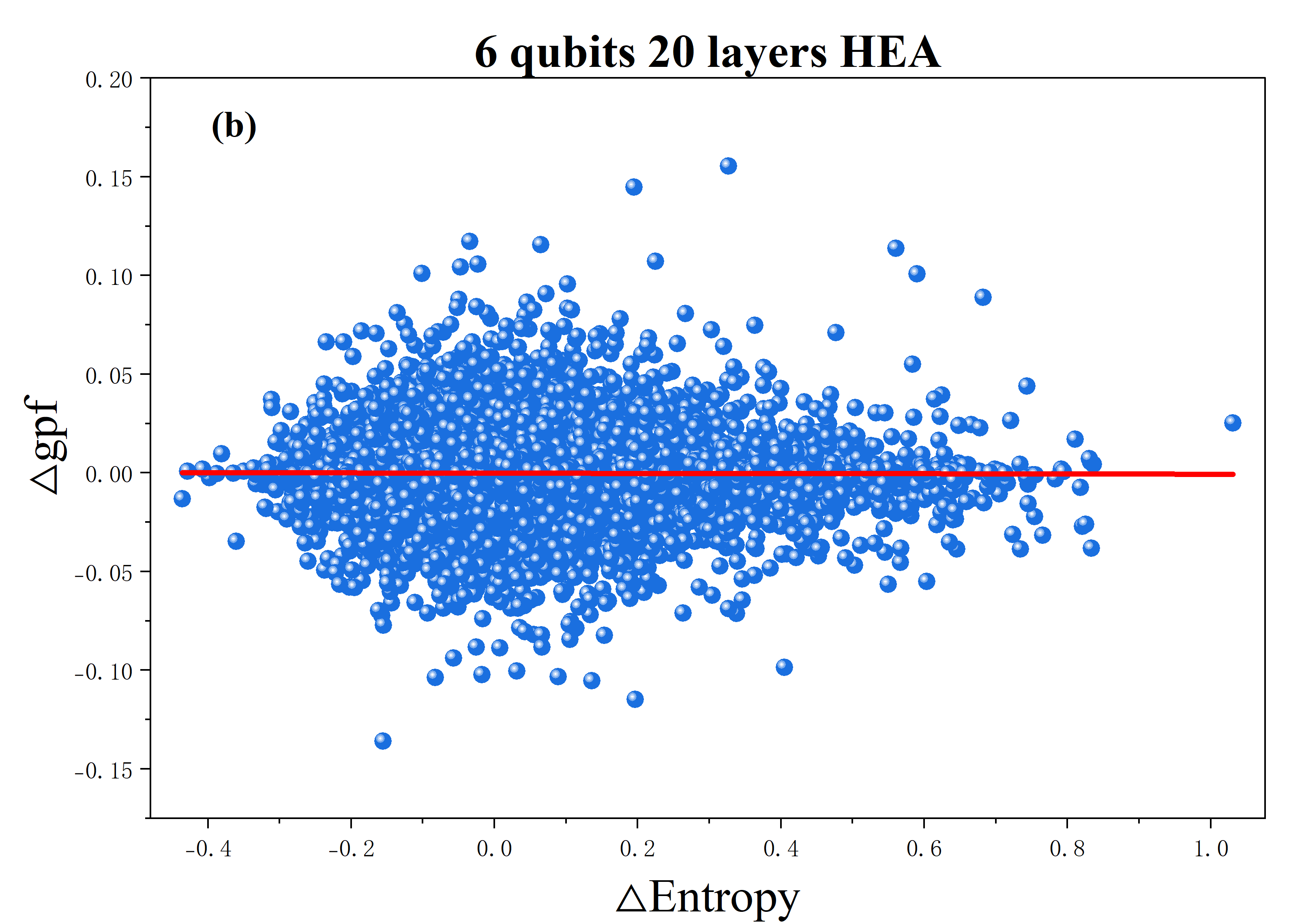
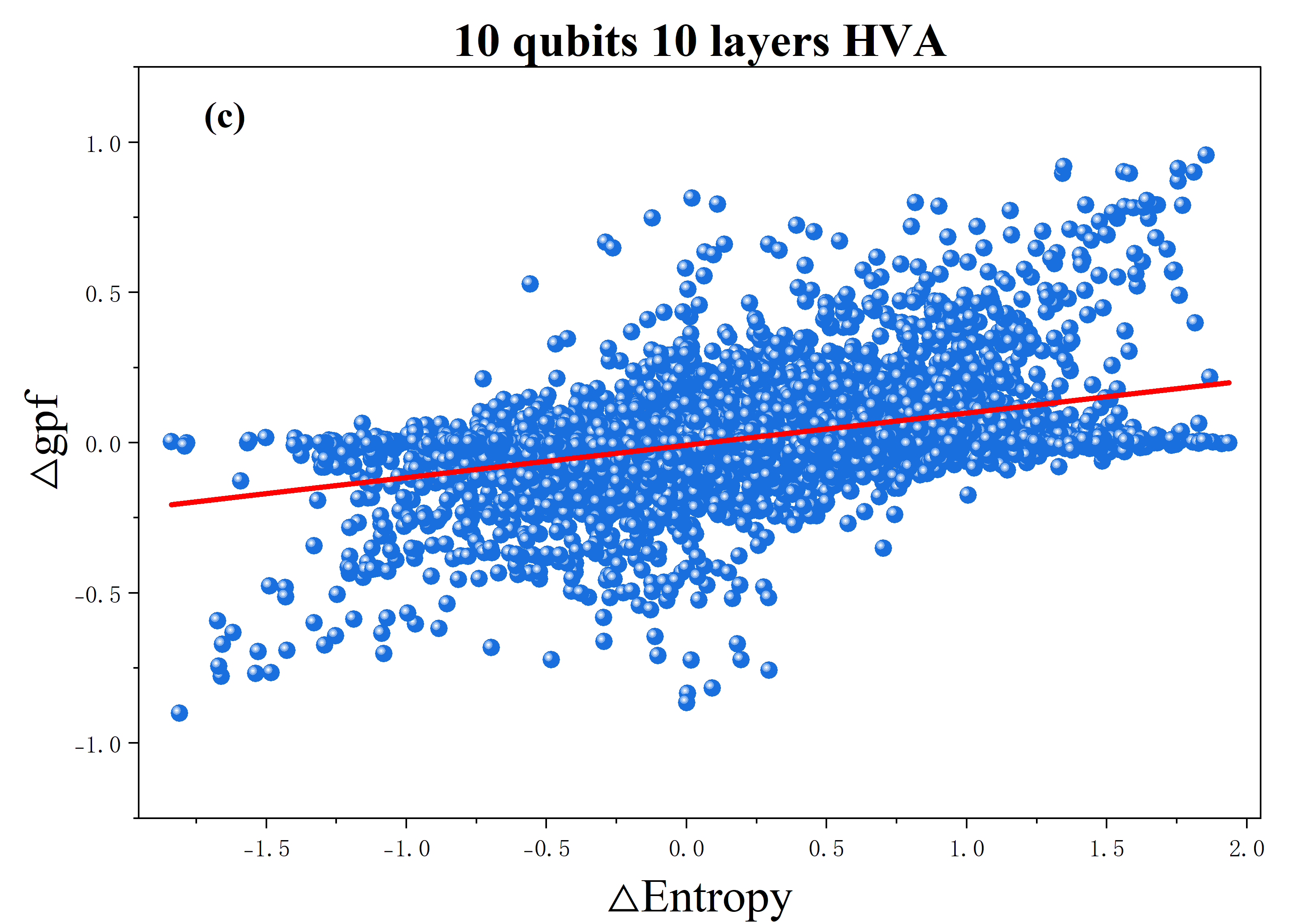
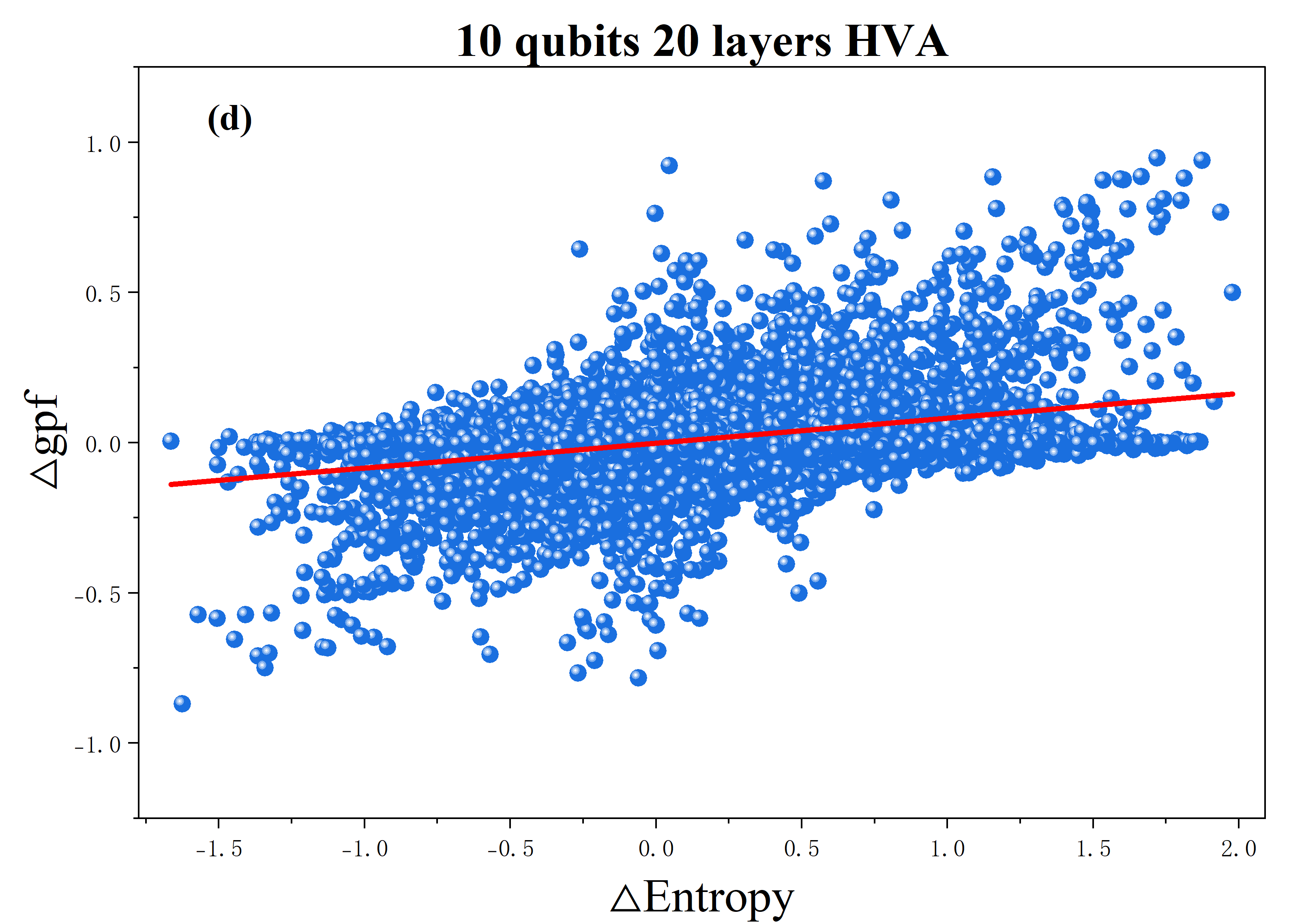
Figure 5: Correlations between step-wise changes in entanglement entropy and geometric phase fraction for (a,b) HEA and (c,d) HVA random circuits.
Dynamics in Optimized Circuits
Upon variational optimization, both circuit classes target the ground-state manifold. For both HEA and HVA, entanglement entropy initially increases with depth, peaks in mid layers, and then approaches the ground-state value—distinctly below the maximum possible for the respective architecture (Figure 6a).
Surprisingly, the geodesic distance between the instantaneous state and the target remains large over most circuit layers, sharply dropping only in the final layers (Figure 6b). The geometric phase fraction remains dominant (>0.9) for HEA throughout, while for HVA, it initially increases then is suppressed at intermediate depths—yet always remains the major contributor to total phase (Figure 6c).
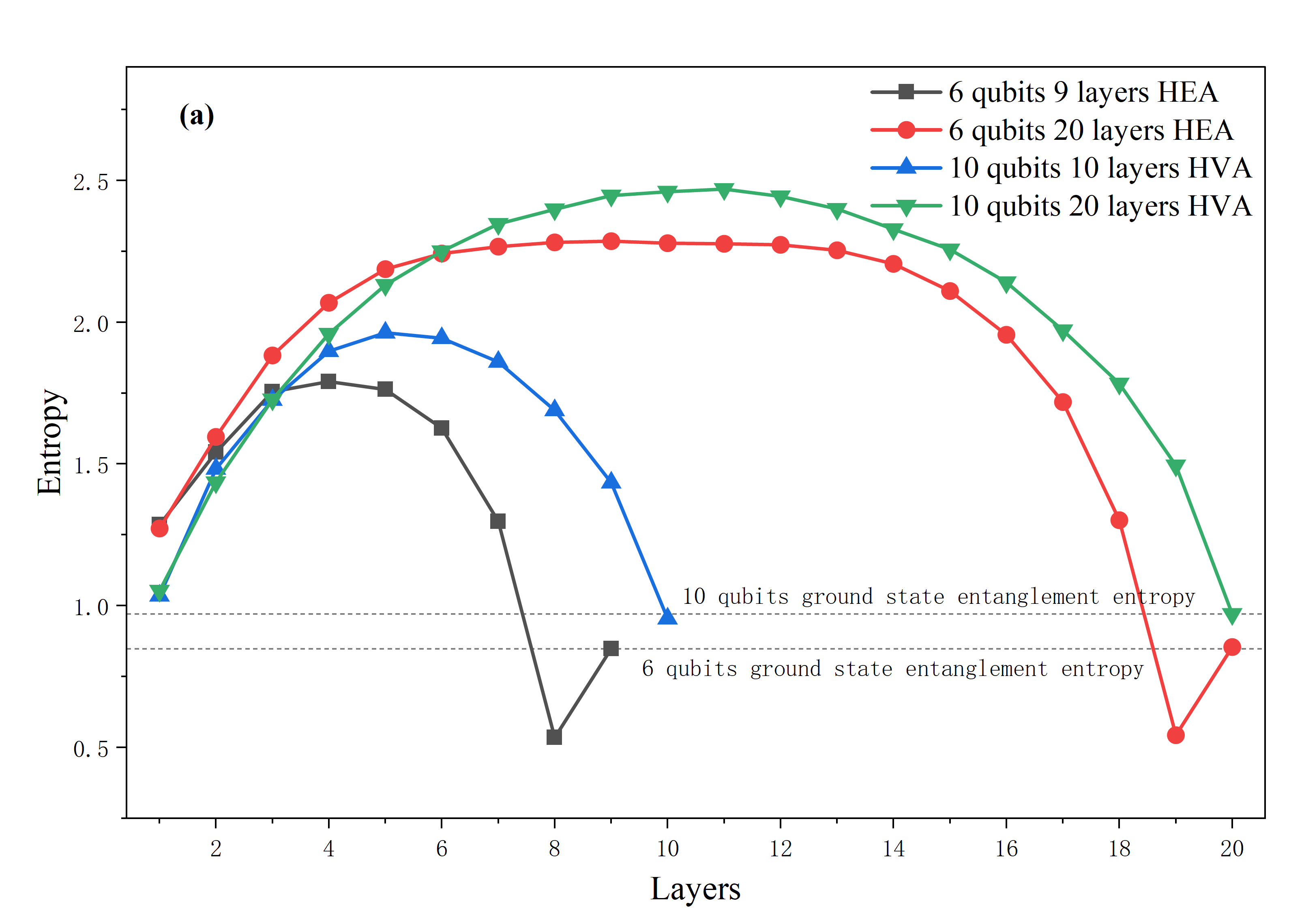
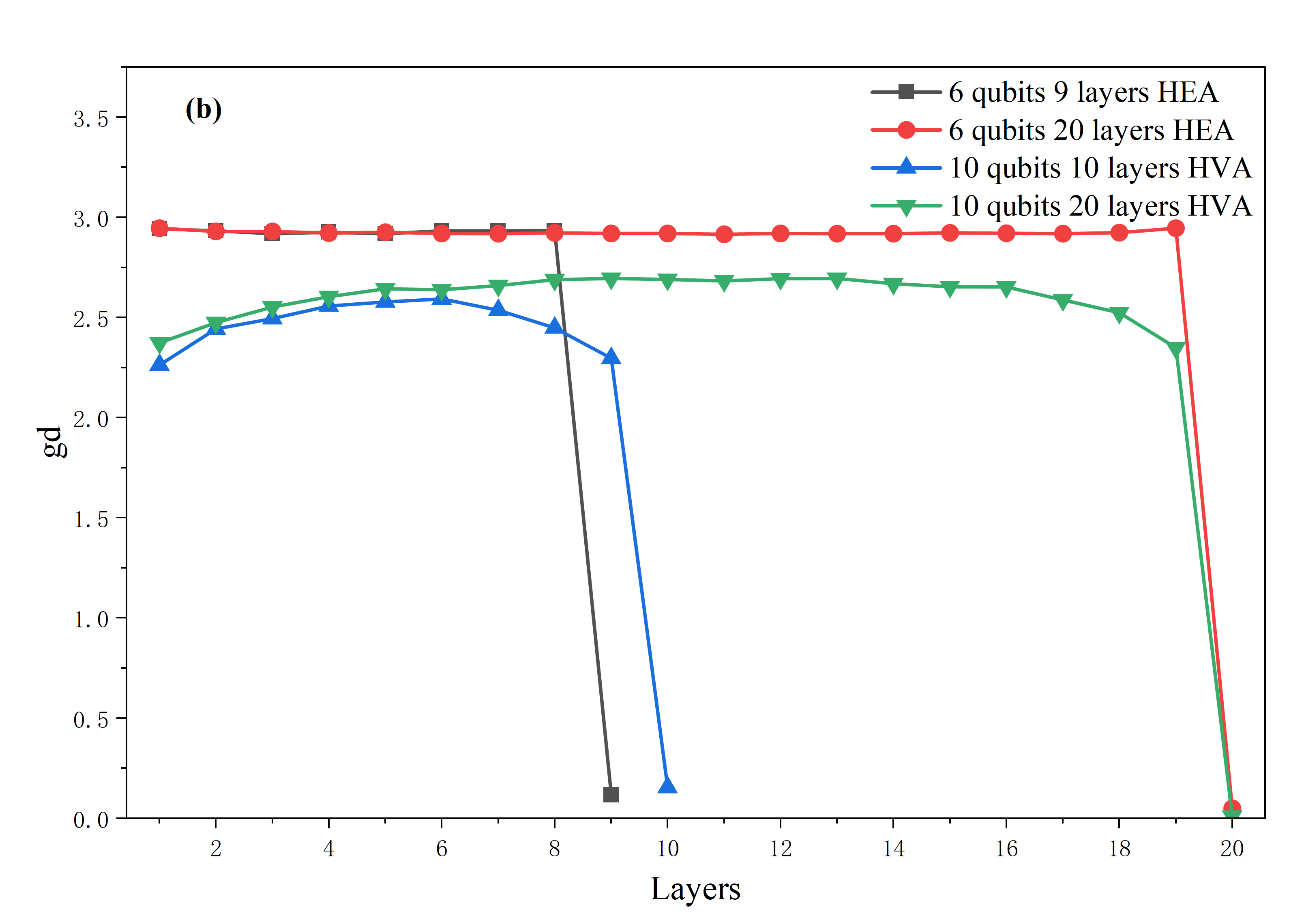
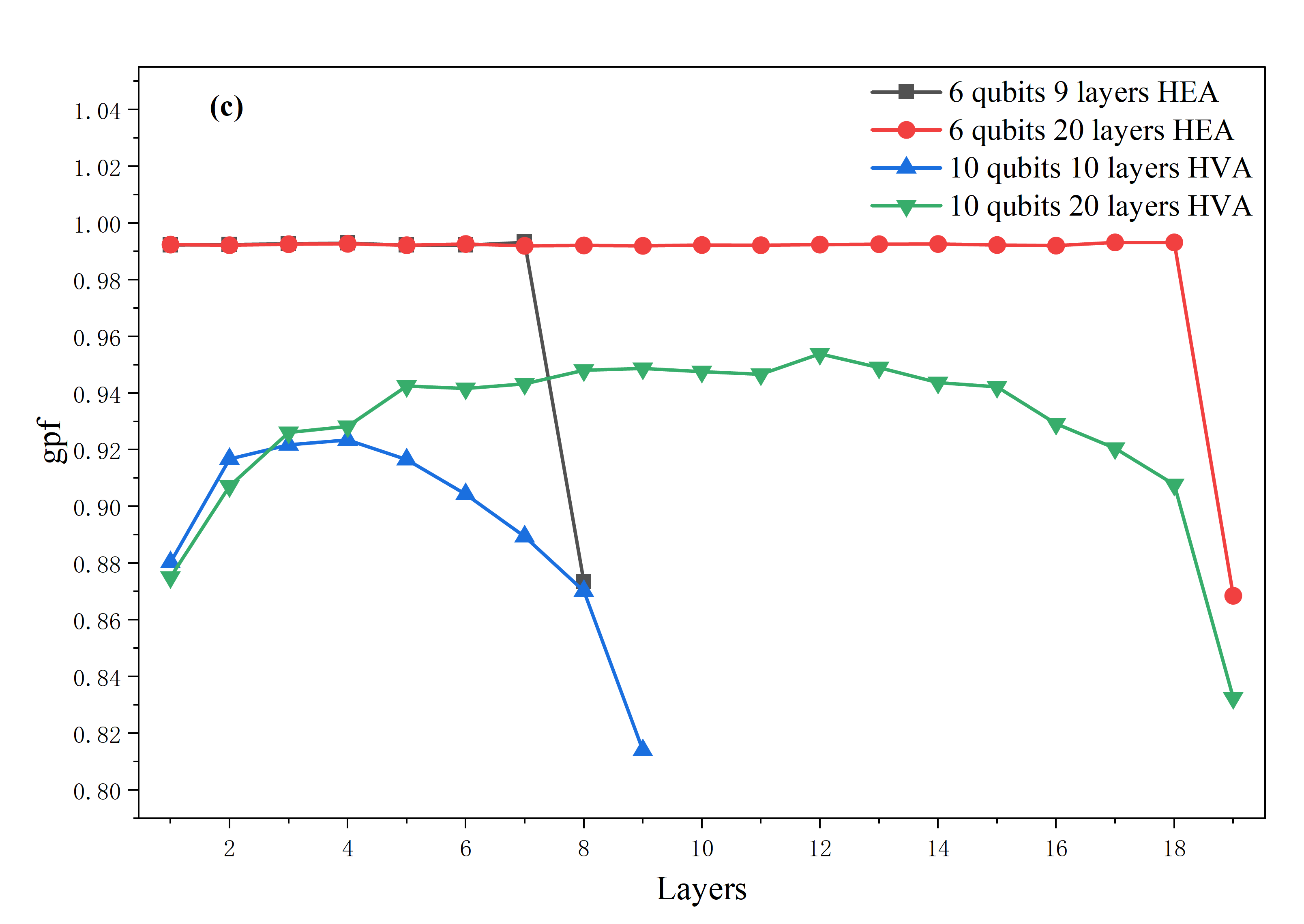
Figure 6: Layer-wise averages for both optimized HEA and HVA: (a) entanglement entropy (gray line: exact ground-state value), (b) geodesic distance to target, (c) geometric phase fraction.
Crucially, the structural contrast persists in correlations between entanglement consumption and progress toward the target. For optimized HVA, there is a pronounced, stable positive correlation between step-wise increases in entanglement entropy and reductions in geodesic distance and geometric phase fraction (Figure 7e,f and Figure 8e,f). This highlights a direct, operational role for entanglement as a resource enabling dynamical evolution toward solution states.
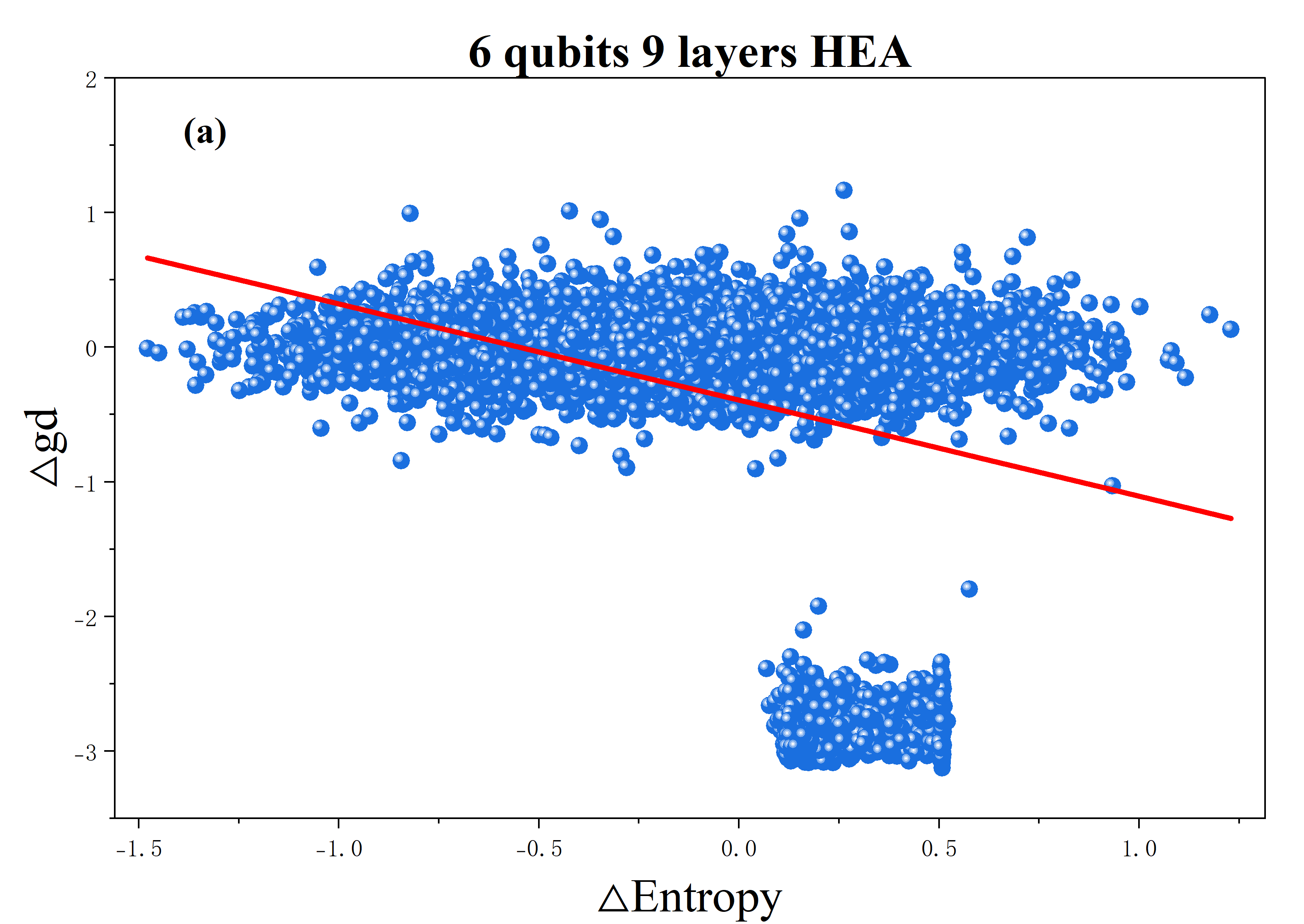
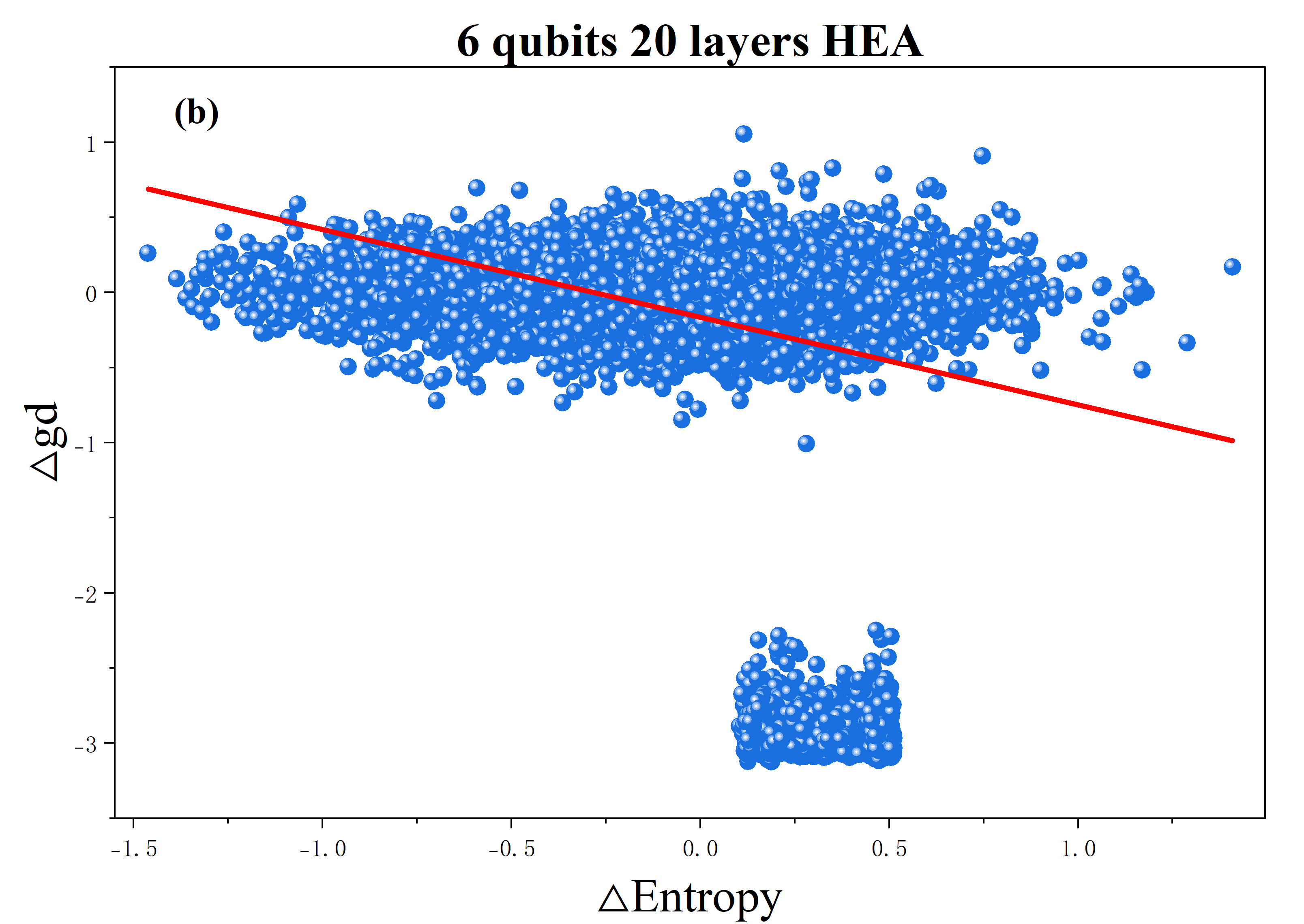
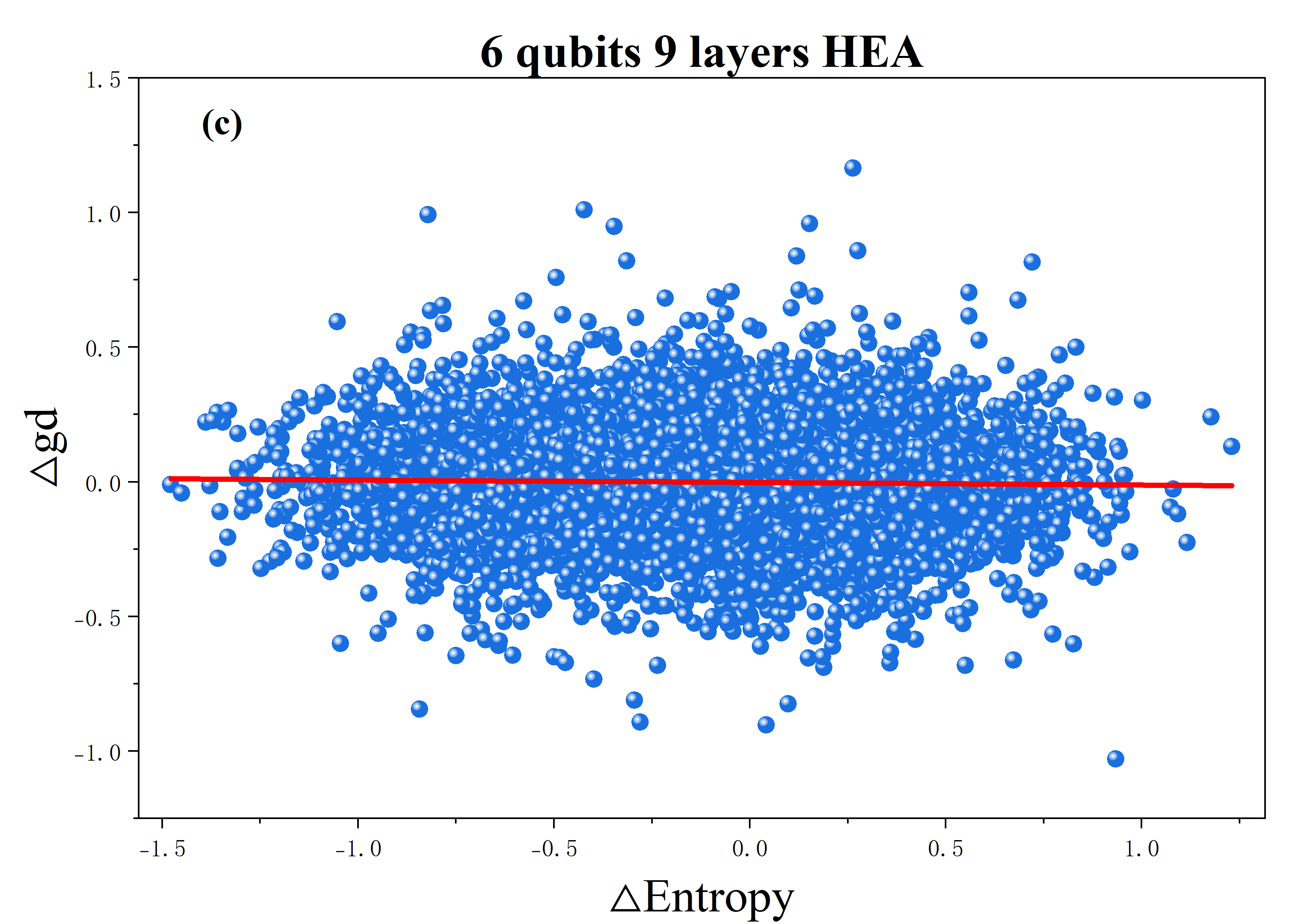
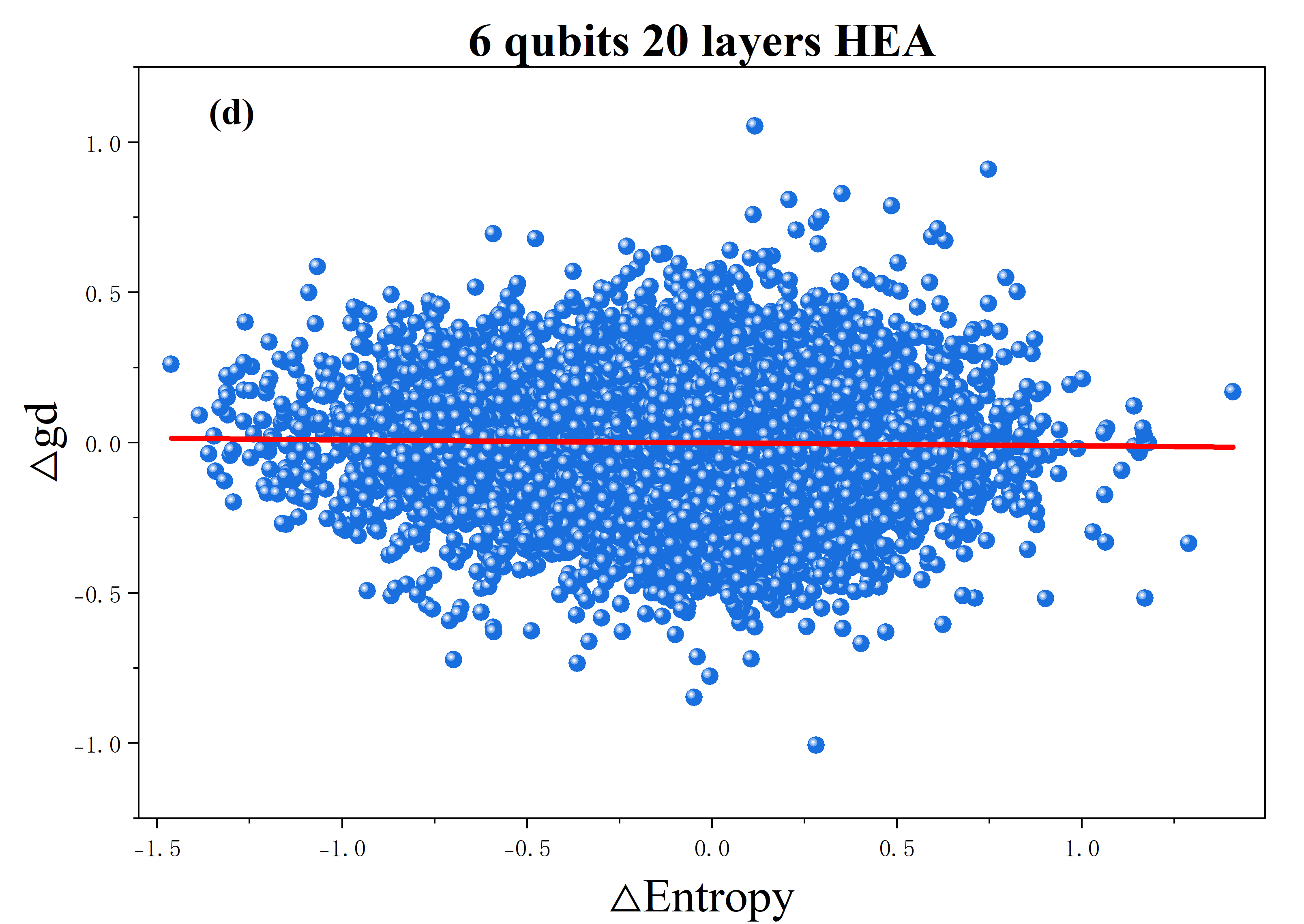
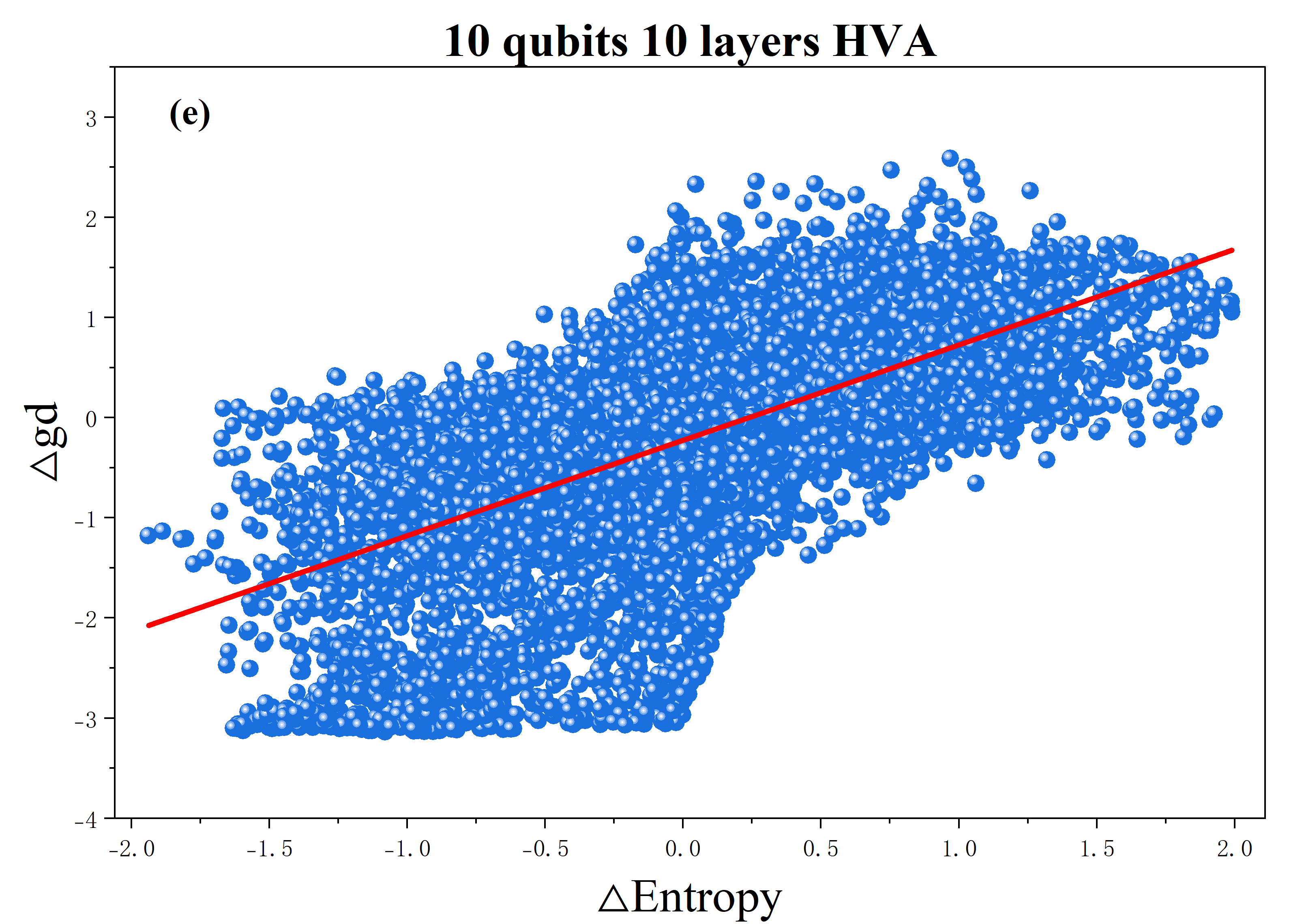
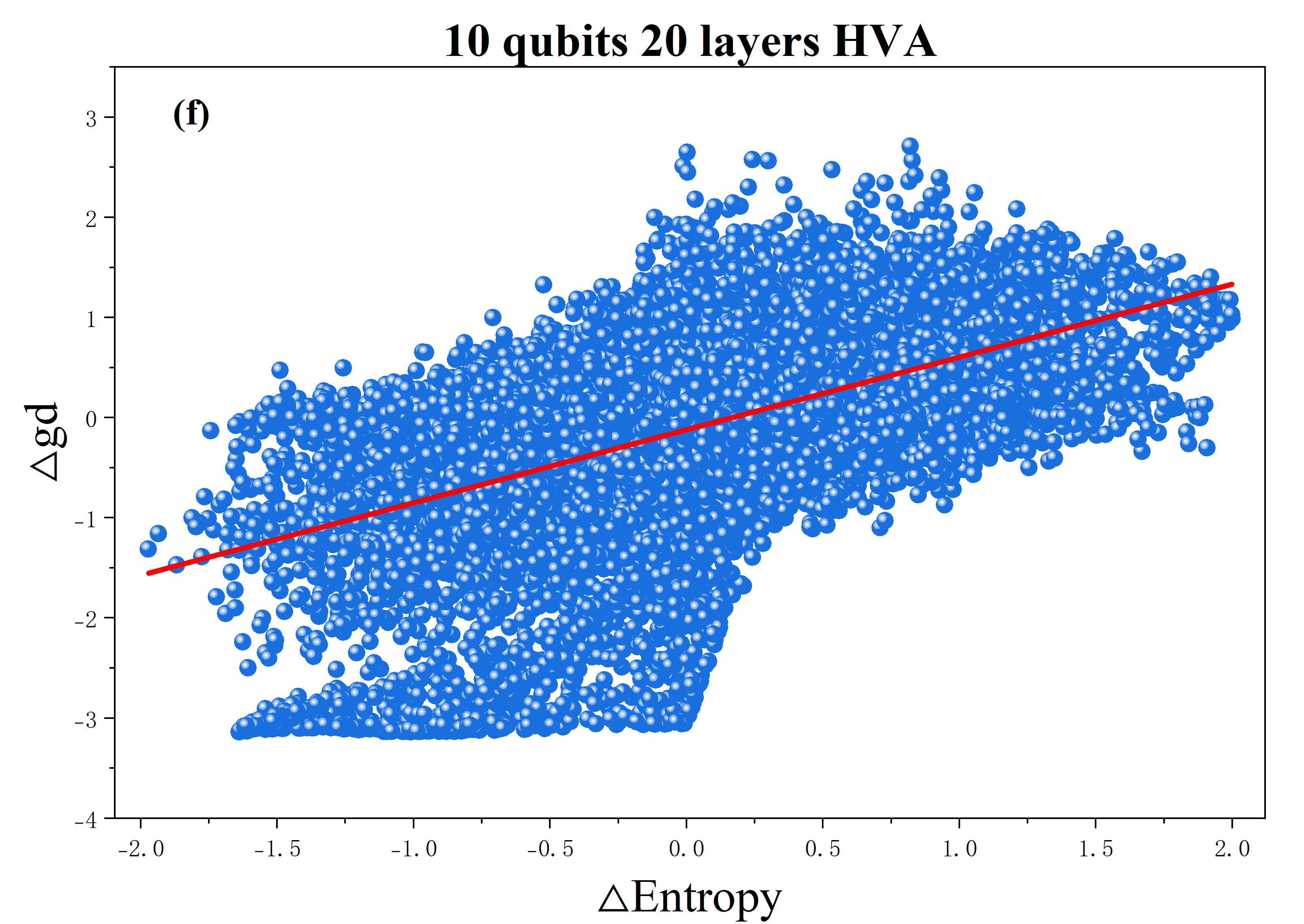
Figure 7: Layer-wise correlations between entanglement entropy and geodesic distance for optimized (a–d) HEA and (e,f) HVA circuits; panels (c,d) remove final layer influence.
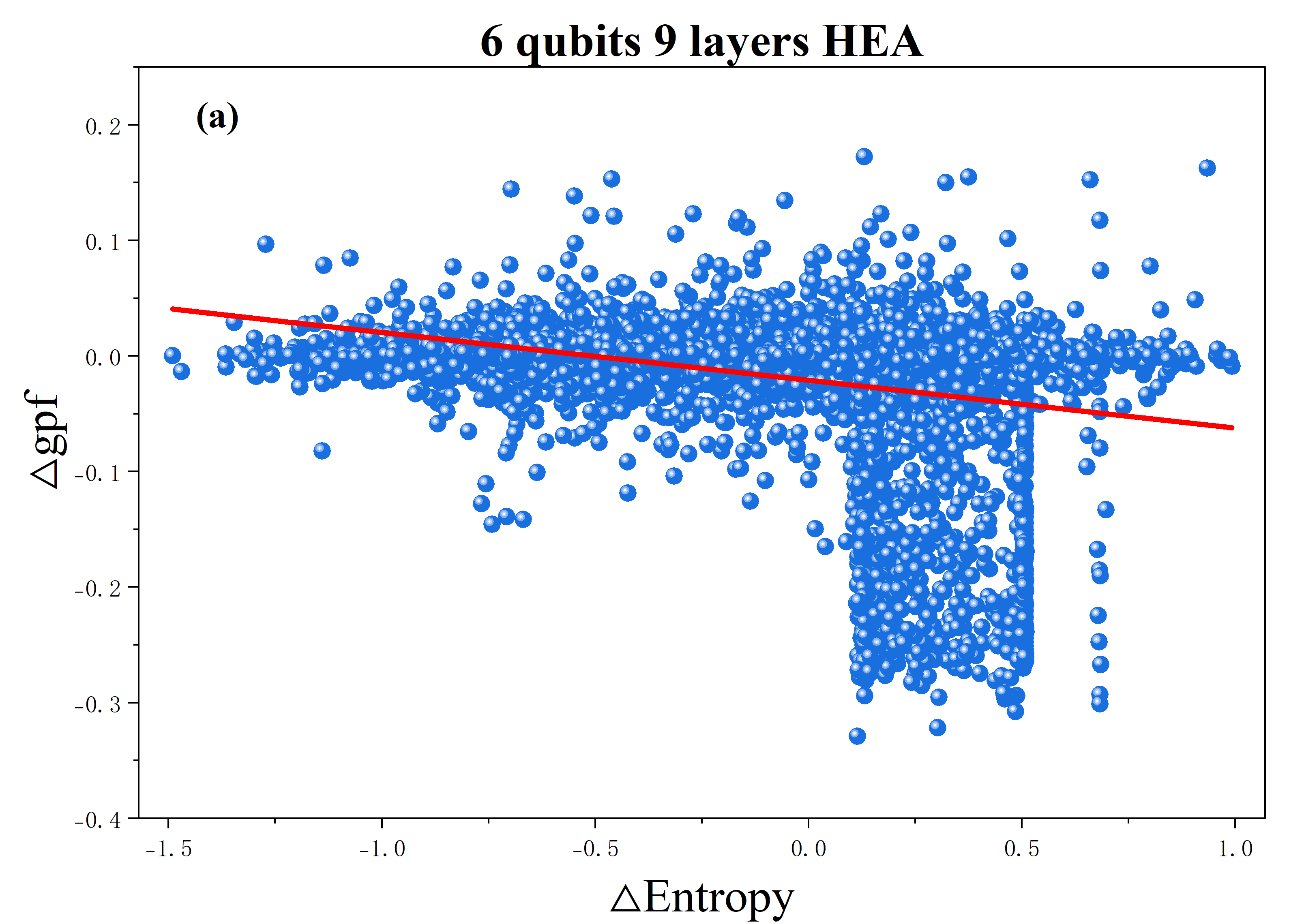
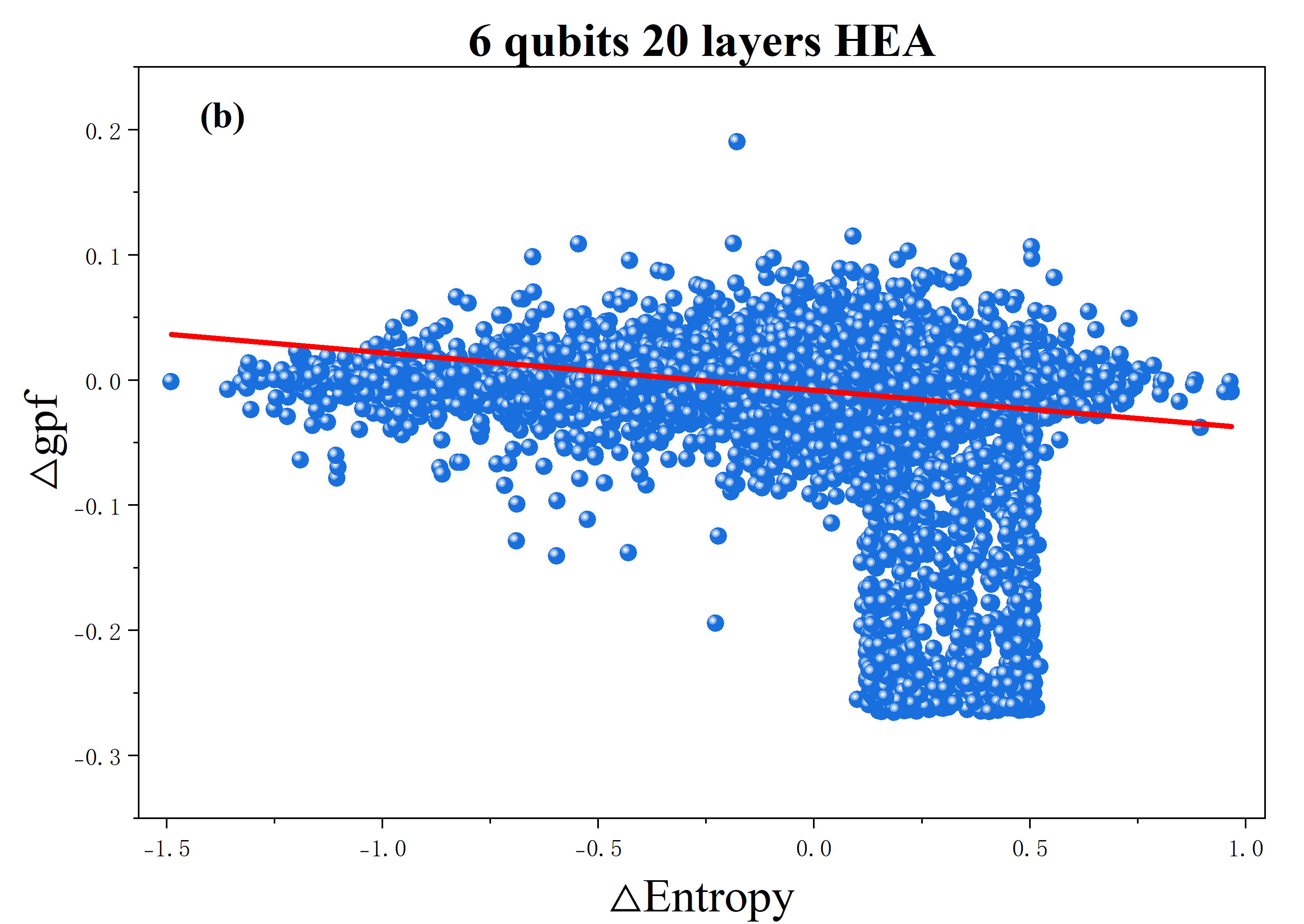
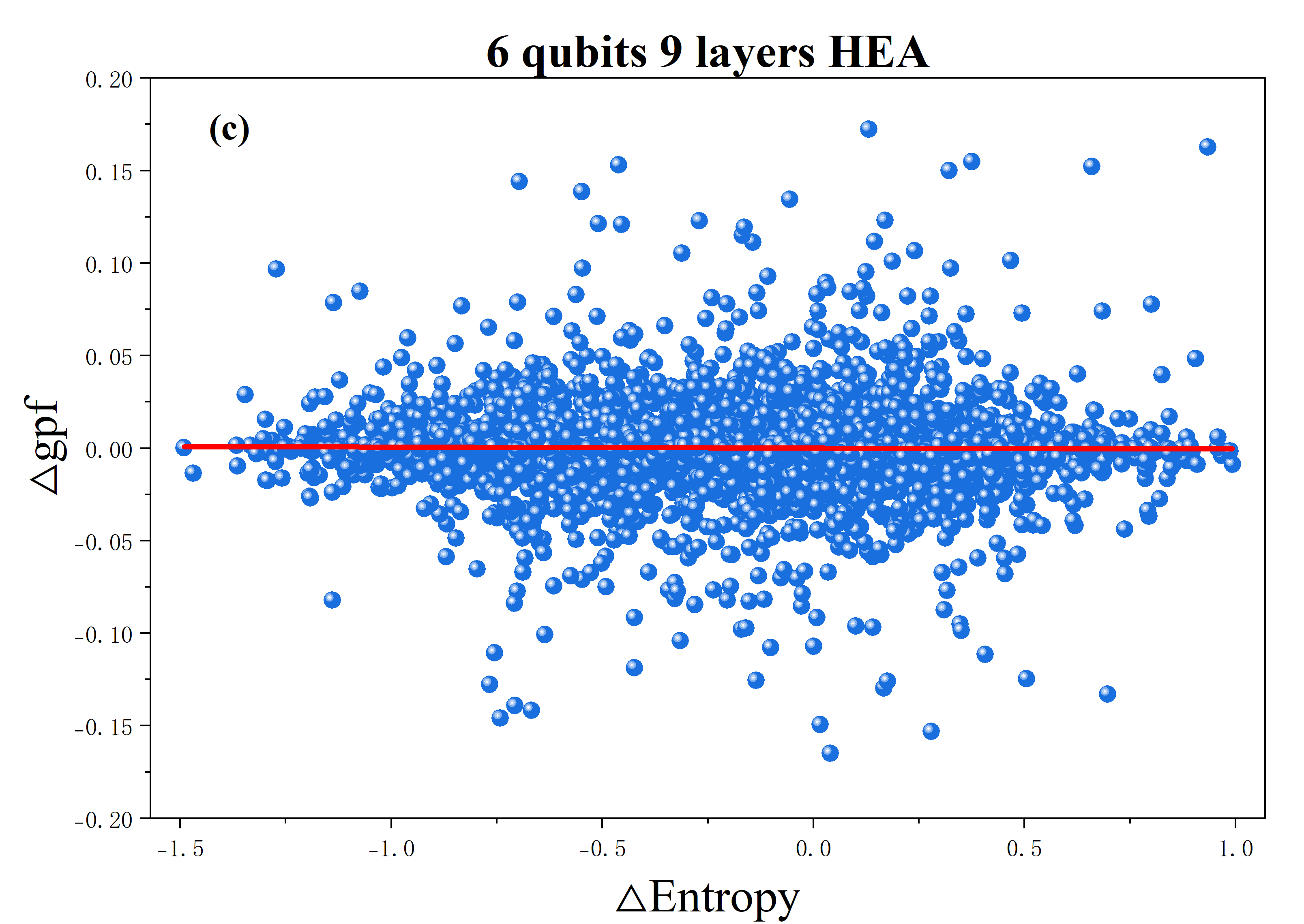
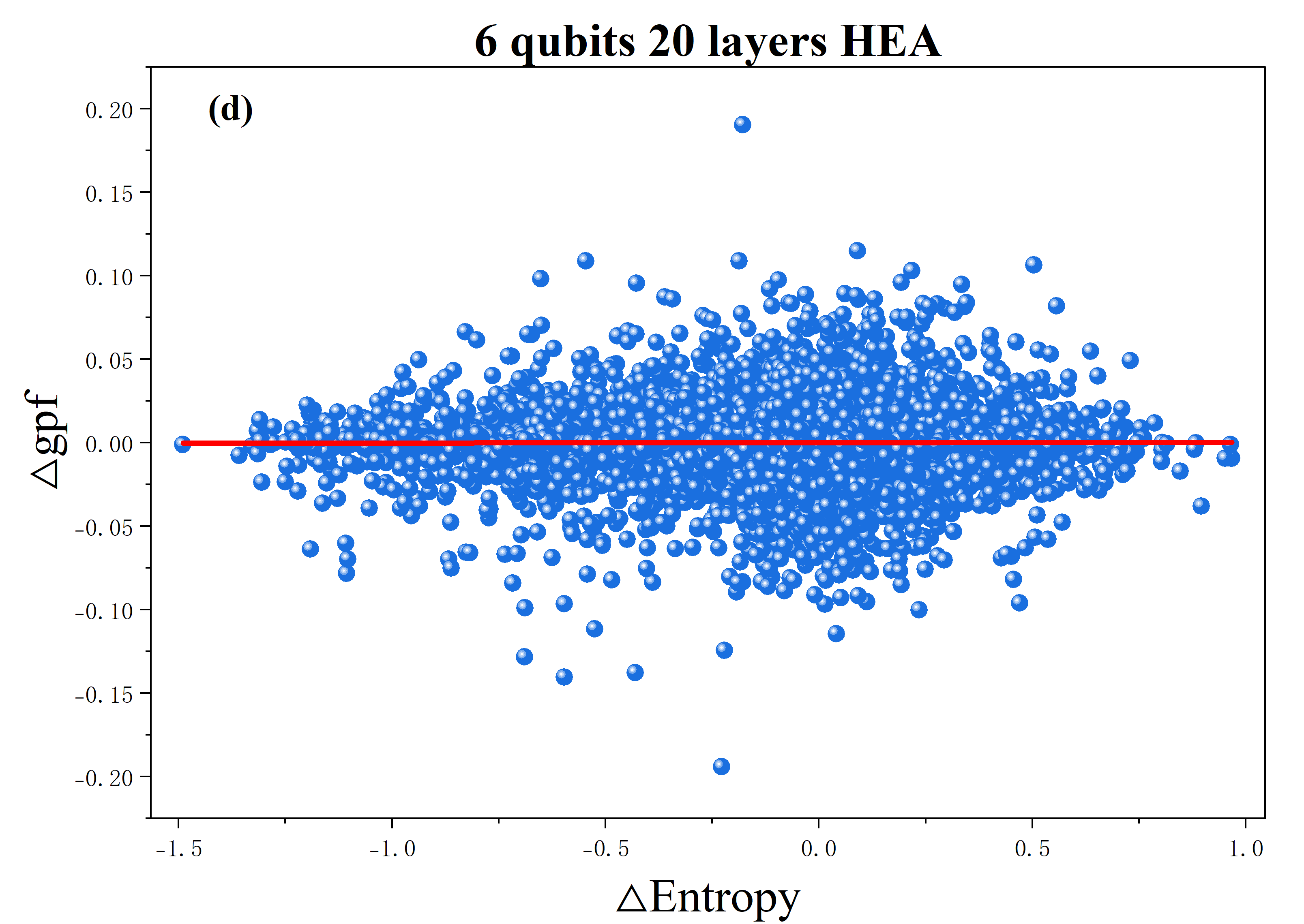
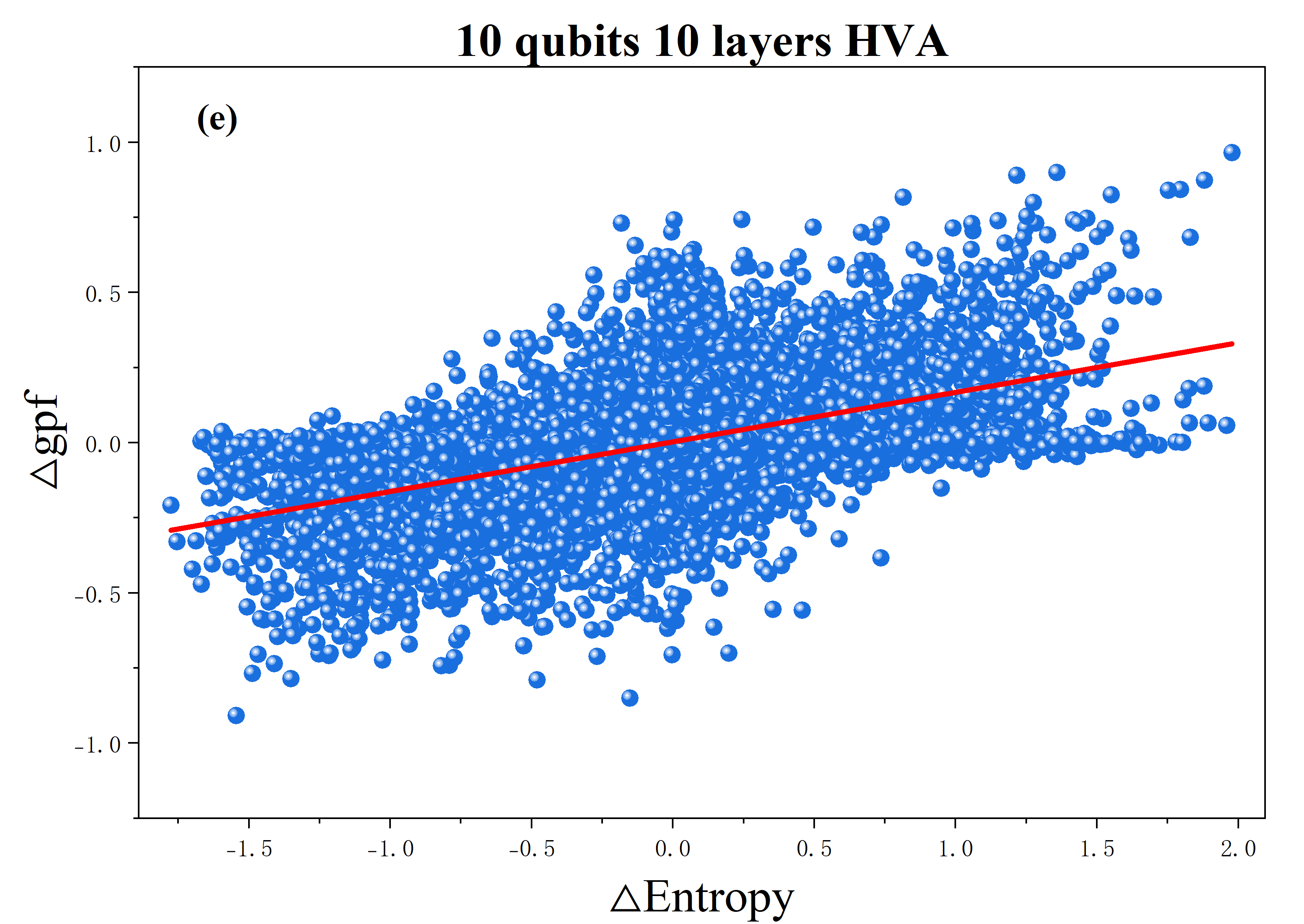
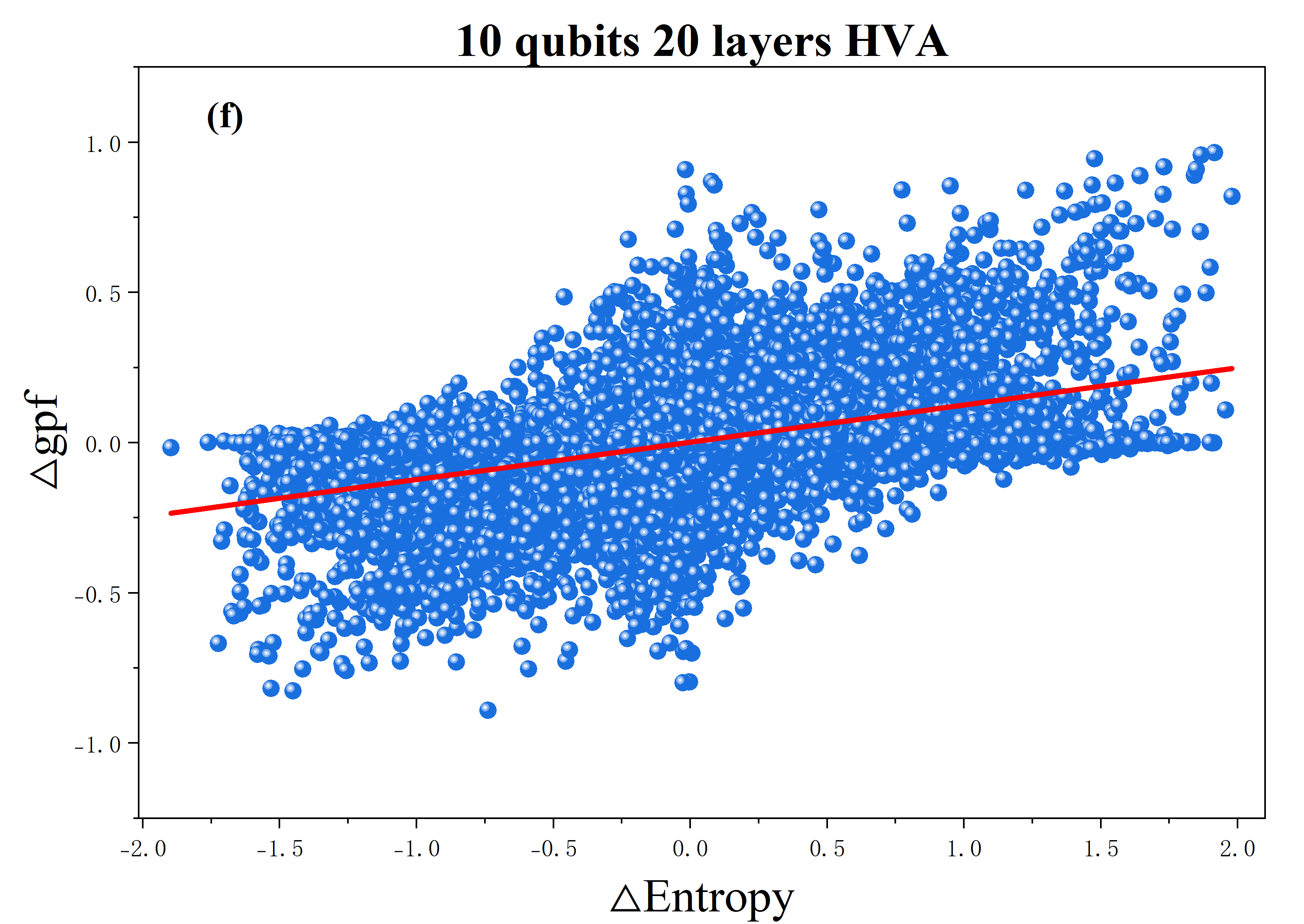
Figure 8: Layer-wise correlations between entanglement entropy and geometric phase fraction for optimized (a–d) HEA and (e,f) HVA circuits; panels (c,d) remove final layer influence.
For HEA, once the disproportionate contribution of the final circuit layer is excluded, any systematic correlation vanishes (Figure 7c,d and Figure 8c,d). Thus, even after optimization, hardware-efficient architectures are structurally incapable of channeling entanglement into coherent algorithmic progress.
Implications and Future Directions
These findings have immediate implications for ansatz architecture design in variational quantum algorithms. The presence of an inductive bias, encoding the structure of the problem Hamiltonian, is crucial: only then does entanglement consumption translate into operationally meaningful circuit evolution, as measured by approach to the target subspace and evolution in geometric phase. In contrast, model-agnostic circuits generate entanglement epiphenomenally—its magnitude fails to determine or accelerate computation; entanglement per se is not a usable resource in HEA.
The paper puts forth a compelling argument for geometric diagnostics—tracking geodesic distances and phase decomposition—as principled tools for evaluating candidate circuit architectures beyond static expressibility metrics. In particular, it suggests a hierarchy: circuits with "active" entanglement evolution (structurally coupled to target-directed geometry) offer greater potential for practical quantum advantage in the NISQ regime.
Extensions of this framework to other classes of parameterized circuits (e.g., QAOA, QNNs) and to alternative resource theories (non-stabilizerness, contextuality) as well as scalable benchmarking on larger problem Hamiltonians are immediate routes for future research. Additionally, relating geometric phase dynamics explicitly to trainability and barren plateau mitigation remains an open challenge.
Conclusion
This work provides a systematic geometric characterization of entanglement in variational quantum algorithms. The capacity to operationally utilize entanglement as a dynamical resource is not a universal property of quantum circuits but emerges only in problem-informed architectures such as HVA. For hardware-efficient, problem-agnostic ansätze, entanglement is largely decoupled from computational progress. These results highlight the need for careful architectural design in VQAs, advocating for frameworks that not only generate but meaningfully harness entanglement. The geometric approach advanced here offers valuable quantitative tools and conceptual insights for next-generation quantum algorithm development.

