- The paper presents a novel methodology using Riemannian diffeomorphisms to model smooth, longitudinal physical activity transformations that capture both timing and amplitude changes.
- It employs MFPCA to decompose activity changes into principal modes, with the leading component showing a strong positive association with physical function (β = 60.1, p < 0.0001).
- Scalar summaries and advanced modeling techniques highlight the predictive power of detailed activity curve dynamics for monitoring functional health in older women.
Introduction
This paper presents a rigorous approach to quantifying longitudinal changes in diurnal physical activity (PA) patterns among older women, leveraging minute-level accelerometer data and advanced functional data analysis. The authors propose modeling visit-to-visit changes in these PA curves as Riemannian diffeomorphic transformations and use multivariate functional principal component analysis (MFPCA) to decompose the modes of change in both temporal (phase) and magnitude (amplitude) domains. This framework is designed to retain temporal structure and separate within-subject dynamics from between-subject baseline heterogeneity. The central focus is on how smooth PA pattern transformations across visits encode clinically relevant information about physical function (PF), as measured by the RAND-36 instrument.
Cohort and Data Processing
The analytic sample is drawn from the WHI OPACH and WHISH studies, providing up to three accelerometer assessment waves per participant (baseline, W1, W2). Minute-level vector magnitude (VM) activity counts between 6 a.m. and midnight were aggregated and smoothed with cubic splines to construct diurnal PA curves.
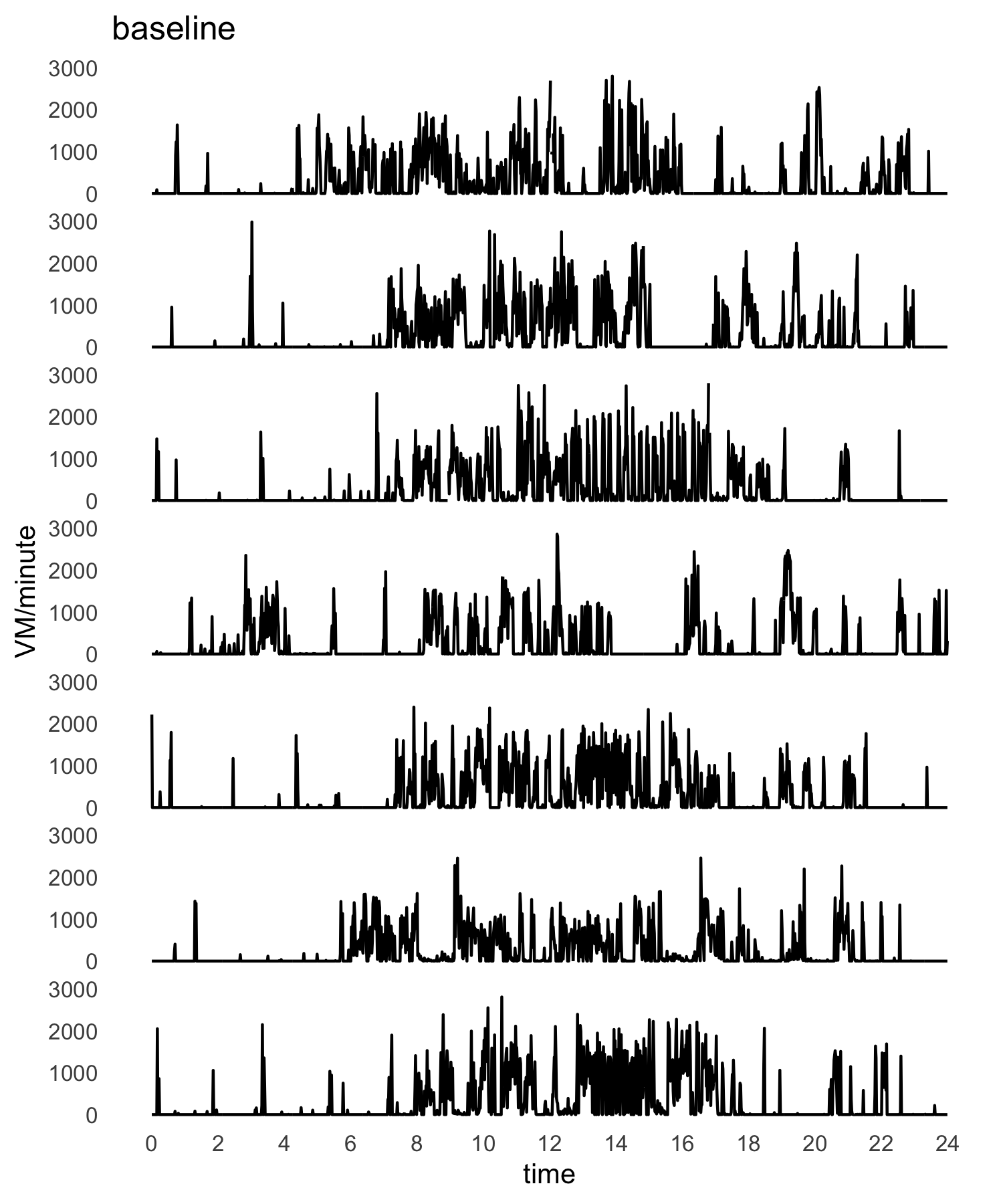
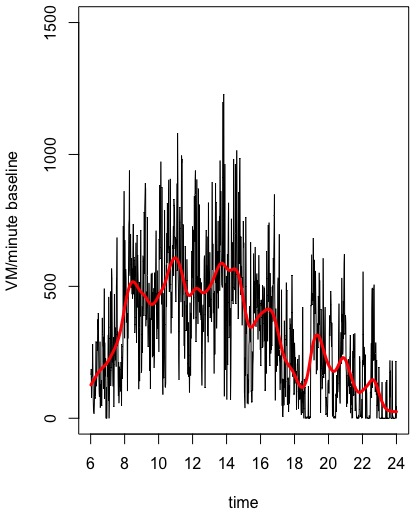
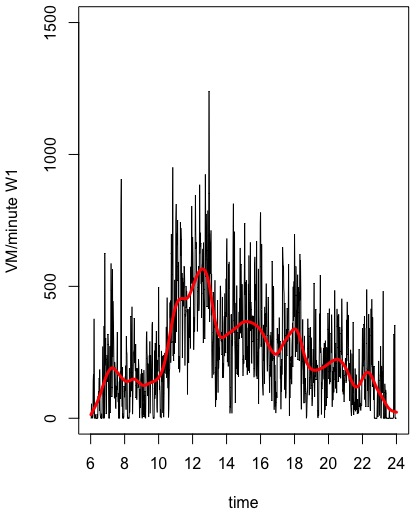
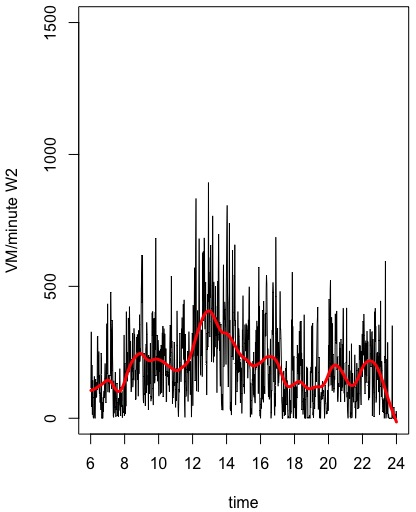
Figure 1: Example of a participant's activity count during multiple days at baseline, illustrating high intra-day resolution available for longitudinal analysis.
Relevant quality-control criteria ensured each profile reflects typical free-living activity: valid days required ≥14 hours of device wear, and only participants with multiple valid assessment waves were retained for the main analyses.
Longitudinal change in PA is represented as a diffeomorphic deformation between an individual's activity curves across visits. The optimal transformation is parameterized by a field of initial momenta, capturing both temporal shifts (x-domain) and amplitude changes (y-domain) at each minute. Deformation energy, computed as the sum of squared initial momenta, quantifies the magnitude of overall change.
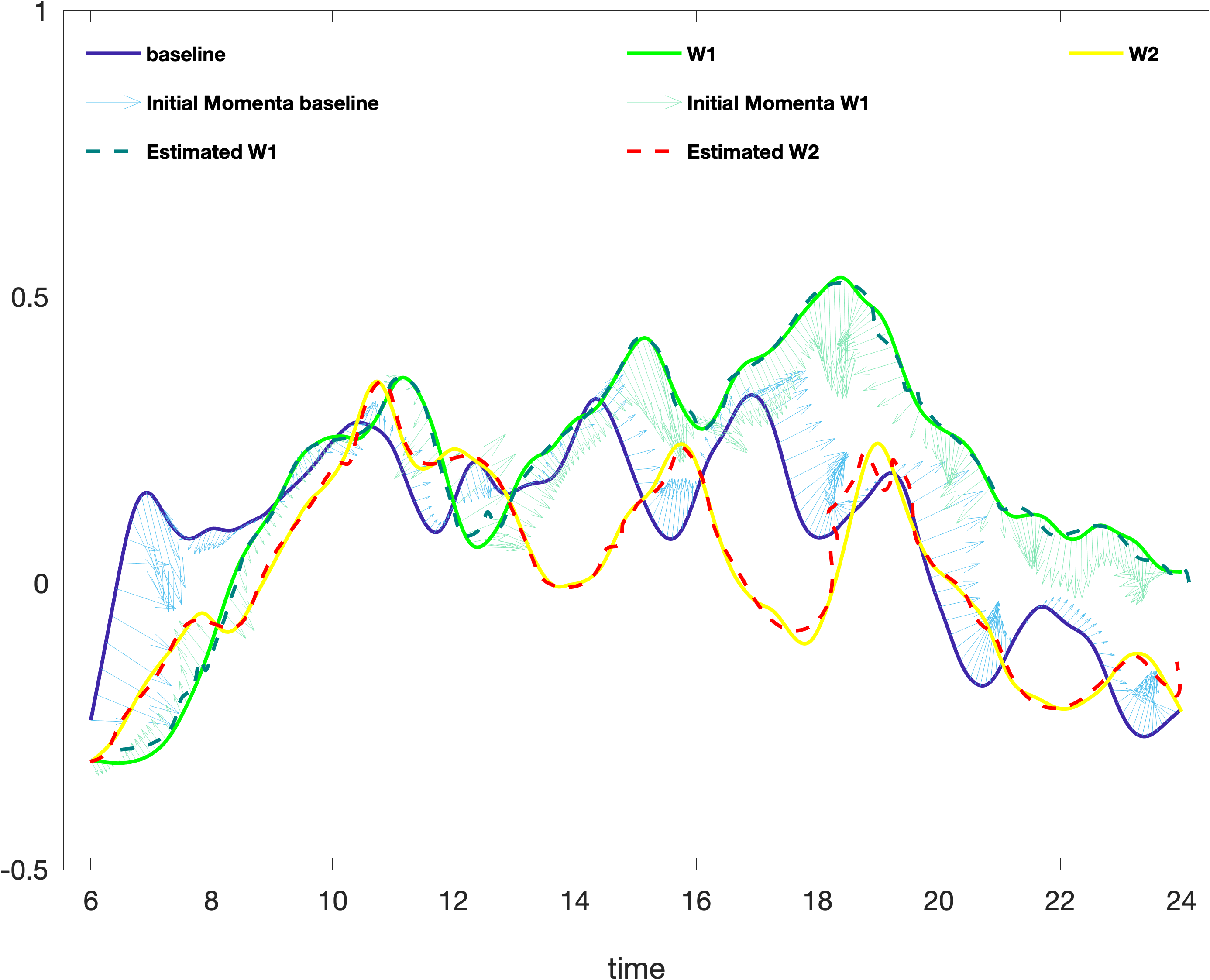
Figure 2: Single participant example of PA curve deformations and initial momenta across three visits; arrows depict joint temporal and amplitude shifts, and dashed curves show reconstructed PA patterns, confirming high-fidelity transformation.
This deformation-based representation allows for explicit modeling of both timing and magnitude adaptations in diurnal activity—attributes relevant for aging populations with heterogeneous behavioral adjustment.
Multivariate Functional Principal Component Analysis
MFPCA is employed to decompose the deformation field into dominant, orthogonal modes, preserving the interpretability of phase (temporal) and amplitude (magnitude) domains. The first 15 multivariate components explained ≥90% of longitudinal PA pattern variance in both transition periods (baseline–W1, W1–W2). The leading mode (PC1) captured an overall decrease or increase in activity (especially between 10 a.m.-7 p.m.) and was the largest single source of variation (22.4% for baseline–W1 and 20.8% for W1–W2).
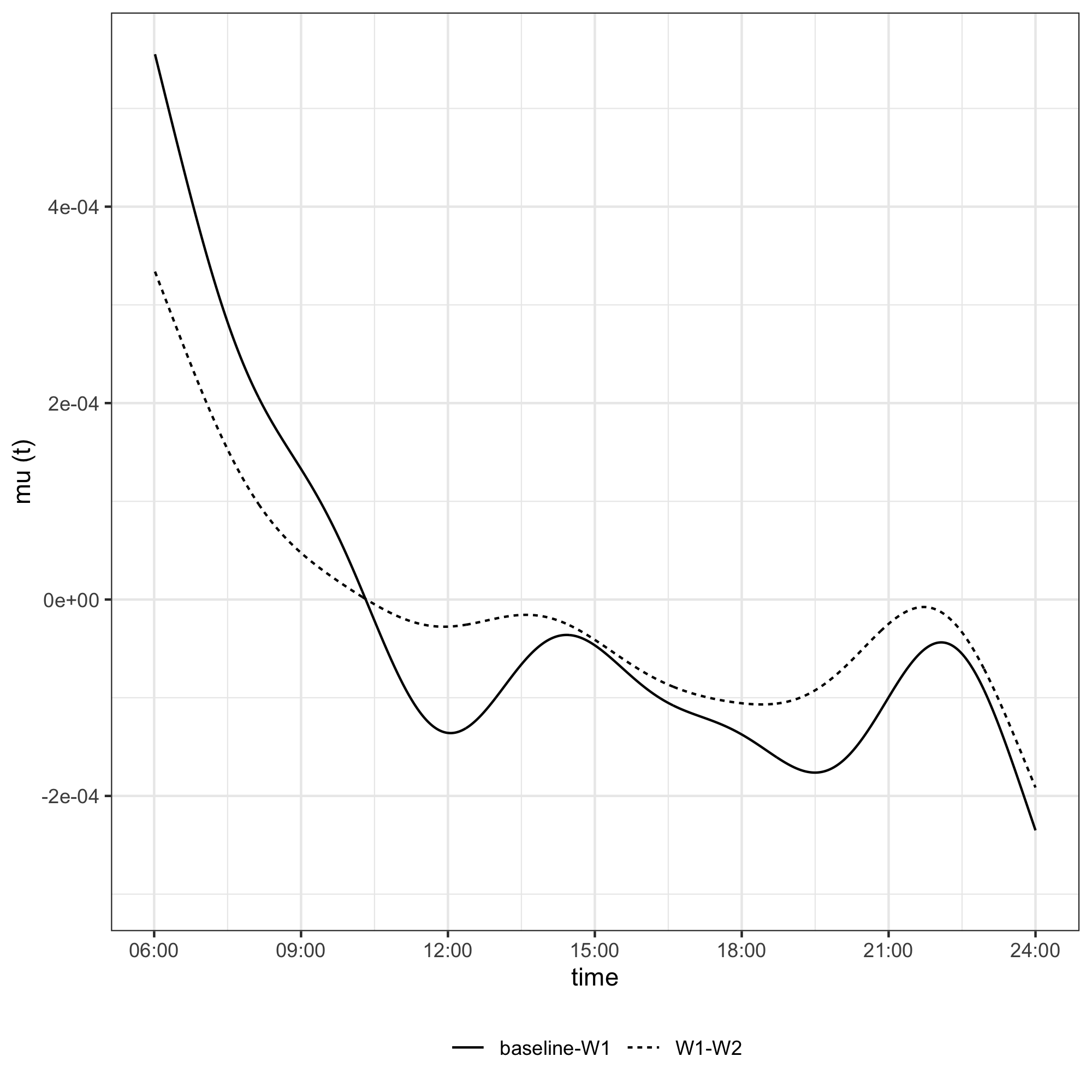
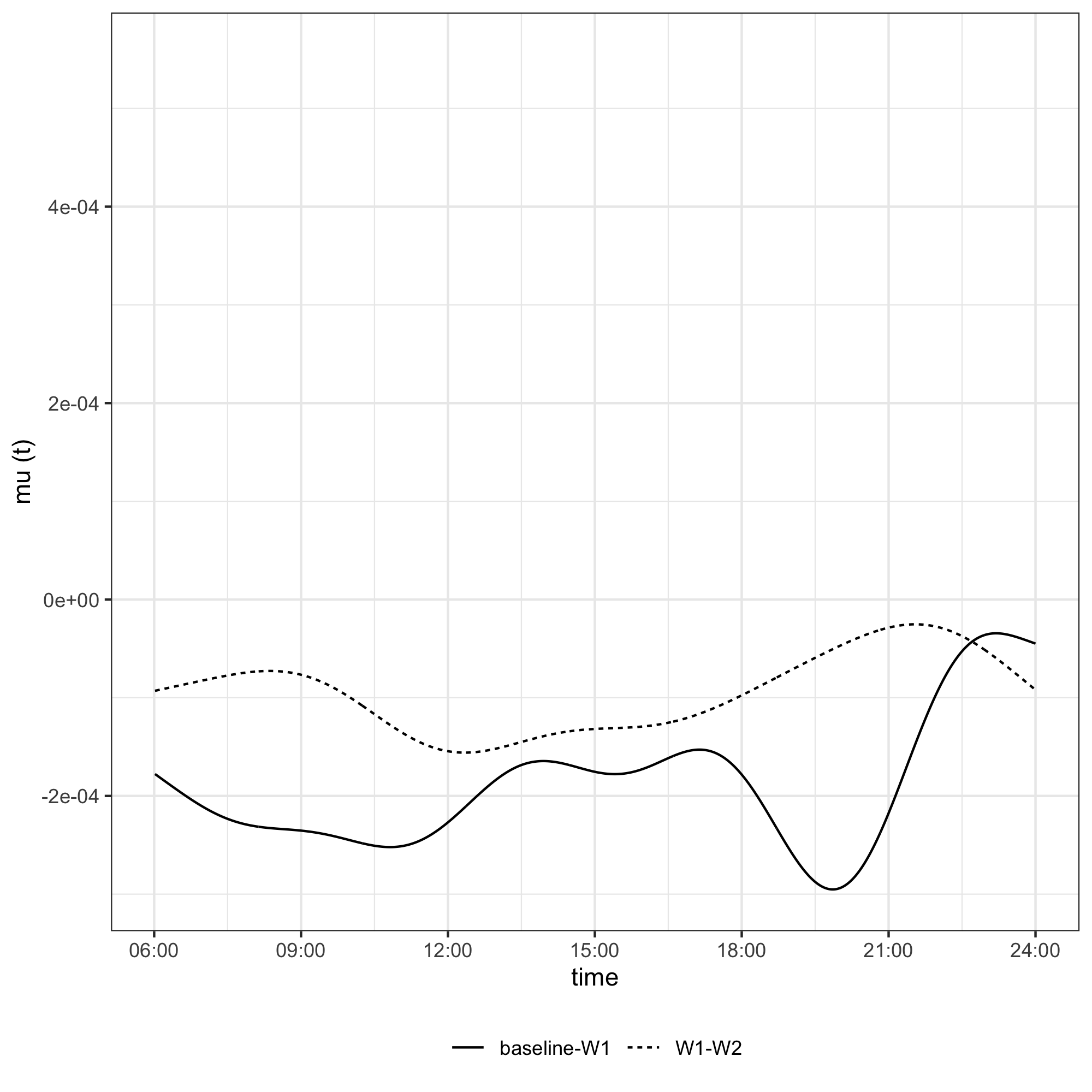
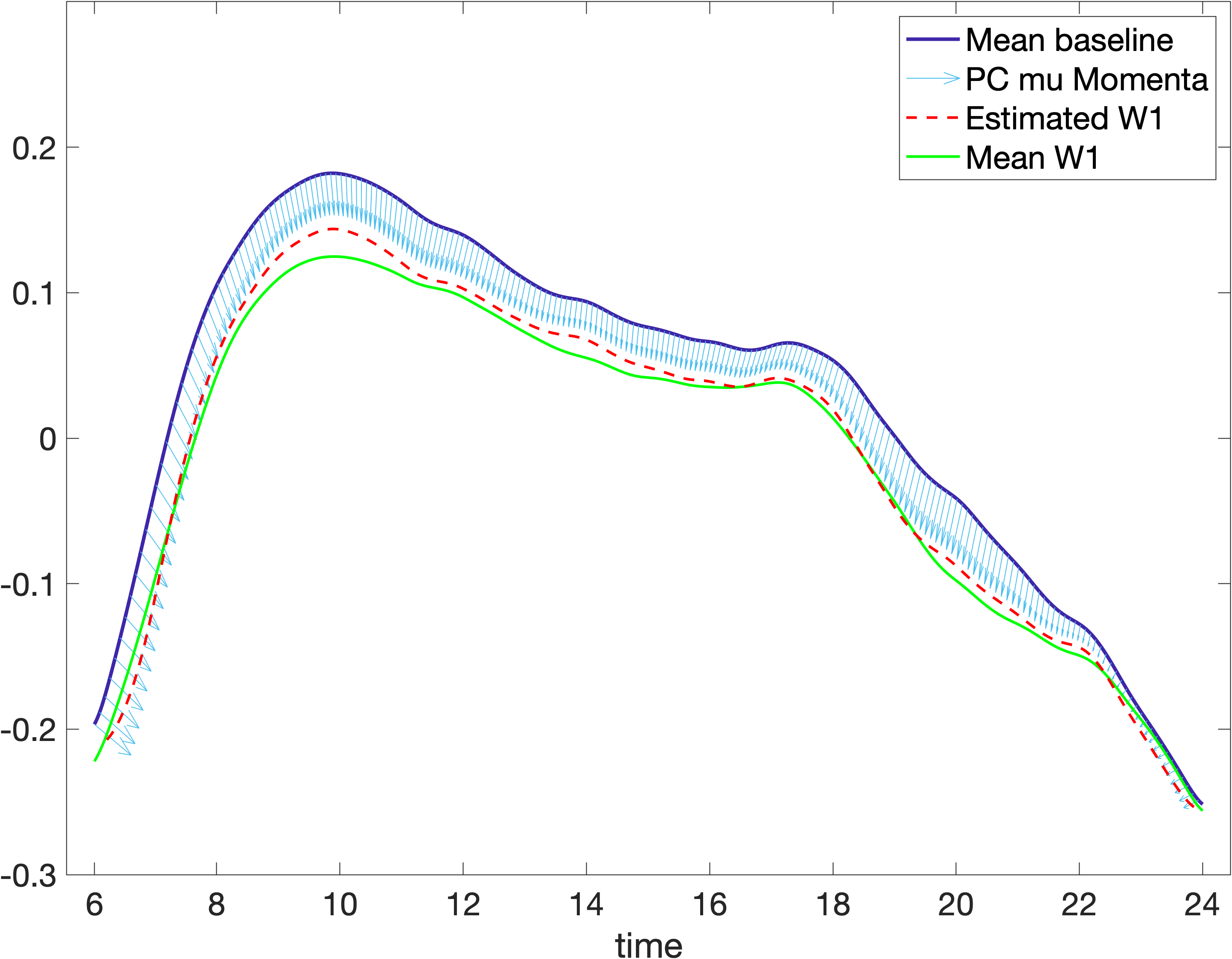
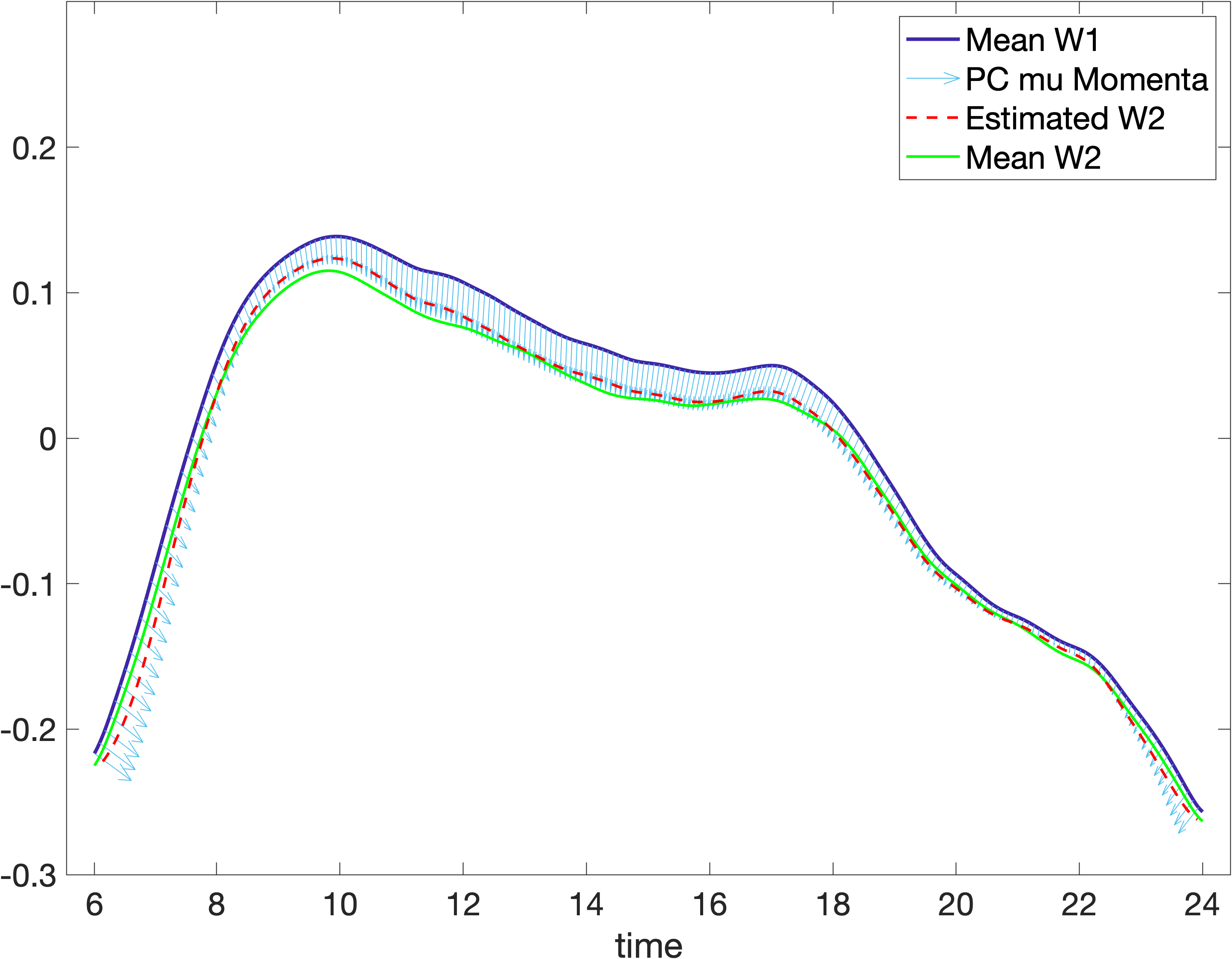
Figure 3: Mean of initial momenta in the x domain, highlighting systematic diurnal temporal shifts observed at the population level between visits.
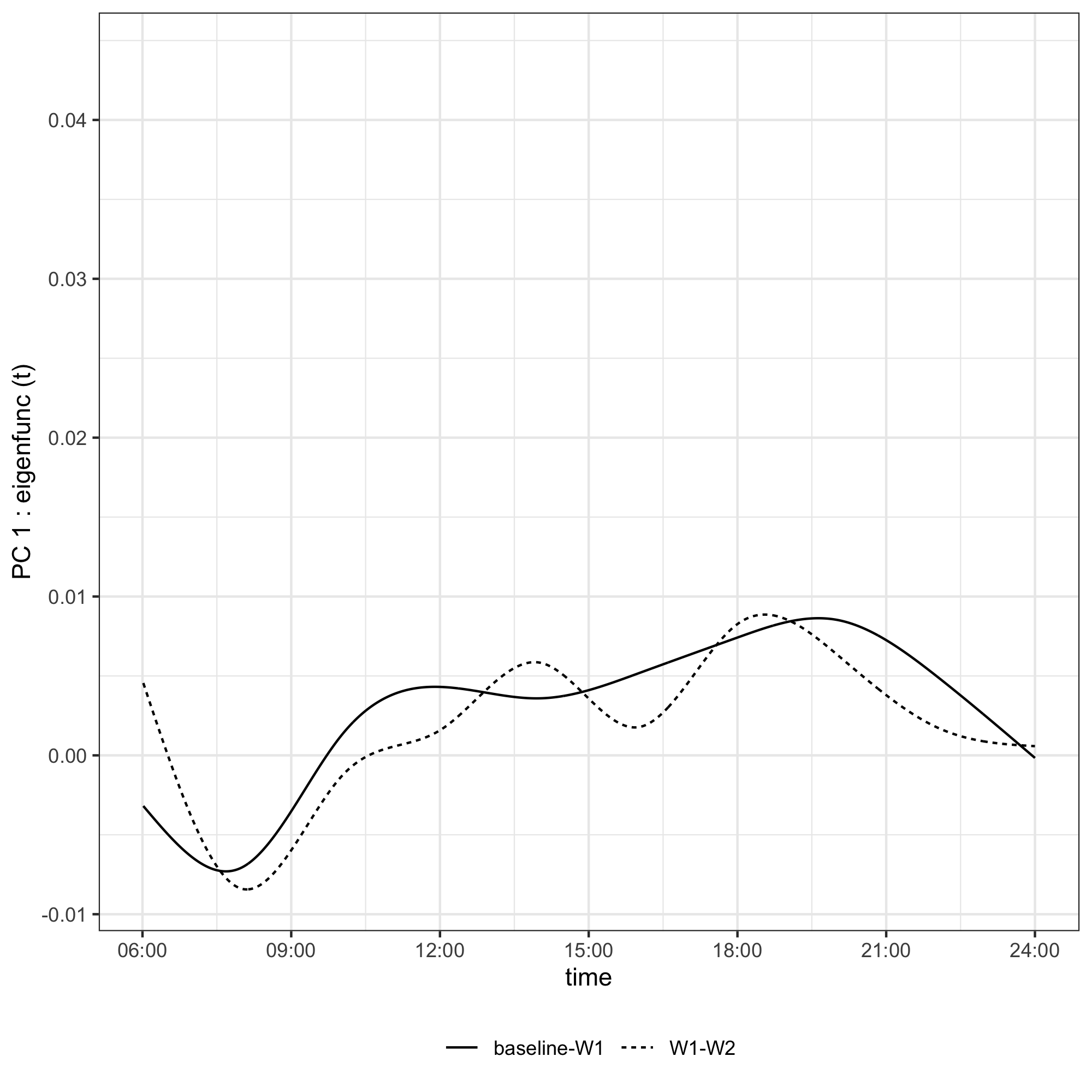
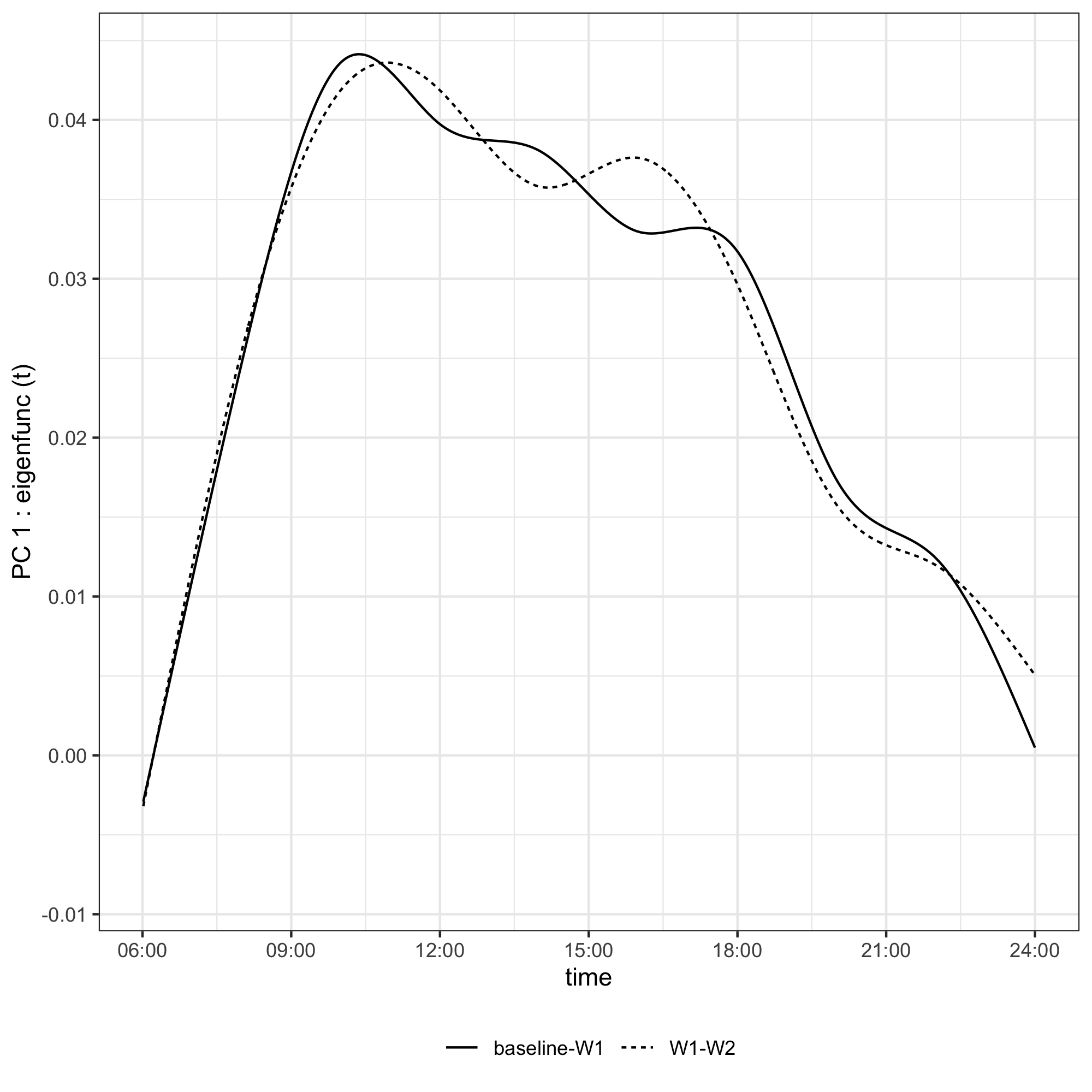
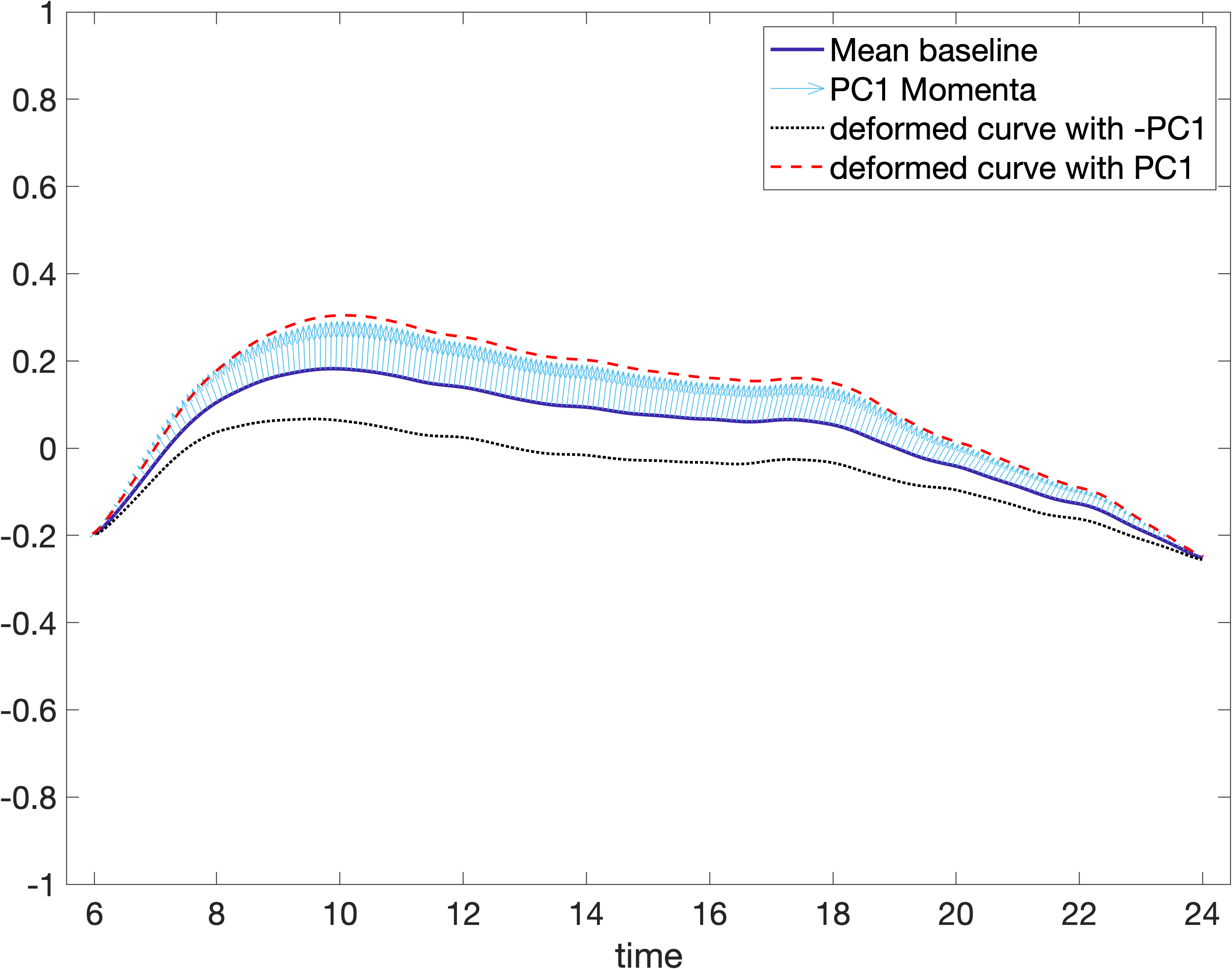
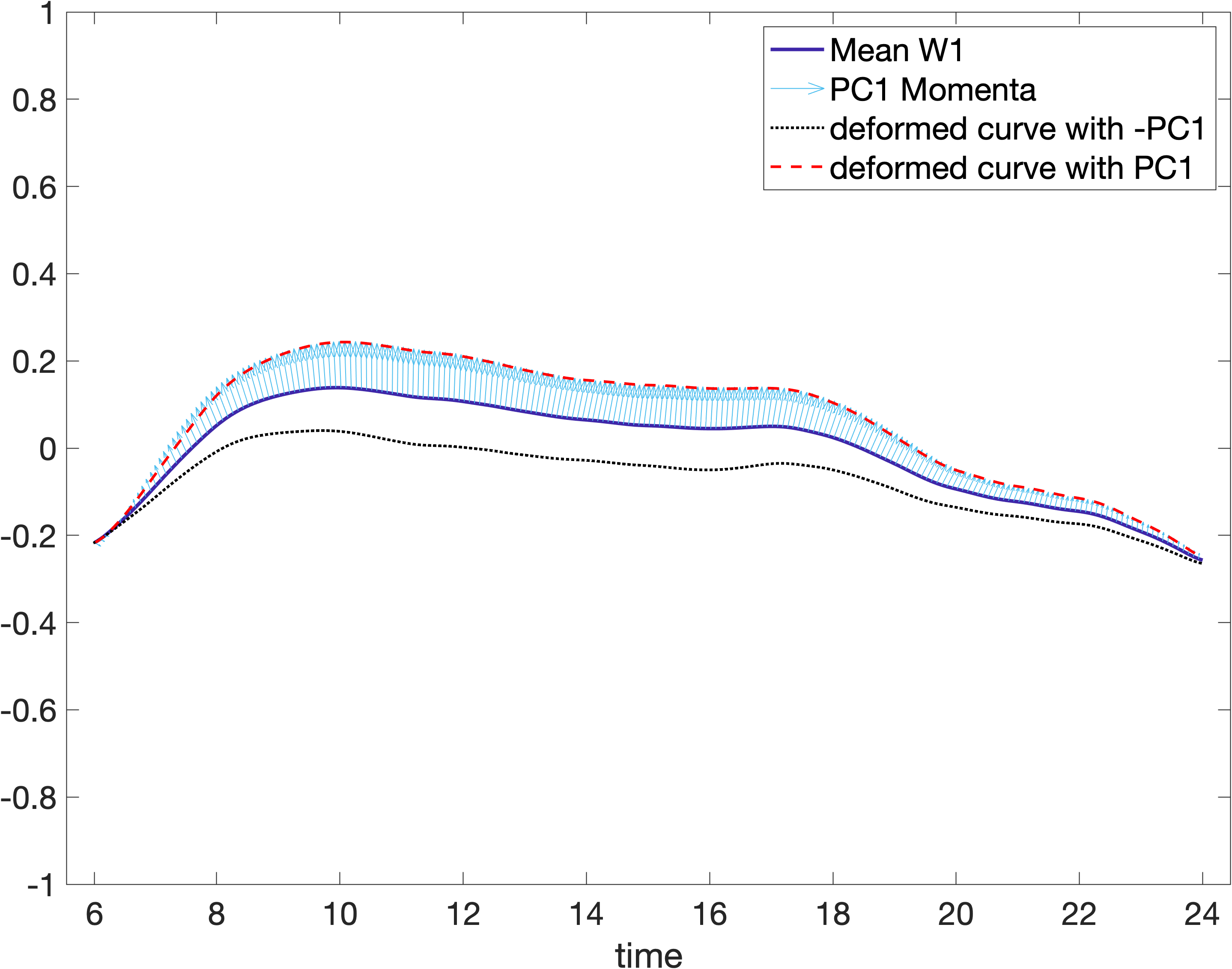
Figure 4: PC1 eigenfunction in x domain, the primary temporal mode underlying longitudinal PA pattern variation; the negative-to-positive crossing denotes the transition time point for most pronounced shifts.
Further principal components (Figures 5, 8–11) resolved sub-patterns of redistribution such as leftward or rightward morning shifts and localized changes.
Scalar Representations and Model Comparison
In addition to the full MFPCA-based decomposition, scalar measures summarizing net change (signed AUC difference, deformation energy) were constructed. Comparison with a naive concatenated univariate FPCA (UFPCA) demonstrated that MFPCA more cleanly separated domain-specific structure, particularly near the transition points between x and y domains.
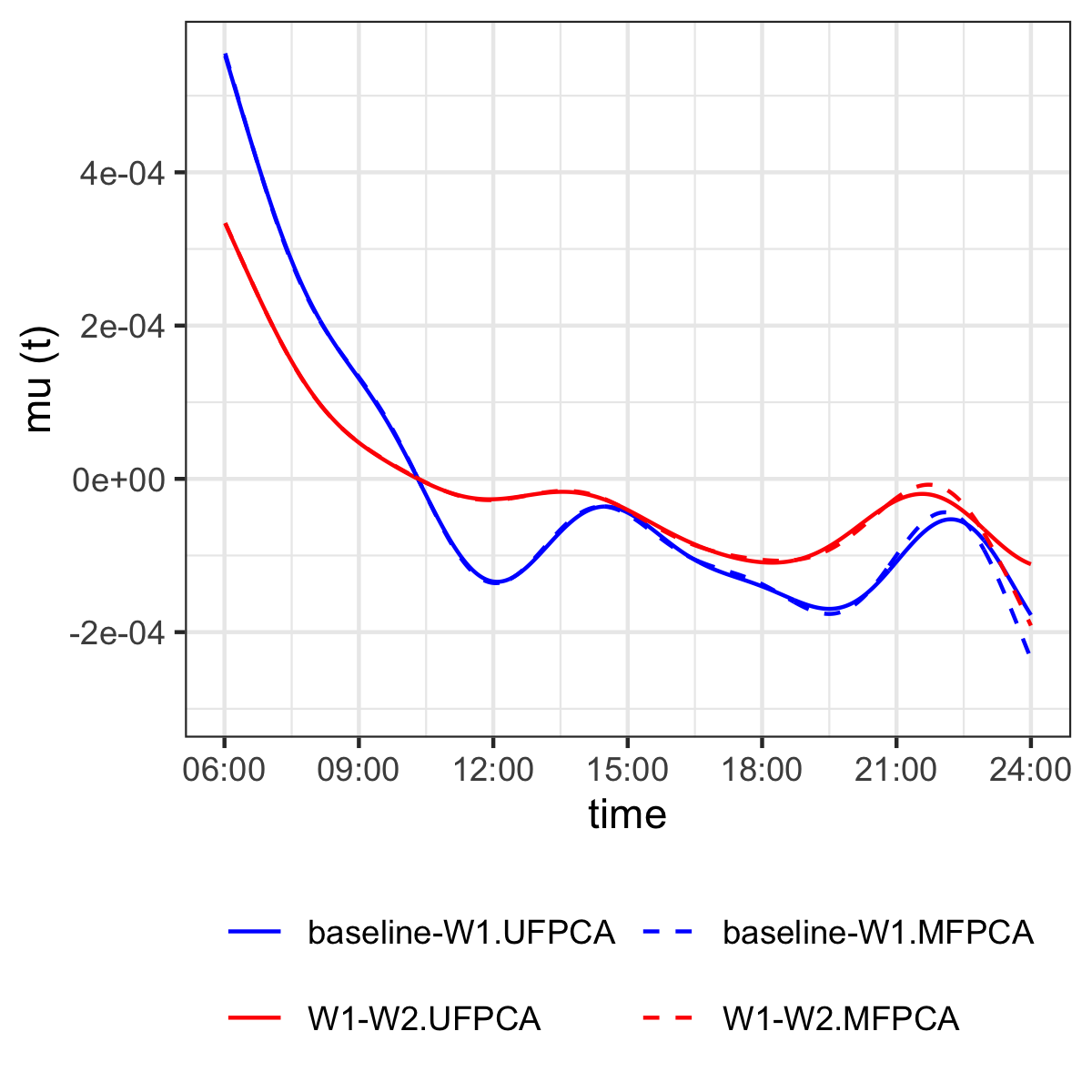
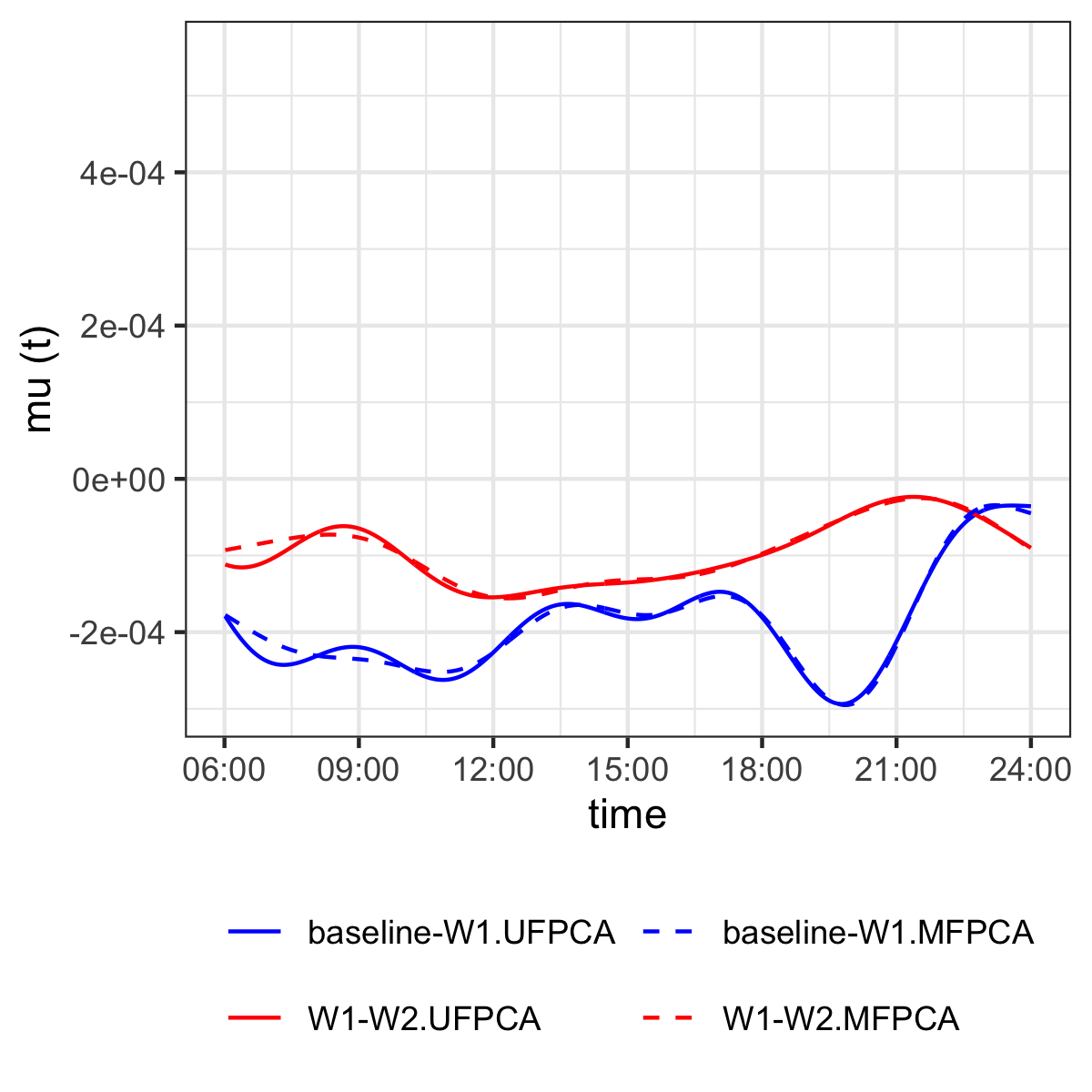
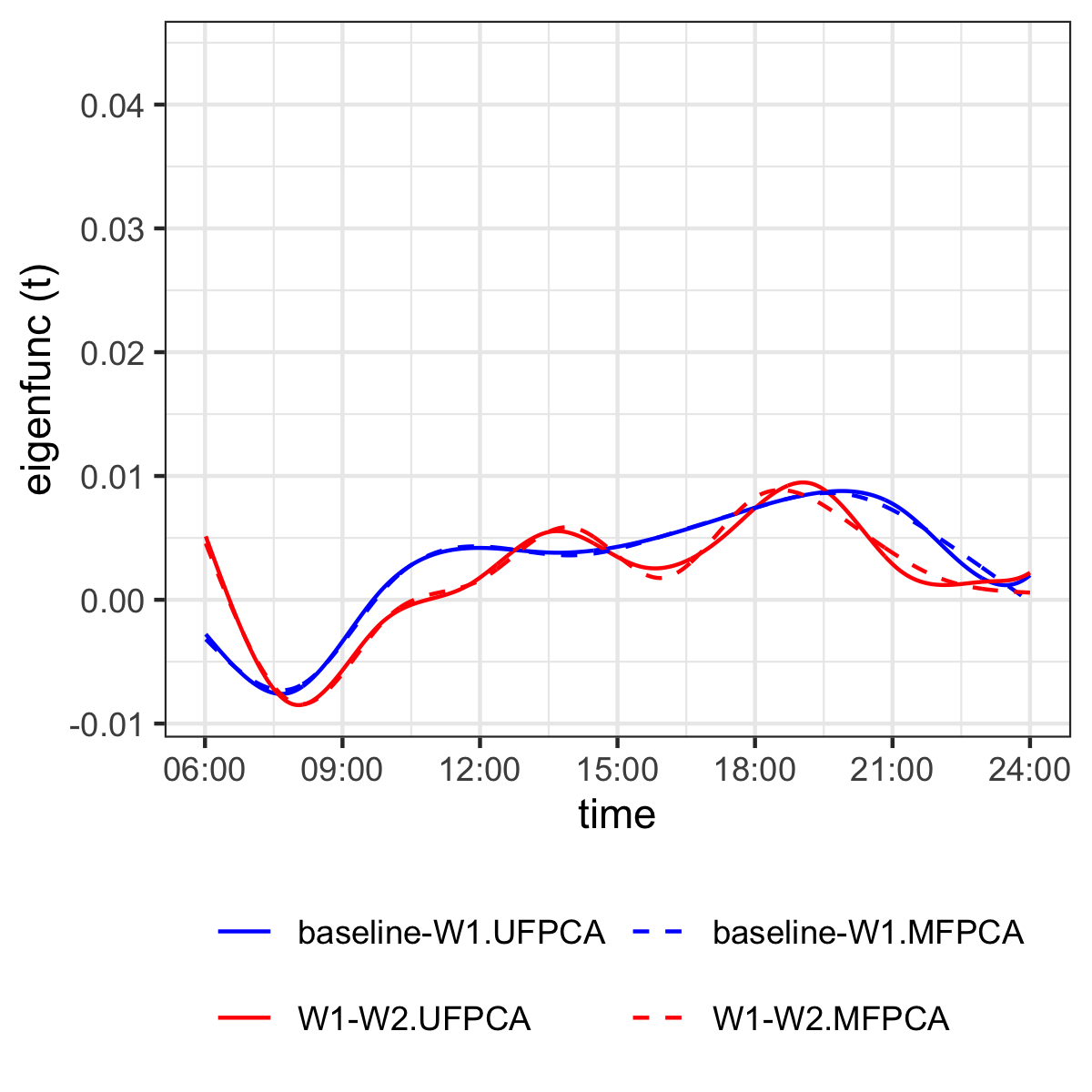
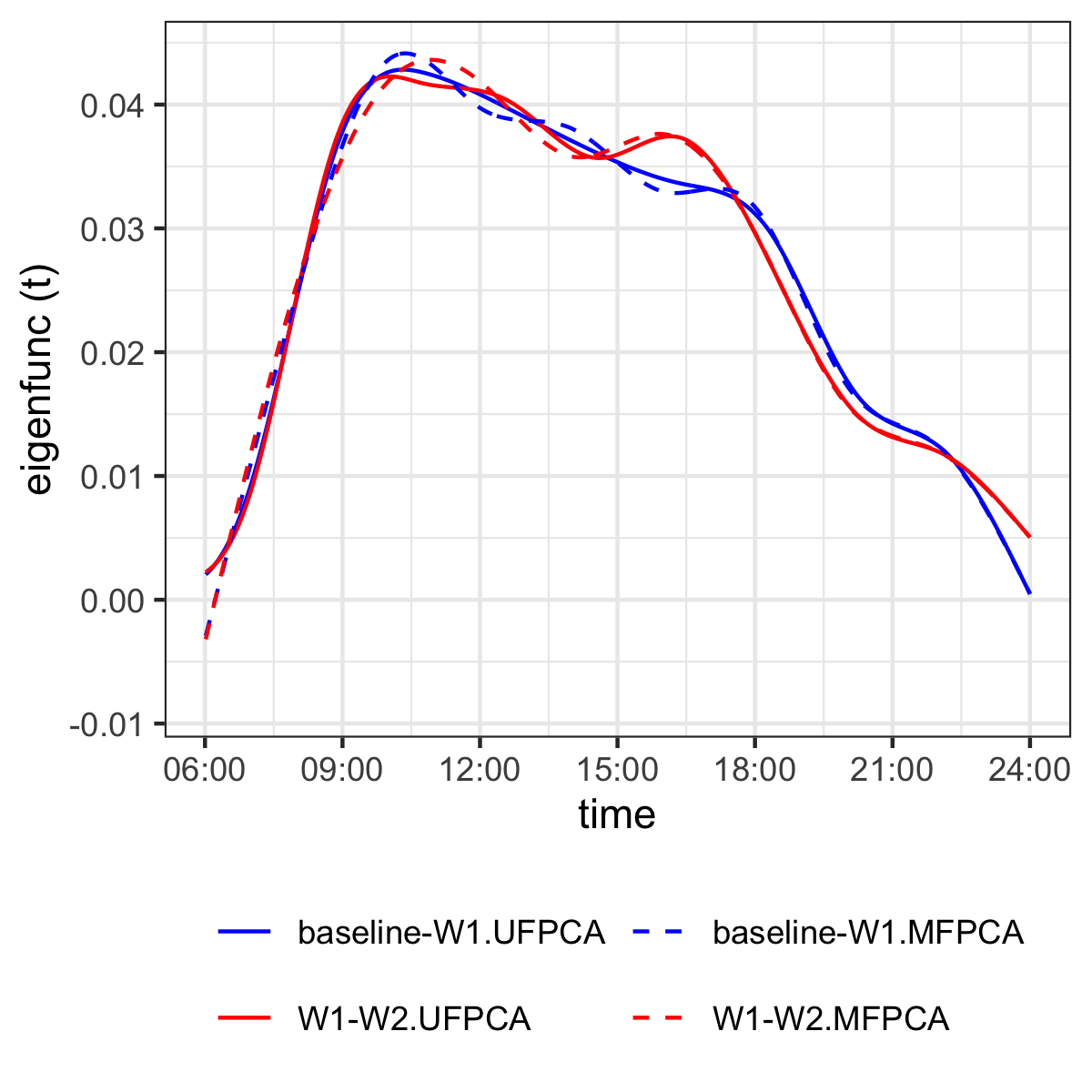
Figure 5: Mean functions at x domain for both MFPCA and UFPCA, with UFPCA's artificial smoothness across domains illustrating its limitations in representing multi-domain functional changes.
Association with Physical Function Outcomes
Associations between PA change features and PF (RAND-36) were assessed using linear mixed-effects models, jointly adjusting for relevant covariates and addressing within-person repeated measures. Several strong results emerge:
- PC1 of MFPCA deformation was highly positively associated with PF (β = 60.1, p<0.0001). Increasing PC1 score (representing an upward, across-the-day increase in activity) was associated with higher PF.
- Deformation energy by period interaction was significant (p=0.003), with a larger effect during W1–W2 than baseline–W1, indicating PF in older ages is more responsive to recent changes in daily activity configuration.
- Net-AUC change (total activity mass difference) and baseline covariates like age, BMI, and MVPA were also significant but less informative than the principal deformation modes for domain-specific change effects.
Theoretical and Practical Implications
This work advances statistical methodology for longitudinal sensor data by explicitly modeling smooth, invertible transformations between functional phenotypes and conducting principal component analysis in a multivariate phase-amplitude space. Practically, it demonstrates that not just the quantity, but the timing and structure of daily activity adaptation, are significant determinants of later-life physical function.
Contradicting the oversimplification inherent in summary PA metrics, this study provides strong evidence that multidimensional pattern changes bear unique predictive relevance to aging-related functional health, beyond total activity levels alone.
These insights motivate further development of scalable multi-level MFPCA methodologies and lay the groundwork for individualized digital phenotyping of functional aging trajectories. Future work could extend this approach to more diverse cohorts, implement day-type-specific modeling, and incorporate intervention group indicators to further refine the causal interpretation of longitudinal activity-health relationships.
Conclusion
By modeling longitudinal diurnal PA change as Riemannian deformations and dissecting the major modes via MFPCA, the study provides novel quantitative biomarkers of activity pattern adaptation with high predictive validity for age-related declines in physical function. The principal finding that the leading amplitude-phase deformation mode is robustly and positively associated with functional health, particularly in more advanced age, emphasizes the importance of high-resolution behavioral change signatures in population aging research. This framework is well-positioned for integration in future large-scale digital health studies and has direct translational relevance for the monitoring of successful aging phenotypes.
References:
(2604.22123)

