- The paper demonstrates that implicit self-cues, such as a black screen, significantly interrupt habitual video consumption by increasing self-awareness.
- It uses a controlled experimental design with randomized interventions to compare behavioral outcomes, user acceptance, and cognitive impacts.
- Findings reveal that subtle, contextually anchored cues outperform overt self-representations in reducing usage and mitigating psychological reactance.
Background and Motivation
The proliferation of short-form video platforms, exemplified by YouTube Shorts, has escalated concerns regarding digital overconsumption. Recent literature underscores the detrimental effects on prospective memory and cognitive integrity associated with habitual, rapid context-switching inherent in short-form media [10.1145/3544548.3580778]. Conventional digital wellbeing interventions predominantly rely on coercive mechanisms such as app blocking, often eliciting psychological reactance and undermining voluntary behavior change [10.1145/3314403, 10.1145/2858036.2858403]. This work advances an alternative paradigm: leveraging objective self-awareness theory through self-related cues functioning as design friction to foster autonomous disengagement rather than forcibly curtailing usage.
System and Experimental Design
The authors developed SelfStop, an Android application instrumented to periodically display self-related cues during YouTube Shorts viewing. The intervention was delivered as a five-second full-screen overlay after every twentieth video, with four randomized conditions: black screen (control), live camera (real-time self-image), selfie (pre-captured static image), and name in text (participant's name). The experimental setup preserved ecological validity by replicating native feed recommendations and viewing affordances.
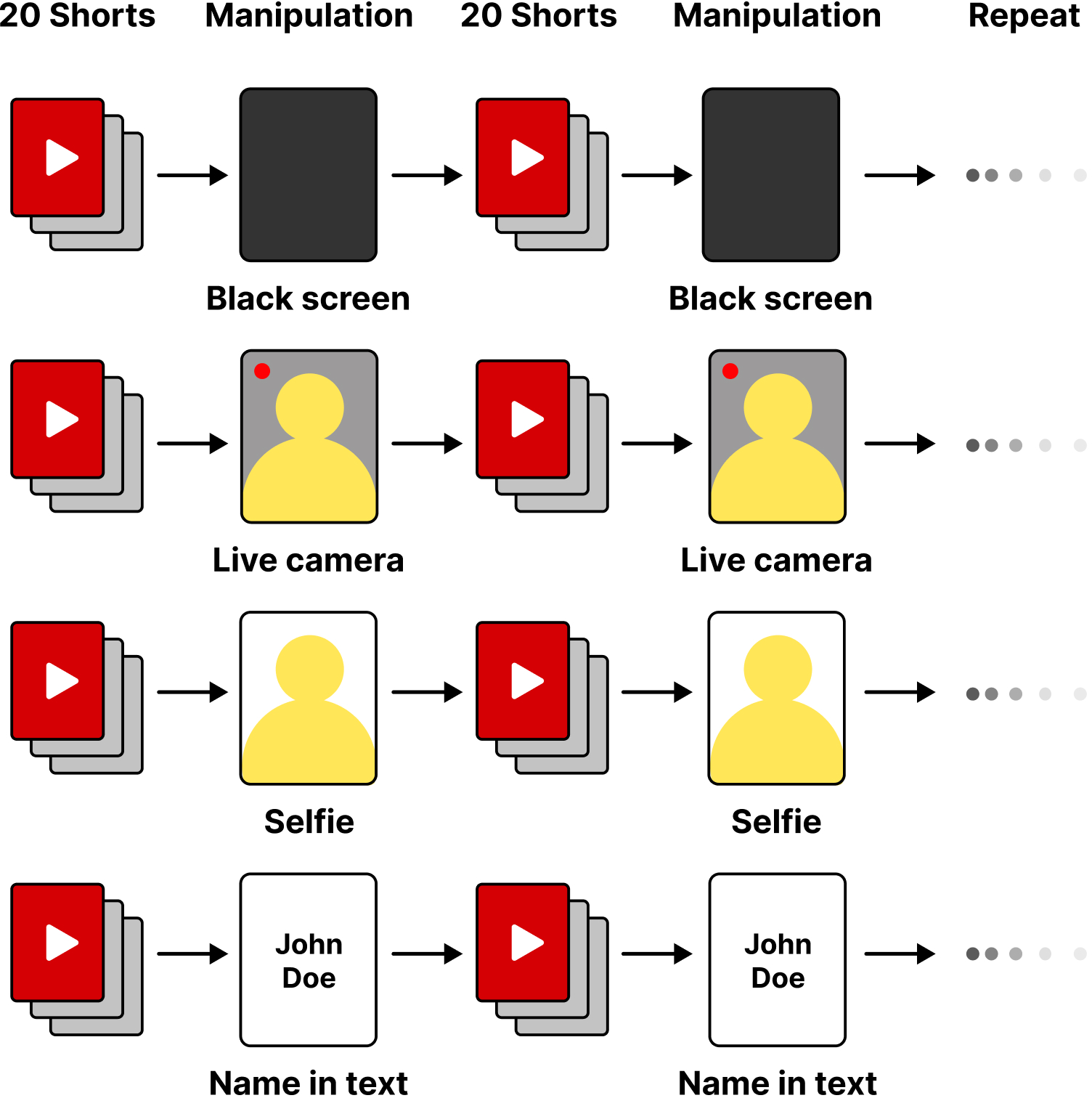
Figure 1: Intervention flow and cue modalities deployed in SelfStop after every 20 short-form videos.
The laboratory environment was structured to emulate naturalistic viewing while maintaining privacy and comfort for participants.
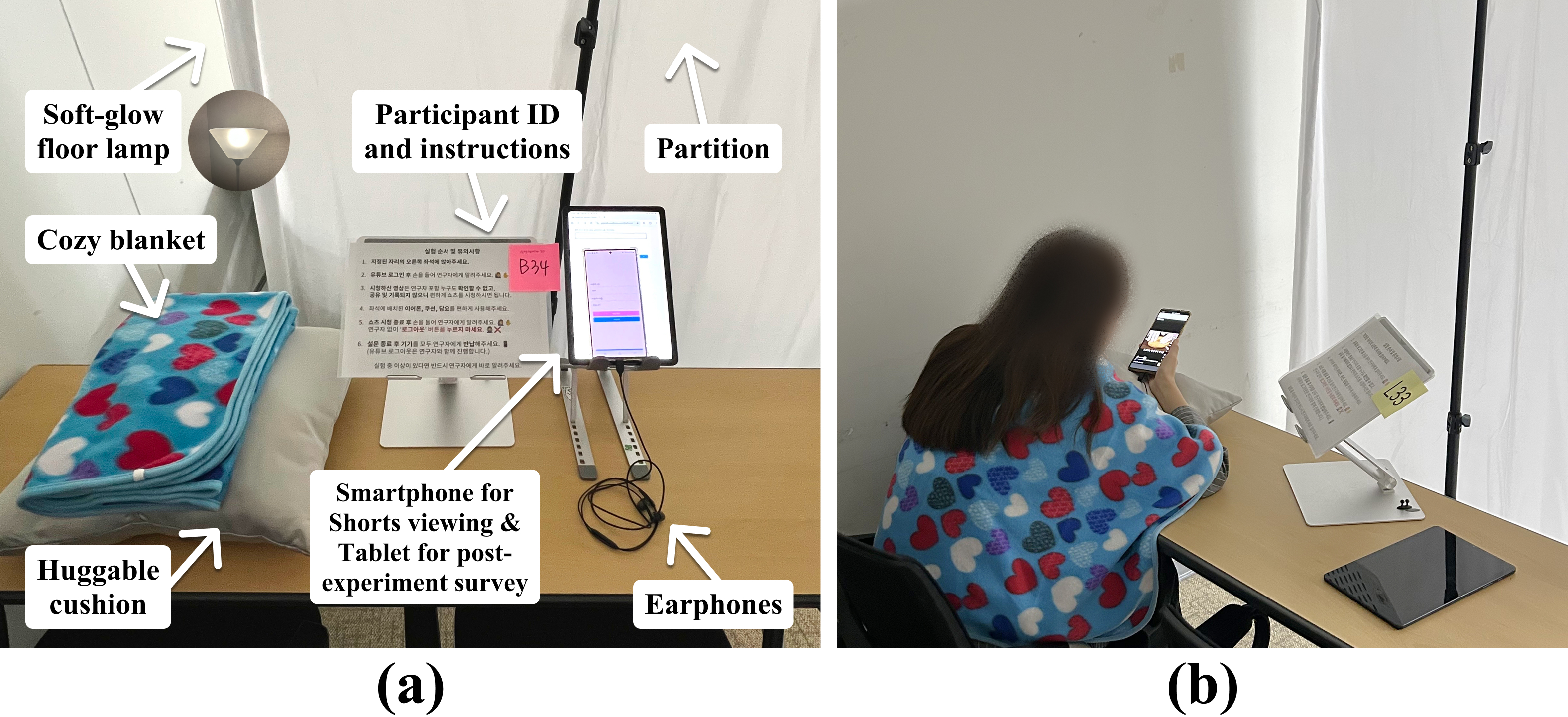
Figure 2: Experimental lab setup illustrating participant context and device arrangement.
Empirical Results
Quantitative behavioral data demonstrated a significant main effect of intervention modality on consumption volume. Participants exposed to the name-in-text condition exhibited markedly higher consumption (M=94.44), while black screen, live camera, and selfie conditions induced substantial reductions (means approximately $53$-$61$), with post-hoc pairwise comparisons confirming significance (p<.05). No significant difference was detected among the three self-image conditions.
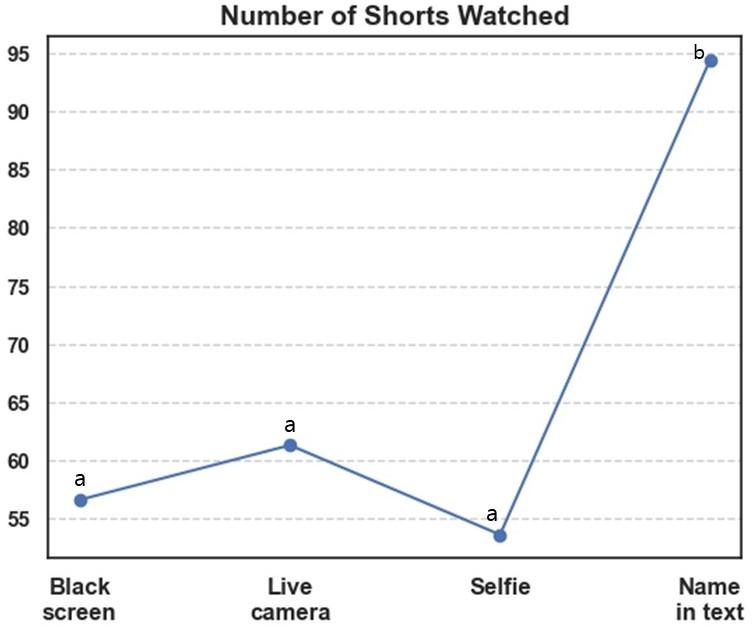
Figure 3: Mean number of Shorts watched per intervention; name-in-text outpaces all self-image and control cues.
Self-reported measures further differentiated intervention acceptability and efficacy. The black screen condition produced the highest scores in Intention to Use, Attitude, and Satisfaction, significantly outperforming selfie and live camera (p<.05). Live camera and black screen also augmented Self-efficacy relative to static selfie. Objective self-awareness per se was not modulated by intervention, suggesting that the subjective experience of awareness was robust across cue types, whereas behavioral change and user acceptance diverged.
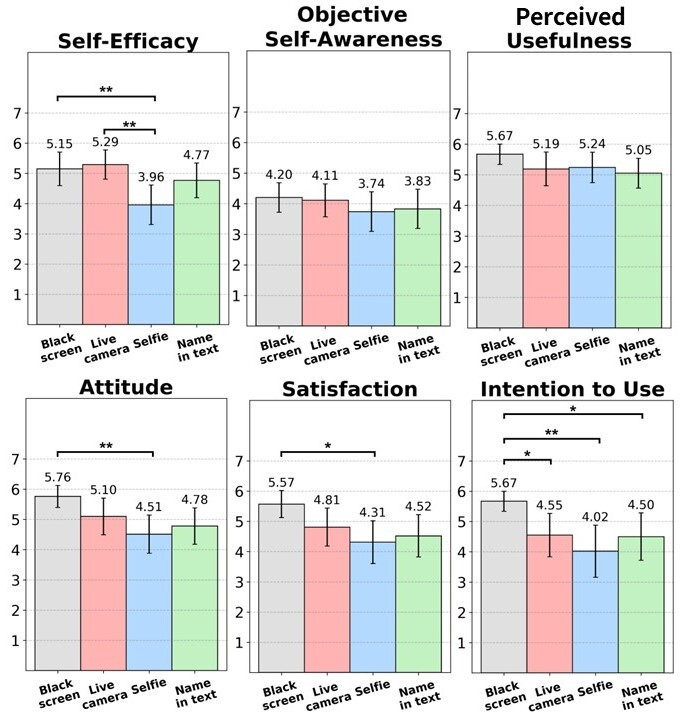
Figure 4: Subjective outcome ratings highlighting superior user experience (attitude, satisfaction, intention) for black screen relative to explicit cues.
Qualitative data elucidated the mechanism underlying behavioral change. Participants reported abrupt transitions from immersion to self-awareness—the “Hyunta” experience—particularly when confronted with real-time reflection (live camera, black screen). Explicit cues evoked discomfort and resistance, while subtle, implicit cues (black screen) induced self-reflection with minimal psychological reactance. Static cues (selfie, name in text) lacked contextual anchoring; participants described dissonance and irrelevance, undermining disengagement.
Design Friction and Theoretical Implications
This study operationalizes design friction as an intrinsic trigger for digital self-regulation. The empirical findings validate that real-time or contextually anchored self-related cues can disrupt automaticity in short-form video consumption, achieving voluntary disengagement without external coercion. Notably, the black screen—conceptualized as a control—emerged as the most effective and well-tolerated intervention, functioning as an implicit reflective surface in line with implicit persuasion literature [LIAO2024].
The distinction between explicit and implicit self-representation is consequential. Overt self-exposure (live camera, selfie) provokes reactance and embarrassment, attenuating acceptance despite theoretical salience. In contrast, implicit cues balancing explicitness and ambiguity optimize design friction, circumventing resistance while maintaining efficacy.
The necessity for real-time contextual anchoring is evident: static cues disconnected from the user’s current state fail both affectively and behaviorally. This underscores that optimal self-awareness interventions must dynamically mirror the “here and now”, enhancing both effectiveness and user adherence.
Practical Applications and Future Directions
The findings inform actionable guidelines for digital wellbeing systems. Integrating subtle, contextually relevant, implicit self-related cues—like the black screen—into the user interface can effectively interrupt habitual engagement and support voluntary behavior change. Future research should extend evaluation to in-the-wild scenarios, adapt cue modalities to ambient and social environments, and systematically optimize intervention frequency and duration for sustained impact.
In addition, adaptive personalization leveraging sensor data (e.g., ambient lighting, front camera availability) could further calibrate intervention salience, minimizing risks of desensitization or social discomfort. Longer-term, embedding real-time objective self-awareness as a scaffold within pervasive media platforms may recalibrate the balance between consumption and conscious engagement, offering scalable strategies for digital wellness.
Conclusion
The paper demonstrates that brief, periodic self-related cues—especially implicit modalities such as the black screen—effectively disrupt unconscious short-form video consumption via design friction. This approach elicits voluntary disengagement and enhances user acceptance, obviating the need for coercive restriction. Real-time contextual relevance is requisite for intervention efficacy, while overt cues can trigger resistance. The findings delineate a theoretically grounded, practically viable pathway for supporting autonomous regulation of digital media use through enhanced self-awareness (2604.19424).