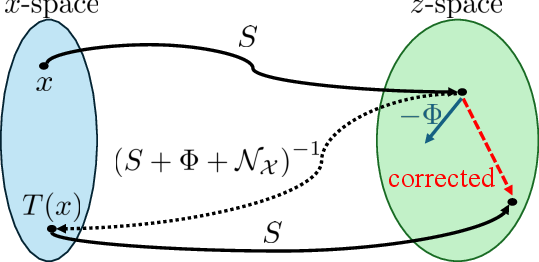
- The paper presents Target Mirror Descent (TMD) as a novel framework that stabilizes mirror descent on monotone variational inequalities through dual-space target correction.
- It unifies a diverse set of algorithms—including proximal point, extragradient, and splitting methods—under a geometrically decoupled design with rigorous convergence guarantees.
- The approach enables ensemble TMD by combining multiple mirror maps, enhancing robustness and addressing equilibrium misalignments across various applications.
Target Mirror Descent: A Unified Framework for Monotone Variational Inequalities
Introduction
This paper presents Target Mirror Descent (TMD), a novel and unifying framework for solving monotone variational inequalities. TMD addresses the classical instability of standard mirror (and gradient) descent on merely monotone VI problems by introducing a principled dual-space correction via a target-point mechanism. Notably, the framework is shown to subsume critical algorithms—including the proximal point algorithm, extragradient/mirror-prox, splitting schemes, Brown-von Neumann-Nash (BNN) dynamics, forward-backward-forward methods, and extensions such as discounted mirror descent—with rigorous convergence guarantees provided under relaxed monotonicity and regularity conditions.
Core to TMD's design is the structural decoupling of the mirror map from the target determination and surrogate operator. This innovation enables the construction of geometric ensembles: multiple algorithms, each deploying distinct geometric priors, coherently solving the same variational inequality through synchronized dual updates. The paper presents an explicit analysis of the correspondence between ensemble TMD and a single synthesized TMD instance, establishing inheritance of convergence property and providing an operational mechanism for robust aggregation across geometric priors.
Preliminaries: Mirror Descent and Variational Inequalities
Mirror descent generalizes gradient flow by leveraging a strictly convex regularizer h, defining primal-dual mappings via ∇h and its conjugate ∇h∗. Optimization steps are conducted in dual space, with state updates phrased in terms of the Bregman divergence Dh(x,y), measuring deviation from linearity in the geometry imposed by h.
Variational inequalities are defined for a mapping F over closed convex X, seeking x∗∈X such that F(x∗)⊤(x−x∗)≥0 for all x. The solution set ∇h0, as well as the associated properties of pseudo-monotonicity, monotonicity, and strong monotonicity, structure the study of algorithmic convergence in non-potential vector field settings.
The Target Mirror Descent (TMD) Framework
TMD augments traditional mirror descent with a target-point correction embedded in the dual update, defined as:
∇h1
where ∇h2, ∇h3, ∇h4 is a strongly monotone operator, ∇h5 is a surrogate operator possibly different from ∇h6, and ∇h7 is a generalized target map determined by ∇h8 and ∇h9 through monotonicity and normal cone conditions.
This architecture yields several important properties:
Convergence Analysis
The paper derives rigorous asymptotic and strong convergence properties for TMD. Using the Lyapunov function ∇h∗6 for ∇h∗7 in the variationally stable set, it is shown that trajectories are Bregman-Fejér monotone with respect to ∇h∗8. Under pseudo-monotonicity of ∇h∗9 (implying VS for the solution set), last-iterate convergence is established. Furthermore, a relaxed sufficient condition, denoted as (C2Dh(x,y)0), broadens applicability to weak-Minty settings where standard VS does not hold strictly. The dynamical system admits natural input extensions, preserving passivity and enabling modular interconnection.
Unification of Landmark Algorithms
A significant strength of TMD is its capacity to instantiate multiple well-known monotone VI algorithms as strict special cases under specific operator selections:
- Proximal Point Algorithm: Dh(x,y)1, Dh(x,y)2; TMD recovers the (nonlinear) PPA with its convergence guarantees.
- Extragradient and Mirror-Prox Methods: Dh(x,y)3, Dh(x,y)4; TMD captures extragradient with target points coinciding with intermediate mirror-prox iterates.
- Splitting Methods (Douglas-Rachford, Forward-Backward): Dh(x,y)5, Dh(x,y)6; with appropriate resolvent-based targets, TMD implements both Douglas-Rachford and forward-backward as monotone operator splitting instances.
- Evolutionary Dynamics (BNN): Via Dh(x,y)7, Dh(x,y)8 as entropy, Dh(x,y)9 as a normalized excess-payoff move, and h0, TMD realizes BNN dynamics in population games.
- Forward-Backward-Forward Dynamics: h1, h2; TMD writes FBF as a continuous-time correction.
- Discounted Mirror Descent and Higher-Order Extensions: Specific parameterizations h3 along with a TMD-form preconditioned operator calibrate the equilibrium set, resolving known misalignments in classical DMD.
For each algorithmic form, the paper provides correspondences for both continuous and discrete settings, ensuring precise formal unification.
Geometric Ensembles in TMD
The decoupling of mirror geometry from the target and surrogate operators in TMD enables geometric ensembles—a construction where h4 parallel algorithms, each with distinct mirror map h5, update synchronously on a shared dual correction computed from the ensemble mean state. Formally, the ensemble evolves as:
h6
The map from ensemble TMD to a single synthesized TMD is established via infimal convolution of the regularizers. This construction not only preserves all the convergence properties of the single-agent TMD but also unlocks robust behaviors via adaptive, composite geometries informed by diverse priors or parameterizations.
Practical and Theoretical Implications
The TMD framework provides a unified lens for understanding a breadth of algorithms previously considered disparate. Practically, the approach:
- Offers a meta-algorithm for designing stabilized monotone VI solvers with tunable correction and geometry;
- Facilitates aggregation (ensembling) of multiple geometric perspectives for robust performance;
- Enables correction of known deficiencies (e.g., equilibrium misalignment in DMD) via compositional operator design;
- Lays theoretical groundwork for generalized operator splitting and learning in non-potential, constrained multi-agent systems.
From a theoretical standpoint, TMD clarifies the role of dual-space correction and infimal convolution of geometric priors, and generalizes the passivity analysis underlying higher-order and input-coupled methods.
Conclusion
Target Mirror Descent introduces a versatile and unifying architecture for monotone variational inequalities, encompassing landmark first- and higher-order algorithms within a common dynamical correction framework. Its geometric and operator-theoretic modularity enables both principled stability in challenging regimes and robust ensemble construction. TMD's flexible design is expected to inspire further advances in accelerated methods, composite geometry ensembling, and equilibrium computation for non-potential, multi-agent, and distributed optimization paradigms.
References
For all claims and derivations, refer to the arXiv manuscript "Target Mirror Descent: A Unifying Framework for Solving Monotone Variational Inequalities" (2604.18813).