- The paper presents a two-stage BiLSTM architecture integrating environmental sensing with dynamic RIS configuration for improved user localization and orientation estimation.
- It employs sequential pilot feedback and adaptive beamforming to significantly lower RMSE compared to traditional model-based methods.
- Simulation results validate the framework’s robustness in dense multipath scenarios, highlighting the benefits of distributed RIS deployment.
Integrated Sensing and Joint User Localization in RIS-Assisted Dynamic Rich Scattering Environments
The paper "Integrated Sensing, User Location and Orientation Estimation in RIS-Assisted Dynamic Rich Scattering Environment" (2604.17474) addresses the challenge of robust and accurate user equipment (UE) localization and orientation estimation in indoor environments characterized by dense multipath and rapid temporal and spatial dynamics. By leveraging reconfigurable intelligent surfaces (RIS) together with sequential neural network models, the work presents a unified framework that adaptively configures RIS and beamforming parameters based on real-time environmental feedback. This approach systematically integrates environment sensing, channel adaptation, and localization, offering substantial improvements over conventional model-driven and static machine learning strategies.
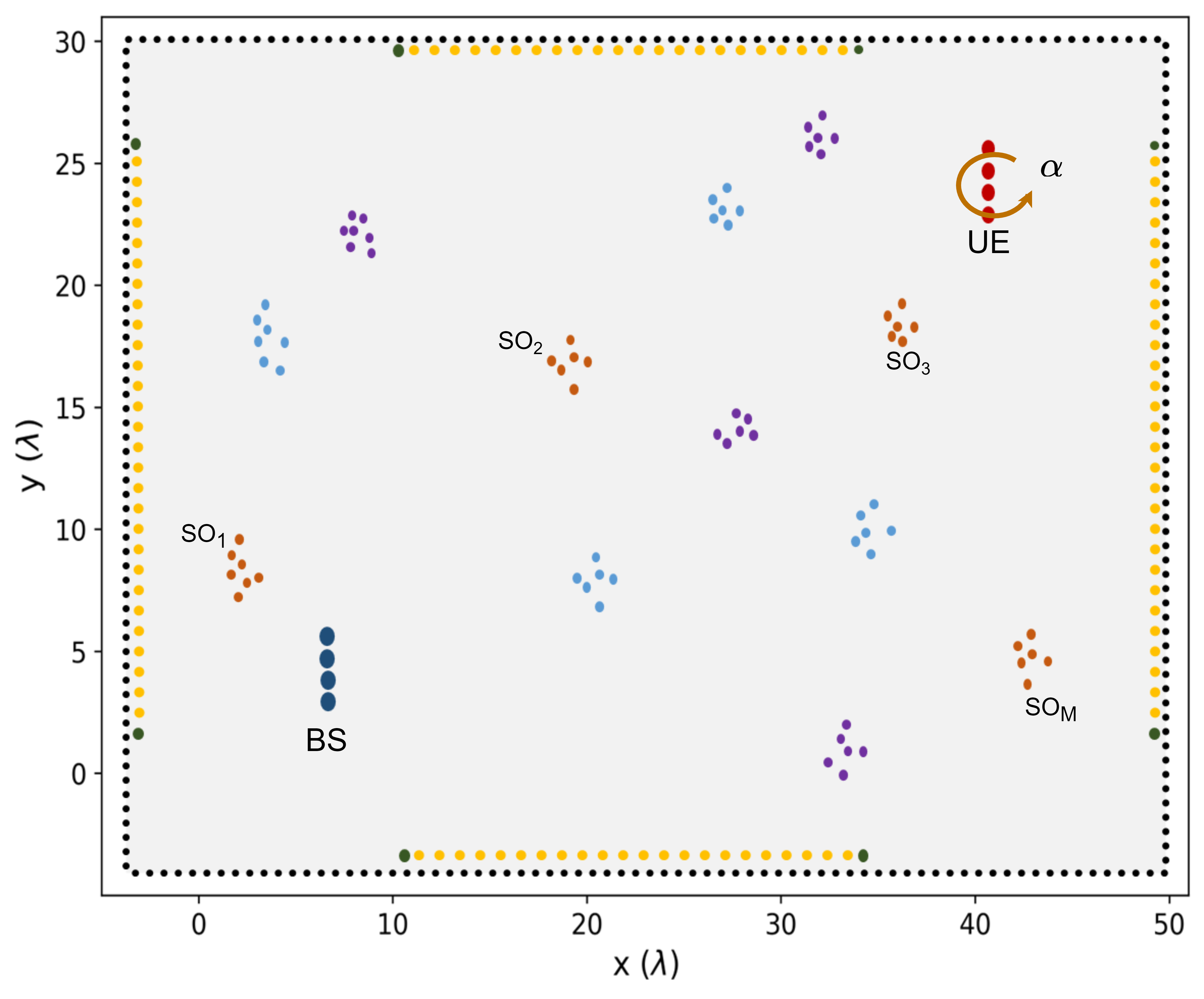
Figure 1: Depiction of the investigated rich-scattering environment, including RIS placements, base station (BS), user equipment (UE), and dynamic scattering objects (SOs).
Problem Setting and System Model
Indoor wireless environments are dominated by rich scattering due to dense multipath propagation, moving objects, and infrastructure constraints. Precise localization in such radio environments is complicated by the indistinguishable overlap of multipath components and rapid channel fluctuations. Traditional approaches relying on geometric models or direct angle-of-arrival (AoA) estimation become unreliable under these conditions. The authors consider a MIMO narrowband system comprising distributed RIS panels, multi-antenna base stations and UEs, and multiple randomly moving scattering objects (SOs).
RIS elements act as tunable reflectors, capable of shaping the multipath environment and enhancing controllable spatial diversity. A subset of RIS elements is reserved for explicit environmental sensing (with reception only), allowing the system to spatially sample the evolving scattering field. The objective is to estimate the UE’s 2D position and orientation jointly with the location of SOs, by leveraging sequential pilot transmissions and adaptively configuring BS, UE, and RIS beamforming parameters in each time frame.
The core innovation is an adaptive, learning-based, closed-loop mechanism for joint environment sensing, RIS configuration, and beamforming design:
- Two-Stage BiLSTM Architecture: The environment is sensed by a first-stage bidirectional LSTM (BiLSTM) that encodes the temporal history of received pilot signals from the dedicated RIS sensing elements, providing real-time estimation of SO locations. This latent environmental state is recursively updated at each time instance.
- Joint RIS/BS/UE Configuration: A second-stage BiLSTM receives both the pilot measurement history and the inferred SO locations to jointly predict the next set of beamforming vectors for the RIS array, BS, and UE. All vectors are output with enforced unit-modulus constraints suitable for analog hardware implementation.
- Optimization Objective: The overall learning objective is to directly minimize the root mean squared error (RMSE) in UE position and orientation across a sequence of pilot feedback, with auxiliary loss for SO localization accuracy.
- Online Adaptation: During inference, the network selects the optimal configuration at each step, taking into account historical feedback and environmental context, allowing progressive refinement.
This sequential model, trained offline with a diverse set of dynamic environment realizations, outperforms both static fingerprinting and adaptive model-based lower bounds, particularly in complex, dynamic scenarios.
Analytical Baseline: Bayesian Cramér-Rao Lower Bound (BCRLB) Optimization
For benchmarking, the authors construct an analytical model-driven baseline based on minimization of the Bayesian Cramér-Rao Lower Bound (BCRLB):
- The BCRLB is computed sequentially at each time frame, using recursively updated posteriors of the UE and SO state given the past observations.
- The next RIS configuration is optimized to minimize the trace of the Schur complement of the joint Fisher information matrix, reflecting the conditional variance lower bound of the UE position estimate.
- This classical method, while effective in less rich scattering or lower dimensional settings, becomes suboptimal in high-multipath regimes due to limited expressiveness and its stage-wise greedy nature.
Empirical Evaluation and Numerical Results
The performance of the proposed system is extensively evaluated via comprehensive simulations:
RMSE vs. Time Frames and SNR
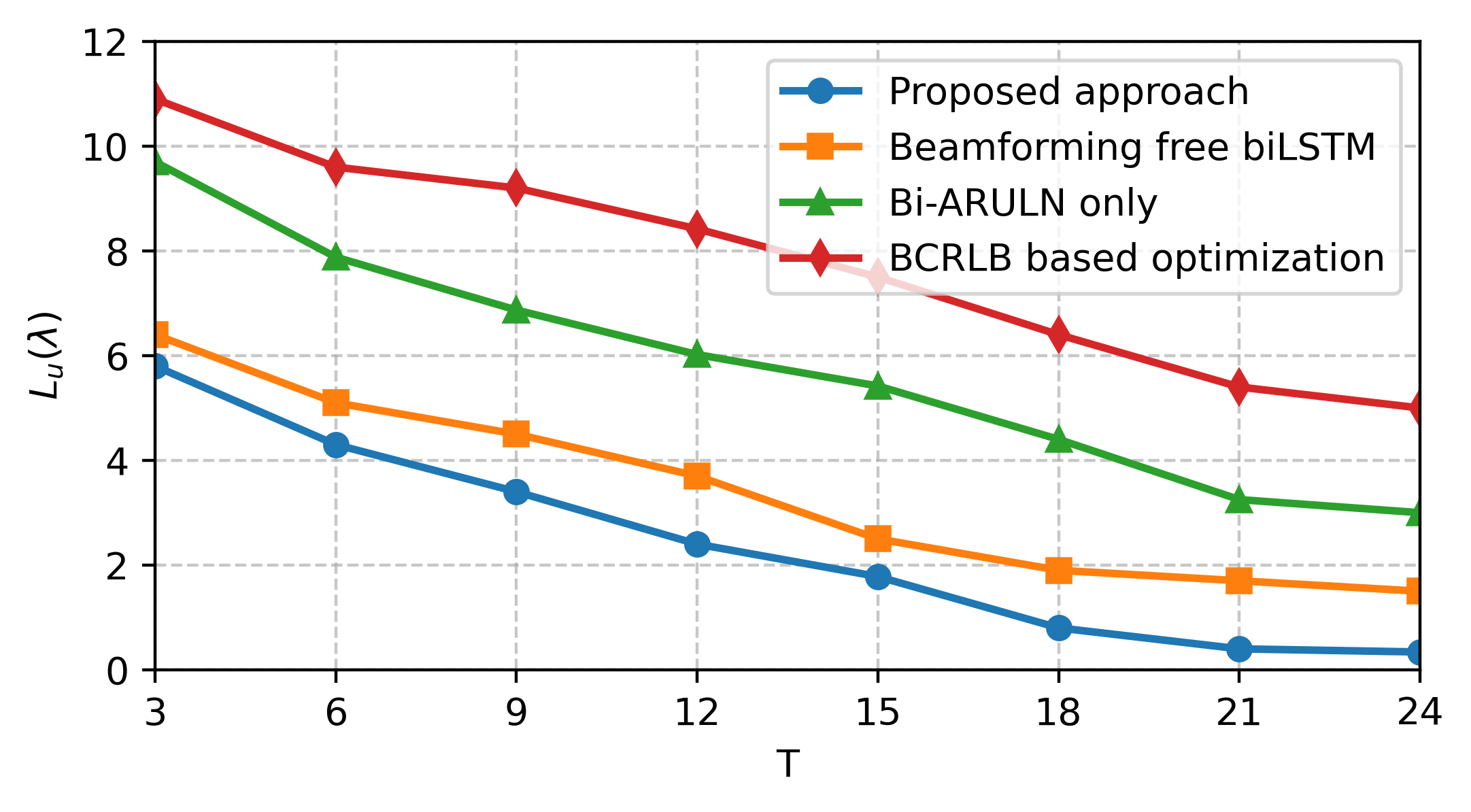
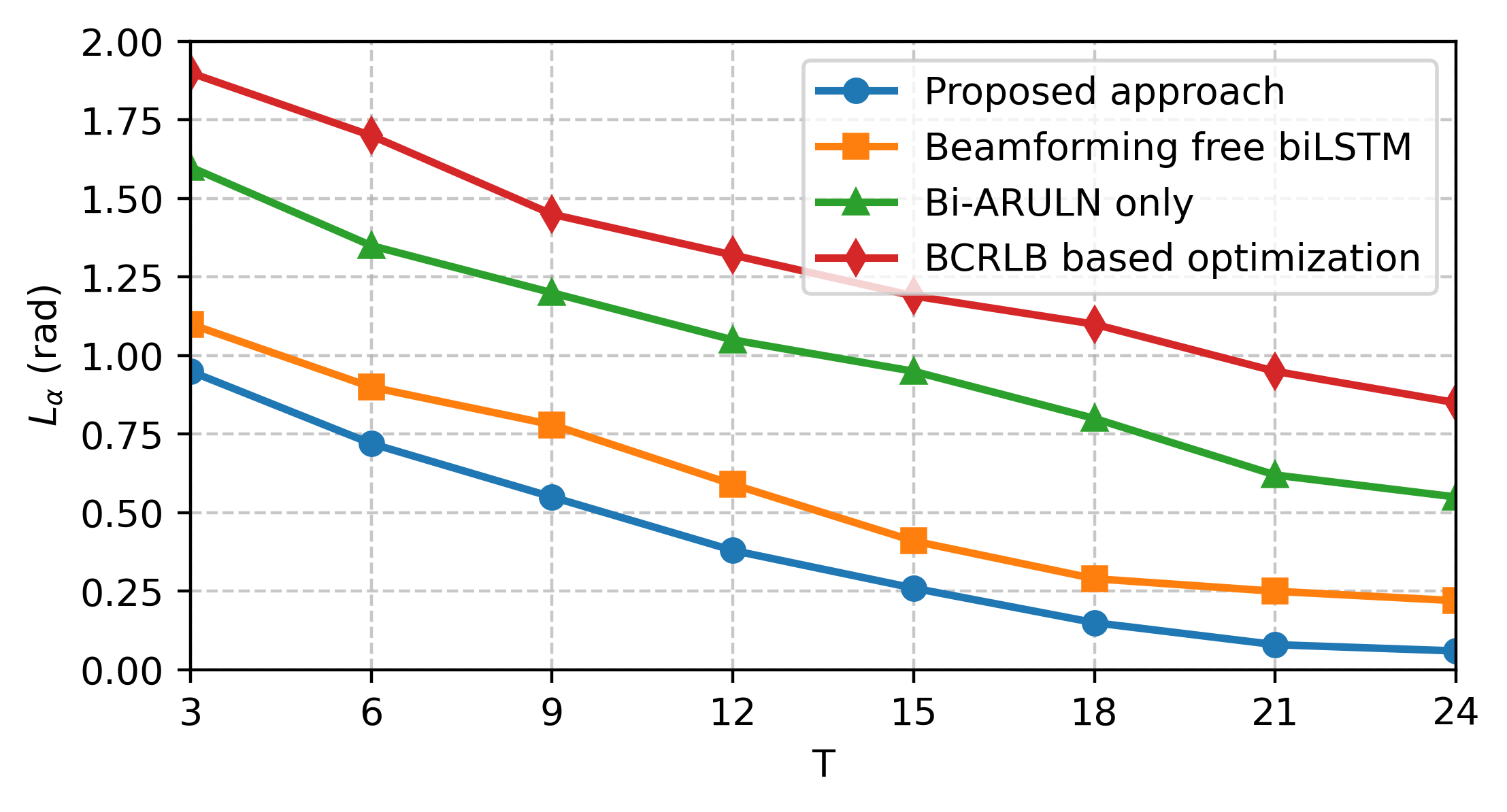
Figure 2: RMSE of UE localization as a function of time frames T for NRIS=100, SNR=30 dB, M=4.
The learning-based approach exhibits consistently lower RMSE for both location and orientation compared to all baselines, with sharper performance gains as the number of pilot rounds increases.
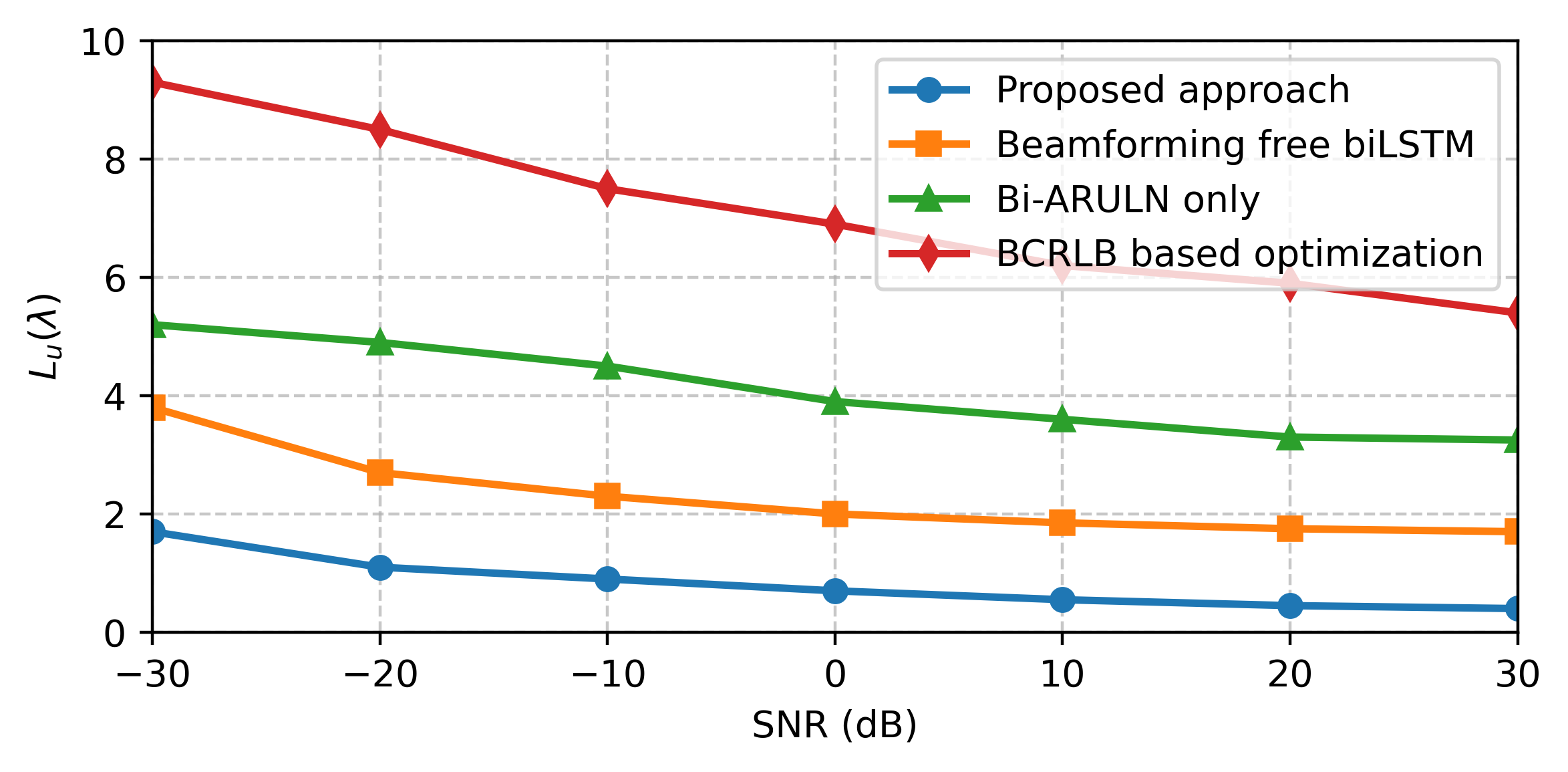
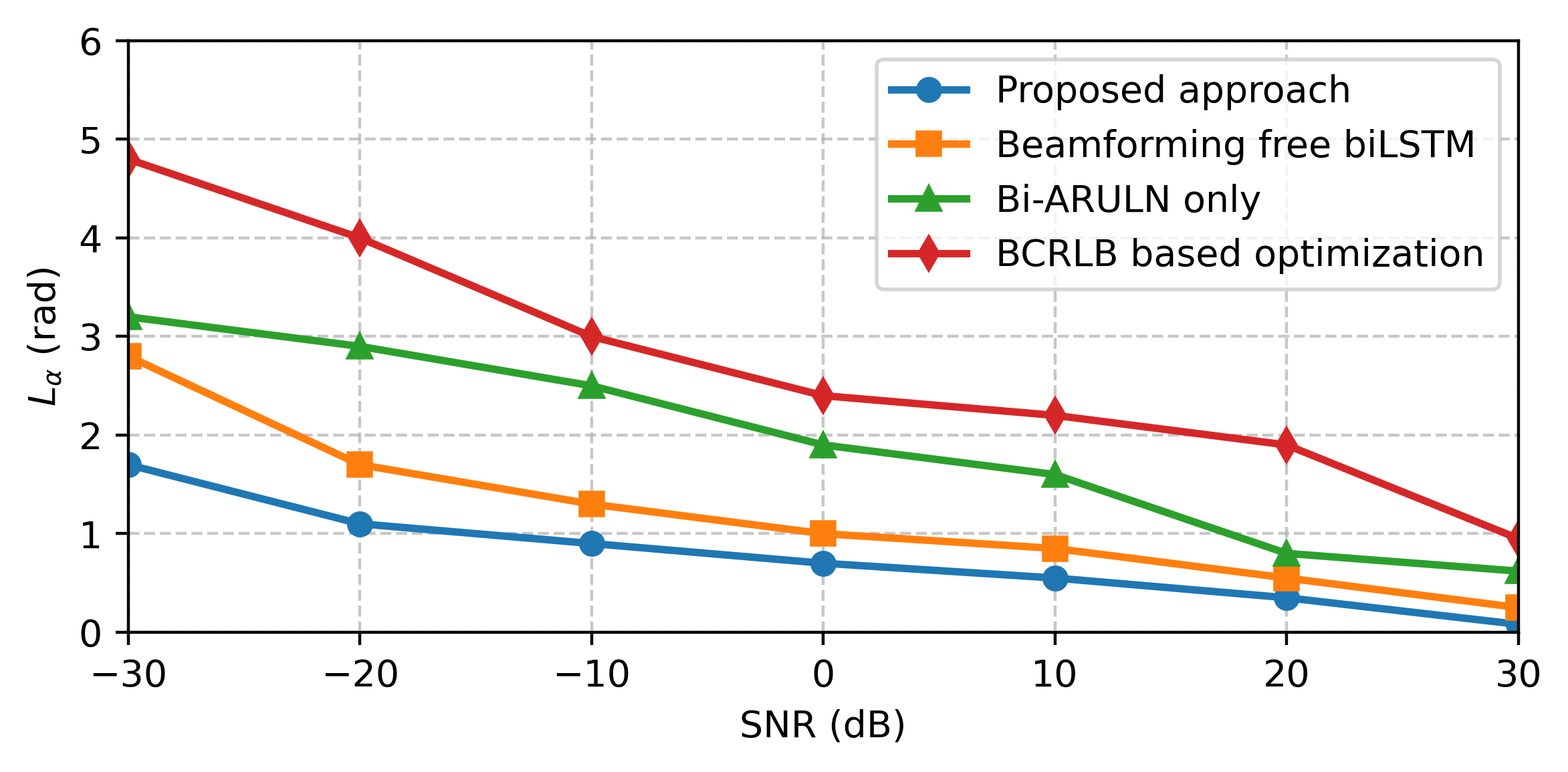
Figure 3: RMSE of UE localization as a function of SNR with fixed RIS and scattering object settings.
At high SNR, learning-based models demonstrate strong robustness and accuracy, while the BCRLB-based method manifests a distinct performance gap, reflecting limitations in dynamic, high-multipath regimes.
Error Distribution and Robustness
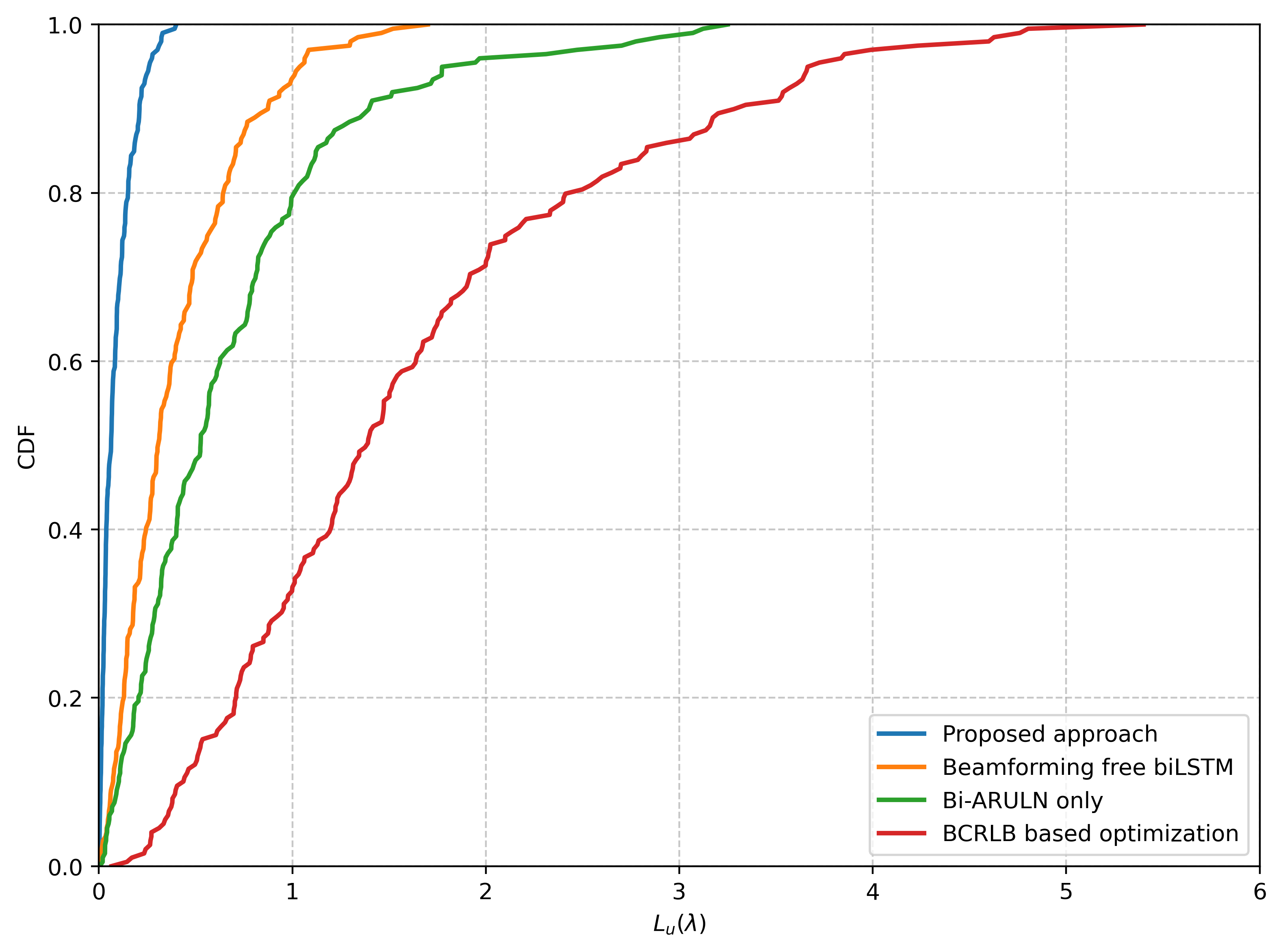
Figure 4: CDFs comparing the localization RMSE distributions of proposed and baseline algorithms.
The adaptive neural model results in the majority of estimation errors clustered at low RMSE values, confirming both accuracy and consistency across randomized trials.
Impact of RIS Panel Deployment
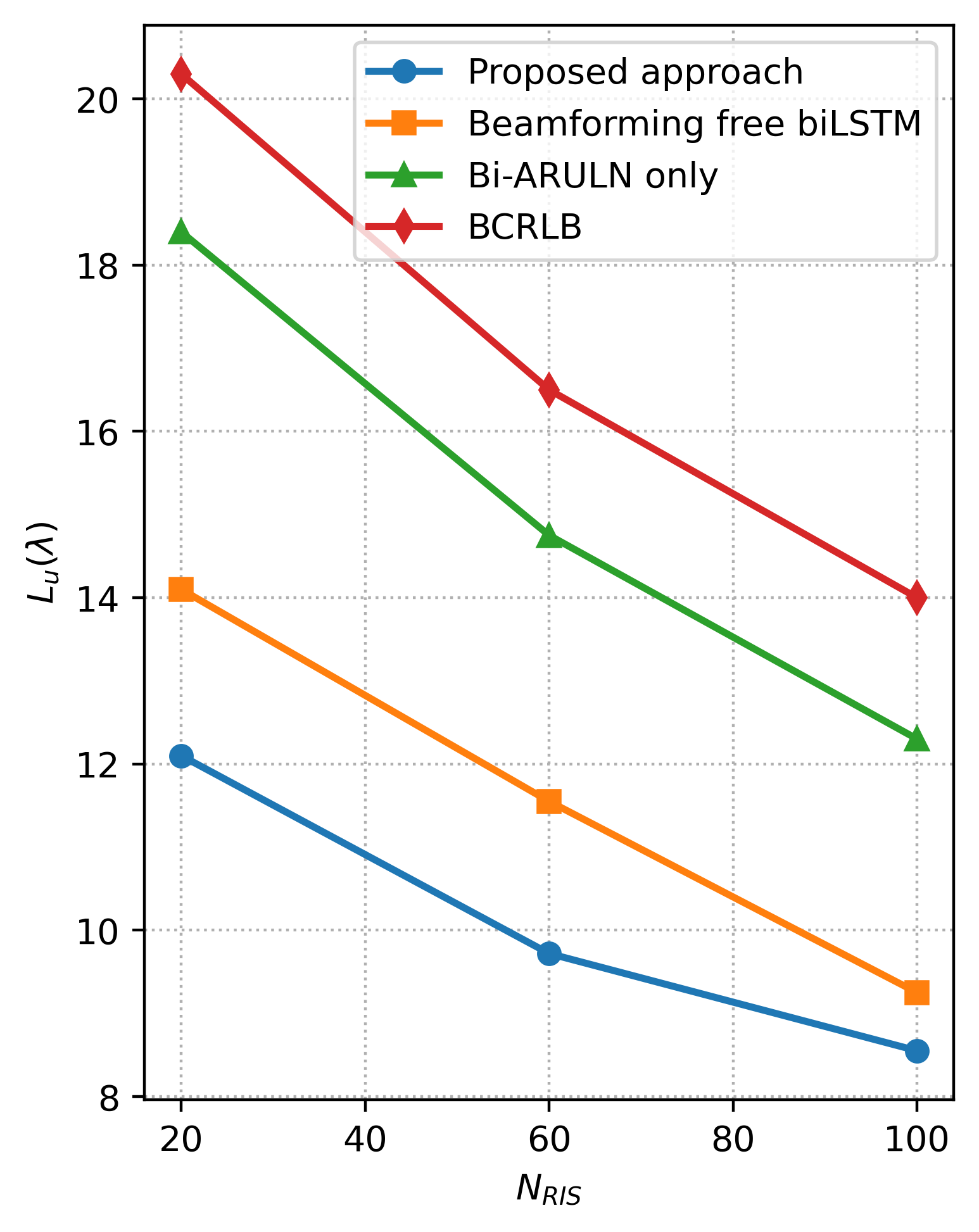
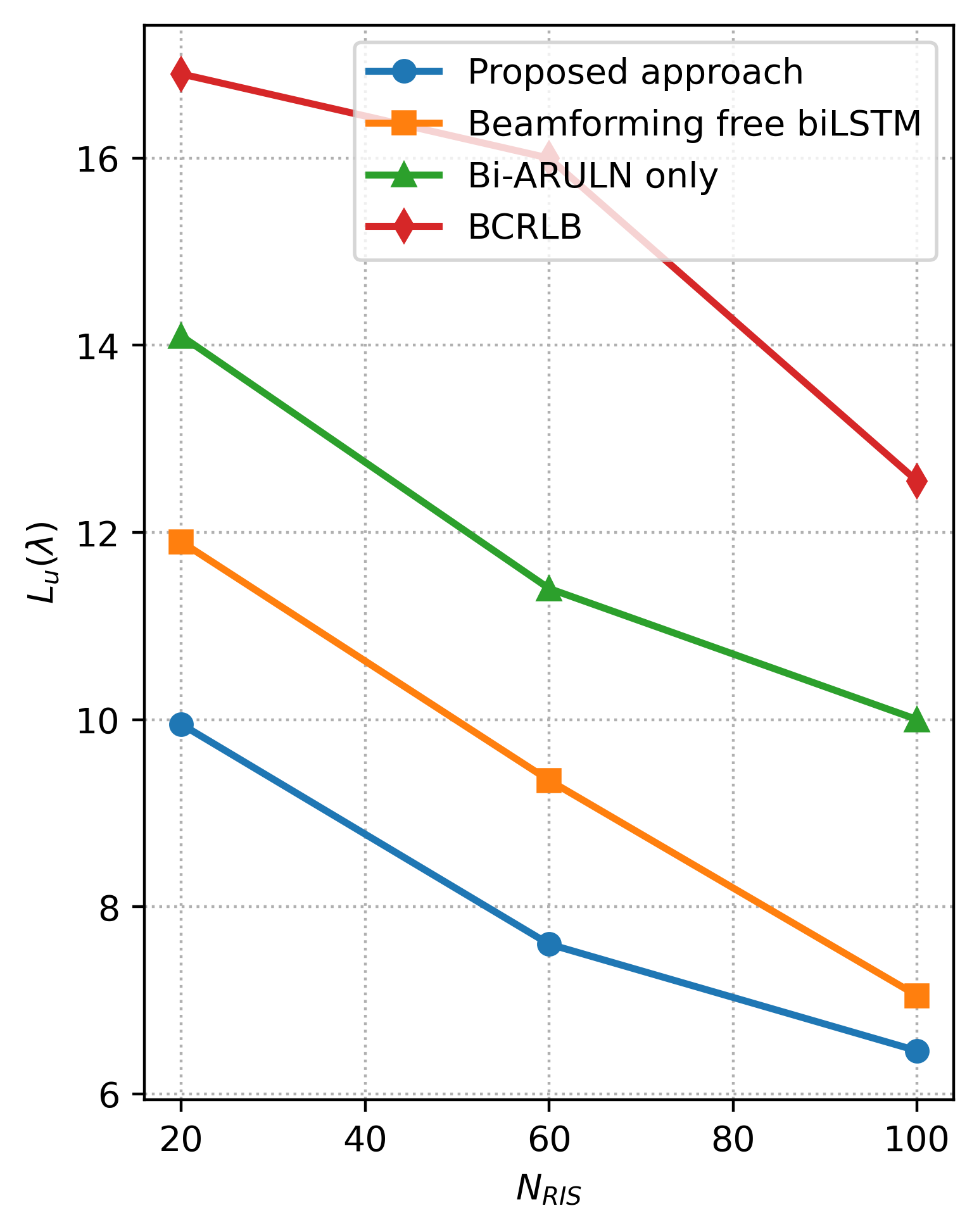
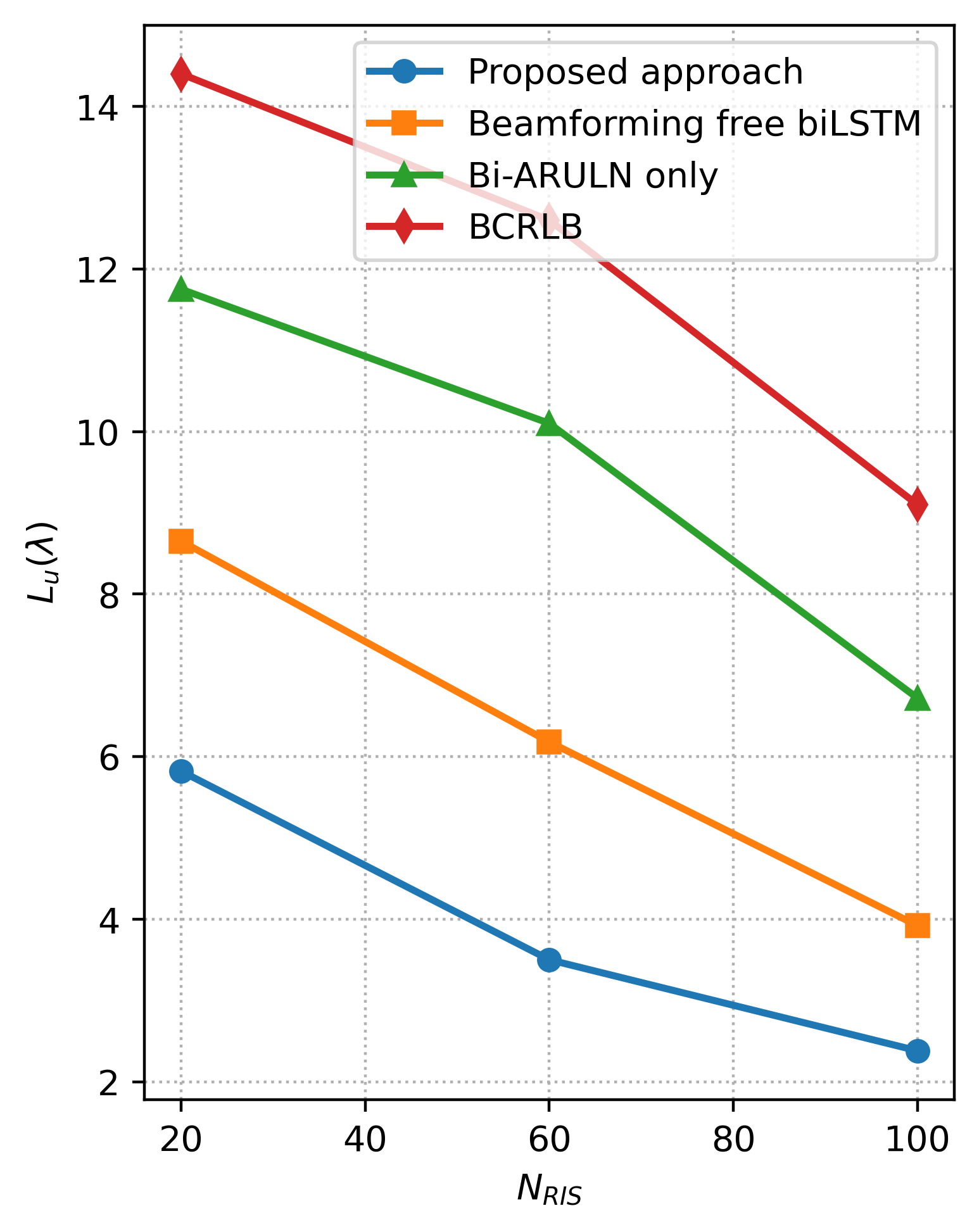
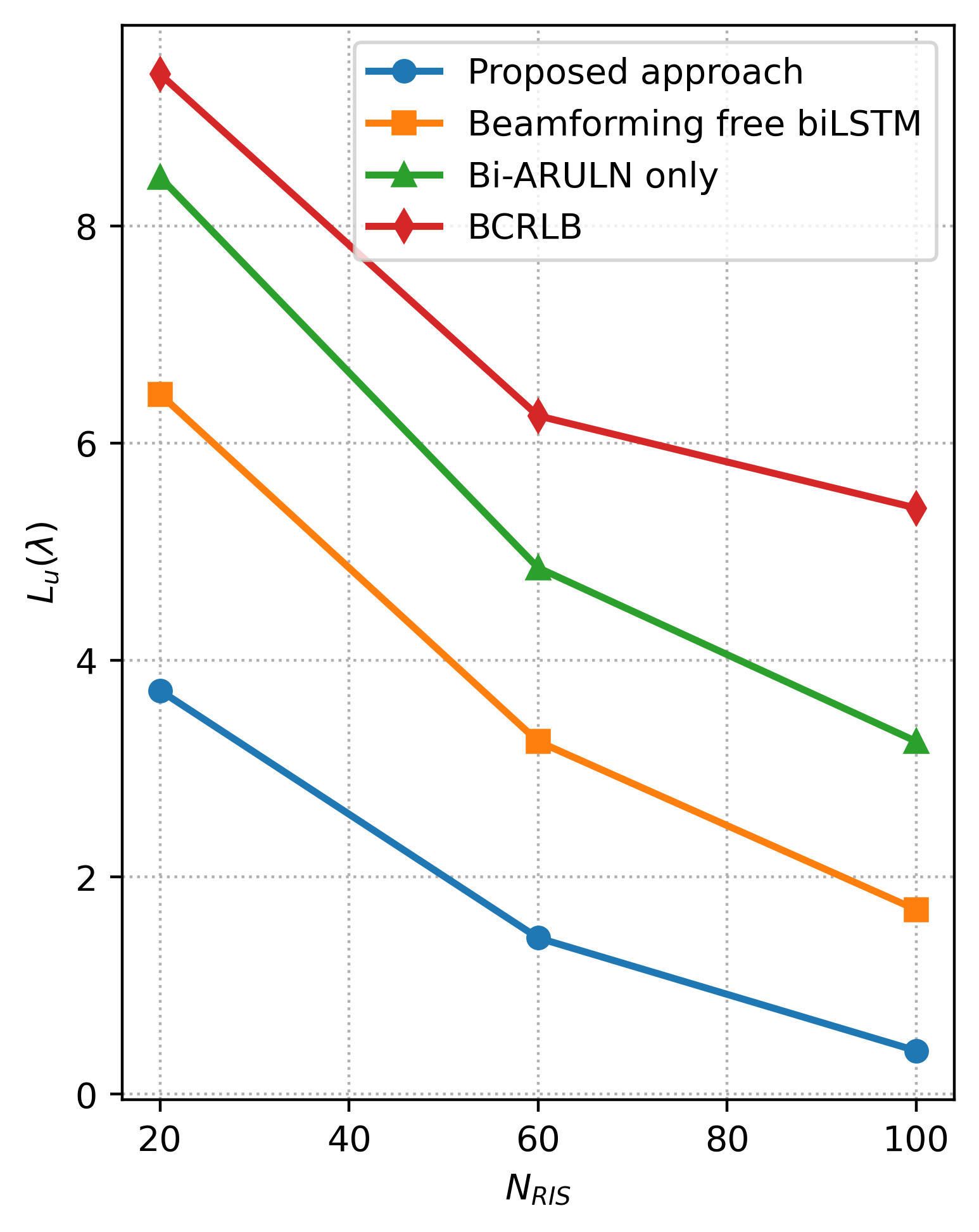
Figure 5: RMSE as a function of RIS element count and wall deployment, showing consistent performance improvements with increased spatial diversity.
Distributed RIS placement across multiple enclosure walls yields significant accuracy gains, particularly as the RIS density increases. The diminishing returns at very high densities suggest practical upper bounds governed by noise and environmental uncertainty.
Discussion and Theoretical Implications
The study demonstrates several critical theoretical and practical implications:
- Environment Awareness is Essential: Accurate localization in rich scattering environments fundamentally depends on real-time environmental awareness, which cannot be matched by static or model-driven design alone.
- Sequential Learning Surpasses Stagewise Design: Joint, history-aware adaptation (over multiple time frames) is essential in capturing the temporal correlation and mutual coupling of multipath components, a property not addressed by greedy or local optimization.
- RIS Distribution and Density: Spatially distributed RIS deployment on multiple boundaries is substantially more impactful than increased density on a single boundary, due to the introduction of angular diversity and additional virtual anchors.
- Sensing Elements: Increasing the number of RIS elements dedicated to environmental sensing (not just reflection) provides significant improvements in the resolvability of dense multipath environments.
Future Directions in AI-Empowered Wireless Sensing
The proposed learning-based, environment-aware sequential design paradigm suggests multiple avenues for future research and development:
- Generalization to Active Sensing and Multi-User Environments: Extending this framework to multi-user, multi-access scenarios and integrating active environment perturbation for SLAM-type applications.
- Transfer Learning Across Environments: Investigating cross-environment generalization and meta-training to facilitate rapid adaptation in unseen environments [11359994].
- Integration with Communication Objectives: Joint optimization of sensing, localization, and communication (ISAC), balancing spatial location accuracy and communication throughput [11200490].
- Hardware-In-the-Loop Deployment: Real-time deployment with hardware-in-the-loop evaluation, exploring RL and online finetuning for edge adaptation.
- Explainable Sensing: Enhancing the interpretability of environment-driven adaptation, critical for mission-critical applications and regulatory compliance.
Conclusion
This work provides a rigorous and effective approach for joint user localization and orientation estimation in RIS-assisted, dynamically evolving rich scattering environments. Through the integration of adaptive, history-aware neural architectures and environment-aware sensing, it demonstrates notable advancements in achieving accurate and robust localization well beyond the reach of conventional model-driven or static learning methods. The results highlight the necessity and efficacy of coordinated environmental sensing and sequential adaptation for next-generation smart radio and localization systems.