- The paper systematically compares seven effective dissipation channels in warm Higgs inflation using a binary combination of LT, HT, and threshold mechanisms.
- It employs a unified numerical protocol with self-consistent background integration, Bayesian Information Criterion scoring, and channel diagnostics to assess model viability.
- Results reveal that the pure LT channel is statistically preferred, exhibiting strong warm regime metrics and minimal parameter complexity.
Comparative Analysis of Effective Dissipation Channels in Warm Higgs Inflation
Theoretical Framework and Motivation
The paper conducts a systematic comparison of seven effective dissipation channels (EDC) within warm Higgs inflation, each formed by combinations of three archetypal dissipative mechanisms: low temperature (LT), high temperature (HT), and threshold (Th). The motivation draws from the nontrivial role that dissipation plays in warm inflation, in contrast to the cold inflation regime where dissipation is typically neglected. Specifically, when incorporating warm inflationary dynamics into Higgs inflation models—characterized by the Einstein frame plateau potential—the interplay between dissipation, non-minimal coupling, and the inflationary trajectory becomes notably complex. The classification and comparative assessment of EDCs, rather than a focus on a single dissipation form, address an explicit gap in the inflationary literature and are pivotal for discriminating among warm inflation models under future high-precision CMB observations.
The EDCs are constructed as all logical on/off (binary) combinations of the three base channels. This yields seven physically distinct EDCs, parameterized as:
Υijk(h,T)=i⋅ΥLT+j⋅ΥHT+k⋅ΥTh
with i,j,k∈{0,1}.
Methodology and Numerical Implementation
The paper implements a unified and constrained numerical protocol for all channels, comprising: (1) self-consistent warm background integration, (2) determination of inflation end and pivot-scale quantities, (3) scoring and complexity penalization via a Bayesian information criterion (BIC), and (4) robust boundary and internal-mixing diagnostics. The parameter scan covers an extensive space for each EDC (see Table in the paper), integrating directly the Friedmann and radiation equations without post hoc assumptions about Nend, Q∗, or h∗. Model observables (ns, r), as well as dissipation diagnostics (Q∗, T∗/H∗) and channel fractions fi,∗, are extracted at the CMB pivot scale.
Selection of best-fit points is based principally on BIC, which explicitly penalizes for the number of free parameters in each EDC. This rigor enforces that additional channel freedom is only retained when it yields significant improvements in fit quality, preventing overfitting by unnecessarily complex dissipative channel structures.
Results: Statistical Ranking and Physical Regimes
Best Fit Parameter Distribution
Except for the pure HT EDC (i,j,k∈{0,1}0), six channels cluster tightly in the i,j,k∈{0,1}1 plane near i,j,k∈{0,1}2 and i,j,k∈{0,1}3. The HT-only channel (i,j,k∈{0,1}4) is offset, exhibiting i,j,k∈{0,1}5 and i,j,k∈{0,1}6.
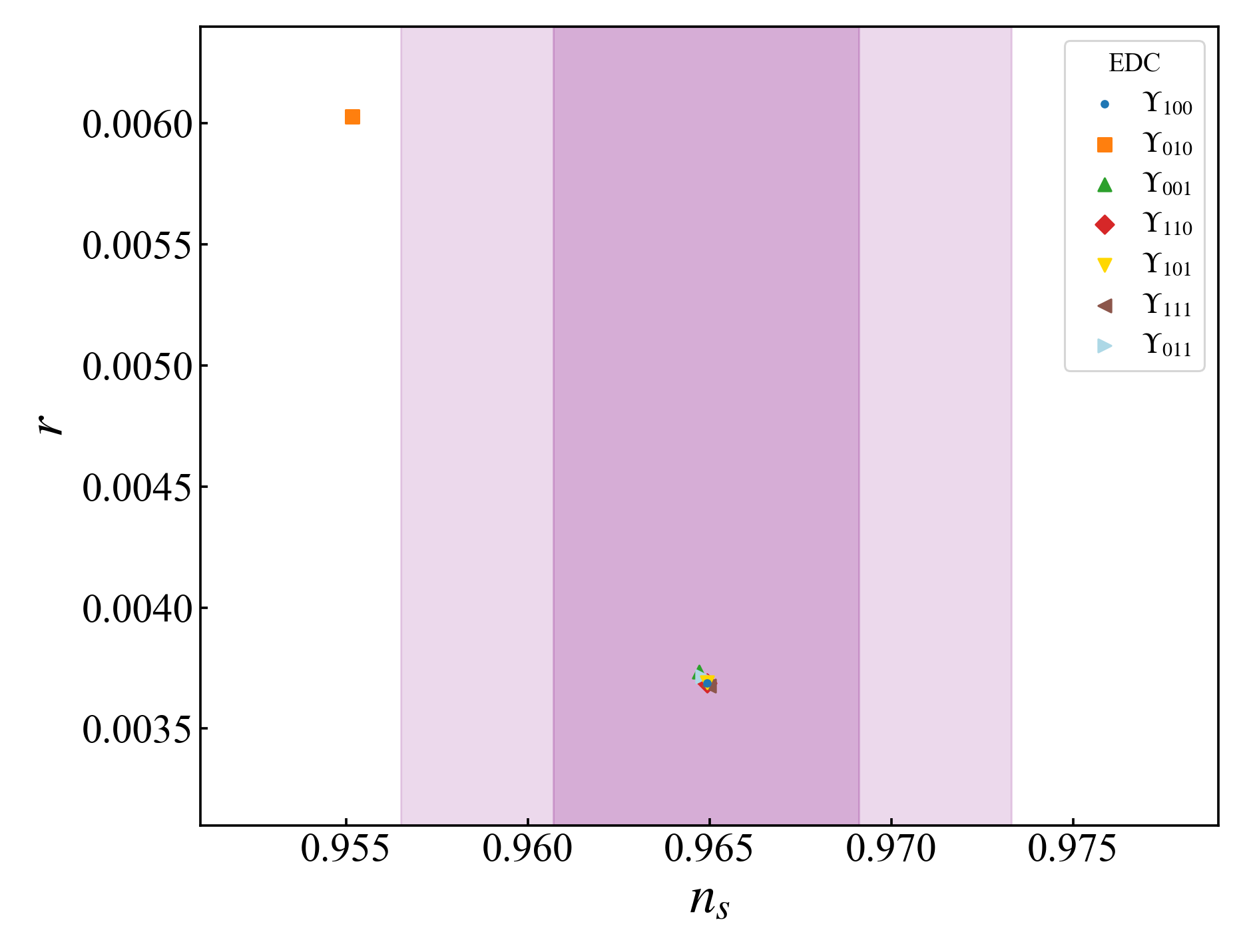
Figure 1: Best fit points of the seven EDC in i,j,k∈{0,1}7 plane.
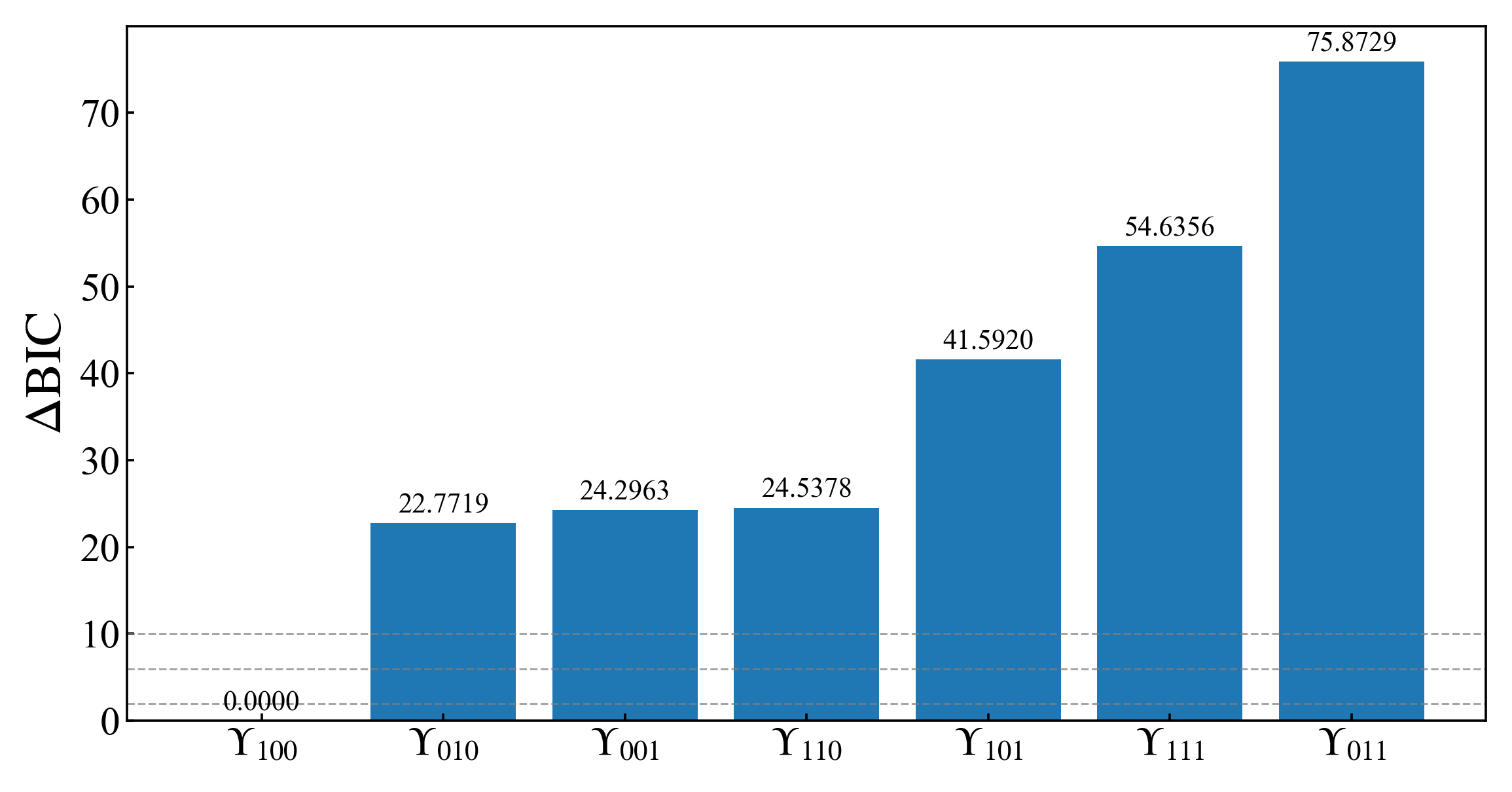
The BIC-based ranking unambiguously identifies the pure LT channel (i,j,k∈{0,1}8) as top-performing, with all multi-channel and threshold-inclusive channels incurring significant BIC penalties without corresponding gains in fit quality. In the 1200-point refined rescoring, the i,j,k∈{0,1}9BIC increases for all other EDCs, confirming the statistical stability of hierarchy:
Channel Fractions and Internal Mixing
Analysis of channel fractions at the pivot scale elucidates that multi-channel EDCs, although nominally general, in practice collapse to a regime where a single channel dominates—typically the LT channel. No channel configuration maintains robust internal mixing in its best fit point; contributions from secondary channels are always subdominant (Nend9 for non-dominant components).
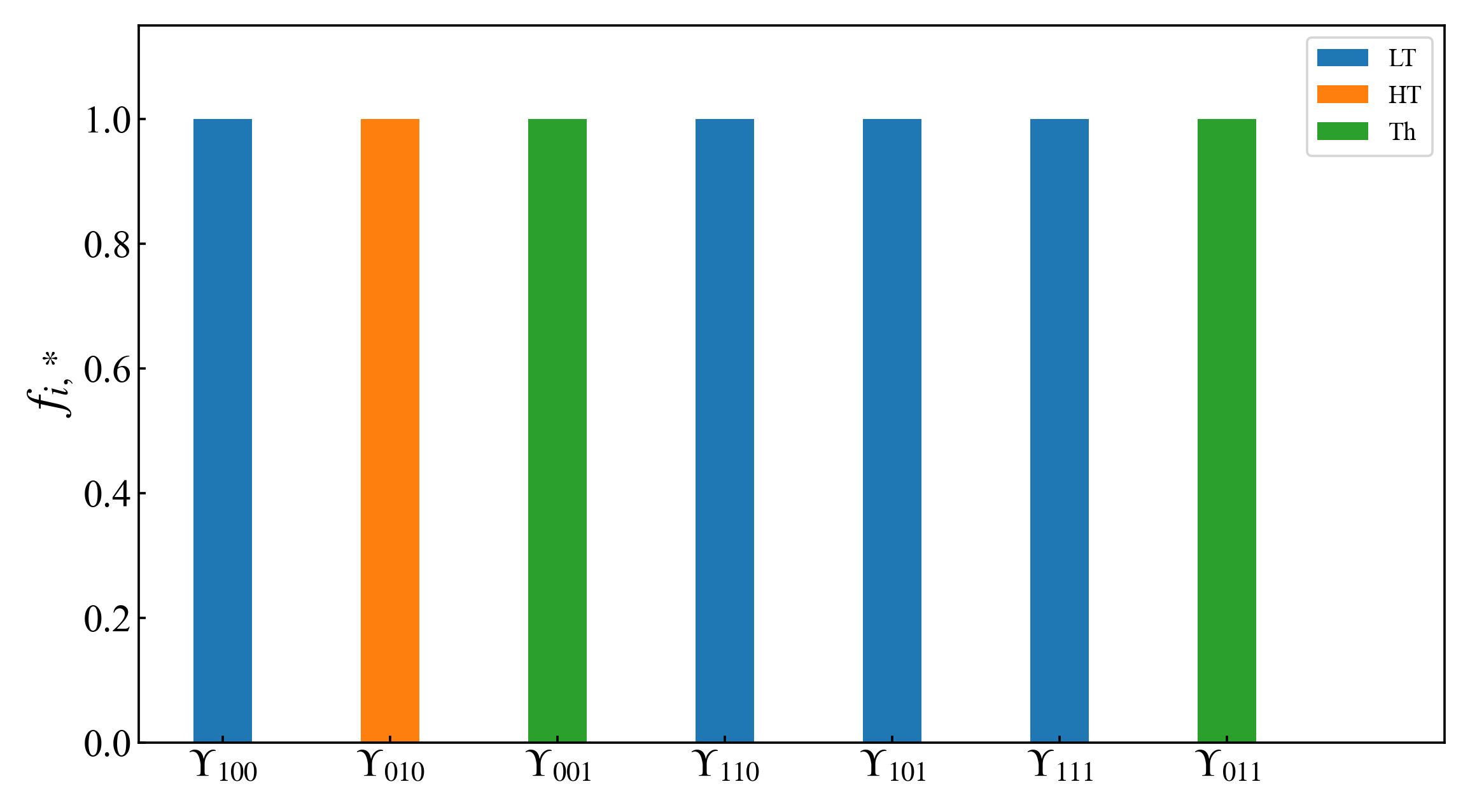
Figure 3: Fractions of the three channels at the pivot scale, Q∗0.
Dissipation Strength and Warmness
The warmness diagnostics (Q∗1 and Q∗2) underscore that Q∗3 and its LT-dominated variants universally reside in the strong warm regime (Q∗4, Q∗5). By contrast, Q∗6 corresponds to extremely weak dissipation, while Q∗7 yields Q∗8, formally falling below the warm inflation threshold.
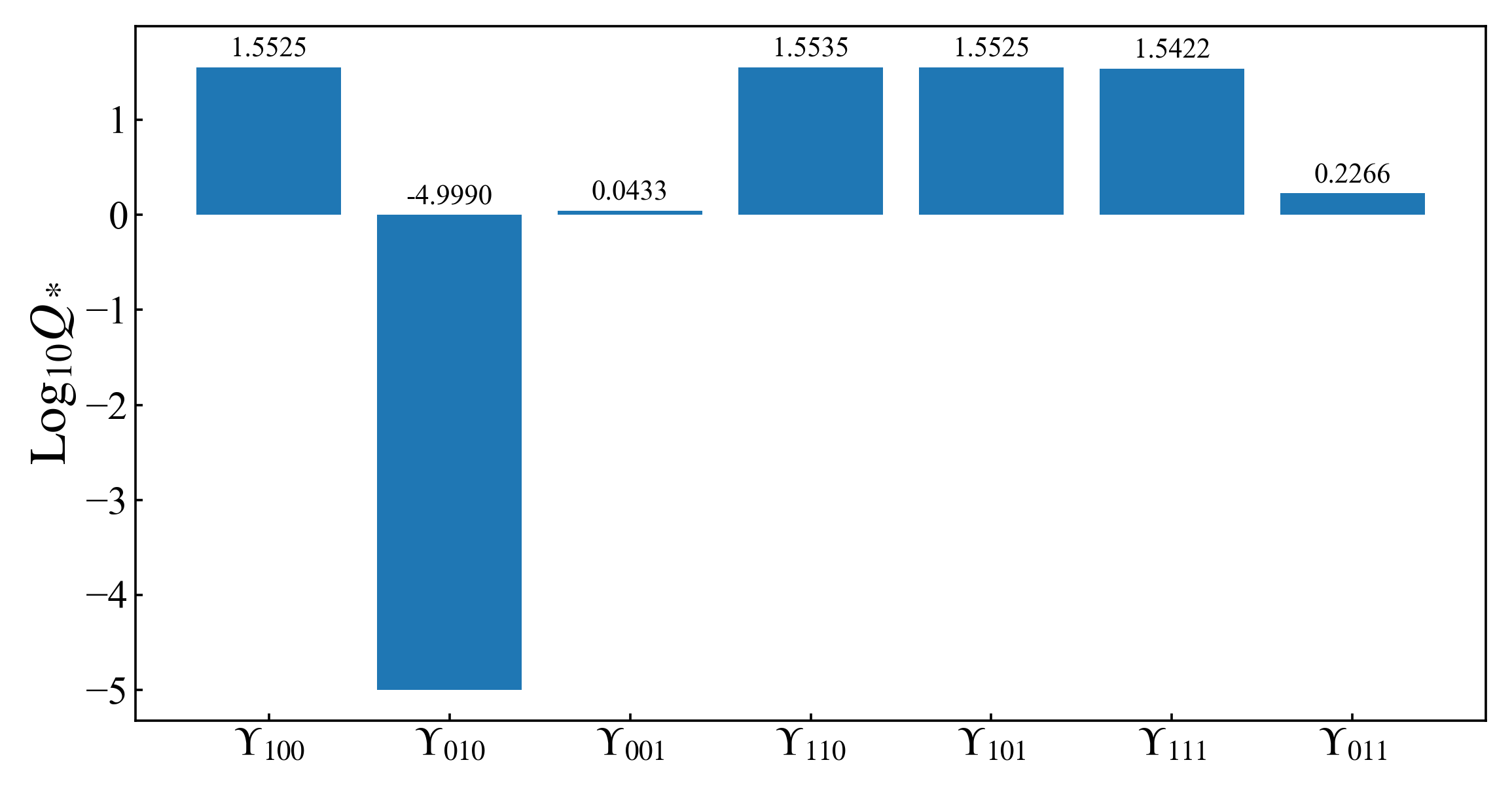
Figure 4: Logarithmic dissipative strength, Q∗9, at the best fit points.
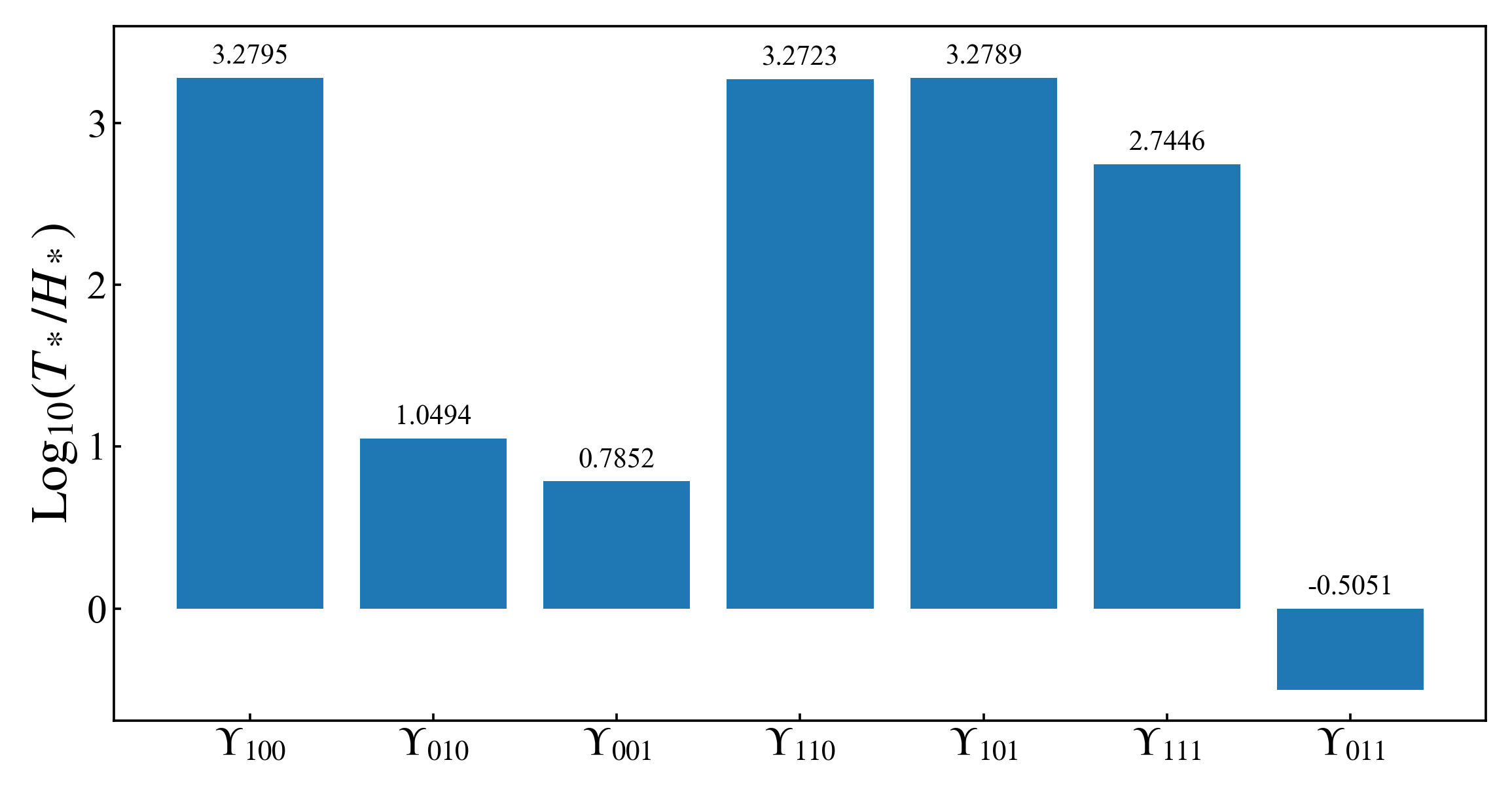
Figure 5: Logarithmic warmness, h∗0, at the best fit points.
Discussion and Implications
This systematic hierarchy, consistent across sampling refinements and boundary diagnostics, indicates that the penalty for complexity—rather than the h∗1 fit locus—governs the channel ranking. Pure LT and LT-dominant channels not only achieve optimal fit quality but do so with minimal structural overhead. Effective internal mixing among channels is not statistically or physically favored in the current parameter and scoring regime.
These results have direct implications for model building and CMB-oriented inflationary inference: pursuit of phenomenological accuracy via additional dissipative complexity is generally unjustified. Moreover, the strong alignment of best fit points among non-HT-dominated EDCs suggests that model selection for warm Higgs inflation will be predominantly constrained by complexity penalties and consistency with strong warmness diagnostics, rather than by future improvements in tensor or spectral index constraints alone.
From a theoretical perspective, the failure of mixed channels to yield stable coexistence implies that, at least for the Higgs plateau potential, the microphysical mechanisms favor one regime dynamically—or that the effective parameter space is such that one channel's behavior overwhelmingly satisfies observational and warmness requirements.
Conclusion
A comprehensive, complexity-penalized scan of effective dissipation channels in the context of warm Higgs inflation demonstrates that the LT channel alone, or its dominance in multi-component constructions, is both statistically and physically preferred. The hierarchy is robust against increased computational scrutiny and boundary constraints, with multi-channel EDCs collapsing to single-channel dominance near their best fit points. These results clarify that, within the warm background effective field theory paradigm, increasing dissipative structural complexity does not translate to improved phenomenological or theoretical viability. Future developments in warm inflation model discrimination will thus require either fundamentally new dissipative physics or dramatically different potential structures to realize stable, observationally viable internally mixed dissipation regimes.