- The paper demonstrates that warm inflation models based on string-theoretic brane dynamics overcome cold inflation challenges by enabling dissipative dynamics in fully stabilized compactifications.
- It derives analytical scalar potentials and dissipation coefficients for both radial and angular brane scenarios, with numerical results closely matching cosmological observations.
- The study shows that warm inflation suppresses tensor modes and limits field excursions, addressing swampland and weak gravity conjecture constraints.
Warm Inflation from Brane Dynamics in Warped Throats
Introduction
The paper "Warm Warped Throats" (2603.29781) investigates the realization of warm inflation (WI) in string-theoretic brane inflation setups. Specifically, it develops models in which the inflaton arises from either the radial or angular motion of a mobile D3-brane within a warped deformed conifold (WDC). Unlike conventional cold inflation (CI) models that often fail to match observational constraints or require significant fine-tuning, the proposed warm inflation scenarios are naturally embedded in fully stabilized compactifications, with scalar potentials induced via non-perturbative effects from D7-brane embeddings. The analysis rigorously contrasts both CI and WI, demonstrating that dissipative dynamics enable compliance with recent cosmological bounds in parameter regimes inaccessible to CI.
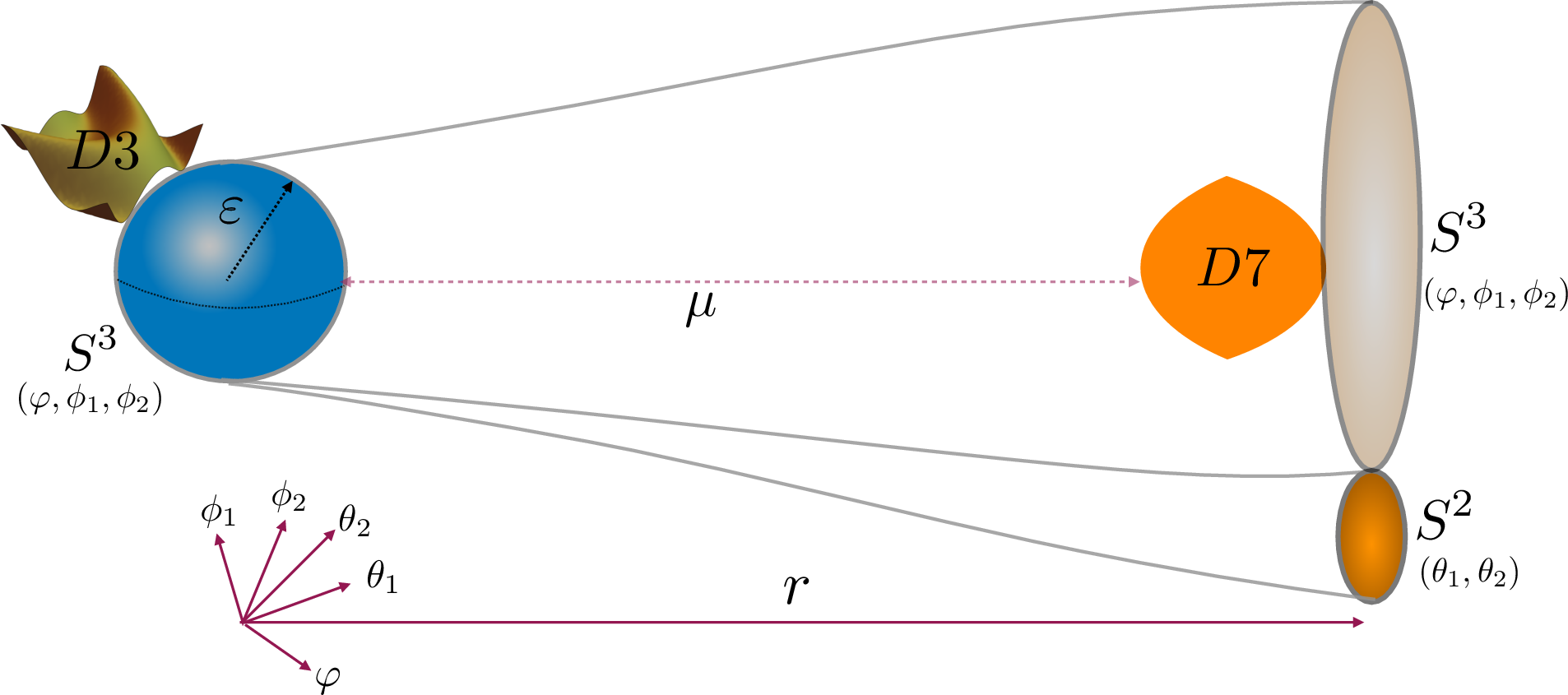
Figure 1: Schematic of the warped throat geometry showing the conifold structure, resolved at the tip via an S3, and indicating the D3-brane motion along radial (μ) or angular (ε) directions.
Brane Inflation Scenarios and Moduli Stabilization
Geometry and Mechanism
A warped throat is modeled as a deformed conifold whose cycles are threaded by type-IIB fluxes. The D3-brane either moves radially toward the anti-D3-brane (if present), or angularly along a S3 at the tip of the throat. The paper considers two distinct inflationary scenarios:
- Radial Brane Inflation: The inflaton is the radial distance (μ) between D3-D7 branes.
- Angular Brane Inflation: The inflaton is an angular coordinate (φ) on the S3 at the tip.
Moduli stabilization is ensured by embedding a stack of D7-branes using supersymmetric Kuperstein-type embeddings. These generate the necessary F-term potentials governing both radial and angular brane dynamics, while all other moduli are locked at their minima.
Scalar Potentials
For both scenarios, the potentials are derived analytically in terms of string theory parameters, incorporating KKLT moduli stabilization (via W0 and A0 in the non-perturbative superpotential), threshold corrections, and sub-leading Coulomb interaction terms (when present).
- Radial Brane Potential: Contains terms up to ϕ3/2, μ0, and a suppressed Coulomb term.
- Angular Brane Potential: Features a multi-term trigonometric structure, generalizing natural inflation via μ1 and plateau-flattening terms from Kuperstein embeddings.
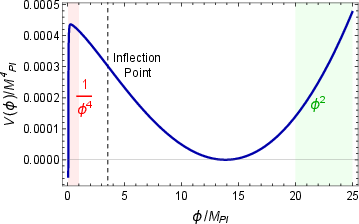
Figure 2: The effective radial-brane scalar potential, showing a maximum, minimum, and inflection region across the inflaton field range.
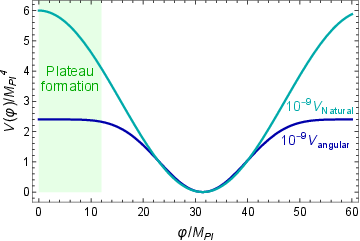
Figure 3: Angular-brane potential structure contrasted against standard natural inflation; additional terms flatten the plateau, enabling sub-Planckian decay constants.
Dissipation Mechanisms and Warm Inflation Dynamics
Background Evolution
Warm inflation is characterized by the continuous transfer of inflaton energy to a thermal radiation bath during expansion, governed by the dissipation coefficient μ2. The coupled system modifies the inflaton and radiation equations, and the parameter μ3 quantifies the dissipative strength. The end of inflation coincides with μ4, and the model allows direct computation of μ5 (number of e-folds at horizon crossing) without post-inflation reheating ambiguities.
Microphysical Dissipation
Two distinct dissipation mechanisms arise:
- Radial Brane Inflation: The inflaton couples to heavy intermediates that decay into light fields, as motivated by brane-string dynamics, leading to μ6. Large μ7 constants reflect the requirement for multiple light decay channels, typical for such setups.
- Angular Brane Inflation: The angular coordinate (axion-like) couples via Yang-Mills interactions involving μ8 and μ9 terms. For non-chiral fermions, dissipation is linear in temperature, ε0, facilitating viable inflation with sub-Planckian axion decay constants.
Numerical Results and Observational Constraints
Radial Brane WI
Numerical analyses reveal that, for the presented benchmark parameters, CI produces a spectral index ε1 and tensor-to-scalar ratio ε2—both excluded by Planck/BICEP/ACT constraints. In contrast, WI achieves ε3, ε4, and field excursion ε5 in the strong dissipative regime (ε6).
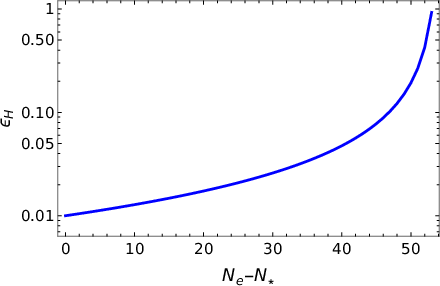
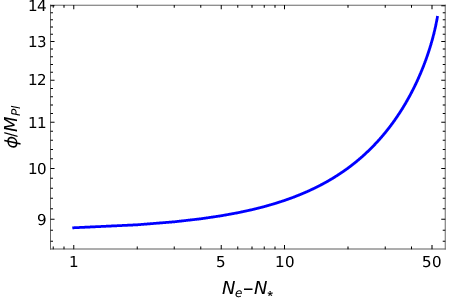
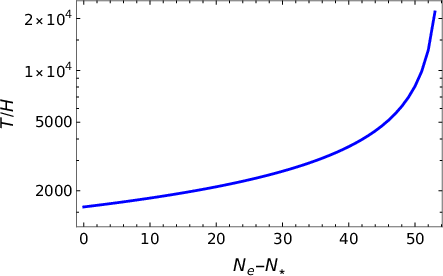
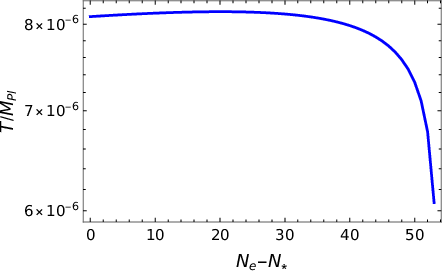
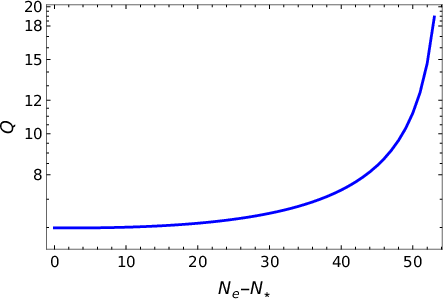
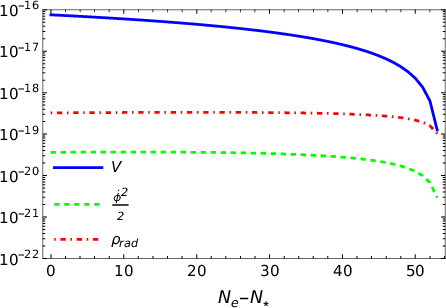
Figure 4: Evolution of ε7, ε8, ε9, S30, S31, and energy densities during WI, confirming dominance of the radiation bath near the end of inflation.
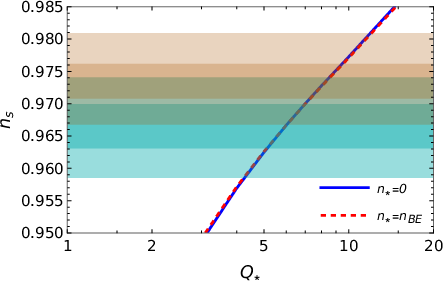
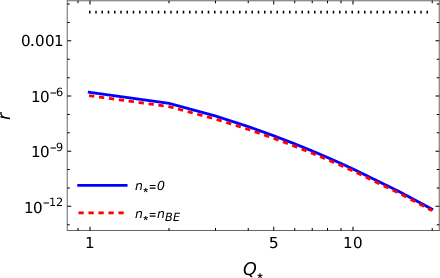
Figure 5: The spectral tilt S32 and tensor-to-scalar ratio S33 as a function of S34 for radial brane WI; observational bounds highlighted.
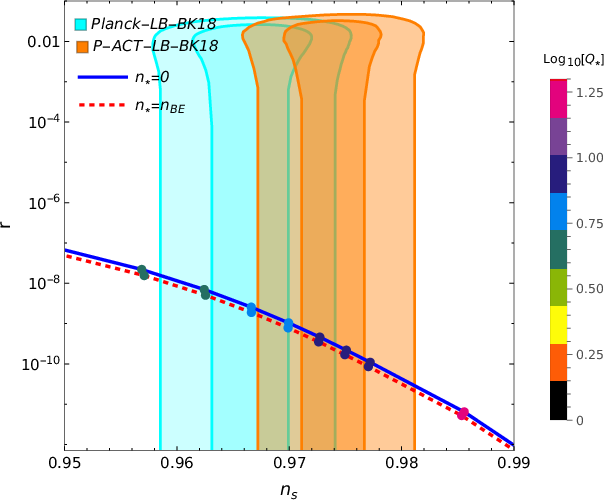
Figure 6: S35 plane with Planck and ACT confidence regions overlaid for the radial brane WI scenario, demonstrating parameter space viability.
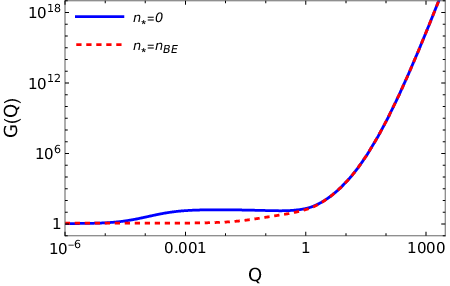
Figure 7: Computed S36 correction for WI power spectrum with S37 dissipation, confirming numerical stability.
Angular Brane WI
The angular-brane WI mechanism, with S38, supports consistent inflationary trajectories for S39, enabling μ0 and suppressed μ1 across weak dissipative regimes (μ2). The field excursion μ3 is reduced relative to CI, and a variety of parameter sets fall within observational bounds.
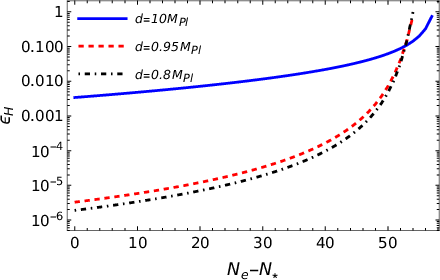
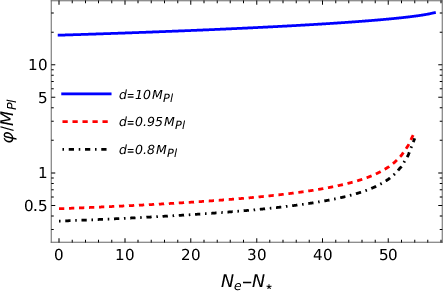
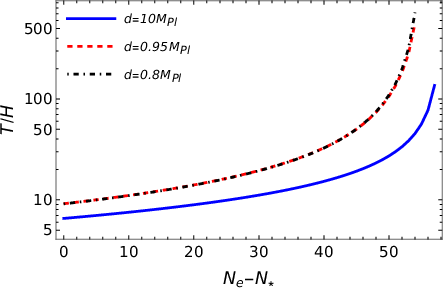
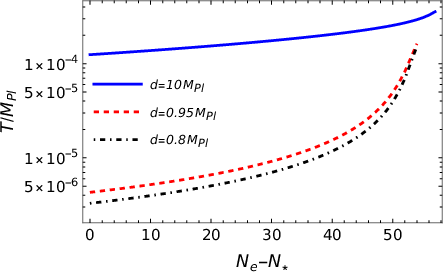
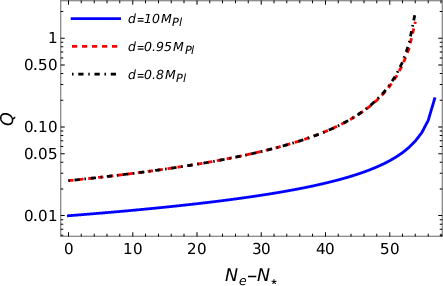
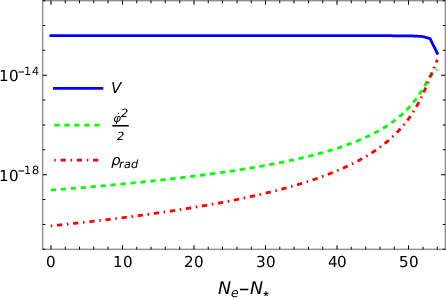
Figure 8: Time evolution of μ4, μ5, μ6, μ7, μ8, and energy densities for angular brane WI models with varying decay constants.
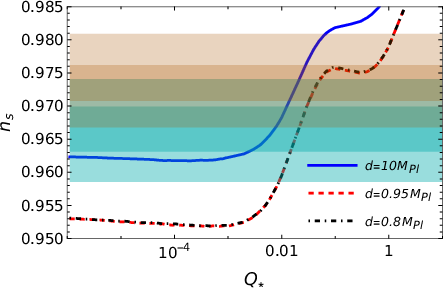
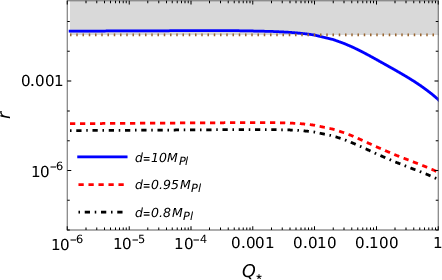
Figure 9: μ9 and φ0 versus φ1 in three angular brane WI benchmarks, all satisfying observational constraints for φ2.
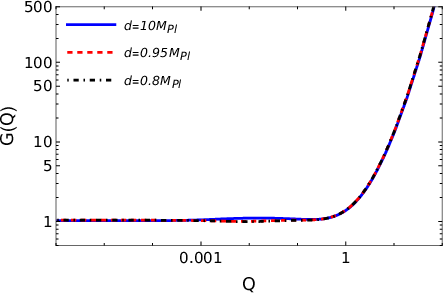
Figure 10: Numerical φ3 for angular brane WI, exhibiting characteristic plateau for weak dissipation.
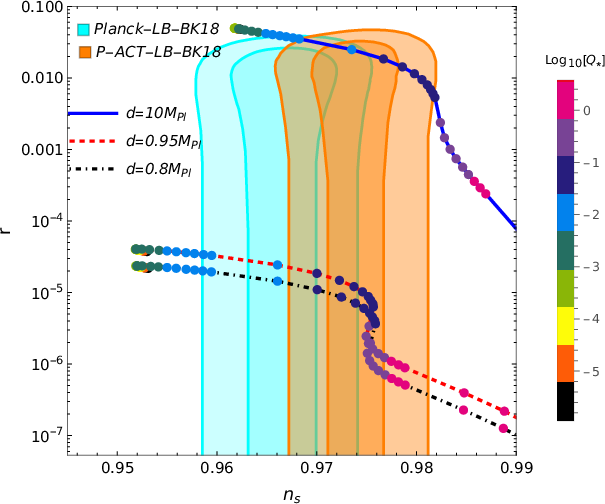
Figure 11: φ4 observational contours from Planck and ACT, overlaid with predictions from angular brane WI with linear temperature dissipation.
Implications and Outlook
The results demonstrate that WI scenarios grounded in realistic string-theoretic brane constructions can achieve full compatibility with cosmological data, overcoming the limitations of CI in the same parameter regimes. Crucially, WI suppresses tensor modes and reduces field excursions, aligning better with swampland and WGC-inspired constraints. The explicit realization of sub-Planckian axion decay constants in WI via angular brane inflation is highly significant for consistent UV completions. Strong dissipation is accessible in radial models, while angular models are observationally viable in the weak dissipation regime.
The theoretical insights developed here deepen the interplay between microphysical string parameters and cosmological observables, suggesting further model-building with more complex throat geometries, interaction structures, and embedding schemes. Practically, these models motivate targeted observational searches for WI signatures (suppressed φ5, distinctive non-Gaussianities, etc.), and the framework invites exploration of AI techniques for automated string inflation model classification and parameter inference.
Conclusion
The paper provides a rigorous analysis of warm inflation dynamics in string theory via brane-motion-induced scalar potentials within warped throats. By deploying moduli-stabilized, observationally compliant models—both radial and angular—the study established that dissipative mechanisms enable the realization of inflation in compactification settings previously excluded by cold paradigms. The parameter mapping and cosmological output are firmly grounded in the string geometry and microphysics, supporting future theoretical developments and observational probes in the context of string cosmology and inflationary model selection.