- The paper presents BizCompass—a dual-axis benchmark that evaluates LLMs’ business reasoning across four fundamental domains and three key roles.
- The methodology includes extensive corpus curation, modular question design, and expert validation to ensure realistic and diverse business tasks.
- Experimental results reveal that while proprietary LLMs excel in factual recall, they face challenges in compositional and context-rich decision-making tasks.
BizCompass: A Systematic Benchmark for Business Reasoning in LLMs
Motivation and Benchmark Design
LLMs are increasingly deployed in business environments where effective analysis, trading, and consulting demand rigorous reasoning across multiple knowledge domains and alignment with real-world operational constraints. Despite rapid advances in LLM capabilities, prior benchmarks suffer from limited domain coverage, weak mapping between theoretical knowledge and applied tasks, and insufficient role-specific scenario diversity. BizCompass addresses these gaps with a dual-axis evaluation framework, providing systematic coverage across four foundational domains—finance, economics, statistics, operations management—and three pivotal business roles: analyst, trader, and consultant. The benchmark explicitly constructs a mapping from foundational competencies to business-critical applications, enabling diagnostic insights into both model strengths and limitations.
The benchmark construction pipeline (Figure 1) employs a rigorous three-phase methodology: extensive corpus curation from top academic journals and practitioner-oriented resources, a modular question construction process designed to ensure high-quality, auditable, and representative task design, and an expert-driven review phase emphasizing both methodological robustness and ecological validity.
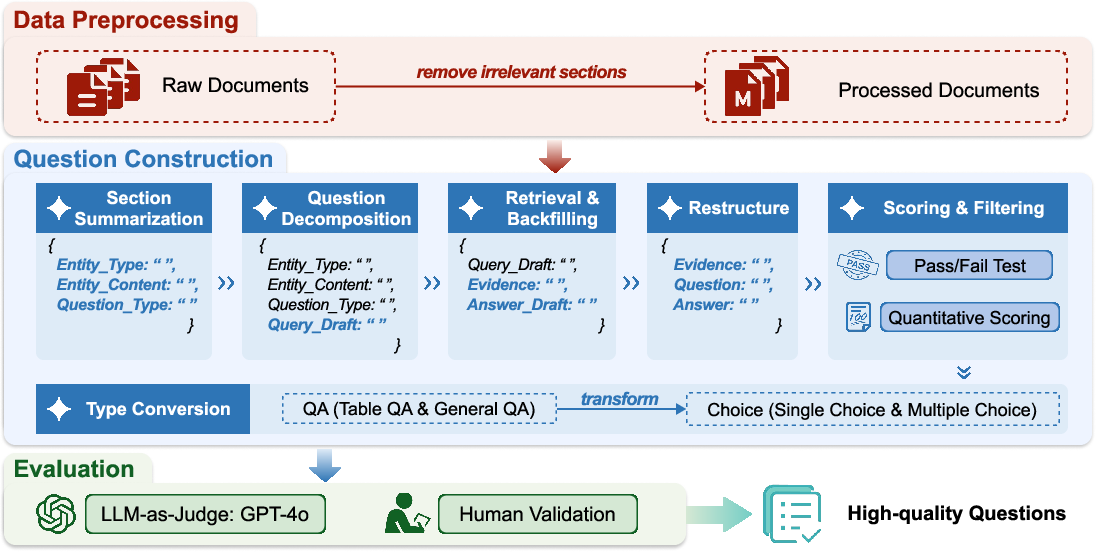
Figure 1: The three-phase pipeline of BizCompass benchmark construction.
Data and Scenario Coverage
BizCompass encompasses 14,855 questions, partitioned into 6,406 knowledge-based (domain mastery) and 8,449 application-based (pragmatic decision-making) tasks. Its design reflects the task and format diversity characteristic of professional business environments, integrating question answering, single-choice, and multiple-choice formats, and balancing long-context analytical reasoning with short-context interactive decision tasks.
BizCompass systematically sources knowledge-based tasks from an 82-journal corpus spanning finance, economics, operations management, and statistics, ensuring disciplinary centrality and broad thematic coverage. Application-based tasks are derived from (1) practitioner-oriented textbooks, (2) authentic business documents (e.g., SEC filings, Morningstar datasets), and (3) real-world news feeds—yielding both realism and statistical representativeness.
Role coverage is analytically validated against O*NET, confirming that the analyst, trader, and consultant roles capture >80% of employment and job-opening shares across the business sector. Task-to-role mapping ensures that scenario diversity mirrors authentic functional responsibilities. Statistical analysis of task and subdomain distributions is visualized in Figure 2.
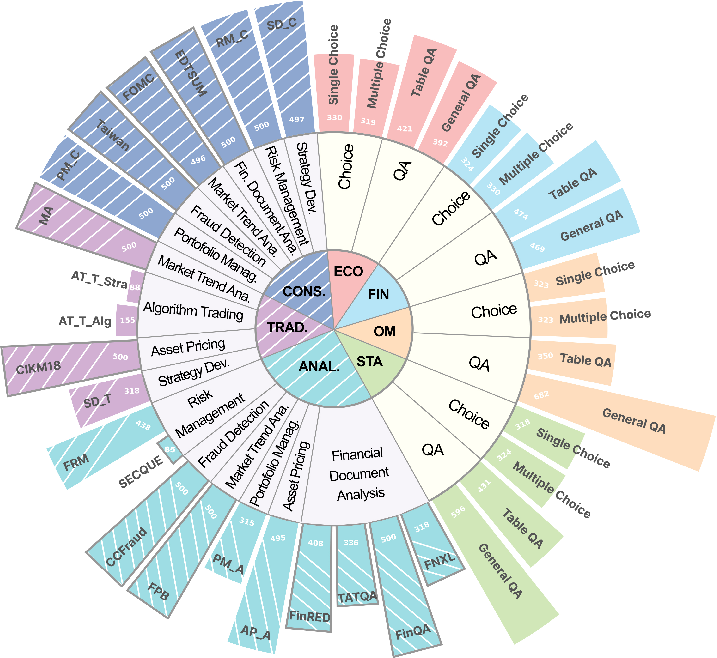
Figure 2: BizCompass's statistics—knowledge and application subsets by domain and role type.
Contextual demand, a key aspect of real business reasoning, is quantified by average token length distributions (Figure 3). BizCompass captures a spectrum from concise discriminative tasks to multi-document synthesis, directly targeting models' performance and scaling limitations in real-world reading comprehension and information integration settings.
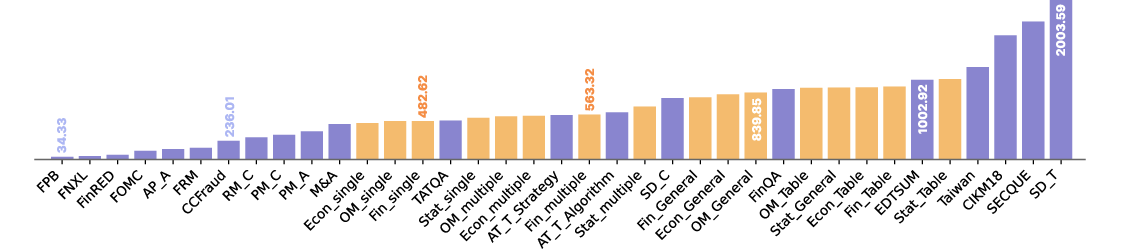
Figure 3: The average token length of each subset in BizCompass, reflecting real-world contextual heterogeneity.
Evaluation Protocol
For model evaluation, 23 LLMs—including both proprietary (GPT, Gemini, Claude, Grok) and open-source (Llama, Qwen, DeepSeek) series, plus distilled and chain-of-thought variants—are benchmarked under few-shot settings with strict fairness controls. Evaluation metrics are task-specific: accuracy for discriminative tasks, macro-averaged ROUGE for generation, and GPT-4-o-based LLM-as-a-judge setups for open-response tasks, following G-Eval criteria. Hyperparameters are tuned via grid search, results presented in the appendix.
BizCompass' expert review process employs stratified panels (knowledge experts, domain practitioners) and a dual-track, dimension-wise scoring system. Knowledge-based items are filtered for clarity, conceptual centrality, domain representativeness, and cognitive complexity; application-based items are validated for clarity, realism, role-relevance, and difficulty. Benchmark quality assurance integrates multi-criteria, pairwise preference-based filtering with strict rejection rules.
Experimental Results and Analysis
Across all dimensions, proprietary LLMs outperform open-source models, with average knowledge-based accuracy approaching 80–90% for GPT/Gemini/Claude, compared to 60–70% for top open-source models. However, neither model class demonstrates robust, reliable performance on composite, high-dimensional business tasks—application-based scores reveal significant drop-off in contextual reasoning and decision tasks, especially for models with more generative or synthesizing requirements. Notably, scaling model size does not guarantee improved performance—e.g., DeepSeek-R1-671B is outperformed by smaller proprietary models on several tasks—underscoring limits of brute-force scaling for business reasoning.
Mapping Knowledge to Application
Correlation analysis (Figure 4) demonstrates that domain knowledge acquisition and application performance are not strictly colinear for all tasks. Quantitative and analytical tasks (e.g., asset pricing, risk management) show higher cross-domain alignment, while consulting and text-based tasks are more dependent on extended semantic/contextual representations. These patterns validate the necessity of a dual-axis design—diagnosing what domain/role intersections represent genuine model bottlenecks.
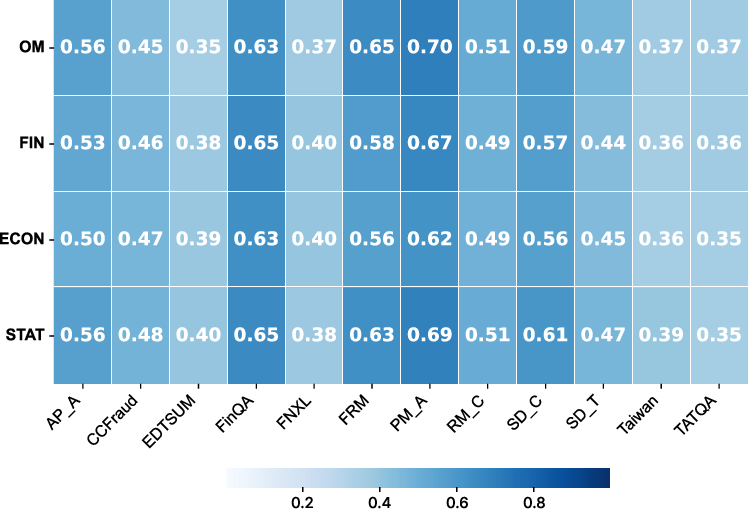
Figure 4: Correlation between application-based tasks and the 4 knowledge domains.
Further, Figure 5 illustrates the relationship between performance on general code reasoning (SWE-bench), long-context tasks (LongBench v2), mathematical ability (AIME2024), and BizCompass evaluation. Strong code reasoning, long-context understanding, and mathematical skills correspond to improved knowledge-based task performance but are less predictive of composite, business-specific reasoning outcomes. This non-monotonic transfer affirms the practical distinctiveness of business-critical task demands and aligns with prior findings on benchmark specialization and overfitting.
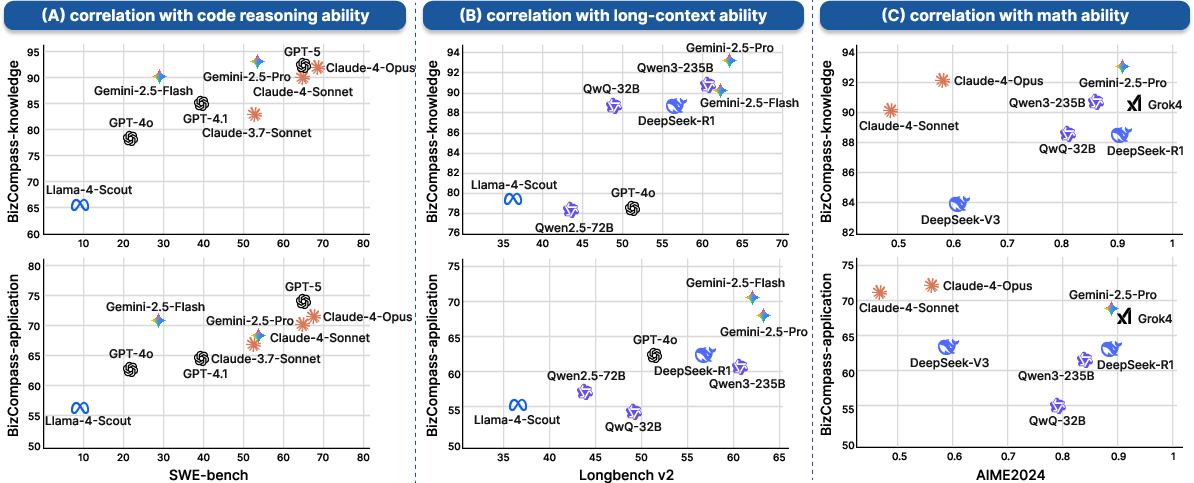
Figure 5: Correlation of model performance on (A) SWE-bench, (B) LongBench v2, and (C) AIME2024 with BizCompass evaluation metrics.
Depth of Reasoning and Synthesis
Sample analysis (see Figure 6) reveals that task design incorporating multi-source synthesis and deep reasoning chains more robustly differentiates model abilities. BizCompass explicitly operationalizes quality along three axes: depth of reasoning, degree of synthesis, and conceptual centrality—with deeply compositional, highly synthetic items functioning as strong discriminators.
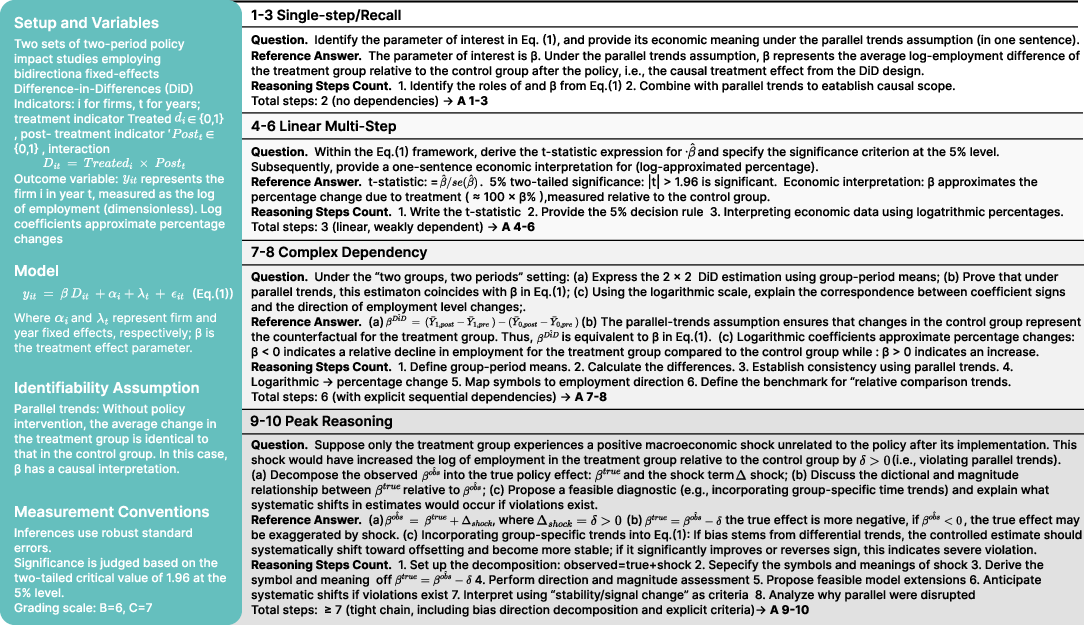
Figure 6: Four examples showing different scores on the Depth of Reasoning (A) dimension.
Fine-Tuning and Optimization
Domain-specific supervised fine-tuning (SFT) on financial instruction datasets yields substantial gains in factual recall tasks (single/multiple-choice), but minimal improvement for compositional or generative reasoning tasks (Table in main text). This demonstrates that factual alignment is necessary but not sufficient: business reasoning requires not just domain exposure but robust alignment of reasoning strategies, information integration, and pragmatic adaptation. Further, computational profiling demonstrates that generative business reasoning carries significant inference cost overhead, relevant for practical deployment considerations.
Implications and Future Directions
BizCompass exposes persistent reasoning bottlenecks in state-of-the-art LLMs, most acutely in compositional, multi-step, and cross-domain scenarios—precisely those where high-stakes business decisions are made. The findings challenge assumptions that scaling, superficial instruction tuning, or chain-of-thought prompting alone can deliver reliable performance for business-critical automation.
In practice, BizCompass provides actionable diagnosis for real-world model selection and deployment strategy in enterprise settings: a model's performance on generic benchmarks cannot simply be extrapolated to high-reliability business contexts; application-ready deployment requires rigorous, scenario-specific evaluation and potentially new approaches—e.g., structured information retrieval, interactive alignment, and dynamic model composition.
Theoretically, the research highlights the open question of how to achieve transfer from foundational domain knowledge to robust, context-sensitive, and adaptive business reasoning. Benchmarking along the BizCompass axes can serve as a test-bed for emerging architectural innovations including retrieval-augmented generation, reasoning-augmented decoding, and role-aligned agentic composition.
Conclusion
BizCompass advances the evaluation of LLMs by bridging domain knowledge and application-level reasoning in business contexts. The benchmark's dual-axis coverage, rigorous task construction, and expert-driven quality filters enable a precise diagnosis of both knowledge and reasoning limitations in current models. Results emphasize that while progress in factual recall and domain knowledge is real, fundamental advances in compositional business reasoning remain necessary for trustworthy deployment in the enterprise. BizCompass sets a new foundation for diagnostic research, optimization, and development of LLMs tailored for complex business decision-making (2604.17305).

