- The paper introduces SciDraw-6K, a dataset of over 6K Gemini-generated scientific illustrations with multilingual prompts tailored for T2I evaluation.
- The paper details a custom eight-class prompt taxonomy and automated translation into 11 languages, ensuring robust testing across diverse scientific domains.
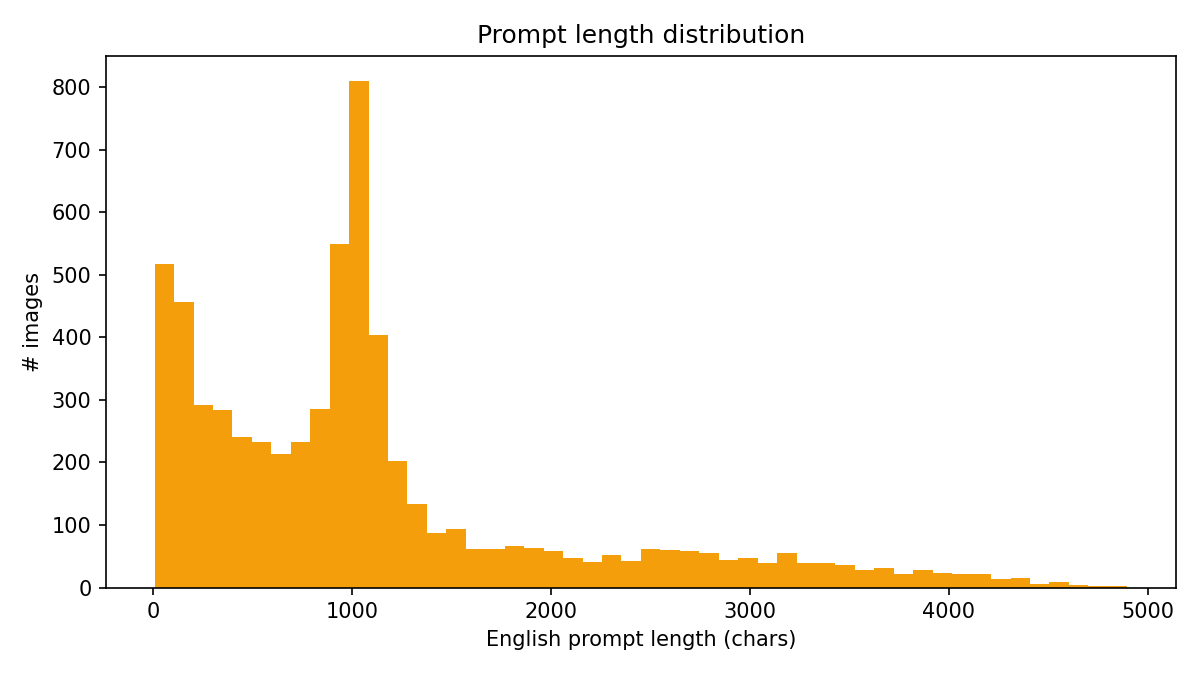
- The paper analyzes temporal trends and category imbalances while noting single-source bias and template reuse as limitations for further model fine-tuning.
SciDraw-6K: A Multilingual Dataset for Scientific Text-to-Image Evaluation and Adaptation
Introduction
SciDraw-6K (2604.17206) addresses a foundational gap in text-to-image (T2I) research for the scientific illustration domain. While the state-of-the-art in T2I has rapidly advanced, culminating in powerful general-purpose models such as Gemini, Stable Diffusion, and Midjourney, existing large-scale datasets are overwhelmingly oriented toward aesthetic, artistic, or generic visual content. SciDraw-6K targets the unique requirements of scientific documentation—specifically, schematic diagrams, mechanistic figures, table-of-contents graphics, and conceptual posters—by synthesizing 6,291 high-density illustrations via Gemini-based endpoints, each paired with prompts in eleven languages and rich metadata.
Dataset Construction and Properties
SciDraw-6K relies exclusively on Google’s Gemini image-generation API. Generation is concentrated in the gemini-2.5-flash-image and gemini-3-pro-image-preview variants, with systematic model identification and log provenance attached per image, enabling fine-grained downstream stratification.
The dataset construction pipeline incorporates:
All images undergo lightweight expert curation, filtering for generative quality, topical alignment, and compliance with dataset policy constraints. Metadata is stripped of all user identifiers, ensuring participant anonymity.
Dataset Analysis
Category and Temporal Distribution
The dataset exhibits a pronounced domain skew, with biomedical figures constituting roughly 45%, followed by materials science, AI systems, chemistry, and environmental science (Figure 2). The "other" category absorbs a long tail of specialist subfields.
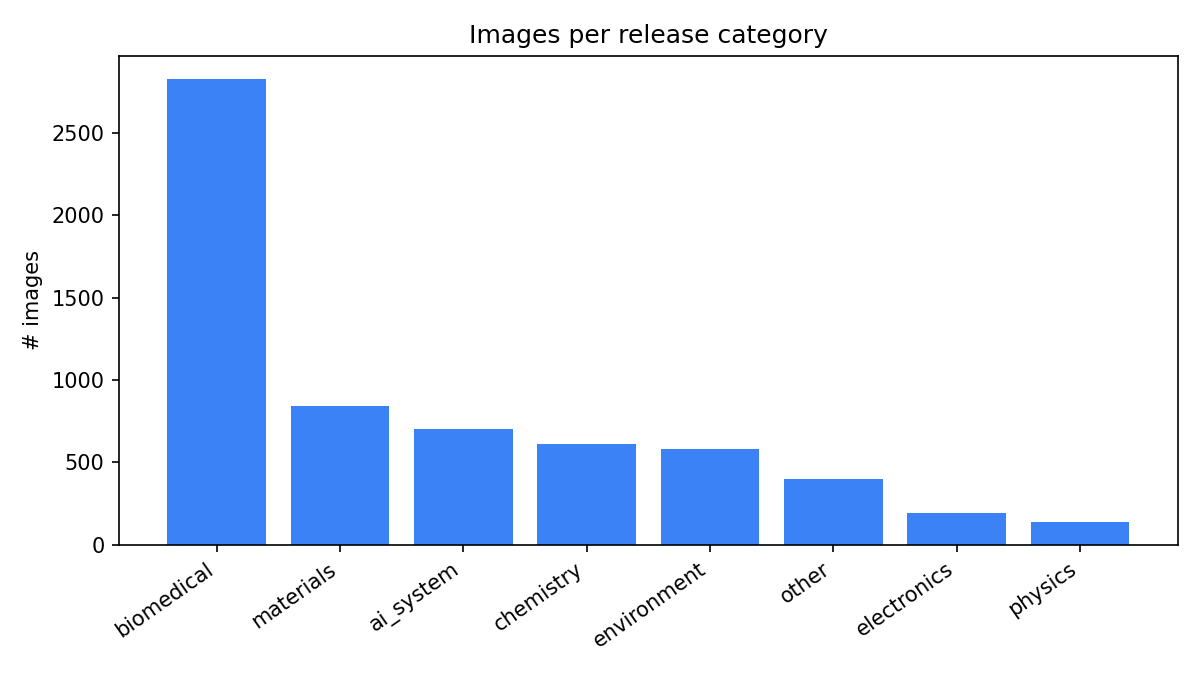
Figure 2: Number of images per category—with biomedical content dominating and a diverse but sparse tail of minor disciplines.
Monthly generation counts trend upwards, reflecting pipeline maturation and increased Gemini API throughput over time (Figure 3). Such temporal traceability provides a valuable perspective for tracing evolving model behaviors and potential test-time distribution shifts.
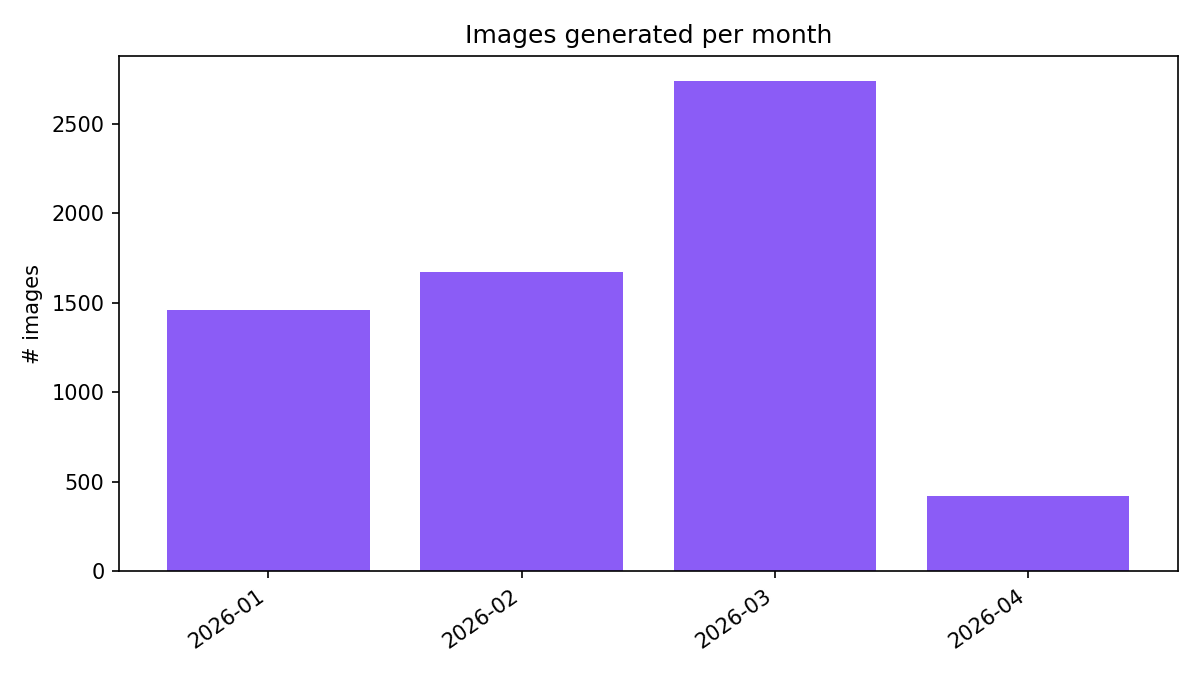
Figure 3: Number of images generated per month, demonstrating growth and increased adoption of the authoring pipeline.
Multilingual Coverage
Unlike prevailing datasets that are overwhelmingly English-centric and lack translation alignment, SciDraw-6K achieves 100% non-null coverage for each language column (Figure 4), constructing a fully parallel corpus suitable for robust multilingual evaluation of T2I models.
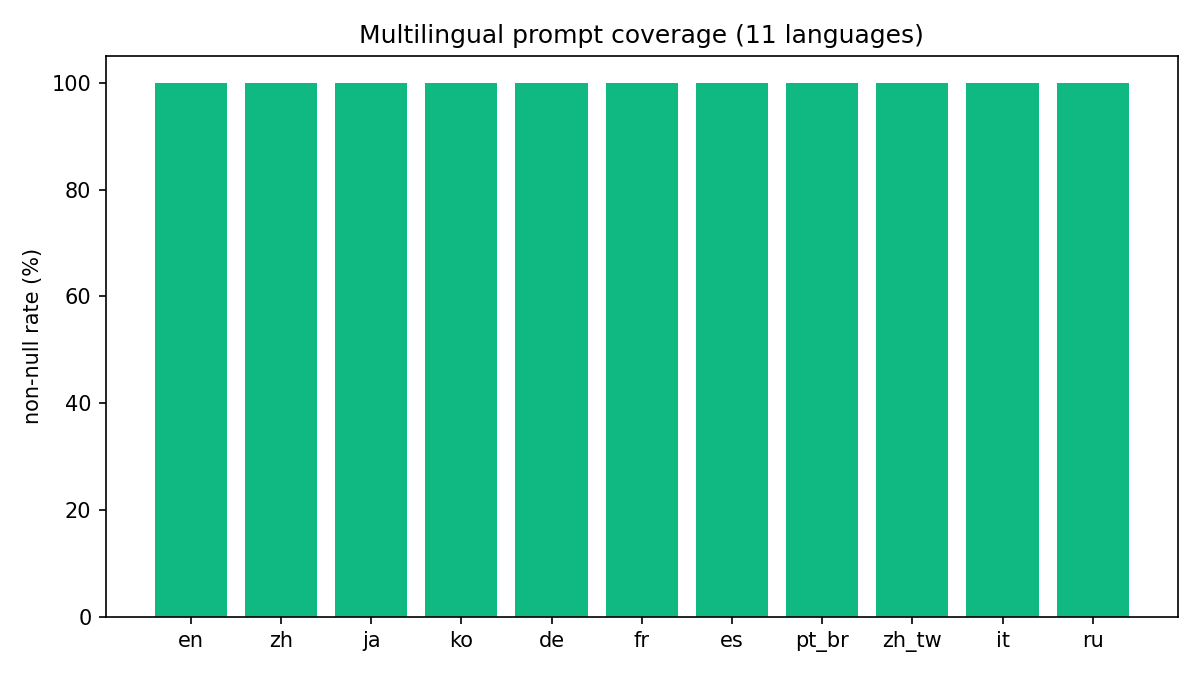
Figure 4: Per-language prompt coverage—ensuring that all eleven supported languages are consistently populated for every image.
However, the translation paradigm is English-anchored, so non-English prompts serve as proxies rather than fully independent captions.
Provenance and Source Model Diversity
A significant technical detail is the thorough annotation of the Gemini source model per image (Figure 5). This granularity enables rigorous downstream analysis, such as source-stratified fine-tuning or teacher-student transfer studies.
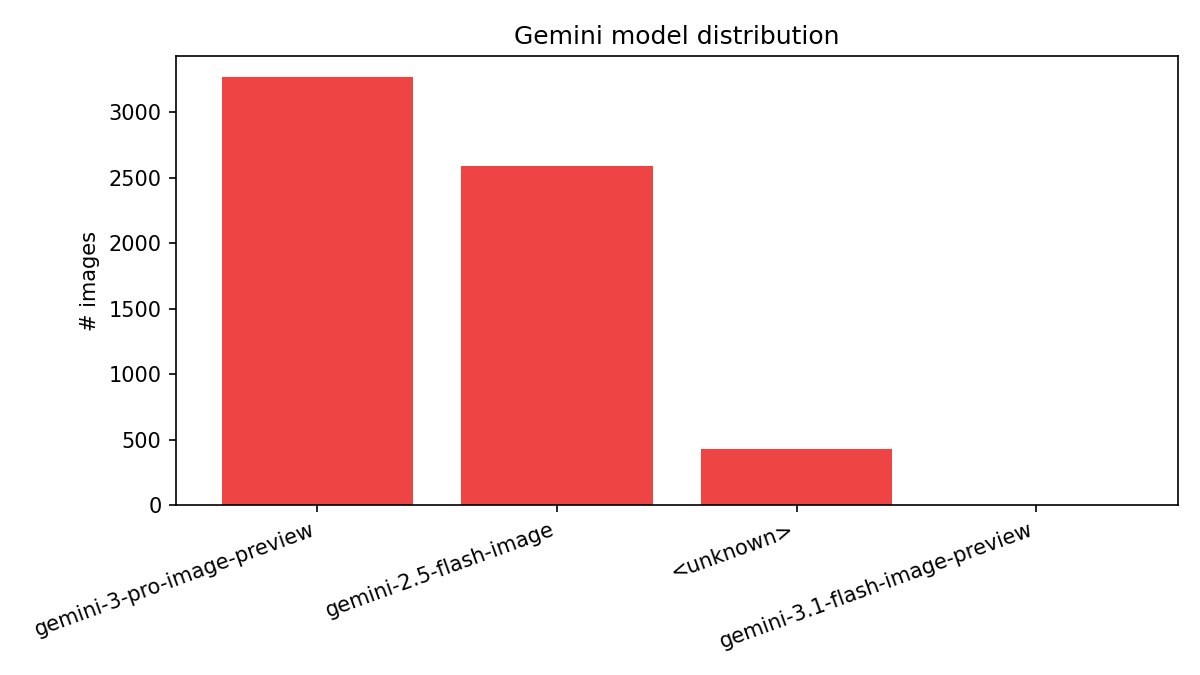
Figure 5: Breakdown of dataset composition by Gemini source-model, facilitating detailed cross-model evaluation.
Application: Prompt Engineering and Live System Integration
SciDraw-6K underpins the sci-draw.com service, demonstrating robust applied utility beyond static benchmarking:
- Serving as seed templates for multilingual, domain-diverse prompt authoring.
- Supporting retrieval-augmented prompt rewriting: user-supplied queries are augmented with dataset-derived exemplars, enhancing Gemini’s generative performance in scientific contexts.
- Powering internal regression suites for model upgrades, providing a practical metric for evaluating scientific visual quality (label legibility, topological correctness) in continuous deployment scenarios.
The dataset does not function as a training corpus for generative models from scratch but rather as a high-quality resource for prompt engineering, retrieval, benchmarking, and as a lightweight foundation for application-layer adaptation.
Limitations
Several key limitations and ethical considerations are documented:
- Single-source bias: All samples derive from a single closed model family, which risks embedding stylistic and semantic artifacts unique to Gemini.
- Severe category imbalance: The corpus is demand-shaped, not balanced; downstream use in modeling should weigh or resample underrepresented categories.
- English anchoring: Non-English prompts are translations, not independently authored.
- Template concentration in prompts: Many prompts are variations of reusable templates, which may impact caption diversity and model generalization in few-shot learning settings.
- Potential for misuse: As with any synthetic scientific imagery, there remains the risk of visual misinformation if images are misconstrued as primary evidence.
Implications and Future Directions
The release of SciDraw-6K enables a spectrum of research questions in scientific T2I:
- Systematic evaluation of multilingual prompt robustness across novel domains.
- Fine-tuning or retrieval-augmentation strategies for specialized illustration styles and genres, including schematic diagrams and conceptual models.
- Studies on model bias, generation-specific artifacts, and teacher-student domain adaptation, exploiting the annotated source-model metadata.
- Prompt engineering and automatic rewriting approaches that leverage domain-aligned, information-dense templates.
Anticipated extensions include scaling for improved balance across scientific disciplines, enhancing translation fluency via native-speaker review, and broadening compositional prompt diversity.
Conclusion
SciDraw-6K constitutes a focused, domain-dense contribution to the scientific T2I literature, pairing curated Gemini-generated illustrations with high-coverage multilingual prompts and rich metadata. It is explicitly constructed for fine-tuning, retrieval-augmented generation, prompt engineering, and benchmarking in scientific illustration, and it serves as an exemplary model for lightweight, production-oriented dataset design in specialized visual domains.