- The paper introduces a novel tensor-centric compression pipeline that exploits redundancy at the finest granularity to achieve significant storage reductions.
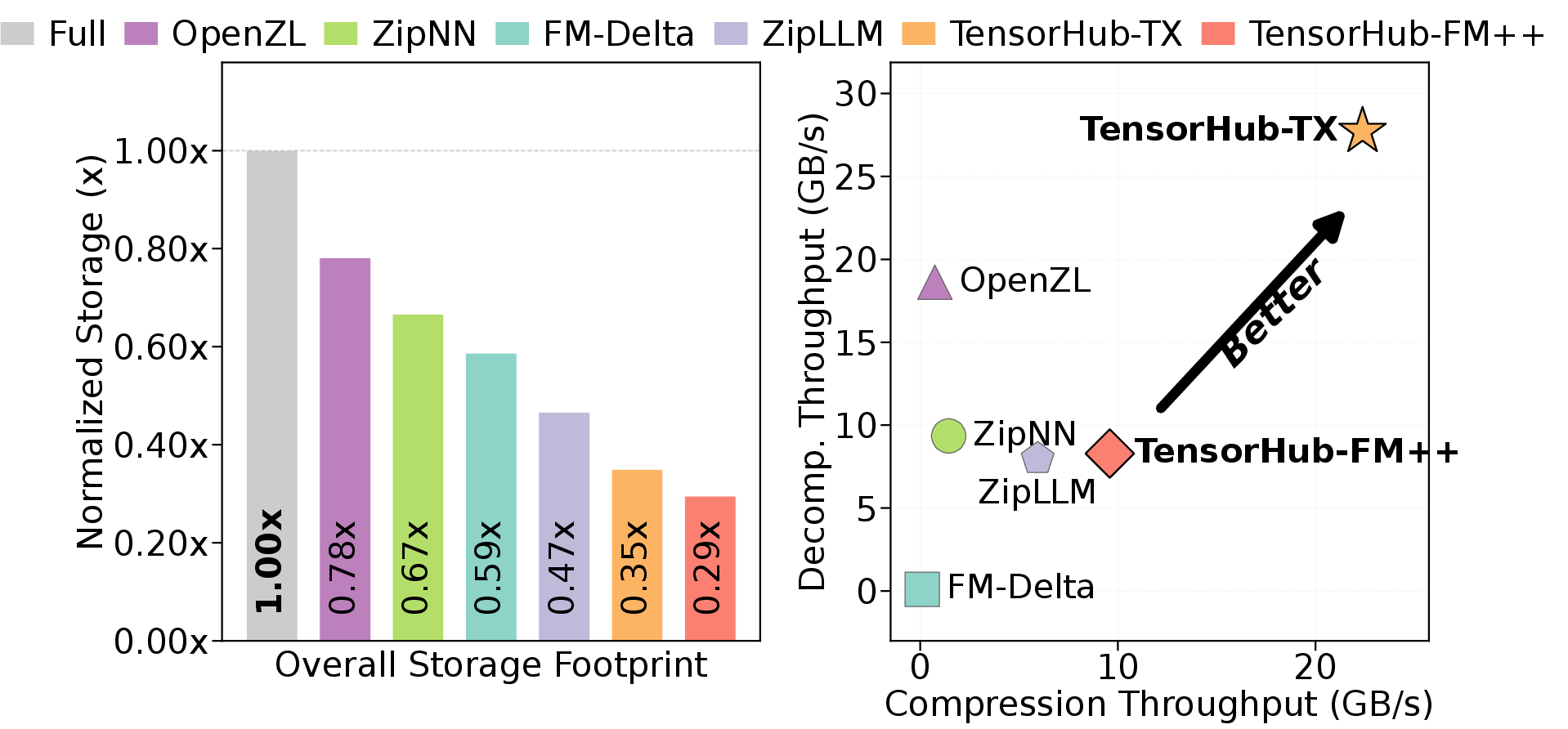
- It employs data-driven techniques such as TensorSketch, TensorPred, and FlexSplit to predict and optimize compression, yielding up to 70.5% storage savings.
- It enhances system throughput and scalability for model hubs, reducing operating costs and outperforming traditional metadata-based compression methods.
TensorHub: A Tensor-Centric Paradigm for Model Hub Compression
Introduction and Motivation
The rapid proliferation of LLMs and their fine-tuned derivatives in model repositories like Hugging Face has led to an unprecedented explosion in storage requirements, now measured in tens to hundreds of petabytes and projected to reach exabyte scale. The characteristic feature of this growth is an overwhelming dominance of fine-tuned variants—accounting for 99% of models and storage—rather than original base models. Traditional deduplication and model-level delta-compression approaches fail to provide sustainable reductions due to unreliable lineage metadata and suboptimal global base selection. The paper "TensorHub: Rethinking AI Model Hub with Tensor-Centric Compression" (2604.17104) introduces a fundamentally novel solution: tensor-centric compression, which treats each tensor as a first-class unit, discovering and exploiting redundancy at the finest possible granularity.
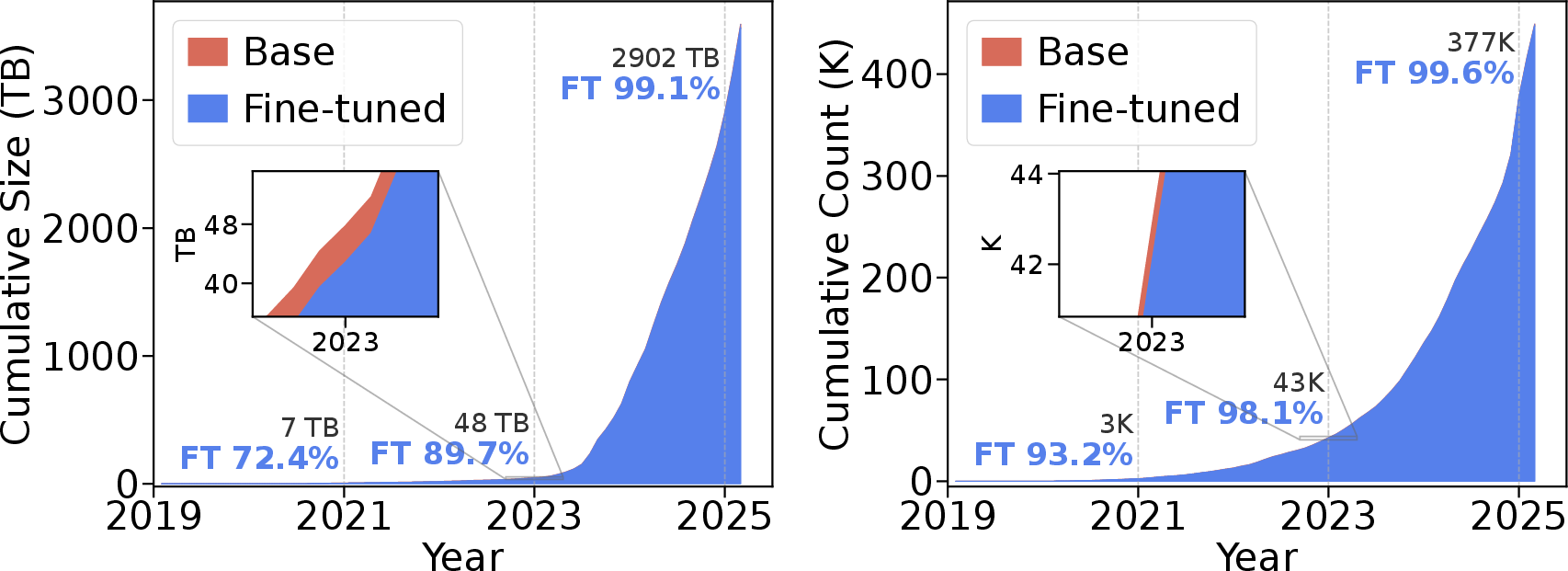
Figure 2: Cumulative storage size and model count on Hugging Face, illustrating that fine-tuned variants overwhelmingly dominate both metrics by 2025.
Empirical Analysis: Redundancy and Compression Challenges
A large-scale empirical study highlights three fundamental barriers to effective model hub storage reduction:
- Missing Lineage Metadata: Analysis shows only 25.8% of public Hugging Face models include usable base-model metadata, and the quality of this metadata is inconsistent.
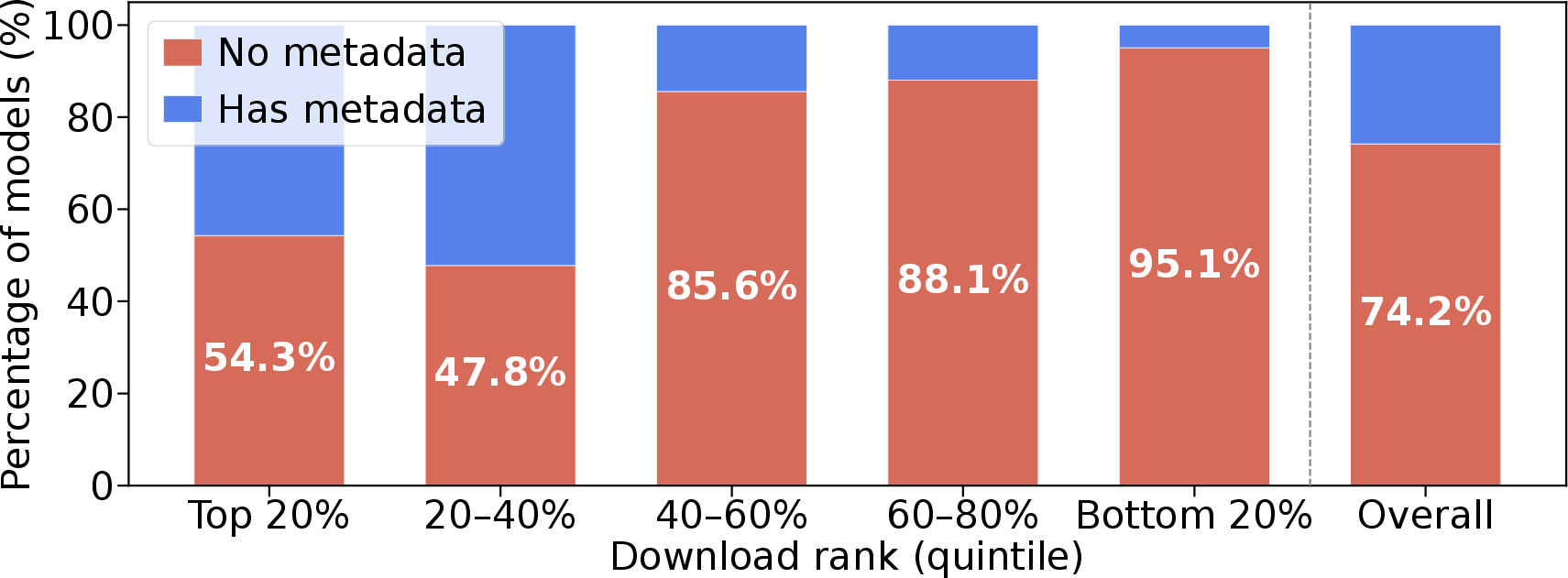
Figure 1: The majority of Hugging Face repositories lack model lineage metadata, rendering heuristic pairing strategies ineffective.
- Pair Sensitivity and Rapid Drift: Compression efficacy is highly pair-sensitive—optimal delta-bases for one fine-tuned model can yield a 47% storage reduction vs. only 29% when using metadata-designated bases.
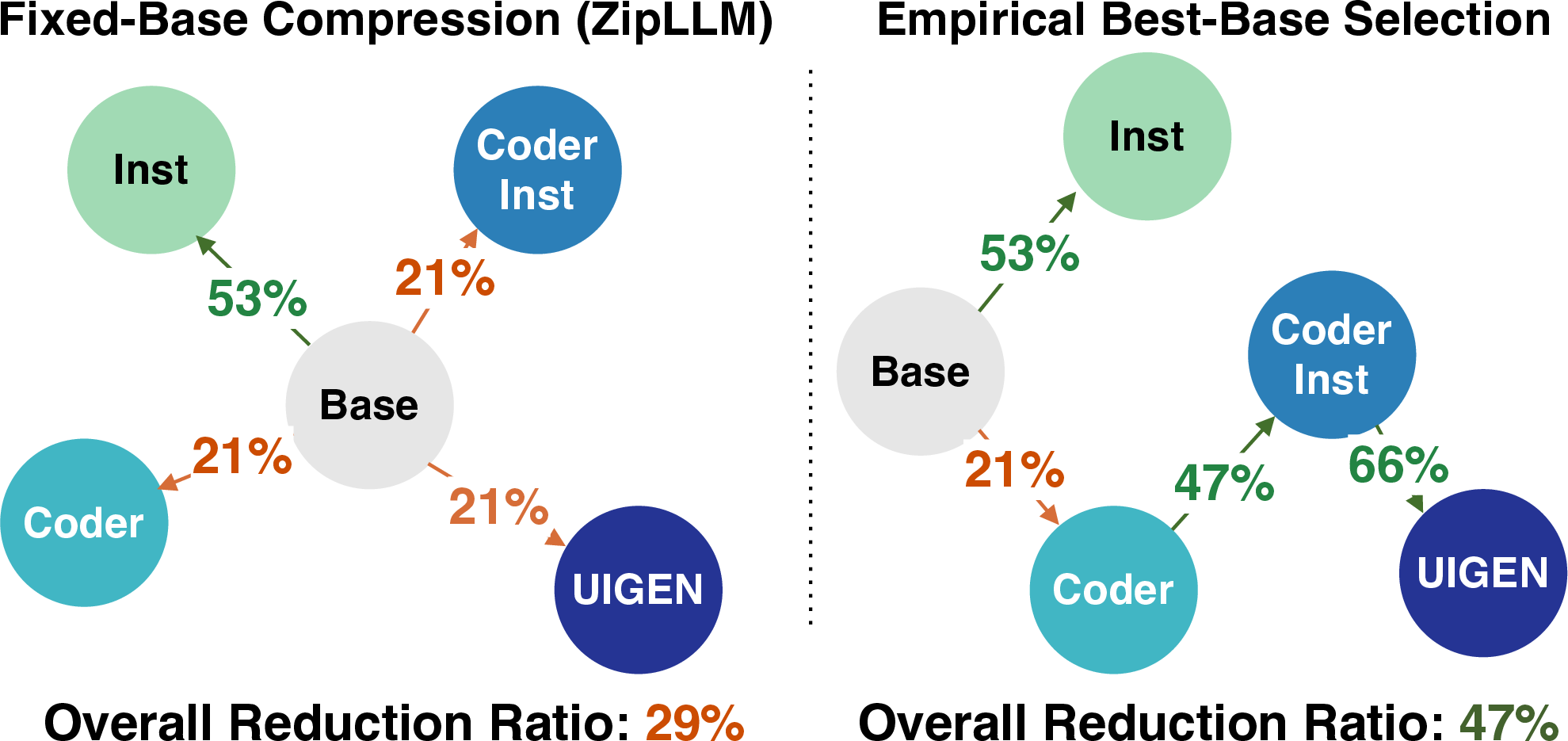
Figure 5: Delta-compression reduction ratio is highly dependent on data-driven, optimal base selection rather than fixed metadata heuristics.
- Tensor-level Redundancy: Fine-tuned models exhibit heterogeneous parameter drift across tensors; the best delta base for different tensors within the same model often comes from distinct models and not the declared base, leading to substantial unexploited redundancy under model-level compression.
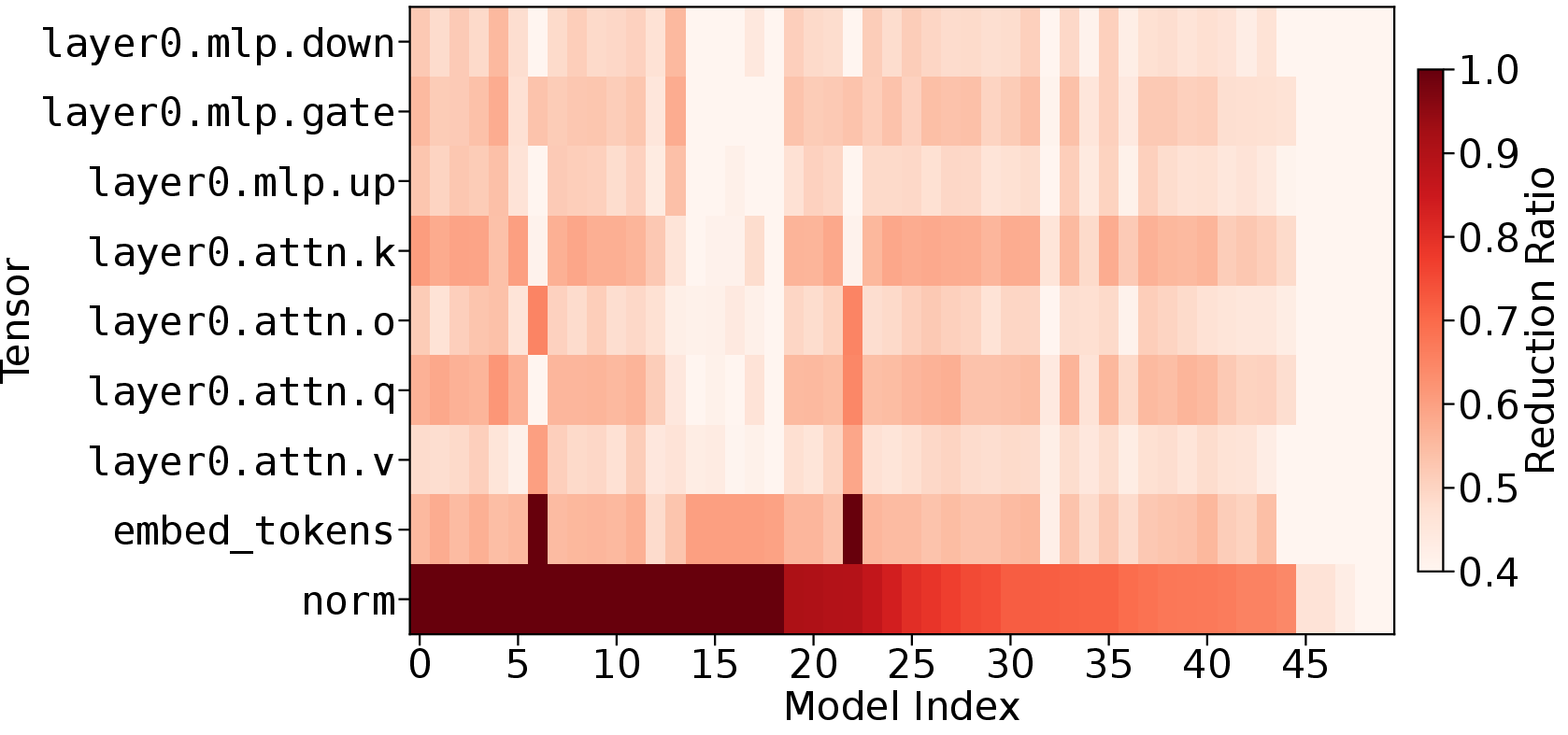
Figure 3: Storage-reduction ratio heatmap demonstrates substantial heterogeneity in compressibility across tensors and base selections.
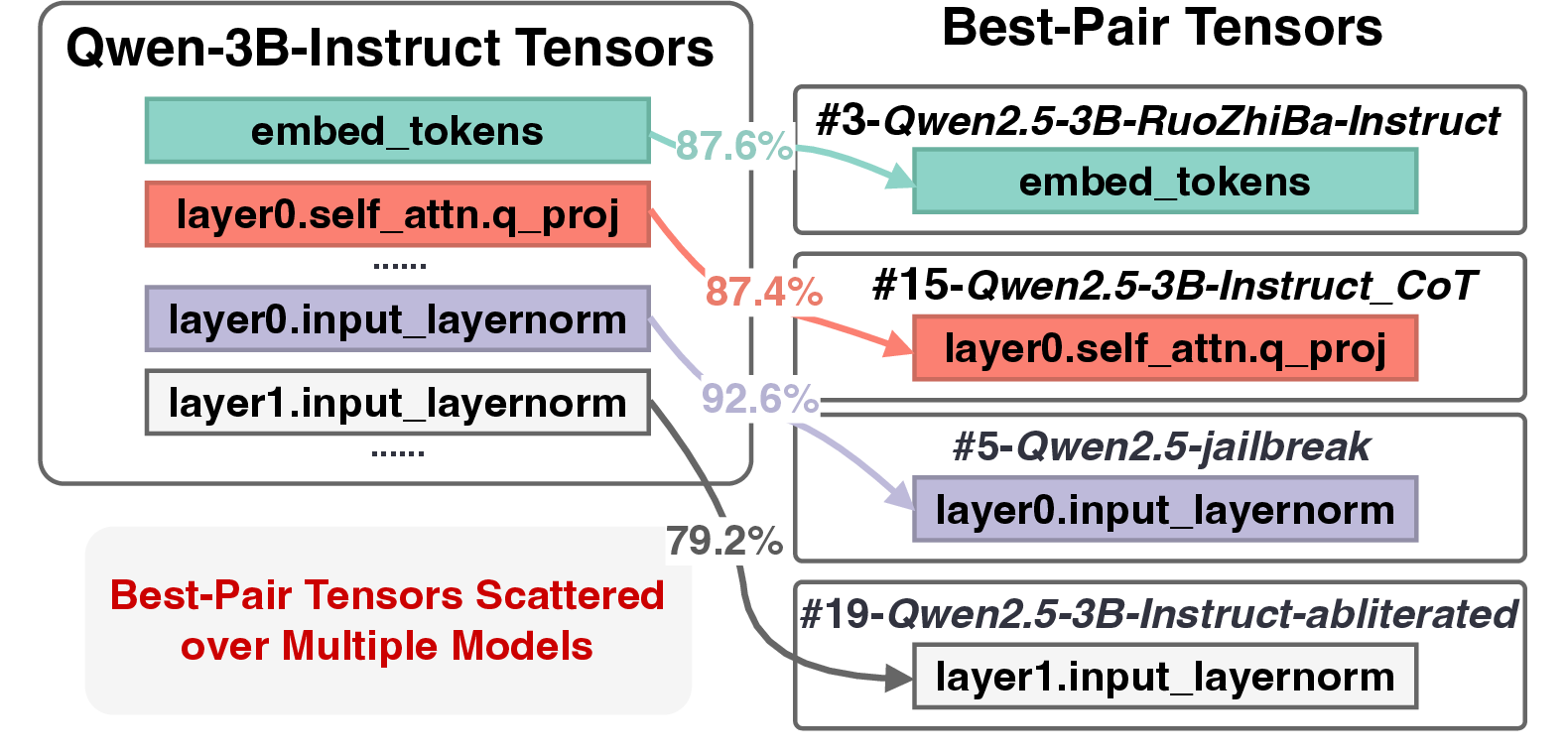
Figure 4: For a single model, the optimal base tensors for compression are distributed across several different models.
Architectural Overview
TensorHub is structured around four key components:
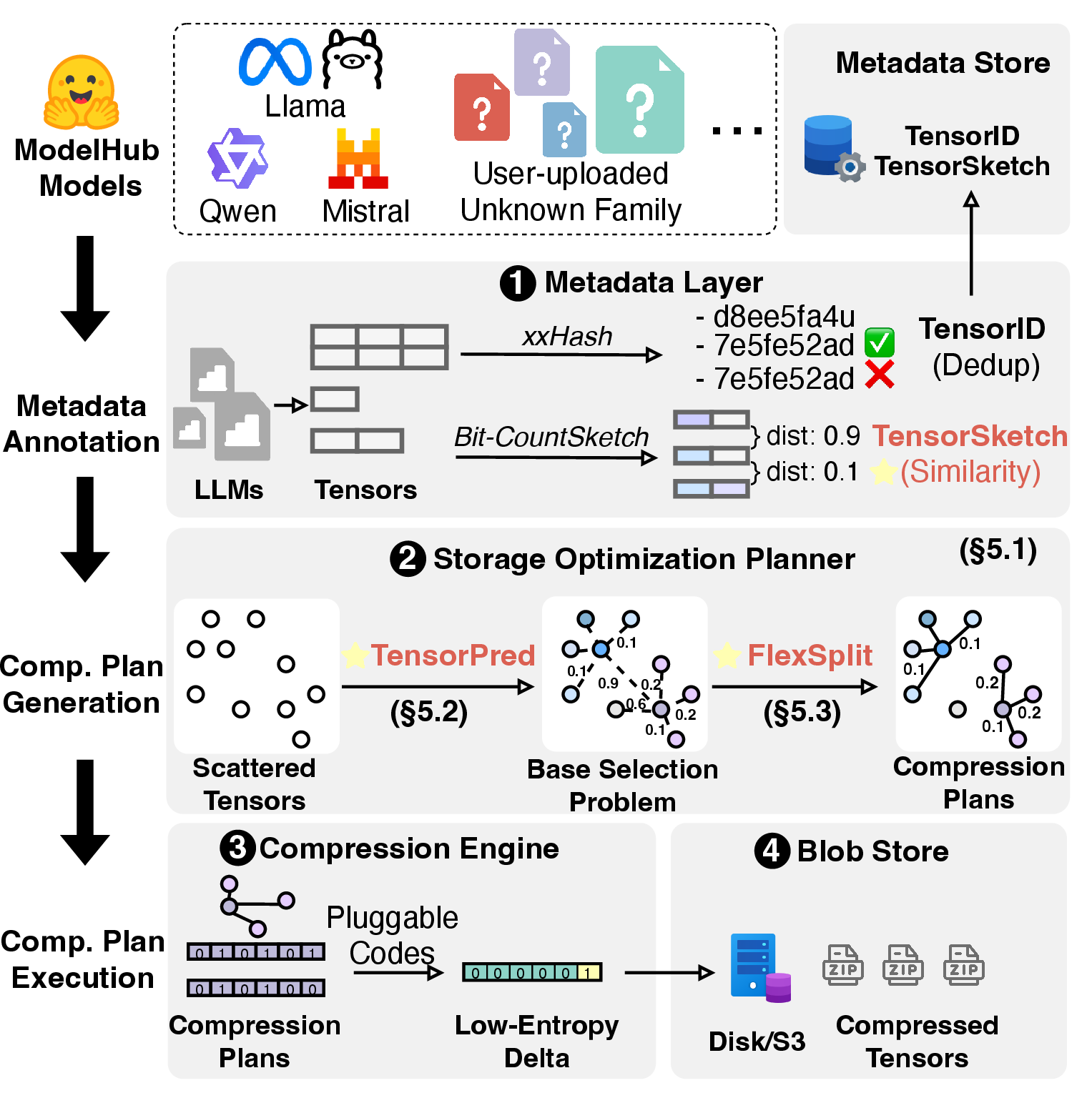
Figure 9: Architecture and workflow of the TensorHub system, emphasizing tensor-level planning and metadata-driven base selection.
- TensorSketch: A compression-aware fingerprint that compactly encodes the bit-level content structure of tensors for rapid, accurate similarity estimation.
- TensorPred: A regression-based predictor that translates TensorSketch distances into reduction ratio estimates, obviating the need for costly pairwise entropy evaluations.
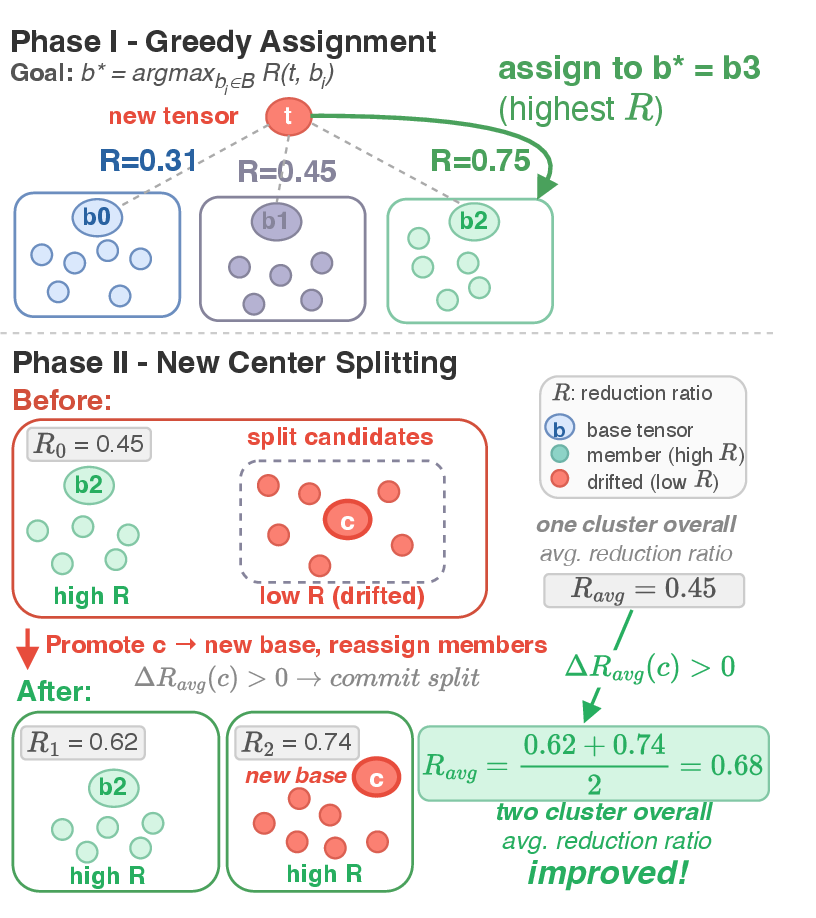
- FlexSplit: A scalable, online clustering and base selection algorithm that incrementally optimizes base-delta assignments during continuous model ingestion.
- High-Performance Compression Engine: Pluggable codecs (TensorX and FM++) optimized for throughput and compression ratio, respectively.
TensorSketch and Data-Driven Compressibility Prediction
TensorSketch is designed as a bit-level CountSketch variant, encoding each tensor’s raw parameter stream into a multidimensional, hash-bucketed sketch. The normalized Hamming distance between sketches serves as an efficient proxy for pairwise delta entropy at the bit level, outperforming value-level distances (e.g., ℓ2) in predicting compressibility.
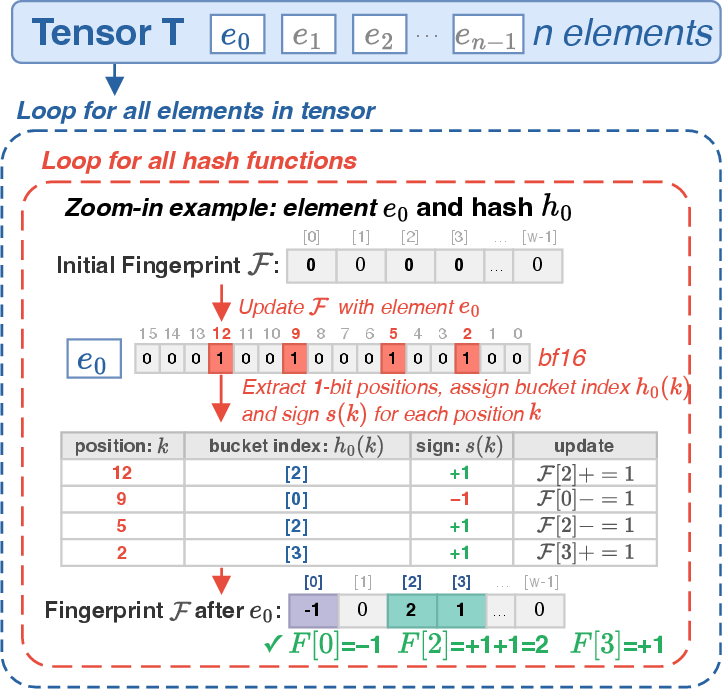
Figure 6: Visualization of TensorSketch fingerprinting workflow for capturing bit-level similarity structures.
TensorPred leverages the empirical correlation between tensor sketch distances and achievable reduction ratios, modeling this relationship via a regression incorporating entropy-inspired non-linear features. Validation against 5.7M tensor pairs reveals a Pearson correlation of r=0.993 and a mean absolute error of 1.11%, indicating a highly reliable predictor for large-scale planning.
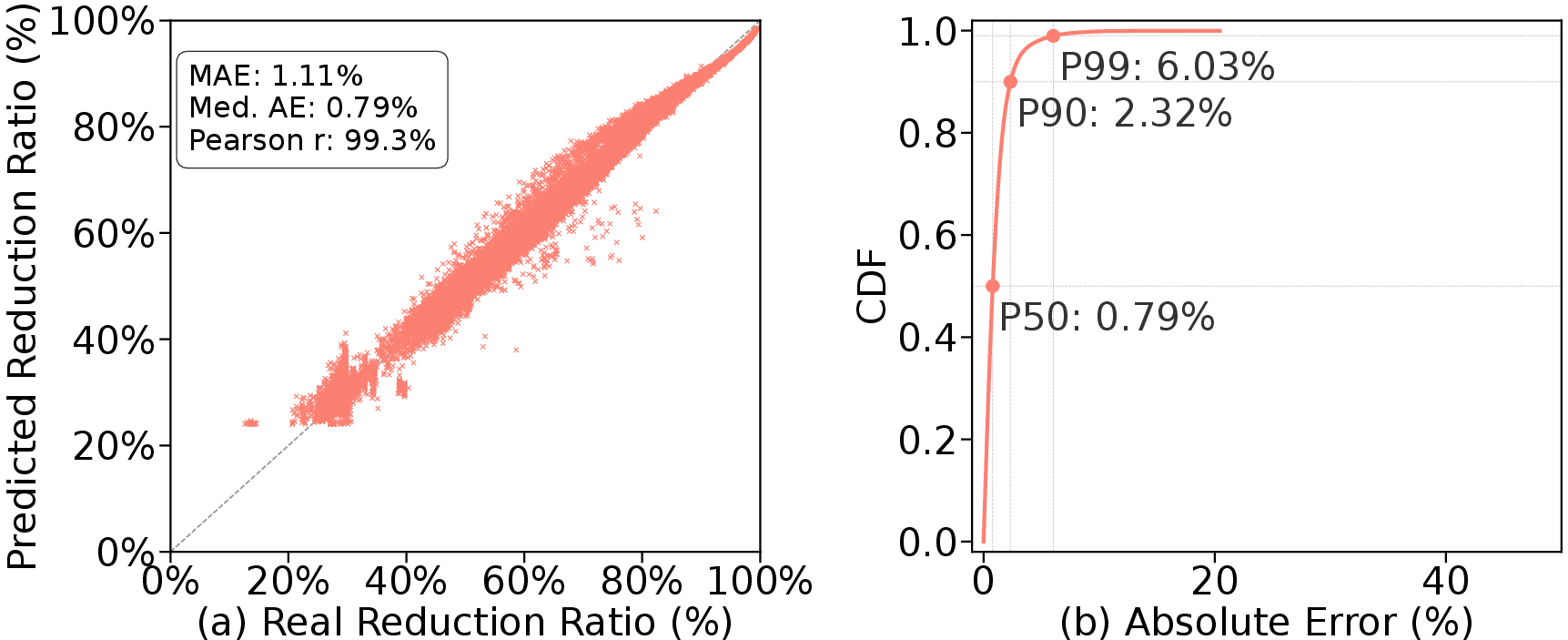
Figure 7: Predicted versus true reduction ratios over a large corpus, showing the tight correspondence attained by TensorPred.
FlexSplit: Scalable Incremental Base Selection
FlexSplit addresses the NP-hard problem of selecting base tensors in large dynamic repositories. The algorithm operates in two phases:
Empirical evaluations show that FlexSplit matches reduction ratios achieved by integer linear programming (ILP) solvers, while maintaining near-constant planning time as the corpus size becomes large.
Evaluation: Storage Reduction and Throughput
TensorHub is benchmarked on a 2,890-model Hugging Face trace spanning diverse LLM architectures. The results are decisive:
TensorHub’s gains accrue from both codec improvements and, more critically, from superior content-driven planning, which consistently identifies more compressible tensor pairs than any metadata- or model-level system.
Scalability and System Implications
The system’s efficient index-based planning (leveraging HNSW over TensorSketch) achieves over 25,000 QPS in nearest-neighbor lookup, enabling practical deployment at hub-wide scale. Metadata overhead remains negligible at 0.015% of total storage. FlexSplit’s base selection is robust, requiring no expensive global optimization or static metadata.
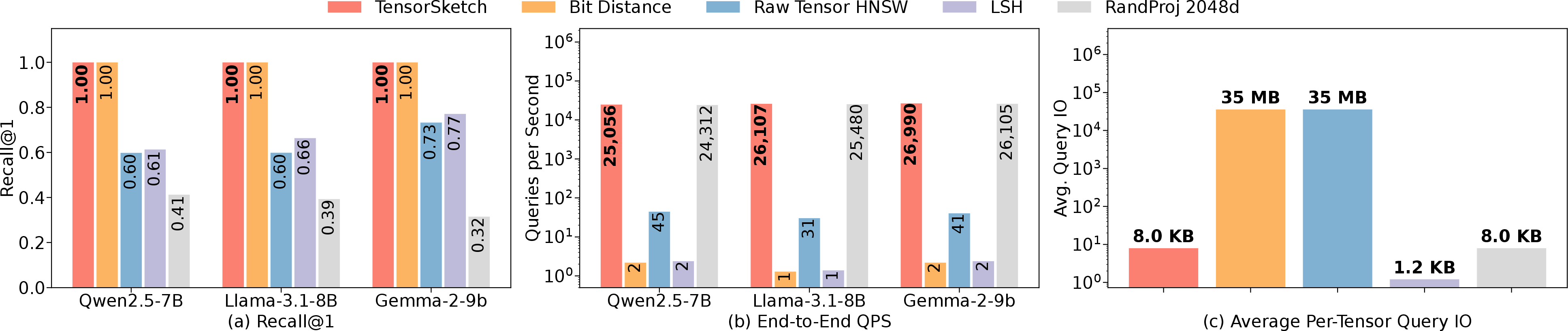
Figure 12: TensorSketch enables high recall and query throughput relative to alternative similarity search bases.
Implications and Future Directions
TensorHub’s tensor-centric, metadata-oblivious paradigm provides a new lens through which model storage infrastructure can be optimized:
- Practical Impact: Model hubs can reduce operating costs and bandwidth requirements by scaling with content-derived rather than heuristic-based redundancy exploitation.
- Theoretical Impact: The work invalidates the sufficiency of model-level delta-compression and demonstrates the necessity of fine-grained, data-driven planning for sustainable compression.
- Research Directions: The framework opens new avenues for adaptive, automated storage optimization, potentially integrated with versioning, provenance, and integrity checking in future multi-modal and incremental model deployment settings.
Conclusion
TensorHub (2604.17104) establishes that only a tensor-centric, content-driven compression pipeline can meet the storage and performance demands of contemporary model hubs. This advance is made possible through innovations in bit-level fingerprinting, regression-based reduction prediction, and scalable, dynamic clustering. The system achieves substantial empirical gains over prior art and offers consequential implications for the future of scalable, efficient AI infrastructure.