- The paper demonstrates that traditional risk-neutral and risk-sensitive methods destabilize cooperative equilibria in non-stationary MARL.
- It introduces the RATTL algorithm that regulates policy gradient updates via a trust factor to expand the cooperative basin under partner noise.
- The study provides theoretical guarantees and empirical validation, showing that risk-seeking RATTL maintains near-100% cooperation despite severe stochastic disturbances.
Robust Risk-Sensitive Cooperation in Non-Stationary Multi-Agent Reinforcement Learning
Introduction and Problem Statement
The paper "The Price of Paranoia: Robust Risk-Sensitive Cooperation in Non-Stationary Multi-Agent Reinforcement Learning" (2604.15695) addresses the fundamental fragility of cooperative equilibria in MARL driven by non-stationarity, particularly when agents adapt policies concurrently. The work establishes that co-learning injects stochastic noise into action distributions, destabilizing cooperative solutions even when those equilibria are strongly Pareto-optimal. The central thesis is that traditional risk-neutral MARL approaches are exponentially unstable under such noise, and conventional risk-sensitive learning aggravates, rather than ameliorates, this instability.
The analysis is grounded in the dynamics of canonical coordination games such as the Stag Hunt, where mutual cooperation can be derailed by transient exploration or noise, causing irreversible defection cascades. The paper formalizes this with the "Optimist's Hangover": even agents that optimistically achieve cooperation will lose it under small, statistically indistinguishable fluctuations due to partner adaptation or exploration.
The EVaR Paradox in Cooperative MARL
A key theoretical contribution is the articulation and proof of the "EVaR Paradox." The entropic value-at-risk (EVaR), a coherent risk measure known for its tightness under large deviation bounds, is hypothesized to facilitate robust cooperation by hedging against uncertainty. However, the authors demonstrate both analytically and empirically that direct application of EVaR-based risk aversion to expected returns (as in standard robust RL) strictly raises the critical cooperation threshold. This paradox is formalized as follows: for any β>0 (risk-averse regime), the region in which mutual cooperation is stable becomes strictly narrower, exacerbating the very collapse it was intended to cure. The cooperative basin contracts because return-level risk-aversion disproportionately penalizes high-variance cooperative actions near the threshold—where partner noise is maximal and signal-to-noise ratio is lowest.
Bold Claim: Distributional robustness, when misapplied at the return level in co-adaptive MARL, not only fails to stabilize cooperation but strictly worsens equilibrium fragility for all nonzero risk-aversion parameters.
The RATTL Algorithm and the Price of Paranoia
To resolve this paradox, the authors introduce Robust Adaptive Trust-Region Learning (RATTL), a doubly-adaptive algorithm that targets the gradient variance induced by partner non-stationarity, rather than the return distribution itself. The core insight is to regulate the strength of policy gradient updates for the cooperative action (Stag) using a trust factor defined as
t(p,β)=(1+βσ2)−1
where σ2=p(1−p) is the online Bernoulli variance estimate of partner cooperation and β is the tunable risk-sensitivity parameter.
The trust factor continuously modulates advantage estimates, dampening gradients only for actions susceptible to uncertainty (i.e., Stag), yielding selective robustness. This delivers a closed-form expansion of the cooperative basin, provably lowering the critical threshold for defection under partner noise.
Alongside RATTL, the Price of Paranoia (PoP) framework is introduced to characterize the structural and algorithmic cost of risk-sensitivity. It formalizes a dual to the classical Price of Anarchy: while PoA lower-bounds welfare via rational selfishness, PoP upper-bounds welfare lost to maximin paranoia. The Cooperation Window CW(G,ε) demarcates the recoverable welfare region, and an adaptive β-updating rule leverages this diagnostic to balance stability and sample efficiency online.
Theoretical Guarantees
The paper provides rigorous theoretical results supporting the efficacy of RATTL:
- Basin Expansion Theorem: RATTL provably expands the cooperative region by a calculable Δp∗, maximized when the equilibrium threshold is $1/2$.
- PAC Sample Complexity Bound: The robustness overhead of RATTL is polynomial in the partner action-space, O(∣Aj∣eβ), not exponential in state-action space.
- Welfare Decomposition: Welfare loss decomposes additively into an adaptation cost and a robustness overhead, yielding a closed-form for the optimal fixed risk parameter, balancing convergence rate and stability.
These guarantees ensure that RATTL operates without any privileged information, opponent modeling, or communication—relying solely on observable partner actions.
Empirical Results
Empirical validation is performed on the iterated Stag Hunt with stochastic and adversarially perturbed partners. RATTL is benchmarked (risk-seeking vs. risk-neutral vs. risk-averse) against vanilla PPO and prior cooperative MARL heuristics.
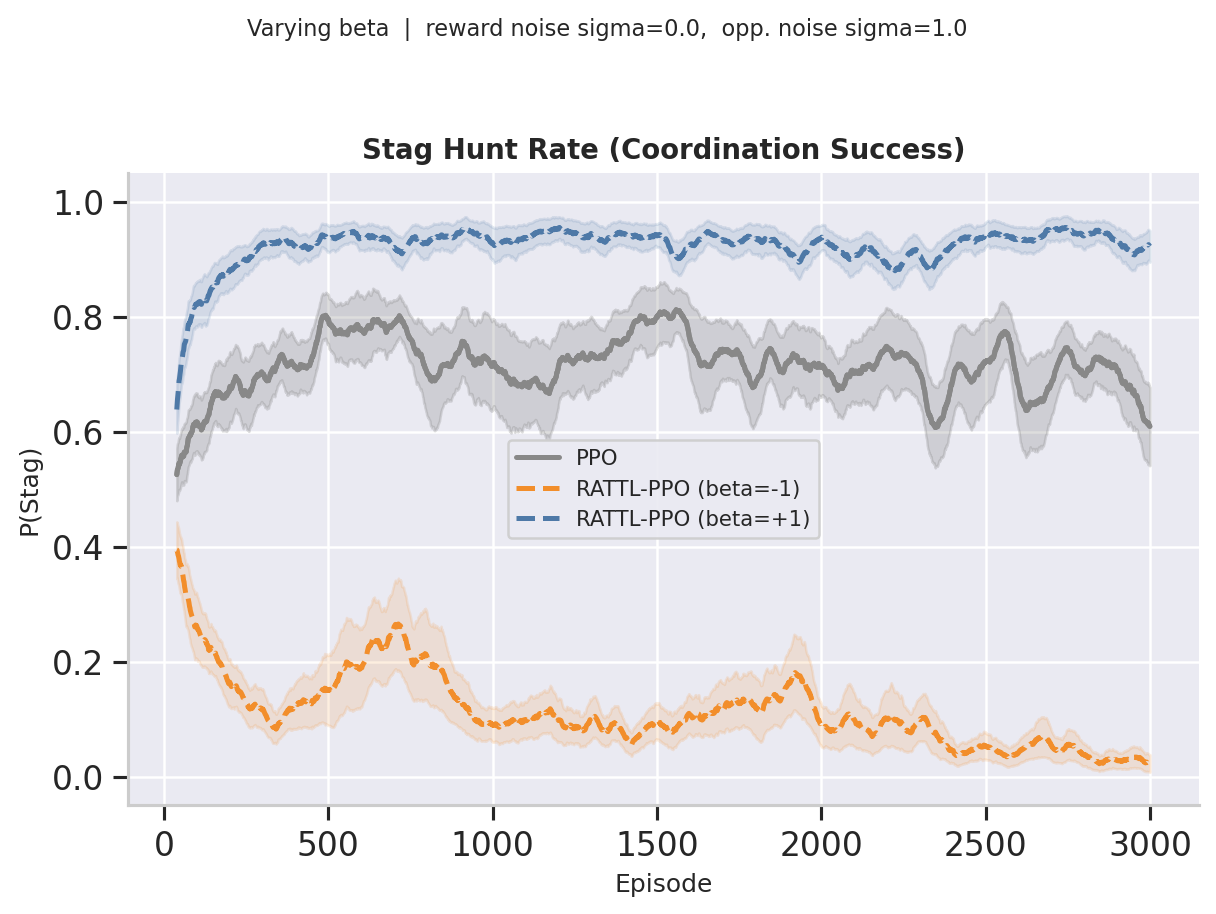
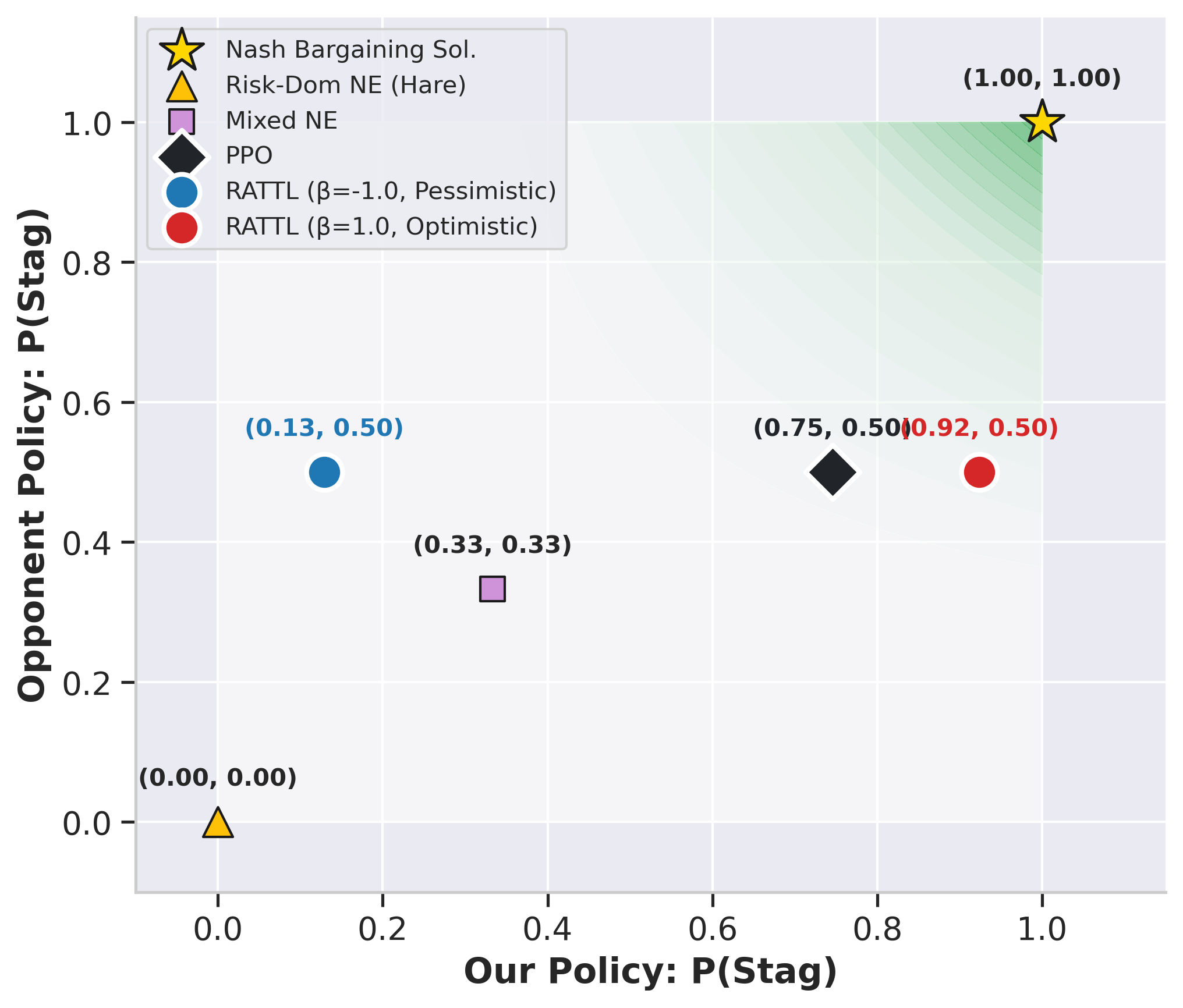
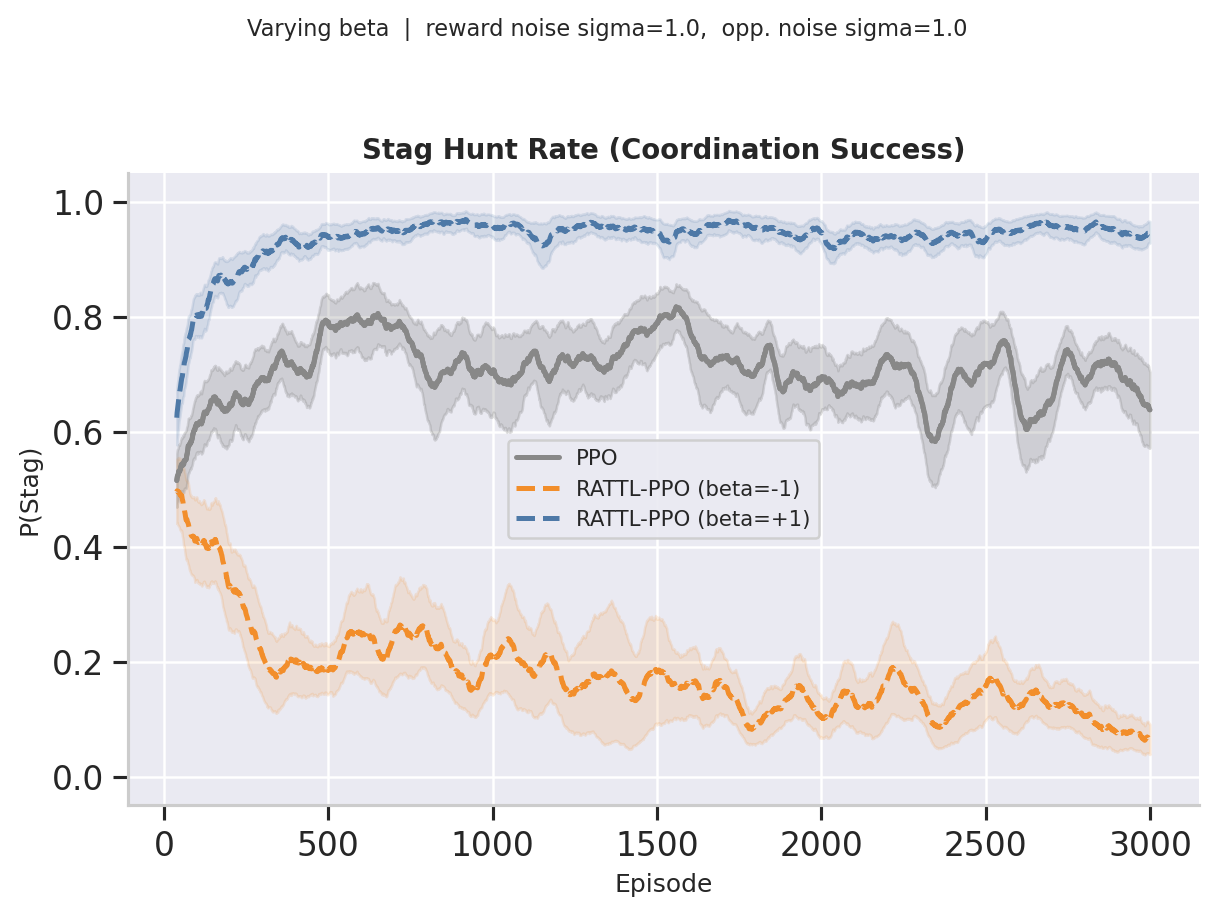
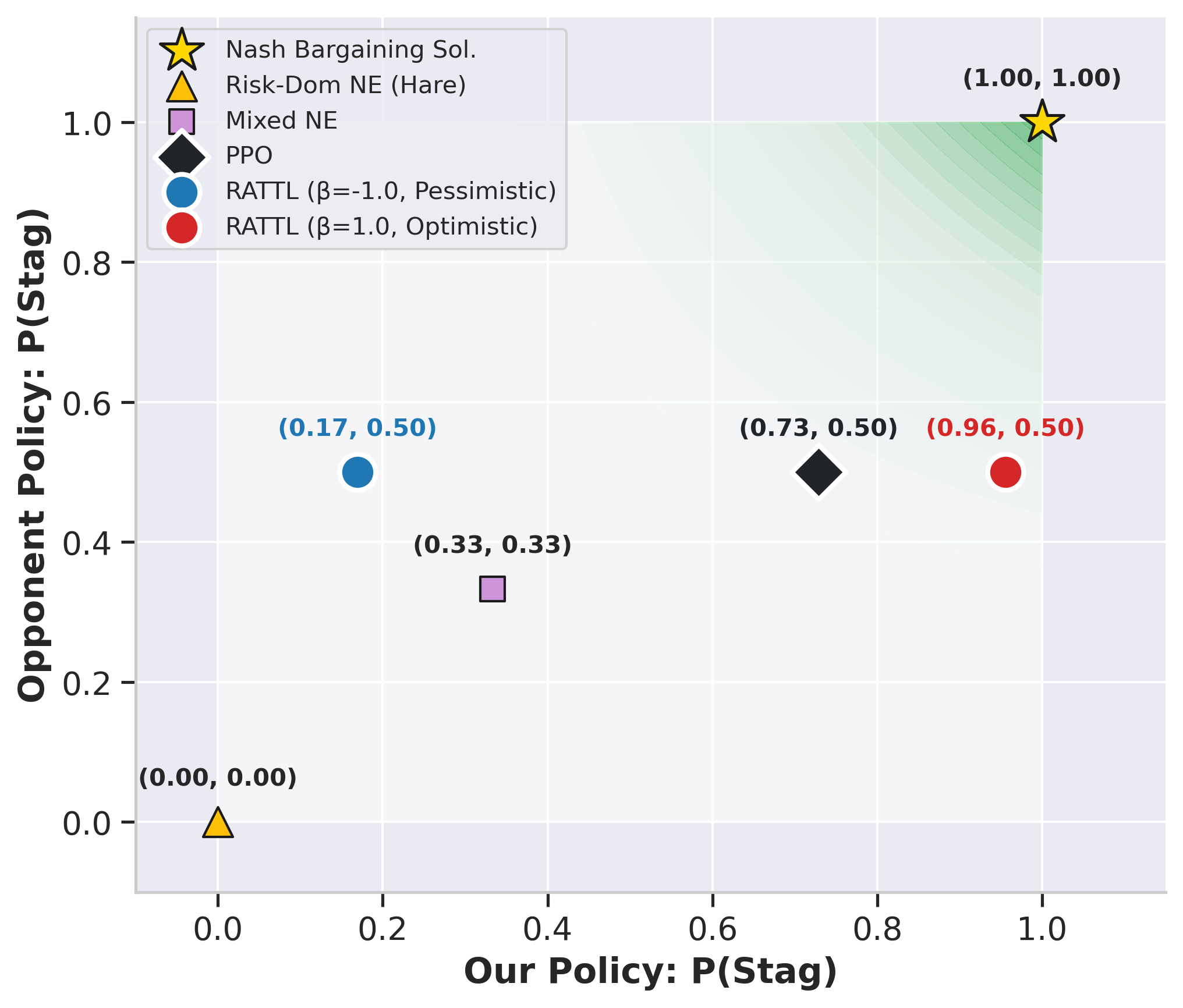
Figure 1: Cooperation rate of agents under stochastic partners in the absence of reward noise, highlighting the superiority of risk-seeking RATTL (β=1.0) in maintaining high levels of cooperation.
RATTL with t(p,β)=(1+βσ2)−10 achieves near-100% cooperation retention under severe partner noise, consistently outperforming both risk-neutral and risk-averse baselines. Vanilla PPO oscillates or collapses in the face of persistent non-stationarity, while risk-averse RATTL collapses to defection.
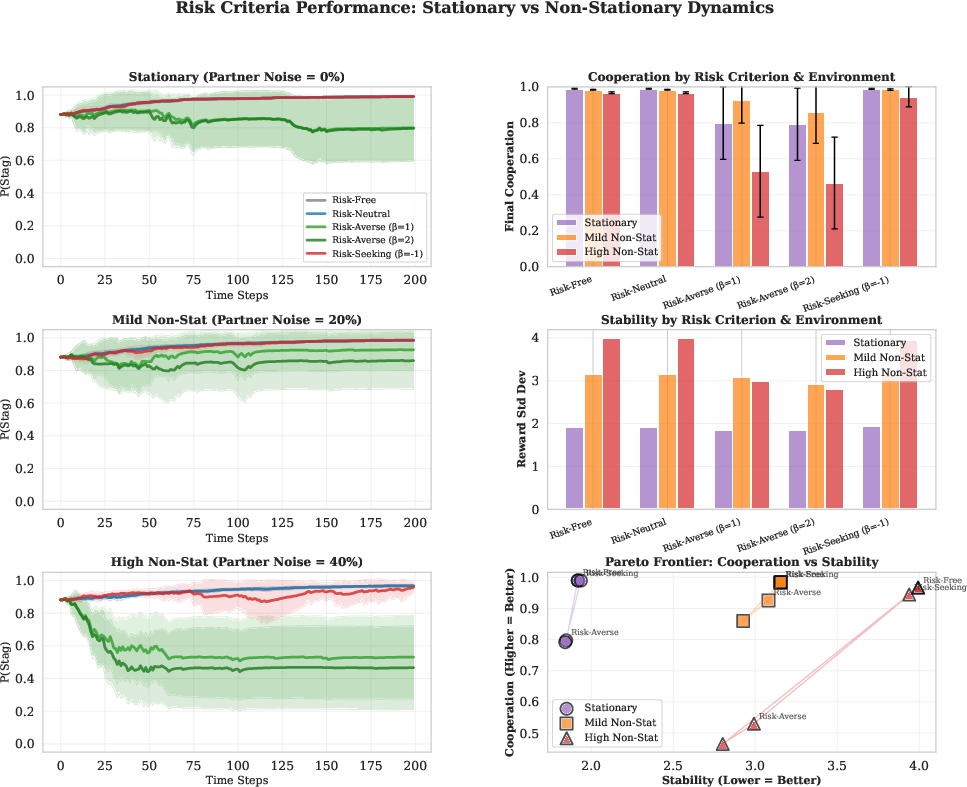
Figure 2: Risk-criteria performance across stationary and non-stationary partner noise regimes; risk-seeking RATTL exhibits robust, high cooperation probability across all noise levels, while risk-averse variants collapse as partner noise increases.
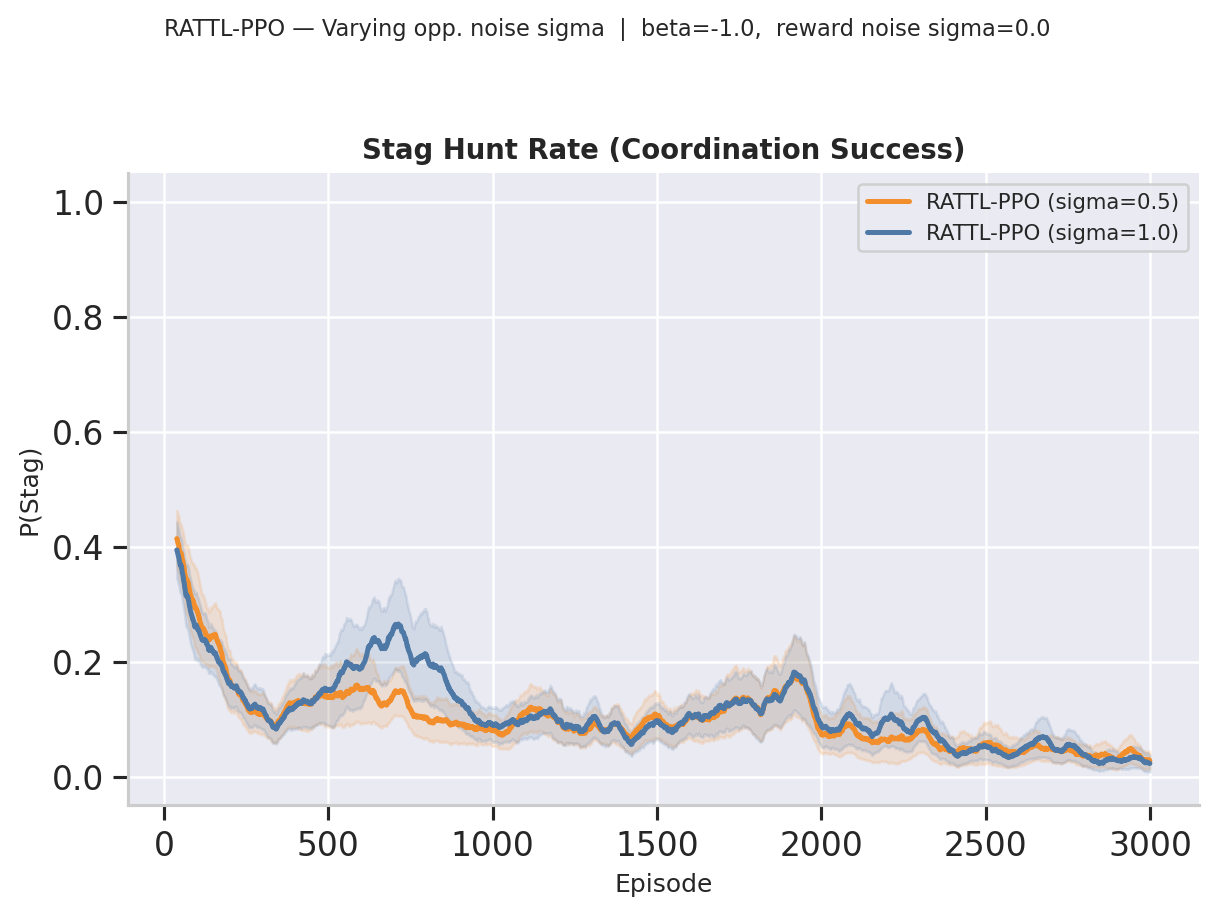
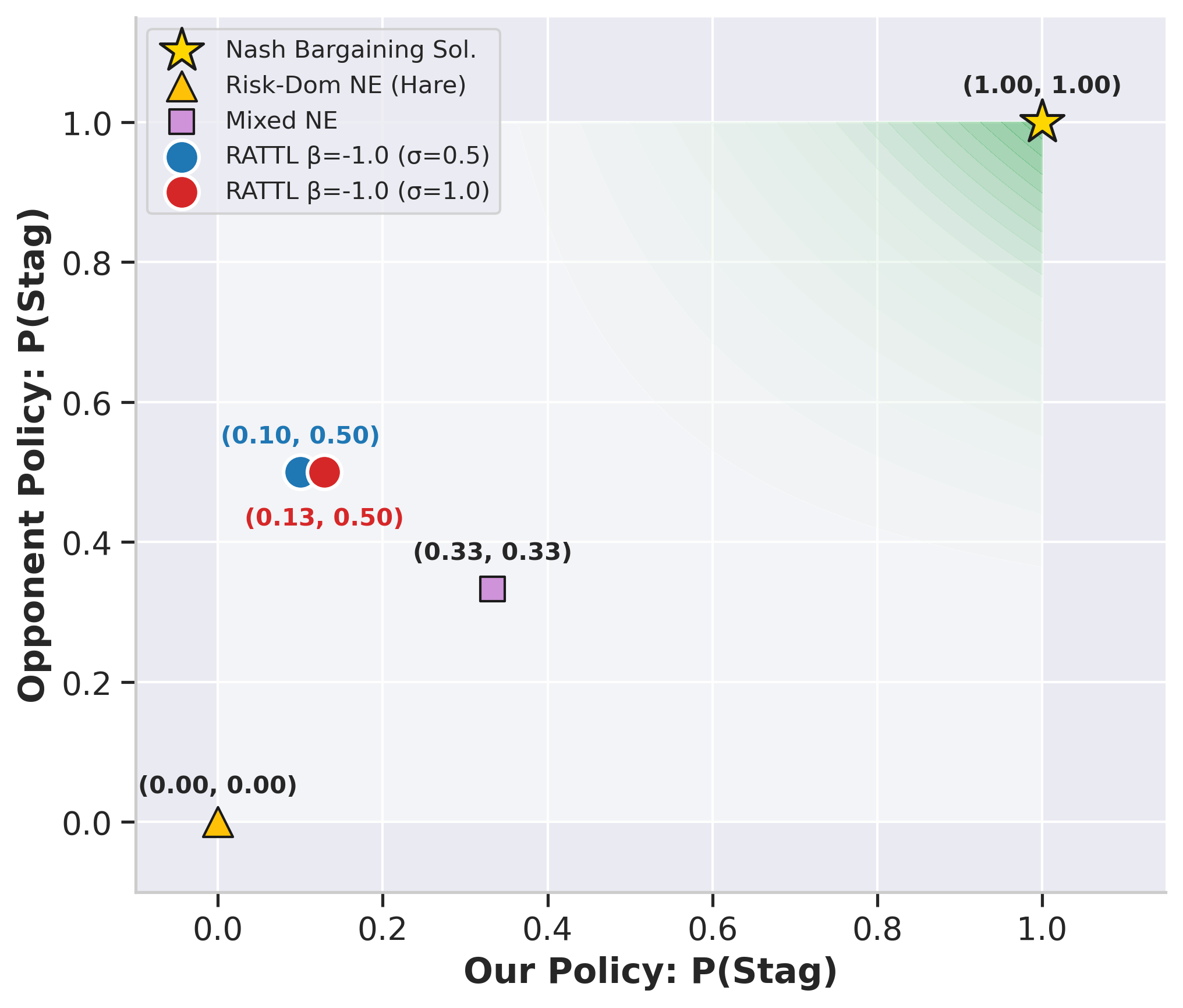
Figure 3: Representative coordination dynamics for risk-averse RATTL (t(p,β)=(1+βσ2)−11), demonstrating failed retention as partner stochasticity rises.
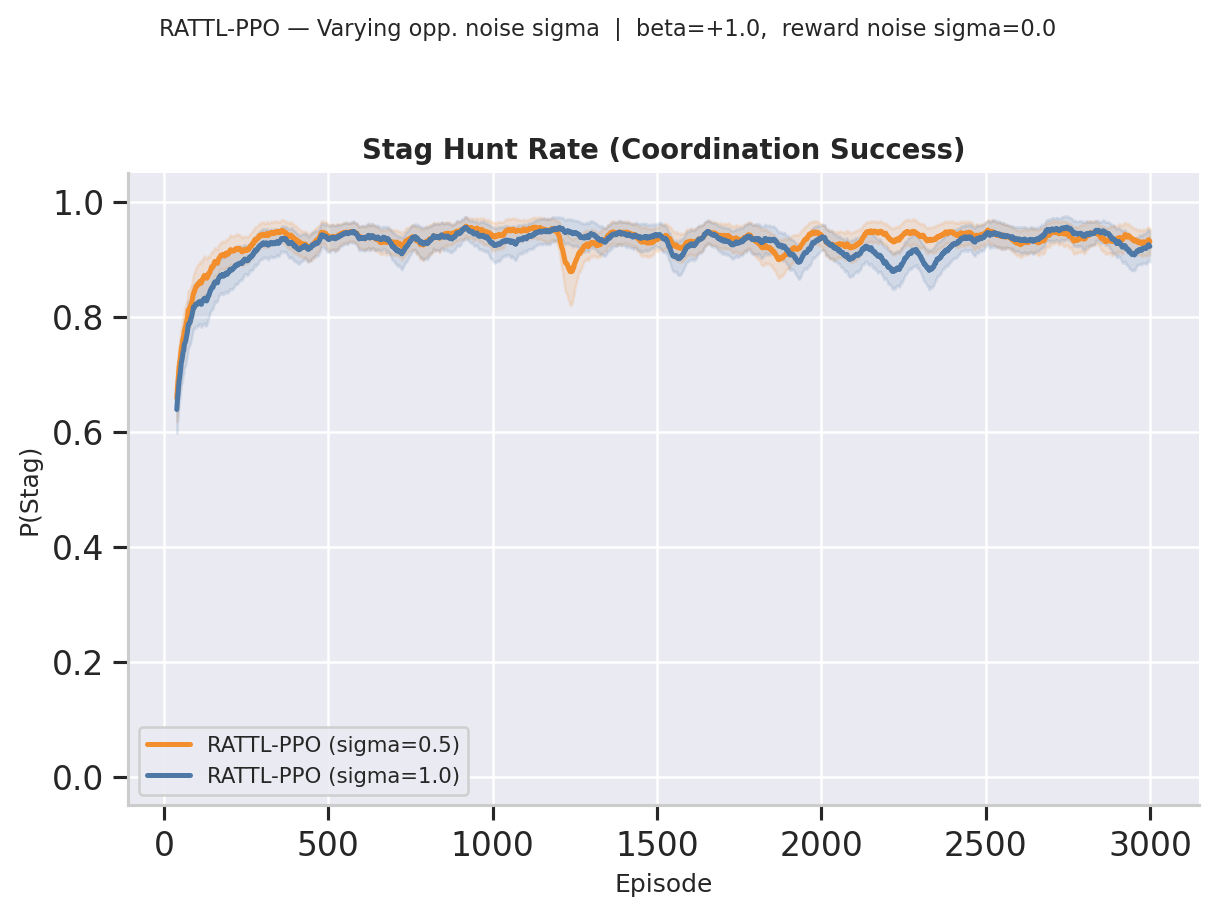
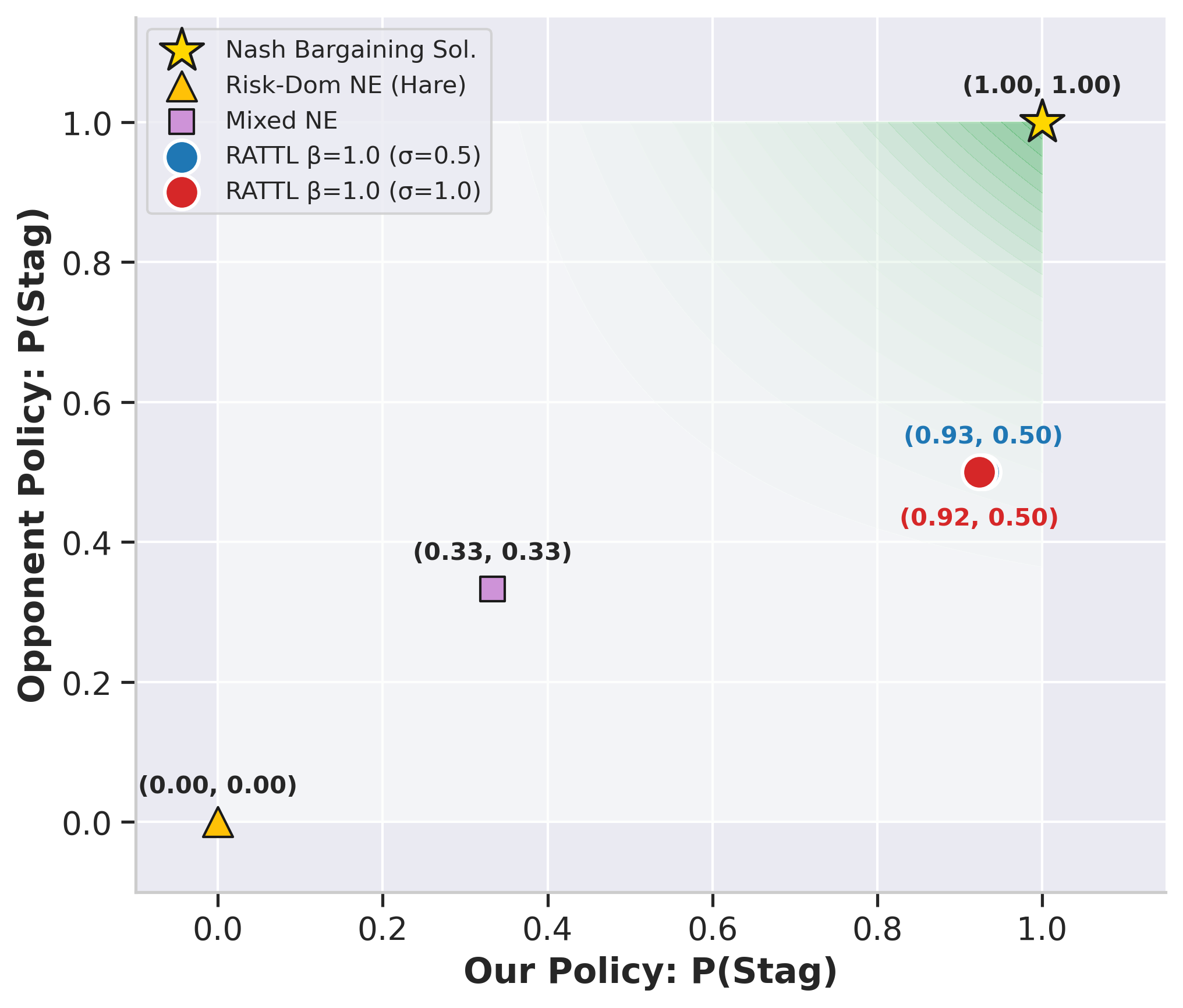
Figure 4: Attempt at coordination for risk-seeking RATTL; successful stabilization near the cooperative equilibrium despite high partner unpredictability.
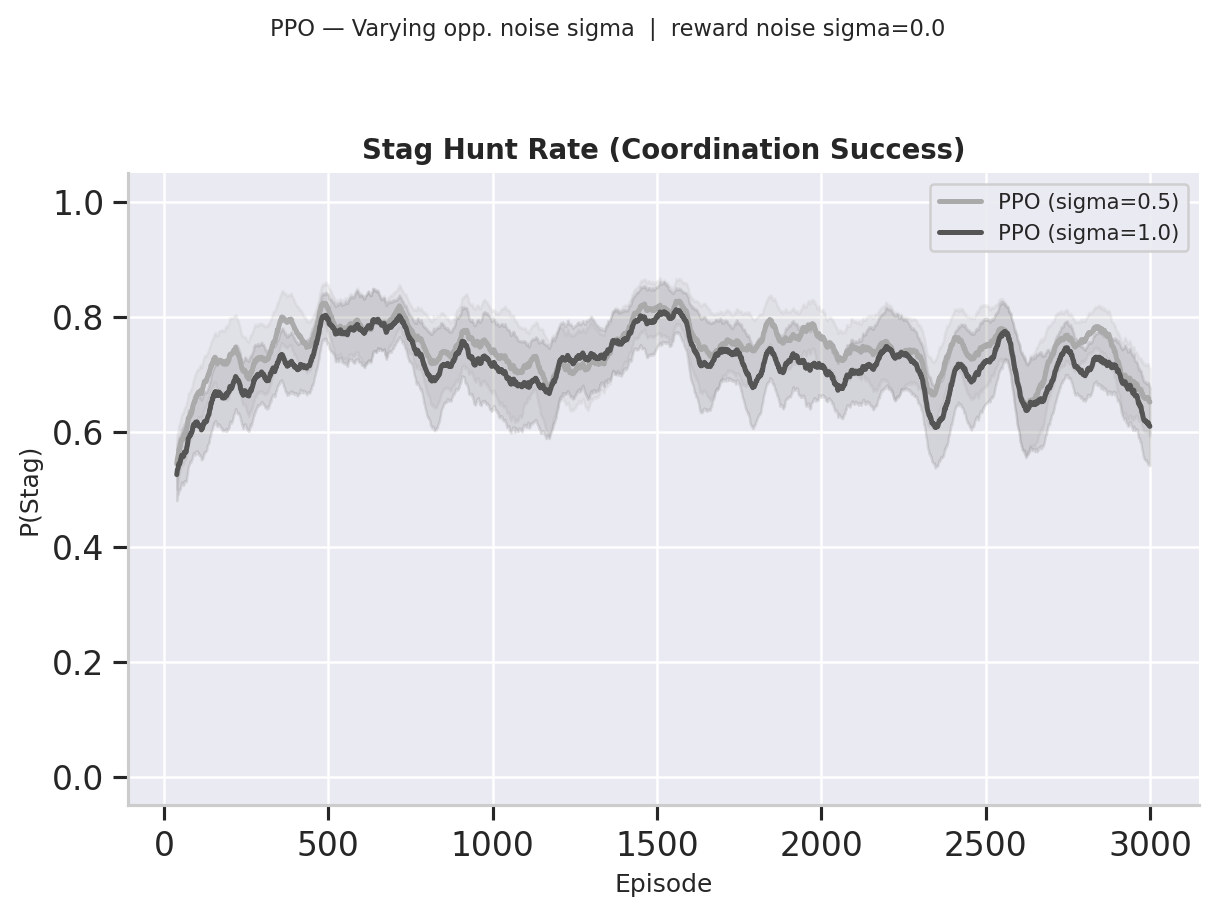
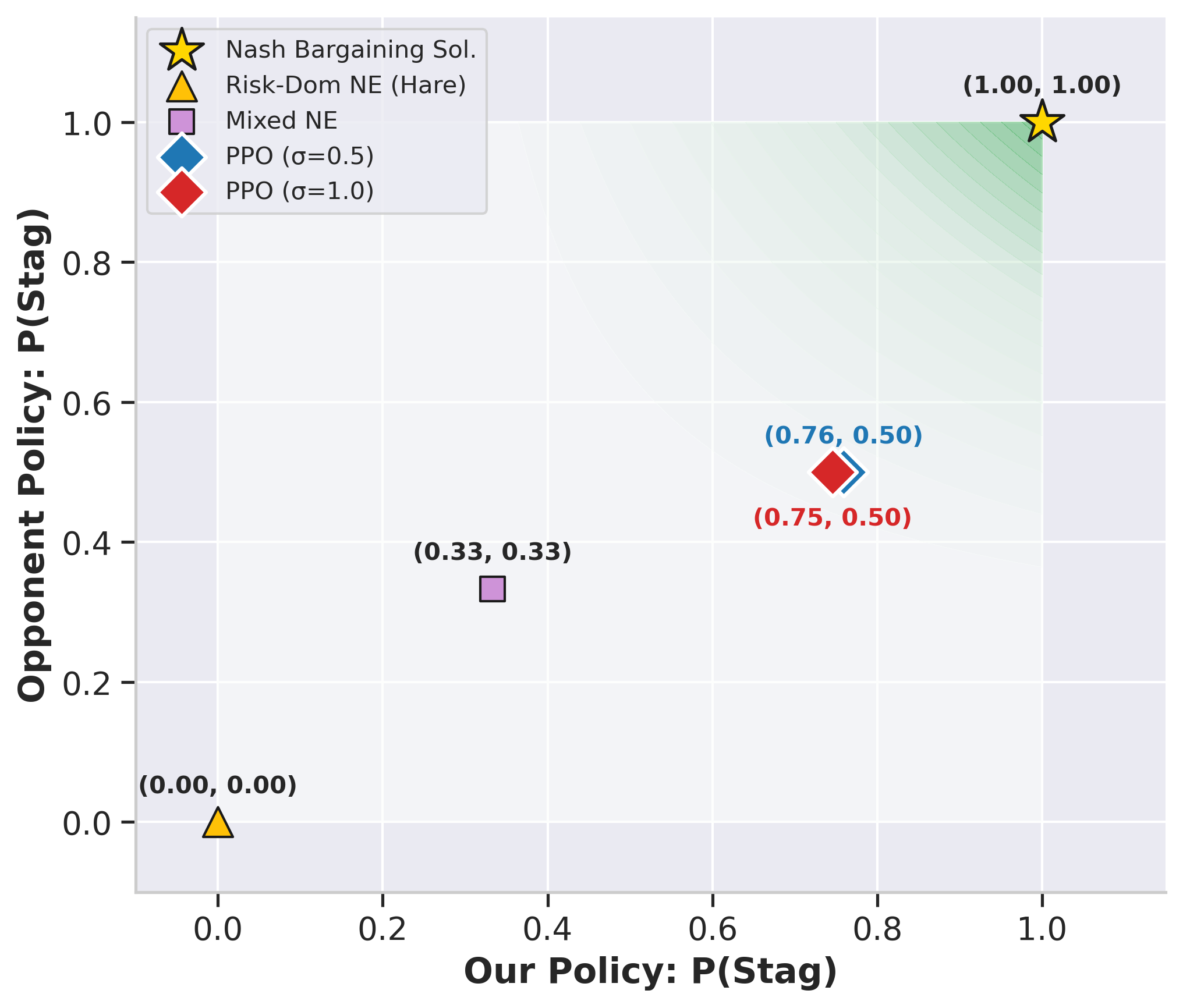
Figure 5: Attempt at coordination for vanilla PPO, illustrating intermediate, volatile mixed strategies with no stable cooperation.
The empirical PoP and PoA metrics corroborate the theoretical findings: risk-seeking RATTL strictly dominates both axes, and the empirical validation directly confirms the EVaR Paradox—risk aversion in the objective is deleterious for cooperative stability.
Practical and Theoretical Implications
This work exposes a fundamental limitation of classical robust RL in co-adaptive MARL contexts and provides a practically implementable solution—RATTL—that achieves welfare guarantees under severe non-stationarity. The trust factor mechanism is information-lean, requiring only local partner action histories and no structural modeling or communication. The empirical robustness to both behavioral and reward noise positions RATTL as a strong candidate for MARL deployments in dynamic, uncertain multi-agent environments (e.g., decentralized control, market coordination, or human-AI cooperation scenarios).
Theoretically, the Price of Paranoia provides a unifying metric for risk-sensitive algorithm design, enabling principled calibration of robustness/adaptivity trade-offs and a generic welfare diagnostic across games.
Future Directions
Open avenues include meta-learning of the risk parameter for nonstationarity-adaptive cooperation; scaling RATTL to deep RL with high-dimensional and continuous action spaces; and exploration of its effects in broader classes of social dilemma games and real-world hybrid (human-agent) settings.
Conclusion
This study establishes that the conventional import of robust RL objectives into cooperative MARL is not only ineffective but actively counterproductive, as clarified by the EVaR Paradox. By targeting gradient variance via the RATTL framework and quantitatively analyzing welfare using the Price of Paranoia, the authors provide both theoretical and practical advances in sustaining cooperation under non-stationarity—without reliance on extrinsic incentives, opponent modeling, or communication. These results significantly refine our understanding of risk, robustness, and cooperation in learning multi-agent systems.