- The paper demonstrates that chaos-assisted and resonance-assisted tunneling are unified through a semiclassical framework involving complex trajectories and fractal phase-space structures.
- It employs scattering matrix and saddle-point methods to link classical orbit stability and quantum resonances with sharp tunneling fluctuations and plateaus.
- The findings have practical implications for experiments in cold atoms, microwave, and mesoscopic systems, offering strategies for controlled dynamical tunneling.
Chaos and Quantum Tunneling: Mechanisms, Structures, and Semiclassical Perspectives
Overview
The interplay between classical chaos and quantum tunneling constitutes a central research topic in quantum dynamics, particularly for systems that are neither fully integrable nor fully chaotic. In these mixed systems, quantum effects facilitate tunneling processes through phase-space structures impermeable to classical trajectories. This paper provides a thorough technical exposition of phenomenological mechanisms such as chaos-assisted tunneling (CAT), resonance-assisted tunneling (RAT), and the mathematical architecture linking complex semiclassical dynamics, with particular attention to the roles of complex trajectories, Julia sets, and invariant manifolds.
Mechanisms of Dynamical Tunneling
Chaos-Assisted Tunneling (CAT)
CAT arises in mixed phase spaces where regular islands are embedded within a chaotic sea. Tunneling doublets, supported by these regular regions, interact not only through direct quantum transitions but also via intermediate states localized in the chaotic region. As system parameters vary, avoided crossings between doublet levels and chaotic eigenstates occur, resulting in sharp resonant spikes in the tunneling splitting (Figure 1).
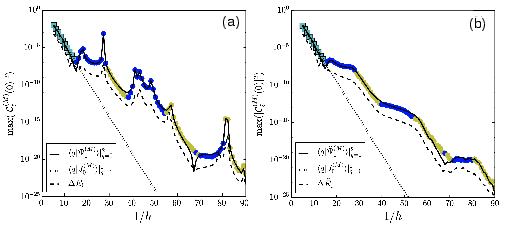
Figure 1: Tunneling splittings and maximal mode energies as a function of 1/ℏ, illustrating exponential and plateau regimes corresponding to changes in dominant tunneling mechanism.
The distribution of tunneling splittings in this regime follows a truncated Cauchy law, as shown through random matrix modeling of the effective Hamiltonian encompassing regular and chaotic states. Notably, the width of tunneling splitting distributions is governed by the stability properties of the classical orbits mediating tunneling, and the appearance of spikes alone cannot be taken as a unique signature of chaos: similar features may emerge in near-integrable or even completely integrable systems given sufficient energetic proximity between states.
Semiclassical analysis via the scattering matrix formalism connects tunneling rates to matrix elements derived from classical dynamics, continued analytically into the complex plane. The dominant contributing paths are those that use near-edge "beach states" at the boundary between regular and chaotic regions, rather than direct transitions, a scenario supported by saddle-point methods (Figure 2).
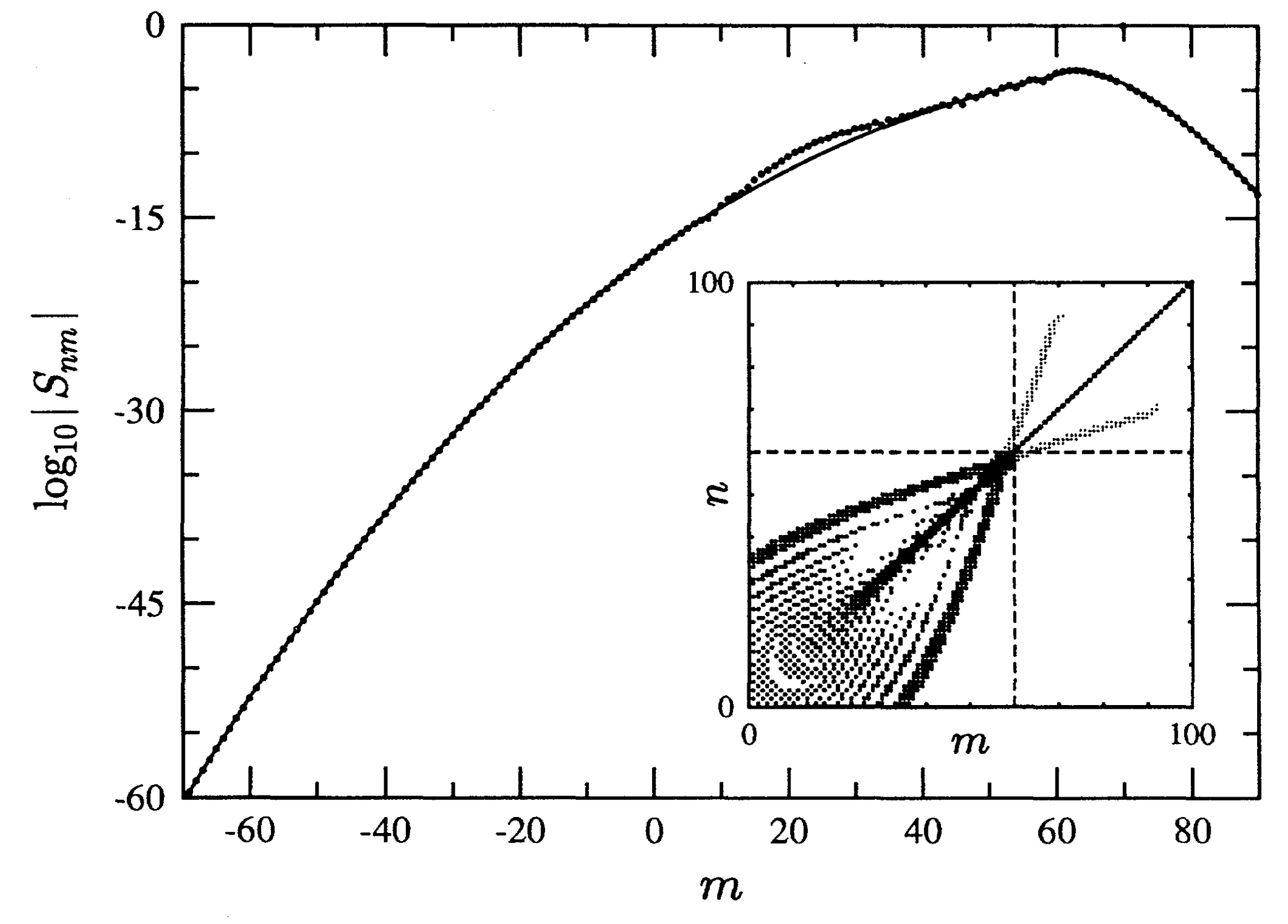
Figure 2: Tunneling amplitude patterns in an annular billiard, emphasizing the dominance of “beach state” mediated transitions over direct off-diagonal tunneling.
Resonance-Assisted Tunneling (RAT)
In addition to global chaos, nonlinear classical resonances embedded in regular regions significantly modulate tunneling rates. RAT formalism utilizes local Hamiltonian normal forms near nonlinear resonances—typically cast as perturbed pendulum systems—and applies perturbation theory to estimate tunneling splittings. Resonant enhancement arises when the energy difference between a tunneling doublet and a third, resonance-localized state approaches zero, producing sharp spikes and subtle plateau structures in splittings as a function of 1/ℏ (Figure 3). However, RAT is manifest only when a sizeable classical resonance exists commensurate with the Planck scale; in the limit of ultra-near-integrable dynamics, such classical structures become unresolvable.
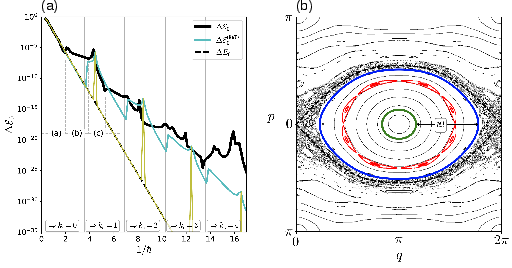
Figure 3: Comparison of exact tunneling splittings and RAT predictions in a kicked system, showing the appearance of plateaus and resonant enhancement only at specific regimes.
Interestingly, the existence of plateaus and shifting maxima in tunneling rates under parameter variation can be attributed not to classical resonances but rather to quantum resonance phenomena. Quantum resonance here refers to matching between energy differences and external driving frequencies, with plateaus and staircase features in splittings moving as ℏ is varied, contrasting with classical resonance-induced fixed structures (Figures 7, 8).
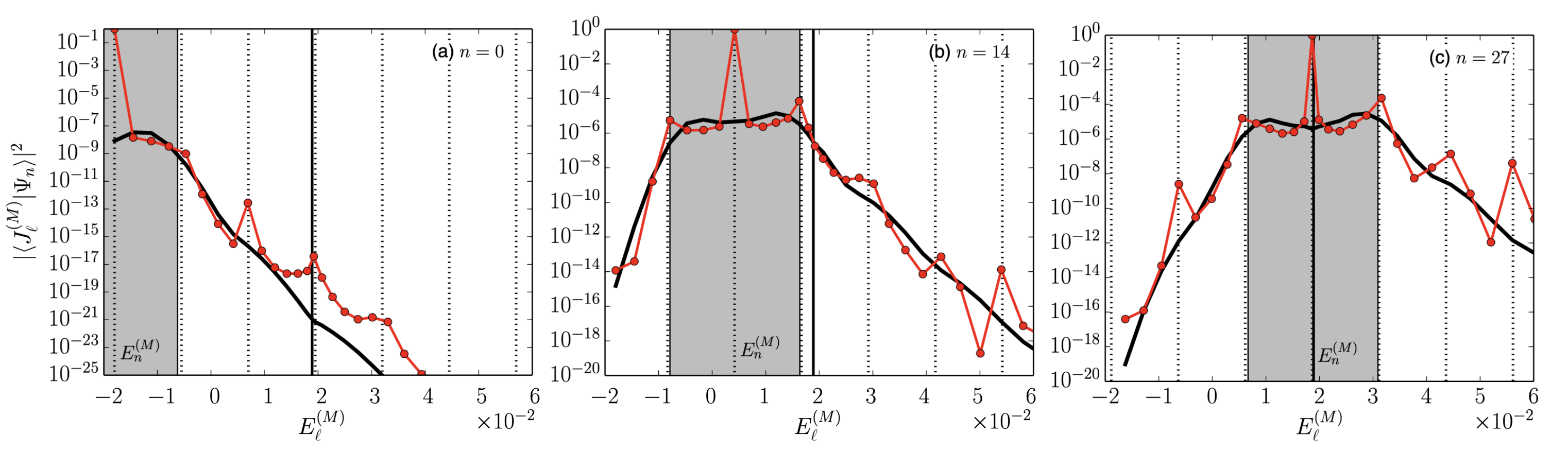
Figure 4: Quantum resonance peaks in the representation of quasi-energy basis states, each corresponding to a resonance between basis and excited states.
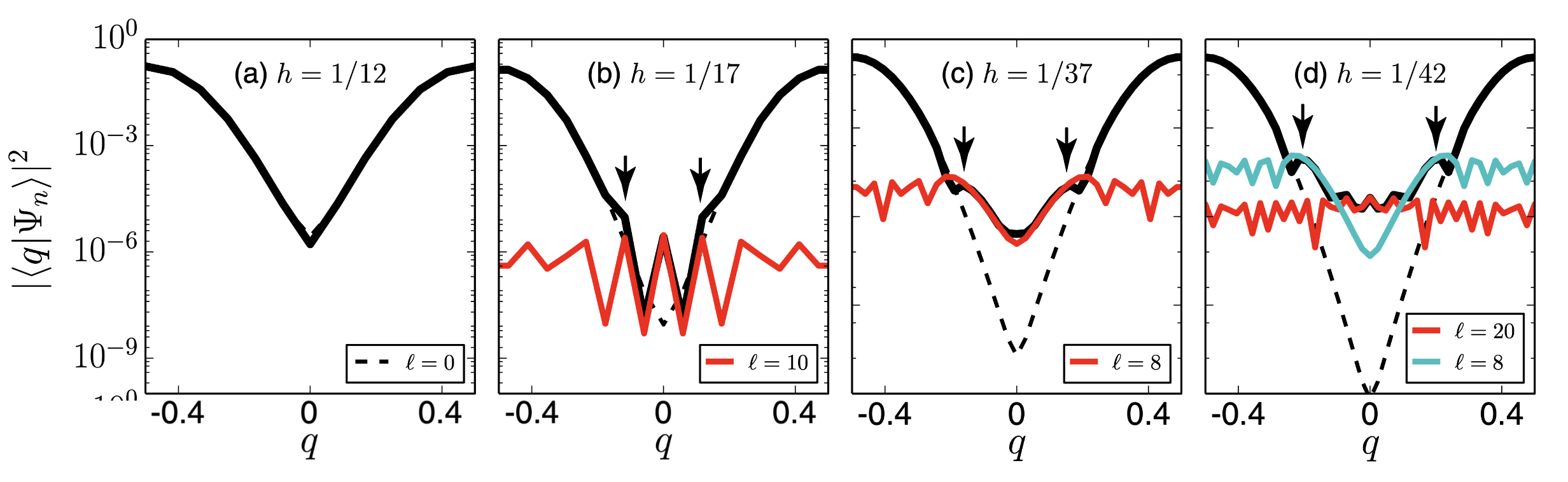
Figure 5: Spatial wavefunction humps induced by quantum-resonant states, their positions varying non-trivially with ℏ.
Semiclassical Complex Trajectory Analysis
Complex Paths, Julia Sets, and Manifolds
Approaching tunneling as an exponentially small, non-perturbative quantum effect necessitates complexified classical mechanics. In the standard Euclidean (instanton) approach, one computes semiclassical amplitudes via saddle-point solutions of the path integral, often yielding a unique dominant tunneling trajectory in one degree-of-freedom systems. However, in multi-degree or non-integrable systems, the analytic structure of phase space is lost, giving rise to a multitude of possible contributing complex orbits.
The complexity is embodied in the structure of Julia sets, which serve as organizing centers for the contributing orbits in complexified phase space. The set of relevant initial conditions for contributing complex paths appears as a fractal array of branches, dense in complex phase space (Figure 6). The connection between complex dynamics and tunneling is formalized by results such as the Bedford-Smillie theorem, which links the support of the invariant measure (in the sense of pluripotential theory) to closures of stable and unstable manifolds of periodic orbits.
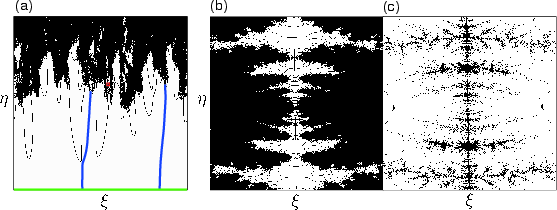
Figure 6: Hierarchical fractal set of initial conditions (Julia set sections) for complex semiclassical paths contributing to tunneling.
Crucially, the complex trajectory minimizing the imaginary part of the action becomes dominant in the semiclassical sum. These trajectories tend to approach the real plane through the stable manifolds of low-period real periodic orbits, efficiently connecting the initial (typically regular) region to the chaotic sea (Figure 7). While an exponentially large number of trajectories may contribute, interference effects or action minimization select a specific subset.
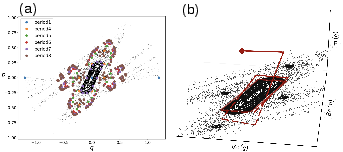
Figure 7: Example of a direct path through the complexified stable manifold connecting a regular initial region to an unstable periodic orbit in the chaotic sea.
Ultra-Near-Integrable Limit and Quantum Resonances
When the classical phase-space structures associated with non-integrability fall below the Planck scale (the ultra-near-integrable regime), conventional CAT and RAT scenarios lose validity. Nevertheless, quantum resonances, entirely rooted in the quasi-energy spectrum of the driven quantum system, persist and underpin observed enhancements in tunneling rates and wavefunction amplitudes. The step or staircase structure in the tunneling tail or energy splitting as a function of ℏ reflects the shifting resonance energies, and this is robust to suppression of classical nonlinear structures (Figures 9, 10).
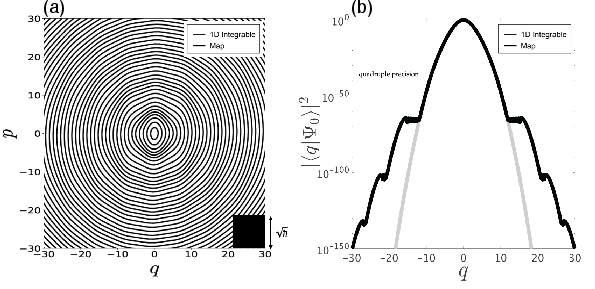
Figure 8: Ultra-near-integrable phase space with unresolvable classical structures and corresponding wavefunction displaying quantum-resonance-induced staircase in the tail.
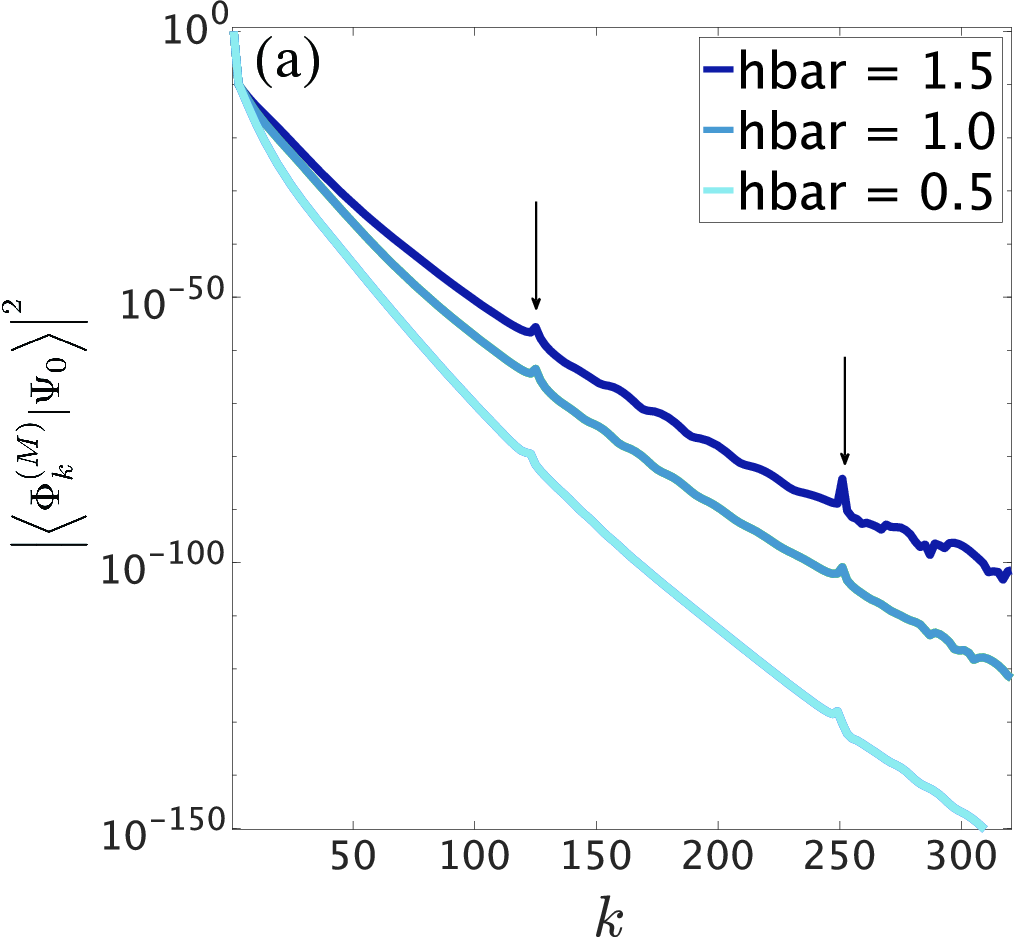
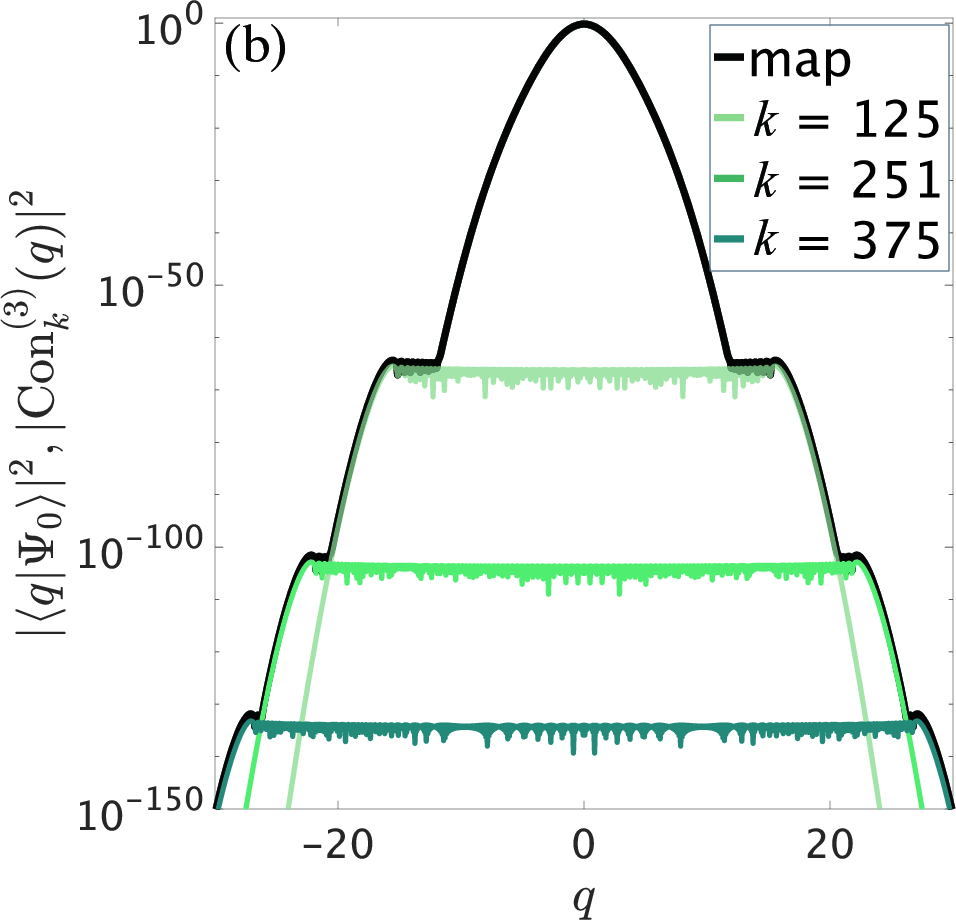
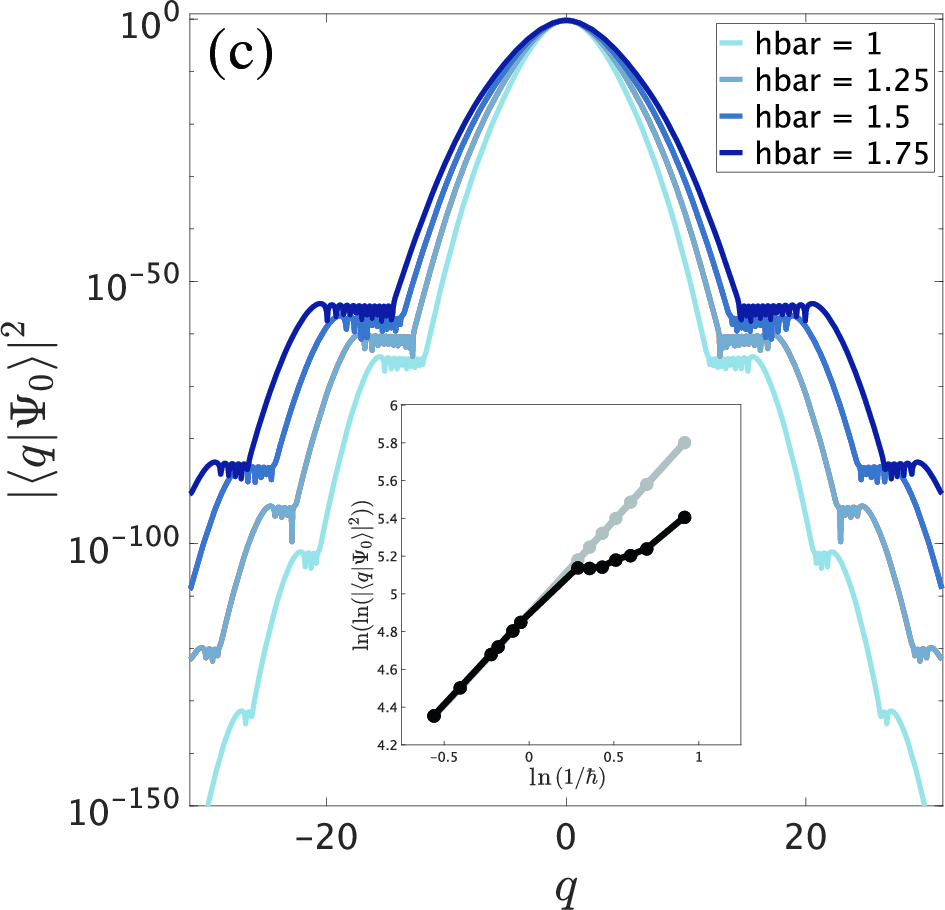
Figure 9: Decomposition of wavefunction amplitude into BCH eigenbasis components, revealing staircase features reflecting quantum resonances.
Theoretical and Practical Implications
The theoretical results illuminate the nontrivial partition between classically interpretable effects and phenomena that are intrinsically quantum in origin. While deterministic chaos in the classical limit creates new transport channels in phase space, quantum resonance and structure in the eigenvalue spectrum can dominate the fine details of tunneling phenomenology—even in regimes devoid of classically visible chaos. The identification of Julia sets and stable/unstable manifolds as organizing centers in complex phase space suggests deep links with invariant set theory and potential generalizations to higher-dimensional or field-theoretic systems.
Experimentally, these mechanisms are accessible in cold atom, microwave, and mesoscopic solid-state systems with tunable degrees of chaos and external driving. The findings also have implications for chemical reaction rates, intramolecular vibrational energy redistribution, and dynamical control via tuning of external parameters to exploit or suppress specific tunneling channels.
Conclusion
The analysis offers a comprehensive, mathematically rigorous framework unifying phenomenological, statistical, and semiclassical perspectives on chaos-induced and resonance-mediated quantum tunneling. CAT and RAT are best understood as asymptotic regimes within a larger, complexified-dynamical landscape, where the minimal action complex orbits that traverse Julia-set structures play a central role. Persistent enhancement of tunneling, as revealed in plateau and staircase features, are quantum-resonant rather than classically resonant in nature—underscoring the irreducibly quantum character of these phenomena. Open challenges remain in fully characterizing the semiclassical contributions in the near-integrable and autonomous system limits and in extending these results to high-dimensional and strongly coupled quantum systems.

