- The paper presents the GG-EZ framework that integrates regional data curation, supervised fine-tuning, and model merging to enhance local cultural relevance while retaining global performance.
- It demonstrates via Southeast Asia case studies that merged models improve regional metrics by 5-15% with over 98% retention of global accuracy.
- The study reveals that calibrating the globalization factor α is key to balancing cultural specificity and overall model generalization.
Anthropogenic Regional Adaptation in Multimodal Vision-LLMs: A Technical Analysis
Introduction
This paper addresses a persistent challenge in the development and deployment of large-scale multimodal vision-language (VL) models: their lack of effective regional adaptation and cultural alignment, particularly for underrepresented contexts. The concept of Anthropogenic Regional Adaptation is introduced as a foundational framework to quantify and optimize the regional alignment of VL models, ensuring both enhanced local cultural relevance and robust global performance. To operationalize this paradigm, the authors propose Geographical-generalization-made-easy (GG-EZ), an efficient framework that combines high-quality regional data curation, targeted supervised fine-tuning, and model merging to bridge the trade-off between global generalization and regional specialization.
Model Archetypes and the Motivation for Regional Adaptation
Foundation models in VL typically fall into two archetypes:
- Global models are optimized for overall generalization across broad data distributions but often neglect region-specific cultural and contextual nuances, leading to suboptimal outcomes when deployed in underrepresented locales.
- Regional-specific models exhibit superior performance within their targeted locales due to focused adaptation but generally suffer significant generalization loss outside their training region.
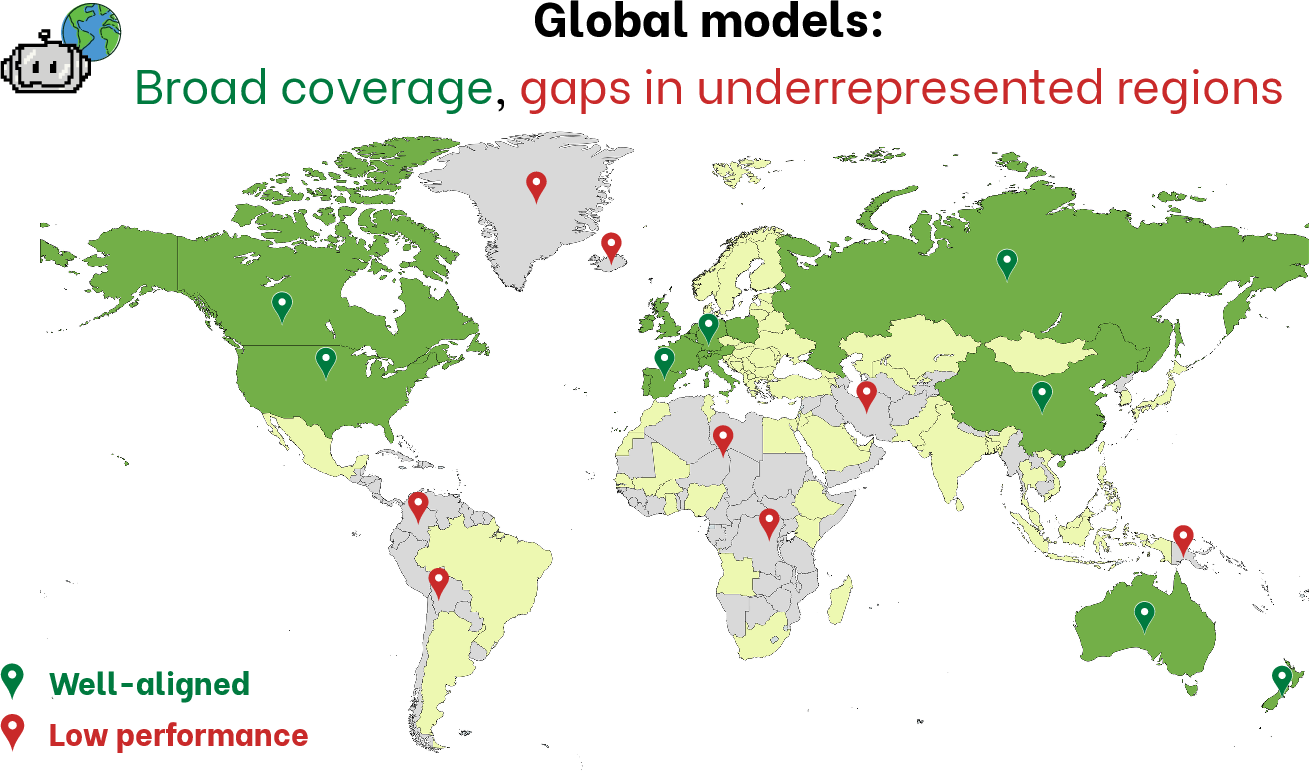
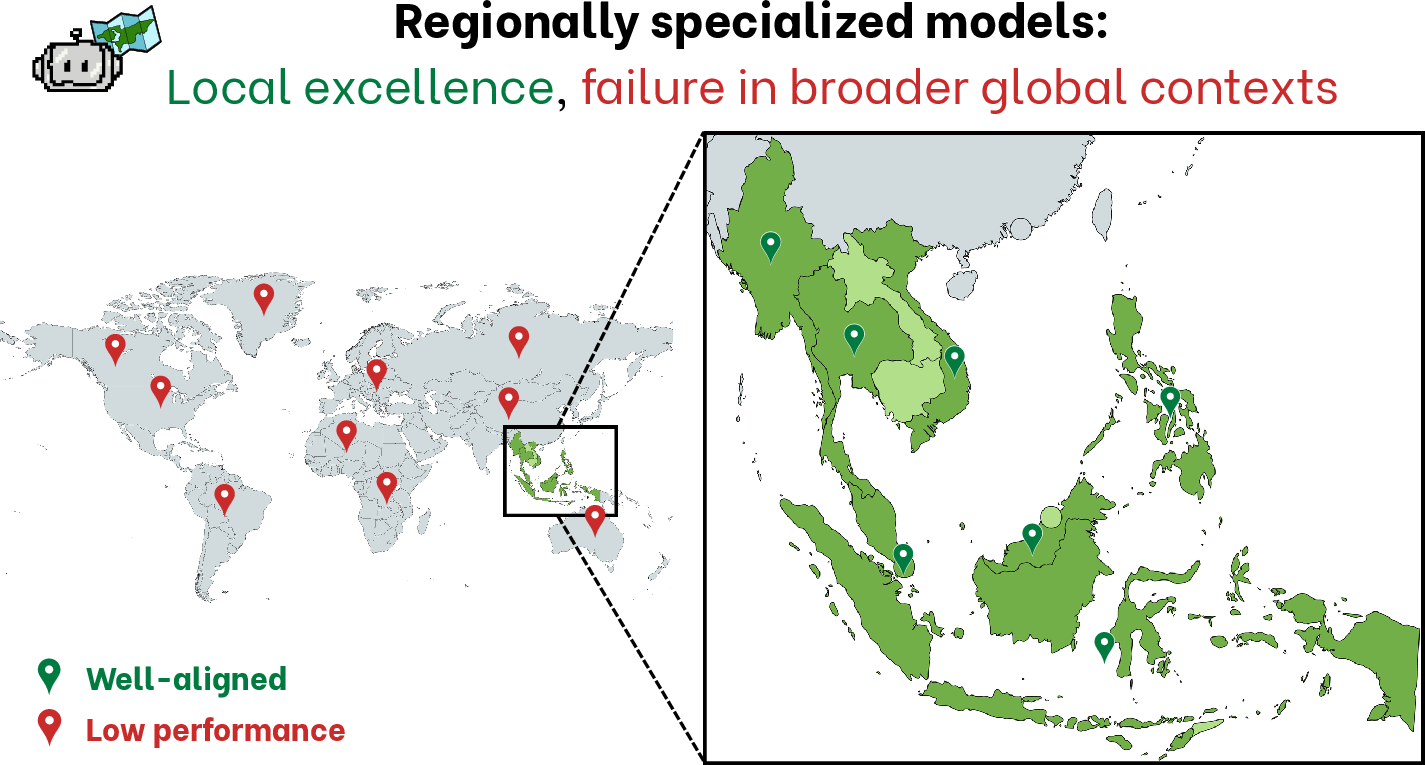
Figure 1: Contrasts global and regional model archetypes, depicting the trade-offs between overall performance and regional sensitivity.
This dichotomy exposes an inherent tension in multimodal model design: optimizing exclusively for global metrics fails to address subtleties of local culture, while pure regionalization causes catastrophic forgetting of global knowledge.
The GG-EZ Framework: Architecture and Methodology
GG-EZ is a three-stage adaptation protocol consisting of (i) high-quality regional data filtering, (ii) regionally supervised fine-tuning, and (iii) model merging via interpolation of regional and global model parameters.
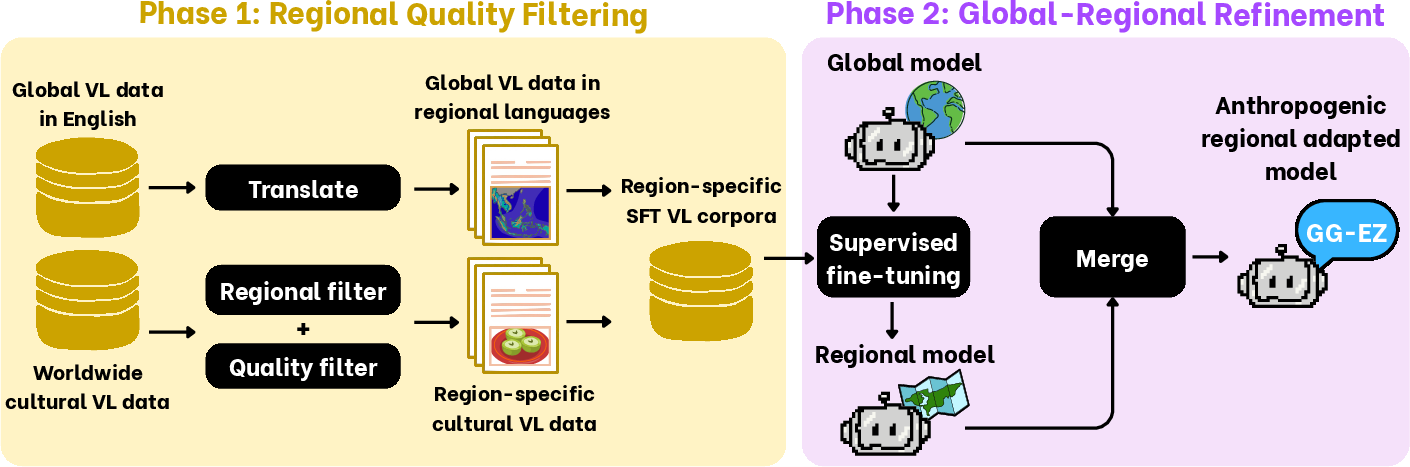
Figure 2: Schematic overview of the GG-EZ pipeline, spanning data filtering, regional adaptation, and model merging.
Regional Data Curation
- A regional filter isolates datapoints with specific geo-cultural characteristics.
- Multilingual reward models are used to score and select high-quality, regionally salient examples.
- Translation augmentation extends coverage by translating curated English corpora into regional languages using optimal translation models.
Supervised Regional Fine-Tuning
- Global VL models are fine-tuned on the curated, high-quality regional dataset.
- This process yields a regionally-specialized model that better encodes anthropogenic and cultural phenomena salient to the target region.
Model Merging
- The fine-tuned regional model is interpolated with the original global model using a linear mixing coefficient β.
- The optimal β is determined by maximizing a composite objective reflecting Global-Regional Parity (GRP):
θmax[αQRglobal+(1−α)QRregional]
where α is tuned to capture the desired balance, potentially derived from region-specific globalization indices.
Empirical Validation: Southeast Asia Case Study
Experiments target three distinct architectures:
- Gemma-3 27B (large VLM)
- SDXL (text-to-image diffusion)
- SigLIP-2 (vision-language embedding)
The focus region is Southeast Asia (SEA), comprising 11 nations and substantial population diversity. Curation relies on resources such as SEA-VL (prefiltered SEA-specific VL data), CulturalGround, and machine-translated multimodal corpora.
Impact of Regional Data Curation
Ablation studies demonstrate that indiscriminate inclusion of data does not guarantee improvement; gains depend critically on dataset volume, coverage, and task alignment.
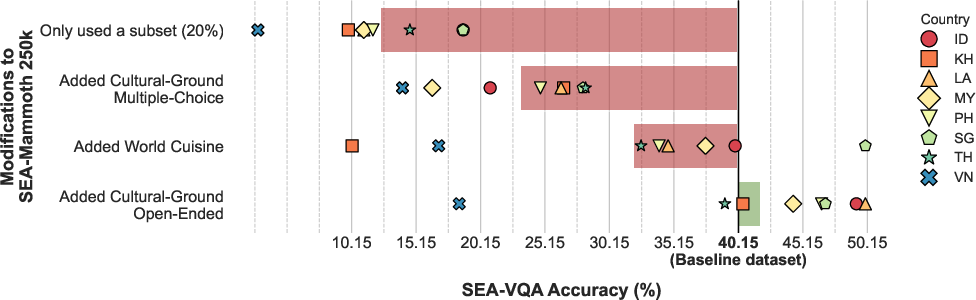
Figure 3: Performance impact of various regional curation and augmentation strategies on SEA-Gemma-3.
Overly specialized datasets (e.g., focusing exclusively on a single cultural facet) can degrade general performance, indicating a need for balanced, context-rich regional corpora.
Quantitative and Qualitative Results
Numerical gains: On SEA-specific metrics (e.g., SEAVQA, CVQA, WorldCuisine), merged models (e.g., SEA-Gemma-3 10%) achieve 5-15% improvements compared to baselines, with retention or even improvement of global performance (>98% retention across benchmarks).
GRP Optimization: The merged models consistently yield superior GRP scores, denoting effective balancing of regional and global performance.
- Diffusion model assessment (SEA-SDXL) via DPGBench yields improved global and regional scores through model merging.
- For vision-language embedding (SEA-SigLIP2), zero-shot evaluation shows simultaneous boosts in both global and regional metrics after merging.

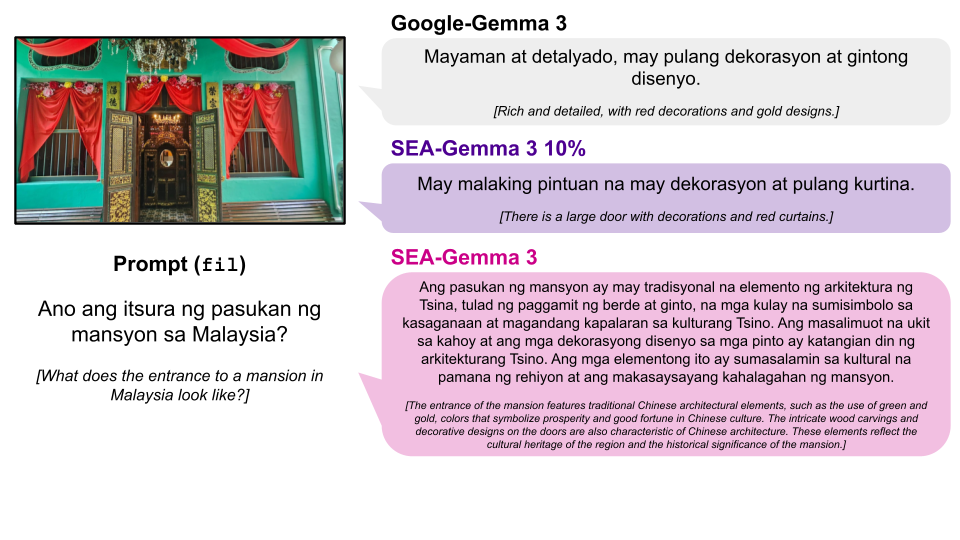
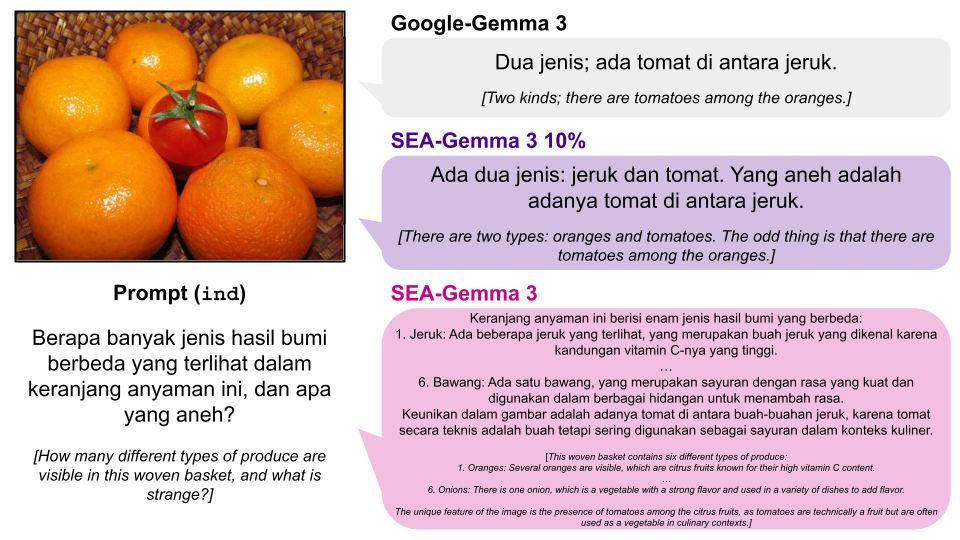
Figure 4: Qualitative comparisons of generative VQA outputs for global, regional, and merged models, highlighting improvements in correctness and naturalness.
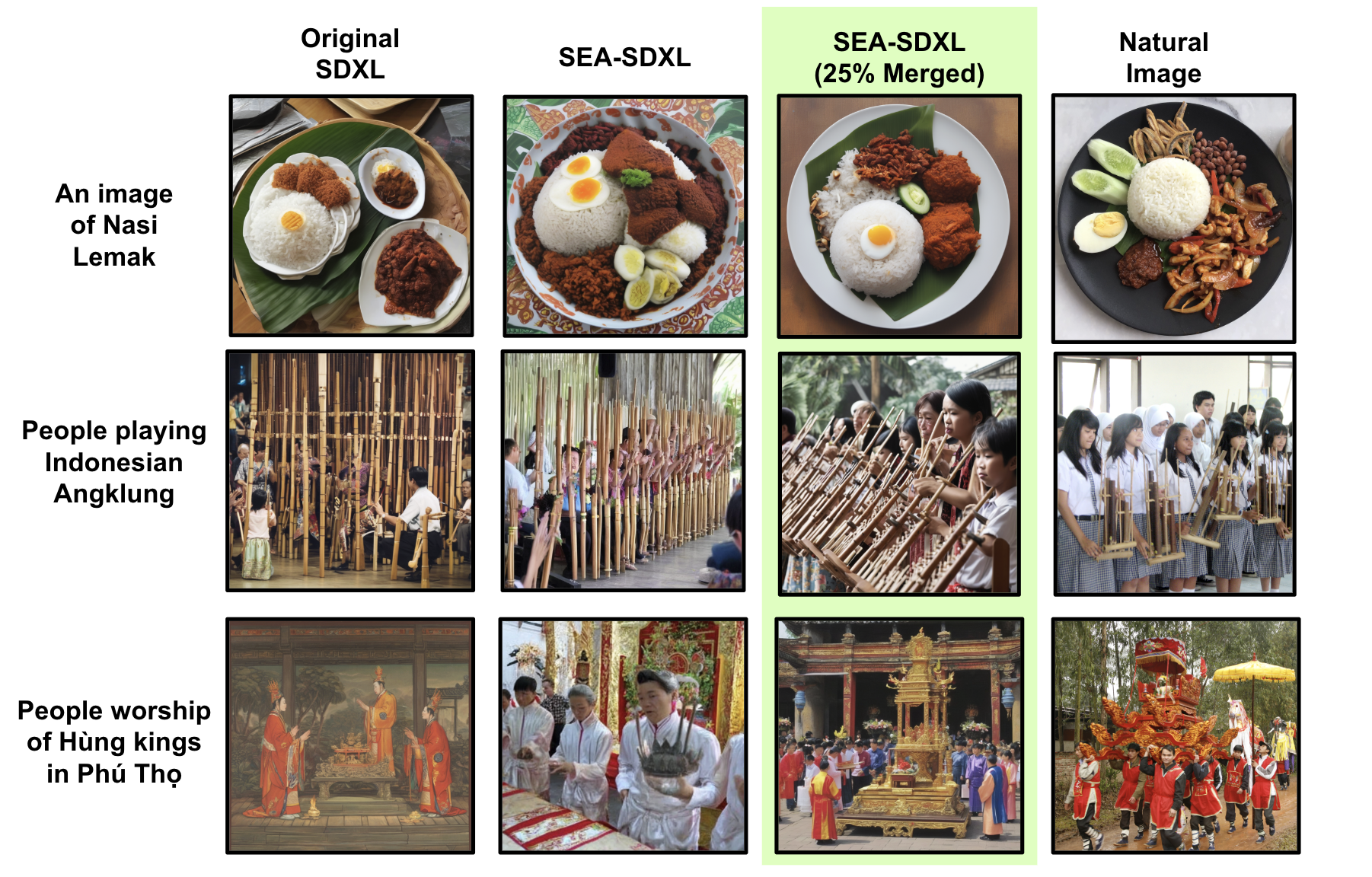
Figure 5: Image generation output comparison between global SDXL, regionally-adapted, and merged models against cultural reference images.
Role of the Globalization Factor α
The globalization factor α is pivotal in GRP optimization. If α is misaligned with the empirical degree of regional interconnectedness (as measured by the KOF globalization index), models may underperform on their intended target objectives.
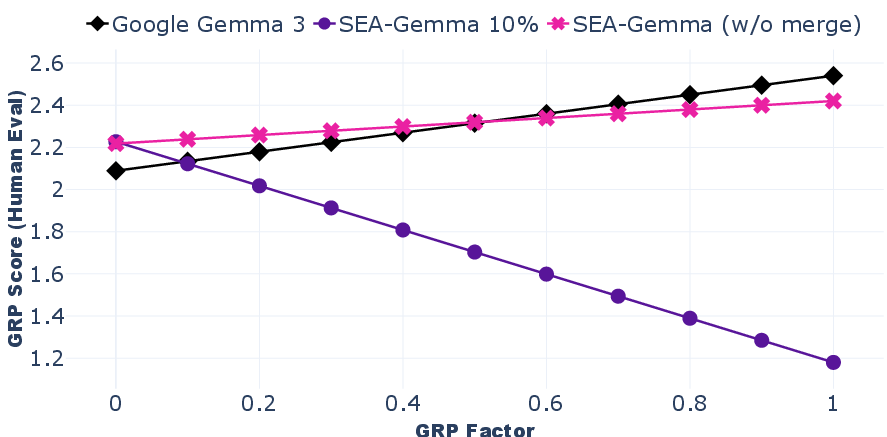
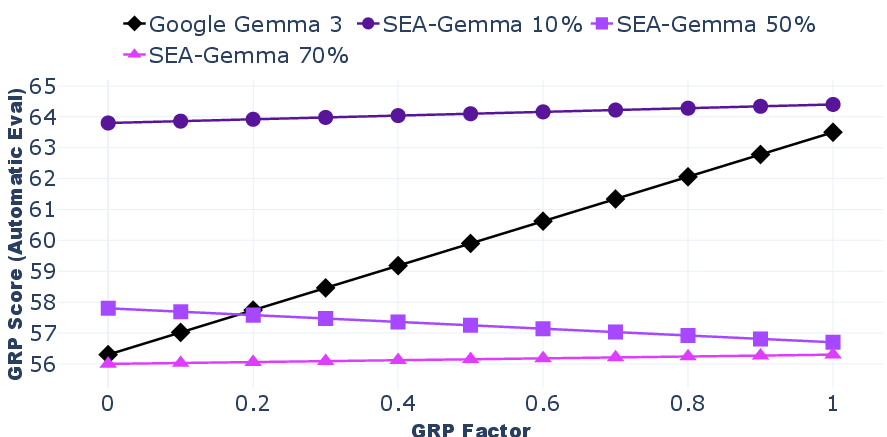
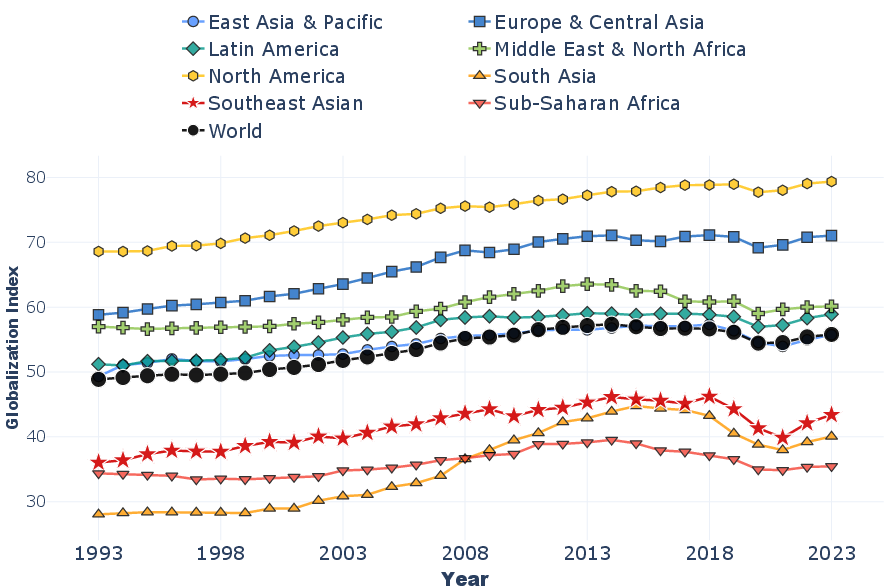
Figure 6: Visualization of the influence of α on GRP, and curve showing region-specific globalization index over time, which informs settings of α.
By leveraging regionally grounded social science metrics, the framework accommodates dynamically shifting balances between regional adaptation and global retention.
Implications and Future Perspectives
This work demonstrates that anthropogenic regional adaptation is both feasible and effective across multiple model families and tasks. The GG-EZ framework is architecture-agnostic and can be generalized to any region or VL backbone with appropriate regional resources. Notably, the results contradict the common belief that regional fine-tuning irreparably harms generalization; with carefully engineered model merging and data selection, joint optimization is attainable.
Practical implications include:
- Enhanced real-world applicability of VL models in underrepresented languages and cultures.
- Instantiation of a quantifiable, repeatable methodology for regional alignment applicable to industry deployment.
- A foundation for region-aware continual learning strategies, potentially with temporally-evolving adaptation as globalization metrics shift.
Theoretically, the explicit formalization of GRP and the integration of social indices represent a significant advance in principled, data-driven trade-off management in model adaptation.
Future work could explore non-linear merging techniques, continual adaptation regimes informed by real-time globalization signals, and comprehensive benchmarks for anthropogenic regional alignment across additional domains.
Conclusion
Anthropogenic Regional Adaptation and the GG-EZ protocol provide a thorough, empirically validated framework to endow vision-LLMs with both strong global generalization and robust regional specificity, addressing a vital gap in multimodal AI deployment. The work's explicit treatment of the global-regional trade-off, systematic data curation, and pragmatic merging yields tangible improvements, setting a new baseline for human-centric, regionally-sensitive VL systems.