- The paper presents a dynamic column generation framework that significantly enhances Pareto front approximation in both 1D and 2D bi-objective cutting stock problems.
- It details the integration of lexicographic, frontier partitioning, and Tchebycheff scalarization strategies to balance stock usage and saw cycle minimization.
- Experimental results reveal that hybrid approaches improve hypervolume and solution diversity, highlighting their practical value in industrial optimization.
Column Generation Embedded Scalarization for Bi-Objective Cutting Stock Problems
Introduction
The Cutting Stock Problem (CSP) serves as a central combinatorial optimization template to address resource minimization in industrial applications, with prevalent formulations focusing on mono-objective cost metrics such as material waste minimization. The bi-objective variant (BOCSP) introduces a realistic, yet challenging, context by incorporating additional operational objectives (notably, minimizing both the number of objects used and the total number of saw cycles incurred), which are often in conflict. The existing body of research has placed inadequate focus on exact methods for BOCSP, particularly for the two-dimensional (2D) case and for methods leveraging dynamic column generation within scalarization-based multi-objective frameworks.
This paper presents a rigorous computational and methodological study of BOCSP in both 1D and 2D variants, grounded on mathematical model innovation and the integration of dynamic column generation (DCG) with classic scalarization strategies—Lexicographic ϵ-Constraint (LEC), Frontier Partitioner Algorithm (FPA), and Augmented Weighted Tchebycheff Method (AWT).
The BOCSP seeks a trade-off solution in the space of feasible cutting patterns between the total number of stock objects utilized and the aggregate number of saw cycles required, under the assumption of adequate stock and machine stacking capabilities (governed by saw capacity p). The paper proposes a mixed-integer formulation with explicit modeling of cycles and setups, employing variables xj (object usage per pattern) and yj (saw cycles per pattern), with the objective function tuple (f1(x,y),f2(x,y)) representing object and cycle counts respectively.
For the 2D BOCSP, pattern generation is constrained to two-stage orthogonal guillotine cuts:
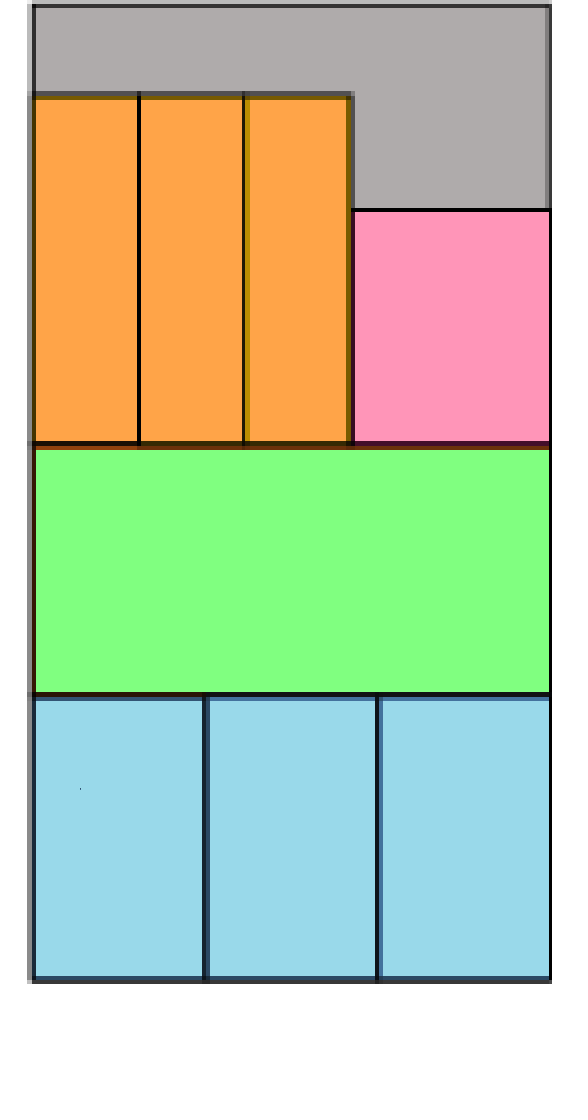
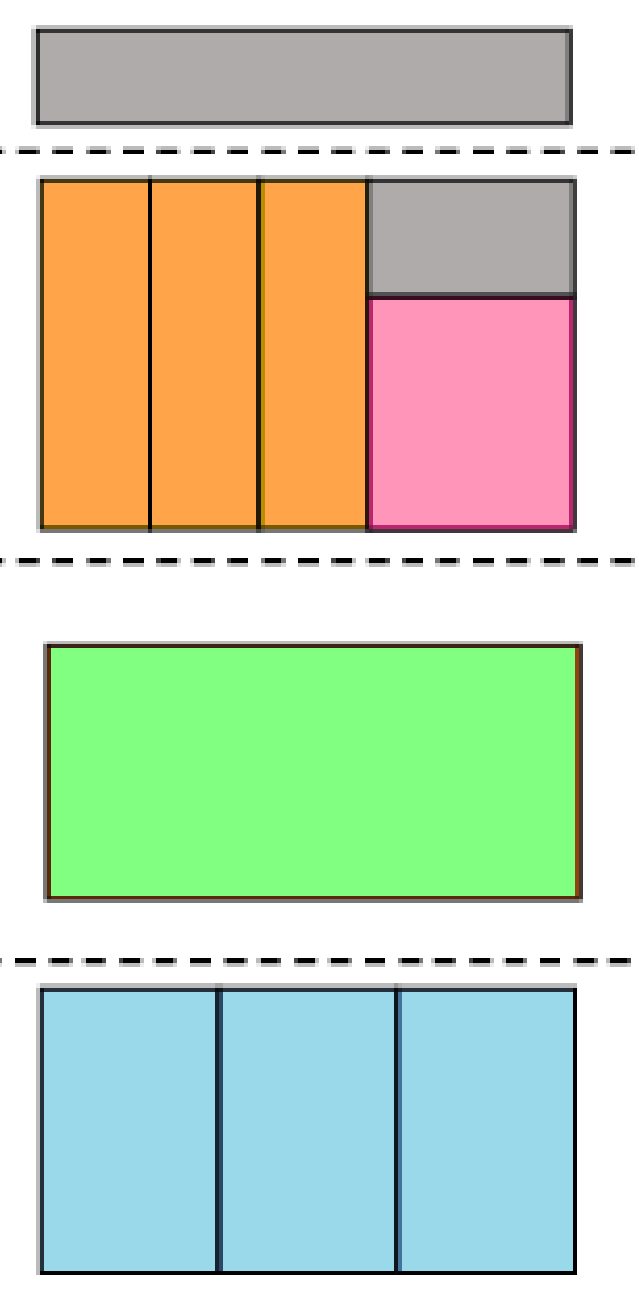
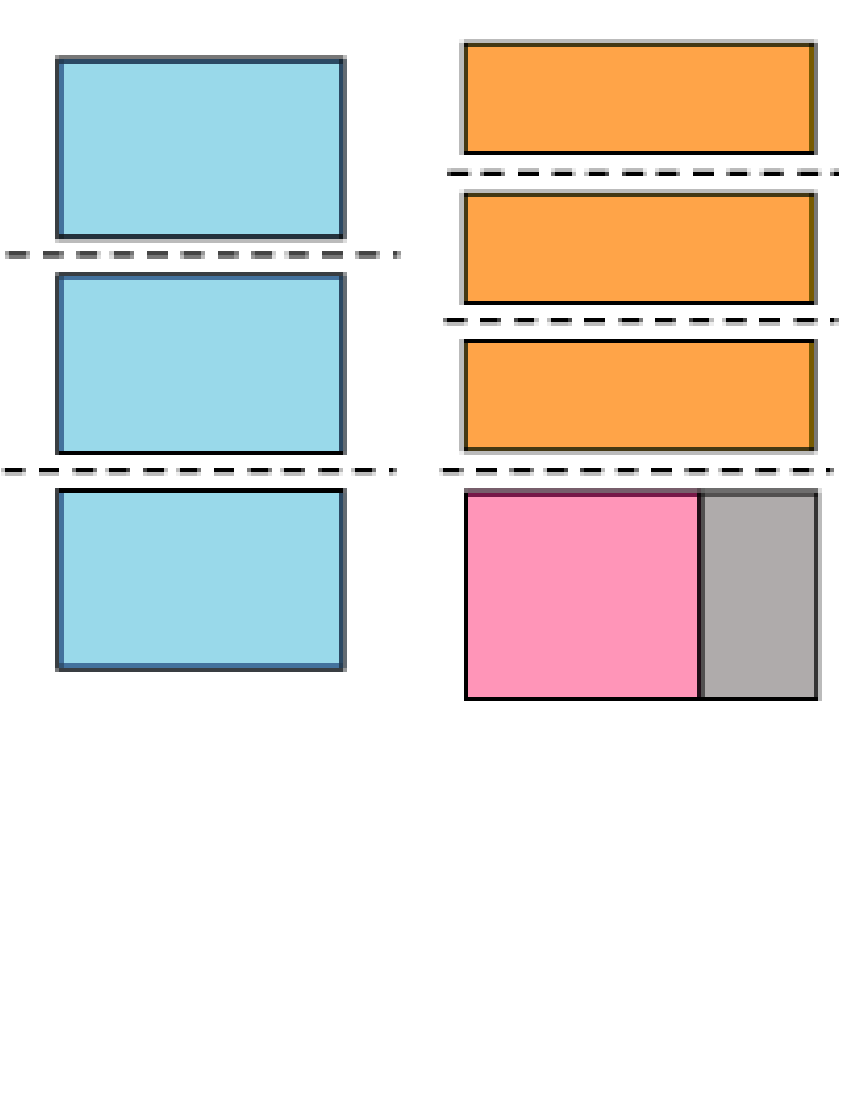
Figure 1: A two-stage orthogonal guillotine non-exact cutting pattern.
Pattern generation subproblems are instances of SLOPP (Knapsack for 1D, generalized assignment for 2D with guillotine and rotation), solved via integer programming for efficient pricing during column generation.
Scalarization within Dynamic Column Generation
Scalarization-based approaches are deployed in a posteriori multi-objective paradigms to approximate the Pareto front by solving structured mono-objective subproblems (ISPs) per strategy. The specific scalarizations implemented are:
- Lexicographic ϵ-Constraint (LEC): Sequentially varies an upper bound on one objective while minimizing the other, requiring two subproblem solutions per iteration.
- Frontier Partitioner Algorithm (FPA): Operates in objective space, successively partitions the search region and uses custom weighted-sum scalarizations to traverse the Pareto front.
- Augmented Weighted Tchebycheff (AWT): Applies a min-max-based scalarization with normalization and augmentation to capture non-convex Pareto regions, varying the weight vector across the solution process.
All scalarizations are equipped with DCG for candidate column expansion, yielding pattern sets adaptively during solution (as opposed to static a priori enumeration).
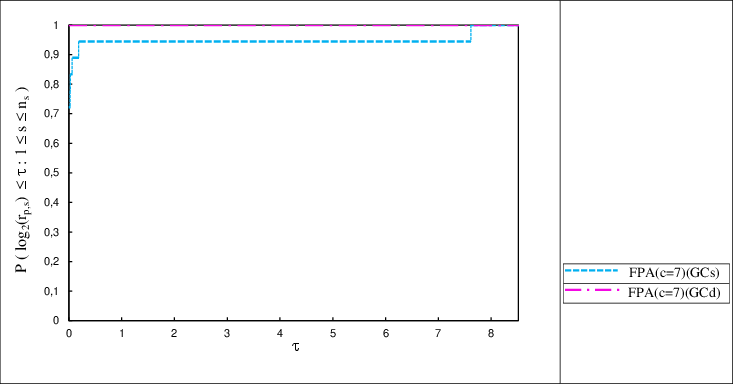
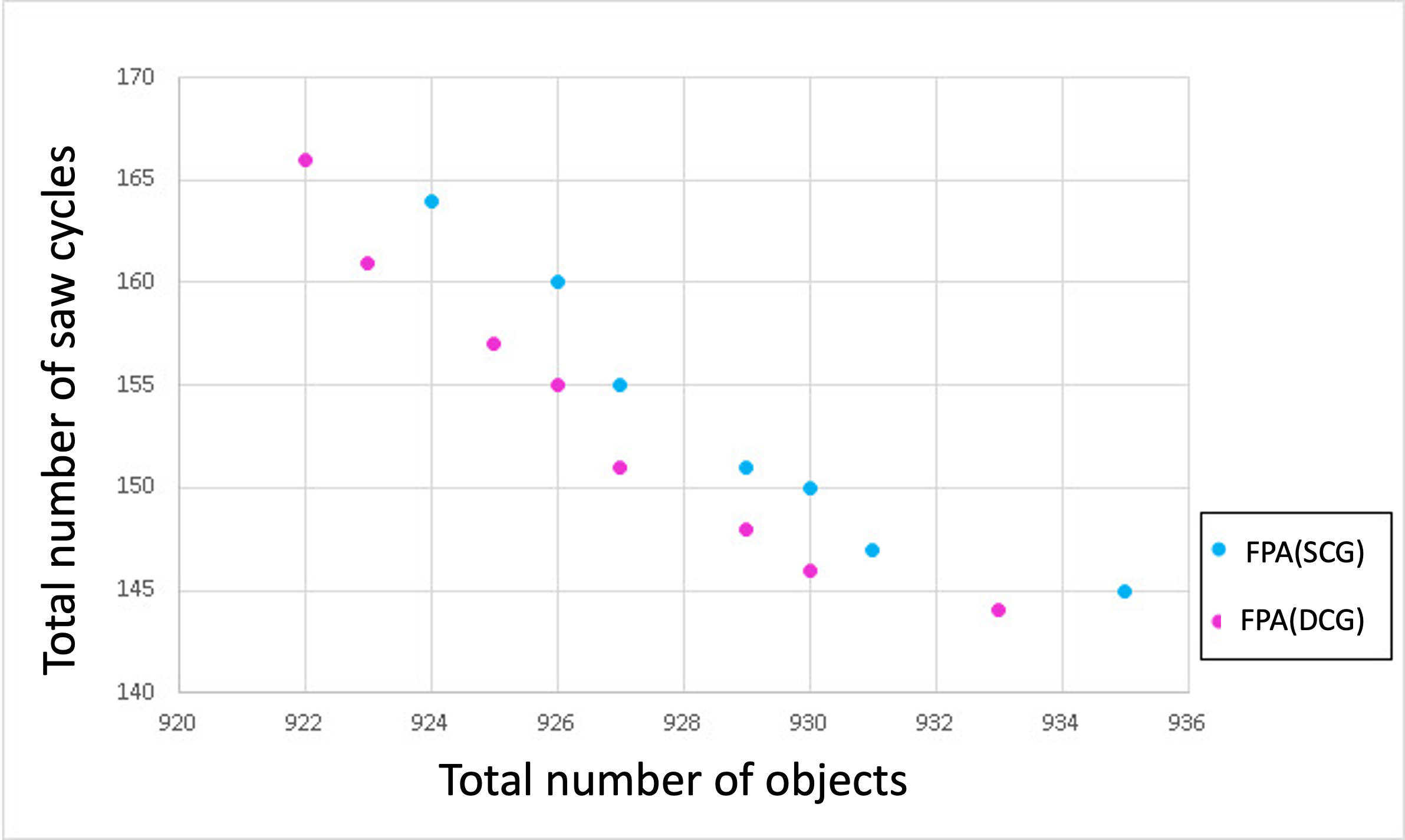
Figure 2: Dynamic versus Static Column Generation.
Computational Analysis
Experiments were executed using a comprehensive set of 1D and 2D instances, with scenarios evaluating saw capacity, item diversity, and instance scale. Solution quality was evaluated using Pareto front cardinality, hypervolume, and computational effort metrics (including subproblems solved per nondominated point found).
1D-BOCSP Results
- Dynamic vs. Static Column Generation: DCG consistently yielded Pareto front approximations with equal or higher hypervolume and dominated SCG points, substantiating the superior search flexibility in pattern space (Figure 3).
- Saw Capacity Effects: As saw capacity increased, Pareto front cardinality and hypervolume increased sharply, exposing greater trade-off complexity, especially for instances where c=dmax.
- Scalarization Comparisons: No scalarization method dominated; AWT yielded higher cardinality, FPA produced higher-quality fronts (in hypervolume), and LEC performed robustly overall.
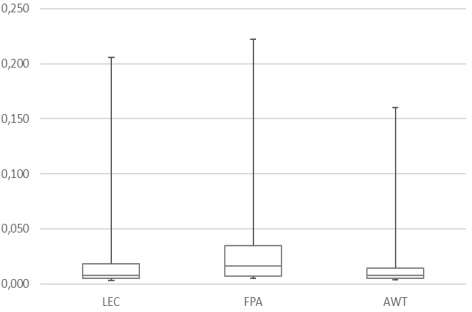
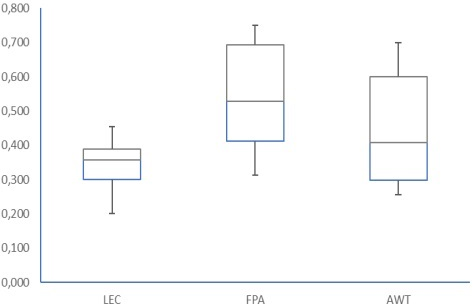
Figure 3: Computational effort to obtain an FrA for the 1D-BOCSP relative to σ5 and σ6.
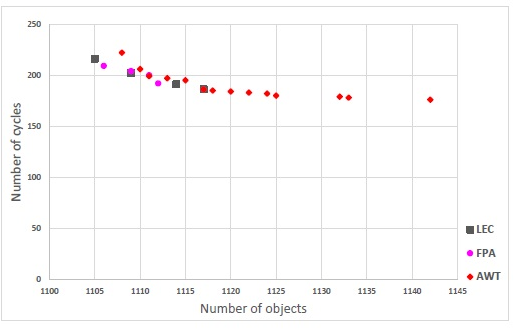
Figure 4: Approximation of the Pareto Front for the instance S/95 of the 1D-BOCSP with c=7 (with DCG).
2D-BOCSP Results
- Pattern Generation: The two-stage guillotine framework effectively modeled industrial constraints, ensuring feasible 2D pattern enumeration.
- Method Quality: FPA outperformed on hypervolume in several large-scale 2D instances, though LEC achieved higher cardinalities in many cases; AWT offered more distributed sampling.
- Computational Resources: While total columns generated were comparable, the methods differed in required iterations and CPU time, reflecting algorithmic structural nuances.
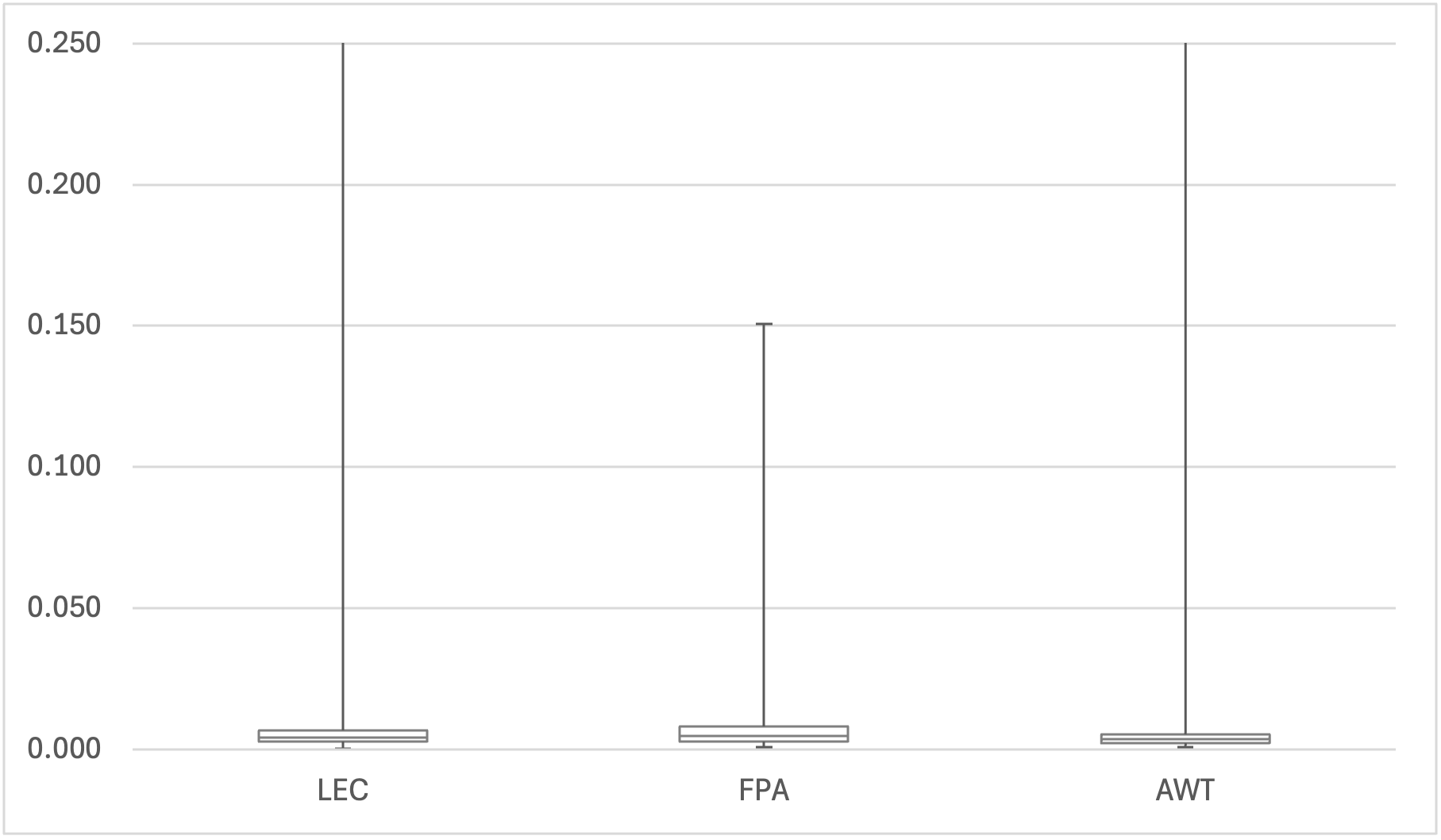
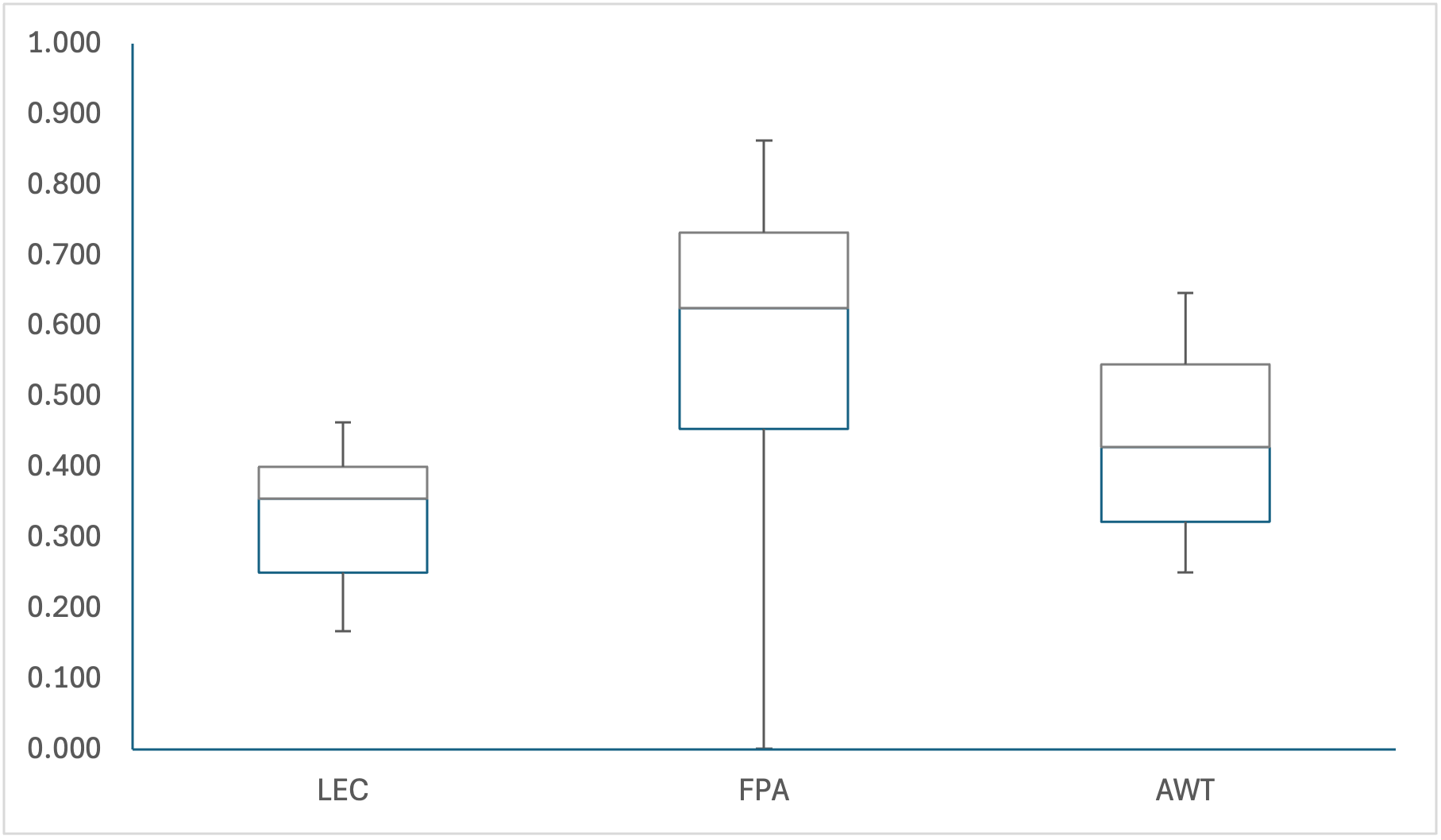
Figure 5: Computational effort to obtain an FrA for the 2D-BOCSP associated with p0 and p1.
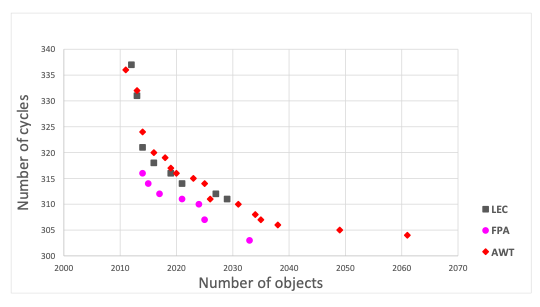
Figure 6: Approximation of the Pareto front given by the methods FPA, LEC and AWT with DCG for the instance 11/100 of the 2D-BOCSP with p2.
Combined Scalarizations
A unified FrA constructed from the nondominated union across LEC, FPA, and AWT consistently improved both hypervolume and cardinality compared to any individual method, empirically confirming their complementarity.
Implications and Theoretical Considerations
The embedding of DCG within scalarization provides an adaptive search process that is crucial for large-scale BOCSP instances, where the pattern space is intractable for full enumeration. The methods investigated demonstrate that no single scalarization dominates across all performance measures, and their union produces FrA sets that more densely and accurately represent the true Pareto front.
From a theoretical perspective, the two-objective modeling provides insight into the operational conflicts in real production scenarios, informing practical trade-off analysis (e.g., between throughput and resource usage). The results substantiate the need for multicriteria approaches in industrial CSP optimization.
Potential Future Directions
- Extension to Robust/Stochastic BOCSP: The framework could be extended to handle uncertainty in demand or production parameters, integrating stochastic programming or robust optimization into pattern generation and scalarization.
- Metaheuristic Coupling: Hybrid approaches leveraging metaheuristics for pricing subproblems and large-instance acceleration may provide further computational benefits.
- Higher-Dimensional Objectives: Generalization to more than two objectives or incorporation of sustainability criteria may capture broader industrial needs.
Conclusion
This study provides strong evidence that dynamic column generation, embedded in classical scalarization approaches, enables effective exact and approximate solution of bi-objective CSPs, for both 1D and 2D guillotine cutting models. The proposed methodology supports the generation of high-quality, practically relevant nondominated solution sets and highlights the benefit of multi-algorithmic ensembles for comprehensive Pareto front approximation. The presented results mark a significant advancement in the computational methodology for multi-objective industrial cutting problems, with implications for both academic research and practical deployment in manufacturing optimization contexts.
Reference: "A study of column generation embedded in scalarization methods for the bi-objective cutting stock problem" (2604.10850)