- The paper demonstrates computational dance motion simplification using rule-based and learning-based methods to reduce complexity and improve novice performance.
- It operationalizes five complexity criteria via data-driven metrics and expert consensus, achieving over 91% accuracy in classification.
- Empirical evaluations show that both approaches enhance learning outcomes while maintaining stylistic and musical integrity in choreography.
Dance Motion Simplification for Novice Learning: Framework, Methods, and Evaluation
Introduction and Problem Framing
The paper "Make it Simple, Make it Dance: Dance Motion Simplification to Support Novices' Dance Learning" (2604.10490) advances the computational modeling of dance motion simplification to scaffold novice motor skill acquisition in digital dance education. Addressing the gap between generic video tutorials and effective motor learning, the work translates pedagogically grounded simplification practices—routinely applied in expert instruction—into automated rule-based and learning-based systems for controllable dance complexity reduction, with an emphasis on preserving stylistic and musical integrity.
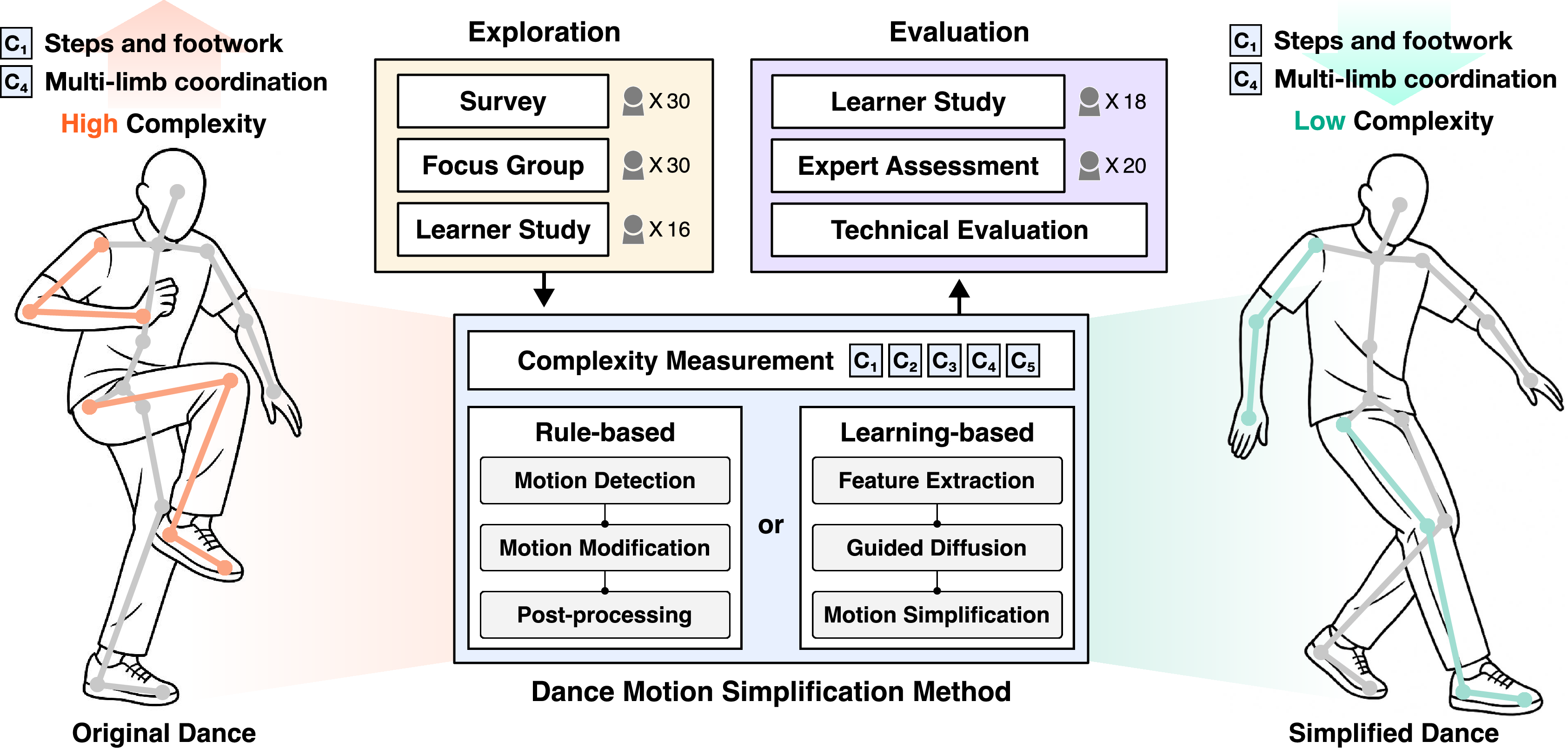
Figure 1: Overview of the data-driven system design: from identifying complexity factors to developing, implementing, and validating automated simplification methods with technical, expert, and user studies.
Qualitative Foundations and Complexity Taxonomy
Through workshops with 30 novice learners and 30 choreographers spanning 10 genres, the study distills five cross-genre complexity criteria that recurrently compromise novice performance: steps and footwork (C1), dense movement (C2), rotations and direction changes (C3), multi-limb coordination (C4), and bilateral asymmetry (C5). Choreographers' domain knowledge is systematically operationalized, and their consensus is used to ground annotated paired datasets of original and simplified sequences.
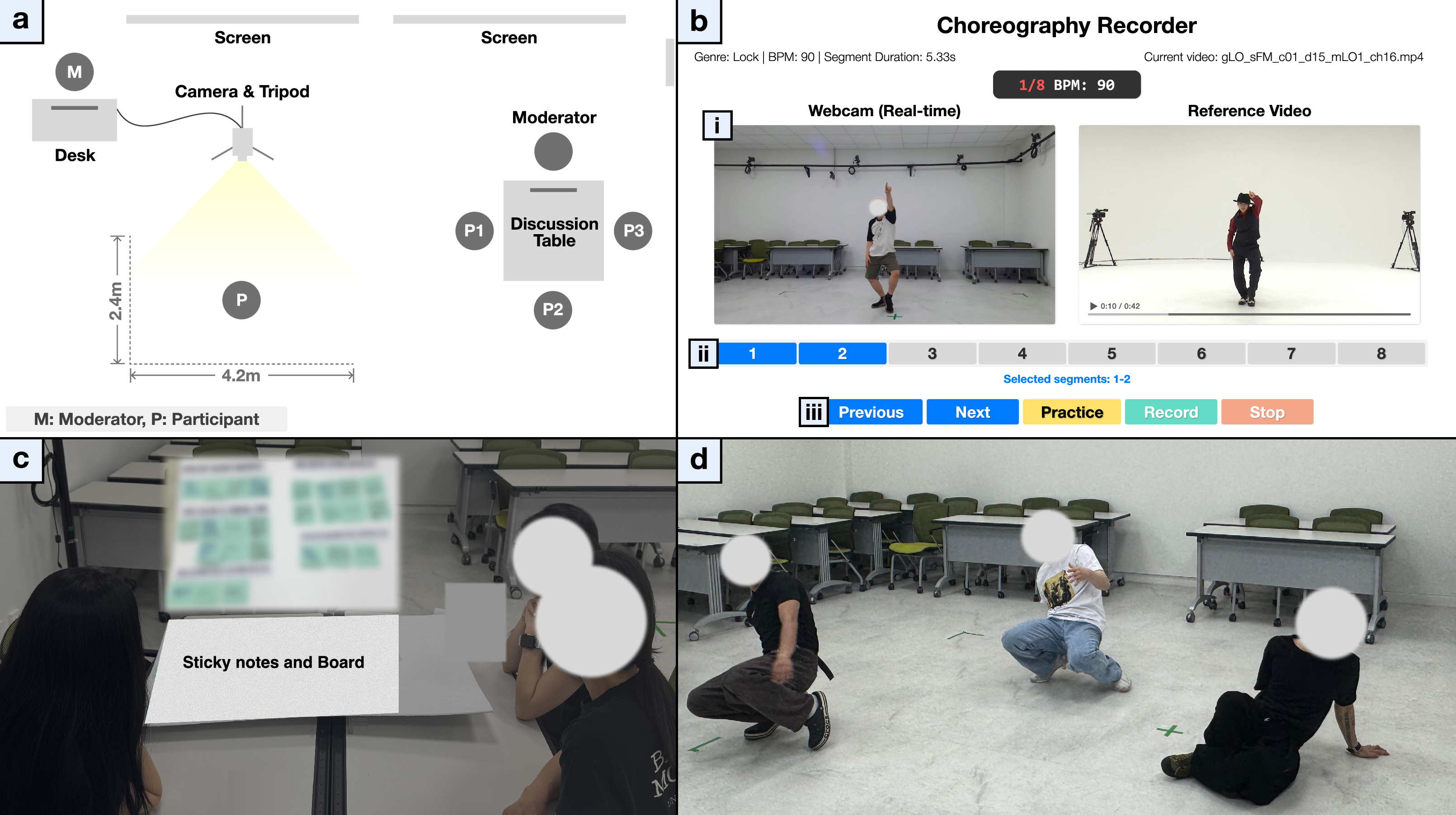
Figure 3: Focus group and data collection protocol integrating video annotation, scenario-based discussion, and real-time practice to extract systematic simplification strategies.
Examples illustrate how complexity is audibly and kinesthetically decomposed (Figure 4):
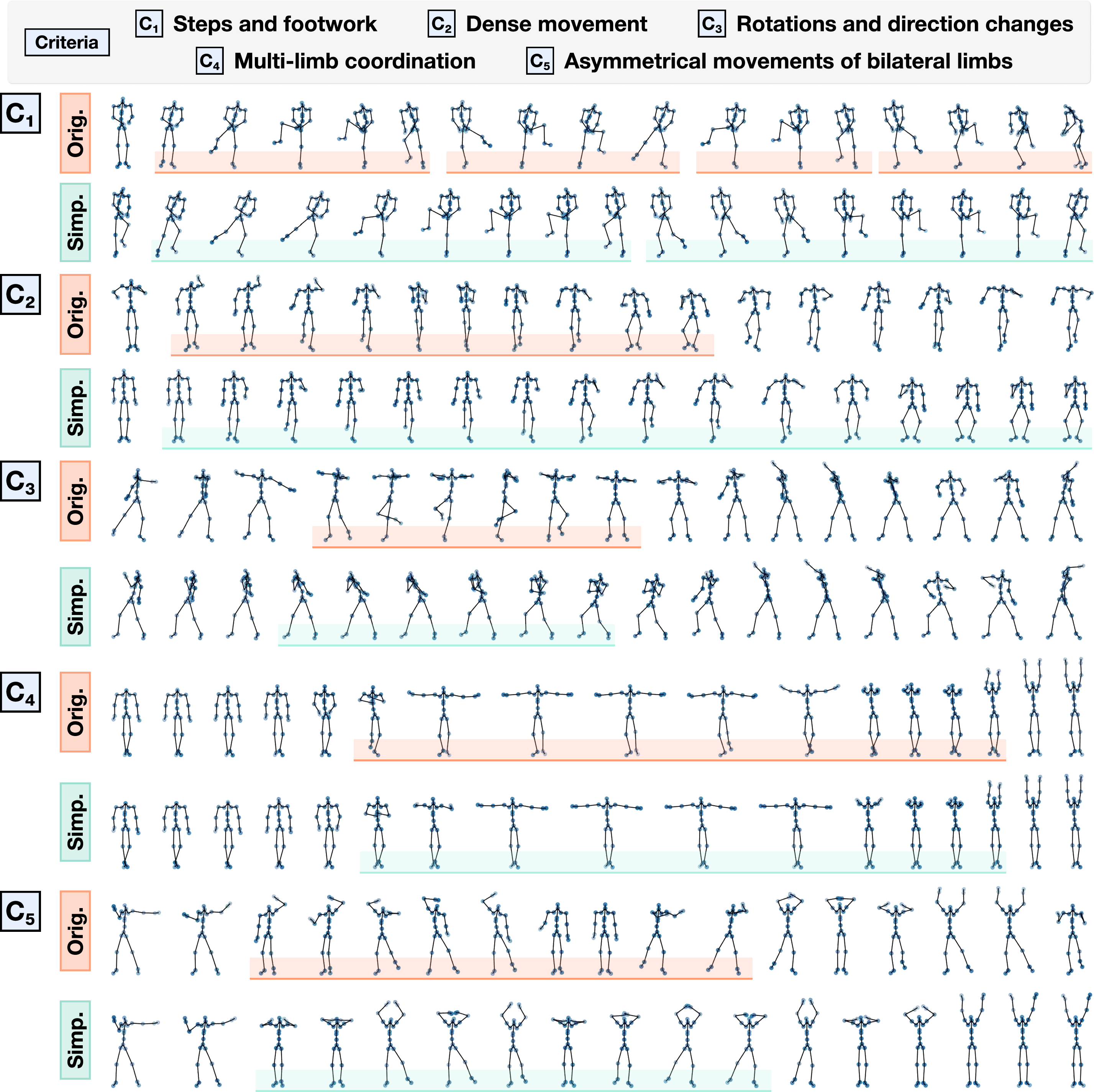
Figure 2: Before/after frames of original and simplified choreography mapped to each complexity criterion, indicating the direct actionability of the measures.
Dataset Construction and Computational Metrics
The authors construct a 548-pair dataset across 10 dance genres, with granular annotations using a custom tool (Figure 5):
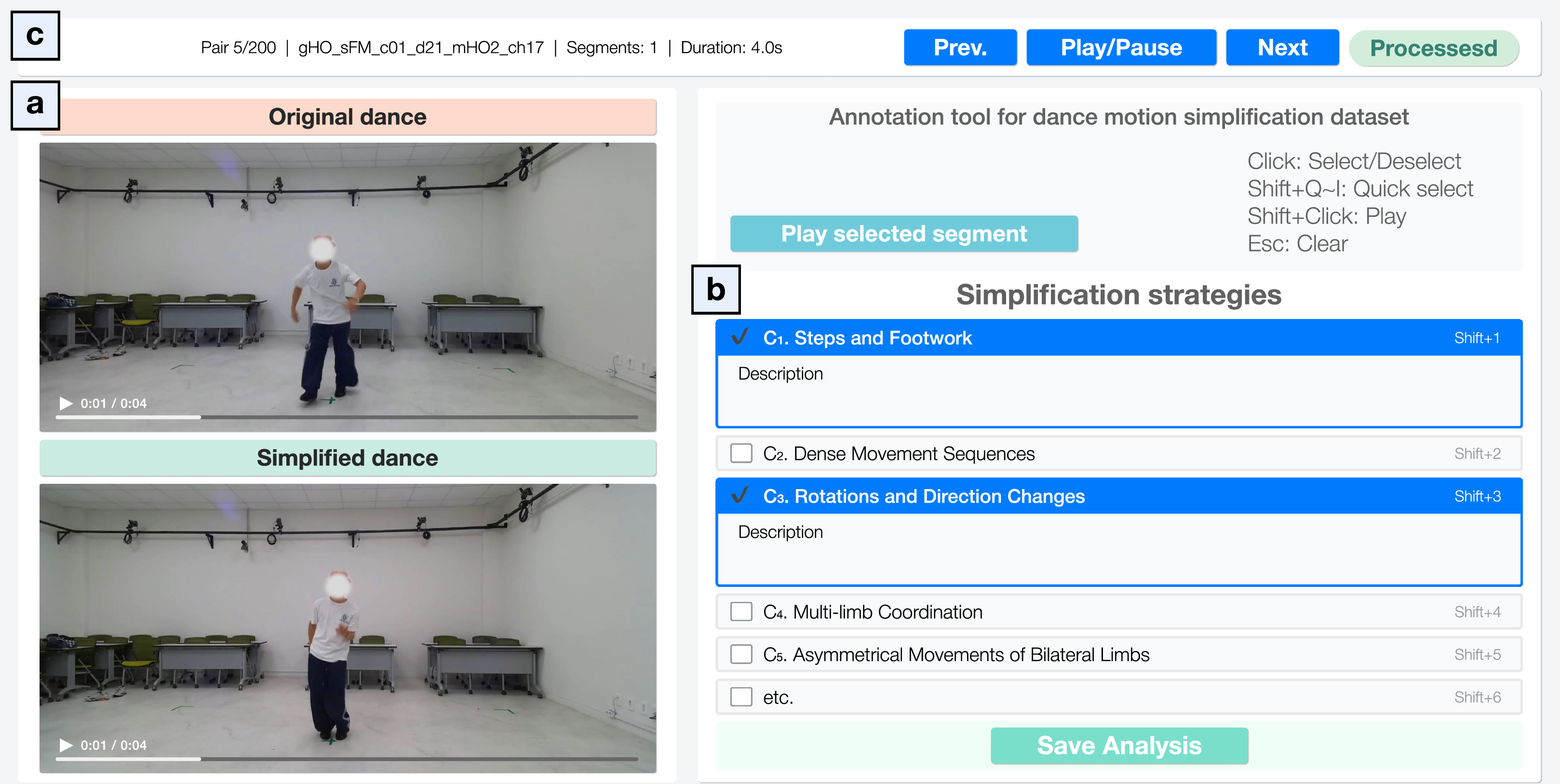
Figure 4: Segmenting, labeling, and comparing original-simplified pairs by specific complexity reduction strategy.
Each complexity criterion is quantified by physically and information-theoretically motivated metrics (velocity, entropy, spatial range, synchronization, symmetry, etc.), and the metrics' discriminative power is verified via gradient-boosted and XGBoost classifiers, yielding >91% accuracy and >0.98 AUC for all criteria.
Automated Simplification Methods
Rule-Based Approach
A modular pipeline identifies complexity activations and applies parametric edits: velocity reduction (C1), spatial compression (C2/C4), orientation stabilization (C3), and bilateral mirroring (C5). Structural realism is maintained via root reattachment and offset smoothing.
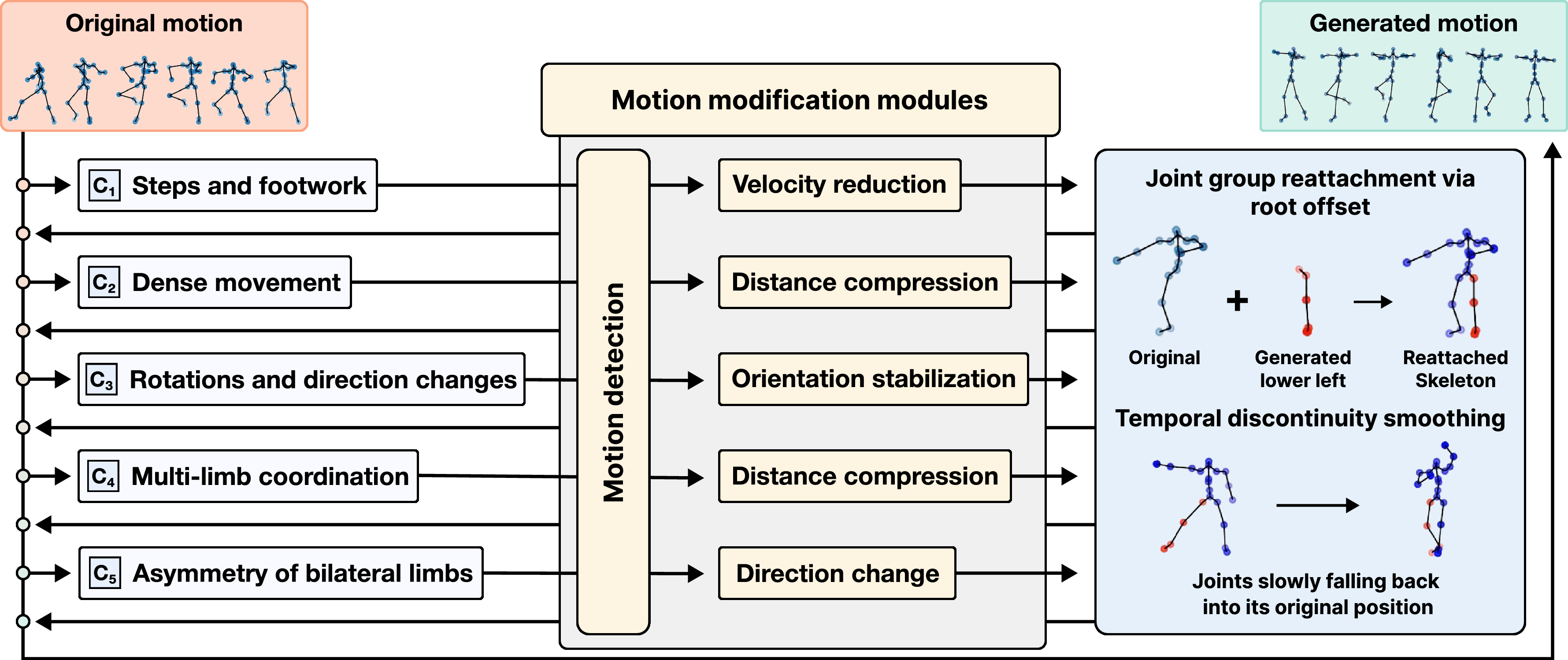
Figure 5: Schematic of the rule-based motion editing pipeline, detailing joint/segment identification, application of criterion-targeted simplification rules, and temporal discontinuity correction.
Ablation shows that removing C2 (dense movement) most significantly degrades performance, while orientation edits (C3) trade-off between rotational simplification and artifact-free kinematics.
Learning-Based Approach
The learning-based pipeline extends POPDG—a diffusion model for music-conditioned dance generation—by employing a ControlNet branch for original-to-simplified motion pairing, and a loss composed of hybrid diffusion, auxiliary realism, and direct optimization for reduction in C1–C5 metrics. The model supports adjustable simplification via classifier-free guidance and conditional weighting.
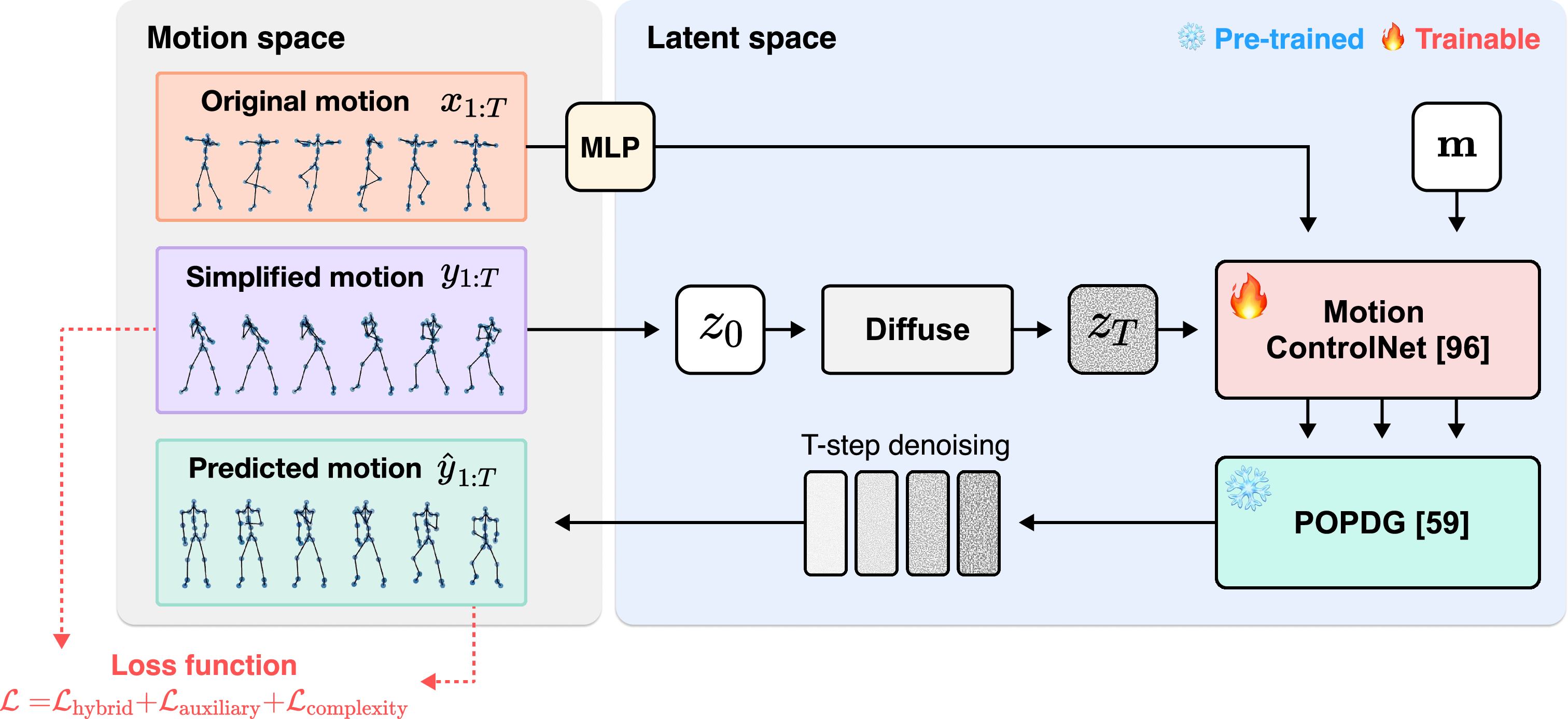
Figure 8: The learning-based setup: denoising diffusion conditioned on original motion and music with explicit complexity-aware loss regularization via ControlNet.
Ablations indicate auxiliary complexity losses are essential for non-trivial simplification, especially in C2–C4; music conditioning is necessary for coherent rhythm and energy but not for baseline complexity reduction.
Empirical Evaluation
Technical and Distributional Analysis
Rule-based methods provide interpretable, fine-grained control across criteria, with strong preservation of structural realism and plausible contacts but are susceptible to artifacts in complex sequences (high FID). The learning-based model produces distributionally faithful and smoother trajectories (low FID, diversity) for C2–C5, albeit with decreased control and less consistent style preservation compared to ground truth.
Expert Assessment
Expert choreographers rated the ground-truth simplifications most favorably on all metrics, but both automated methods surpassed neutral acceptability. The rule-based method preserved style better, while the learning-based approach achieved closer matching in simplification degree:
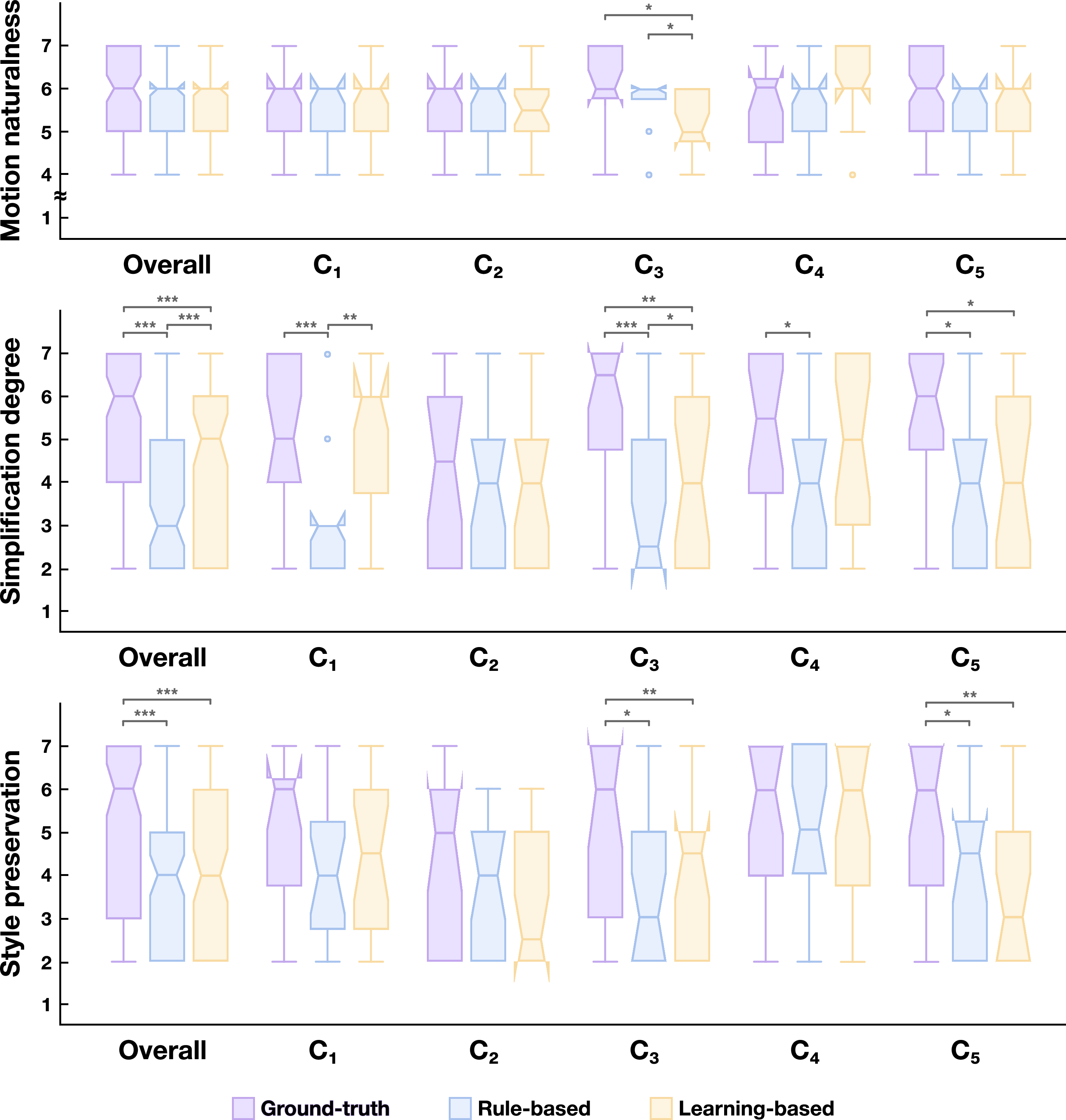
Figure 6: Expert ratings for naturalness, simplification strength, and style preservation; ground-truth outperforms, but both automated systems are effective for teaching use.
Novice Learner Study
Controlled experiments (n=18) with a within-subjects design revealed that all simplification methods significantly reduced cognitive workload, increased self-efficacy, and improved performance (DTW cost/guided learning), especially for dense movement and coordination criteria:
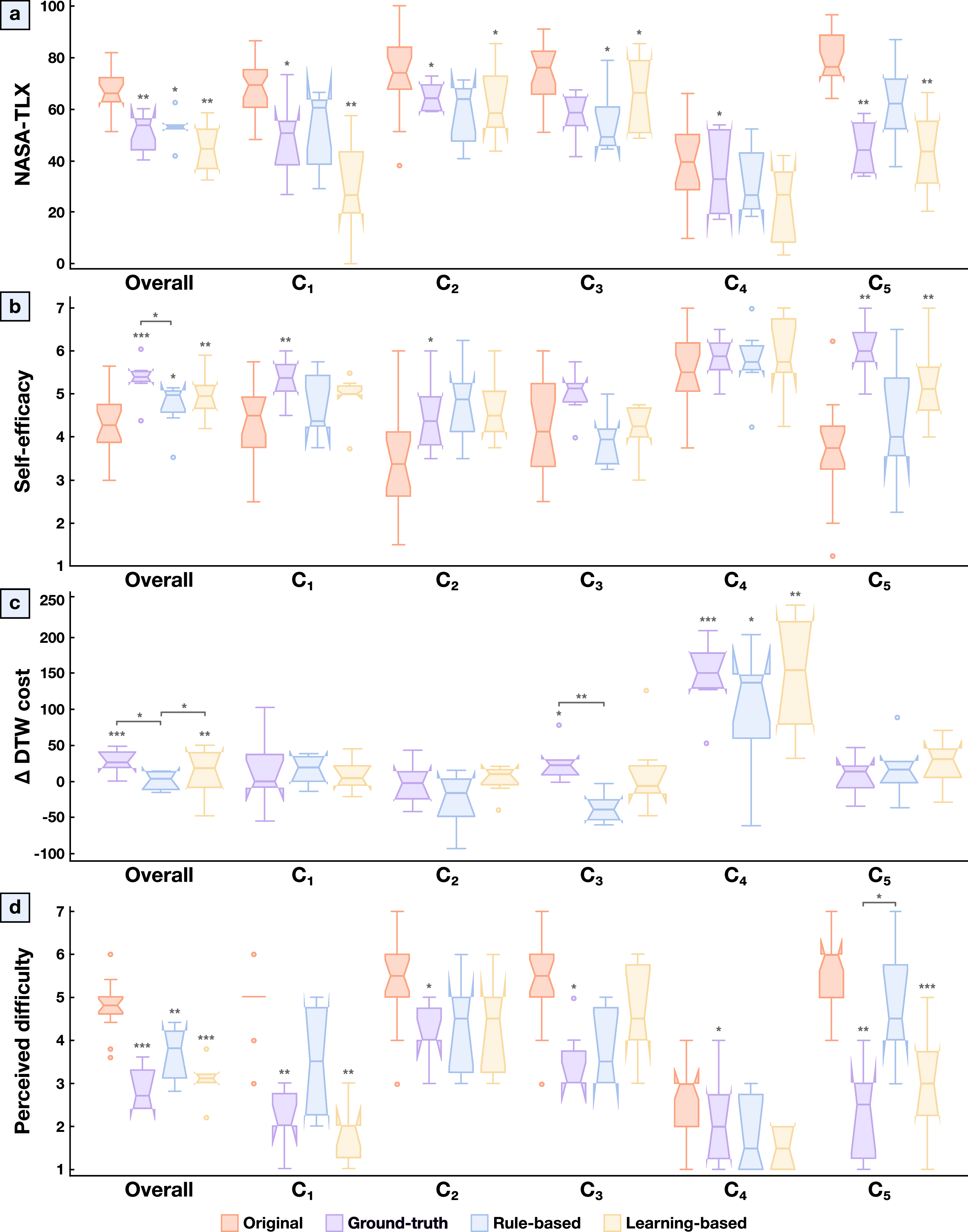
Figure 7: Main and criterion-wise effects on workload, confidence, objective score, and subjective difficulty; automated approaches (learning-based in particular) closely match the human-authored reference, with statistically significant improvements over original complexity.
Theoretical and Practical Implications
The framework provides empirical confirmation of classic challenge-point and progressive practice theories in motor learning: matching task complexity to ability via targeted modular simplification substantially boosts objective and subjective learning outcomes. The decomposed complexity taxonomy can be directly adopted for adaptive, personalized dance training interfaces with interpretable ‘difficulty sliders’ for each criterion. From an HCI/AI perspective, the work demonstrates how upstream pedagogical theory and expert-practice consensus can be operationalized for automated motion editing and content adaptation systems.
Furthermore, the multi-level validation protocol—spanning technical, expert, and actual user dimensions—ensures that simplification is not only computationally effective but also pedagogically and experientially robust.
Limitations and Future Directions
Data scarcity and class imbalance remain limiting factors, especially for edge-case complexity reductions (C5, bilateral asymmetry). The learning-based method’s approximation of expert stylization is inherently distributional, often at the cost of idiosyncratic genre-specific signatures. Hybrid methods blending parametric control with generative model flexibility are a logical next step, potentially augmented by large multimodal foundation models that combine language, motion, and feedback for explainable and adaptive dance scaffolding.
The extension of these methodological tools to other motor learning disciplines (instrumental music, sports, rehabilitation) is immediate and theoretically supported by the generalized nature of the computational complexity measures and the demonstrated feasibility of automated scaffolding.
Conclusion
This work establishes an end-to-end system for computational dance motion simplification grounded in empirical studies with both learners and professional choreographers. Through both rule-based and learning-based pipelines, it enables automatic, criterion-aware reduction of motion complexity, demonstrated to yield significant improvements in novice performance and experience without eroding stylistic essence. The research resolves open questions regarding operationalization and automation of dance pedagogical scaffolding and serves as a critical reference for adaptive, scalable educational technologies in complex embodied skill domains.

