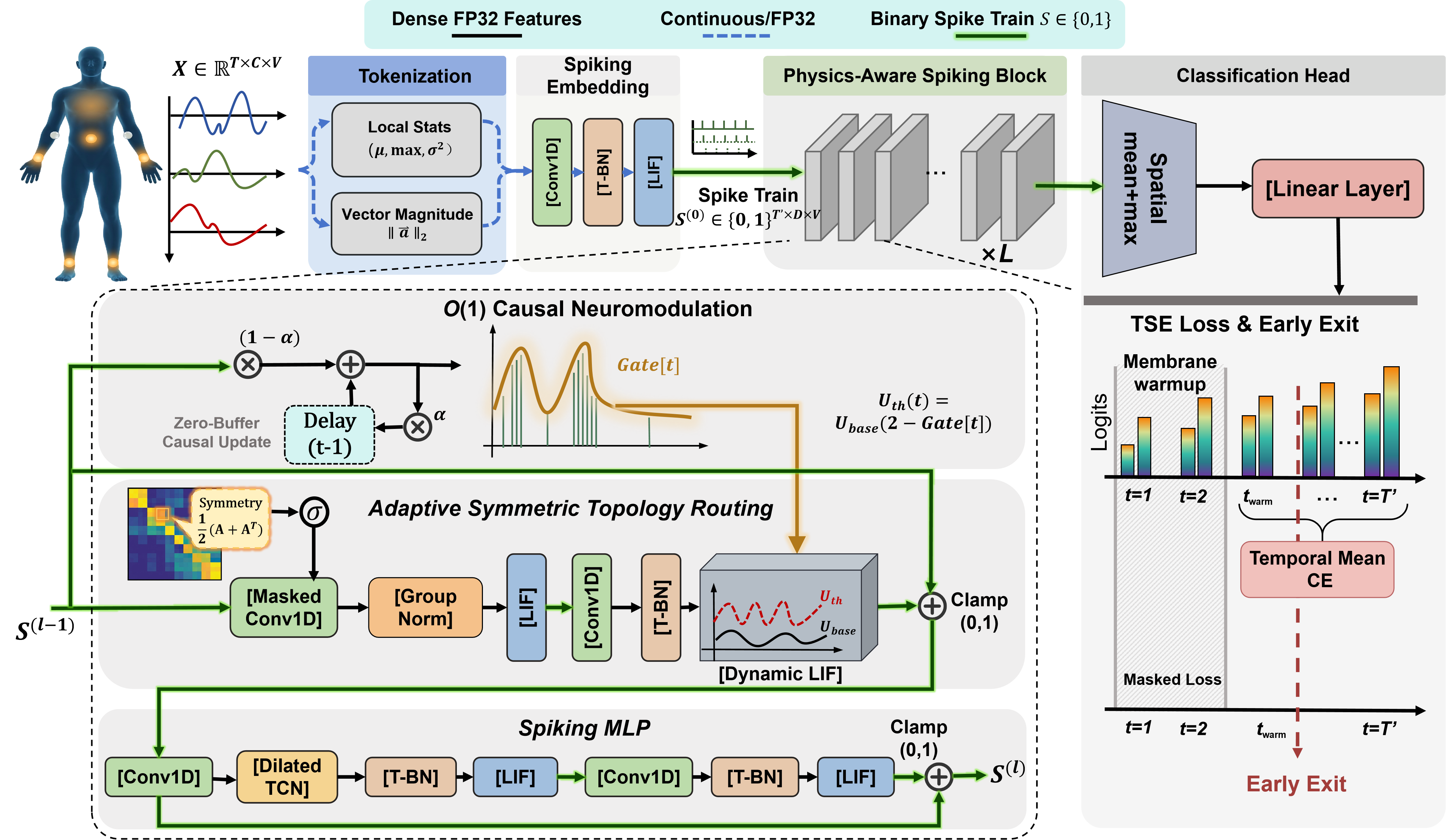
- The paper introduces the PAS-Net architecture that combines physics-aware topology mixing and causal neuromodulation to achieve high HAR accuracy while drastically reducing energy consumption.
- It employs sparse, event-driven computation with a novel Temporal Spike Error loss and early-exit mechanism, reducing inference energy by up to 98% compared to traditional DNNs.
- Experimental evaluations on seven IMU datasets demonstrate PAS-Net’s robustness in real-world, continuous wearable sensing by efficiently modeling multi-node kinematic dependencies.
Physics-Aware Spiking Neural Network (PAS-Net) for Green Wearable Computing
Introduction and Motivation
The paper "Towards Green Wearable Computing: A Physics-Aware Spiking Neural Network for Energy-Efficient IMU-based Human Activity Recognition" (2604.10458) addresses the fundamental limitations of dense DNN-based inference on battery-constrained edge devices in continuous IMU-based HAR. Existing DNNs—especially state-of-the-art CNN/LSTM hybrids, attention mechanisms, and Transformer models—require high-latency floating-point MAC operations and full temporal-window buffering, resulting in intractable power consumption and critical inference latencies for real-world, always-on wearables.
Pure SNN paradigms offer spike-driven, event-based computation, promising ultra-low energy footprints (down to 0.1 pJ/operation). However, canonical SNNs lack spatial awareness of human kinematic topology, are unable to adapt to non-stationary biomechanics with static thresholds, and struggle with gradient flow over long sequences, limiting both recognition accuracy and latency reduction.
Architecture of PAS-Net
PAS-Net introduces architectural novelties that enable state-of-the-art IMU-HAR accuracy while achieving energy and latency characteristics unattainable with standard DNN or SNN approaches.
The overall PAS-Net architecture applies the following pipeline to a raw multi-node IMU tensor:
- Invariant Tokenization & Spiking Embedding: Temporal patching and rotation-invariant feature extraction condense and align input data, enabling a compressed, robust transition into the event-driven spike domain with LIF-based spiking embedding. Temporal-Aware Batch Normalization ensures information-preserving normalization without tempo degradation.
- Deep Physics-Aware Spiking Core: Stacked PAS-Blocks incorporate:
- Temporal-Wise Readout and Early-Exit: A fused mean+max spatial pool followed by linear classification enables stepwise output at each downsampled time index. Training employs a Temporal Spike Error (TSE) loss with membrane warmup, yielding robust early gradients and supporting streaming, confidence-based early exits.
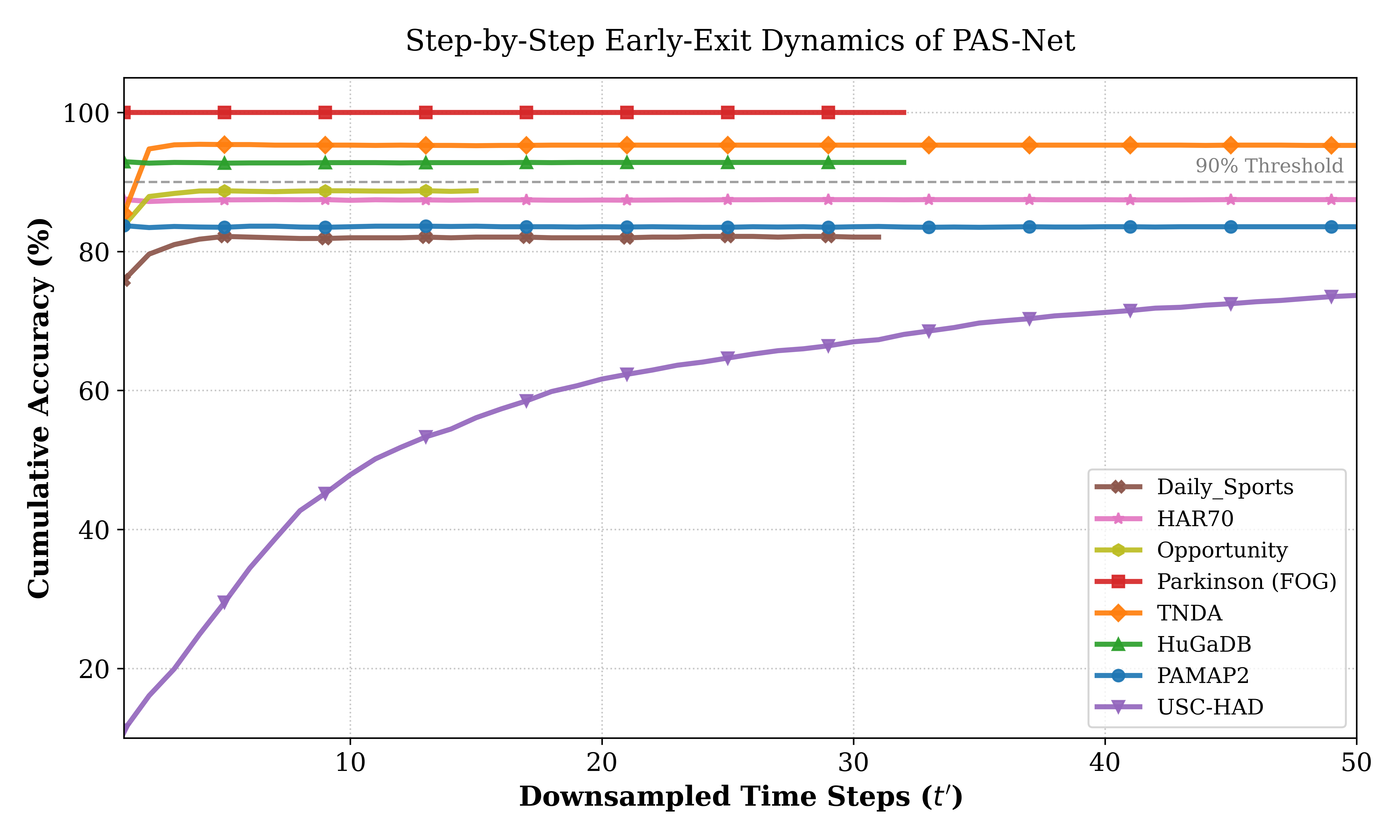
Figure 2: Stepwise cumulative accuracy illustrating PAS-Net's sub-second early-exit mechanism for select activities; complex transitions require longer evidence accumulation.
Experimental Evaluation
PAS-Net is benchmarked against seven public IMU datasets (PAMAP2, Daily-Sports, TNDA-HAR, HuGaDB, HAR70+, Parkinson FOG, USC-HAD) under rigorous subject-independent splits. All comparative models are implemented and optimized under uniform protocols with PyTorch/SpikingJelly. Hardware energy profiles are computed leveraging 45nm CMOS logic cost models.
Accuracy
PAS-Net establishes new SNN SOTA in all evaluations, with absolute gains of up to 12% over the strongest previous SNNs on complex multi-node datasets. More strikingly, PAS-Net often exceeds mainstream heavy DNNs (e.g., DeepConvLSTM, ResNet-SE), refuting the assumption that event-driven computation is necessarily at odds with top accuracy (PAMAP2: +7% over ResNet-SE; USC-HAD: +9% over DeepConvLSTM). On challenging episodic datasets, PAS-Net remains the top SNN, with transformer-based DNNs occasionally offering marginal improvements.
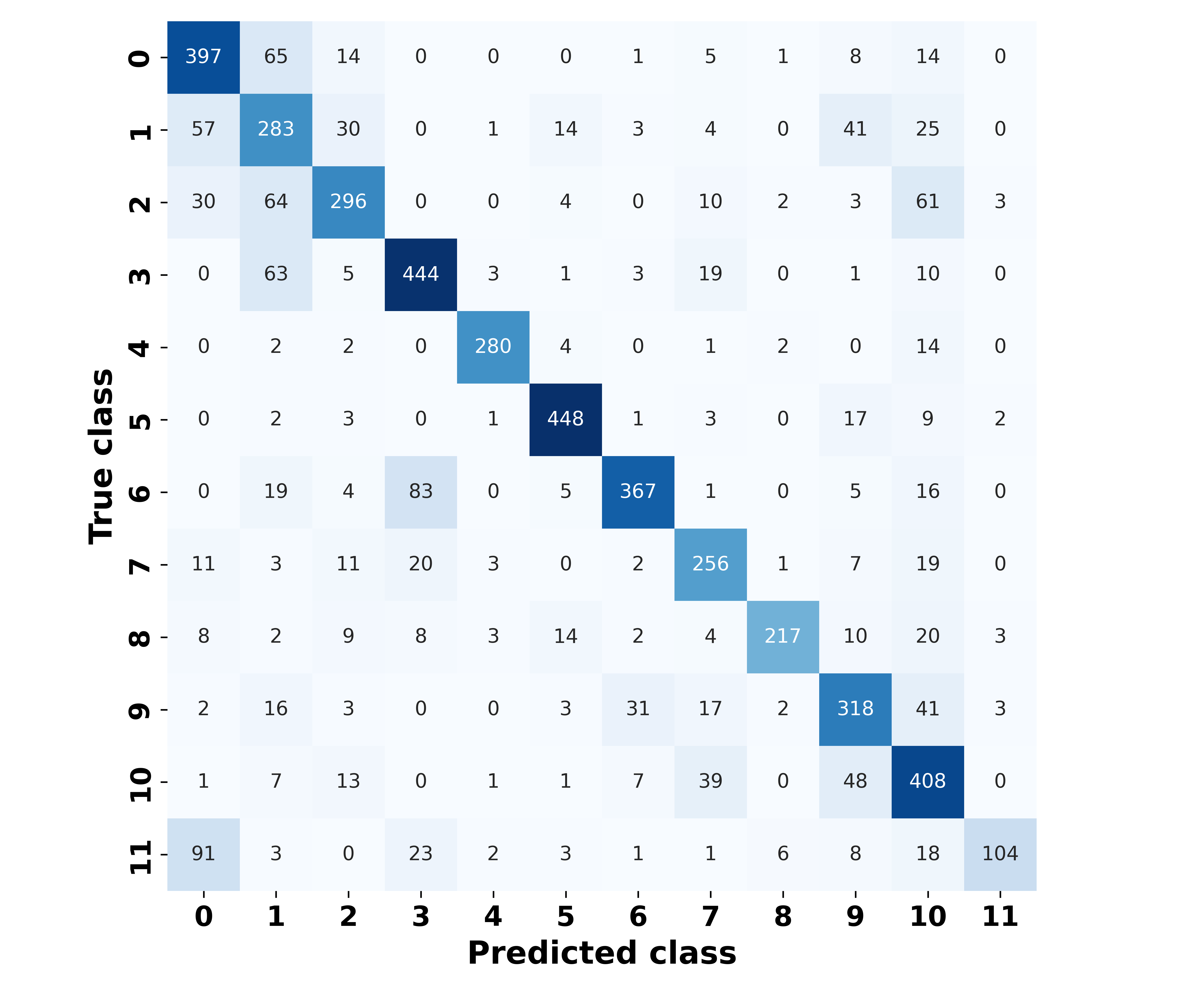
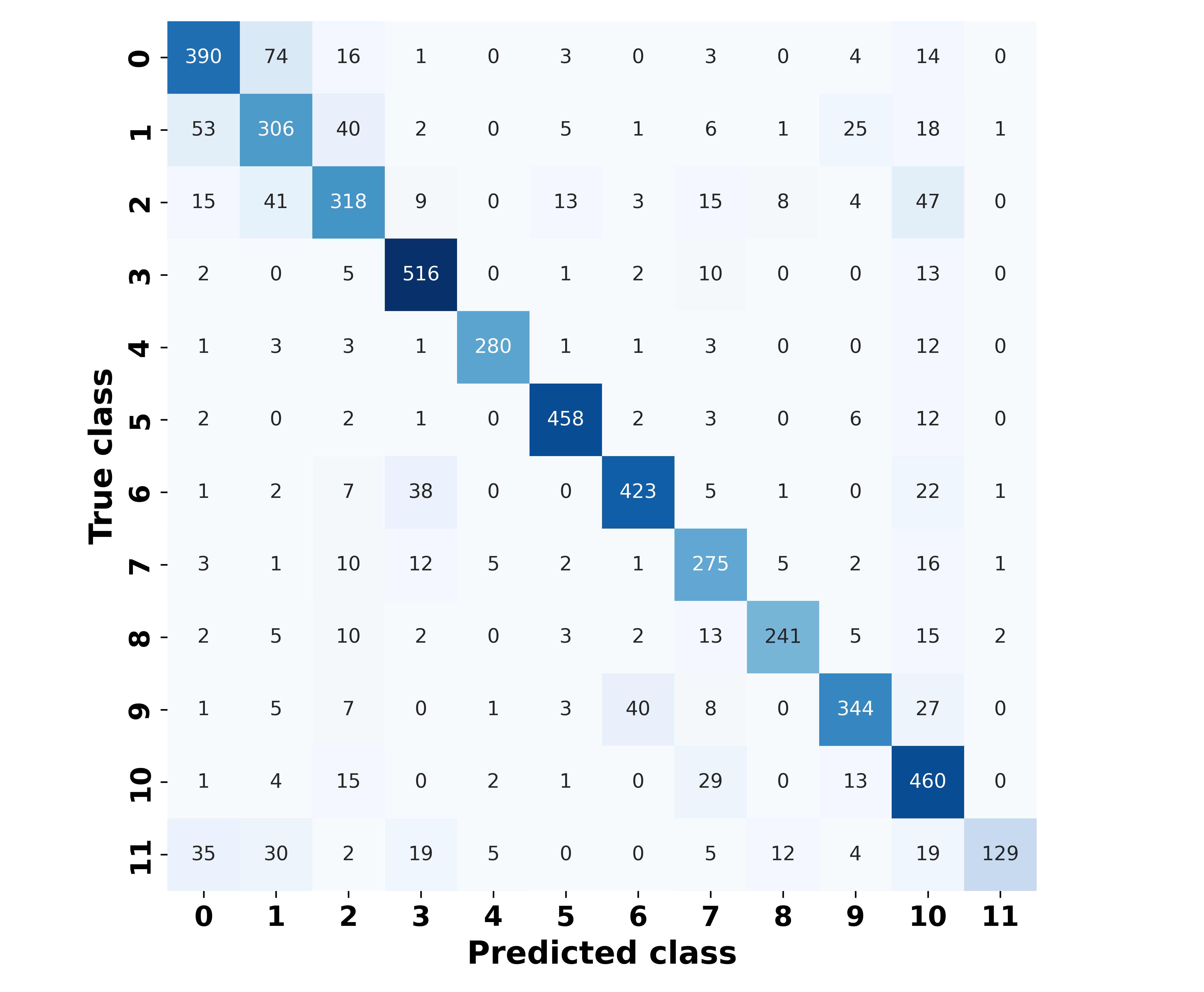
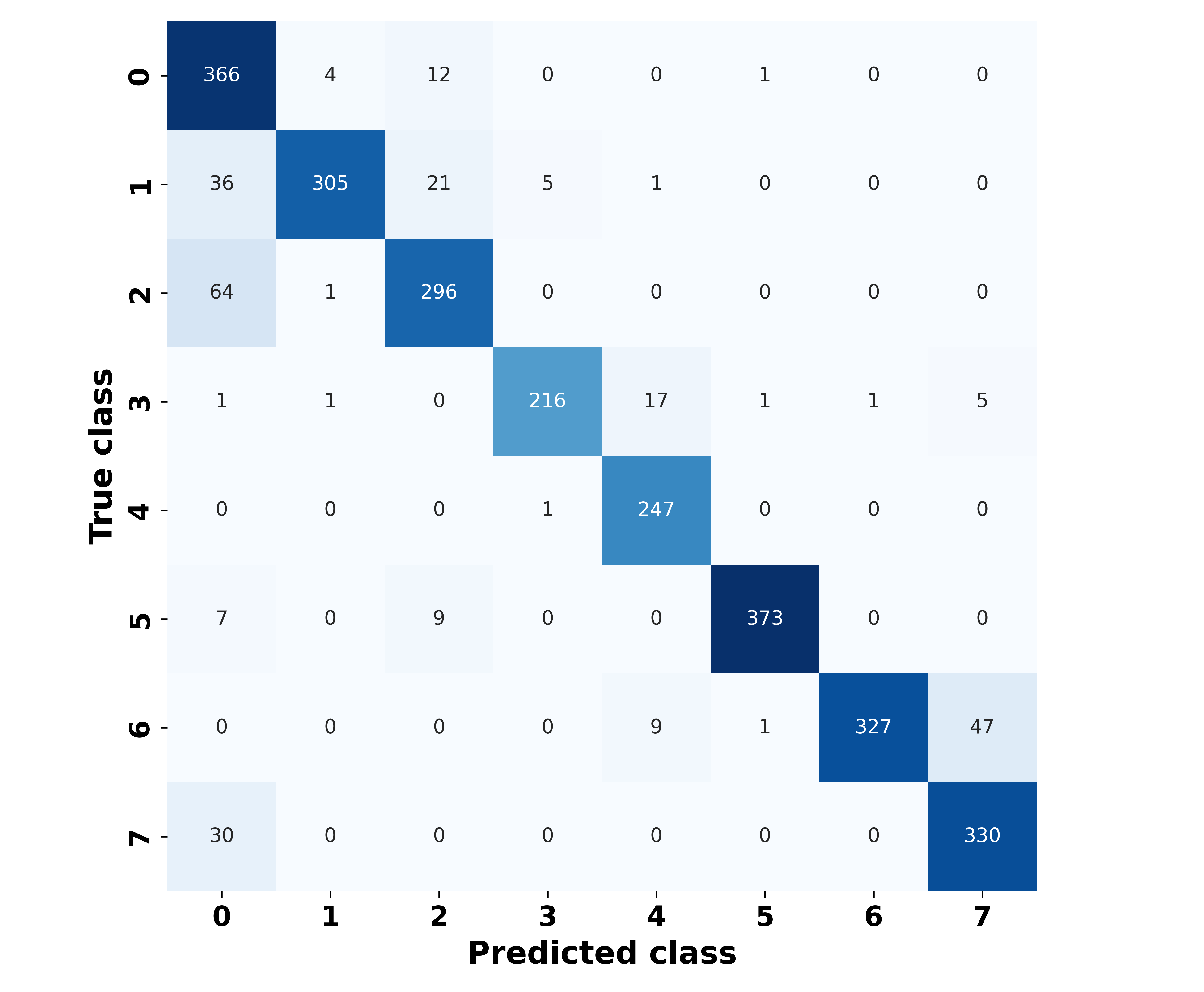
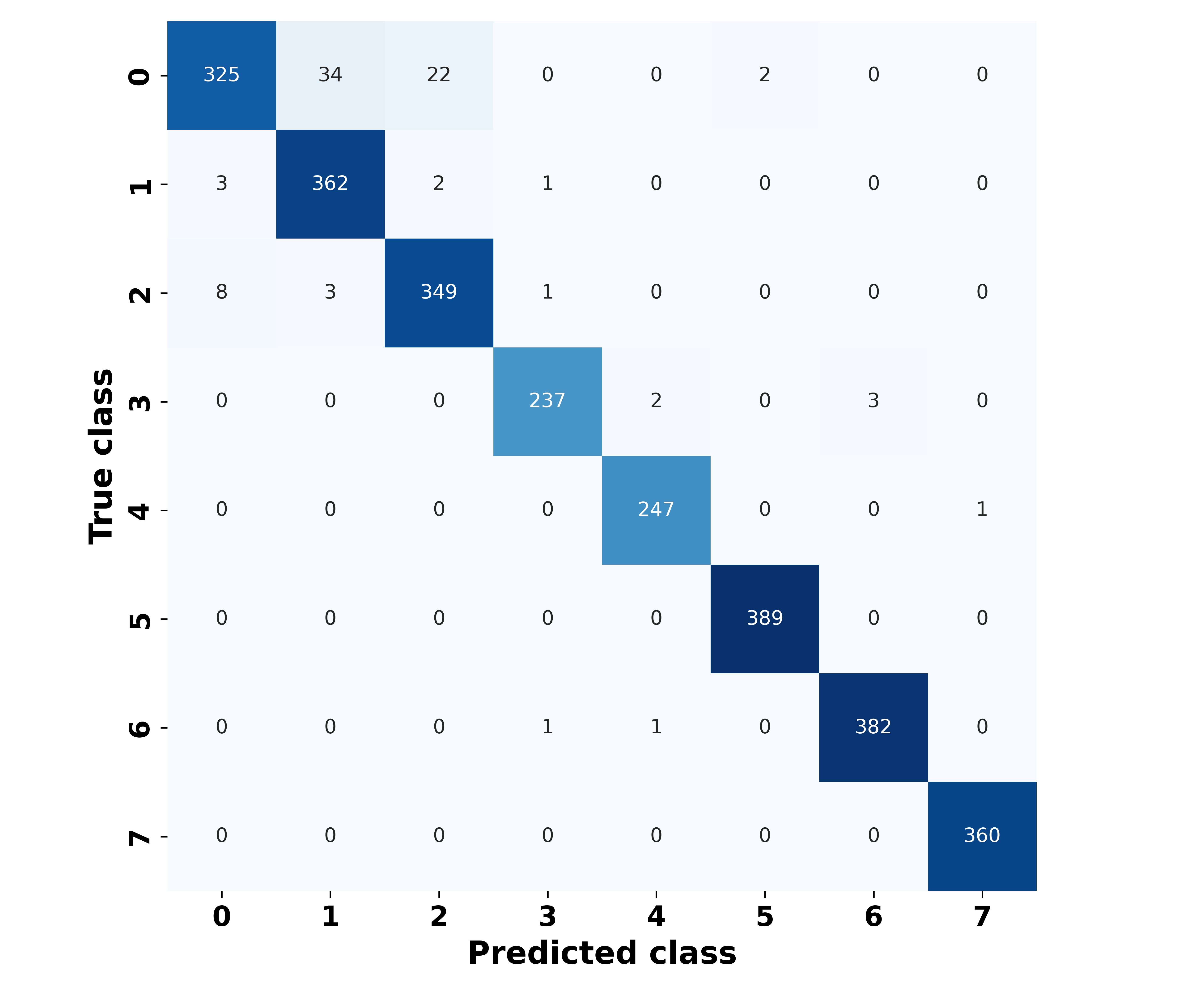
Figure 3: Confusion matrix for DeepConvLSTM on PAMAP2; severe off-diagonal confusion for geometrically similar actions.
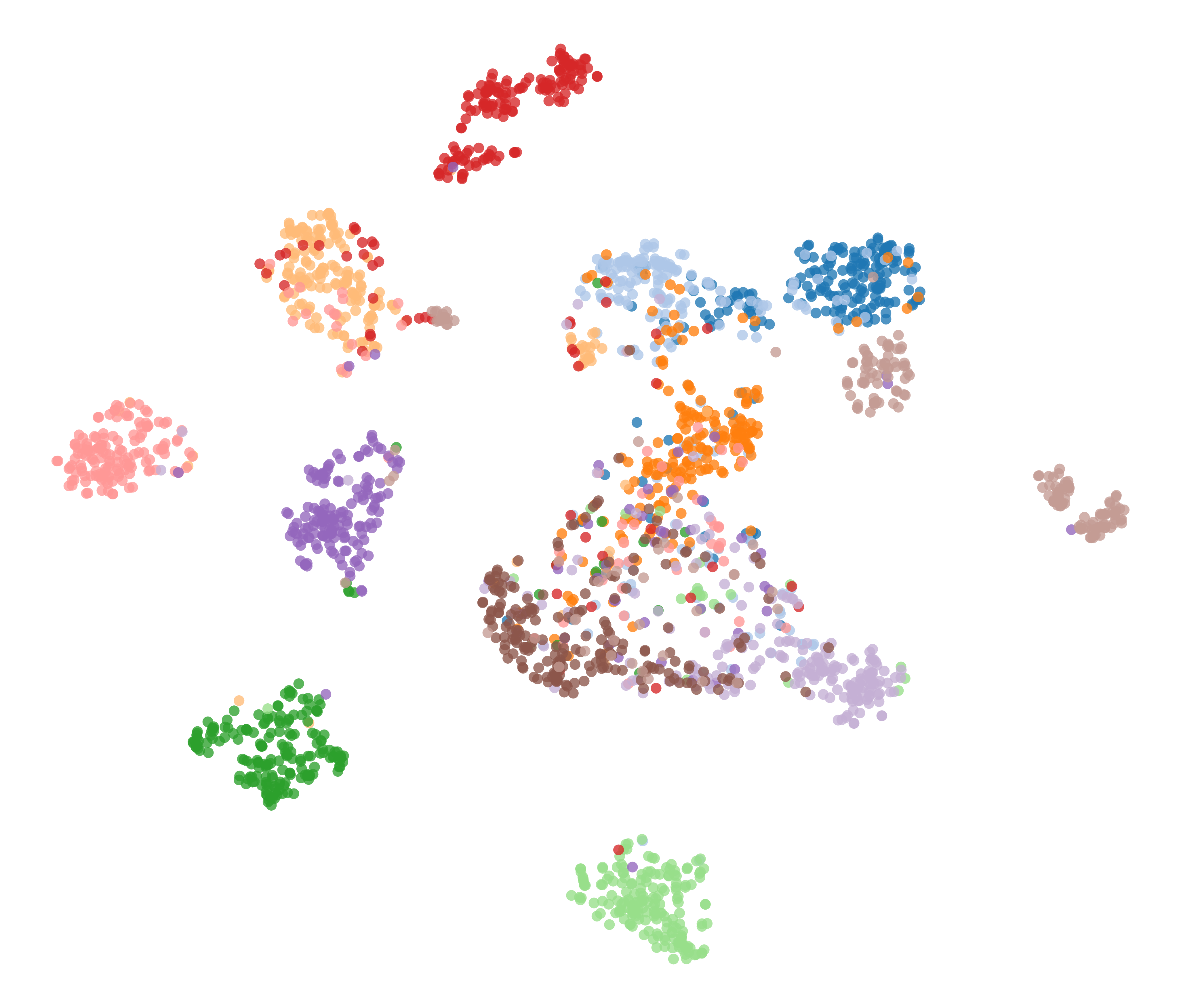
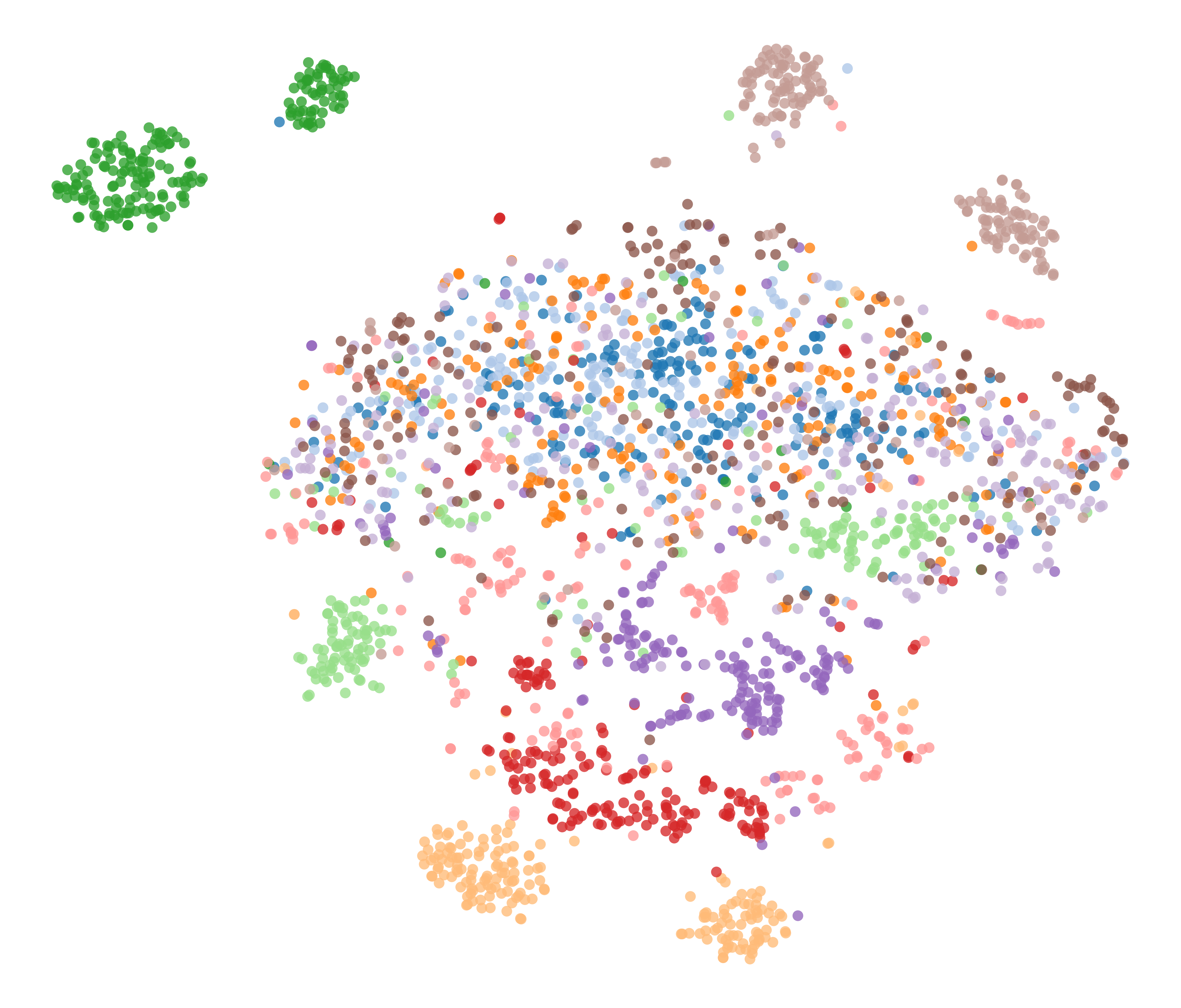
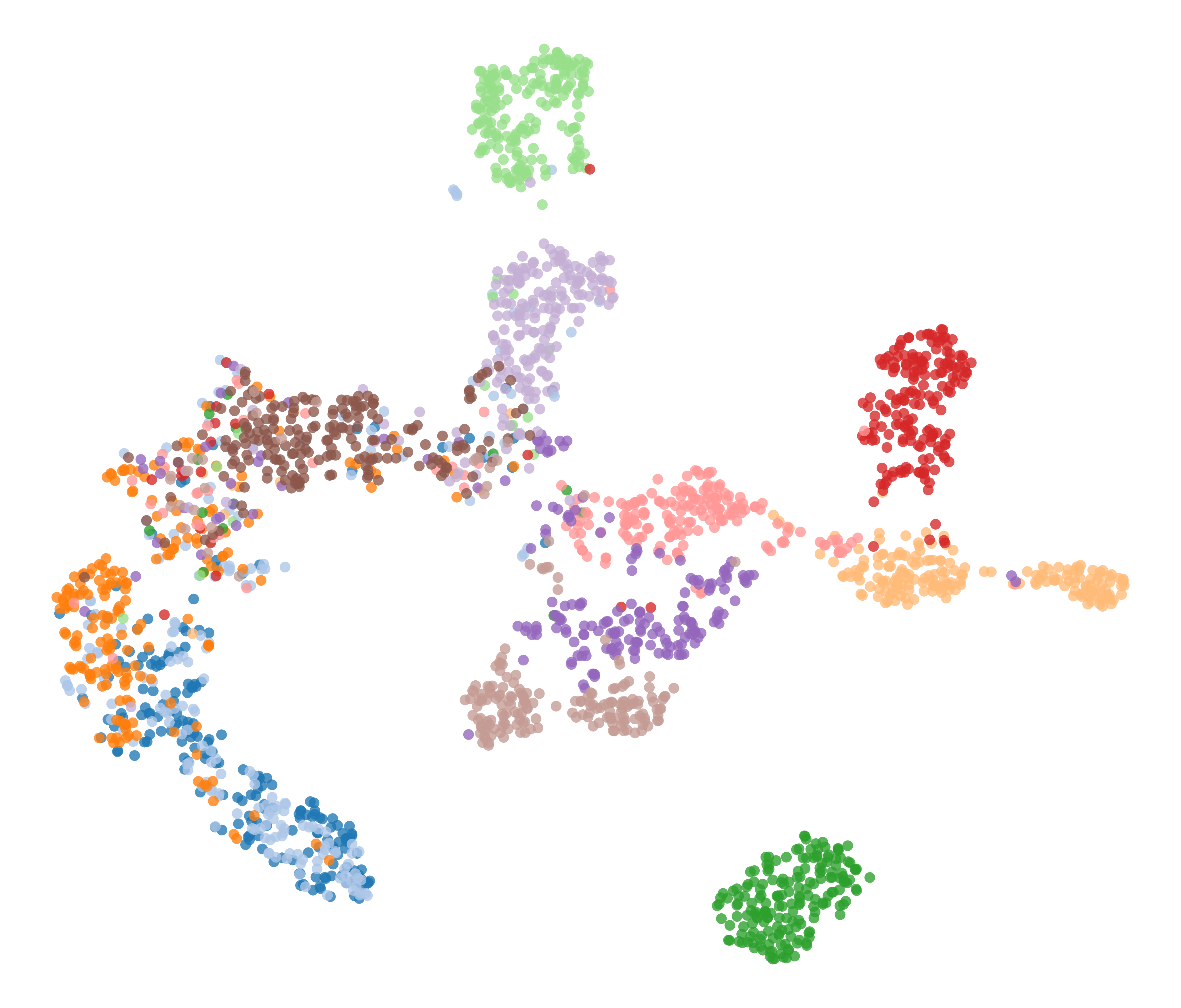
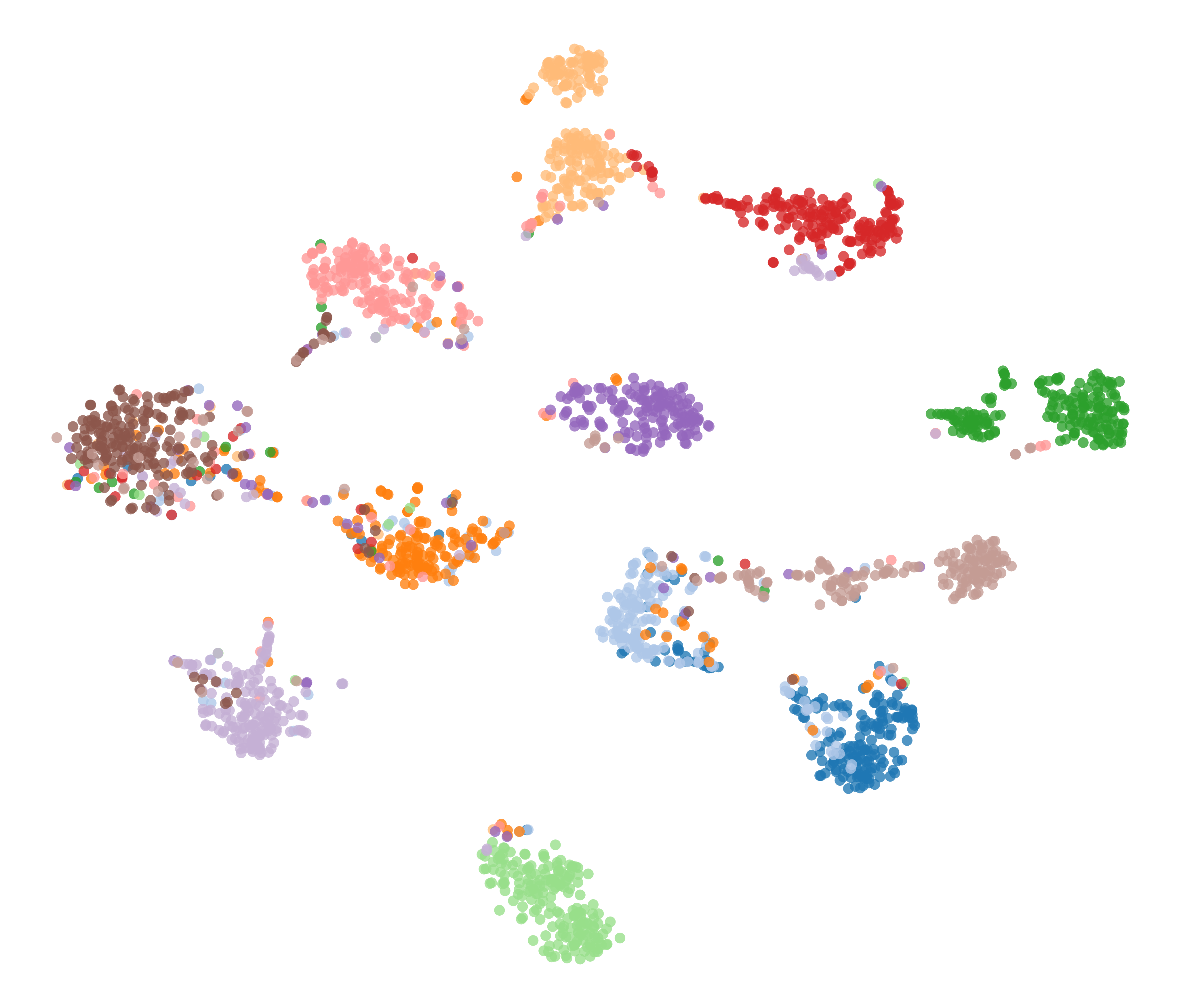
Figure 4: Confusion matrix for PAS-Net on PAMAP2; inter-class confusion significantly reduced due to explicit topology routing.
Energy Efficiency
PAS-Net executes nearly all inference using sparse, event-driven integer accumulates, reducing total energy consumption per inference by up to 98% compared to floating-point DNNs, with dynamic adaptation to input complexity. For PAMAP2, PAS-Net requires only 2.57 μJ (vs. 94.62~μJ for DeepConvLSTM), and on TNDA-HAR, the reduction is >99% compared to the most demanding attention mechanisms.
Responsiveness and Early-Exit
PAS-Net's temporal supervision allows sub-second response with minimal accuracy degradation for most activities. On datasets with highly discriminative kinematics, the model exits after a single downsampled patch, yielding >98% energy savings. Only ambiguous or transition-heavy inputs require full-horizon evaluation.
Ablations
The removal of adaptive topology routing or causal neuromodulation severely degrades performance, especially on multi-node, biomechanically complex tasks. The TSE loss is essential for both peak accuracy and for enabling robust, low-latency early exit.
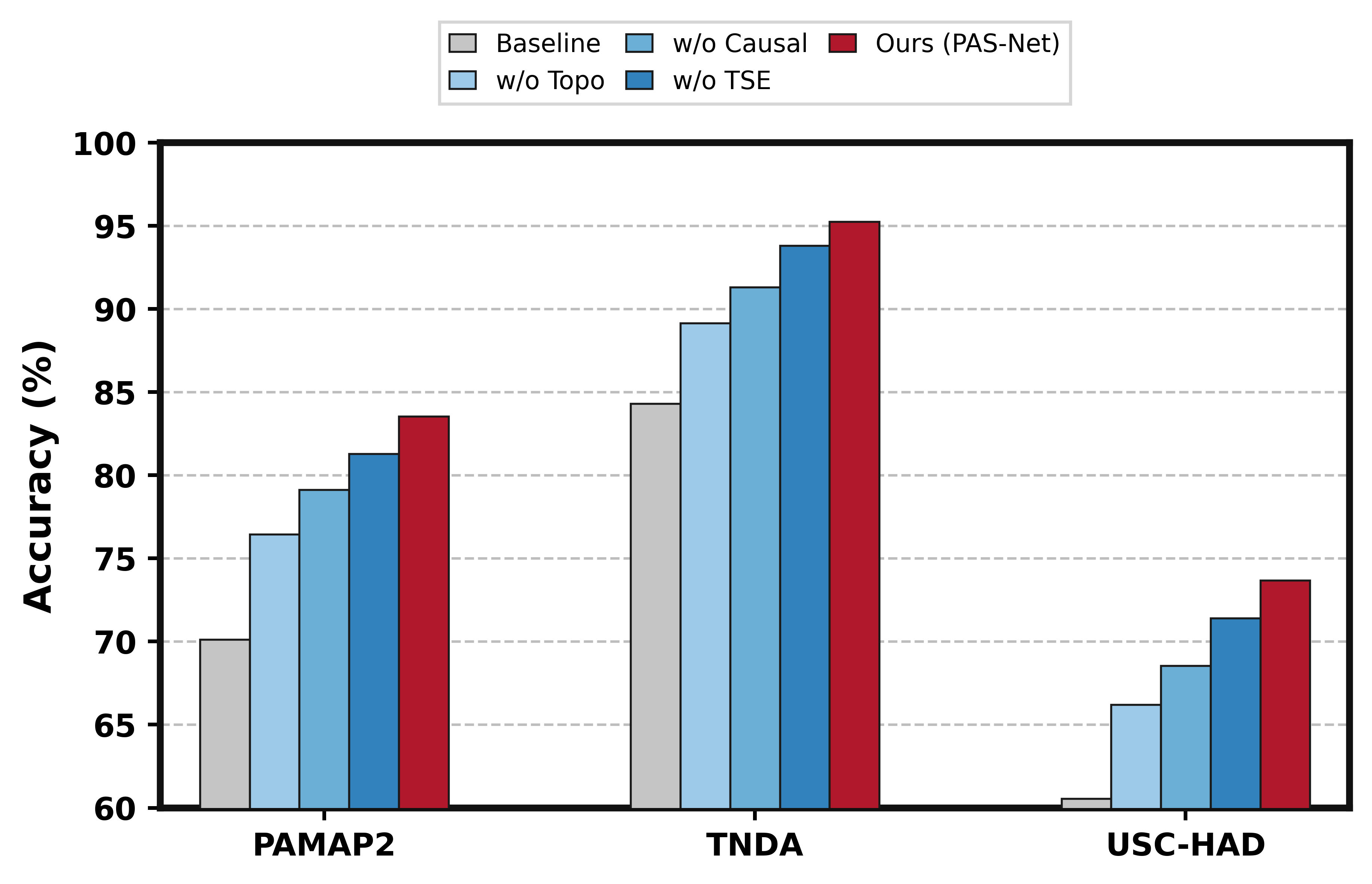
Figure 5: Ablation study on topology routing, causal neuromodulation, and TSE loss. Removal of any component substantially degrades performance across diverse datasets.
Theoretical and Practical Implications
PAS-Net fundamentally demonstrates that multiplier-free, event-driven SNNs, when augmented with explicit physical topology and causal modulation, can match or exceed DNNs in accuracy for complex, noisy, real-world sequences—without incurring the hardware infeasibility or latency of dense models. The method's architectural approach generalizes: any system that requires fast, low-power, always-on inference of streaming, structured sensor signals could benefit from explicit model-informed topology, adaptive firing thresholds, and confidence-based streaming supervision.
Practical deployment is limited only by the maturity of neuromorphic hardware. PAS-Net is architecture-ready for chips like Loihi and TrueNorth, and the paper's energy accounting is grounded in real CMOS operation counts. Robustness to sensor displacement and generalization to adversarial or highly non-stationary domains will depend on future advances in online domain adaptation and continual learning within event-driven frameworks.
Visualizing Biomechanical Awareness
Layerwise analysis shows PAS-Net learns physically meaningful anatomical dependencies (Figure 6), adaptively routing information across nodes in accordance with established kinetic chains, from localized self-connections to global joint coordination.
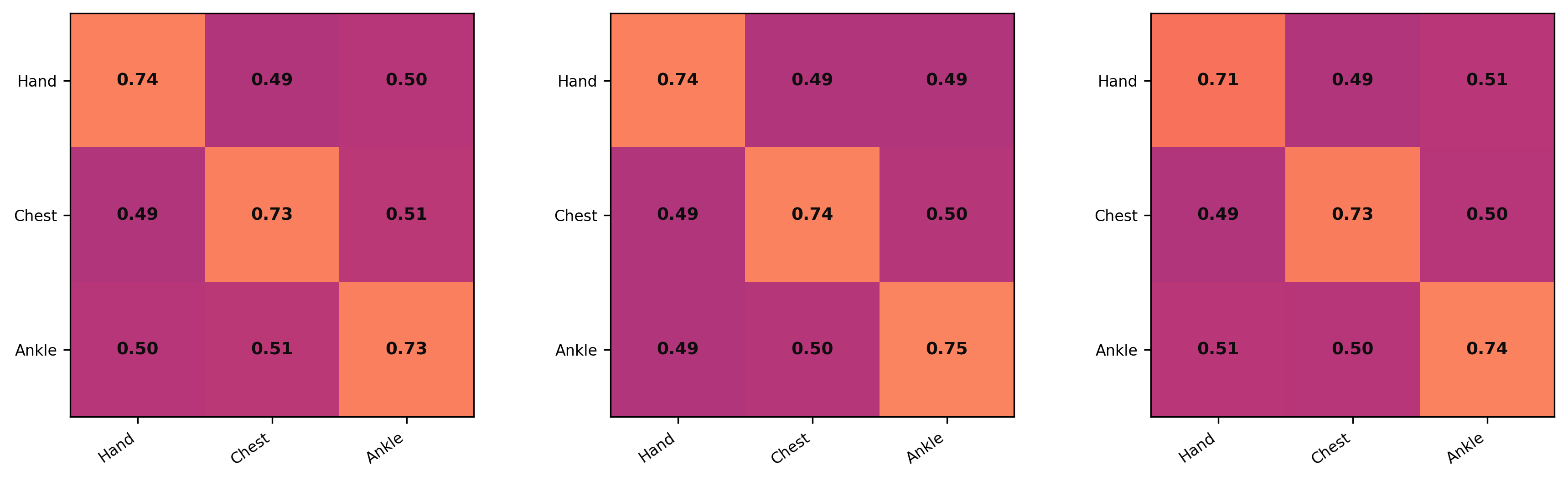


Figure 6: Layerwise visualization of learned symmetric topology masks for sparse human full-body topology (hand, chest, ankle sensors in PAMAP2).
Conclusion
PAS-Net achieves best-in-class accuracy on standard HAR benchmarks while reducing energy-delay product by more than an order of magnitude. Its explicit modeling of human kinematics, event-driven dynamic gating, and streaming early-exit strategy establish it as an archetype for genuinely deployable, robust, ultra-low-power wearable AI. The design principles underpinning PAS-Net are likely to influence not only IMU-based HAR but also other real-time, structured sensor interpretation problems in embedded contexts.
References
For the complete experimental details, comparative model implementations, datasets, and code, see "Towards Green Wearable Computing: A Physics-Aware Spiking Neural Network for Energy-Efficient IMU-based Human Activity Recognition" (2604.10458).