- The paper introduces PCA-Triage, a streaming algorithm that dynamically adjusts sensor sampling using incremental PCA while preserving fault detection performance under bandwidth constraints.
- It leverages inter-channel covariance to prioritize unique sensor signals, ensuring budget feasibility and robust anomaly detection with a safety floor and online interpolation.
- Empirical evaluations show near-full-data performance (F1=0.961) at 50% bandwidth on industrial IoT datasets, demonstrating its efficiency, adaptability, and scalability for edge AI.
PCA-Triage: Streaming Covariance-Aware Sensor Triage for Edge AI
Introduction
The paper introduces PCA-Triage, a streaming algorithm for adaptive sensor triage in industrial IoT settings facing stringent bandwidth constraints. Instead of uniformly reducing all sensor sampling rates, PCA-Triage utilizes incremental Principal Component Analysis (PCA) to dynamically allocate channel-wise sampling rates, explicitly exploiting inter-channel covariance to preserve fault detection performance under aggressive bandwidth budgets. The approach is unsupervised, compute- and memory-efficient, and operates online with zero trainable parameters.
The central insight leverages the empirical redundancy present in large sensor arrays, identified by the covariance structure Figure 1, so that the triage mechanism prioritizes sensors with high unique loading on principal axes while deprioritizing statistically redundant channels.
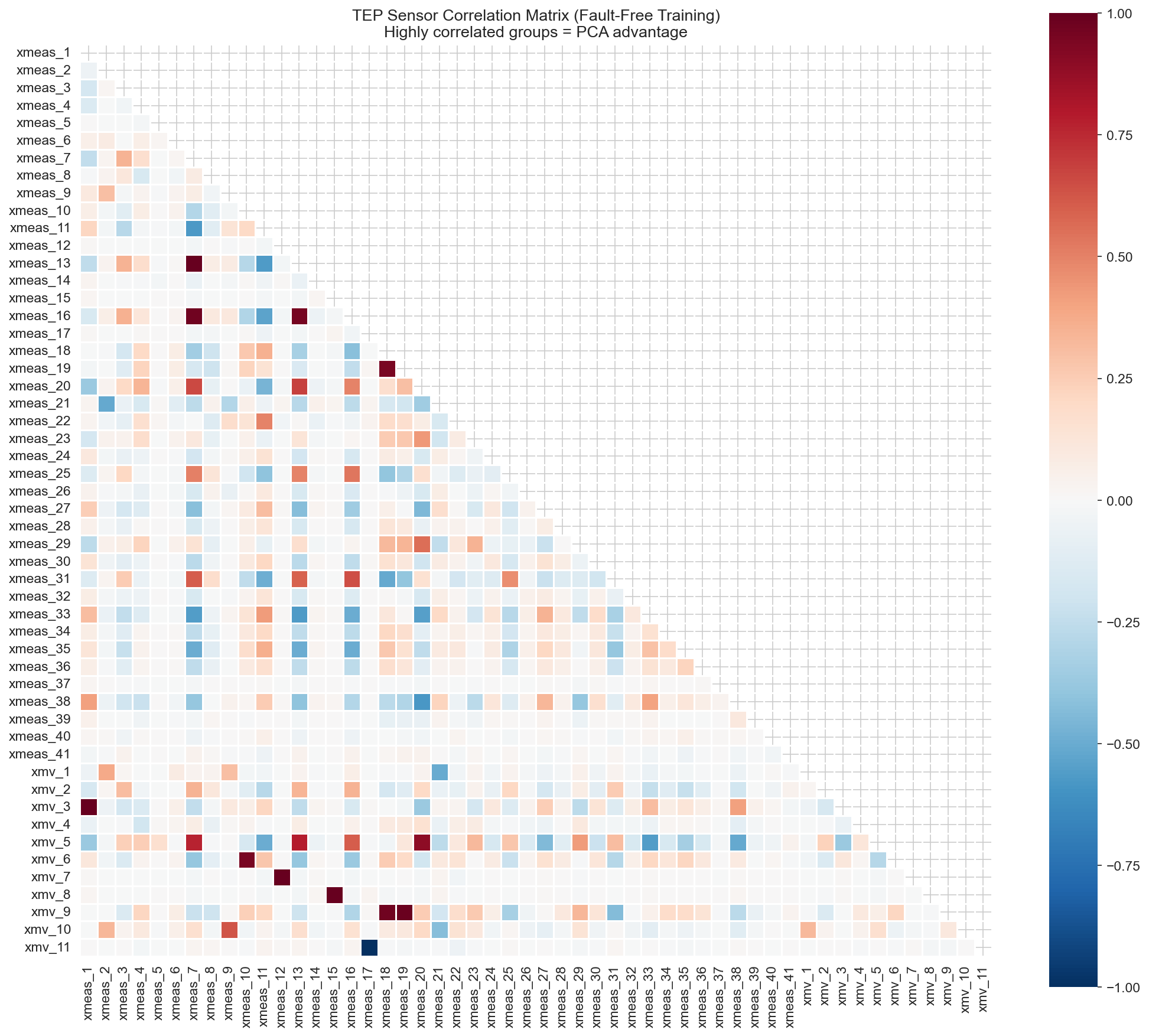
Figure 1: TEP sensor correlation matrix during fault-free operation. Highly correlated clusters represent redundancy that PCA-Triage exploits for efficient bandwidth allocation.
Methodology
System Pipeline and Allocation Mechanism
PCA-Triage operates in a sliding-window streaming manner. Each fixed-size sensor data window is processed by IncrementalPCA to extract principal axes and loadings Figure 2. Channel importance is quantified by a weighted sum of squared loadings, optionally blended with per-channel variance to mitigate the risk of suppressing weakly correlated, but potentially informative, channels. These scores are exponentially smoothed (controllable by a forgetting factor λ for adaptivity/stability trade-off) and passed through a power-law "sharpening" function to control allocation concentration.
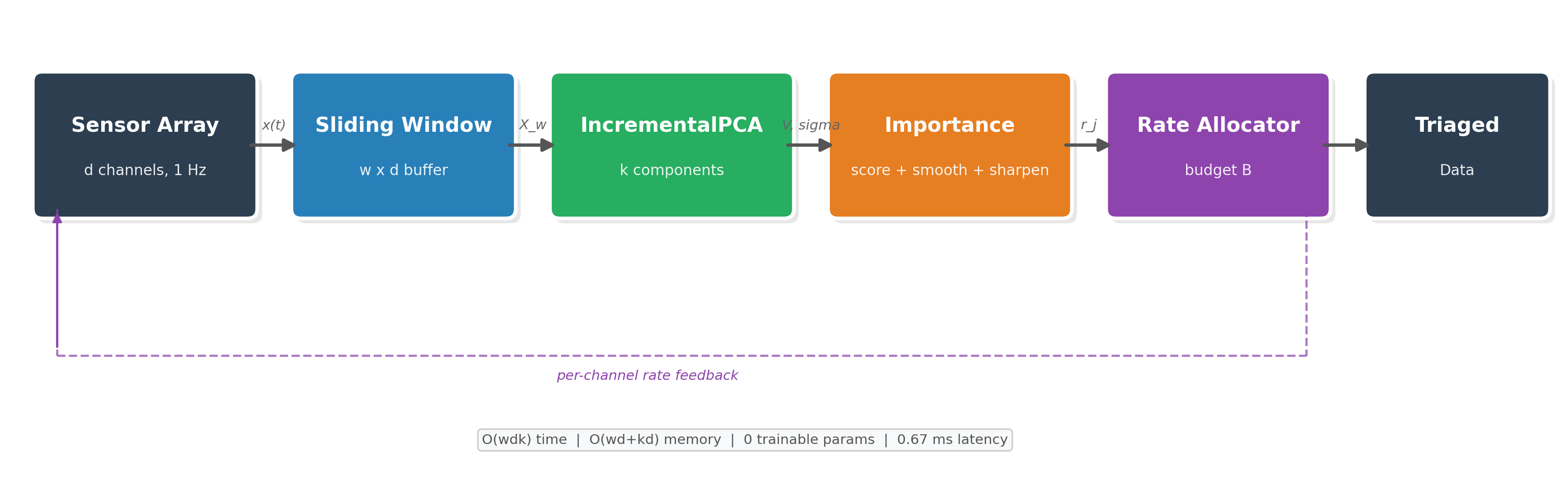
Figure 2: PCA-Triage system architecture: from windowed sensor data to smoothed channel importance and power-law sharpened rate allocation.
The computed importance drives the proportional allocation of channel-wise sampling rates, collectively satisfying a strict user-specified bandwidth constraint. A safety floor prevents complete silencing of any channel. Online missing data reconstruction is performed via linear interpolation, empirically superior to forward- or zero-fill, enhancing the resilience of the downstream anomaly detection pipeline.
Theoretical Guarantees
The paper provides formal analysis confirming:
- Budget feasibility: Allocated rates exactly satisfy the total bandwidth constraint before minimum-rate clipping, asymptotically approaching the feasibility even as dynamic adaptation occurs.
- Importance score convergence: Under stationarity and sufficient windowing, smoothed importance scores converge to population values determined by the process eigenspectrum.
- Covariance exploitation: With k<d principal components, PCA lossily projects correlated variables onto fewer axes, concentrating importance scores, while variance-based approaches cannot differentially allocate among correlated vs. independent variables.
- Adaptation control: The speed of importance reconfiguration under regime change is dominated by the interplay between λ and PCA model convergence, allowing explicit tuning of adaptivity-latency against steady-state accuracy.
Empirical Evaluation
Benchmarks and Baselines
Comprehensive evaluation covers 7 multivariate sensor datasets (8--82 channels) including the Tennessee Eastman Process (TEP), with a total of 9 baselines encompassing unsupervised (variance, thresholding), attention-based (LSTM, Transformer), and a supervised information-theoretic oracle. Downstream performance emphasizes F1 score for anomaly/fault detection, using consistent random seeds, classifiers, and reconstruction methods.
Figure 3 illustrates the diversity and complexity of raw sensor signals—smooth, oscillatory, and piecewise—which PCA-Triage must adequately triage without explicit knowledge of process transitions.
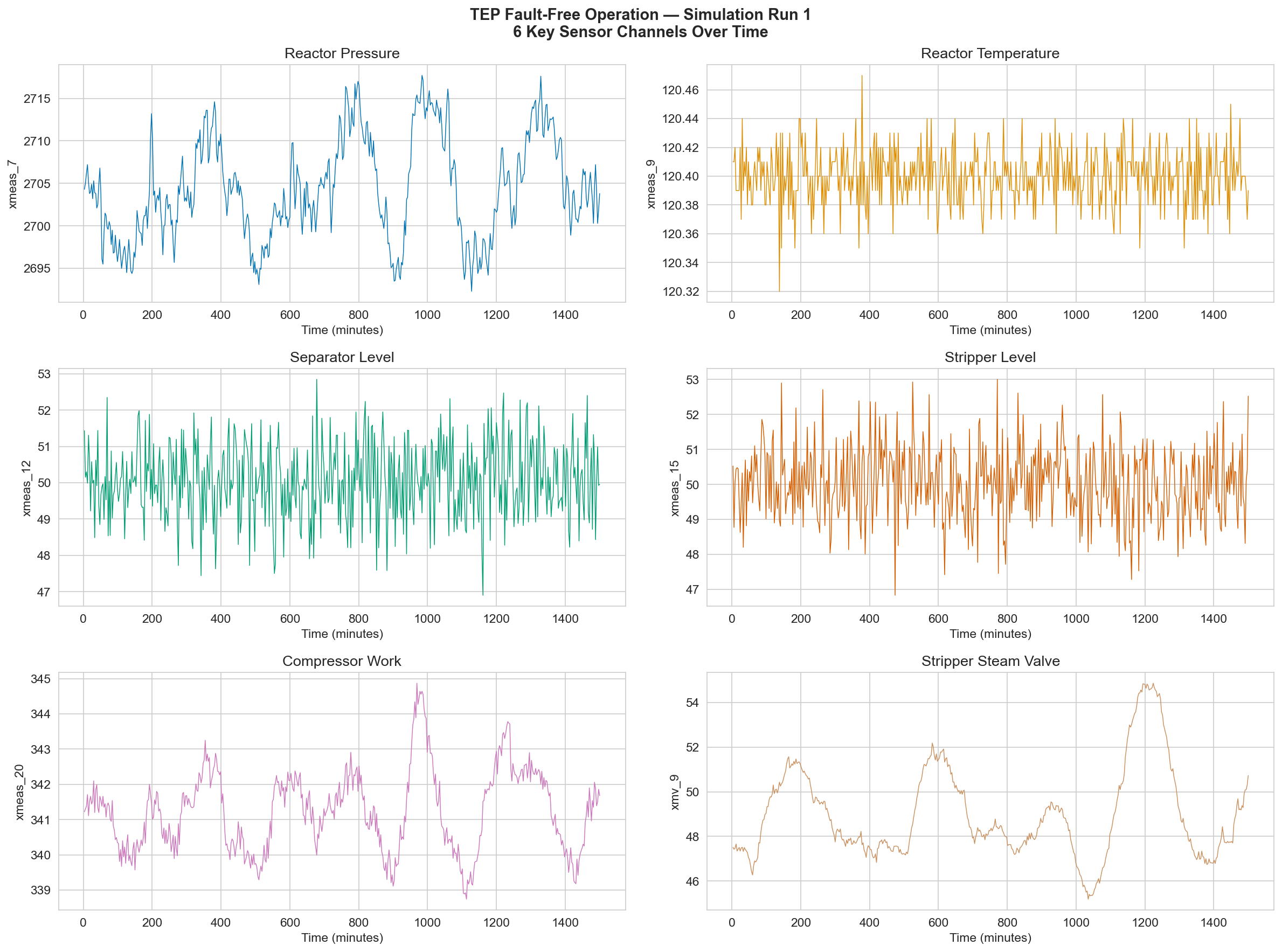
Figure 3: Representative TEP sensor channels: smooth, noisy, and discrete control signals, exemplifying the heterogeneity for triage.
Main Results
PCA-Triage achieves state-of-the-art unsupervised performance on datasets with high channel count and correlation, notably on TEP, SMD, and MSL, where it dominates the F1-bandwidth Pareto front Figure 4. At the operationally relevant 50% bandwidth, it yields F1=0.961±0.001 on TEP, within 0.1% of full-data, and uniformly outperforms non-covariance-aware baselines.
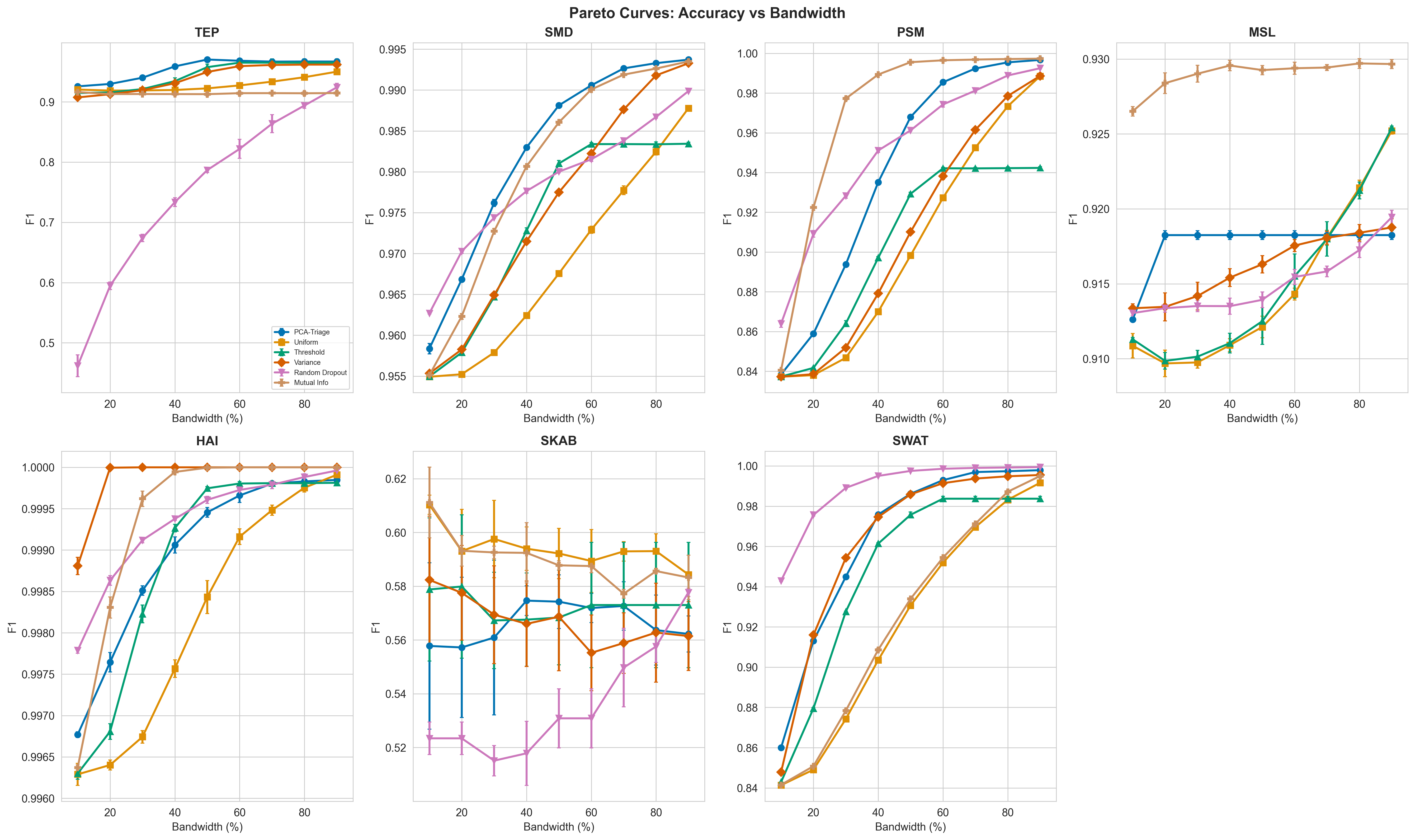
Figure 4: Pareto curves of F1 vs. bandwidth (6 datasets), with PCA-Triage dominating on high-correlation, high-channel settings.
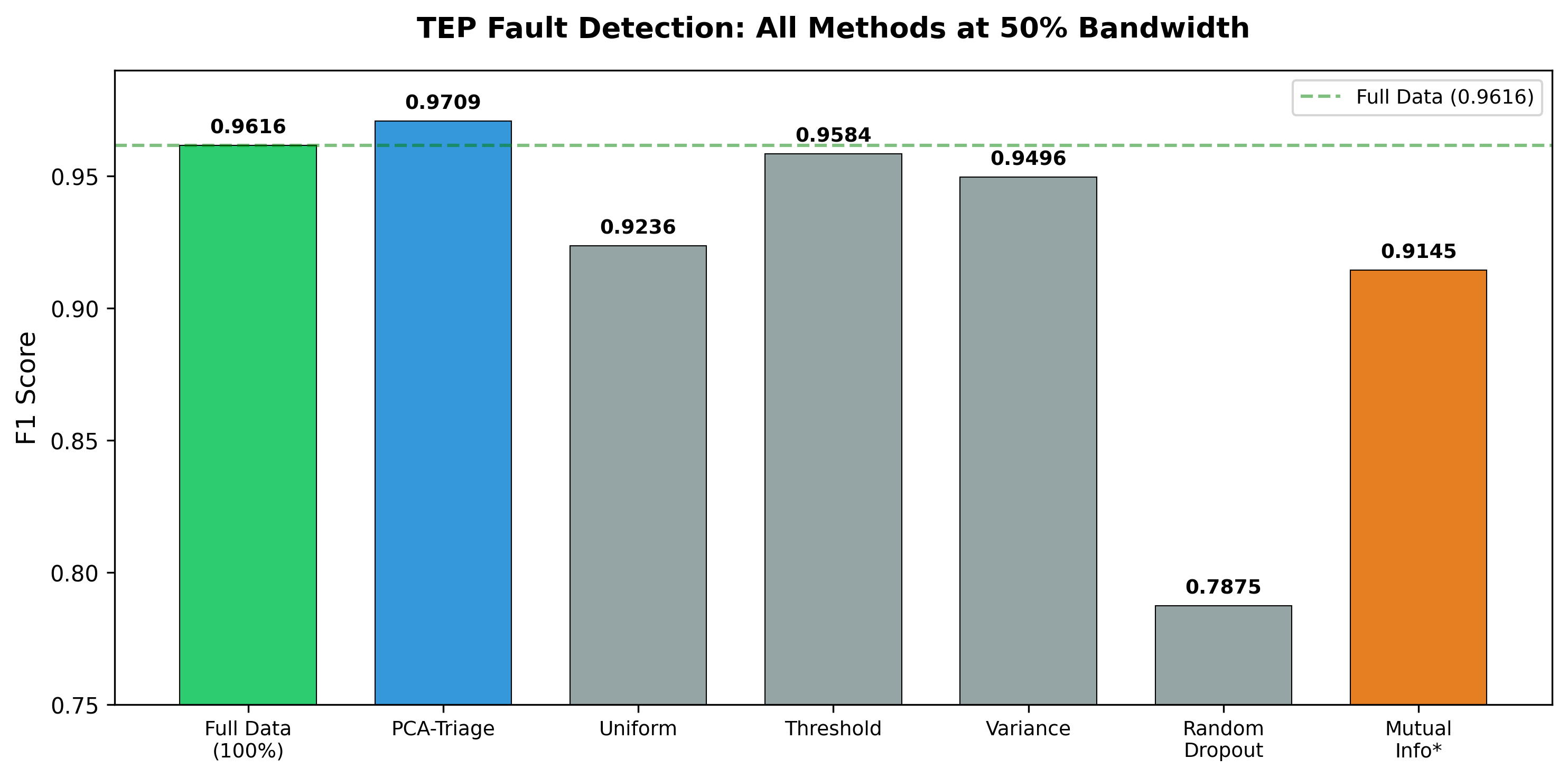
Figure 5: TEP F1 at 50% bandwidth; PCA-Triage is within 0.1% of the full-data regime.
On datasets where channel independence dominates (e.g., SKAB, 8 channels, limited structure), variance, thresholding, and PCA-Triage converge, validating the method's graceful degradation in absence of exploitable correlation.
Statistical testing across datasets confirms the practical significance of PCA-Triage ranks, although small-sample limits preclude formal Wilcoxon significance.
Adaptive and Interpretable Triage
PCA-Triage demonstrates strong adaptivity: as faults develop, importance and bandwidth allocation shift rapidly toward affected sensors (Figures 6, 7, 8). This behavior is directly governed by λ, enabling explicit control of the adaptivity-accuracy trade-off Figure 6.
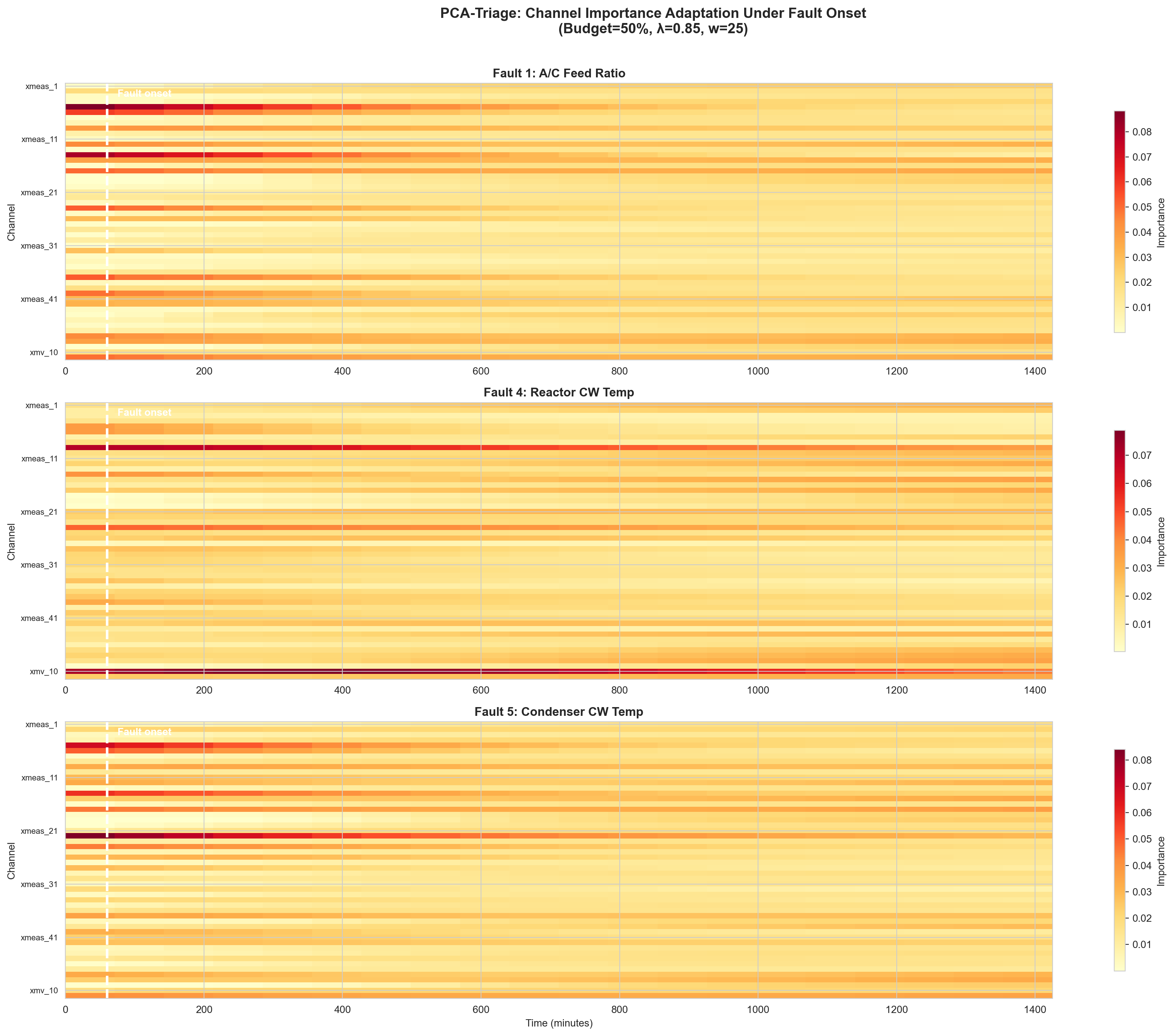
Figure 7: Importance adaptation under three TEP faults: clusters relevant to each fault shift in weight post-onset.
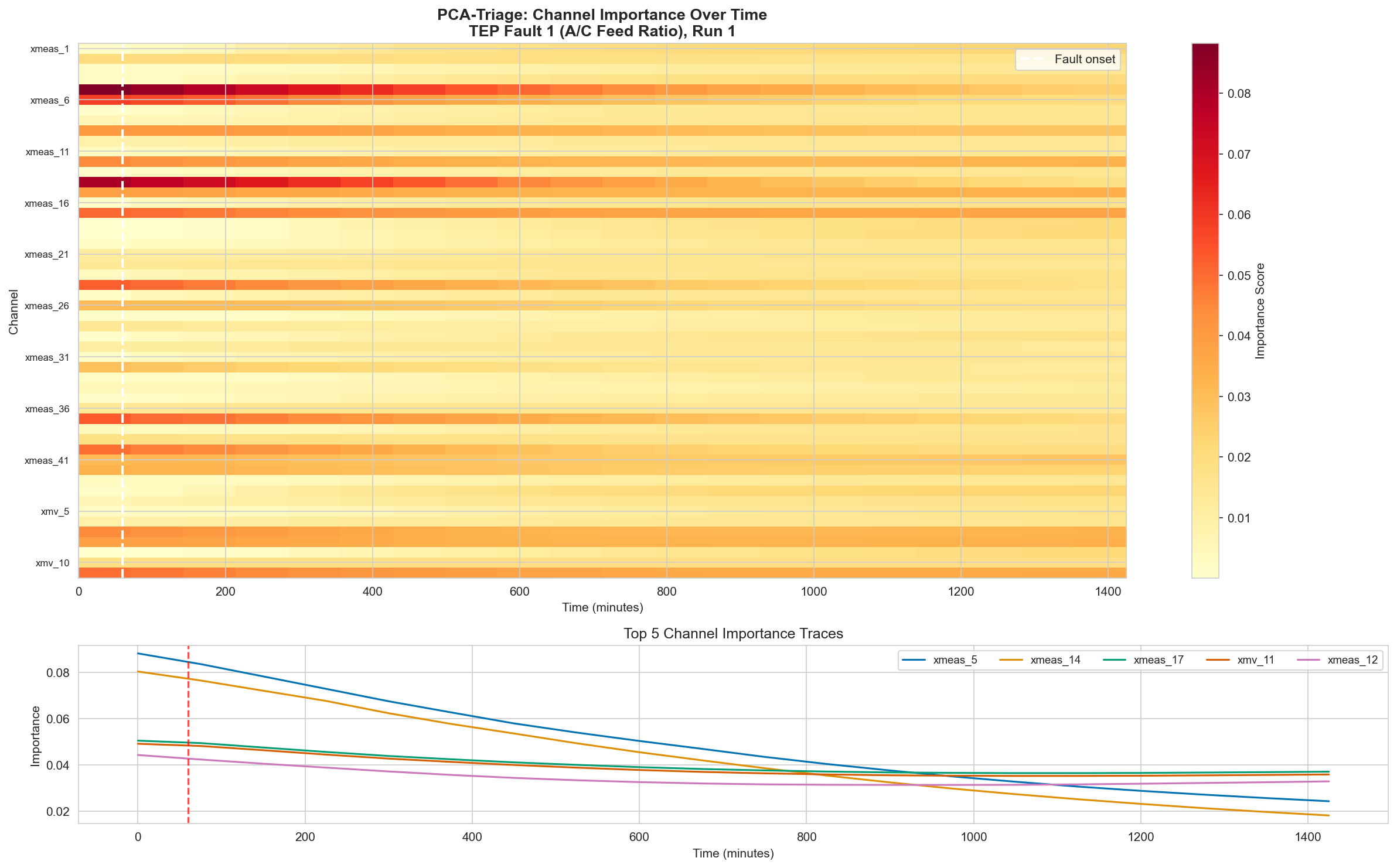
Figure 8: Detailed importance re-distribution in Fault 1: clear temporal signature in channel weights post-disturbance.
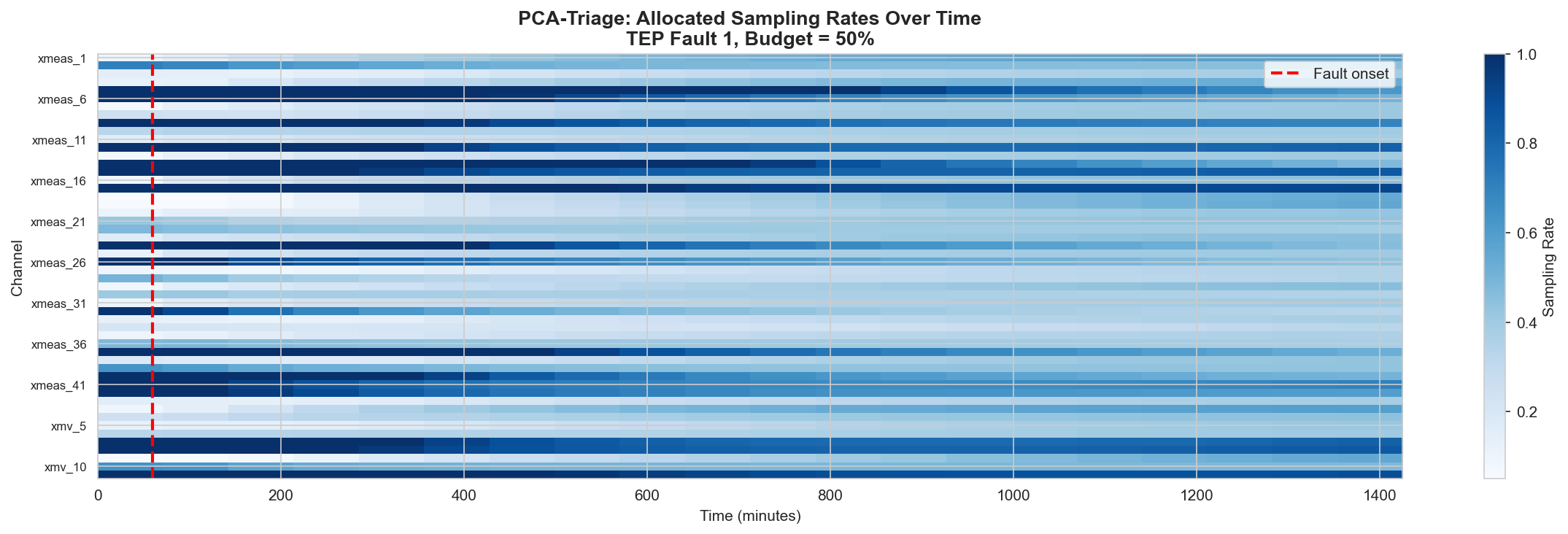
Figure 9: Allocated sampling rates realign toward fault-relevant sensors post-onset.
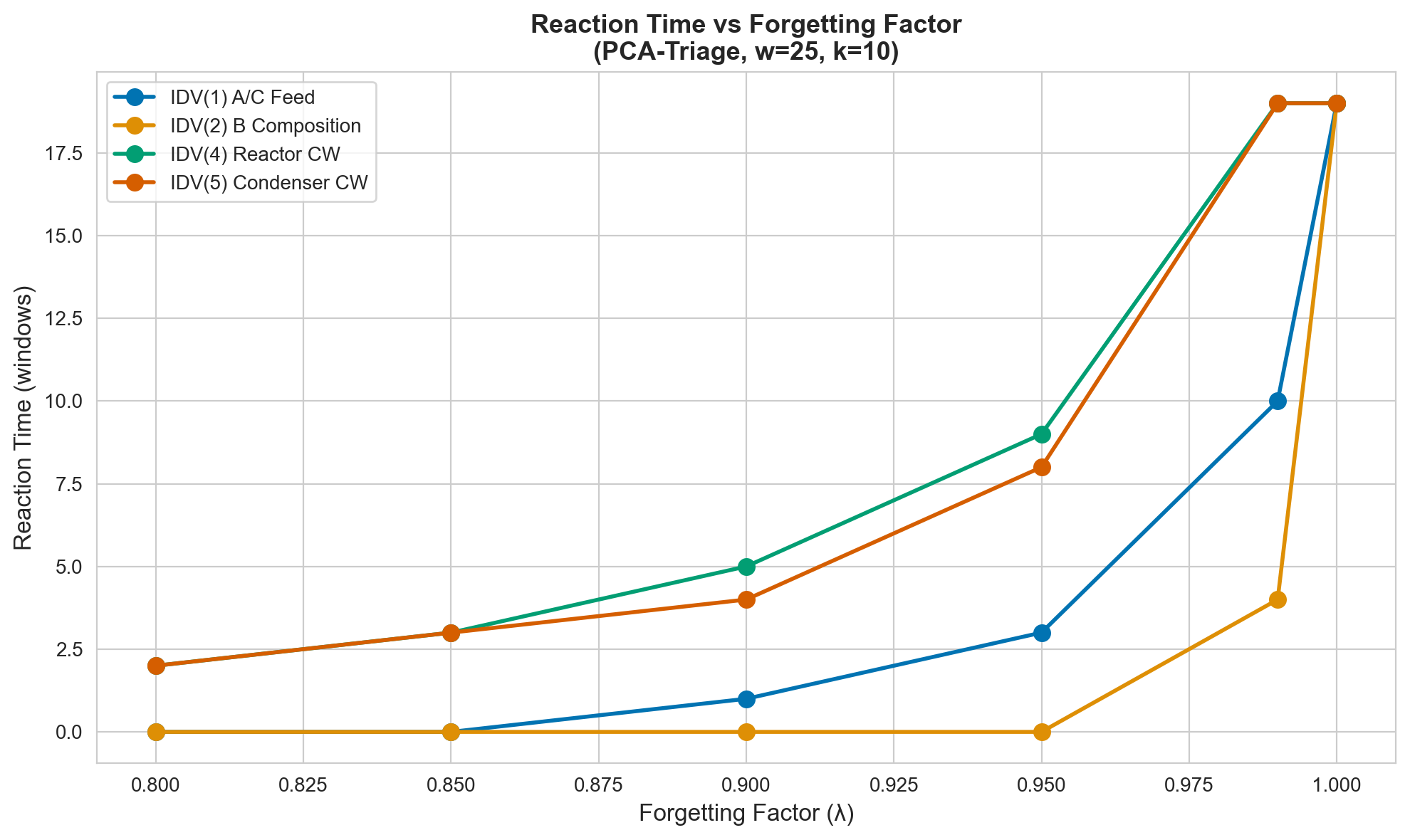
Figure 6: Reaction time (windows to significant reallocation) is an explicit function of forgetting factor λ.
Robustness, Scalability, and Cost
Ablation studies show accuracy is robust to k (principal components) and window size, with optimal operation in the k∈[3,10] range Figure 10. Compute cost is minimal (0.67ms/decision on CPU, Figure 11), and scales linearly with O(wdk) in channel count, supporting deployment up to 500 channels on edge hardware Figure 12.
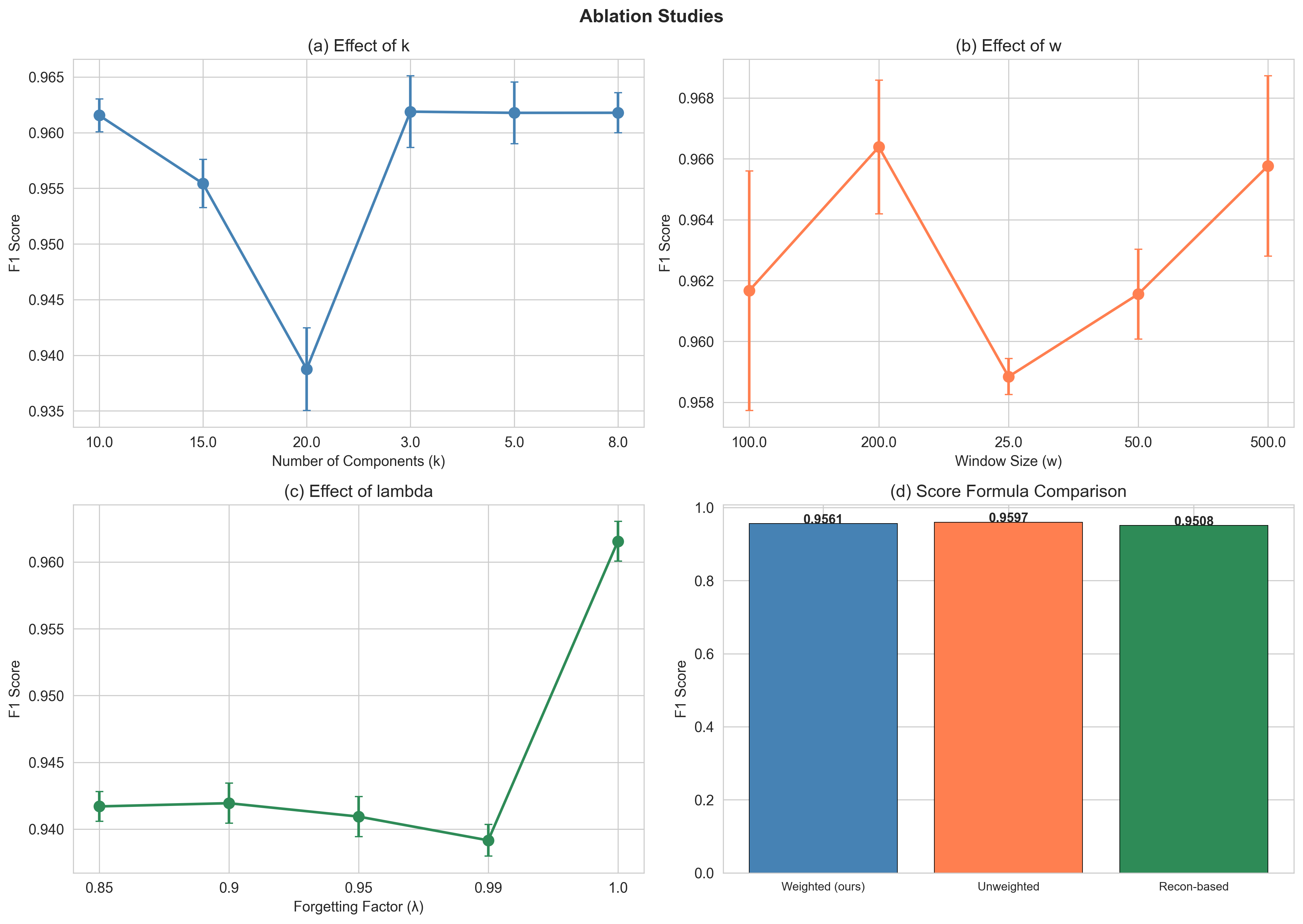
Figure 10: Ablation analyses: PCA-Triage is robust to parameter choices, with controlled accuracy-compute trade-offs.
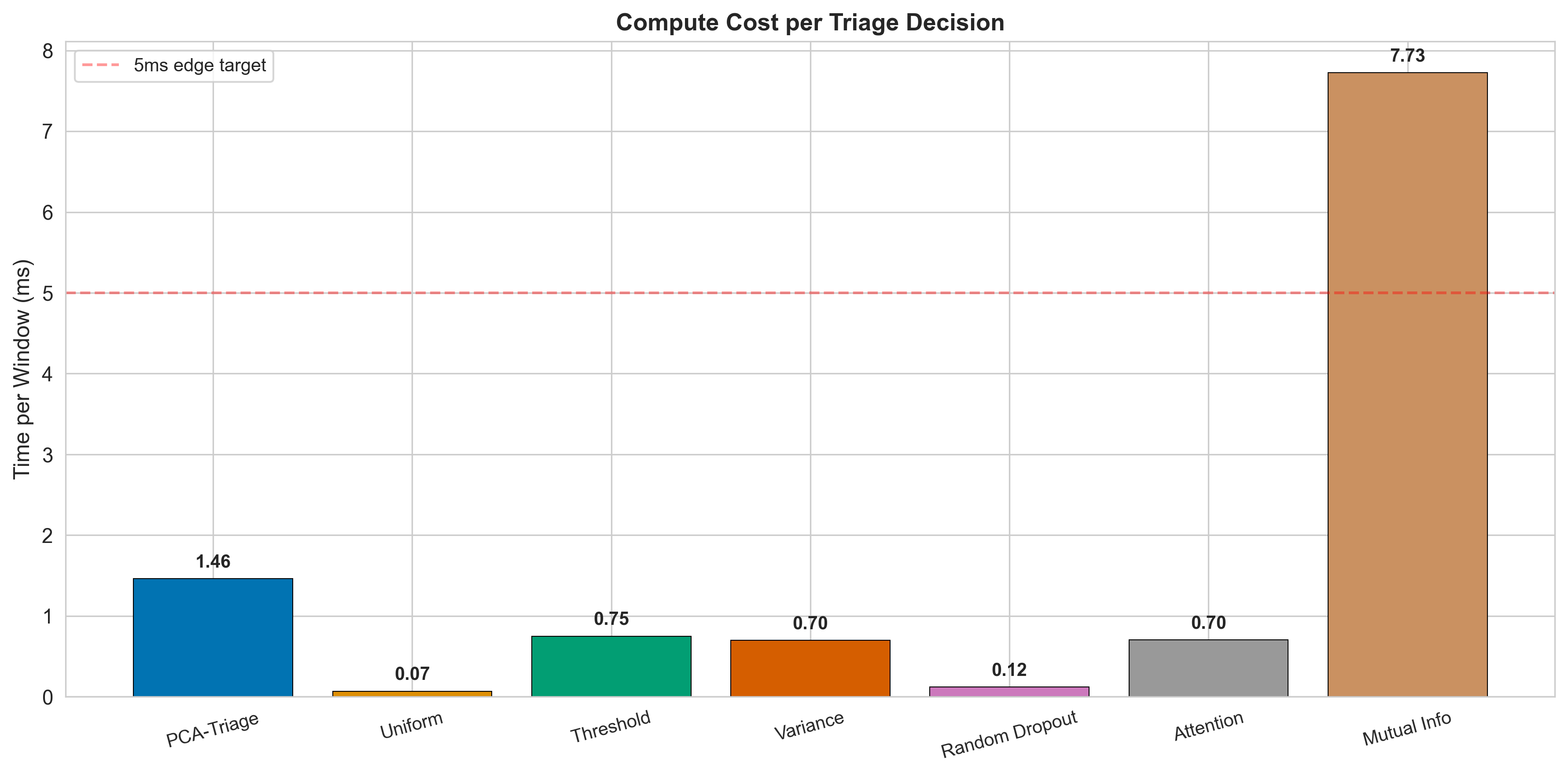
Figure 11: Compute latency and memory are well below edge device limits for PCA-Triage; order-of-magnitude difference to MI-based methods.
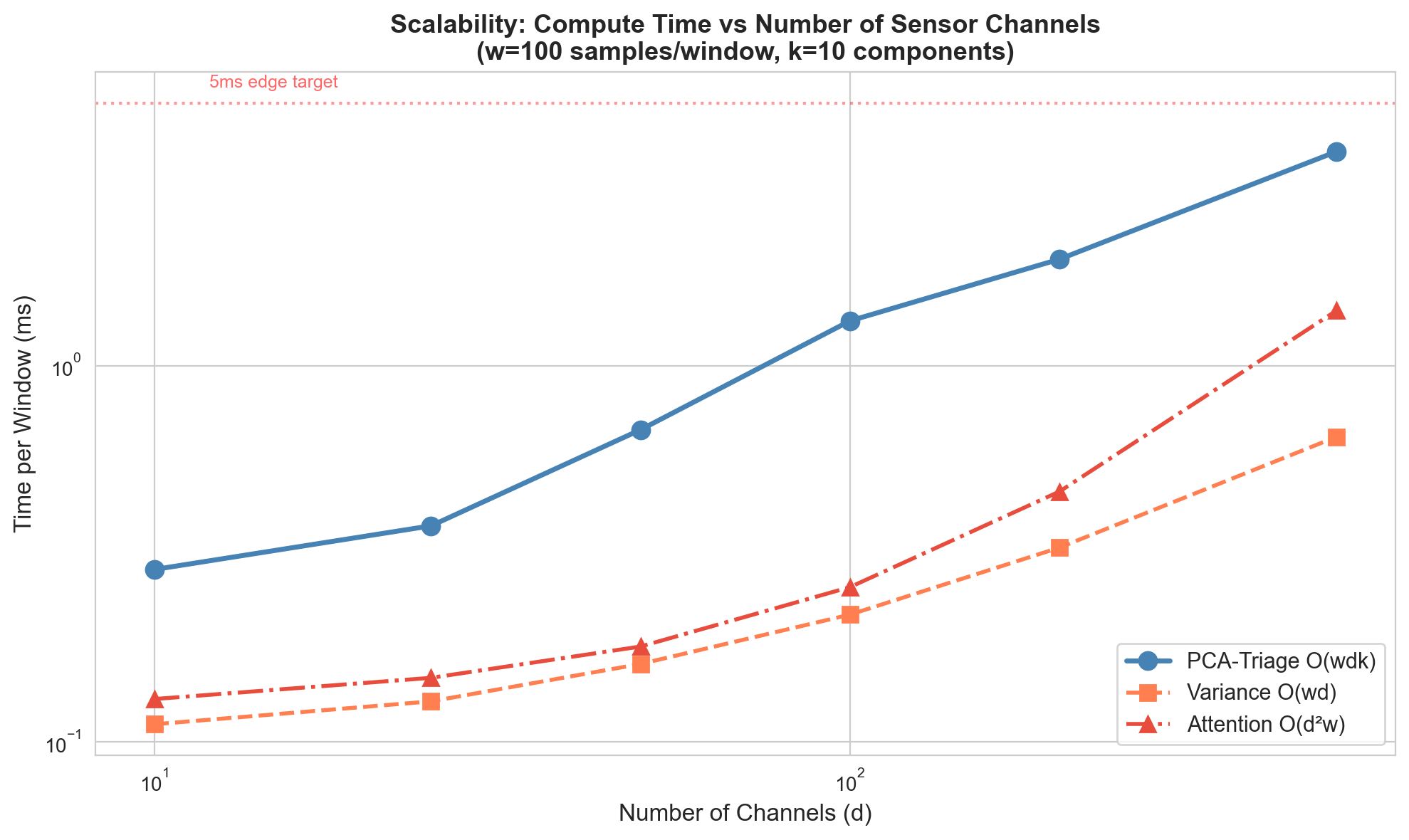
Figure 12: Scaling to high channel counts: PCA-Triage remains tractable and efficient versus quadratic-cost alternatives.
Perturbation experiments simulate packet loss, sensor noise, jitter, and clock drift, showing that PCA-Triage degrades only moderately. Theoretical and empirical evidence thus support robust edge deployment without the need for retraining, hyperparameter tuning, or human-in-the-loop configuration.
Limitations
The algorithm relies on the presence of nontrivial inter-channel correlation for its principal advantage; on independent-channel or small-d problems, gains are attenuated. The minimum-rate constraint and linear interpolation impose a bandwidth and latency overhead, and the off-line experimental protocol may not capture all real-time, closed-loop deployment nuances. Detection can be sub-optimal under abrupt and severe non-stationarities while PCA reconverges.
Implications and Future Directions
This work provides a viable mechanism for bandwidth-limited edge AI inference in industrial settings, safely and efficiently triaging sensor data based on real process redundancy rather than fixed or reactive rules. The method serves as a bridge between classic process monitoring and adaptive sensor selection in modern IoT, precluding the need for supervised labels, model retraining, or complex attention mechanisms untenable on edge platforms.
Future research can target federated incremental PCA for multi-gateway settings, learned scorer blending for automated parameter selection, and robust adaptation under rapid process shifts. The extension to joint spatial-temporal optimization and integration with on-device anomaly detection constitutes promising next steps toward robust, scalable, and interpretable edge AI in cyber-physical systems.
Conclusion
PCA-Triage delivers a compelling, zero-parameter, streaming, and unsupervised algorithm for channel-wise bandwidth allocation in sensor networks. The methodology's strong empirical performance, analytic backing, and operational feasibility under strict hardware constraints position it as a preferred candidate for deployment in bandwidth-constrained Edge AI inference scenarios. Its adaptability, interpretable operation, and theoretical rigor fill a gap in the literature between batch PCA-based diagnosis and fixed-rate adaptive sampling policies, with clear avenues for future research in adaptive, distributed, and hybrid sensor data selection.

