- The paper introduces a differentiable framework that recovers robust set-valued tournament solutions, notably the Top Cycle and Uncovered Set.
- It employs a neural-BTL model and soft thresholding operators to transform noisy pairwise comparisons into stable probabilistic core assignments.
- Empirical results demonstrate that STE outperforms traditional ranking methods under increasing non-transitivity and missing data.
Soft Tournament Equilibrium: A Differentiable Framework for Robust Set-Valued Agent Evaluation
Motivation and Problem Setting
The evaluation of general-purpose agents, particularly LLM-based agents, presents inherent challenges rooted in the non-transitive, cyclic nature of multi-agent interactions. Traditional evaluation frameworks, whether via Kemeny-Young/Condorcet-consistent rank aggregation, Elo/BTL models, or even spectral methods, impose a (possibly spurious) linear or total order on systems whose empirical preference structure is fundamentally intransitive. As a result, existing frameworks tend to conflate non-transitivity with noise, break meaningful cycles, and yield unstable, uncalibrated rankings. There is an axiomatic gap between the object of inference (rankings/ratings) and the algebraic structure of the empirical data, especially as agent pools, evaluation contexts, and data heterogeneity grow.
STE Framework: Core Concept and Technical Innovations
The Soft Tournament Equilibrium (STE) framework re-centers evaluation on set-valued tournament solutions, as motivated by classical social choice theory. The two canonical cores—the Top Cycle (aka Smith/Schwartz Set) and the Uncovered Set—are fundamentally robust to cycles, align with Condorcet-inclusion and monotonicity, and have established normative justification for non-transitive tournaments. The core contribution of STE lies in the construction of end-to-end differentiable operators that approximate these solutions directly from (noisy/contextual) pairwise data. STE thus shifts the evaluation object from a (possibly misleading) ranking or rating to a probabilistic assignment over set membership in the undominated core.
The pipeline consists of: (1) a context-conditioned pairwise probability model (e.g., neural-BTL), (2) construction of a soft adjacency matrix via differentiable thresholding of win probabilities, (3) differentiable soft reachability and covering operators for the Top Cycle and Uncovered Set, and (4) end-to-end joint optimization of model likelihood and regularizers on core-sharpness/calibration. The operators rely on smooth, stable approximations (e.g., softmax/softmin, matrix powers) that are fully GPU-accelerated and compatible with deep architectures.
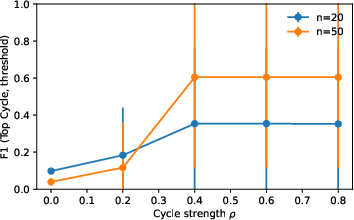
Figure 2: Core recovery F1 as a function of cyclicity (ρ) in the synthetic generator; higher F1 indicates better recovery of the ground-truth core under increasing non-transitivity.
Theoretical Properties
STE operators are rigorously shown to be consistent: as the temperature parameter τ→0, the differentiable core recovers the classical Top Cycle and Uncovered Set solutions (i.e., the hard 0/1 core as computed on the majority-rule tournament). Finite-temperature error bounds are exponential in 1/τ, and soft solutions inherit monotonicity and Condorcet-inclusion in probabilistic form. The stability of the core under estimation error and perturbations is supported by Lipschitz continuity results, and a PAC-style sample complexity analysis guarantees accurate recovery of the core (in the zero-temperature limit) with O(logn/δ2) samples per pair, where δ is a margin lower bound on win probability deviations.
Practical Implementation and Algorithmic Efficiency
STE supports context-conditioned evaluation, sparse comparison graphs, and calibration via regularized joint optimization of core likelihood and ECE (expected calibration error). The differentiable operators scale polynomially in the number of agents n and maximal path-length K, but practical runtimes are managed by path-length truncation, GNN-style message passing, and efficient sparse matrix multiplications.
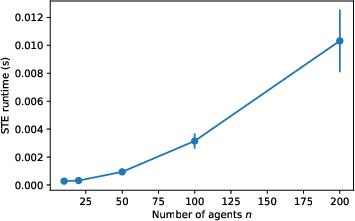
Figure 4: Wall-clock runtime as a function of agent count n, with fixed path length and estimator settings, demonstrating algorithmic scalability of the STE pipeline.
STE’s design is robust to missing data (gracefully treating unknown entries as uncertain) and is invariant to agent relabeling. It natively produces “gray zone” membership scores: in the presence of ambiguous or partial evidence, agents receive intermediate membership probabilities, enabling calibrated tie-breaking or core expansion at user-specified risk levels.
Empirical Results and Core Structure
Synthetic and real-world benchmarks demonstrate STE’s empirical effectiveness. On controlled tournaments with tunable cyclicity (ρ), STE achieves near-perfect core recovery as cycles emerge, outperforming ranking-based baselines which deteriorate as non-transitivity increases.
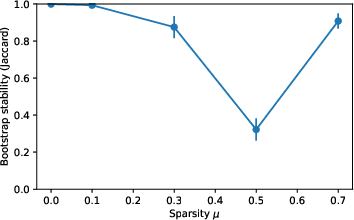
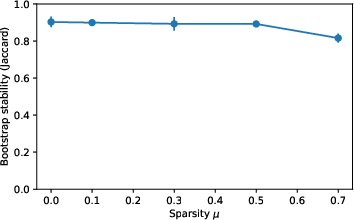
Figure 1: Jaccard stability of recovered Top Cycle cores under increasing observation sparsity (μ); higher stability reflects robustness to missing data.
Benchmarks on LLM competition datasets (e.g., Chatbot Arena, AgentBench) reveal that the empirical core often contains multiple credible undominated agents, with STE membership probabilities exposing cyclic or context-dependent dominance structures that ranking-based approaches cannot capture. Probabilistic membership is well-calibrated, as assessed by reliability diagrams and low Brier/ECE on synthetic ground-truth cores. STE also supports robust bootstrap-based confidence estimation for core inclusion.
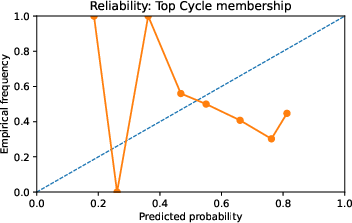
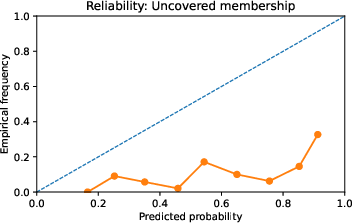
Figure 5: Jaccard stability of Uncovered Set cores as comparison sparsity (τ→00) increases, illustrating STE's resilience to incomplete data.
Implications and Future Directions
The principal implication is that agent evaluation in the LLM/multi-agent era must shift focus from fragile rankings to robust, interpretable set-valued cores, and that differentiable combinatorics makes this shift computationally and statistically tractable even in large, noisy, or context-rich settings.
Potential future developments include:
- Extension to richer tournament solutions: Differentiable analogues of Banks set, Minimal Covering Set, and others.
- Active learning for core-efficient evaluation: Using STE gradients to allocate comparison resources maximally for core resolution.
- Bayesian STE: Full posterior quantification of core inclusion under uncertainty.
- Multi-task aggregation: Hierarchical or context-weighted core analysis supporting more nuanced benchmarking in heterogeneous domains.
- Causal STE: Computing counterfactual interventions required for agents to achieve core inclusion (“what would agent τ→01 need to improve to join the core?”).
STE thus provides both a normative and practical foundation for robust, cycle-aware, and statistically-honed agent benchmarking in modern AI systems.
Conclusion
Soft Tournament Equilibrium advances the theoretical and algorithmic paradigm for agent evaluation under non-transitivity, offering robust, differentiable, and context-sensitive core solutions that are axiomatically and empirically superior to ranking-based alternatives for general-agent domains. Its capacity to deliver calibrated, probabilistic core assignments supports informed deployment decisions and provides diagnostic insight into the complex landscape of multi-agent capability—a critical need as AI systems become increasingly general, interactive, and competitive.