- The paper demonstrates that decentralized adaptive policies, powered by agent-based simulation, can effectively manage complex journal workflows.
- It shows how policy-level controls adjust triage thresholds and reviewer allocations in response to aggregate signals, maintaining system stability under stress.
- Key outcomes include improved auditability, resilience against adversarial behavior, and incentive-aligned credit dynamics for authors and reviewers.
ADAPT: AI-Driven Decentralized Adaptive Publishing Testbed
Overview
The "ADAPT: AI-Driven Decentralized Adaptive Publishing Testbed" (2604.04077) introduces a framework that reconceptualizes journal management as a closed-loop, policy-driven governance system instead of a static, editor-centric workflow. ADAPT leverages agent-based simulation to investigate the systemic effects of decentralized and adaptive editorial protocols, focusing on auditability, interpretability, and stress response. The framework explicitly models authors, reviewers (both human and AI), and editorial roles as pools of agents whose behaviors are dynamically coupled by system-level policy controllers. This architecture targets persistent stressors in scholarly publishing, including submission surges, reviewer fatigue, peer disagreement, quality drift, and coordinated adversarial behavior, by enabling an auditable, adaptive, and non-permanent governance mechanism without centralizing final decision authority in AI systems.
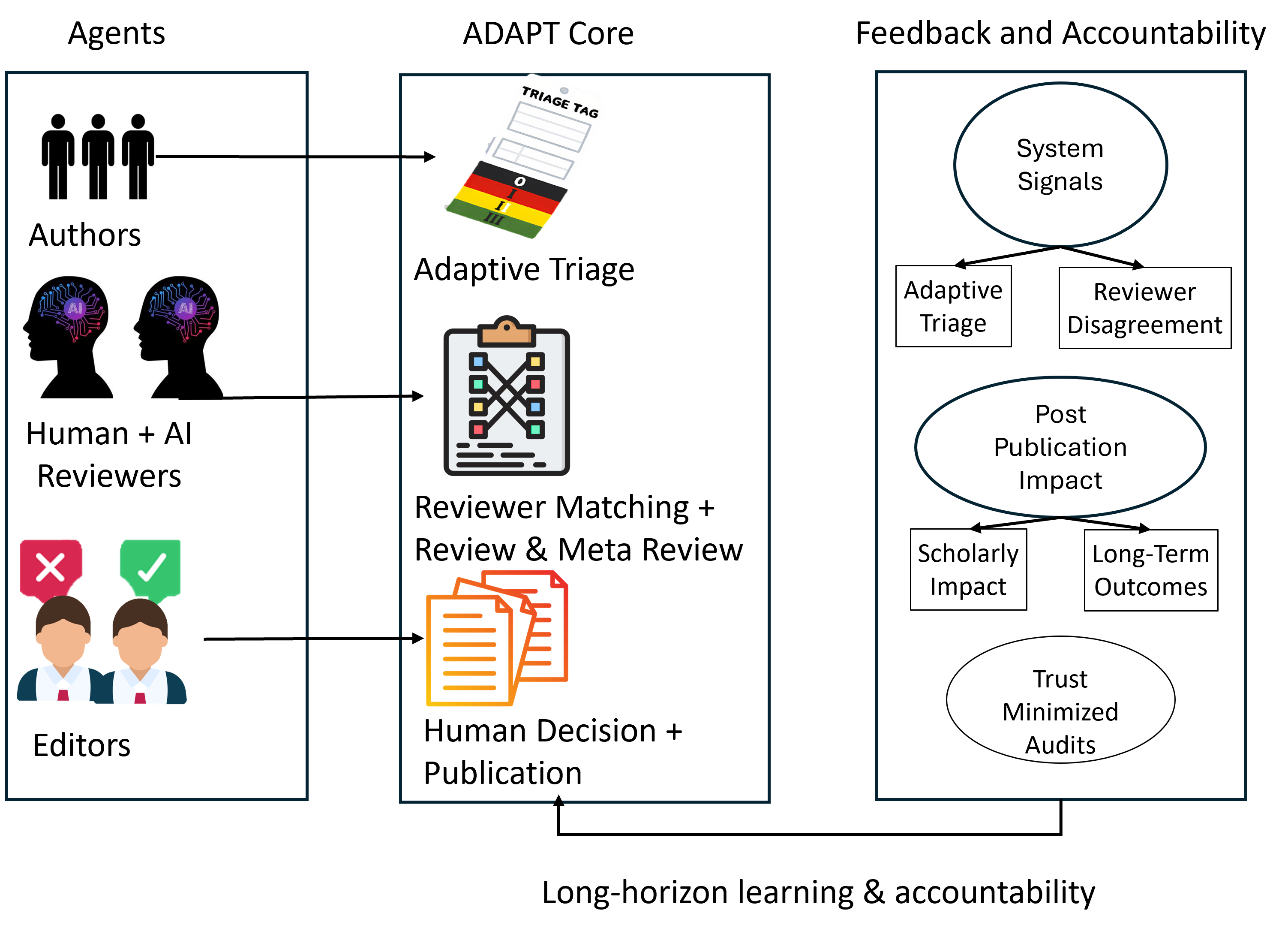
Figure 2: The ADAPT system architecture: agents, governance policies, aggregate feedback, and auditability are tightly coupled via observable signals and bounded adaptation steps.
Motivation and Theoretical Foundations
ADAPT departs from prior work on AI-assisted editorial tools by recognizing the inherent complexity and feedback-laden dynamics of academic publishing. Existing approaches have incrementally automated stages like triage and reviewer recommendation but do so under centralized, largely static governance—perpetuating scalability bottlenecks, accountability gaps, and vulnerability to incentive misalignments and manipulation. Motivated by the structural parallels between peer review and decentralized governance in distributed systems, the authors position ADAPT as an experimental platform to probe whether protocol-level adaptation and explicit signal logging can deliver bounded, interpretable, and auditable improvements at a system level.
The framework integrates several crucial concepts:
- Decentralized, non-permanent roles: Rotating editorial assignments with protocol-enforced limits diminish concentration of authority, reducing capture and collusion risk.
- Policy-level control: Adaptive governance manipulates a low-dimensional vector of interpretable parameters (e.g., triage threshold, AI reviewer usage rate) in response to aggregate, not manuscript-specific, signals.
- Delayed incentive alignment: Retrospective post-publication signals (e.g., proxy impact) update credit for authors and reviewers, supporting slow feedback needed for incentive-compatible learning.
- Auditability: All policy decisions, interventions, and parameter updates are recorded in an append-only log, enabling post hoc forensic analysis without releasing manuscript content or reviewer identity.
System Design and Architecture
The agent-based simulation operates in discrete time, with each timestep comprising submission arrivals, triage, reviewer-agent matching (based on keyword overlap and reliability), noisy review generation, meta-review aggregation, deterministic agent-free decision logic, policy adaptation, and auditable event logging. Manuscript quality and complexity are latent variables, while review score variance depends on both.
Key control signals include backlog pressure, mean reviewer disagreement, reviewer workload, and a dynamically estimated concentration metric for cluster/collusion detection. Policy variables are adjusted heuristically—but within strict bounds—according to these signals and scenario-dependent objectives. The escalation protocol triggers additional review rounds, but only in a bounded and auditable manner.
Numerical Evaluation Across Stress Regimes
Baseline and Overload Response
Baseline operation exhibits stationarity and low intervention activation, signifying controller inertia in non-stressed regimes. During submission surges, the system exhibits controlled backlog growth and automatic policy adaptation (Figure 3).
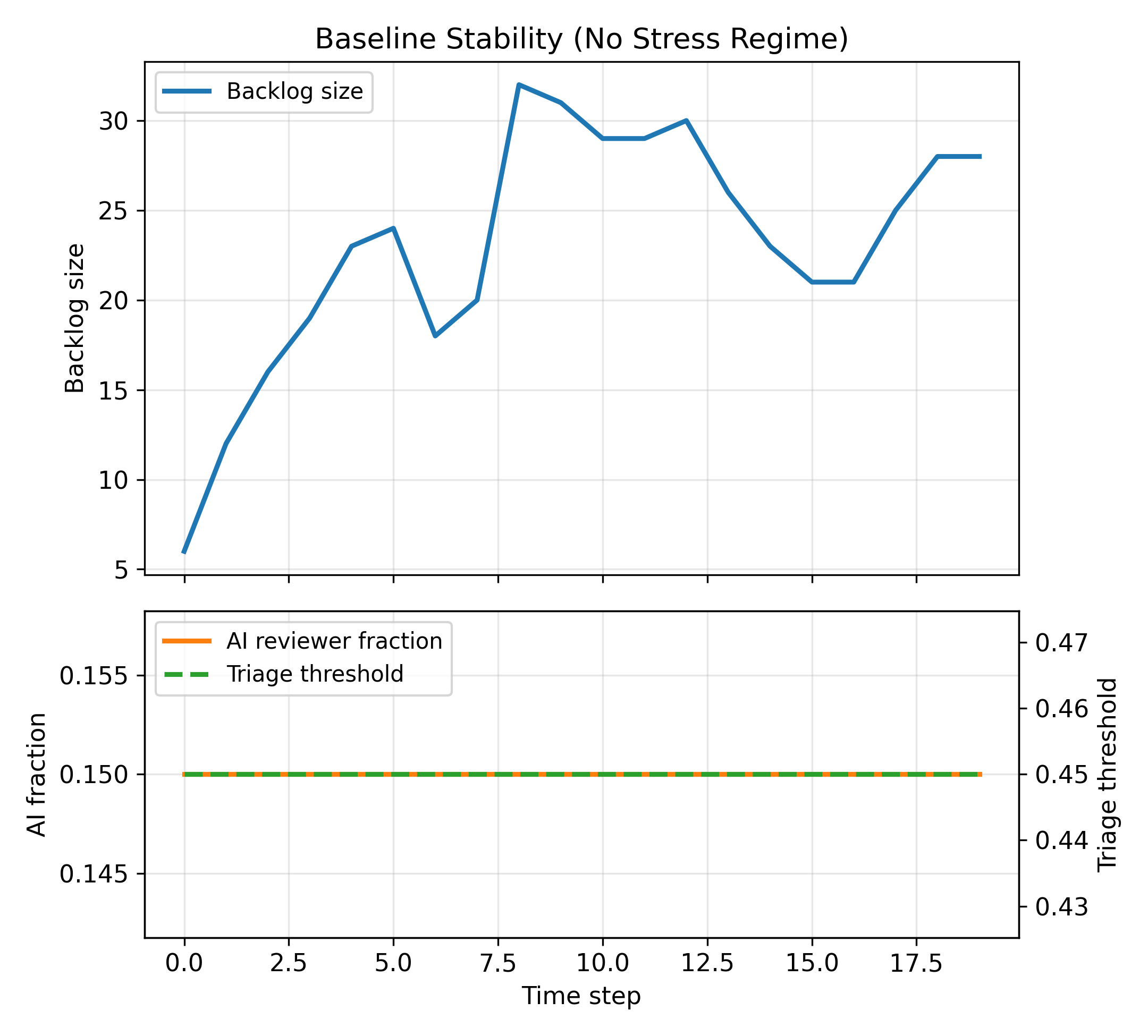
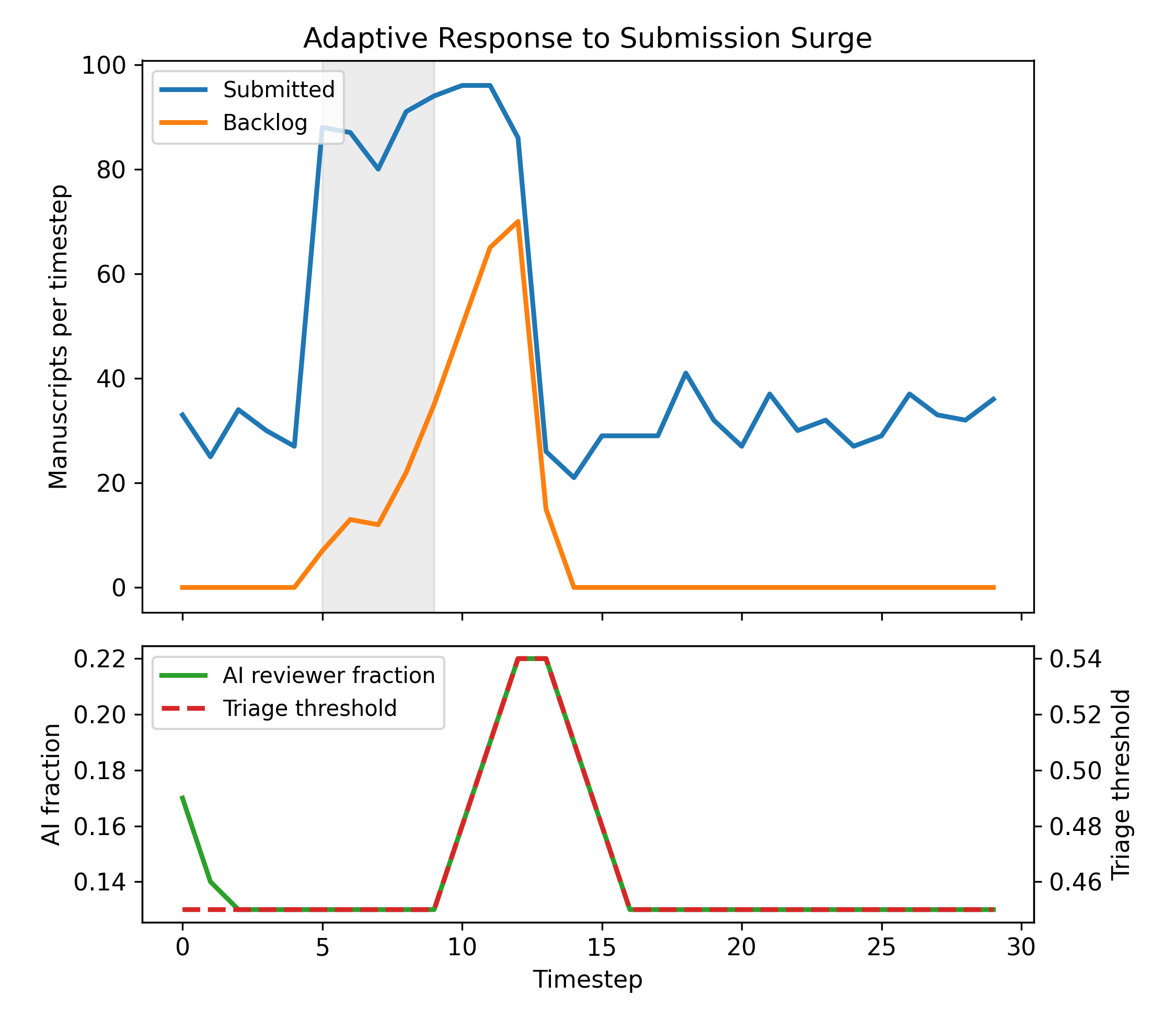
Figure 1: Under baseline and surge regimes, ADAPT maintains bounded backlog and stable reviewer workload through automatic adjustment of triage threshold and reviewer allocation.
Epistemic Drift and Disagreement
Simulations with input quality decay or bursts of review disagreement induced by explicit noise control validate the controller's capability to trigger policy adaptation: selectivity is increased and escalation is invoked, but remains interpretable and bounded. Sensitivity analysis for triage adaptation step size demonstrates a tradeoff between escalation frequency and residual backlog (Figure 4 and Figure 5).
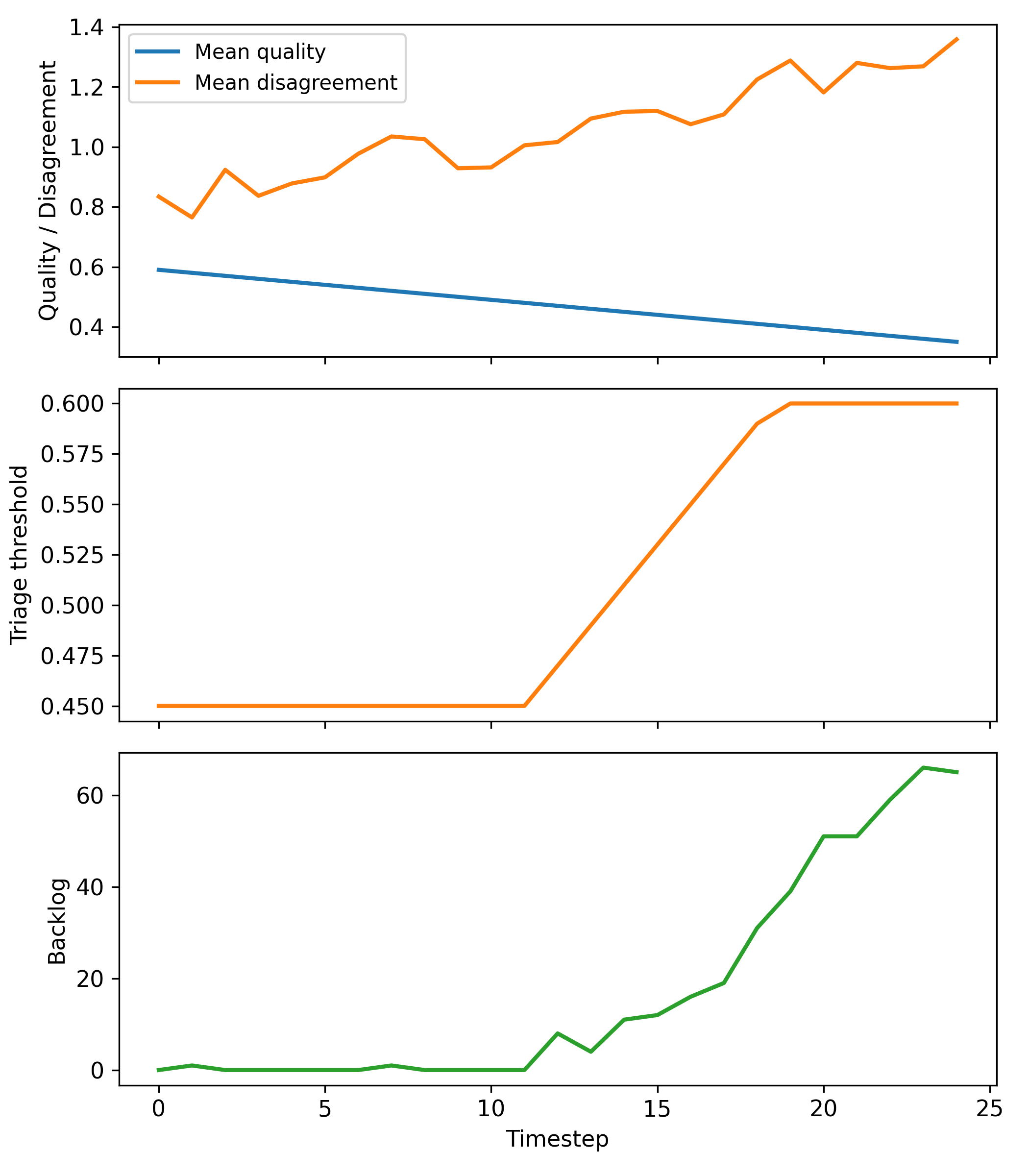
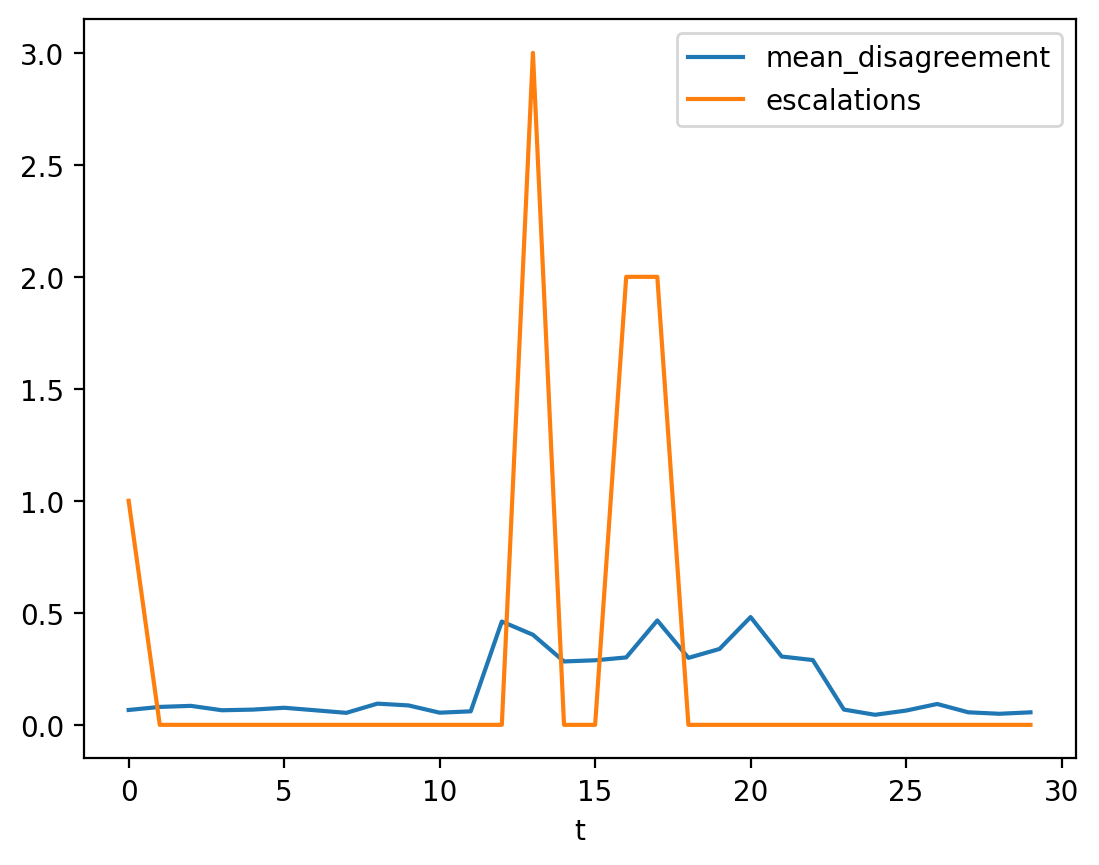
Figure 3: Under simulated quality drift, ADAPT increases triage selectivity and sustains backlog within bounds.
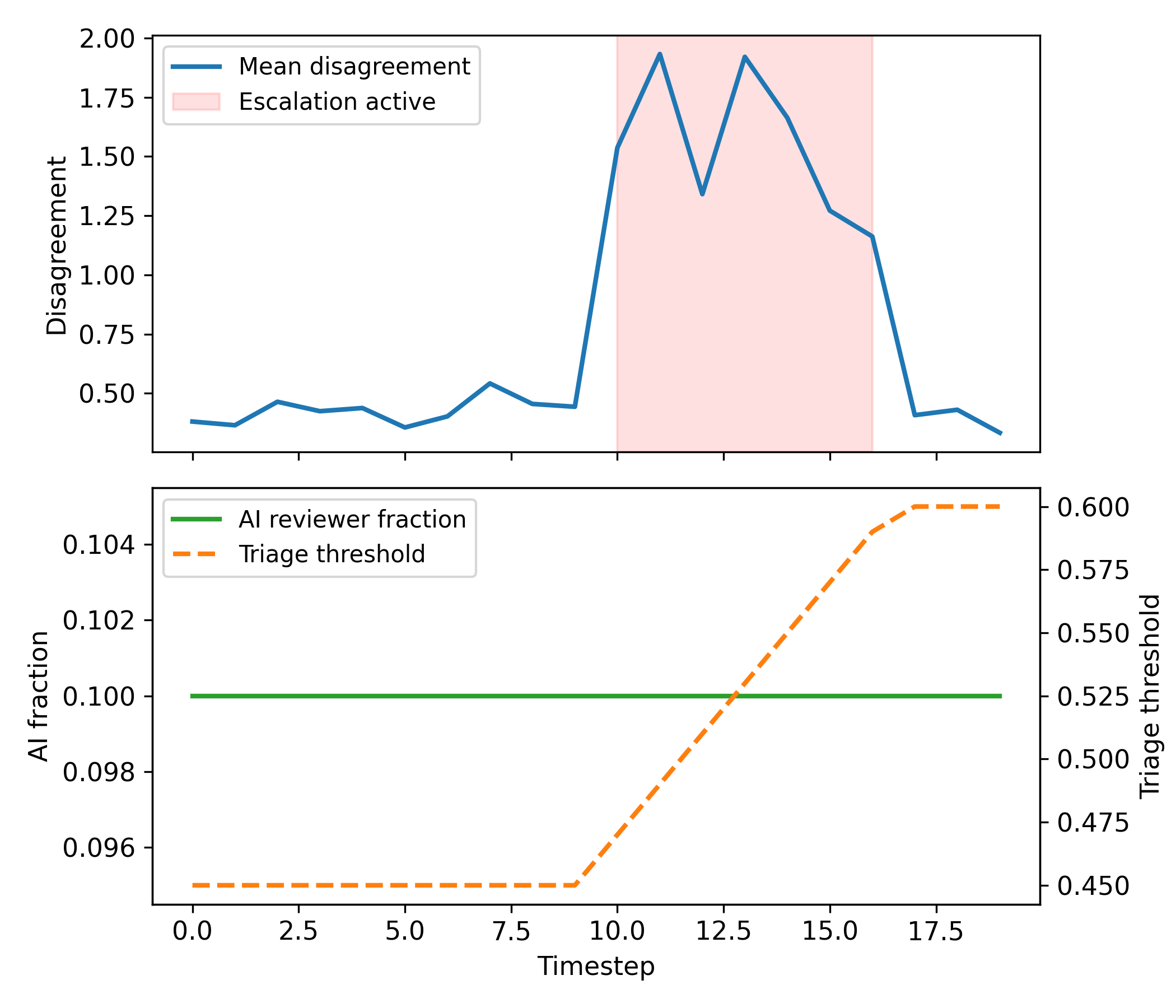
Figure 4: The system detects spikes in reviewer disagreement, dynamically increasing escalation events and adjusting policy variables in response.
Post-Publication Credit Dynamics
Lagged, noisy post-publication signals update author and reviewer credit. The system successfully demonstrates slow, bounded drift in policy as credit accumulates or decays, showcasing insulation from high-frequency oscillations and supporting long-horizon learning (Figure 6).
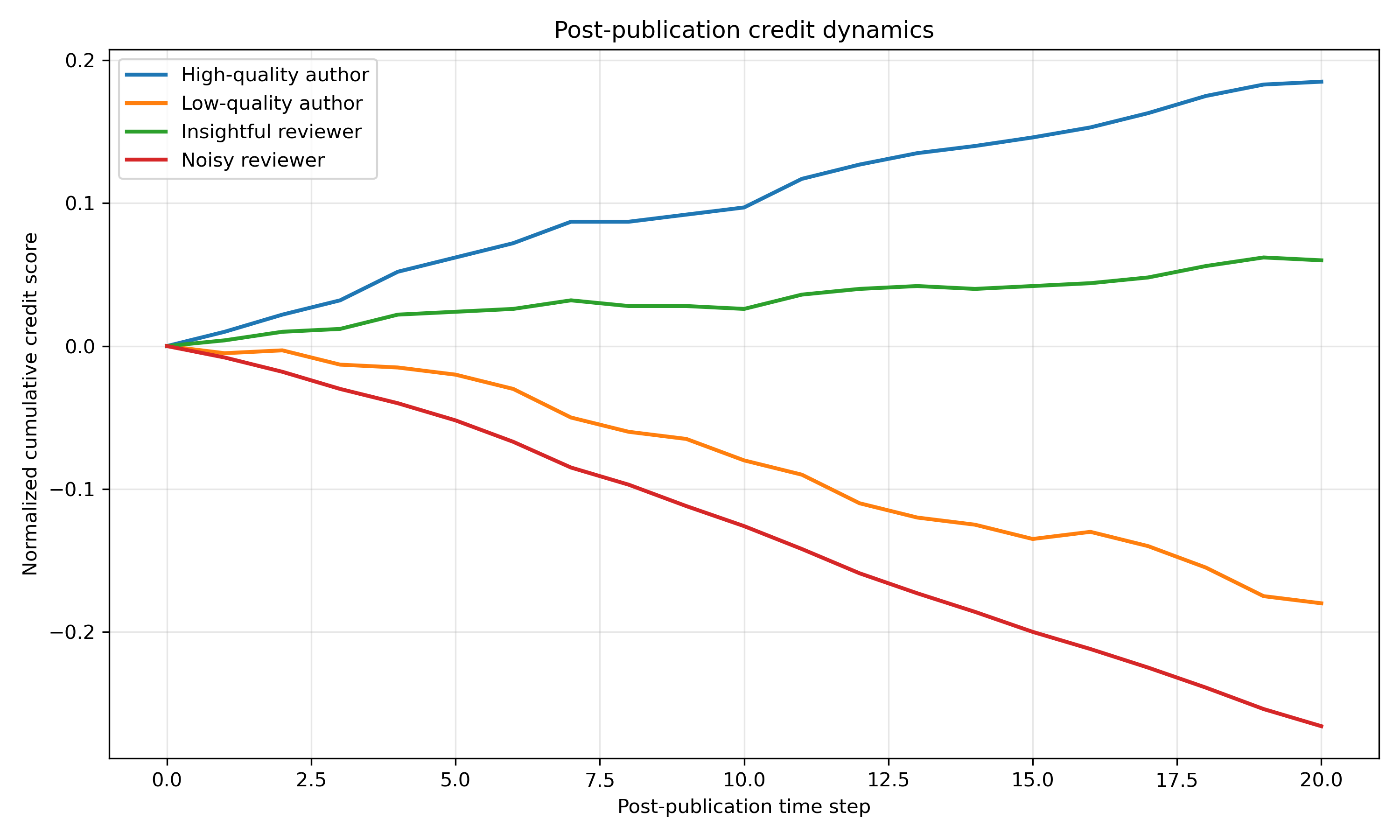
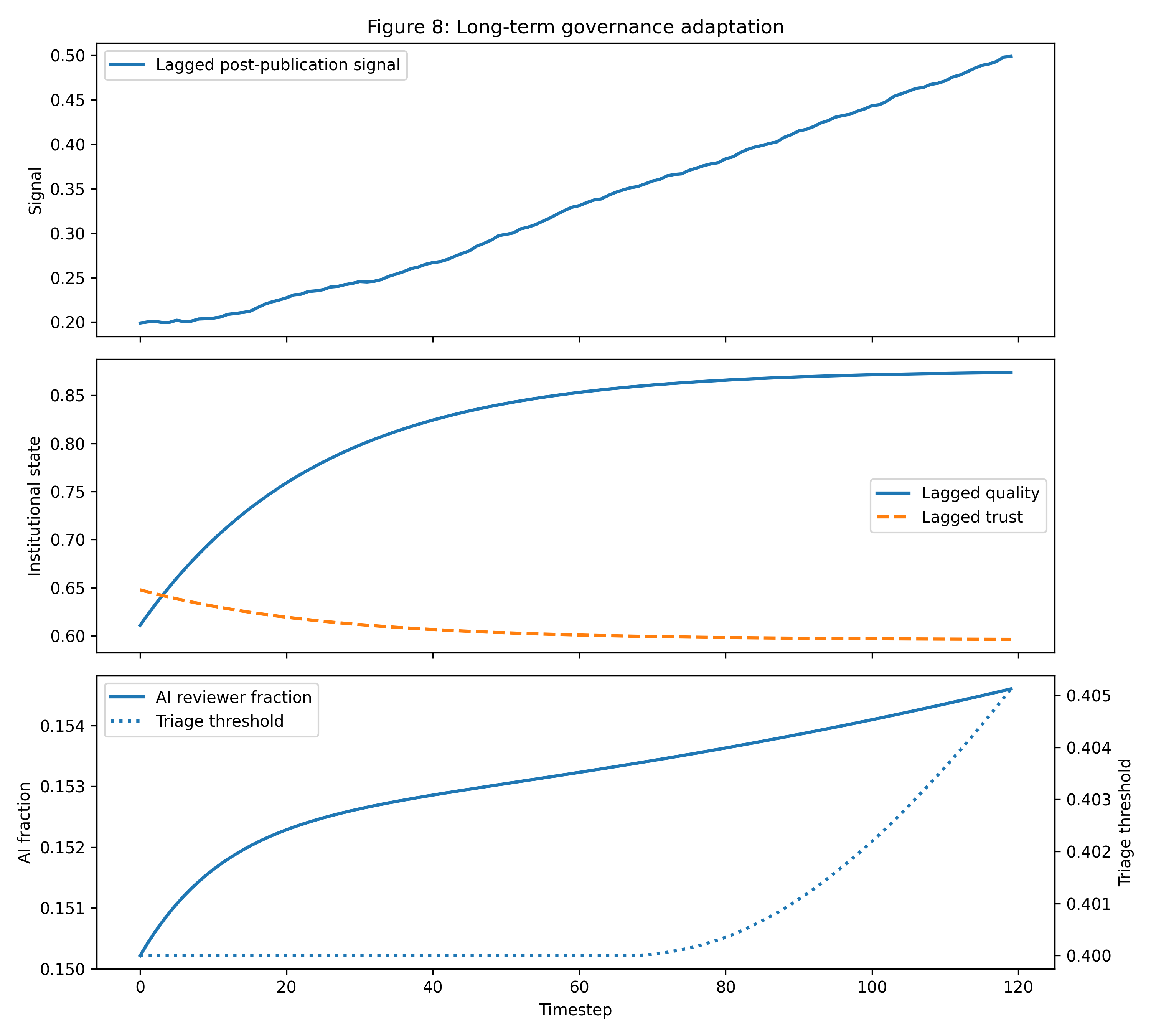
Figure 5: Credit for authors and reviewers is adaptively updated based on post-publication impact, with changes gradually reflected in governance policy adaptation.
Collusion Detection and Mitigation
Explicit adversarial clusters increasing within-pool review concentration are robustly detected using a simple exponentially-smoothed metric. Countermeasures (role rotation, allocation diversification) rapidly reduce concentration and restore baseline assignment diversity (Figure 7). Ablation (mitigation off) confirms persistent capture.
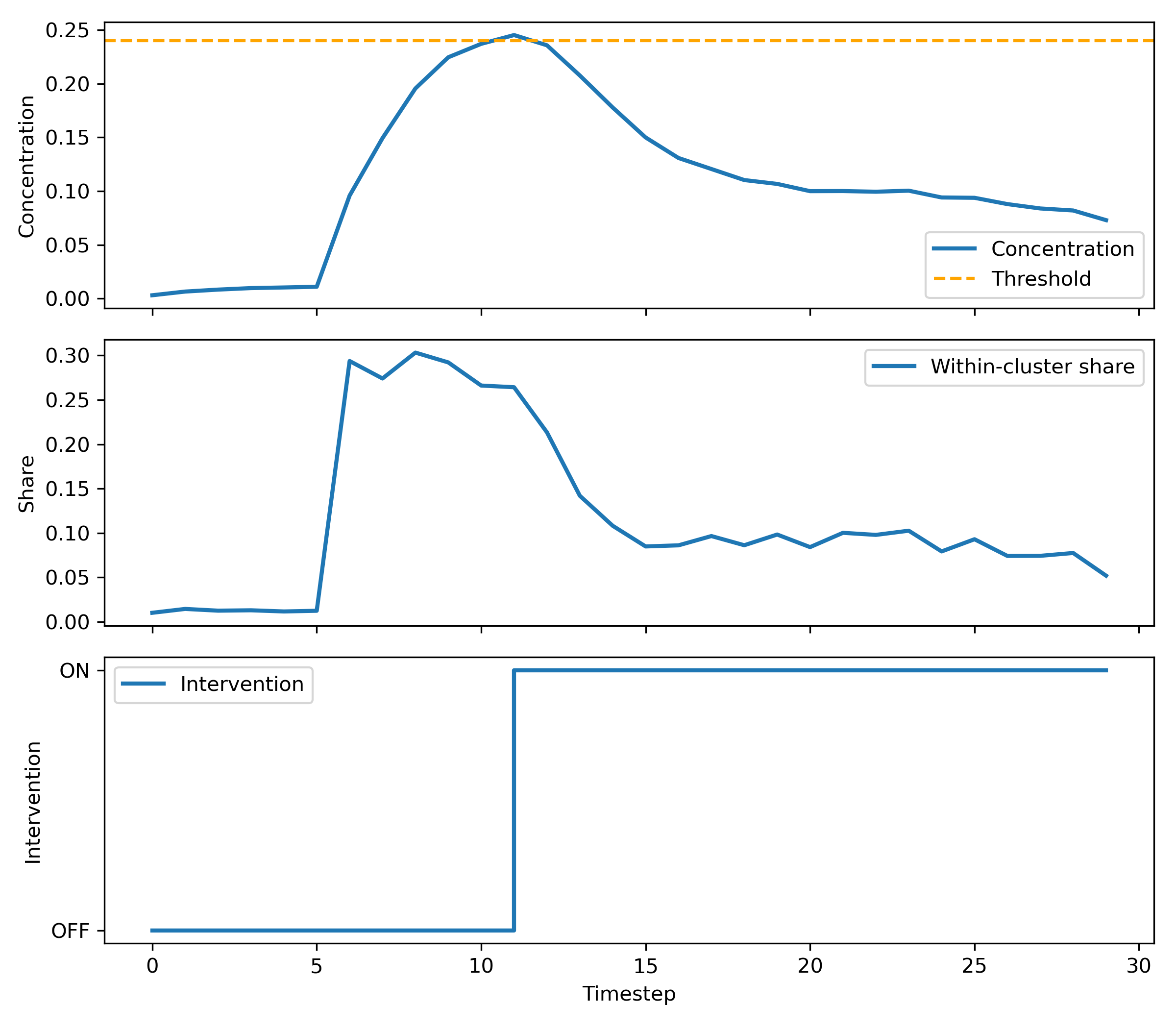
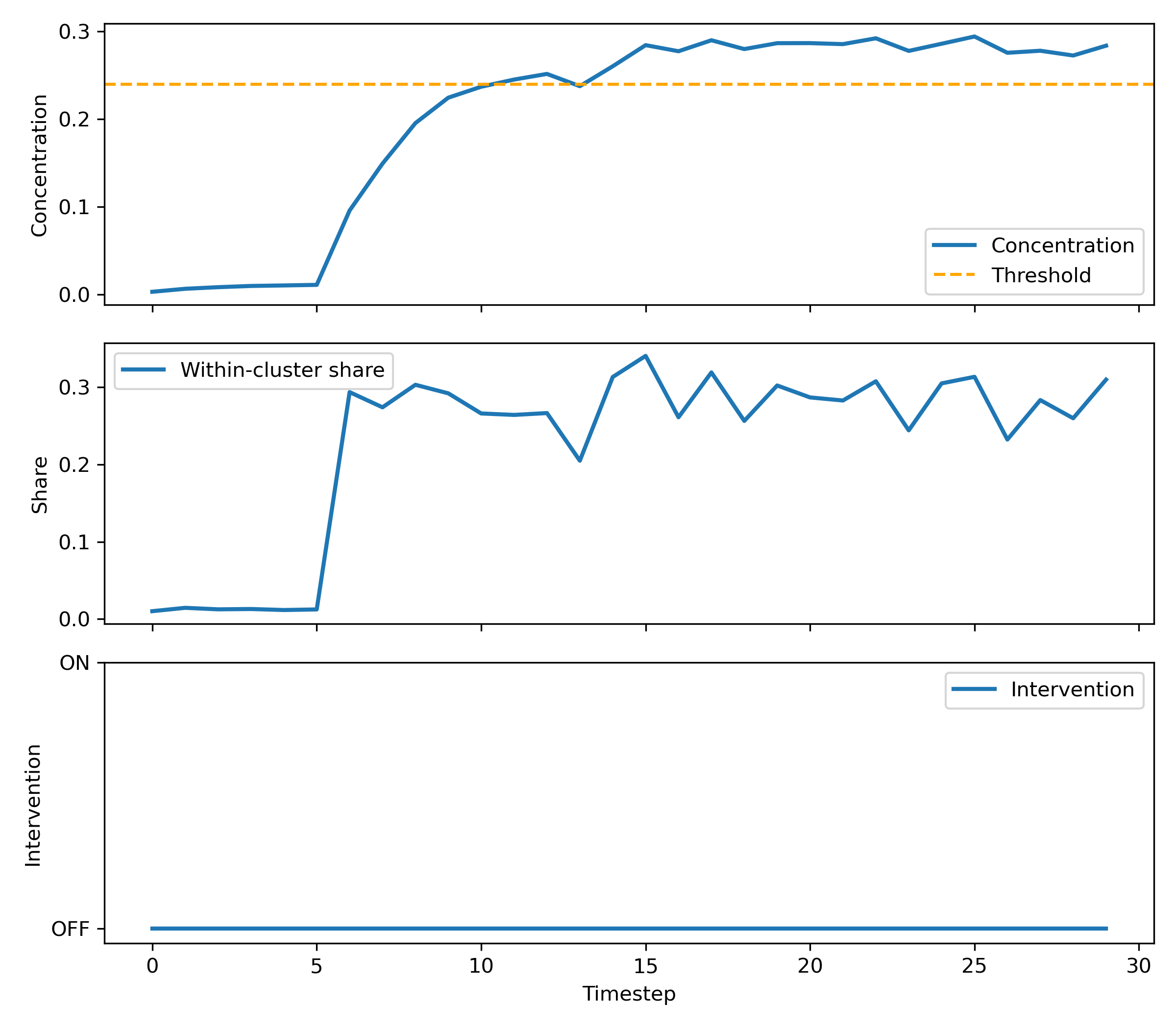
Figure 6: Mitigation enabled run—an increase in within-cluster review concentration triggers detection and activates diversification policies; concentration decays after intervention.
Implications and Theoretical Consequences
ADAPT demonstrates the feasibility of protocol-driven, auditably-adaptive governance in scholarly publishing at the policy rather than workflow task layer. By interfacing closed-loop control with human authority, ADAPT circumvents issues of AI unaccountability, exposes policy evolution to scrutiny, and provides a blueprint for resilient deployment of AI in contexts with high-stakes, long-delayed feedback. Importantly, adaptation is always interpretable: parameter drifts are explainable and reproducible.
This design carries several implications:
- Resilience to surges and adversarial manipulation: ADAPT adapts throughput and reviewer allocation without overfitting to short-term fluctuations, and protocol-level constraints limit collusion or capture.
- Structured uncertainty management: Bounded escalation allows for targeted adjudication under epistemic stress without indefinite resource drain.
- Incentive-aligned credit assignment: Post-hoc credit augments rather than overrides editorial decisions, mediating fairness and discouraging metric gaming.
- Auditability and transparency: The logging system functions as a minimal trust base for distributed science, rather than relying on opaque platform authority.
Future Research Directions
Key open technical directions include:
- Calibration to journal data: Extending beyond stylized simulations to empirical calibration using production editorial data to develop realistic stressor models and optimize policy adaptation parameters.
- Adversarial simulation: Incorporating adaptive adversaries and game-theoretic modeling of strategic agents for robust policy validation.
- Workflow and integration: Adapting credit and eligibility rules to complex, multi-role participation, while aligning privacy guarantees with reproducible and auditable policy interventions.
Conclusion
ADAPT exemplifies a systematic approach to incorporating AI and adaptive governance in academic publishing, distinguishing itself by its commitment to non-permanent authority, bounded, interpretable adaptation, and strong auditability guarantees. The framework's demonstration across diverse synthetic regimes suggests viability for deployment in high-trust, high-stress settings, subject to further empirical calibration and adversarial testing. Its principles may generalize to other complex, decentralized, audit-sensitive sociotechnical systems.
(2604.04077)