- The paper identifies a sequential route from chaotic itinerancy at weak coupling to intermittent synchronization as coupling increases, characterized by distinct symbolic dynamics.
- It introduces a symbolic dynamics method to encode nodal state space transitions, enabling precise tracking of metastable regime shifts across network topologies.
- Experimental validation confirms that structural heterogeneity drives dynamical differentiation, with power-law scaling in regime residence and synchronization durations observed.
Chaotic Itinerancy and Intermittent Synchronization in Complex Networks
Introduction and Theoretical Context
The paper investigates the route to synchronization in heterogeneous complex networks of diffusively coupled chaotic oscillators, focusing on regimes that are typically suppressed in conventional analyses employing only global order parameters. The authors identify and characterize a sequential process: an initial regime of chaotic itinerancy (CI), where network nodes exhibit unsynchronized collective exploration among metastable regimes of the attractor, followed by intermittent synchronization (IS), marked by irregular alternations between coherence and desynchronization at the global level. This sequence is shown to be robust across a range of network topologies and oscillator models.
Symbolic Dynamics Methodology
A salient methodological advance is the introduction of a symbolic dynamics for encoding the temporal evolution of each node’s state space exploration. Each nodal trajectory is converted into sequences of discrete symbols, reflecting the number of sub-regimes visited within a temporal segment. This facilitates node-resolved tracking of regime transitions and supports quantitative indices for both chaotic itinerancy and intermittent synchronization.
Analytical Findings: Bifurcation Scenario
By systematically varying the coupling strength d in large networks (e.g., N=100 Rössler oscillators), the paper demonstrates that CI emerges at weak coupling, with high values of the CI index Φσ. As d increases, Φσ decreases due to confinement of all nodes to a single regime, concomitant with a sequential contraction of the Lyapunov spectrum. Only after this transition does IS—characterized by the IS index ΦE—manifest, displaying on-off intermittency at the network scale. The two regimes are mutually exclusive: no coexistence between CI and IS is observed at any coupling strength. The transitions correspond to critical points in the system’s Lyapunov dimensionality, reinforcing the assertion of distinct organizational mechanisms.
Criticality and Power-Law Behavior
A key numerical result is that both the residence durations within a metastable regime during CI and the laminar (synchronous) phases during IS exhibit power-law distributed statistics at the respective critical coupling points. During CI collapse, the exponent for regime residence time is measured as approximately −1.7. In the IS regime, the duration of synchronized phases decays as t−1.5, consistent with universal on-off intermittency exponents. These empirical scalings support the assertion of critical dynamics governing both transitions.
Structural Heterogeneity and Node Function
Network structural heterogeneity is shown to modulate dynamical differentiation: high-degree ("hub") nodes exhibit access to a broader variety of metastable regimes and settle into less chaotic behaviors at lower coupling strengths compared to peripheral nodes. Symbolic functional synchronization is introduced, quantifying alignment in the symbolic regime transitions among nodes, and reveals that hubs achieve less symbolic synchronization with neighbors during CI, reflecting topological roles in dynamical specialization.
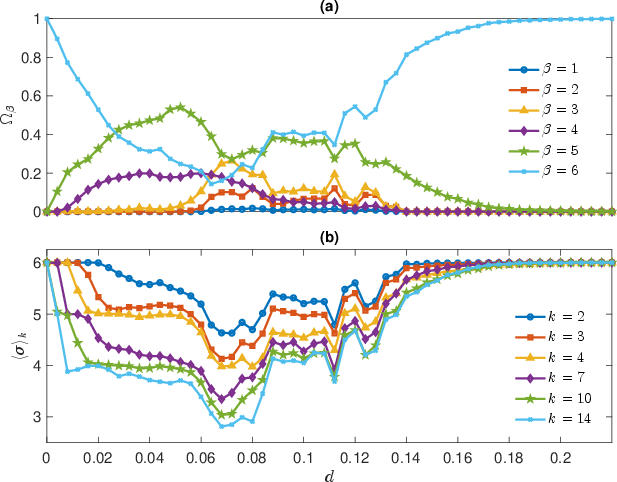
Figure 1: Analysis of the symbolic state realization for the network used in Fig.~\ref{fig:joint_num_SFER}; degree-based partitioning reveals topologically-induced differentiation in regime access and synchronization timing.
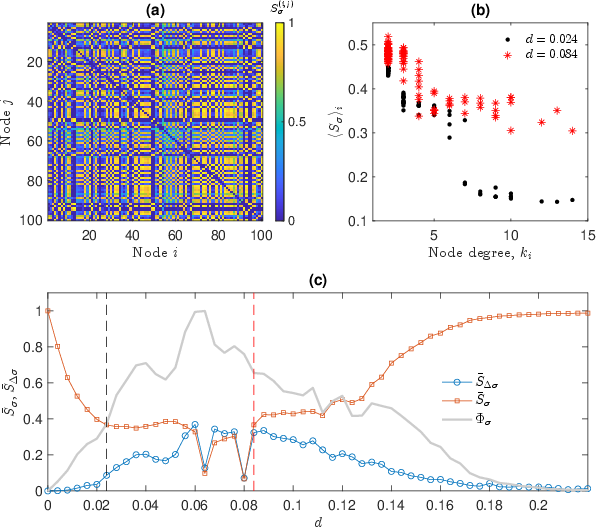
Figure 2: (a) The functional symbolic synchronization matrix Sσ; (b) degree dependence of mean symbolic synchronization; (c) global synchronization indices across the route to coherence, highlighting sequential symbolic and regime transition alignment.
Experimental Validation
The authors implement a hybrid electronic network of N=28 analog Rössler-like oscillators, coupled via reconfigurable resistive links and controlled via a CompactRIO embedded system. Both Erdős–Rényi and Watts–Strogatz topologies are realized. Measurement of the symbolic indices and synchronization errors in the physical system robustly replicates the numerical findings: a sharp sequential crossover between CI and IS is observed in all experiments, confirming the generality of the two-stage route to synchronization.
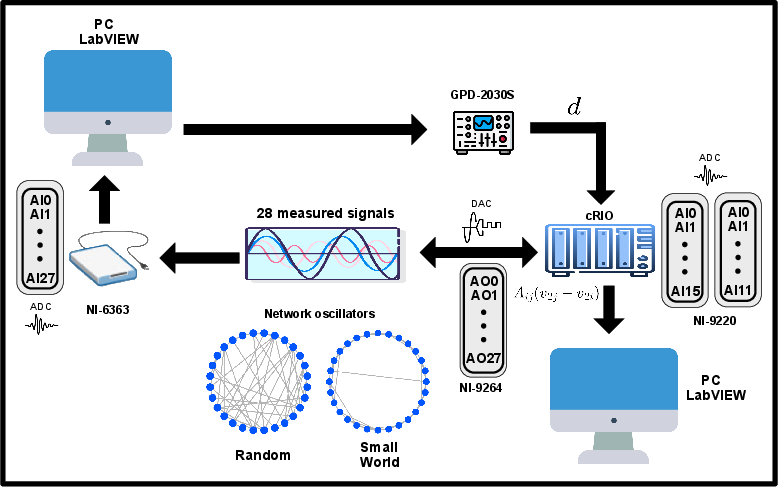
Figure 3: Schematic overview of the acquisition and feedback loop in the hybrid experimental electronic oscillator network platform.
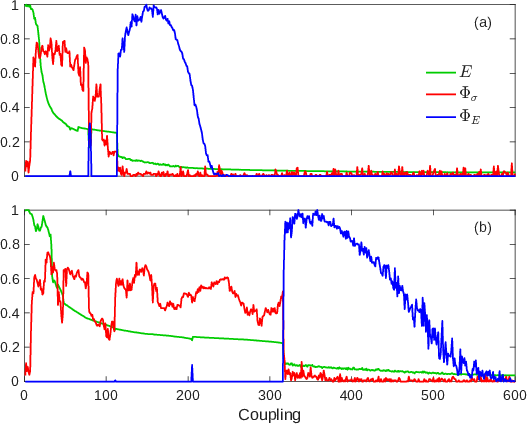
Figure 4: Normalized synchronization error, CI index Φβ, and IS index ΦE in experimental networks; both network types display a sharp CI–IS crossover.
Broader Implications and Future Directions
The unification of chaotic itinerancy and intermittent synchronization as successive, structurally modulated critical regimes along the route to synchronization has implications for both biological and artificial systems. In neural networks, these results underpin computational frameworks positing cognitive flexibility and metastability as products of organized CI [Breakspear2017, Deco2021]. For machine learning, especially reservoir computing architectures, controlled operation near the CI–IS boundary may enhance adaptability and computational richness [Inoue2020, Kong2024]. Structured network heterogeneity is shown to enable functional specialization and regime diversity, a design principle with potential utility in synthetic and neuromorphic networks.
Conclusion
This work offers a comprehensive, node-resolved scenario for the route to synchronization in complex networks of chaotic oscillators. The findings establish, with both numerical rigor and precise experimental corroboration, that chaotic itinerancy and intermittent synchronization are non-overlapping, critical, and sequential regimes, each governed by distinct dynamical mechanisms and modulated by topological heterogeneity. The symbolic dynamics methodology provides a framework for future investigation and control of metastable, flexible computation in both physical and engineered systems.