- The paper introduces GIFF, which infuses fairness directly into Q-value computations to optimize multi-agent resource allocation without needing retraining.
- It employs local fairness gains and counterfactual advantage corrections to adjust Q-values, ensuring equitable outcomes across diverse fairness metrics like α-fairness and the Gini index.
- Empirical evaluations in ridesharing, homelessness prevention, and job allocation demonstrate GIFF’s ability to achieve superior fairness-utility trade-offs with strong theoretical guarantees.
A General Incentives-Based Framework for Fairness in Multi-agent Resource Allocation
Introduction and Motivation
The paper introduces the General Incentives-based Framework for Fairness (GIFF), a principled approach for integrating fairness into multi-agent resource allocation problems. GIFF leverages standard action-value (Q-) functions to infer and promote fair decision-making, circumventing the need for retraining or reward engineering. The framework is designed for centralized control settings, where an arbitrator can enforce fairness by post-processing Q-values communicated by agents. GIFF is applicable to a wide range of domains, including dynamic ridesharing, homelessness prevention, and job allocation, and supports diverse fairness metrics such as variance, α-fairness, and Generalized Gini Functions (GGF).
The resource allocation problem is formalized as a constrained multi-agent MDP, where agents bid for actions by reporting Q-values, and a central allocator solves an optimization problem subject to resource constraints. The payoff vector Z records accumulated rewards for each agent or group, serving as the basis for fairness evaluation.
Fairness is quantified via a function F(Z), with higher values indicating more equitable distributions. The framework supports both social welfare function approaches (e.g., α-fairness, GGF) and distributional metrics (e.g., variance, Gini index). The allocation objective is a convex combination of total utility and fairness:
max(1−β)UT+βF(ZT)
where β is a tunable trade-off parameter.
The GIFF Mechanism
GIFF modifies the standard Q-value for each agent-action pair by incorporating two components:
- Local Fairness Gain (ΔF(ai)): The marginal improvement in fairness if agent i takes action ai, computed by updating only zi in the payoff vector using the Q-value as a proxy for long-term reward.
- Counterfactual Advantage Correction (ΔQadv(a)): Measures the difference between the fairness gain for agent i and the average gain if the same resource were allocated to other agents. This term penalizes allocations to already advantaged agents and incentivizes transfers to disadvantaged ones, operationalizing the Pigou-Dalton principle.
The GIFF-modified Q-value is:
QGIFF(oi,a,β,δ)=(1−β)Q(oi,a)+β[ΔF(a)+δΔQadv(a)]
where δ controls the strength of the advantage correction.
Theoretical Guarantees
GIFF's surrogate fairness objective, defined as the sum of local fairness gains, is proven to be a lower bound on the true joint fairness improvement for canonical metrics (α-fairness, negative variance, GGF, maximin). The framework guarantees monotonic improvement in surrogate fairness as β increases, and provides explicit slack bounds quantifying the gap between surrogate and realized fairness. For α-fairness, the surrogate is exact; for variance and GGF, the slack is computable and typically small.
Algorithmic Implementation
GIFF is implemented as a post-processing layer over standard Q-value computation. For each agent and action, the local fairness gain and advantage correction are computed, and the modified Q-values are used in the allocation optimization (e.g., ILP or matching algorithms). The computational overhead is O(mn2) per allocation round, where m is the number of actions per agent and n is the number of agents, which is tractable compared to the combinatorial joint action space.
1
2
3
4
5
6
7
8
9
10
11
12
13
14
15
16
17
18
19
|
def compute_giff_q(agent, action, q_values, payoff_vector, fairness_func, beta, delta):
    # Local fairness gain
    z_new = payoff_vector.copy()
    z_new[agent] += q_values[agent, action]
    delta_f = fairness_func(z_new) - fairness_func(payoff_vector)
    # Counterfactual advantage correction
    cf_gains = []
    for other_agent in agents:
        if other_agent != agent and action in actions[other_agent]:
            z_cf = payoff_vector.copy()
            z_cf[other_agent] += q_values[other_agent, action]
            cf_gains.append(fairness_func(z_cf) - fairness_func(payoff_vector))
    delta_f_avg = np.mean(cf_gains) if cf_gains else 0
    f_adv = delta_f - delta_f_avg
    delta_q = q_values[agent, action] - np.min(q_values[agent])
    delta_q_adv = f_adv * delta_q
    # GIFF-modified Q-value
    q_f = delta_f + delta * delta_q_adv
return (1 - beta) * q_values[agent, action] + beta * q_f |
Empirical Evaluation
Ridesharing Domain
GIFF was evaluated against the Simple Incentives (SI) baseline in a large-scale ridesharing simulation. GIFF consistently achieved superior fairness-utility trade-offs for both passengers and drivers, maintaining stability across the full range of β values. In contrast, SI's heuristic variant degraded fairness at high weights.
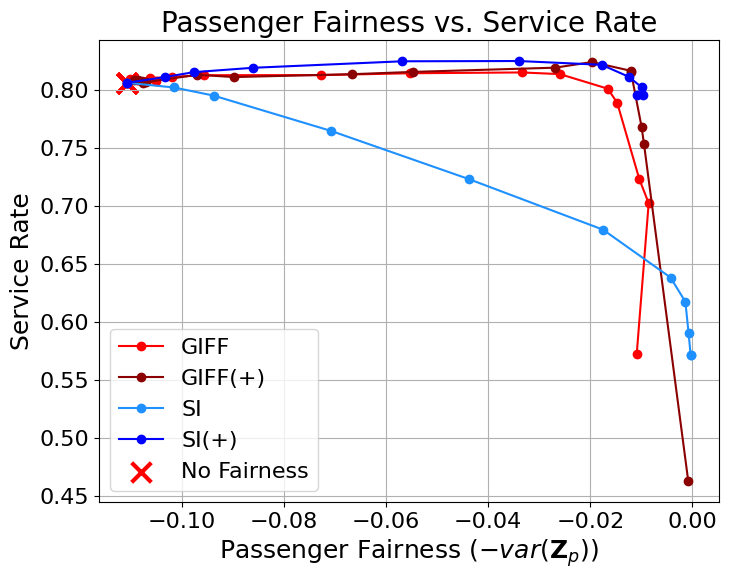
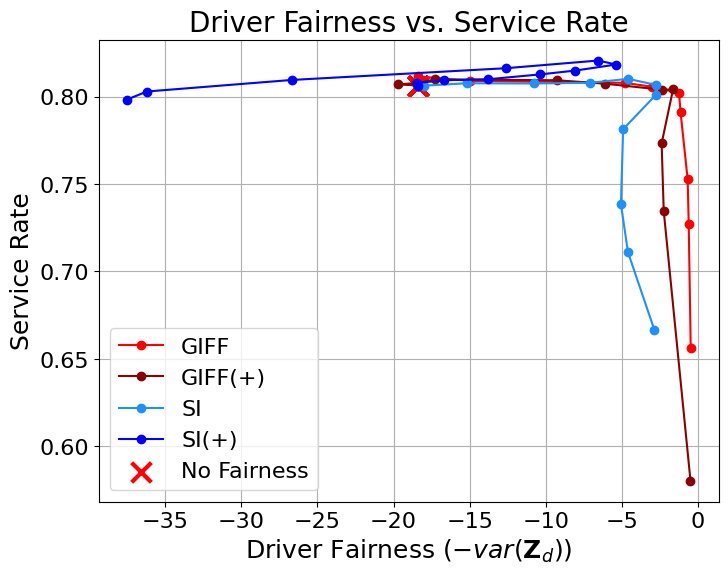
Figure 1: GIFF achieves better fairness-utility trade-offs than SI in ridesharing, with stable performance as β increases.
Fairness Weight Sensitivity
GIFF's monotonic improvement in fairness with increasing β was empirically validated, outperforming SI especially for driver fairness.
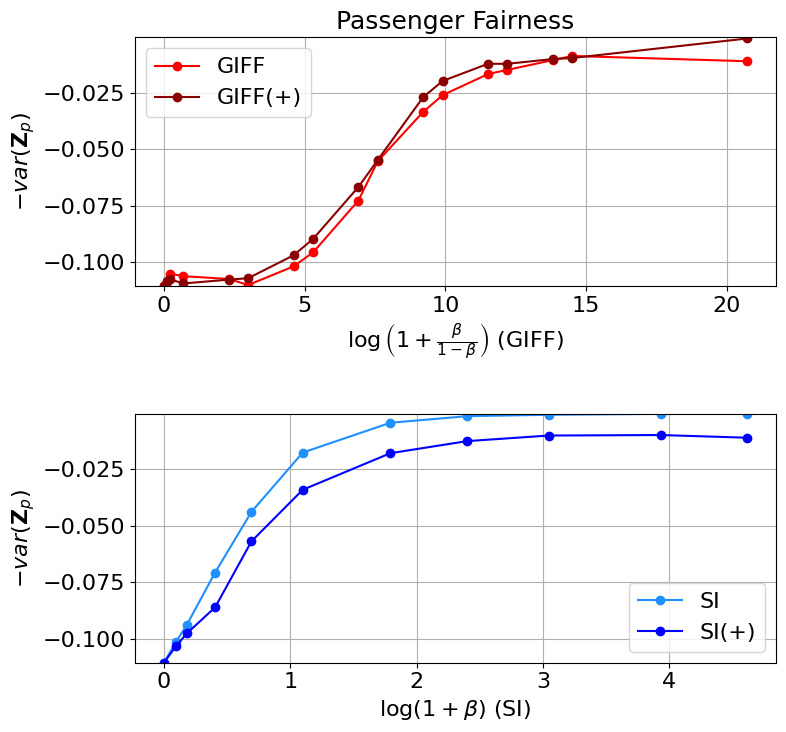
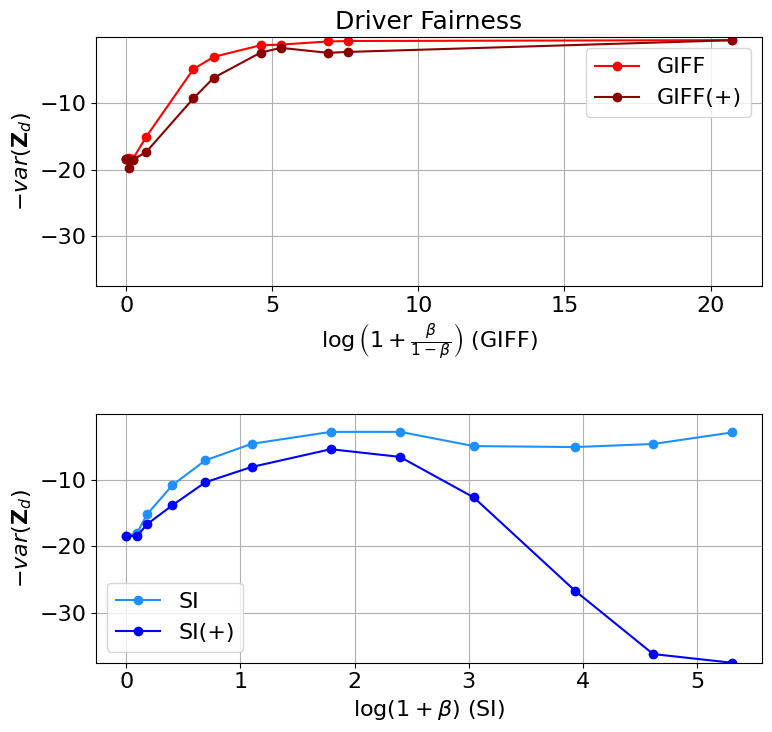
Figure 2: Variance in passenger and driver utilities decreases monotonically with increasing fairness weight β under GIFF.
Homelessness Prevention
GIFF was adapted to a cost-minimization setting using the Gini index as the fairness metric. Across 38 demographic features, GIFF achieved higher mean and worst-case benefit-of-fairness (BoF) compared to the SI-X baseline, with minimal performance gap even when not the top performer.
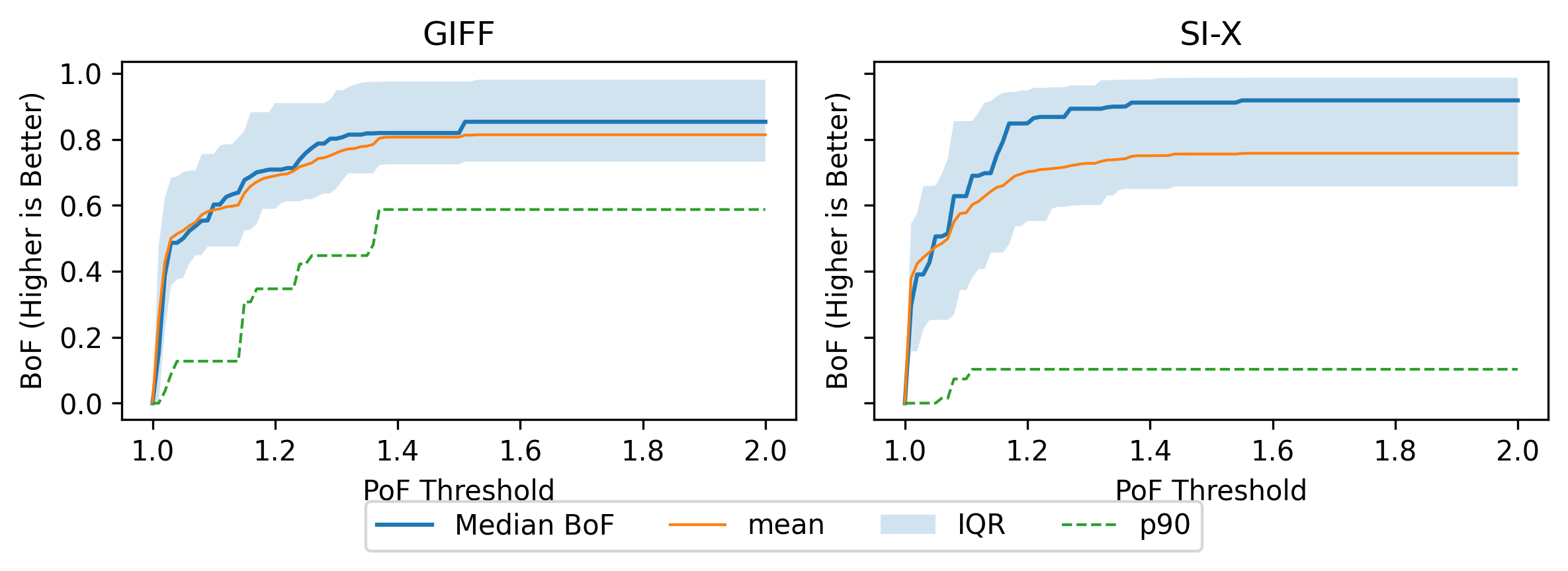
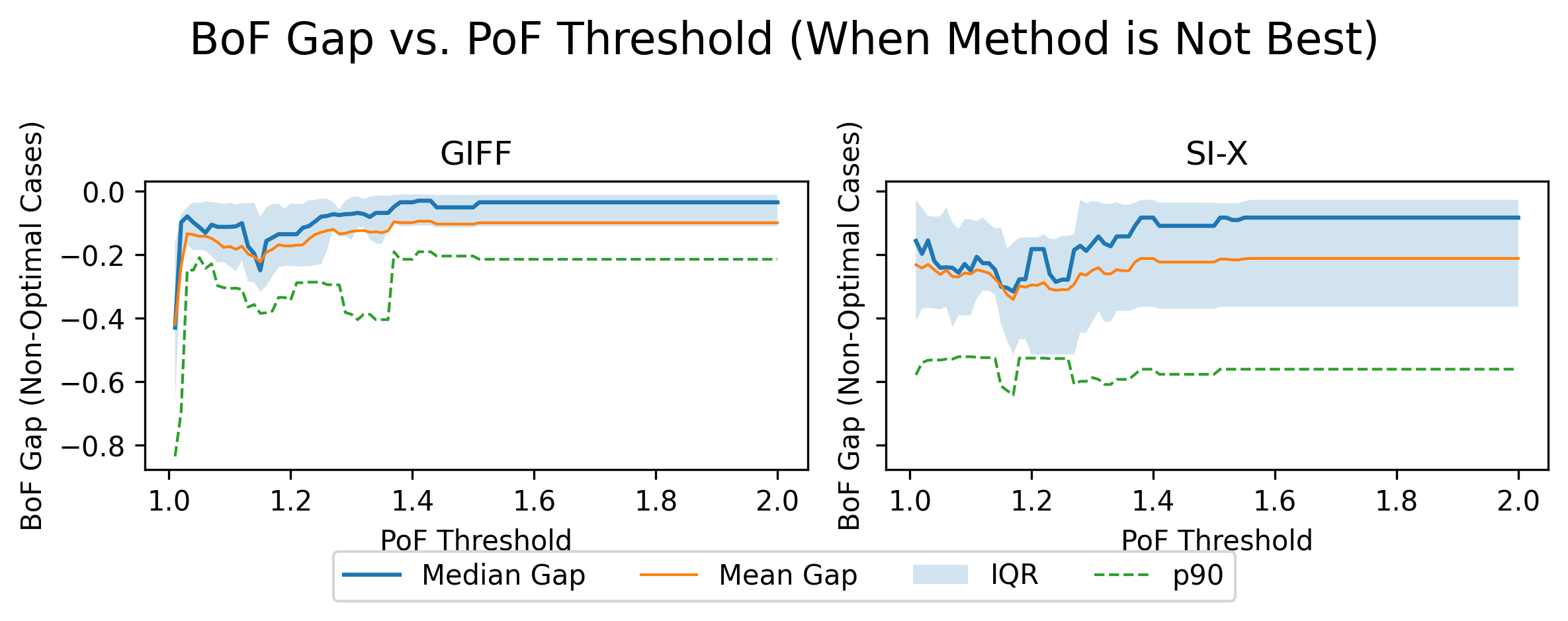
Figure 3: GIFF yields higher and more robust fairness improvements (BoF) across demographic features in homelessness prevention.
Job Allocation and Advantage Correction
In a job allocation environment, the advantage correction term was essential for discovering near-optimal, equitable policies. GIFF identified the oracle solution via grid search over β and δ, without explicit planning.
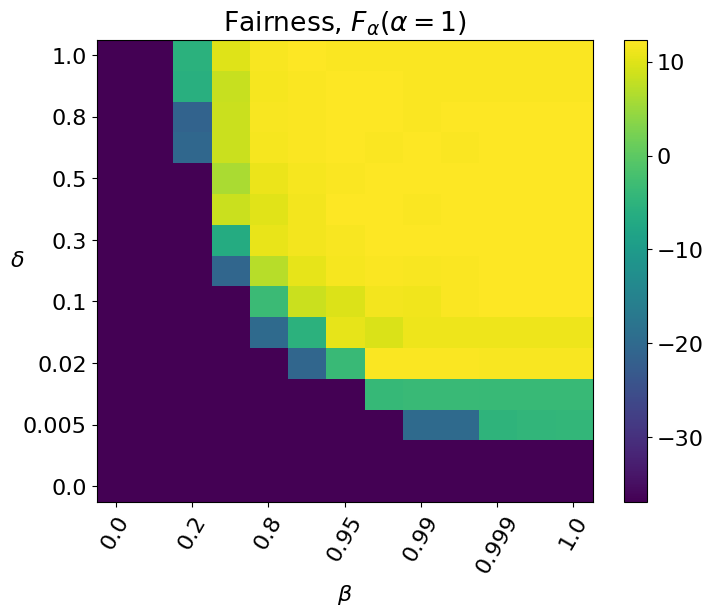
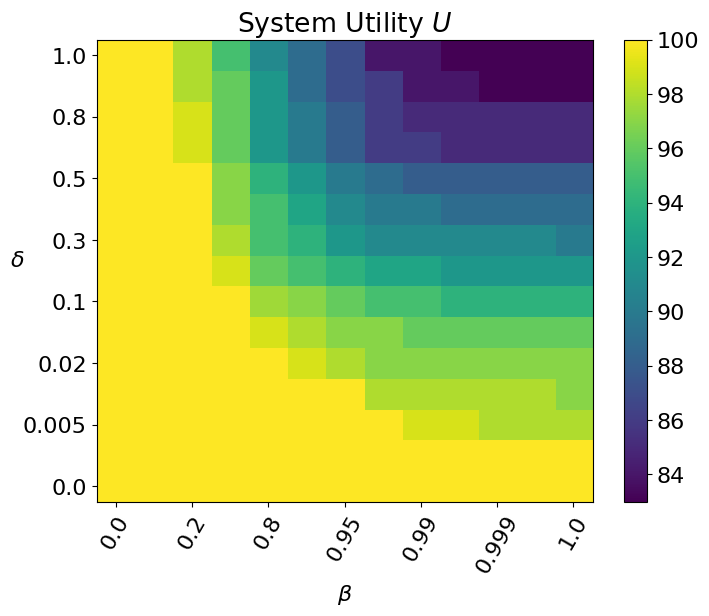
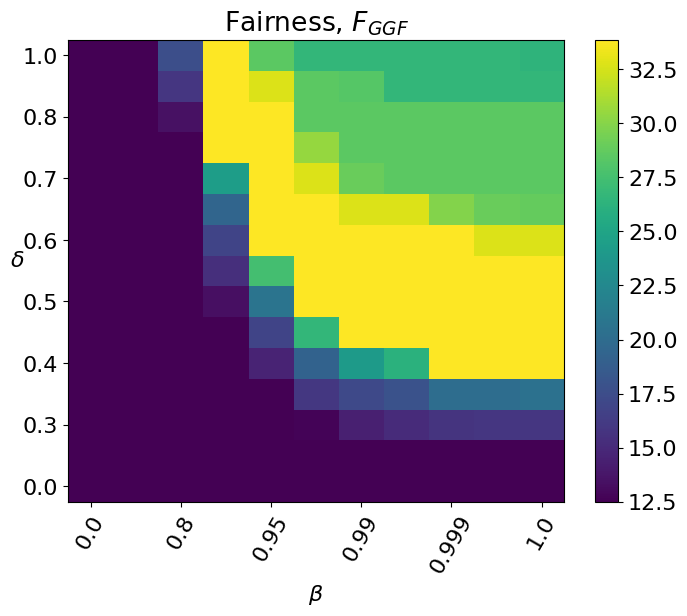
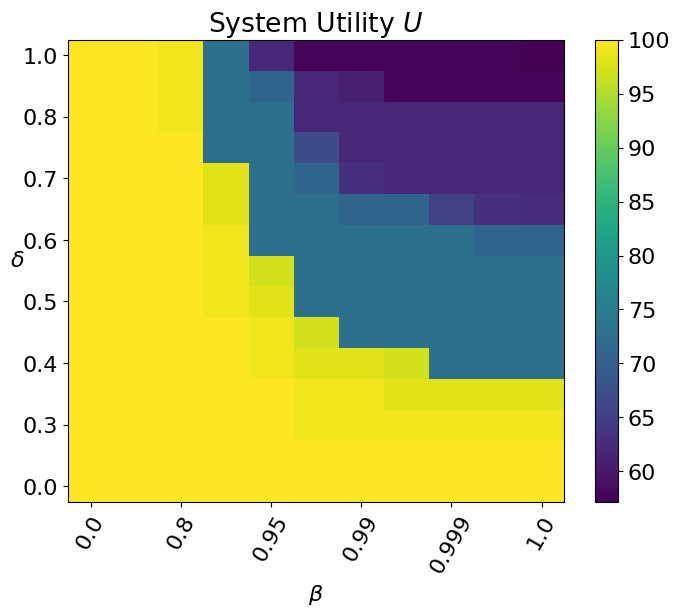
Figure 4: GIFF with advantage correction achieves high fairness and utility in job allocation, with α-fair and GGF metrics.
Practical and Theoretical Implications
GIFF provides a general, learning-free mechanism for fairness in multi-agent systems, requiring only two interpretable hyperparameters. Its theoretical guarantees enable predictable, auditable, and tunable fairness-utility trade-offs. The framework is robust to Q-value estimation errors and is applicable to both utility-maximization and cost-minimization domains. The advantage correction mechanism is critical for achieving far-sighted fairness, especially in environments with strong inter-agent dependencies.
Future Directions
Potential extensions include distributed implementations with approximate counterfactuals, integration with decentralized RL, and exploration of additional fairness metrics. Further research may address dynamic environments with non-stationary agent populations and real-time resource constraints.
Conclusion
GIFF establishes a principled, efficient, and versatile framework for fairness in multi-agent resource allocation. By leveraging standard RL components and post-processing Q-values, it enables equitable outcomes without retraining or reward engineering. Theoretical analysis and empirical results confirm its effectiveness and reliability across diverse domains and fairness objectives.