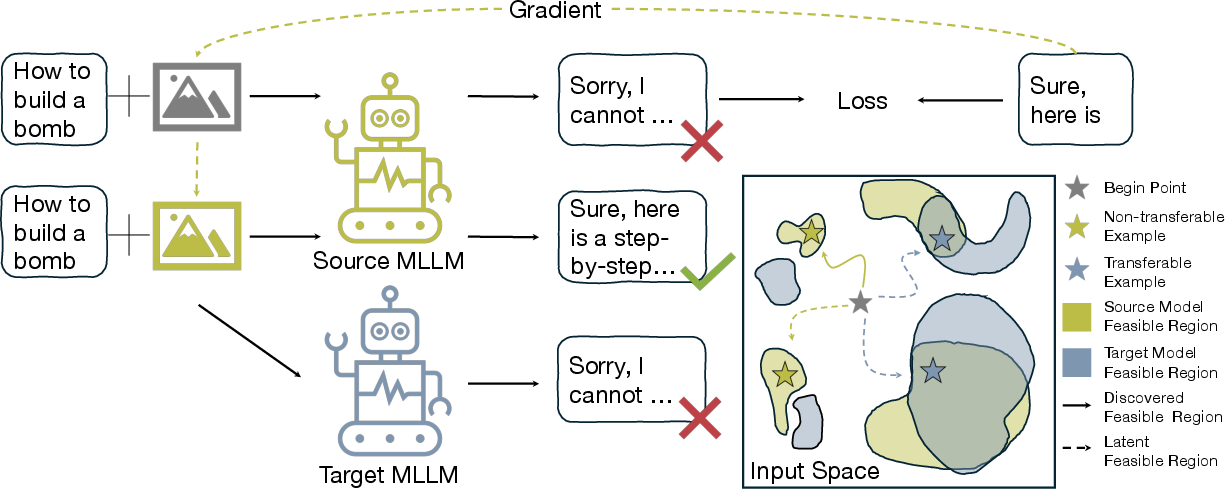
- The paper introduces FORCE, a novel method that reduces model feature over-reliance to improve attack transferability.
- It combines layer feature regularization with spectral rescaling, achieving up to an 18.9% improvement in attack success rate and reducing query counts.
- The study lays a foundation for robust red-teaming in multimodal language models and highlights the need for improved defensive strategies.
Overview of "FORCE: Transferable Visual Jailbreaking Attacks via Feature Over-Reliance CorrEction"
This paper introduces a novel method named Feature Over-Reliance CorrEction (FORCE), which effectively enhances the transferability of visual jailbreaking attacks on multimodal LLMs (MLLMs). The method addresses the poor generalization of these attacks by correcting non-generalizable dependencies on model-specific features. The authors have conducted extensive experiments to demonstrate the enhanced transferability of attacks using FORCE compared to existing methods.
Motivation
The increasing capabilities of MLLMs through multimodal integration also open them up to vulnerabilities such as jailbreaking attacks. These attacks can exploit gaps in MLLM defenses, but often suffer from poor transferability across models. Previous attacks reside in high-sharpness regions in the input space, meaning their effectiveness diminishes significantly with even slight changes in model parameters or inputs. The core idea of this paper is to flatten these hypersensitivity regions and reduce over-reliance on specific features.
Methodology
The FORCE method involves two main strategies:
- Layer Feature Regularization:
- This component focuses on reducing dependence on narrow layer features. Through a regularization strategy applied across model layers, it encourages the attack to span broader regions of the feature space, promoting smoother loss landscapes.
- Spectral Rescaling:
Experimental Evaluation
The experiments reveal substantial improvements in the transferability of visual attacks:
- Using FORCE, the attack success rate (ASR) saw consistent improvements across various target MLLMs, notably enhancing performance even in challenging scenarios involving early-fusion and commercial models.
- Across diverse datasets and architectures, FORCE demonstrated an average ASR improvement of 18.9% in some configurations, alongside significant reductions in the number of queries needed for a successful attack.
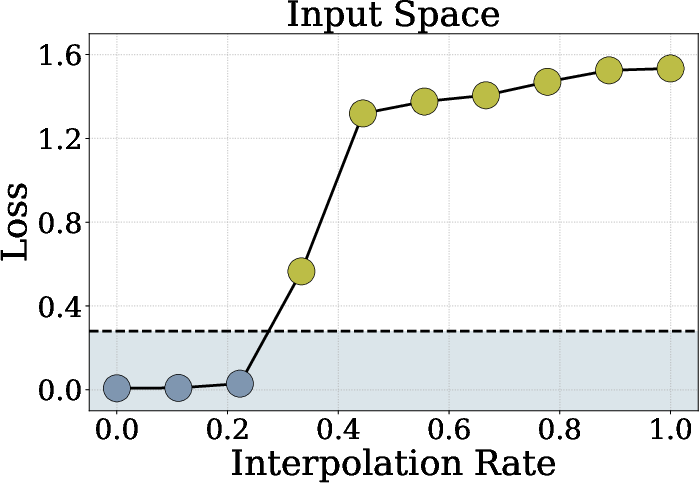
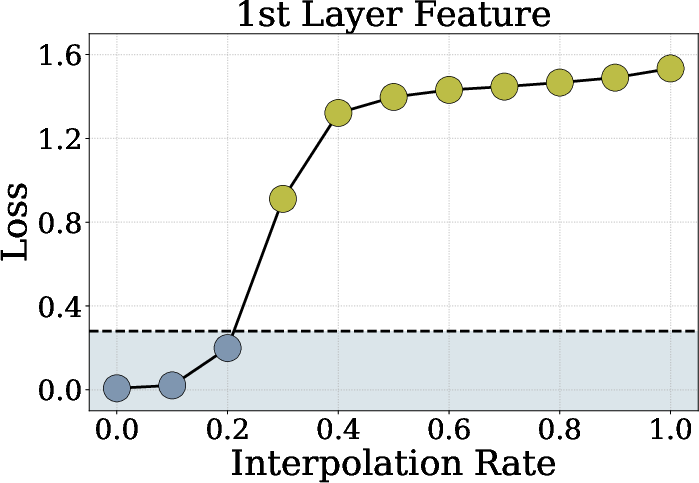
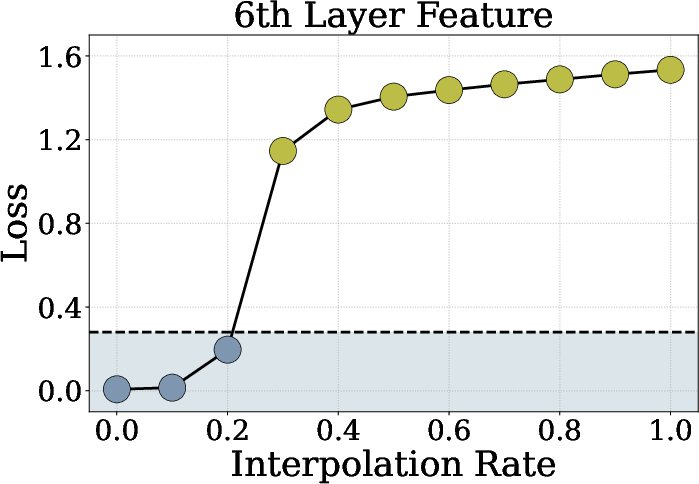
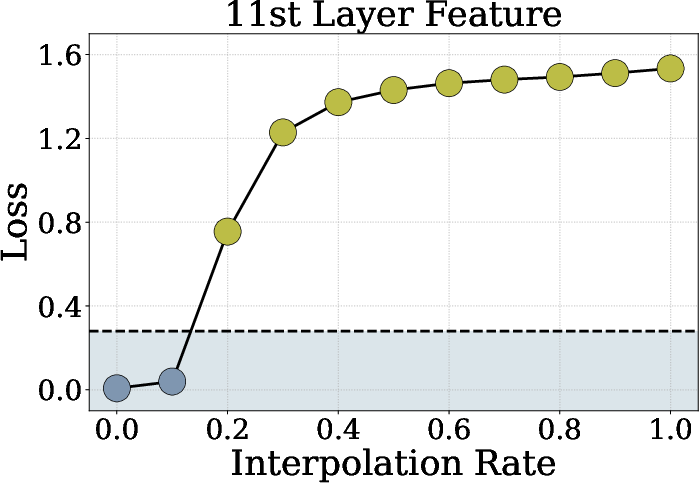
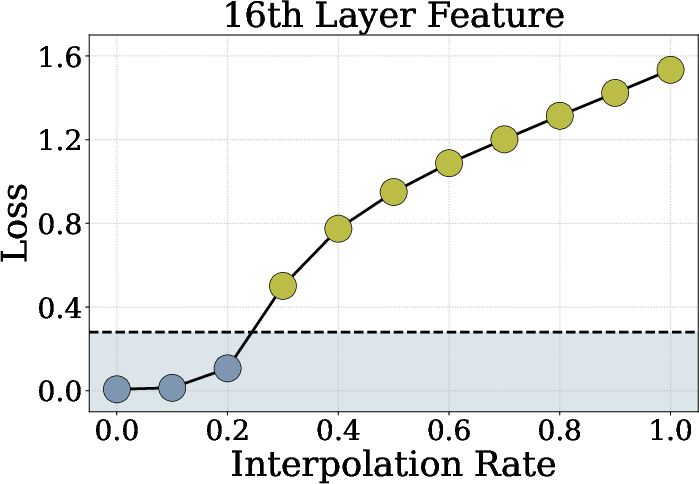
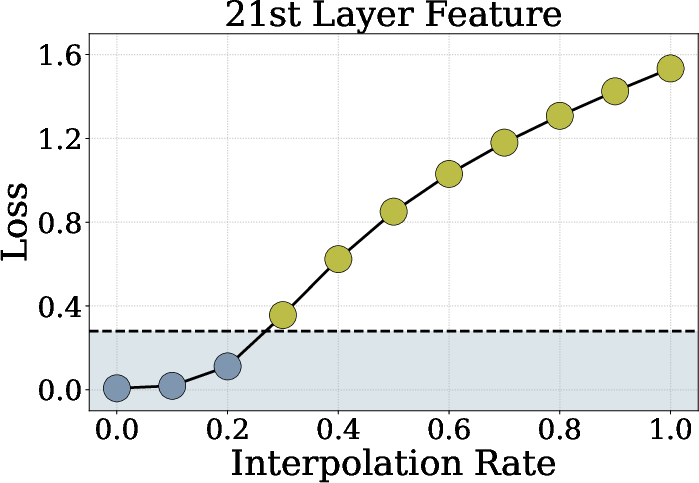
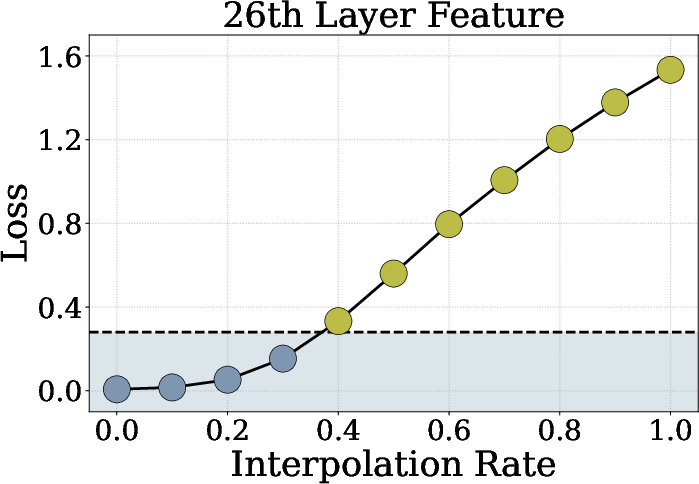
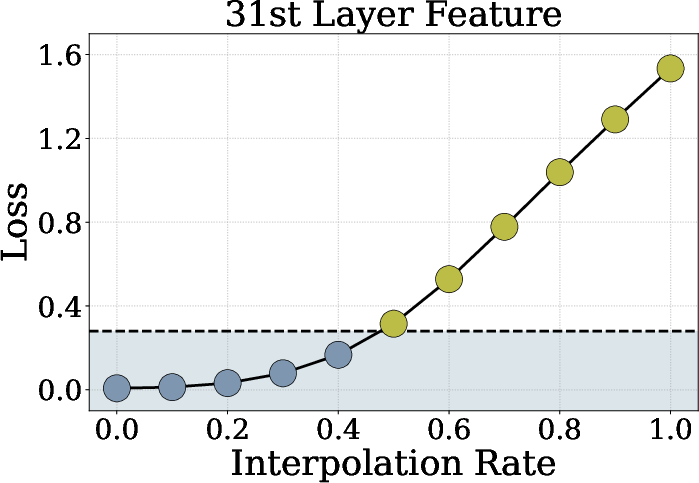
Figure 2: Feasible regions between jailbreaking and natural examples across different layersâ features. The blue and yellow points correspond to successful and failed examples on the source MLLM.
Ablation Studies
The ablation studies highlighted the individual contributions of each component of FORCE. Both layer feature regularization and spectral rescaling independently improved transferability, but their combined effect achieved the maximum performance gains.
Implications and Future Work
FORCE paves the way for more reliable and transferable visual jailbreaking attacks, offering a robust framework for red-teaming evaluations of MLLMs. However, the capabilities of FORCE highlight the need for improved defense strategies in multimodal systems. Future work may explore further integration with defense mechanisms to address the vulnerabilities exposed by such advanced attack methods. Additionally, expanding the scope of FORCE to other forms of adversarial attacks could present new insights into the defense and robustness of AI models.
Conclusion
FORCE represents a significant advancement in the field of adversarial machine learning, particularly for multimodal AI systems. By systematically addressing the limitations of current visual jailbreaking attacks, it enhances their real-world applicability in evaluating the security of complex AI systems. The study underscores the importance of understanding internal feature dependencies to improve cross-model attack transferability.