- The paper introduces Embodied-LM, a neurosymbolic system that uses image schemas to ground logical reasoning in sensorimotor experiences.
- It integrates sensorimotor-derived schemas with ASP via Declarative Spatial Reasoning, achieving 91% accuracy on logical deduction tasks.
- The approach enhances interpretability and error analysis while laying the groundwork for extending reasoning to spatiotemporal and dynamic domains.
Towards a Neurosymbolic Reasoning System Grounded in Schematic Representations
Introduction
LLMs have demonstrated impressive capabilities in natural language understanding; however, they frequently fall short in logical reasoning tasks due to their lack of the mental representations that humans inherently possess. The paper "Towards a Neurosymbolic Reasoning System Grounded in Schematic Representations" introduces a neurosymbolic system—Embodied-LM—that grounds understanding in image schemas derived from sensorimotor experiences. These schematic representations are translated into executable Answer Set Programming (ASP), facilitating logical deductions with high interpretability.
Embodied-LM Architecture
Embodied-LM leverages LLMs' capacity to interpret scenarios via image schemas, translating these into formal programs compatible with ASP. The system addresses spatial primitives and uses the Declarative Spatial Reasoning (DSR) framework to perform spatial reasoning.
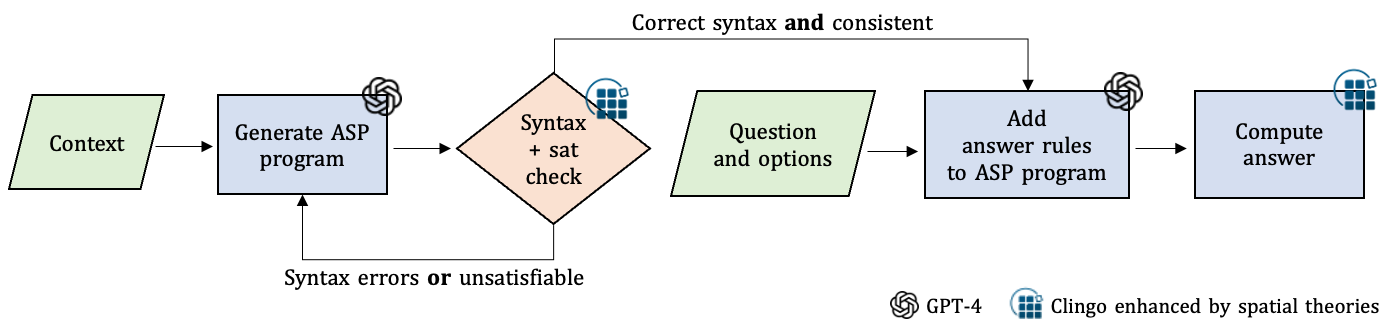
Figure 1: Architecture of Embodied-LM. A problem is given to the LLM that generates the Clingo input program. If errors occur, the LLM retries up to three times. Clingo then generates the answers and a witness for each model upon request.
Reasoning Through Embodied Cognition
The paper emphasizes the utility of image schemas—recurrent patterns that originate from sensorimotor experiences—in structuring cognition. Such schemas include spatial, spatiotemporal, and force-dynamic categories and are modeled as recurring patterns that can be formalized as executable logic. This framework allows for the incorporation of these schemas into cognitive processes for logical reasoning, providing a computational foundation for neurosymbolic AI.
Implementation and Methodology
The implementation involves integrating image schemas via DSR into ASP, allowing users to declare and reason about qualitative spatial relations. Embodied-LM amalgamates geometrical definitions with ASP logic rules, enabling formal reasoning and spatial interpretation of linguistic scenarios by LLMs such as GPT-4. The methodology includes a prompt strategy for ASP program generation and leveraging Clingo for reasoning tasks, enhanced by the DSR framework.
Experimental Validation
Experimental results demonstrate the system's efficiency and accuracy in logical reasoning tasks. The system was evaluated using datasets like the LogicalDeduction dataset, achieving 91% accuracy—comparable to other state-of-the-art neurosymbolic systems. Furthermore, the system effectively solved Zebra puzzles, demonstrating its capacity to handle complex reasoning scenarios by encoding logical constraints into the program.
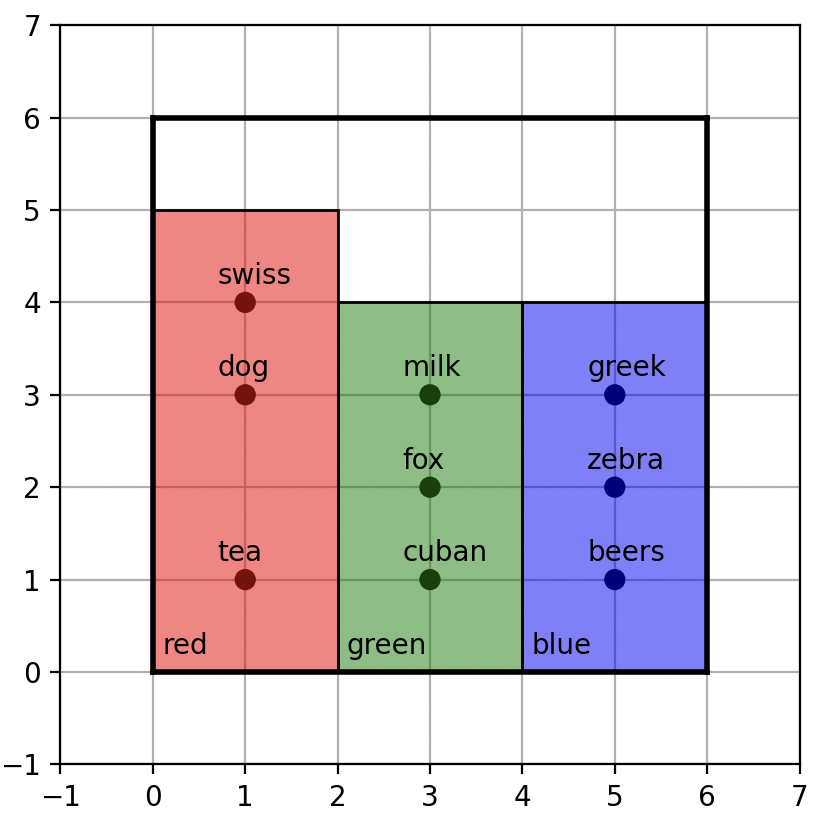
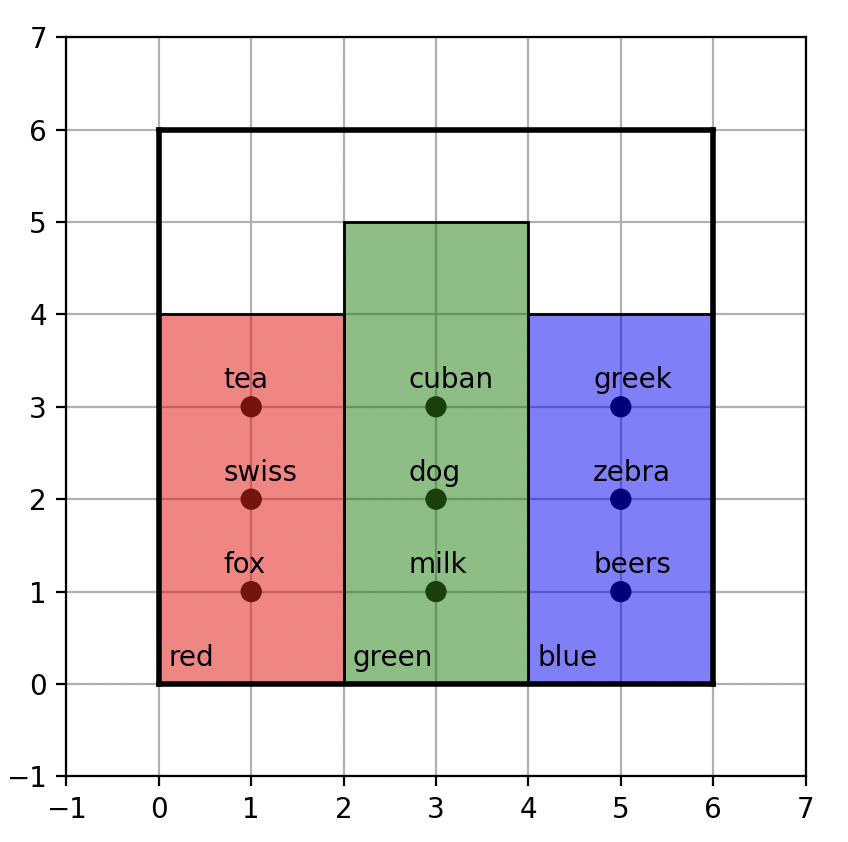
Figure 2: Left: Performance comparison on the LogicalDeduction dataset. Results for other systems highlight the effectiveness of Embodied-LM.
Results and Discussion
Embodied-LM illustrates that schematic structures grounded in human cognition can be efficiently employed for AI reasoning tasks. The universal language formed by these schemas demonstrates potential across diverse problem domains. Competitive performance was observed, maintaining robust interpretability not typically available in neural approaches, and providing insightful avenues for error analysis and system improvements.
Conclusion
The study presents Embodied-LM as a system establishing a computational foundation for logical reasoning via image schemas. While the current focus is on spatial primitives, future extensions could integrate spatiotemporal and dynamic reasoning, enabling the resolution of broader AI challenges. This neurosymbolic approach not only enhances logical inference capabilities but also paves the way for more sophisticated AI reasoning frameworks.
Embodied-LM sets a conceptual framework for extending image schema-based reasoning to greater complexities beyond spatial reasoning, such as mathematical and logic problems, further solidifying the role of embodied cognition in the evolution of AI.