- The paper presents a multi-dress-state engineered superheterodyne scheme that achieves 54.6 MHz instantaneous bandwidth and 140.4 nV cm⁻¹ Hz⁻¹/² sensitivity.
- It utilizes a detuning-dependent dual-peak response and a Rabi-frequency driven dip-lifting effect to optimize sensor coherence and performance.
- The findings open new avenues for applications in radar, wireless communication, and quantum-enhanced metrology.
Multi-Dress-State Engineered Rydberg Electrometry: Achieving 100-MHz-level Instantaneous Bandwidth
Introduction
The paper "Multi-Dress-State Engineered Rydberg Electrometry: Achieving 100-MHz-level Instantaneous-Bandwidth" investigates the challenge of enhancing both sensitivity and instantaneous bandwidth in Rydberg-based microwave (MW) electric field sensors. While Rydberg atoms offer exceptional potential due to their large electric dipole moments and tunable transitions, achieving high sensitivity and broad bandwidth simultaneously in MW transducers has remained challenging. The paper proposes a multi-dress-state engineered superheterodyne detection scheme to address this issue.
Experimental Approach
The proposed methodology utilizes a multi-dress-state engineered superheterodyne scheme (MDSES), which exploits a detuning-dependent dual-peak response structure and a Rabi-frequency-driven dip-lifting effect for bandwidth enhancement. The experimental setup involves a thermal 87Rb vapor-based transducer (Figure 1). The atoms are excited to the Rydberg state using probe and coupling fields, further coupled by local and signal MW fields to form six-wave mixing processes that generate positive and negative sidebands.
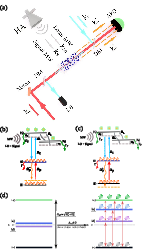
Figure 1: The multi-dress-state engineering superheterodyne scheme.
The MDSES scheme allows manipulation of multiple dressed states wherein non-zero coupling detuning breaks initial symmetry, redistributing dressed states for improved coherence. This redistribution enables the system to maintain collective coherence over a broad range of MW signal detuning frequencies, thereby expanding the instantaneous bandwidth.
Results and Analysis
Experimental results demonstrated significant advancements in MW sensing performance. Through strategic adjustments in Rabi frequencies and detuning, sensitivity reached 140.4 nVcm−1Hz−1/2 and instantaneous bandwidth extended to 54.6 MHz, closely approaching practical requirements for MW antennas in applications such as radar and wireless communication. Noteworthy is the dual response peaks induced by multiple dressed states, as showcased in Figure 2.
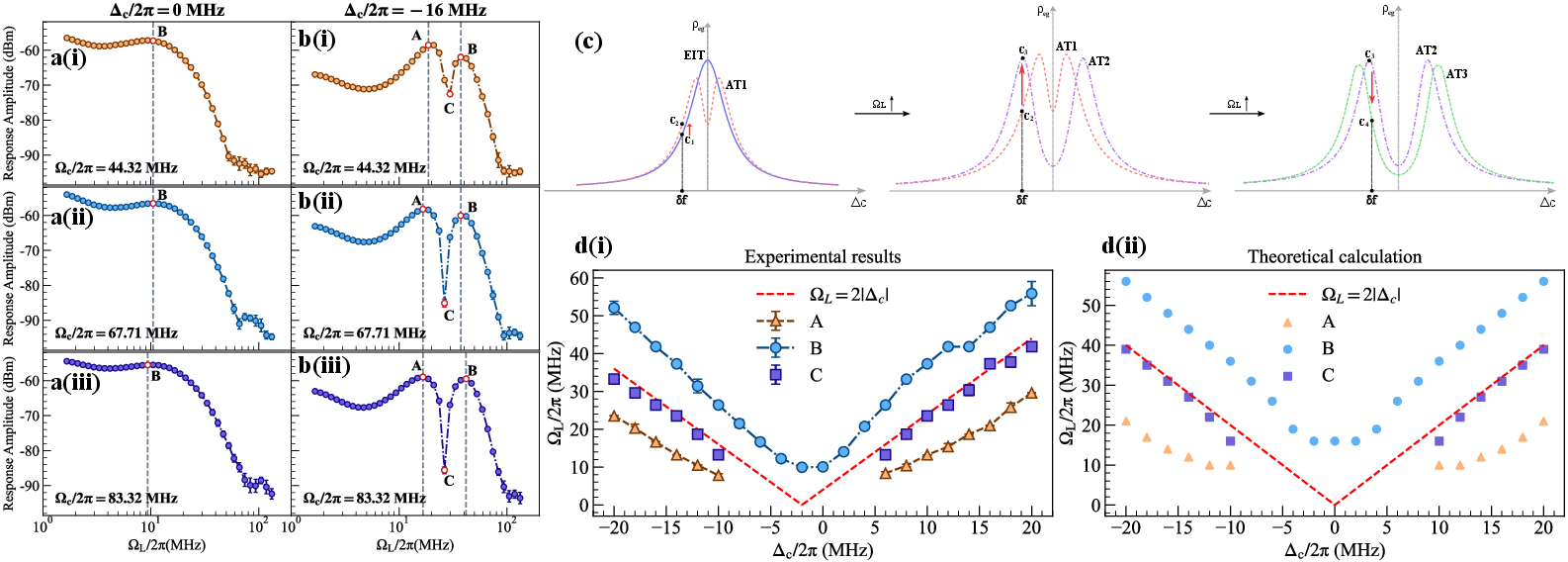
Figure 2: Experimental results and physical mechanism for dual response peaks.
Depth analysis revealed that the lifting of response dips plays a crucial role in enhancing bandwidth. This effect, driven by Rabi frequencies, allows the MW transducer to maintain a broad yet stable operational bandwidth with sustained sensitivity. The experimental investigations confirmed varying detuning to detect peak responses, ensuring optimal conditions for practical applications.
Future Directions
The study highlighted the potential for further improvements in sensitivity and bandwidth by incorporating additional dressed parameters. The MDSES technique's architecture-agnostic nature suggests possibilities for its application across different Rydberg detection methodologies, from superheterodyne to direct detection. Additionally, developments may expand towards quantum-enhanced metrology, using dressing-based control in other atomic systems where dynamic Stark effects are significant.
Conclusion
The research introduces a novel approach for improving bandwidth and sensitivity in Rydberg-based MW sensors. By manipulating multi-dressed states, it provides significant enhancements that bridge atomic sensing and real-world applications, meeting contemporary MW receiver demands. The findings lay the groundwork for versatile implementations in radar, wireless communication, and spectrum monitoring applications, establishing a path forward for the deployment of Rydberg microwave technologies.
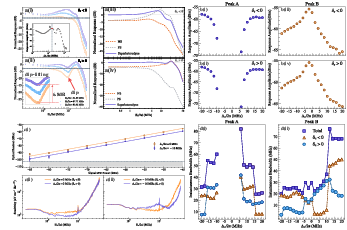
Figure 3: Experimental results of sensitivity and instantaneous bandwidth.