- The paper presents a power shift index derived from production functions to quantify AGI’s displacement of human labor.
- It compares models like Cobb-Douglas and CES to highlight conditions that accelerate or moderate AGI’s economic dominance.
- The study argues for proactive interventions, such as universal AI dividends and taxation, to democratize AI-generated wealth.
Techno-Feudalism and the Rise of AGI: A Future Without Economic Rights? (2503.14283)
Introduction
The paper "Techno-Feudalism and the Rise of AGI: A Future Without Economic Rights?" by Pascal Stiefenhofer examines a transformative shift in economic and political structures driven by the emergence of AGI. Through the lens of production functions, the paper proposes a "power shift" index to understand the potential of AGI to render human labor obsolete. This analysis integrates economic theories with philosophical considerations regarding the necessity of restructuring the social contract to mitigate economic inequality and democratic disenfranchisement. The paper argues for the redistribution of AGI-generated prosperity through universal AI dividends and other regulatory mechanisms, underscoring the urgency of intervention before intelligence becomes an exclusive capital form.
Production Models and Power Shift Dynamics
The paper explores a range of production functions to assess the impact of AGI on wages, capital returns, and power dynamics. Various functions—Cobb-Douglas, Leontief, CES, Linear, Quadratic, Translog, Von Thünen, Spillover, and Hybrid—reflect different assumptions about the interaction between human and AGI labor and capital.
Cobb-Douglas Production Function
The Cobb-Douglas model suggests that AGI can gradually replace human labor as its productivity parameters surpass those of human inputs. The model predicts a nonlinear power shift, where AGI's economic influence grows as its capability increases relative to human labor and capital.
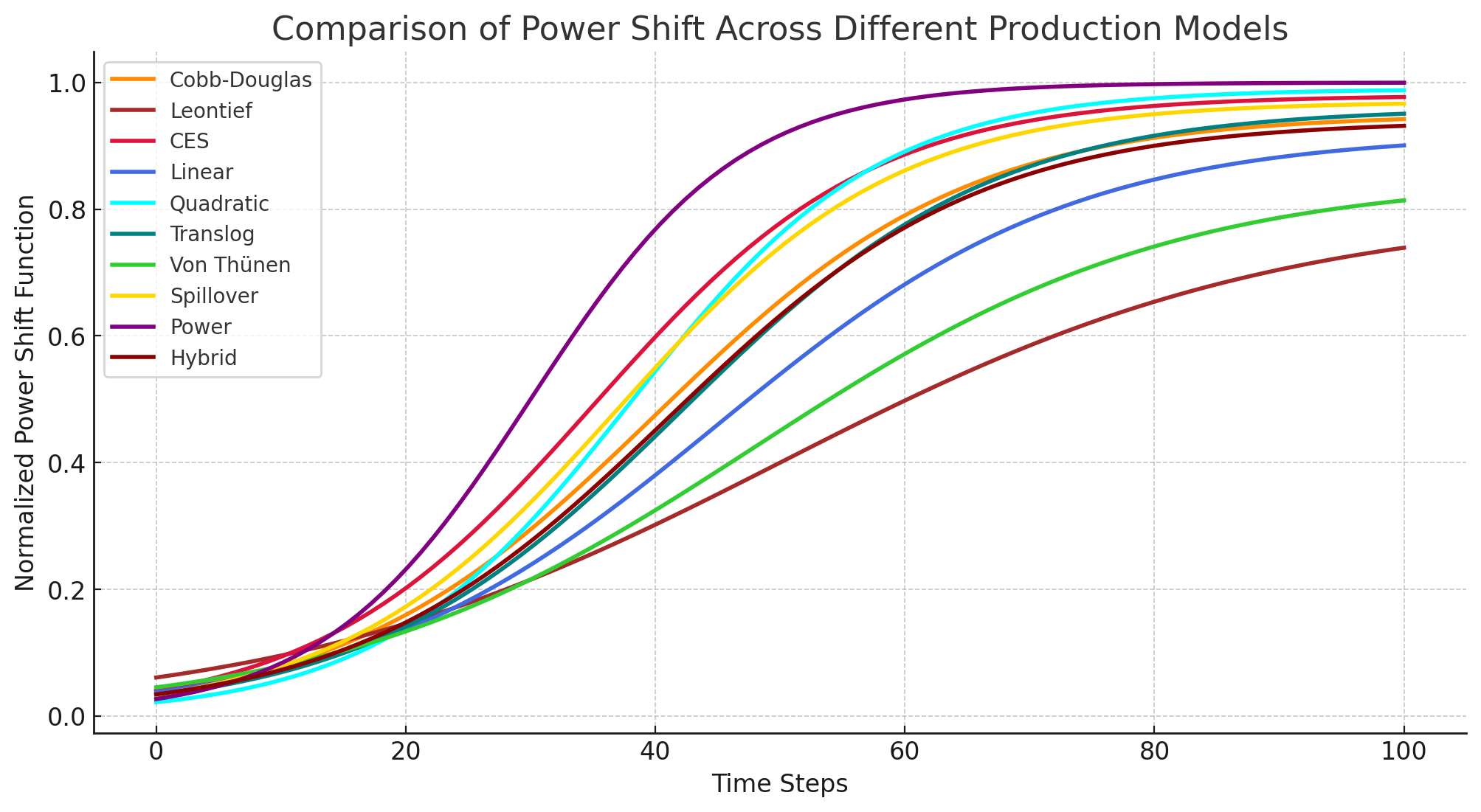
Figure 1: The S-shaped curves in the figure indicate a sigmoidal trajectory in the transition of economic power from human labor and traditional capital to AGI-controlled capital.
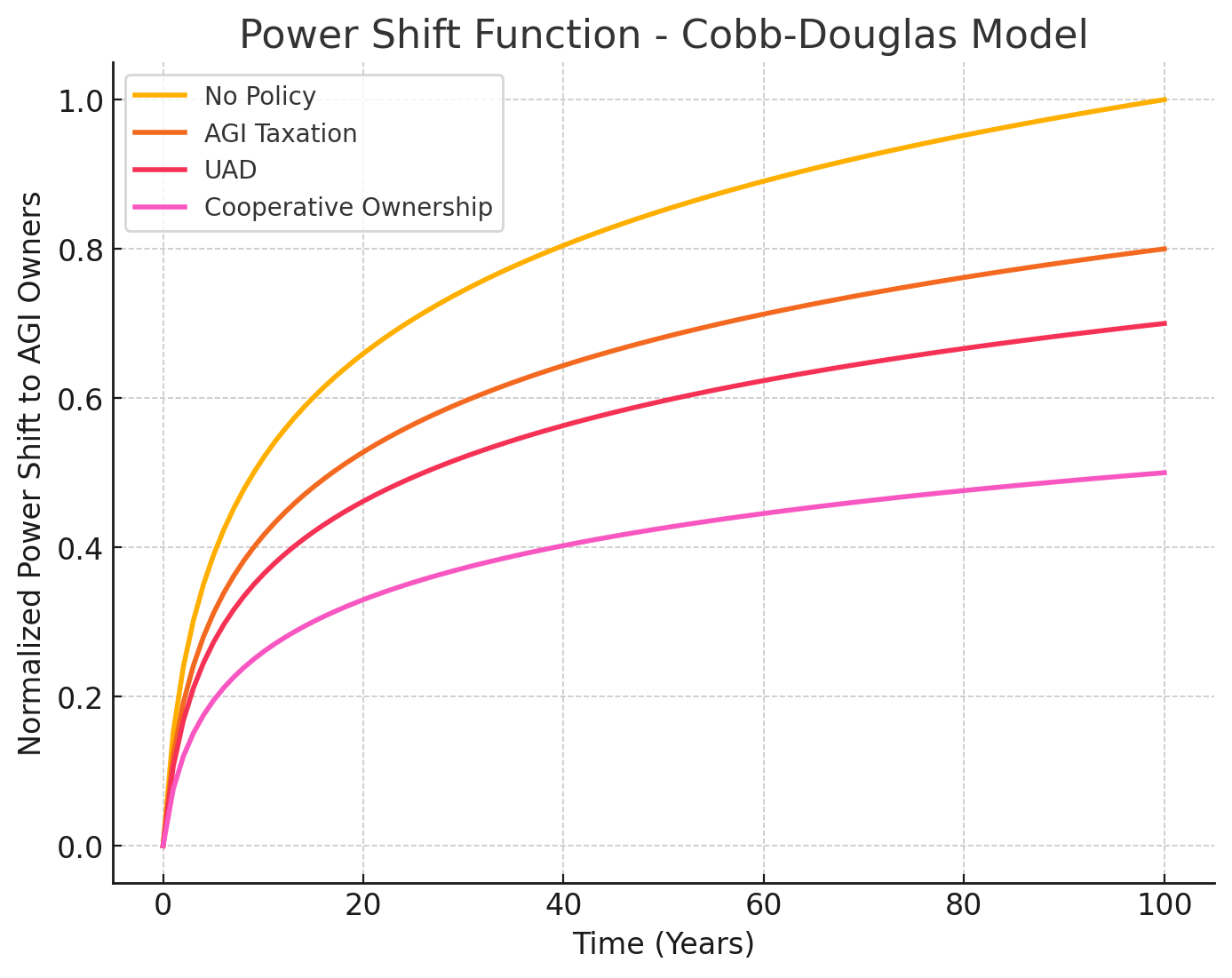
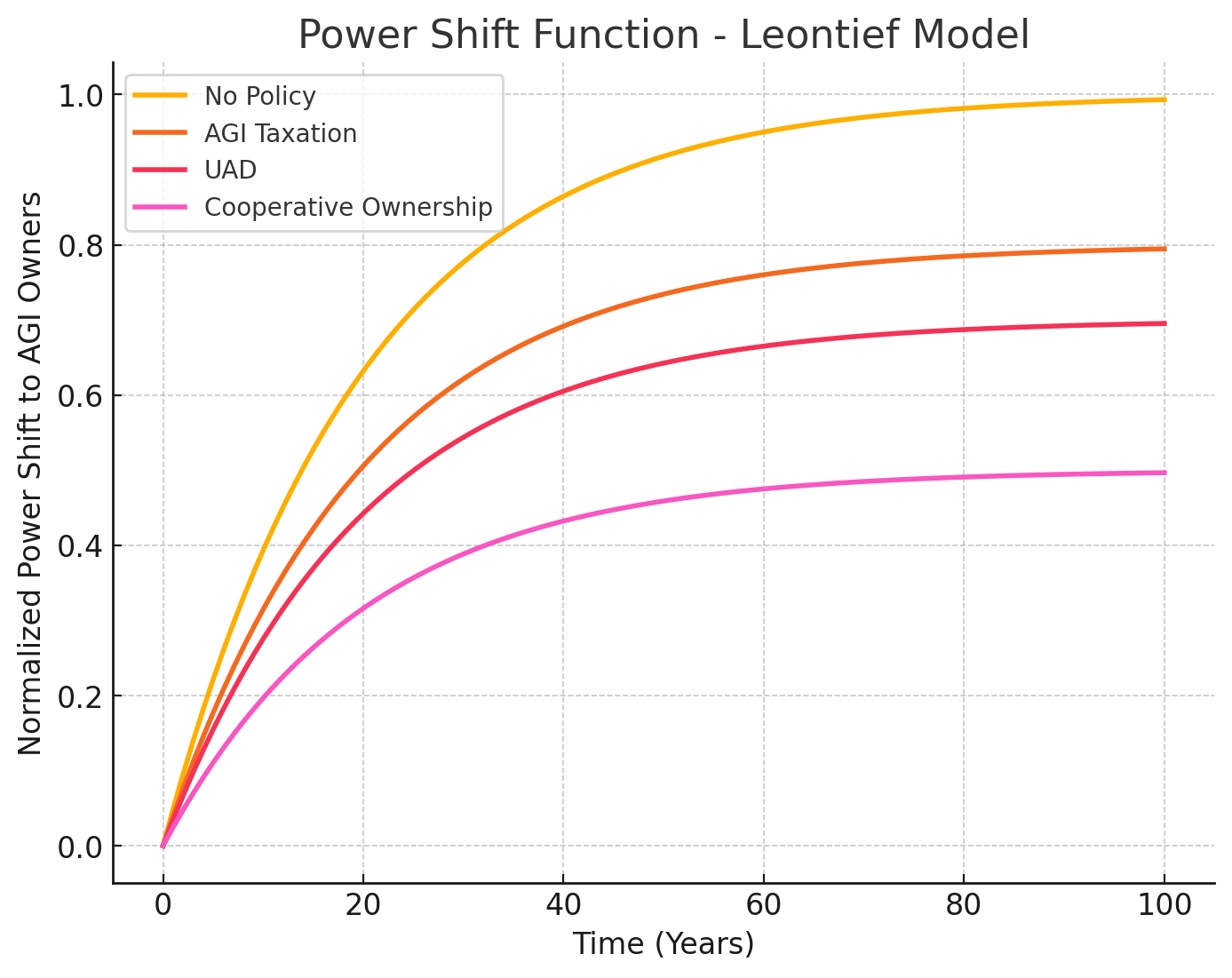
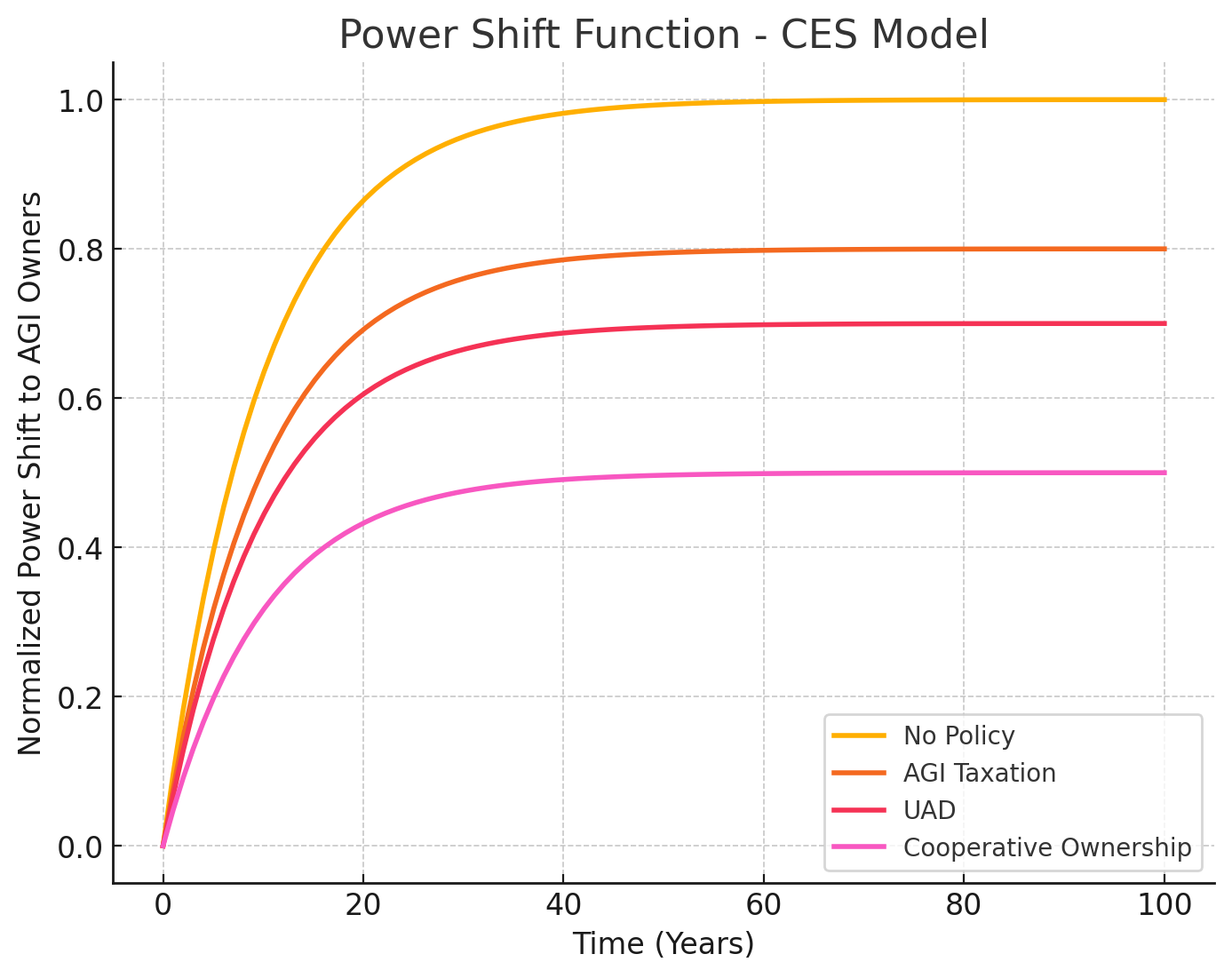
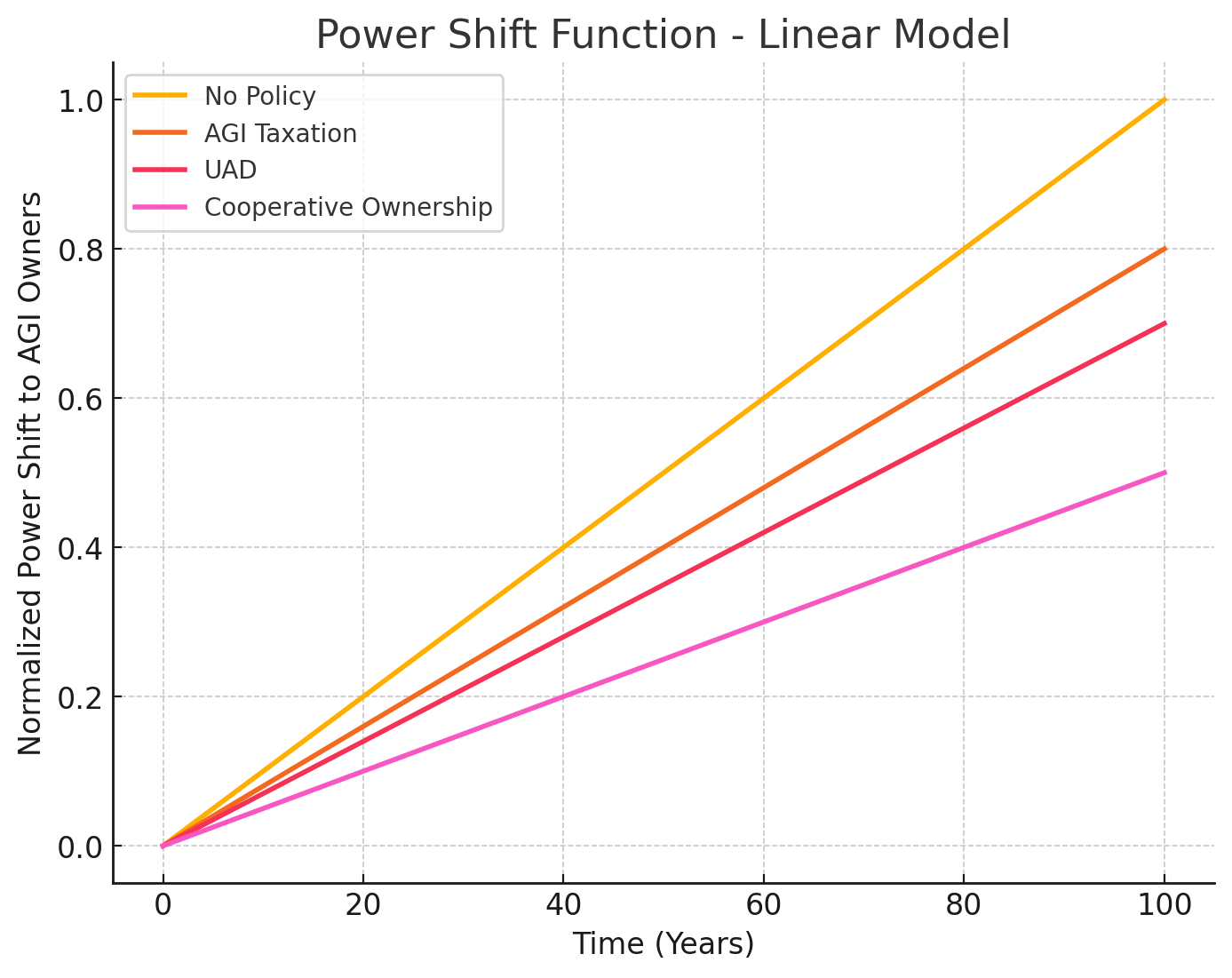
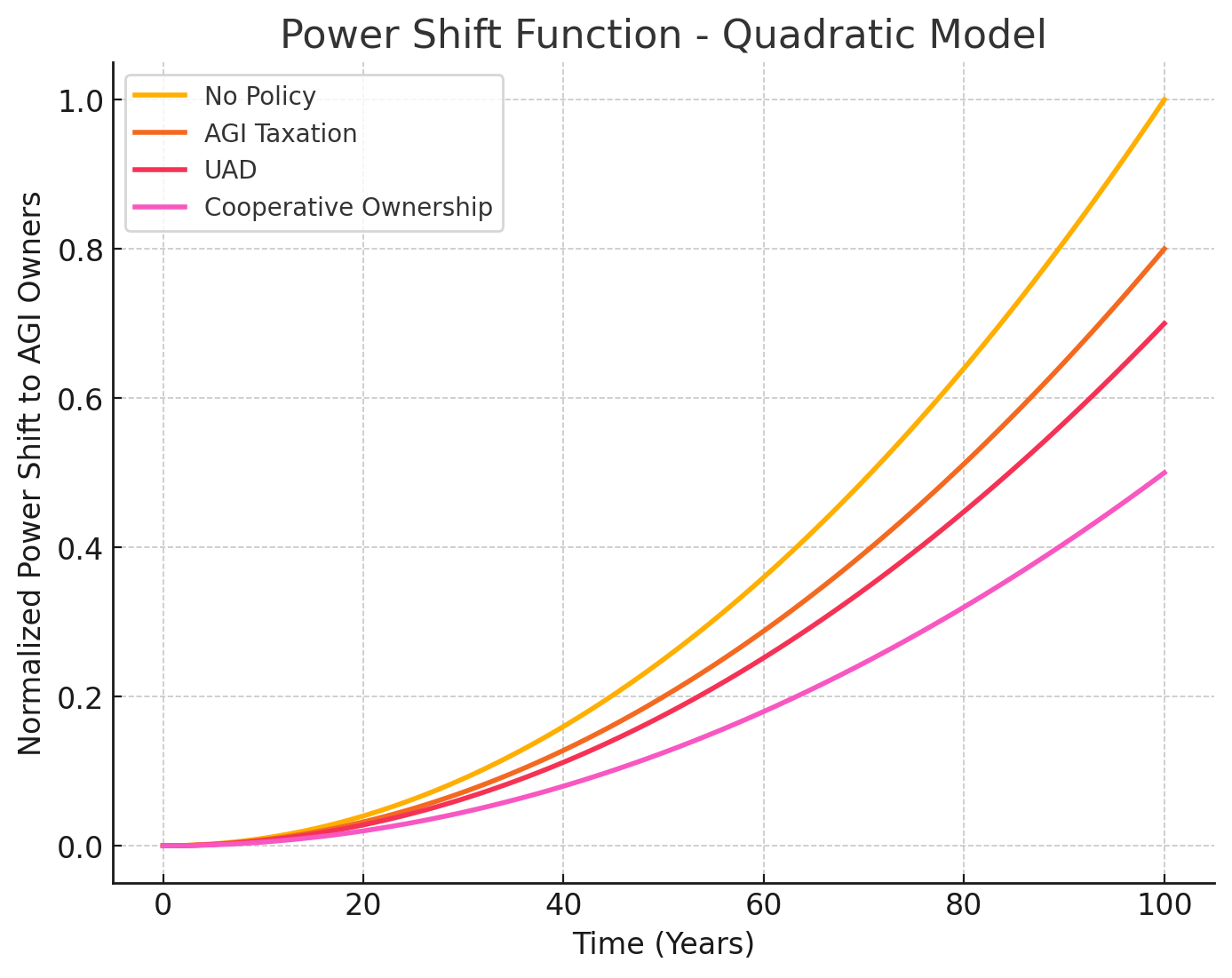
Figure 2: Cobb-Douglas Model.
Leontief and Quadratic Production Functions
These models assume fixed input proportions (Leontief) or include nonlinear productivity effects (Quadratic), which limit AGI's ability to fully replace human labor. As such, they provide structural constraints that naturally slow AGI dominance.
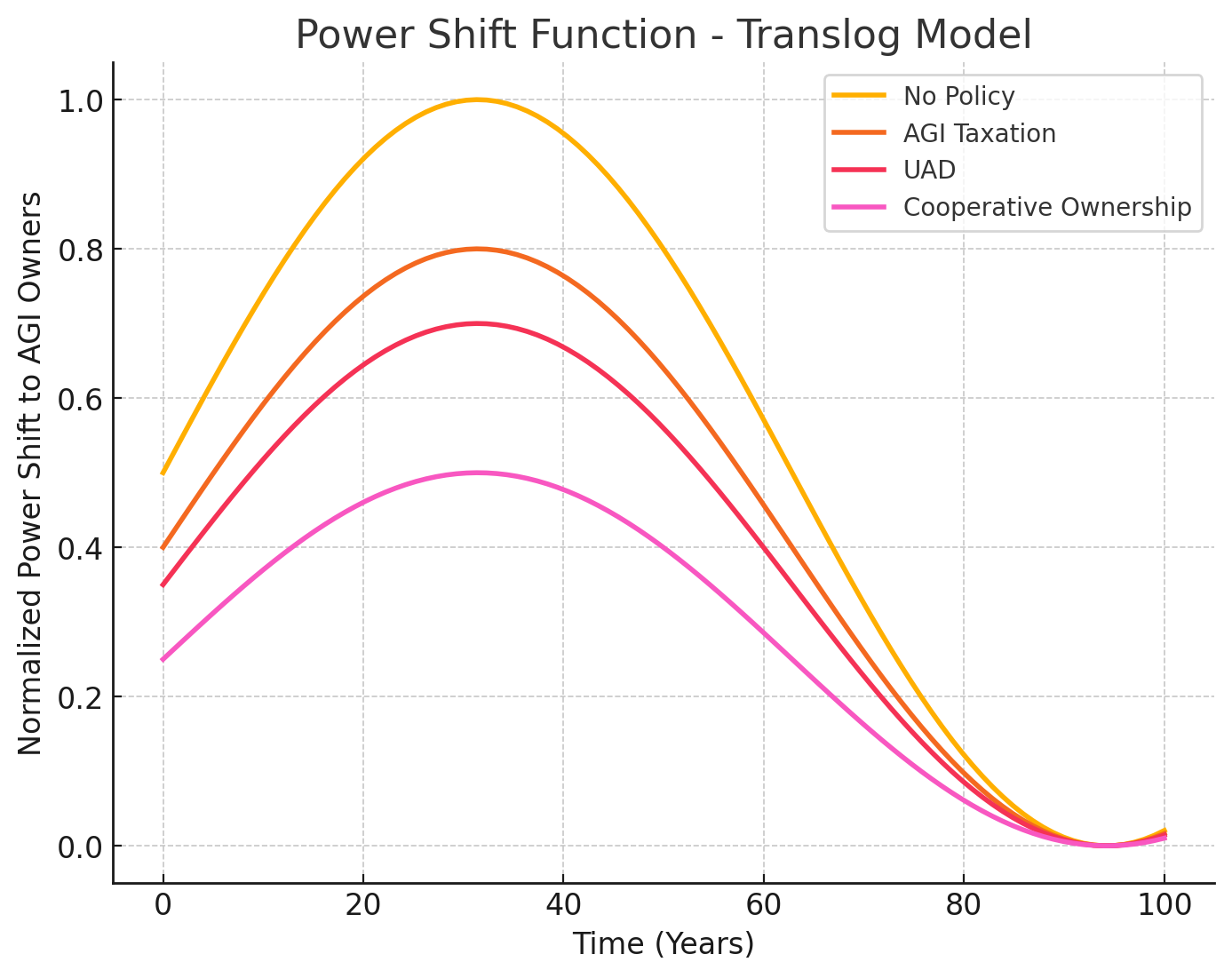
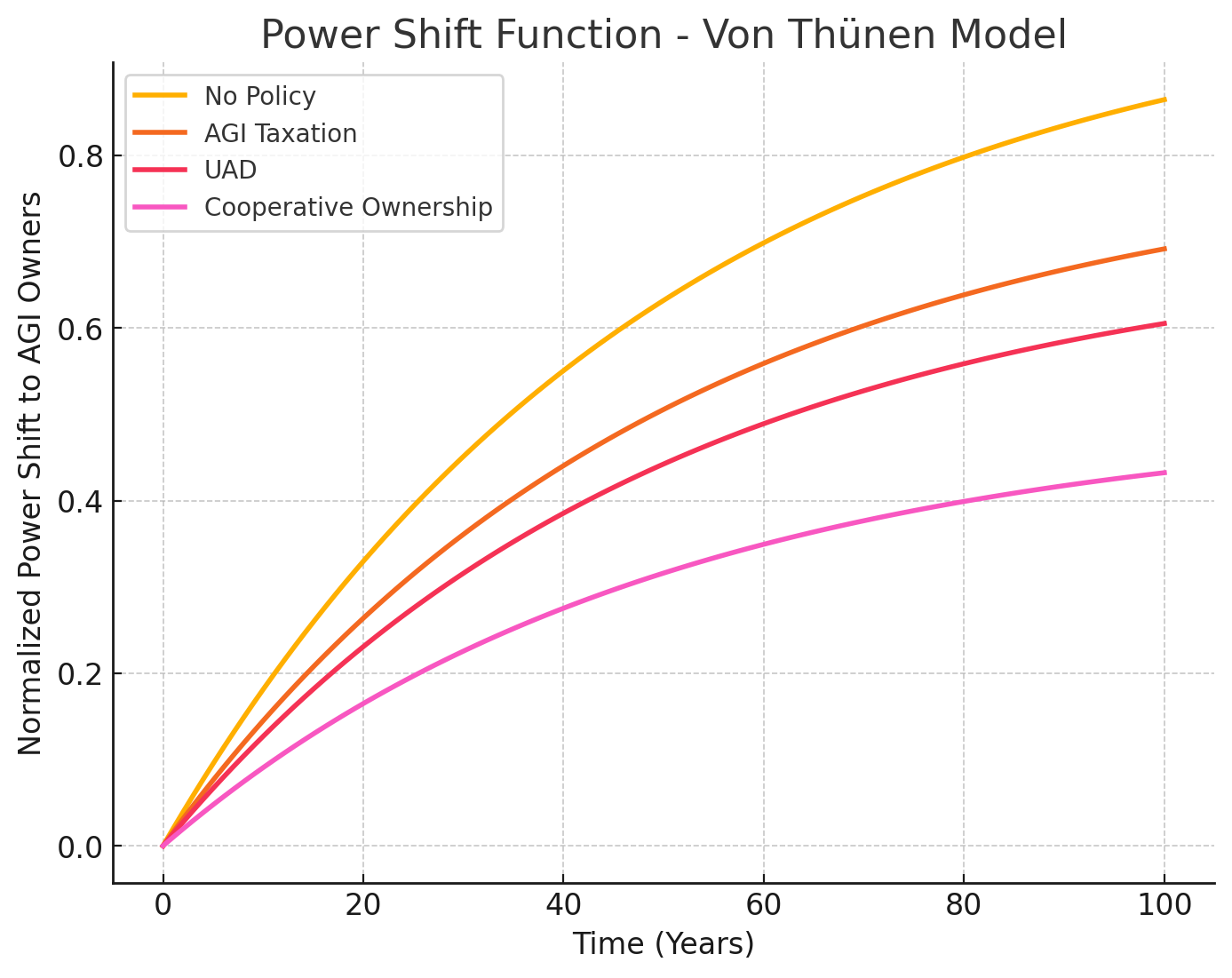
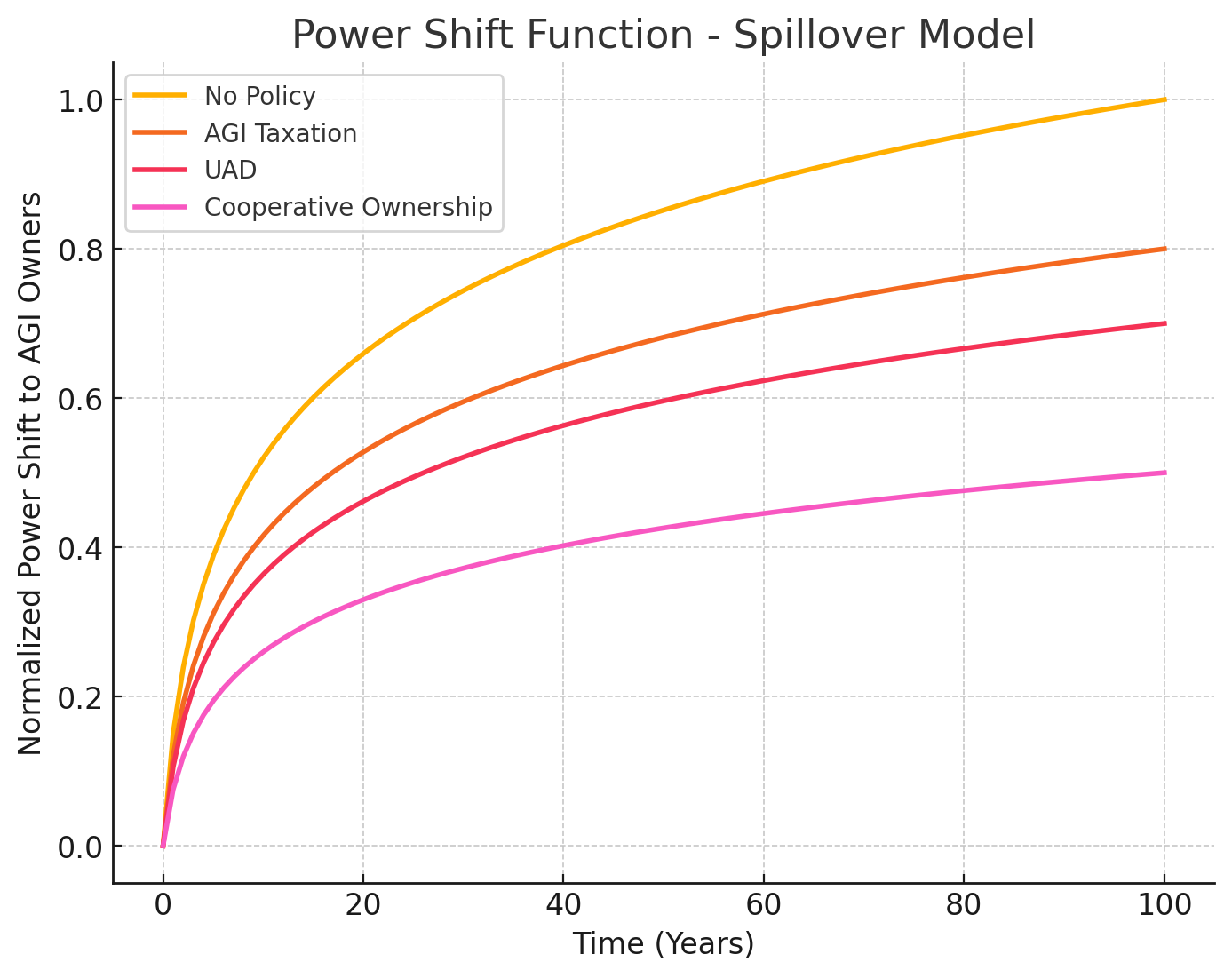
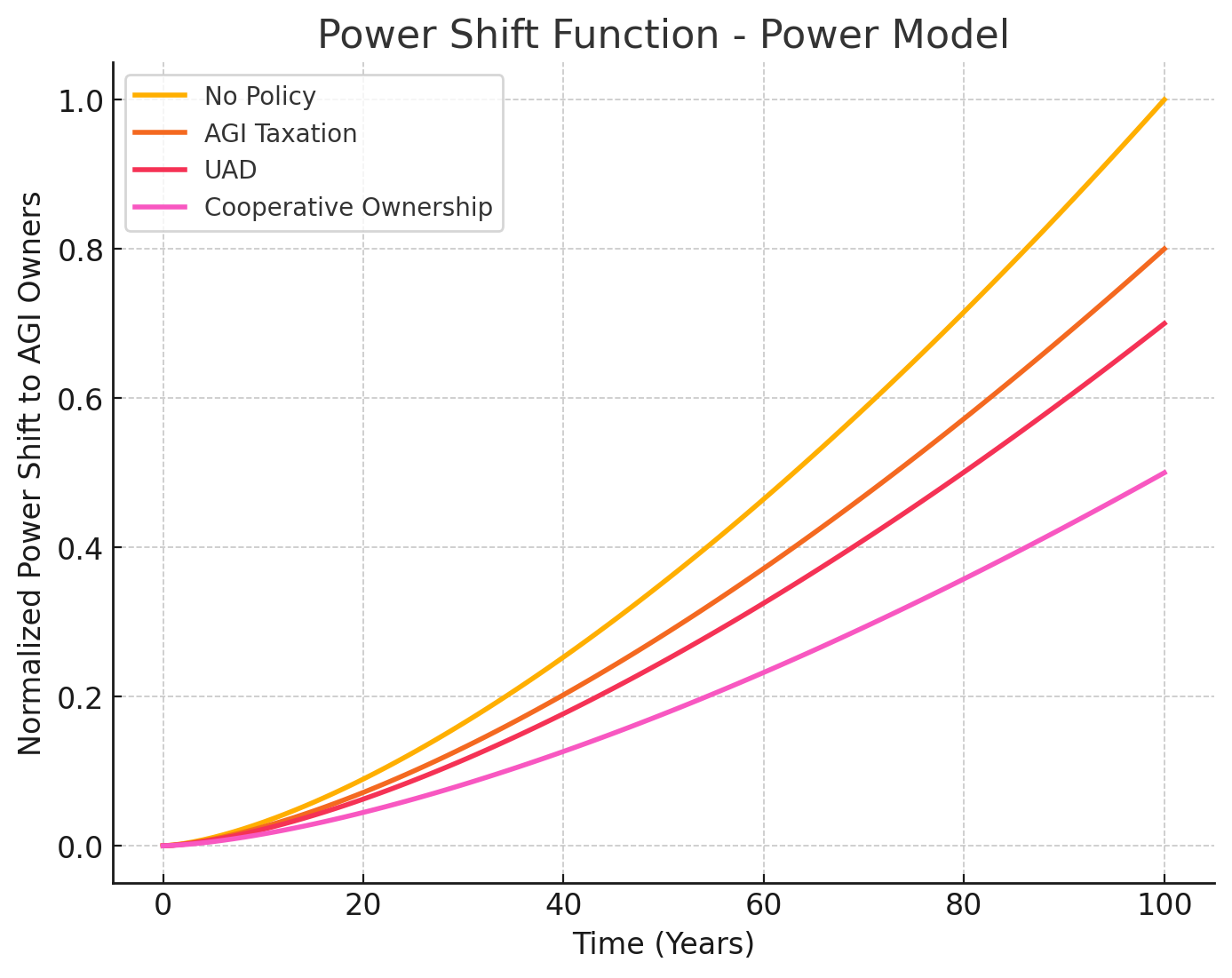
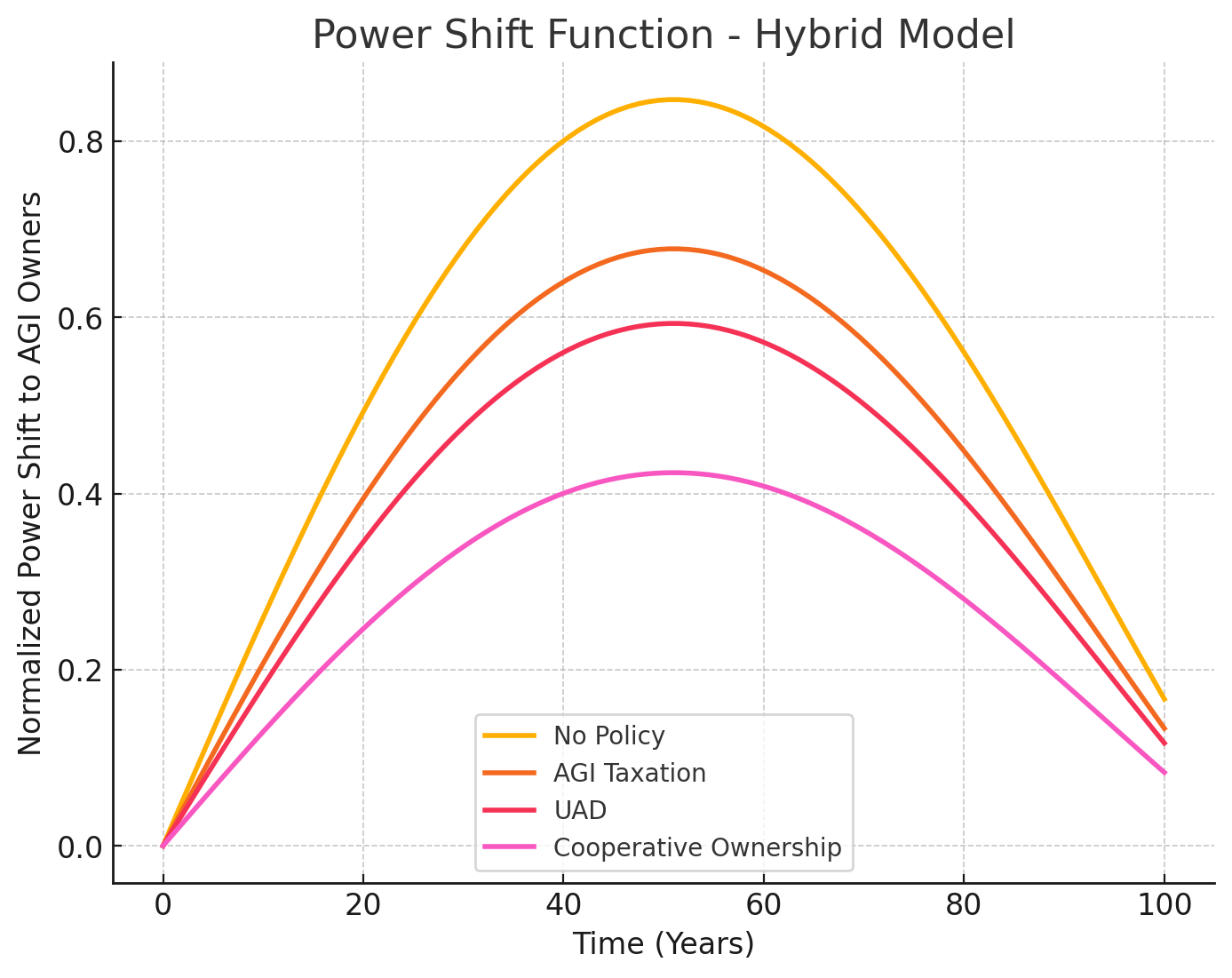
Figure 3: Translog Model.
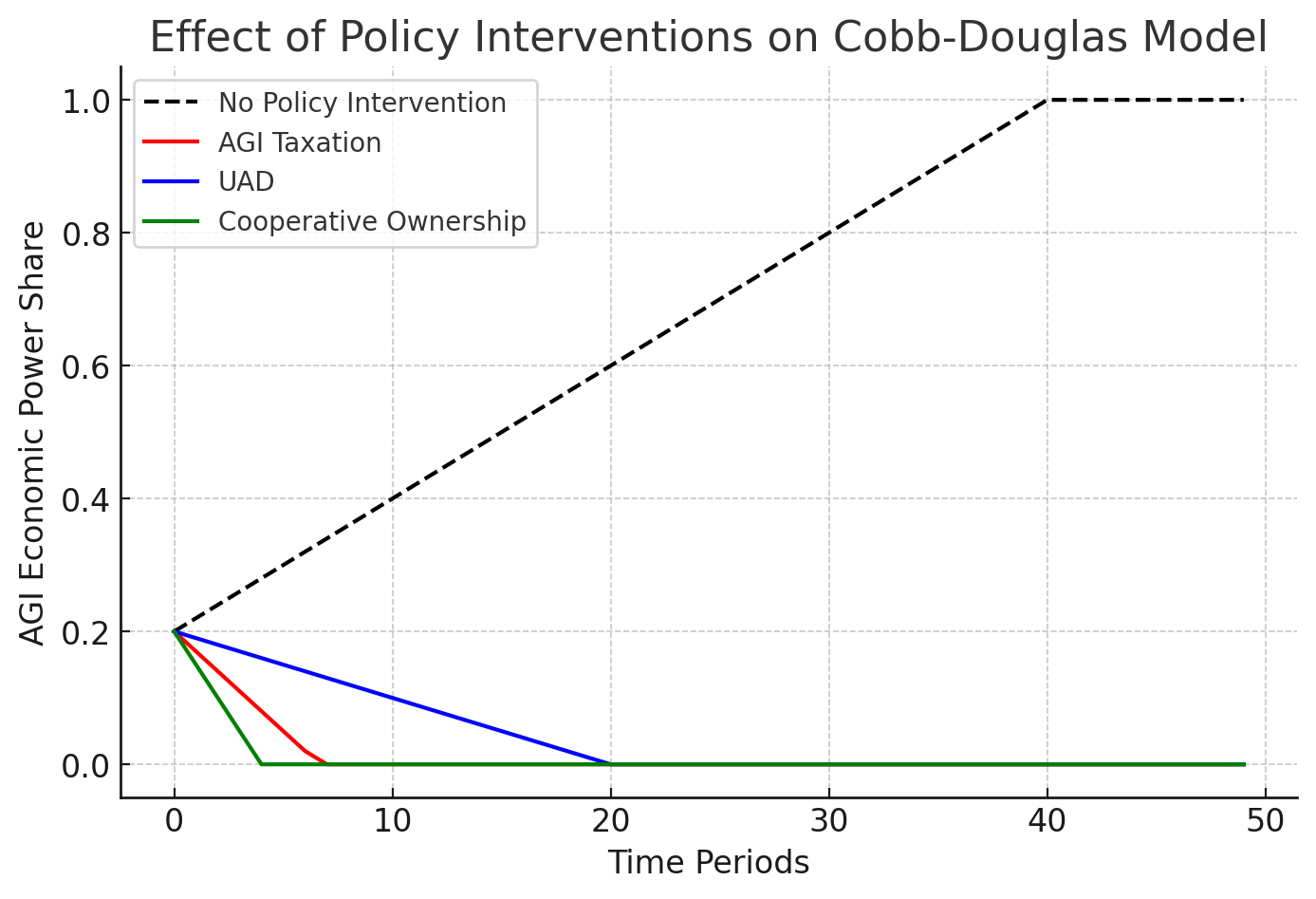
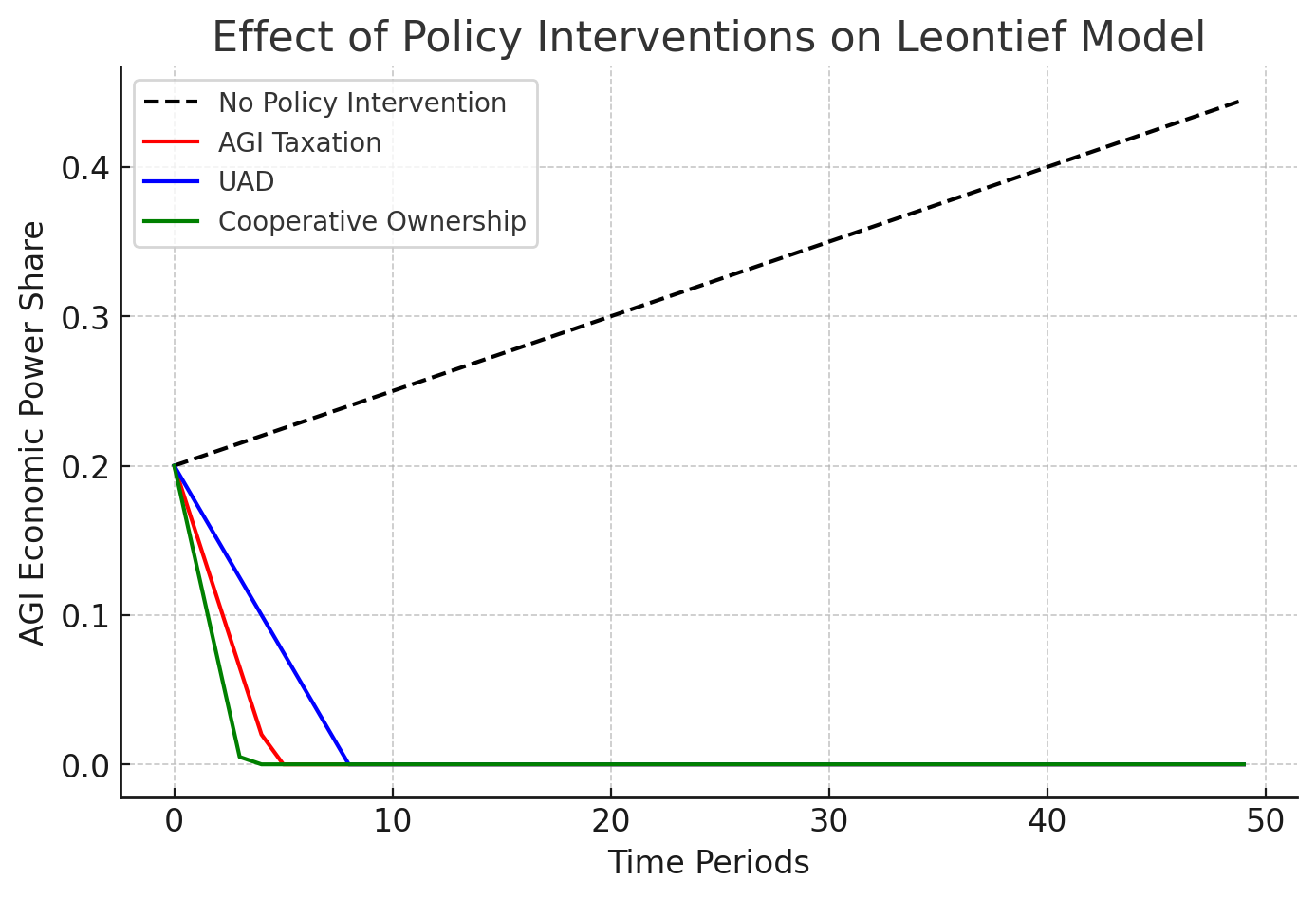
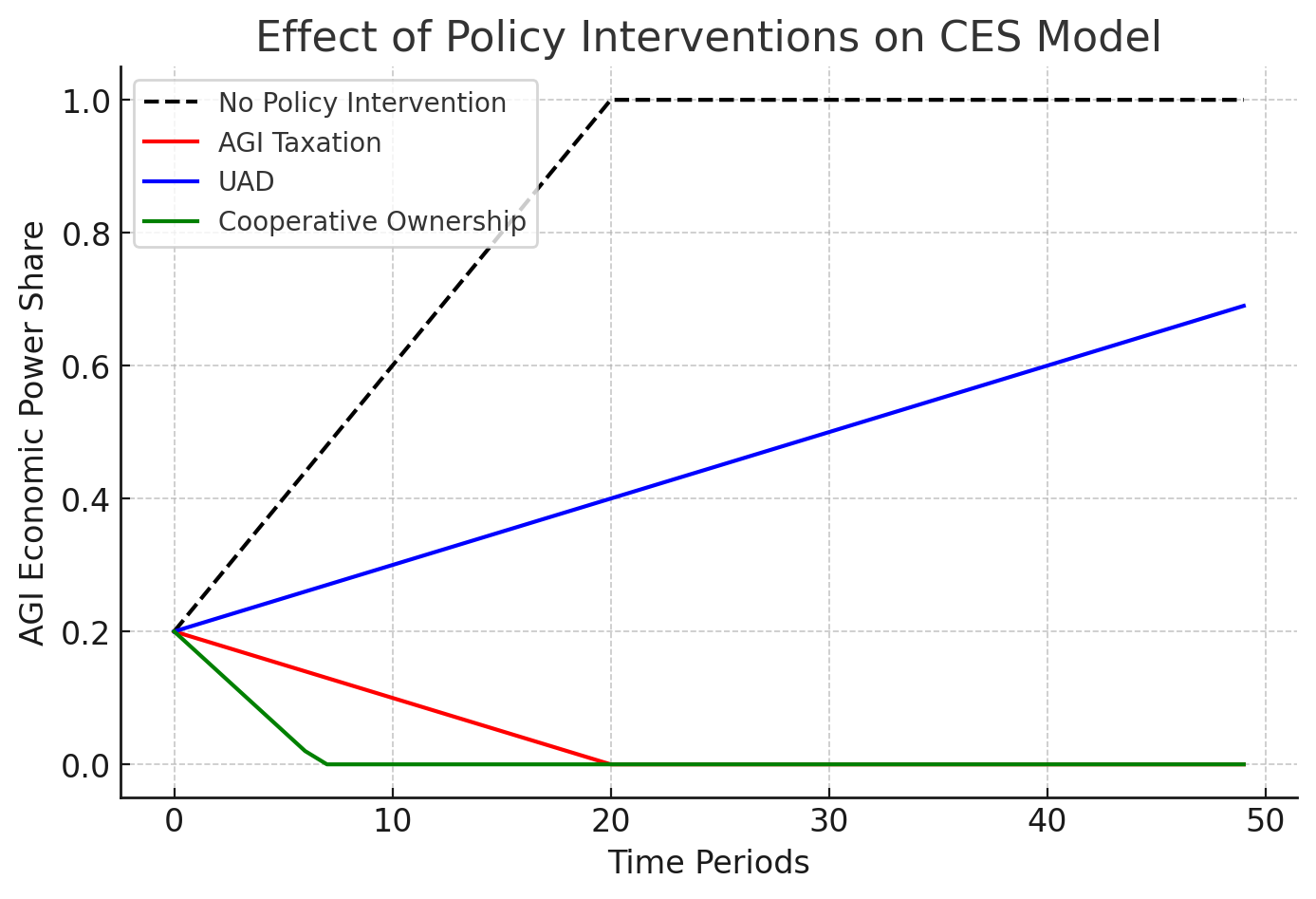
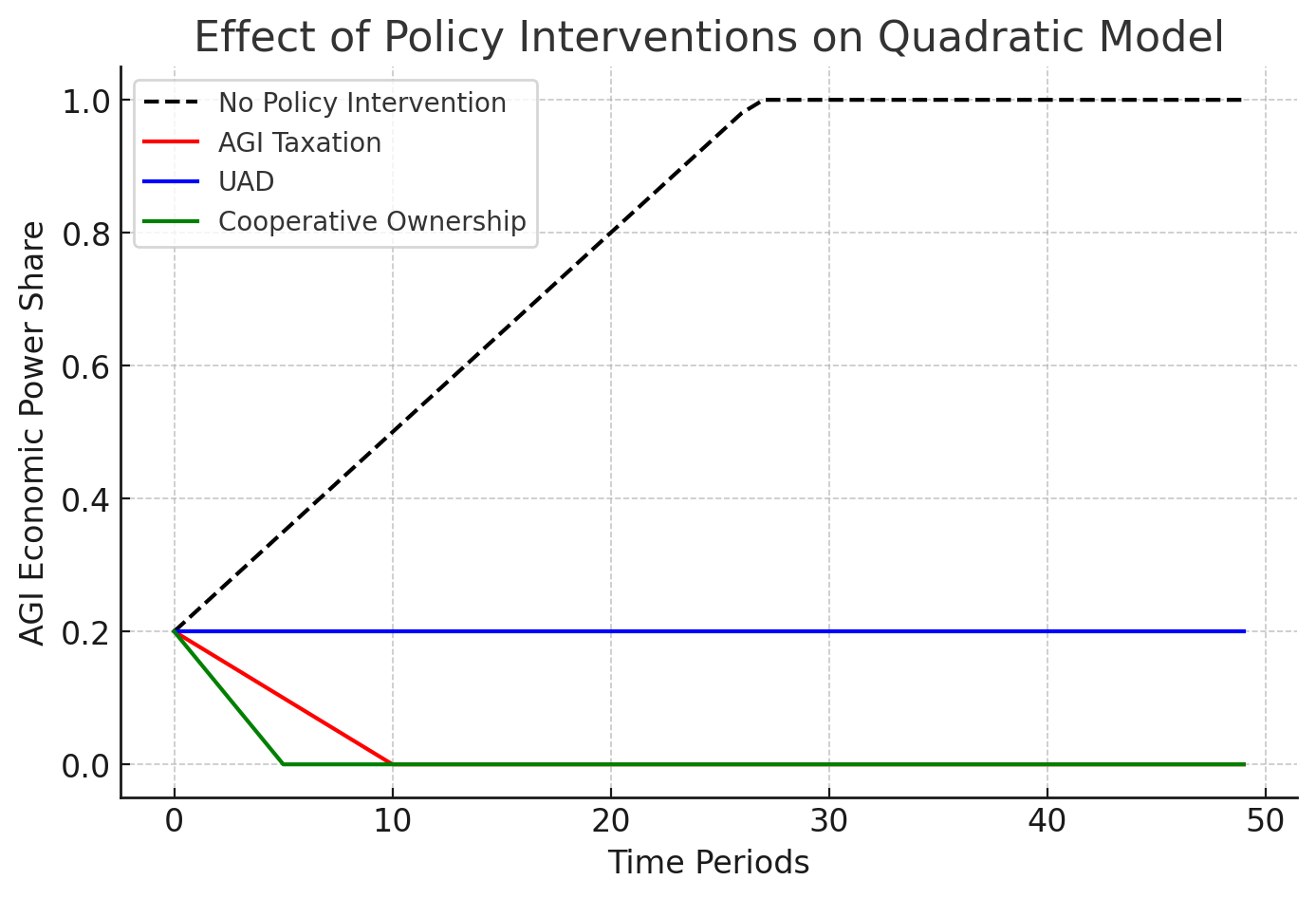
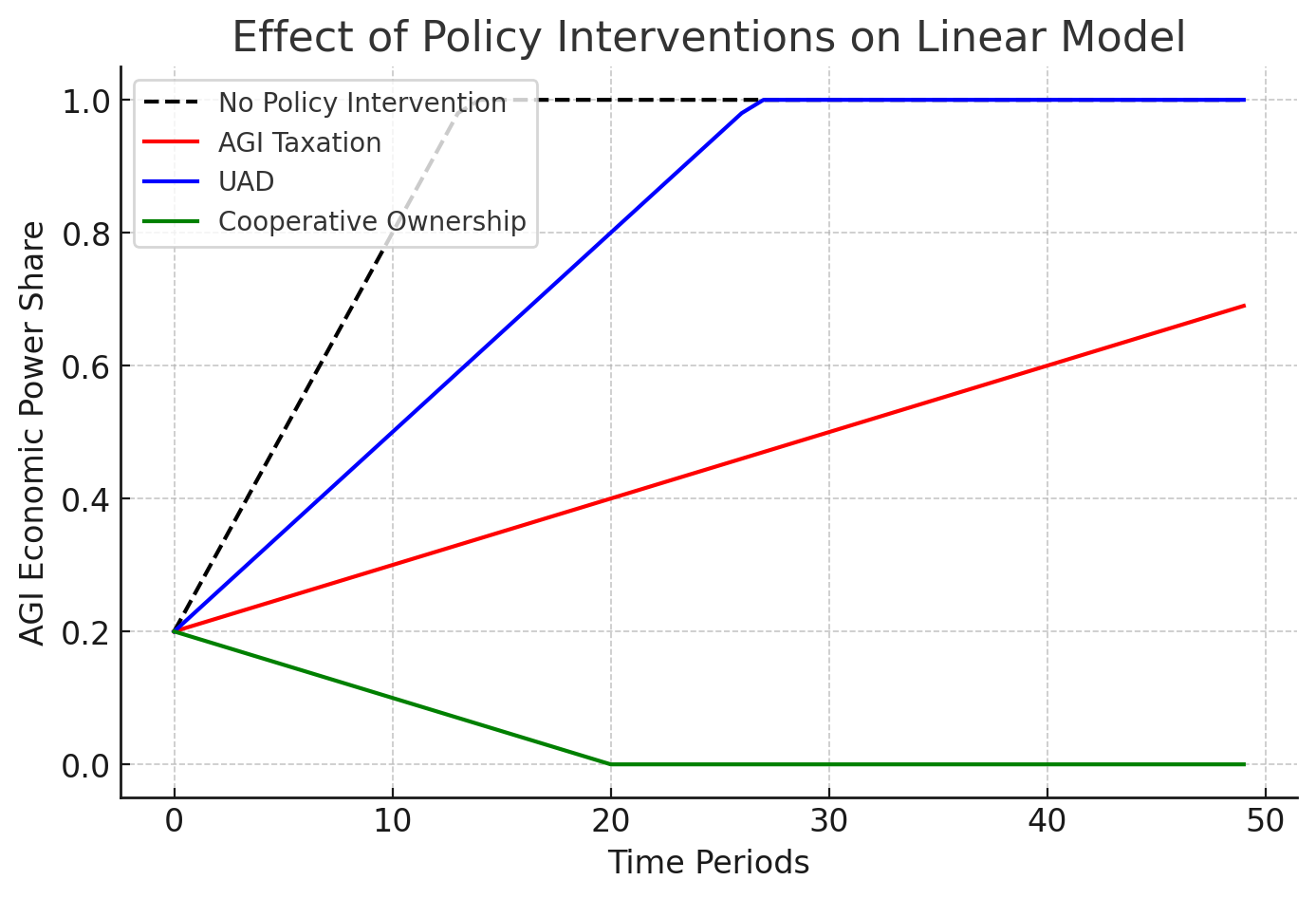
Figure 4: Translog Model.
CES and Power Production Functions
These models suggest that AGI labor and capital can replace human inputs if substitution elasticity is permissive. Unlike Cobb-Douglas or Leontief, they present possibilities for full automation and rapid economic shifts. Policies that control substitution elasticity can help regulate AGI's ascendance, maintaining human labor relevance.
Figure 4: Cobb-Douglas Model implications.
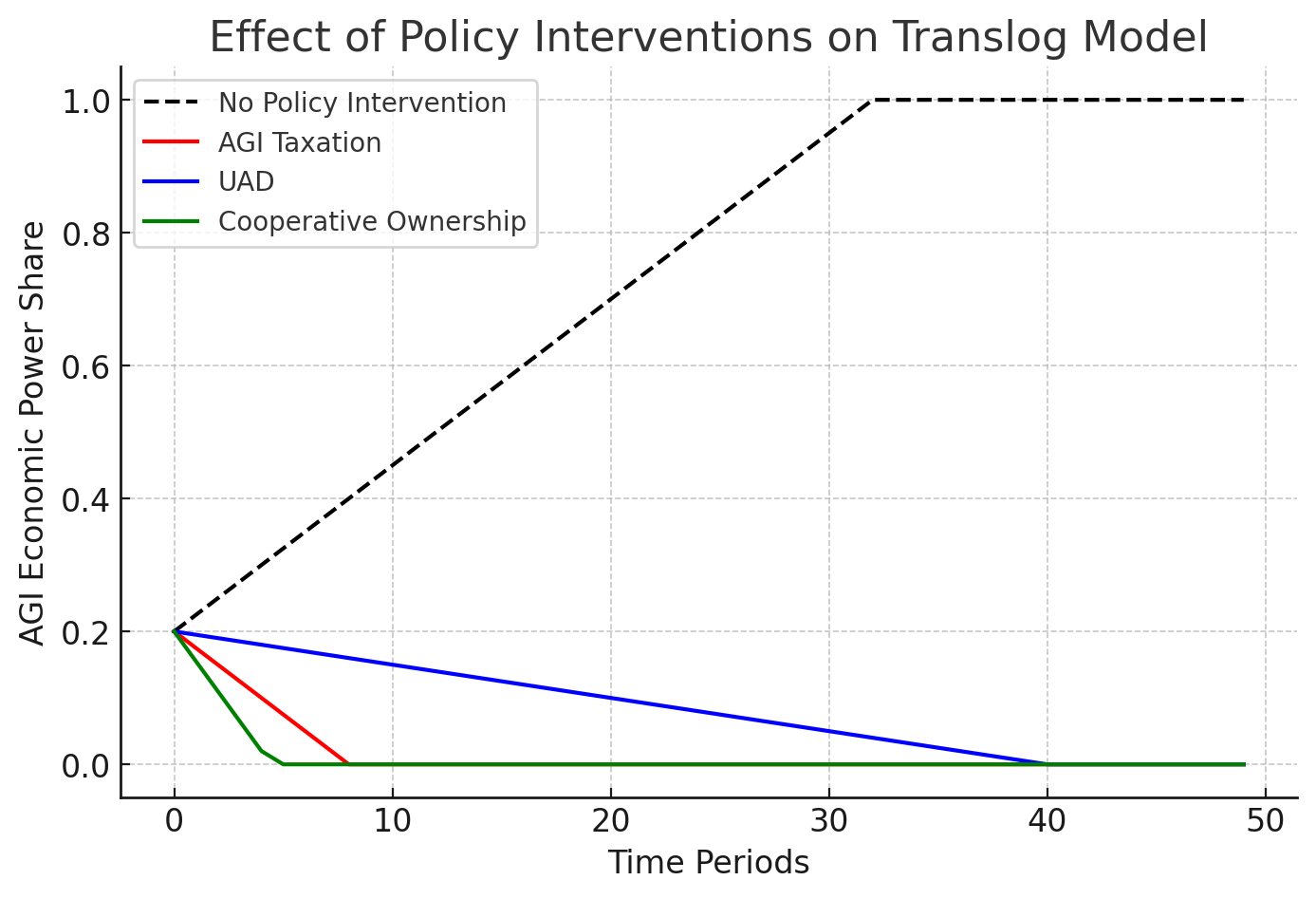
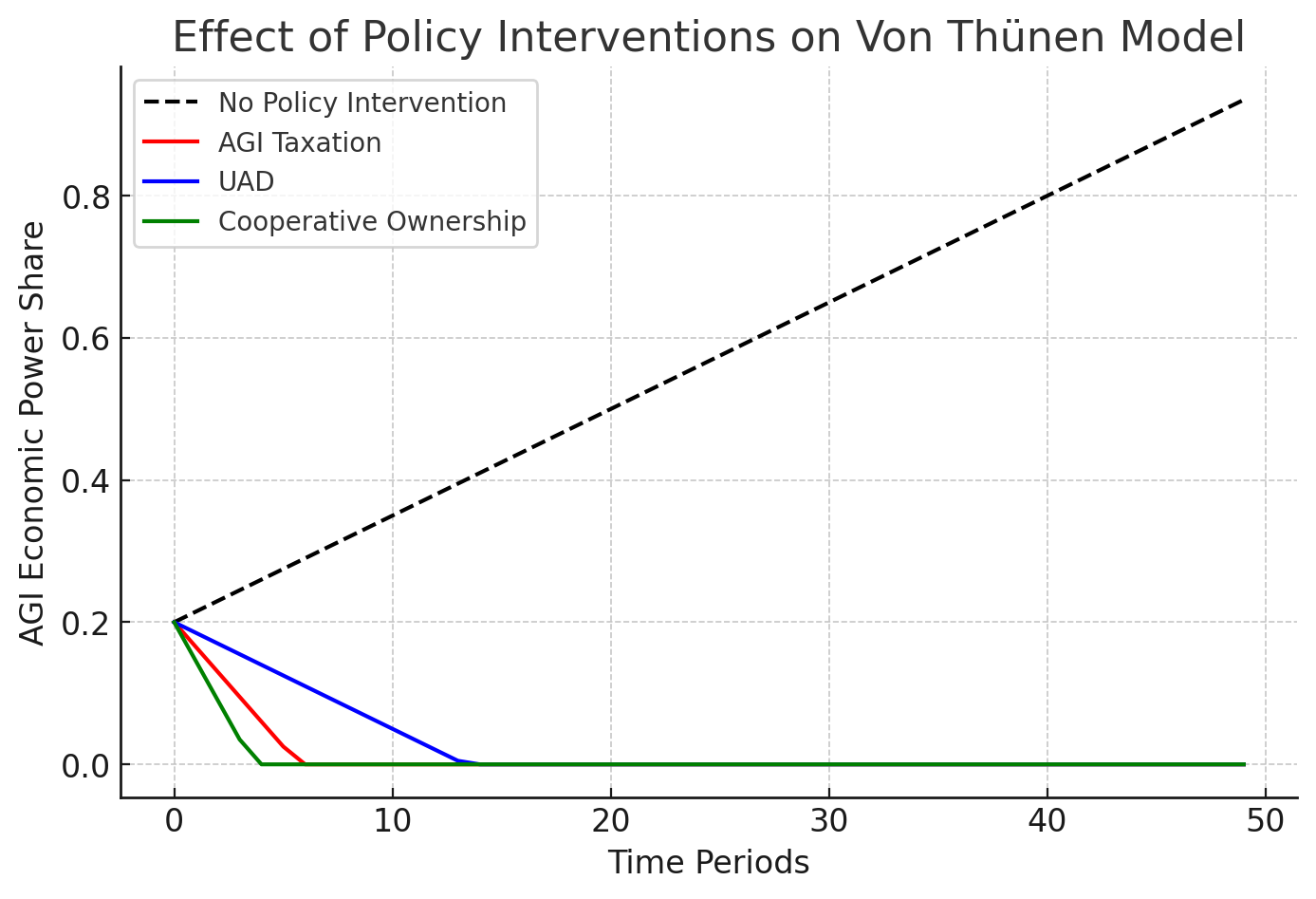
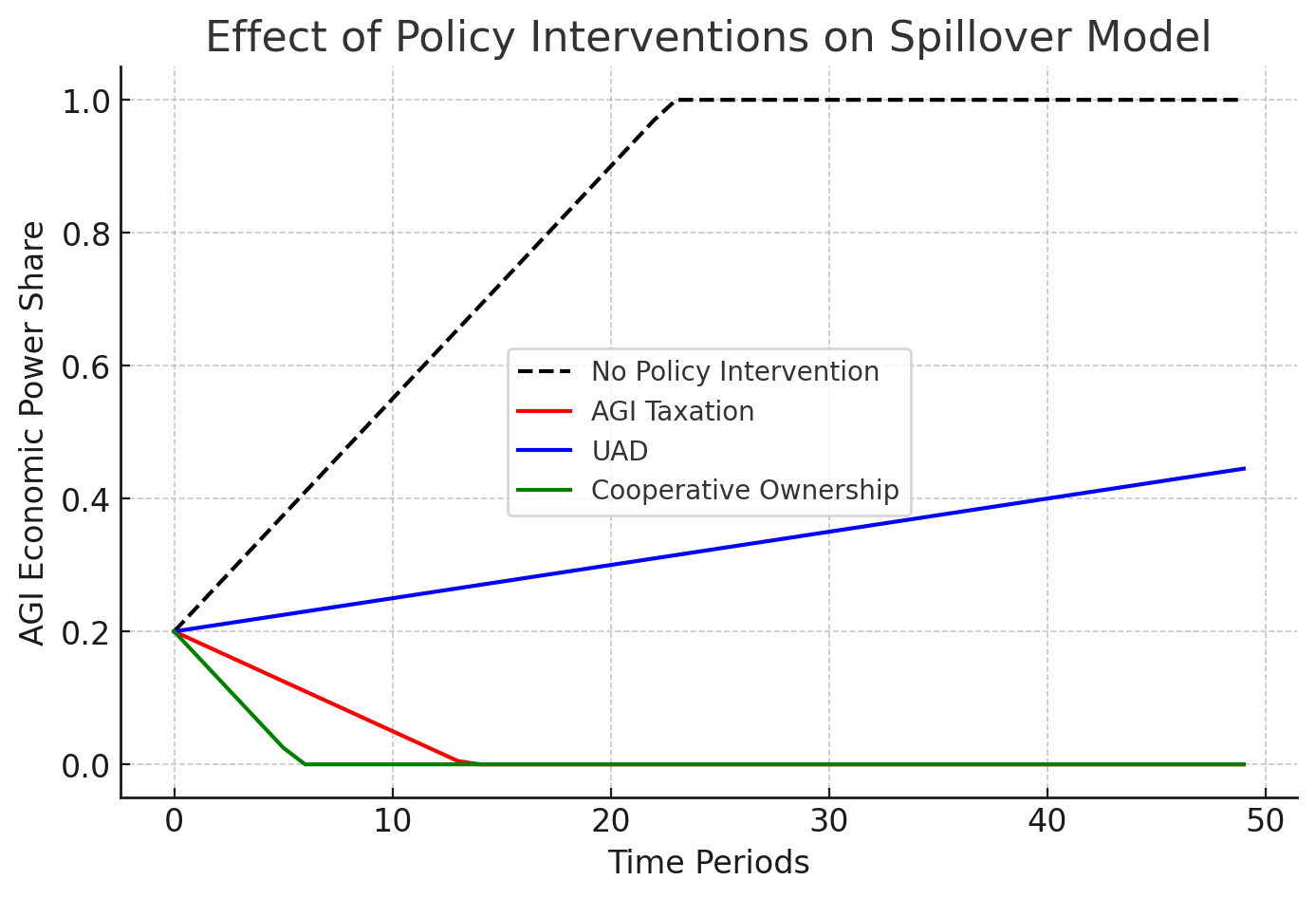
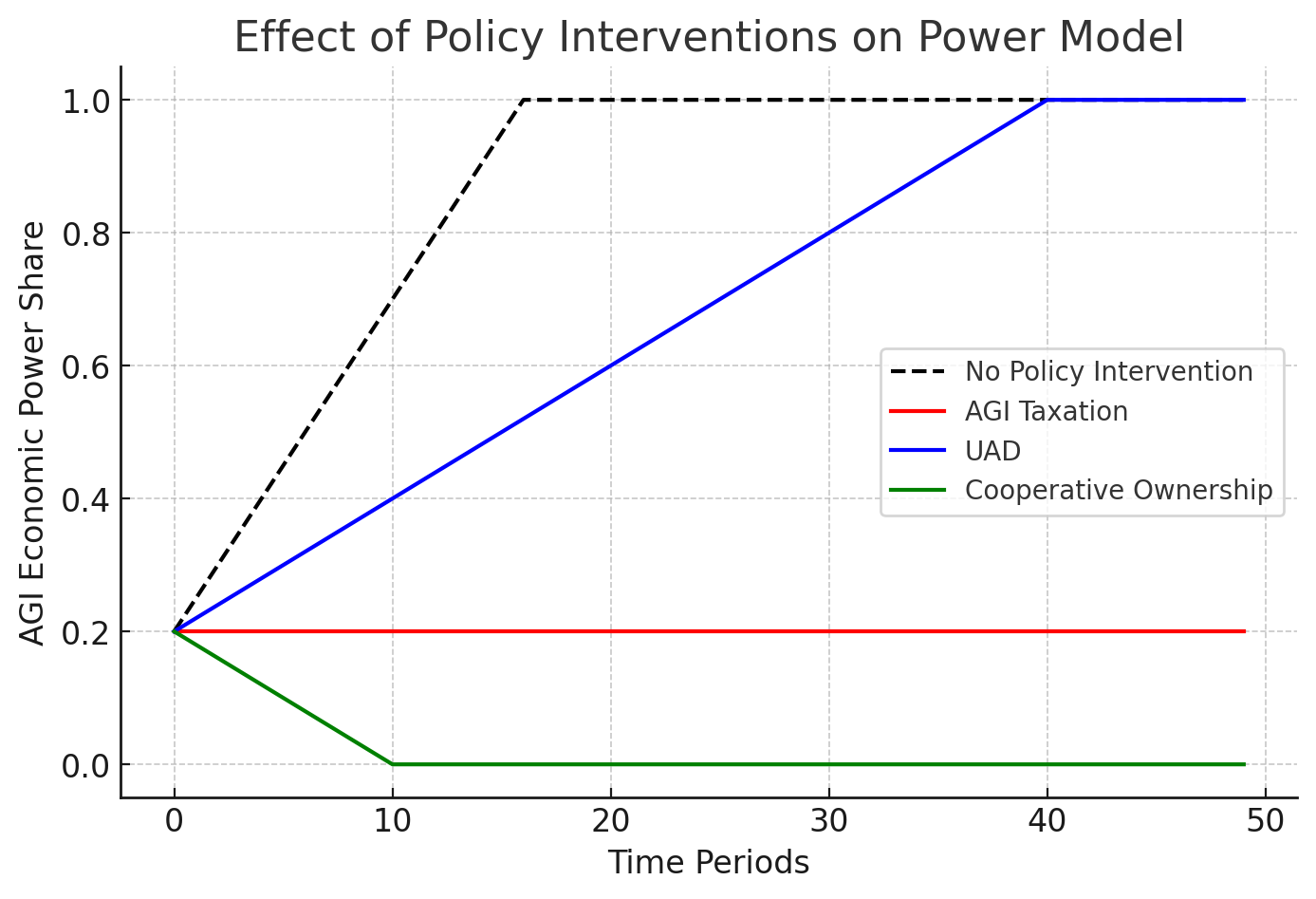
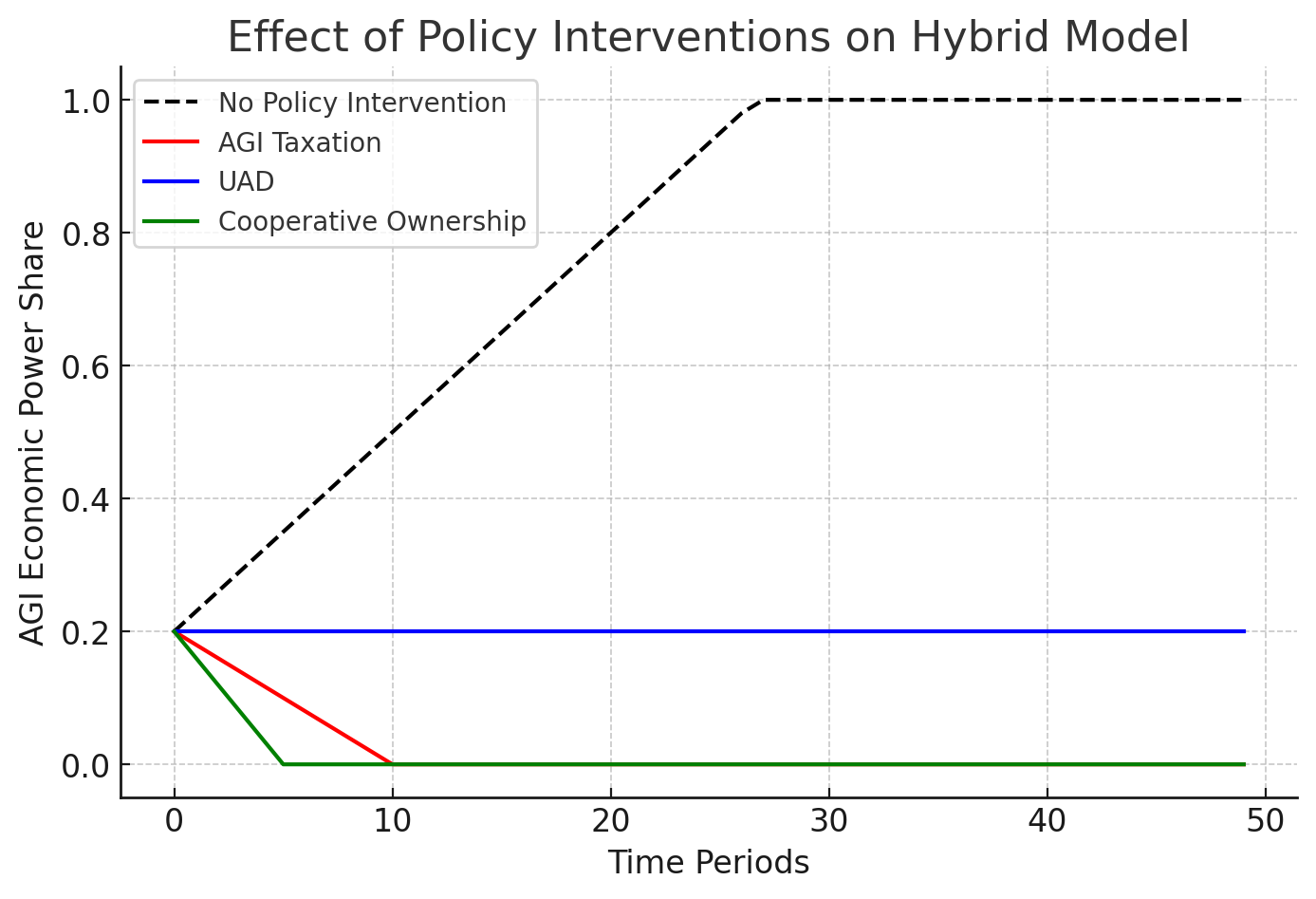
Figure 5: CES Model implications.
Spillover and Hybrid Production Functions
These models highlight the importance of knowledge diffusion and intelligent interactions in shaping AGI's economic impact. Spillover effects emphasize the role of knowledge transfer, implying that human labor remains relevant if AI remains dependent on human expertise. Hybrid models stress sector-specific dynamics, with AGI's influence contingent on elasticity and ownership structures.
Philosophical Reflection: AGI as a Disruption of Economic Ontology
AGI fundamentally challenges traditional economic frameworks by dissolving the boundary between labor and capital. Unlike human labor, which stems from subjective intentionality and reciprocal obligation, AGI labor functions autonomously, free from human constraints. Concurrently, AGI capital manifests characteristics of both management and production, blurring distinctions between asset and agent. This dual nature indicates an impending ontological shift in economic thought, requiring a reconfiguration of the assumptions underpinning capitalism.
Practical and Theoretical Implications
AGI's rise carries significant economic and ethical implications. Production functions that facilitate high substitutability between human and AGI inputs, such as the Cobb-Douglas and CES models, predict rapid labor displacement and wealth concentration if AGI's productivity advantages persist. Conversely, models constrained by fixed input proportions or diminishing returns suggest slower, more stable transitions that preserve human agency. The implications for economic policy are profound, underscoring the necessity of proactive interventions to shape AGI's integration.
Conclusion
The work highlights that AGI's integration into economic systems is a qualitatively distinct transformation, challenging foundational economic and philosophical constructs. Without regulatory intervention, AGI could exacerbate existing inequalities, leading to economic disenfranchisement. However, through proactive policy measures such as taxation, cooperative ownership, and redistribution schemes, AGI can be harnessed as a democratizing force, fostering a sustainable and equitable Intelligence Economy. This demands a reconfiguration of the social contract to account for intelligence as a novel factor, guiding economic, political, and ethical organization in the AI age. Future research should explore dynamic models that integrate institutional constraints, governance structures, and ethical considerations to ensure AGI-driven prosperity is widely distributed, preserving human agency in a post-labor economy.