- The paper develops a unified criterion based on generalized noncontextuality to delineate classical versus nonclassical quantum processes.
- It employs linear, diagram-preserving ontological models that both reproduce conventional criteria and reveal overlooked nonclassical cases such as certain separable states and entanglement-breaking channels.
- The framework supports type-independent resource theories and offers new avenues for certifying quantum advantage in information processing tasks.
A Unified Operational Principle for the Classical–Nonclassical Divide in Quantum Processes
Introduction and Motivation
The demarcation between classical and nonclassical behaviors in quantum theory is foundational both for quantum information applications and the ongoing effort to explicate quantum theory’s conceptual structure. Conventionally, nonclassicality is ascribed to phenomena like entanglement in states, measurement incompatibility, channel non-entanglement-breaking, and quantum steering. However, these demarcations are typically process-type-dependent and lack a unifying operational principle. The paper "Reassessing the boundary between classical and nonclassical for individual quantum processes" (2503.05884) develops a framework grounded in generalized noncontextuality—namely, explainability within a linear, diagram-preserving ontological model—to provide a type-independent, consistent, and well-motivated boundary between classical and nonclassical quantum processes.
The authors systematically re-examine the received wisdom for various process types and demonstrate that their generalized noncontextual explainability criterion reproduces the conventional sufficient conditions for nonclassicality (e.g., entanglement, measurement incompatibility) but also systematically identifies previously overlooked nonclassical processes such as certain separable states, compatible measurements, or entanglement-breaking channels.
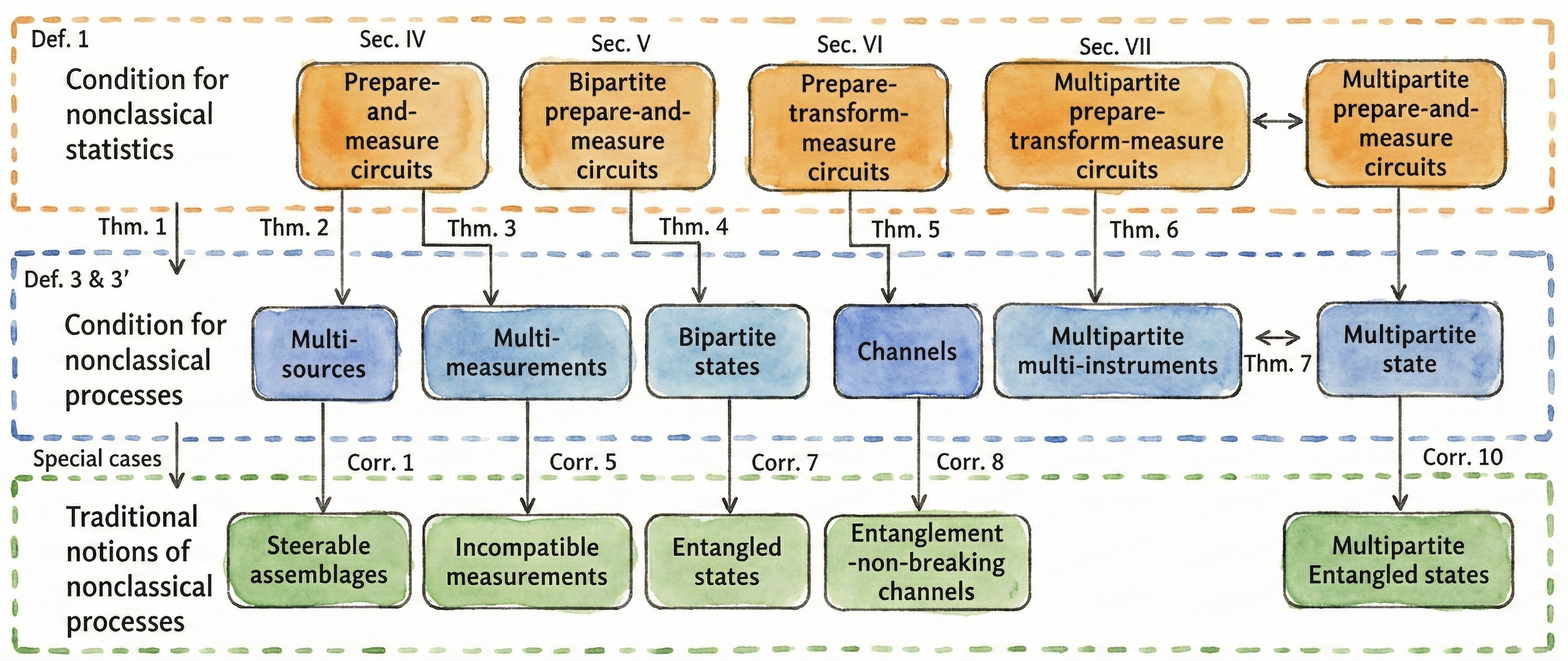
Figure 1: Schematic overview: Each process type is paired with dual processes via circuit composition; classicality is defined by whether contraction with arbitrary duals yields classically explainable statistics, and structure theorems characterize this divide.
Generalized Noncontextuality as a Unifying Principle
Ontological Models and Noncontextuality
Within the operational formalism, a process or circuit is classically explainable if all observed statistics can be reproduced by a (possibly probabilistic) model, subject to the constraint of generalized noncontextuality—linear, diagram-preserving mappings from operational data to substochastic matrices over ontic (hidden) variables. This framework ensures noise-robustness and applies uniformly across process types and circuit structures. Notably, it restores classical probabilistic theory as the unique noncontextual model.
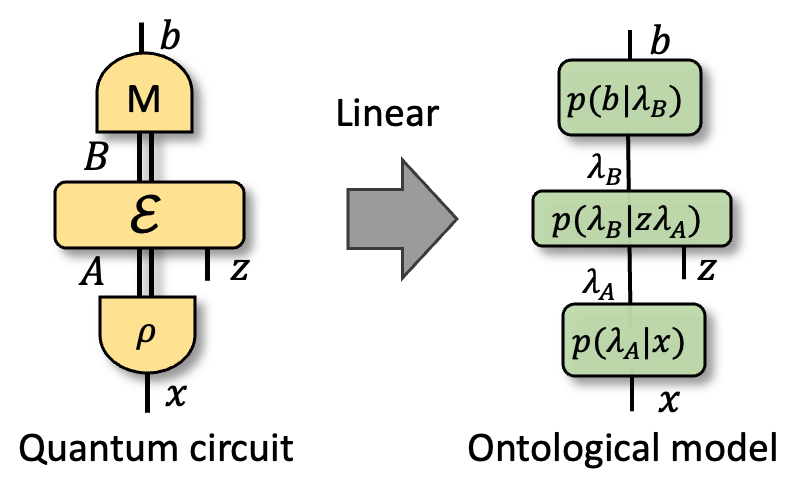
Figure 2: Diagrammatic representation of a prepare-transform-measure circuit and its associated ontological model; classical explainability manifests as a substochastic matrix mapping respecting the circuit topology.
Defining Classicality for Individual Processes
A core innovation is the operationally grounded definition: a quantum process is classical iff, in all circuits formed by composing it with arbitrary dual processes (those with reversed causal roles for quantum systems), the statistics remain classically explainable. In practice, factorizing duals—product measurements and preparations—suffice. This type-neutral principle is then instantiated for preparations, measurements, channels, and general instruments.
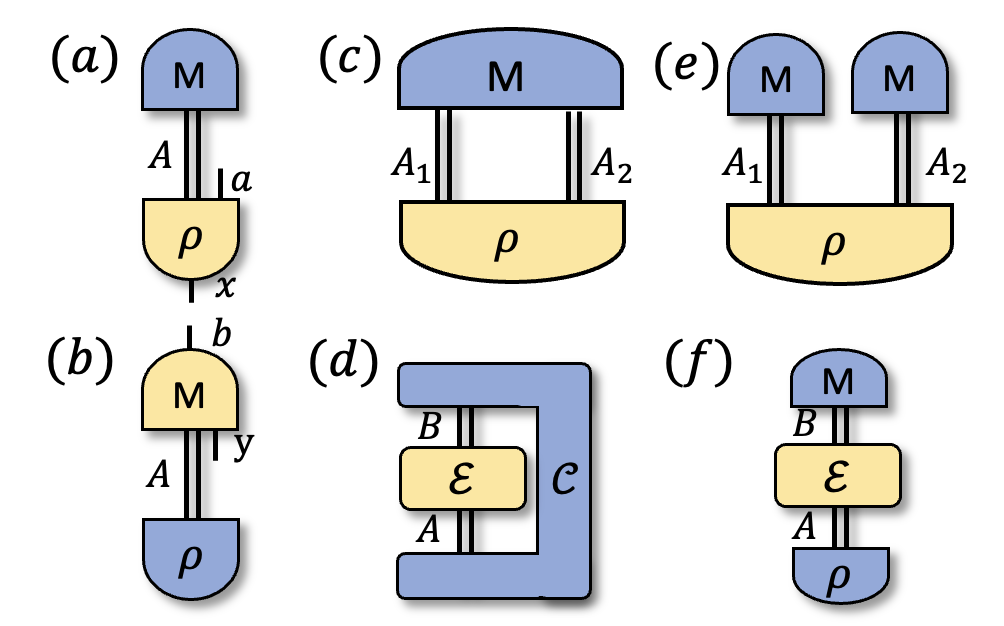
Figure 3: Examples of process/dual pairings for several types: (a) multi-source/effect, (b) multi-measurement/state, (c) bipartite state/bipartite effect, (d) channel/comb.
Structure Theorems for Nonclassicality of Processes
Multi-Sources (Preparations), Multi-Measurements, Channels, and States
Each process type is fully characterized by necessary and sufficient structure theorems for classicality. For preparations (multi-sources) and measurements (multi-measurements), classicality is equivalent to the existence of a convex frame decomposition subject to operational identities arising from linear dependencies among the set of preparations or effects.
Specifically, for a multi-source {{p(a∣x)ρa∣x}a}x, classicality is equivalent to a decomposition of each subnormalized state as p(a∣x)ρa∣x=λ∑p(aλ∣x)σλ where the frame and dual frame satisfy linear constraints induced by operational equivalences.
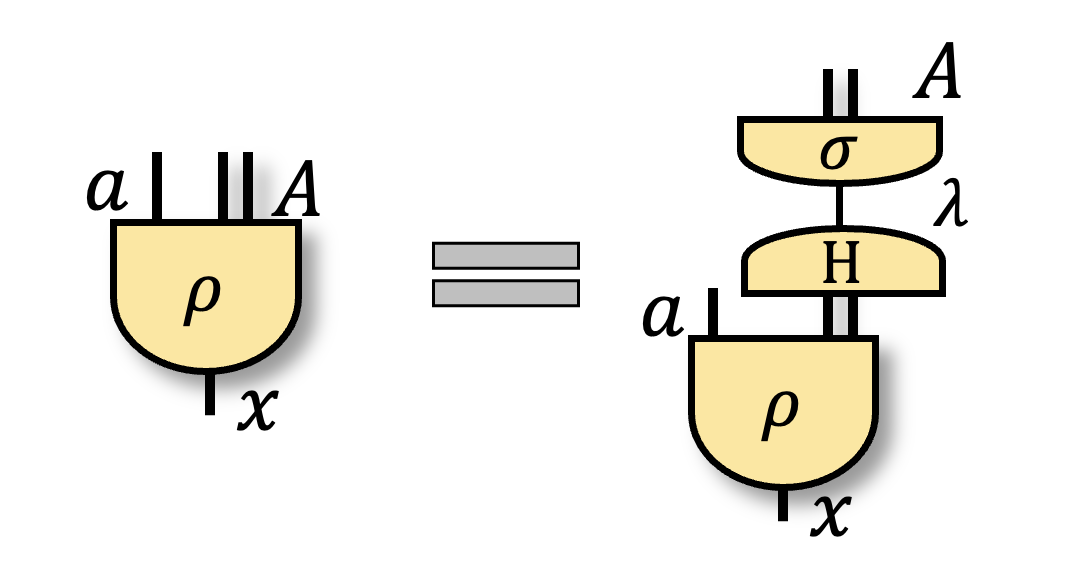
Figure 4: Diagrammatic criterion: A multi-source is classical iff it admits a frame representation with positive weights and suitable frame/dual frame properties.
Similar frame characterizations apply to multi-measurements.
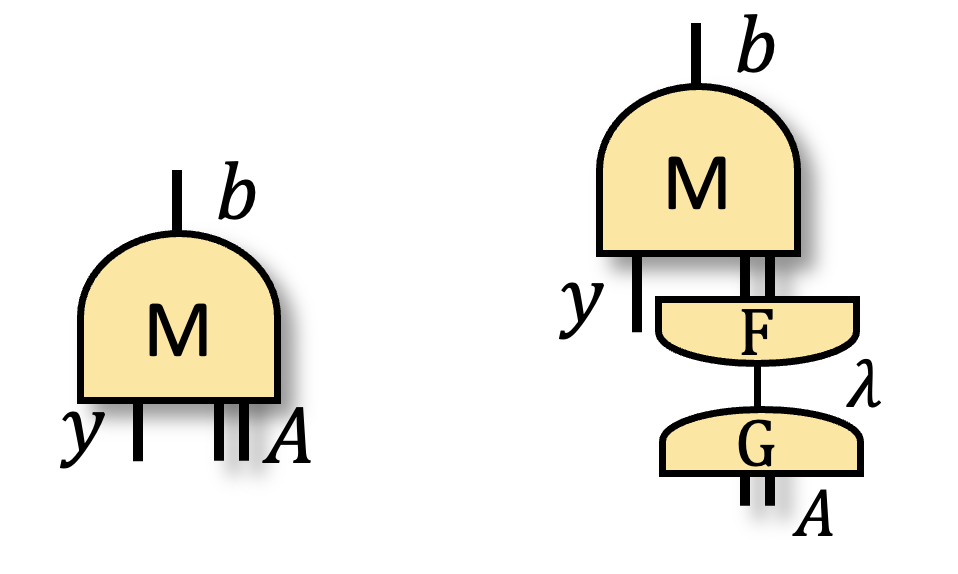
Figure 5: Classicality for multi-measurements: existence of a frame decomposition onto a fixed measurement, with linear constraints determined by operational identities.
For bipartite states, necessary and sufficient conditions are formulated in terms of product frame decompositions: a state is classical iff it can be reconstructed from a convex mixture over product bases derived from local operator spaces spanned by steered states or effects.
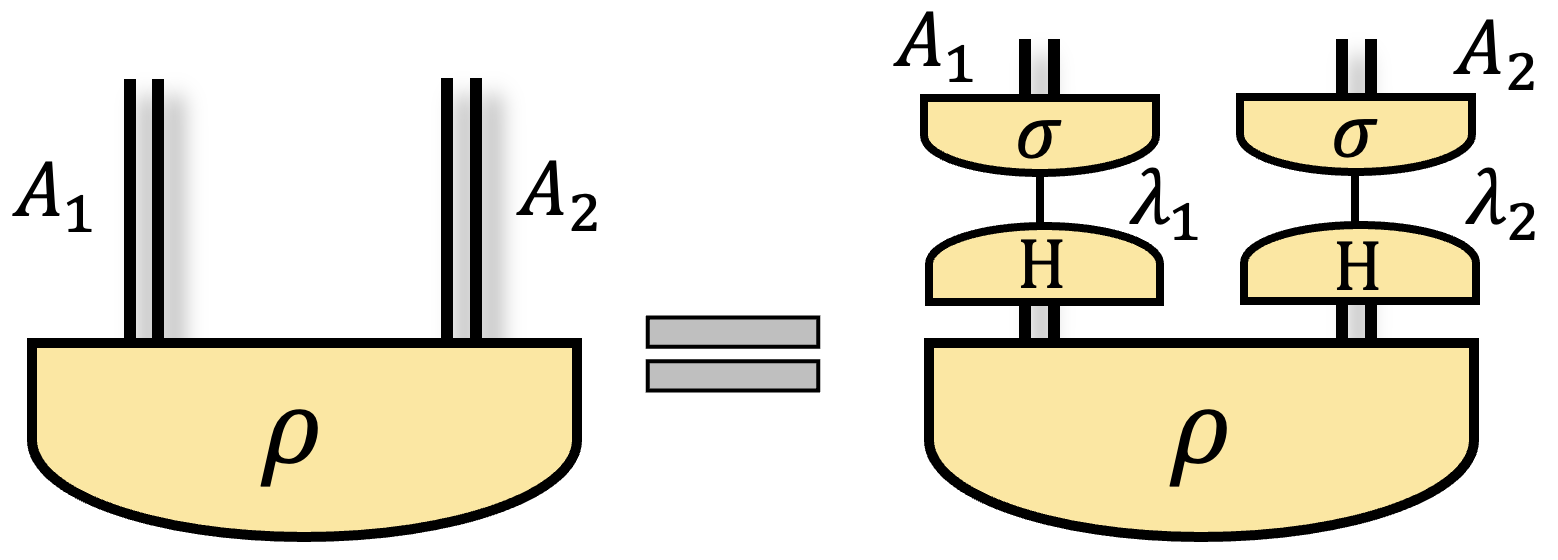
Figure 6: A bipartite state is classical iff it admits a decomposition onto product local frames, compatible with operational identities projected onto local operator spaces.
Channels are treated analogously, via a frame representation that combines the action of the channel on frame elements for input and output spaces and the relevant dual operators.
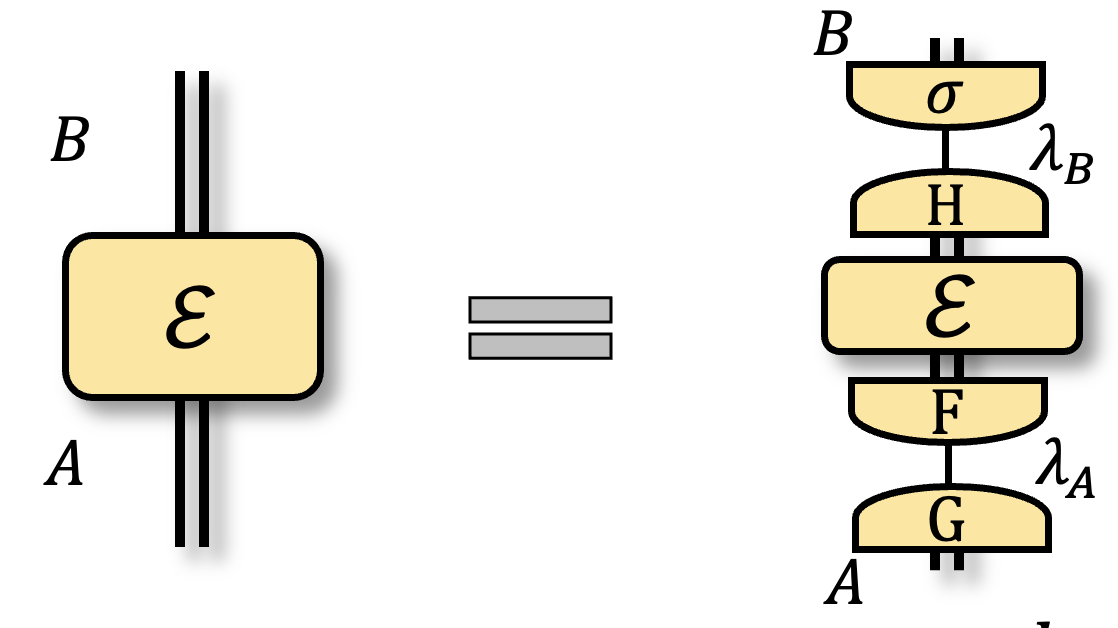
Figure 7: Classical channels admit a frame representation mapping input frames to output frames with non-negative weights fixed by the operational identities.
Consequences and Contradictory Cases
A primary outcome is that all entangled states, incompatible measurements, non-entanglement-breaking channels, and steerable assemblages are nonclassical under this criterion—recovering the standard sufficient conditions. However, there are nonclassical processes within the set of separable states, compatible measurements, and entanglement-breaking channels: for example, a separable state (see Example (Eq. (102) in the paper)) that steers to a nonclassical single-system ensemble, or an entanglement-breaking channel mapping to nonclassical measurement outcomes.
Multipartite and Arbitrary Processes
The operational definition and structural characterization generalize to arbitrary multipartite processes. Classicality is characterized by the existence of a frame representation over local operator spaces for each subsystem, with the decomposition coefficients (generalized weights) meeting non-negativity and operational identity constraints. The composition of classical processes is closed under both serial and parallel composition, imposing a consistent resource-theoretic monoidal structure.
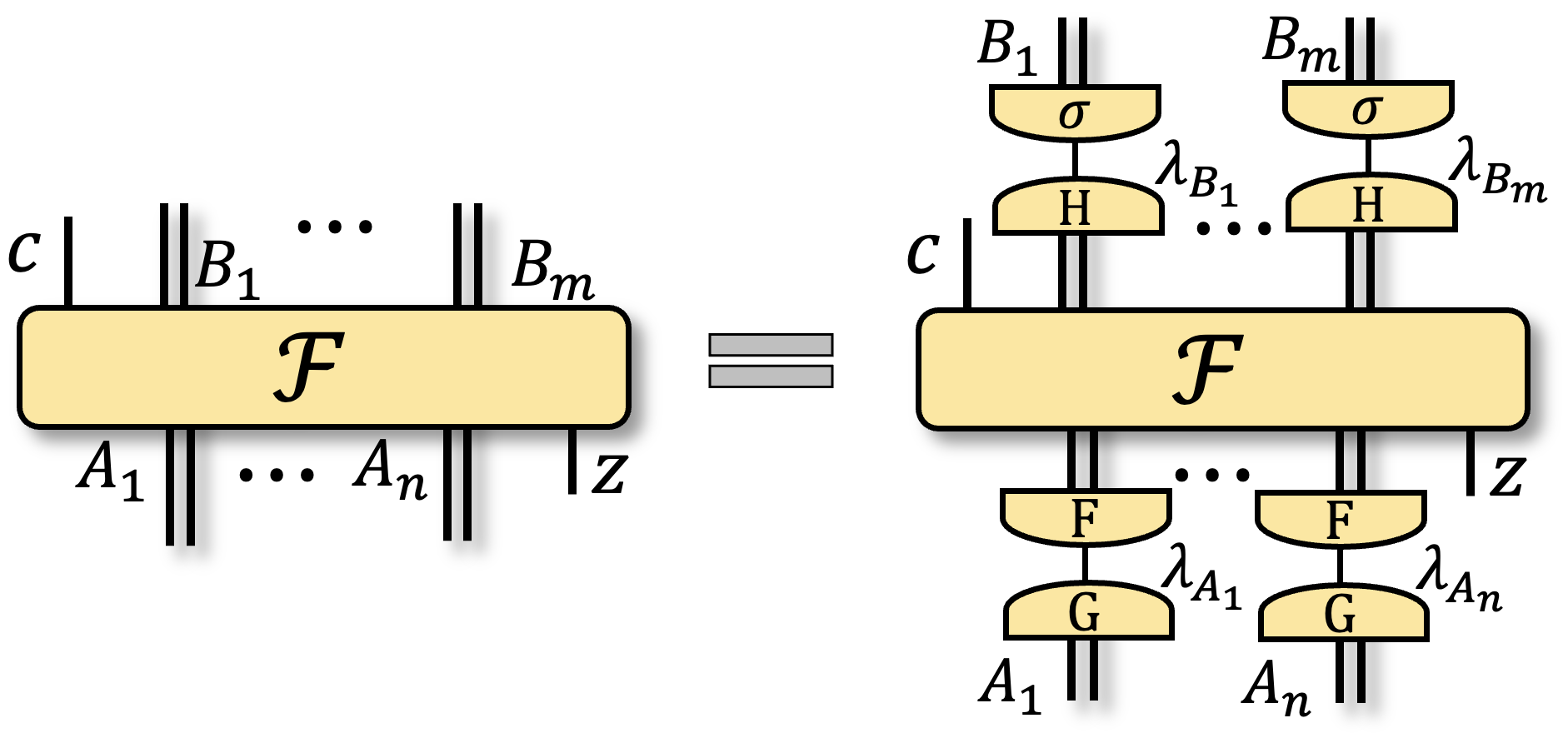
Figure 8: For multipartite multi-instruments, classicality is restricted by a product frame representation over all subsystems, preserving the locality and operational constraints.
Consistency under Operational Re-Labeling and Unification
A crucial feature of the proposed definition is invariance under reconceptualization of classical inputs/outputs as dephased quantum systems. This cut-motility ensures robust process-type independence and avoids context-dependent inconsistencies that arise when stitching together conventional criteria, as illustrated with explicit counterexamples (Figures 23 and 24).
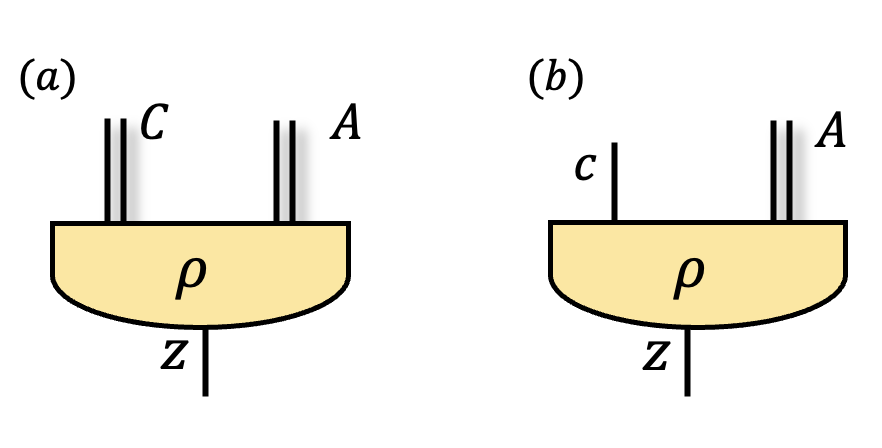
Figure 9: Reconceptualizing a classical output as a dephased quantum output can lead to incompatible verdicts for nonclassicality under conventional type-dependent criteria.
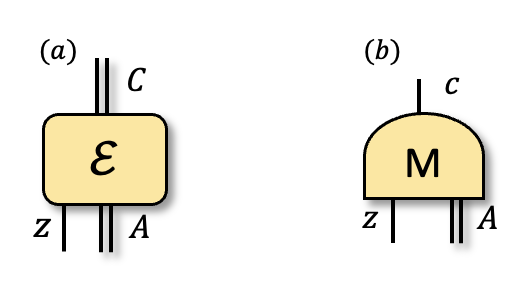
Figure 10: Similar inconsistency arises when classical settings are re-labeled as dephased quantum systems: only a unified operational criterion guarantees type-invariant boundaries.
The framework is contrasted with type-dependent approaches, such as LOSR resource theories and various notions of contextuality/nonlocality/discord, demonstrating that only the generalized noncontextuality criterion is universally consistent, type-independent, and noise-robust. The inclusion of hitherto unrecognized nonclassical resources (e.g., nonclassicality in some separable states or entanglement-breaking channels) suggests that quantum advantage in tasks such as cryptography or computation may require a broader set of nonclassical resources than previously recognized.
Implications and Outlook
The identification of previously overlooked nonclassical processes has both practical and foundational implications. On the foundational side, it motivates refined resource theories of nonclassicality that move beyond convexity, support robust operational quantifiers, and provide process-agnostic witnesses. Practically, it opens avenues for new certifications of quantum advantage and clarifies when quantum resources are available for information processing even in the absence of entanglement or measurement incompatibility. Notably, the framework suggests a future direction for type-independent resource theories and quantifiers, as well as further generalizations to generalized probabilistic theories.
Conclusion
By providing a unified, operationally grounded, and type-independent characterization of the classical–nonclassical divide for quantum processes, the paper establishes a new baseline for consistency and rigor in the foundational study of quantum resources (2503.05884). The operational approach via generalized noncontextuality identifies the classical subset of processes as those admitting linear, diagram-preserving ontological models and, critically, pinpoints new instances of nonclassicality overlooked by conventional criteria. This perspective not only clarifies the resource content of quantum devices but also provides a springboard for future resource-theoretic and experimental investigations.

