- The paper introduces a waveguide-coupled spectrum analyzer leveraging thermal Rydberg atoms for RF detection from DC to 20 GHz via off-resonant heterodyne techniques.
- It achieves high sensitivity, demonstrating intrinsic sensitivities of -120 dBm/Hz and, with preamplification, -145 dBm/Hz over an instantaneous 4 MHz bandwidth.
- The system successfully detects real-world RF signals like FM, AM, Wi-Fi, and Bluetooth, indicating its potential for advanced quantum communications.
Waveguide-Coupled Rydberg Spectrum Analyzer from 0 to 20 GHz
Introduction
The paper "Waveguide-coupled Rydberg spectrum analyzer from 0 to 20 GHz" (2009.14383) introduces a novel radio-frequency (RF) receiver and spectrum analyzer based on thermal Rydberg atoms. This system integrates Rydberg atoms with a planar microwave waveguide, leveraging the unique properties of quantum sensors to offer continuous operation from DC to 20 GHz. The authors achieve notable sensitivity improvements through an off-resonant RF heterodyne technique, with peak sensitivity surpassing that of traditional RF sensors by confining the RF field into a small mode volume. The analyzer demonstrates significant capabilities including 4 MHz instantaneous bandwidth, over 80 dB of linear dynamic range, and enhanced spectrum analysis through a low-noise preamplifier.
Experimental Setup and Methodology
The experimental setup is centered around detecting radio frequencies using thermal Rydberg atoms within a waveguide-coupled quantum sensor configuration. Rydberg atoms are introduced and probed above the coplanar waveguide, facilitating enhanced electric field coupling due to a precisely matched RF mode volume. Applying the heterodyne technique enables superior signal amplification through off-resonant atomic light shifts. This arrangement allows continuous monitoring across the RF spectrum, marked by improvements in sensitivity and operation bandwidth due to the effective confinement of electric fields (Figure 1).
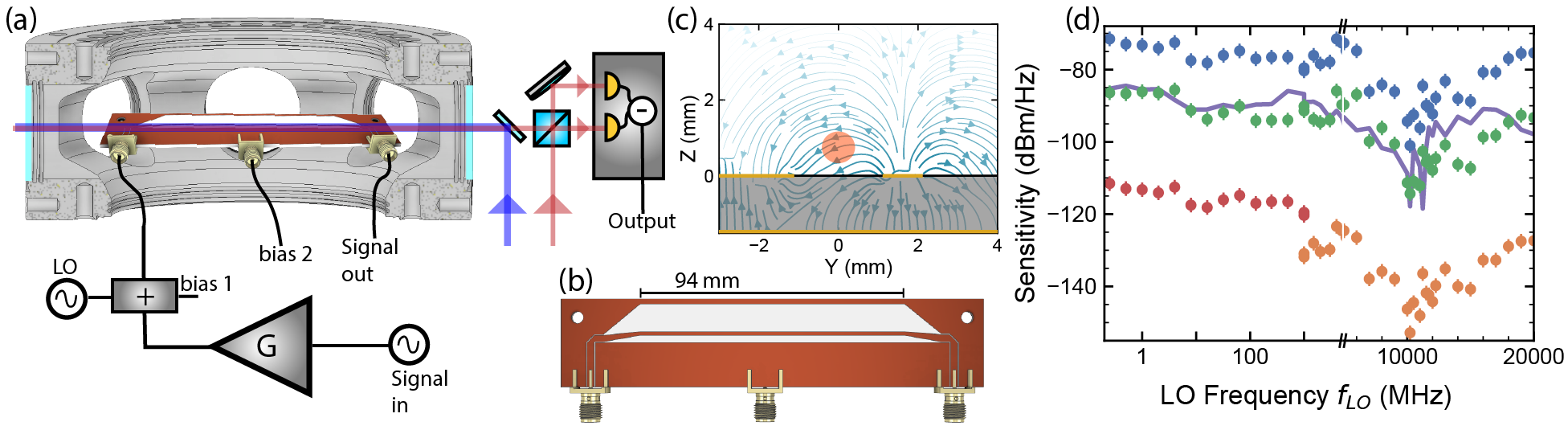
Figure 1: Simplified experimental setup. Rydberg atoms are detected using a \SI{780}{\nano\meter} and \SI{480}{\nano\meter} beam, counter-propagating above a microwave circuit.
The Rydberg spectrum analyzer exhibits several key attributes: its sensitivity achieves intrinsic values of up to -120 dBm/Hz, further amplified via preamplification, reaching sensitivities of -145 dBm/Hz. Sensor signals are effectively detected in various quadrature components, utilizing both optical and microwave homodyne methodologies (Figure 2).
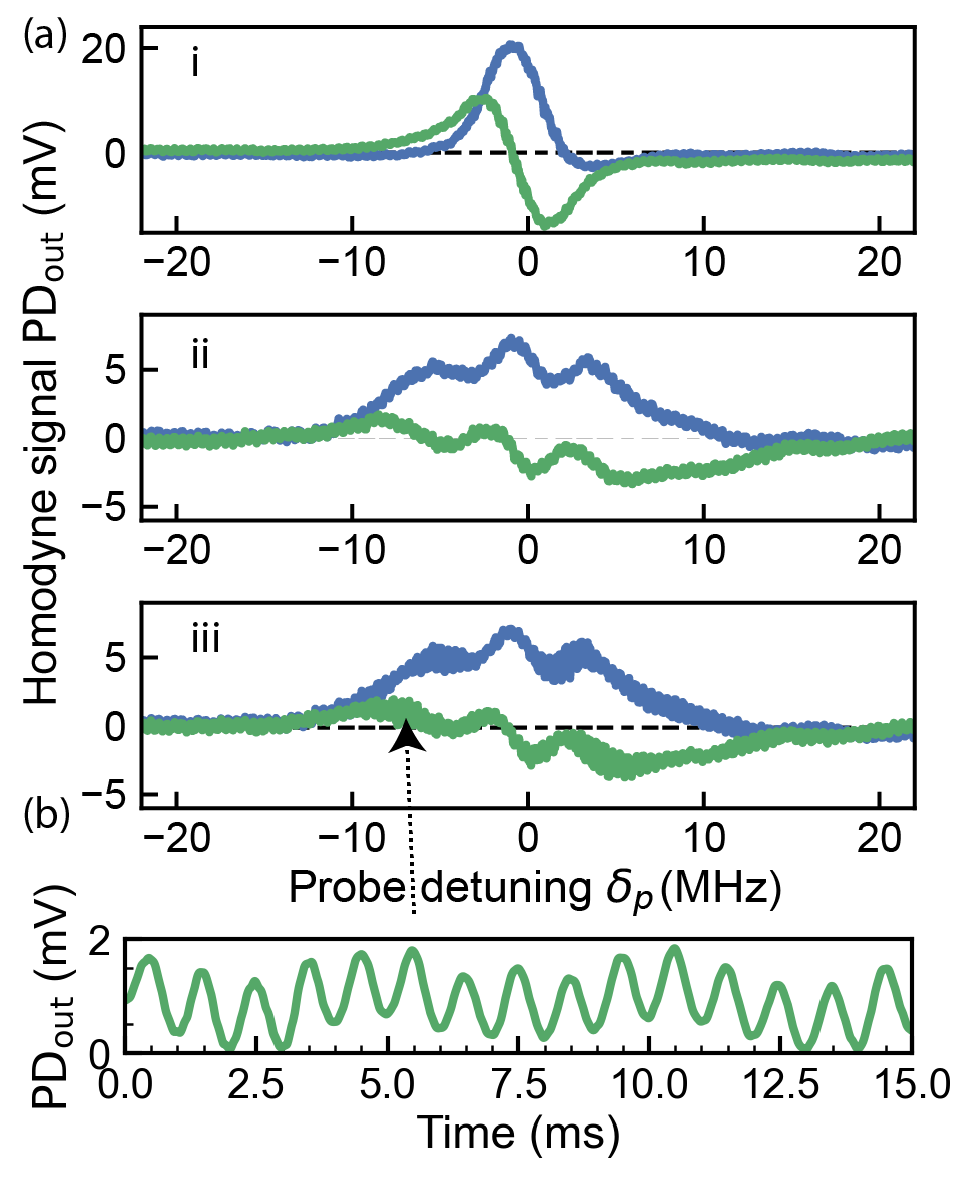
Figure 2: Sensor signals. Detected signals versus probe detuning; optical amplitude quadrature in blue, phase quadrature in green.
Additionally, the system demonstrates high dynamic range, offering linear responses across a wide power range. The instantaneous bandwidth of 4 MHz facilitates robust signal measurement independent of frequency, thus overcoming limitations inherent in passive RF receivers (Figure 3).
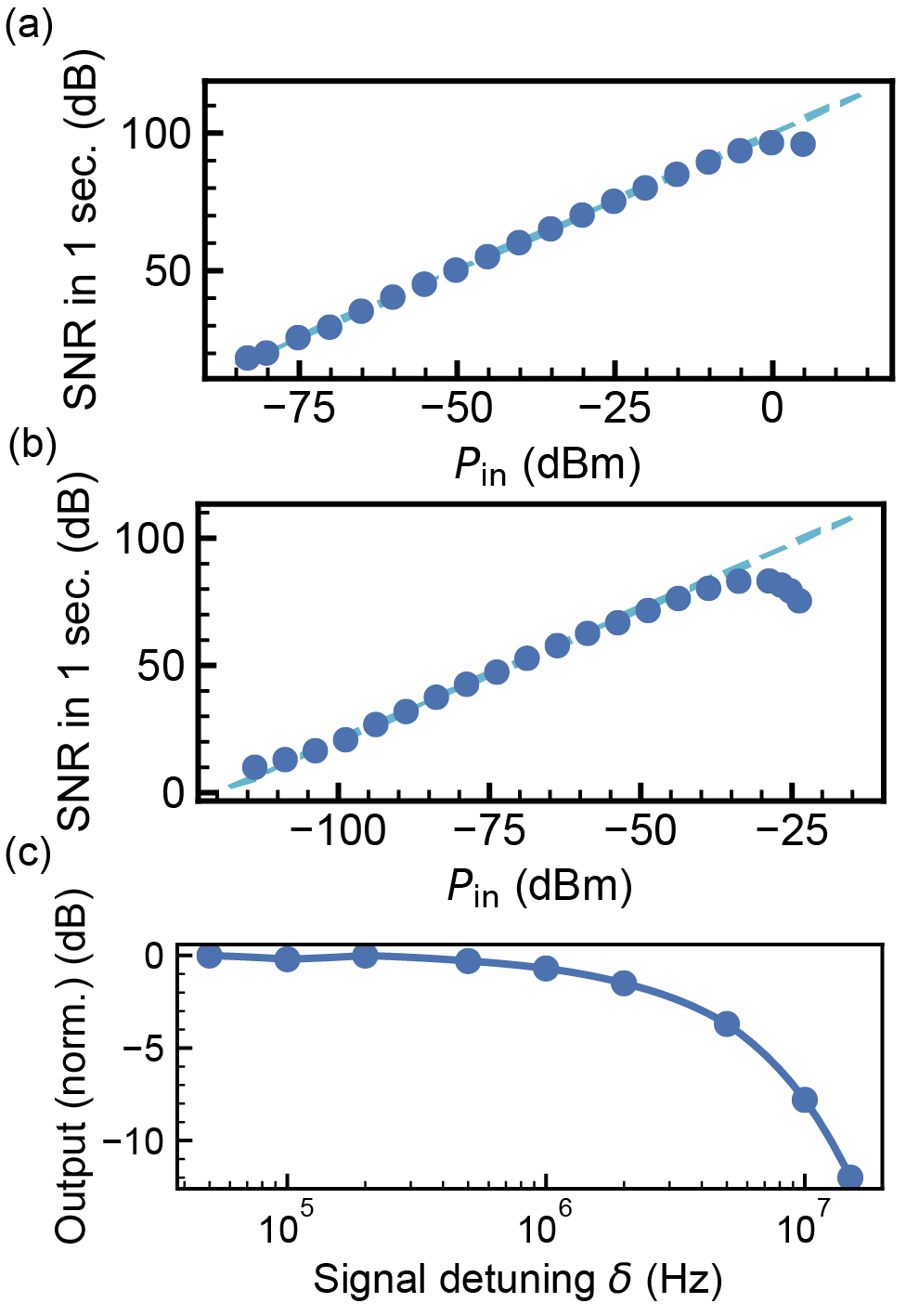
Figure 3: Sensor performance. Linear dynamic range for $f_\text{LO} = 2{content}{\giga\hertz}$.
Real-World Signal Detection
The spectrum analyzer is employed to detect ambient RF signals, including FM, AM, Wi-Fi, and Bluetooth transmissions, revealing its practical applicability. By connecting to standard antennas, the sensor exploits tunable local oscillators to detect real-world signals across multiple bands, thereby showcasing its potential for wireless communication analysis (Figure 4).
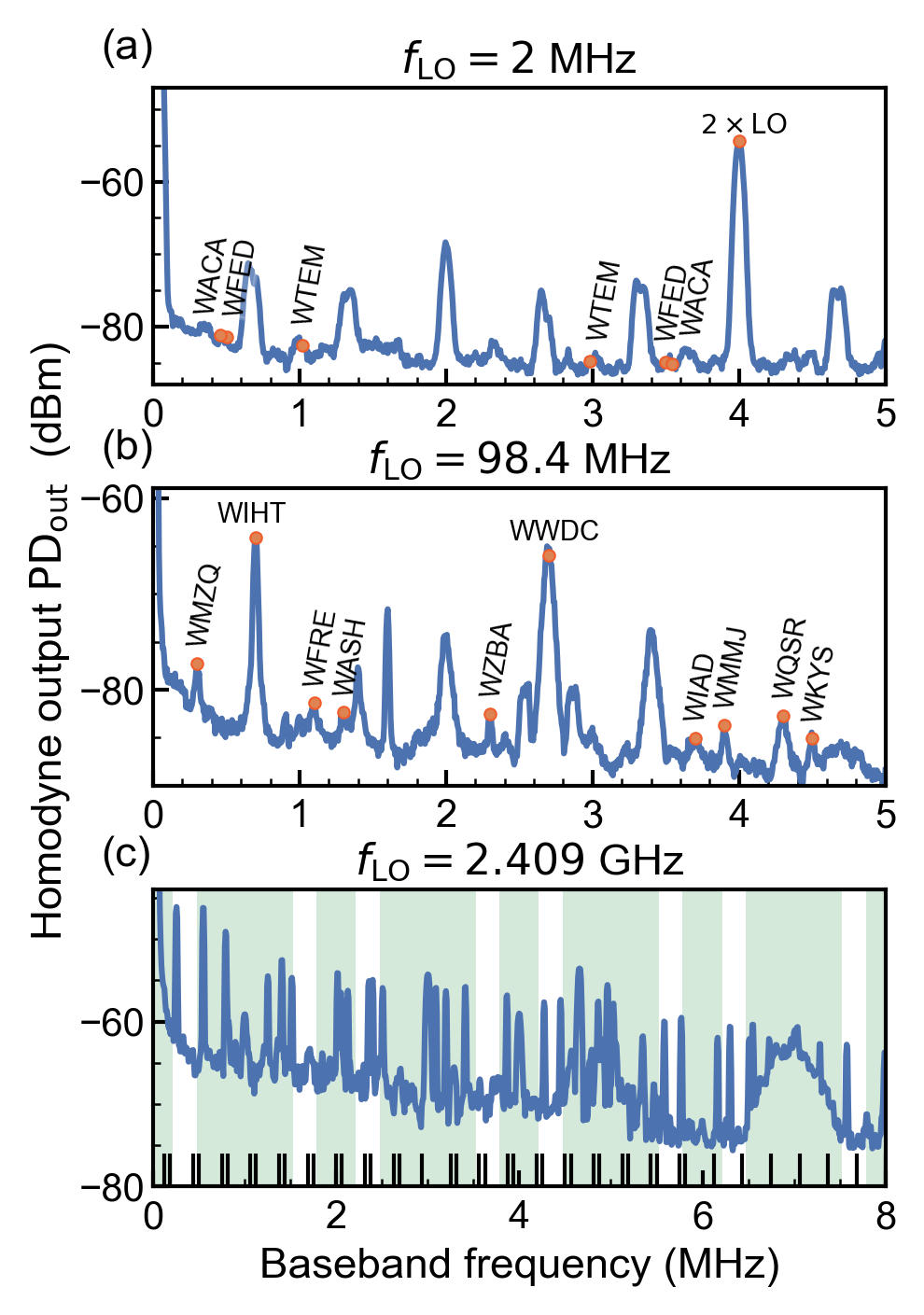
Figure 4: RF signals observed inside the lab building using a rabbit-ears antenna.
Microwave Detection of Rydberg Atoms
Further extending the sensor's capabilities, the paper explores microwave detection of Rydberg atoms, illustrating the fundamental interaction between Rydberg ensembles and waveguide structures. This technique serves as a stepping stone toward advanced quantum electrodynamics applications, promising future developments in quantum frequency conversion and quantum communications (Figure 5).
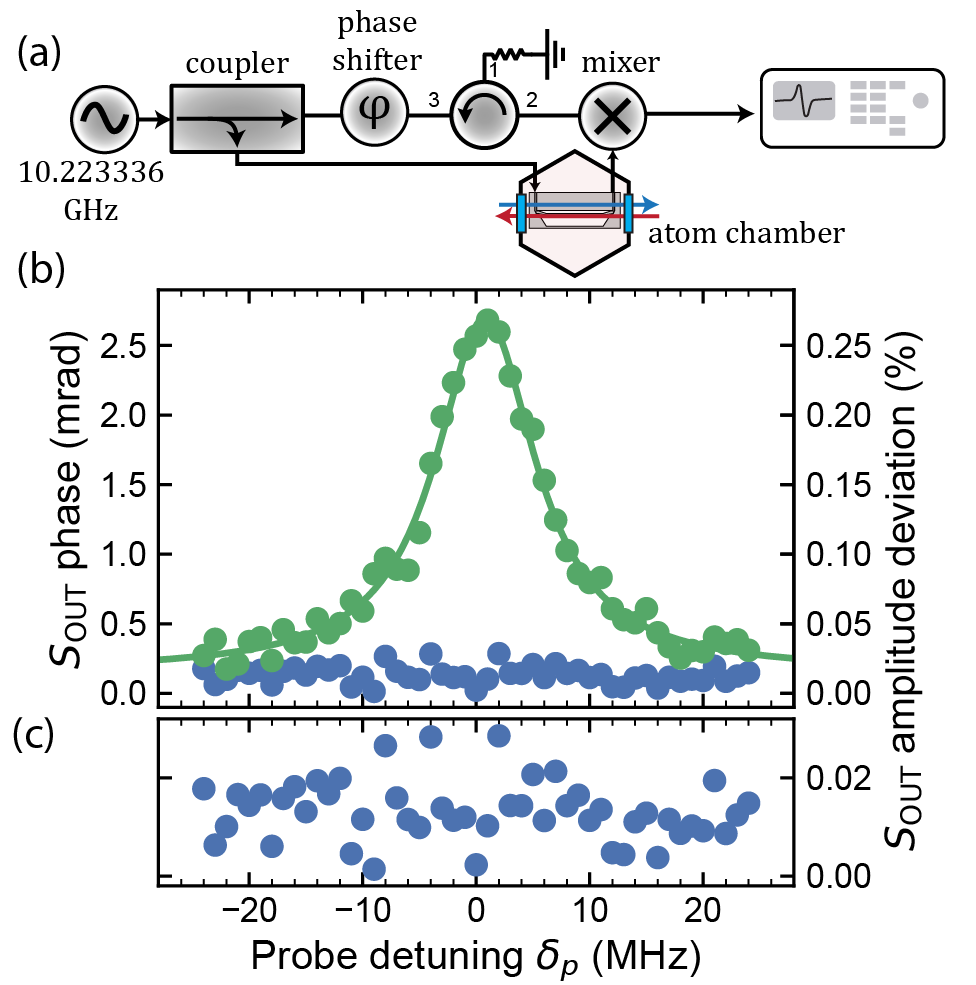
Figure 5: Microwave readout of Rydberg atoms. Circuit diagram for microwave homodyne detection at \SI{10.223}{\giga\hertz}.
Conclusion
The waveguide-coupled Rydberg spectrum analyzer represents a significant advancement in non-cryogenic quantum RF sensors. With its continuous operation, peak sensitivity, and extensive dynamic range, the system bridges the gap between traditional RF sensors and quantum-enhanced methodologies. Future improvements could include enhanced circuit design for increased RF-atom interaction and novel probing schemes to bypass current limitations, thus fostering its potential to outperform existing RF spectrum analyzers. The research underscores the transformative nature of Rydberg atom sensors in advancing both classical and quantum communication technologies.

