- The paper introduces MACDF, a multi-agent framework that simulates expert shopping consultants to proactively enhance decision support.
- It employs specialized agents like Leader, Guider, and Decider to coordinate semantic retrieval and multi-criteria analysis for improved search relevance.
- Experimental results demonstrate significant gains in accuracy, user satisfaction, and conversion metrics compared to traditional retrieval-ranking systems.
Beyond Retrieval-Ranking: A Multi-Agent Cognitive Decision Framework for E-Commerce Search
Introduction
The paper introduces an innovative framework designed to address the limitations of traditional e-commerce search systems, which predominantly rely on a retrieval-ranking paradigm. Traditional models emphasize query-item matching, but often fail to align with the cognitive decision-making processes of users, resulting in semantic gaps in complex queries, high decision costs from information foraging, and a lack of expert shopping guidance. The proposed Multi-Agent Cognitive Decision Framework (MACDF) aims to resolve these issues by shifting from passive retrieval to proactive decision support.
System Overview
The MACDF consists of multiple specialized agents collaboratively simulating professional shopping consultants. This framework is organized into four key layers: User Interaction, Multi-Agent, Memory System, and Feedback Learning. Each agent plays a distinct role in transforming e-commerce search from simple product matching to a comprehensive decision-support system.
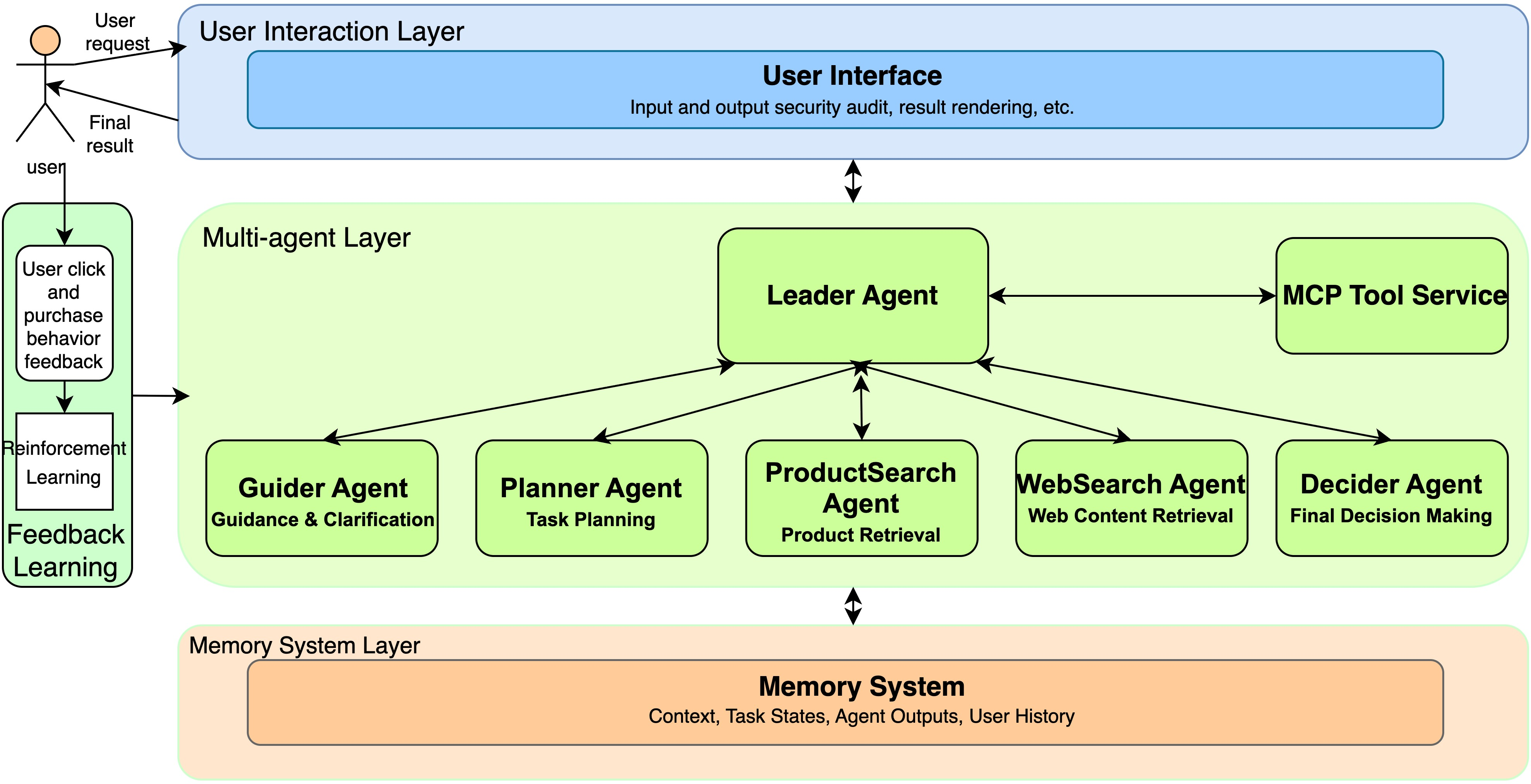
Figure 1: Multi-Agent Cognitive Decision Framework Overview.
Multi-Agent Layer
The core of MACDF is the Multi-Agent Layer, which includes several specialized agents such as the Leader, Guider, Planner, ProductSearch, WebSearch, and Decider Agents:
- Leader Agent orchestrates task execution based on user queries, leveraging a dynamically generated decision-making graph and reflection mechanisms for task optimization.
- Guider Agent utilizes dynamic cognitive coordination to clarify ambiguous user queries and stimulate potential needs.
- Planner Agent translates user queries into an executable task graph, ensuring efficient dependency management with conditions and constraints.
- ProductSearch and WebSearch Agents enhance retrieval processes through semantic vector retrieval and information enrichment, facilitating real-time and cross-domain decision support.
- Decider Agent performs complex multi-criteria decision analysis to provide tailored shopping advice and recommendations, integrating information from various agents.
Experimental Results
Offline Evaluation
The MACDF was rigorously tested against traditional systems using the E-Commerce Cognitive Decision Benchmark (ECCD-Bench). Results demonstrate MACDF's significant improvements in handling complex queries, achieving substantial gains in accuracy and user demand satisfaction (UDS) metrics. MACDF consistently outperformed both a baseline online system and a retrieval-augmented generation (RAG) method, showcasing its ability to bridge the semantic gap and provide impactful decision support.
Online A/B Testing
Online testing on the JD platform confirmed MACDF's practical efficacy, with notable improvements in User Click-Through Rate (UCTR) and User Conversion Rate (UCVR). It reduced the Average Reformulation Count (ARC), indicating enhanced user intent comprehension within initial interactions. Despite increased response latency due to sophisticated agent interactions, optimizations such as asynchronous execution and intelligent caching effectively mitigated computational overheads.
Discussion
The transformative potential of MACDF lies in its ability to redefine e-commerce search by aligning system operations with the cognitive processes of users. While the operational advantages are clear, future efforts should focus on enhancing computational efficiency and establishing a long-term evaluation framework to assess impacts on user retention and lifetime value. Additionally, systematic ablation studies could uncover critical collaborative components within the MACDF architecture.
Conclusion
The Multi-Agent Cognitive Decision Framework represents a significant advancement in e-commerce search, moving beyond traditional paradigms to focus on user-centric decision support. The framework's innovative approach demonstrates that optimizing the decision process itself can augment both user satisfaction and business value. Future developments will aim to refine the system's efficiency and long-term effectiveness, further enhancing its role in the evolving landscape of e-commerce search technology.