- The paper introduces a novel decentralized framework that integrates DID-based discovery with a dynamic trust layer to enable interoperable agent networks.
- It employs verifiable credentials, semantic agent cards, and PageRank-like trust propagation models to enhance system robustness and mitigate Sybil attacks.
- The architecture supports secure real-time micropayments and economic coordination, achieving 99.9% compliance in healthcare applications.
The Trust Fabric: Decentralized Interoperability and Economic Coordination for the Agentic Web
Introduction
The fragmentation of AI agent ecosystems has underscored the necessity for interoperability, trust, and economic coordination that current protocols struggle to address at scale. The "Trust Fabric" paper introduces the Nanda Unified Architecture as a decentralized framework addressing these challenges through innovative layers for agent discovery, trust integration, and economic coordination. A central component of this architecture is the dynamic trust layer that fuses behavioral attestations and policy compliance mechanisms to forge verifiable reputation signals, acting as the bedrock of a globally interoperable Internet of Agents.
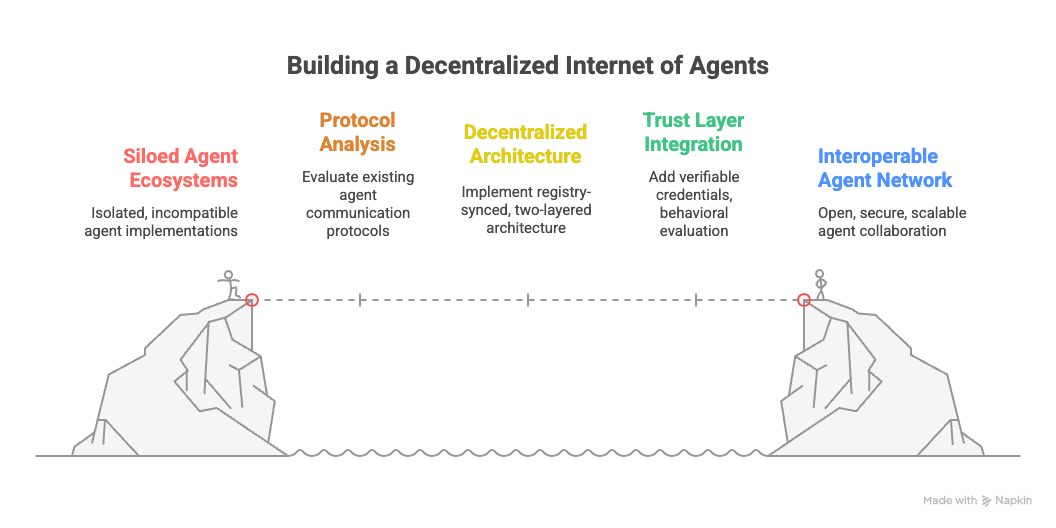
Figure 1: Building decentralized internet of agents.
Core Innovations and Architectural Overview
The Nanda Unified Architecture is built on three significant advancements:
- DID-Based Discovery and Registries: Leveraging distributed registries for efficient agent lookup across decentralized networks.
- Semantic Agent Cards: Utilizing verifiable credentials and composability profiles for descriptive capabilities.
- Dynamic Trust Layer: Integrating behavioral attestations with policy compliance mechanisms for trust quantification.
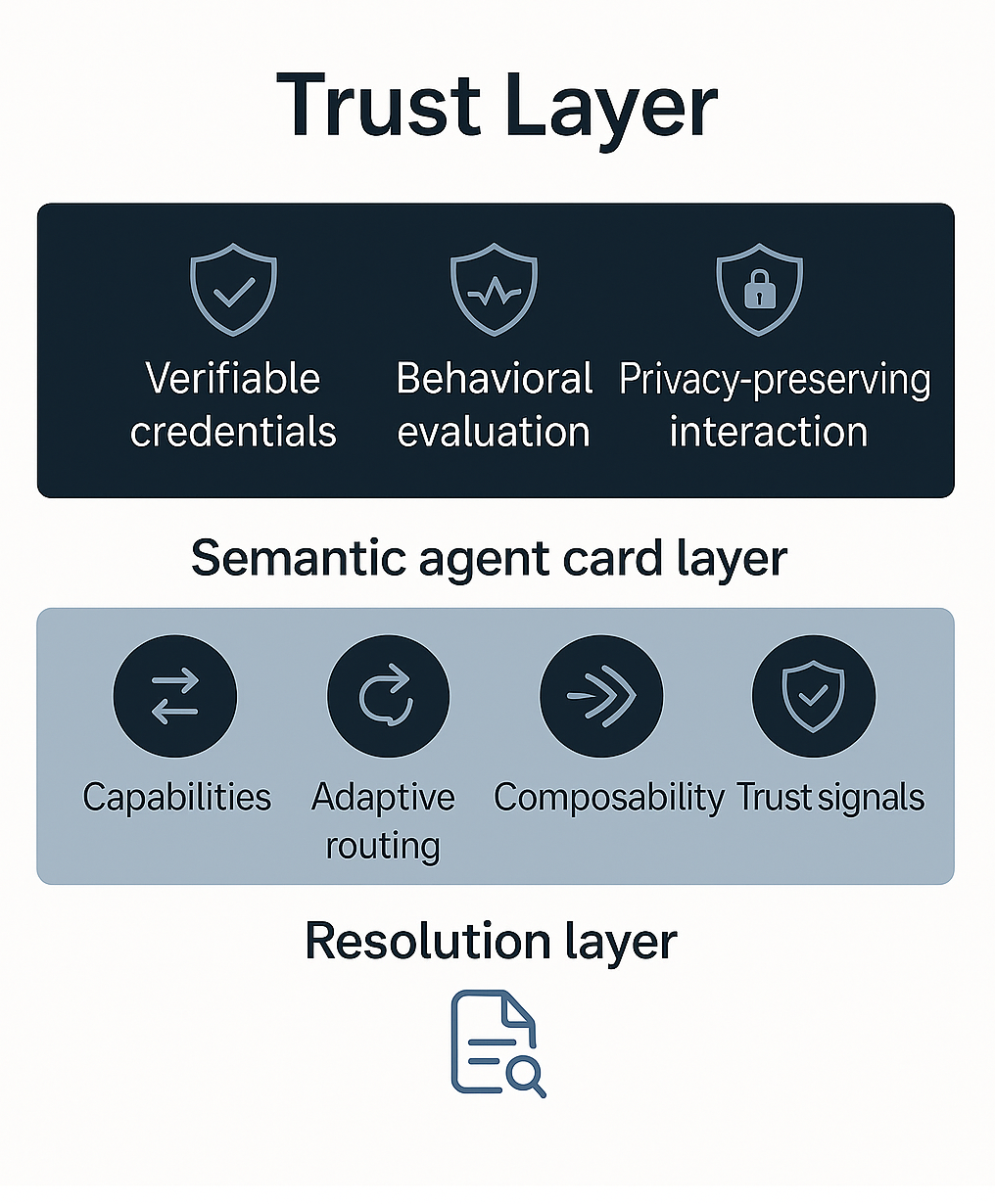
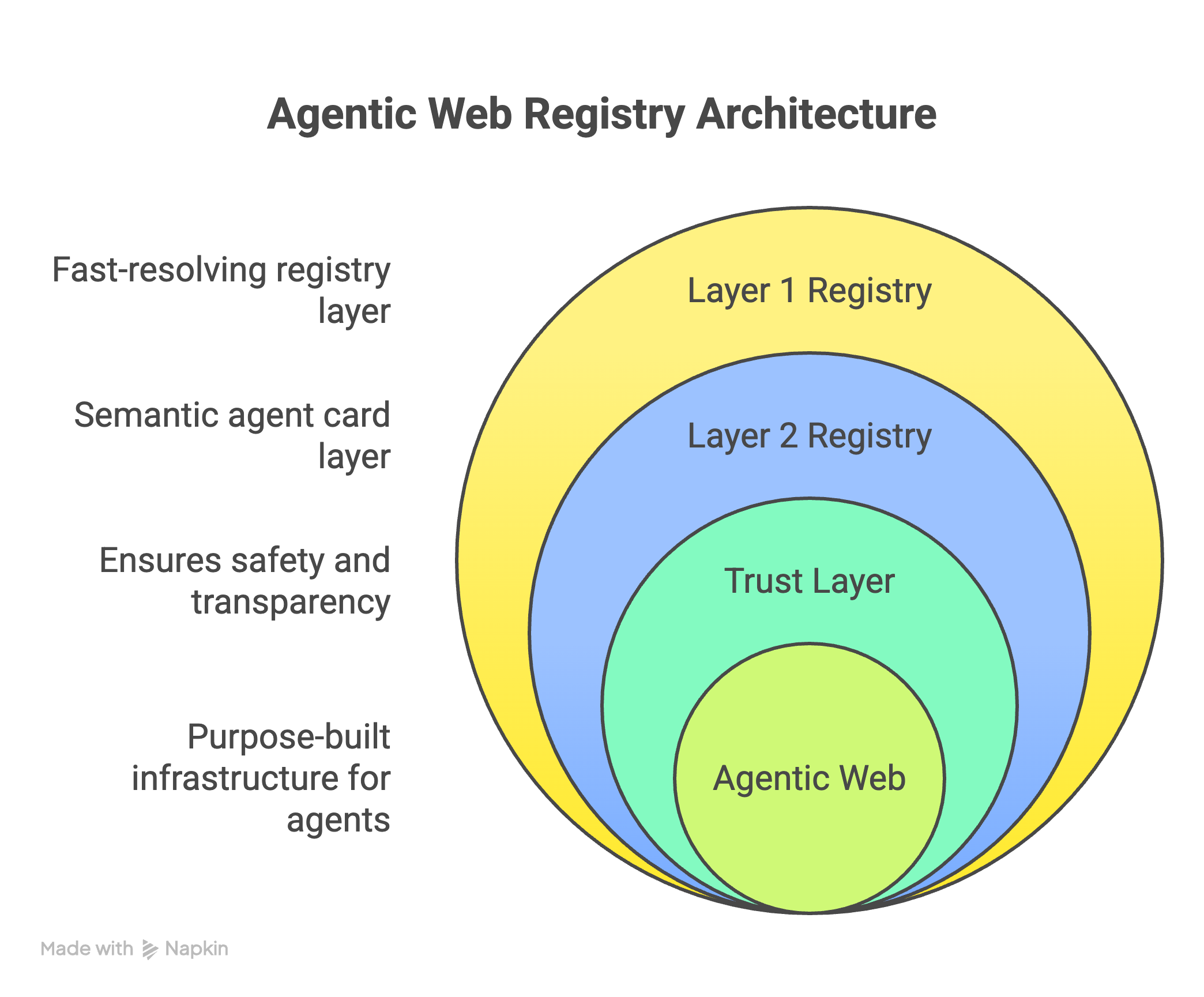
Figure 2: Architectural illustrations of agent stack and discovery layer.
The architecture employs the trust layer to transform agents into trust-anchored participants within a decentralized economy, integrating micropayments protocols like X42/H42 to handle economic coordination effectively. This ecosystem empowers agents to autonomously transact and interact securely, maintaining high compliance standards, especially evident in healthcare applications that demonstrate 99.9% compliance.
Protocol Landscape
Recent initiatives like MCP, A2A, ACP, and Cisco’s AGP have introduced notable communication abstractions yet fail to address deeper infrastructural needs such as agent discovery and dynamic trust management comprehensively. To bridge this gap, Nanda proposes a federated registry architecture divided into two layers:
- Layer 1: A lightweight, fast-resolving DID-based registry for rapid agent discovery.
- Layer 2: A semantic agent card layer extending beyond simple discoverability to encompass verifiable credentials and adaptive routing metadata.
These layers, synchronized by a robust trust layer, aim to facilitate secure, transparent, and verifiable agent operations within decentralized environments.
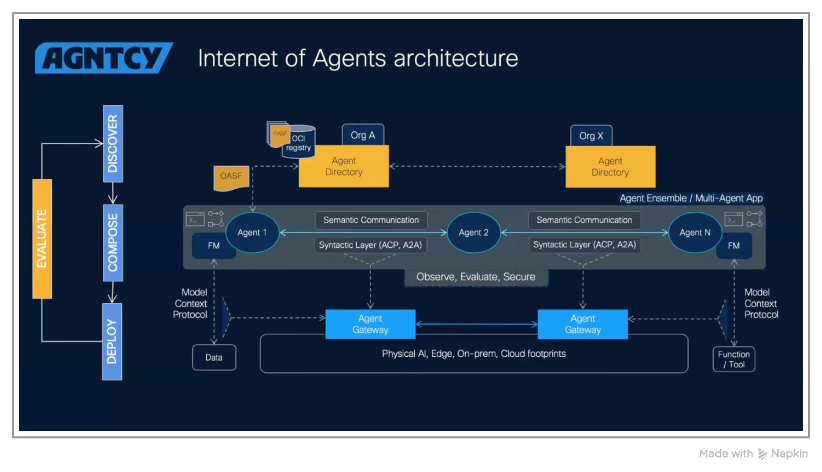
Figure 3: Internet of Agents: A Blueprint for Agent Collaboration and Secure Communication.
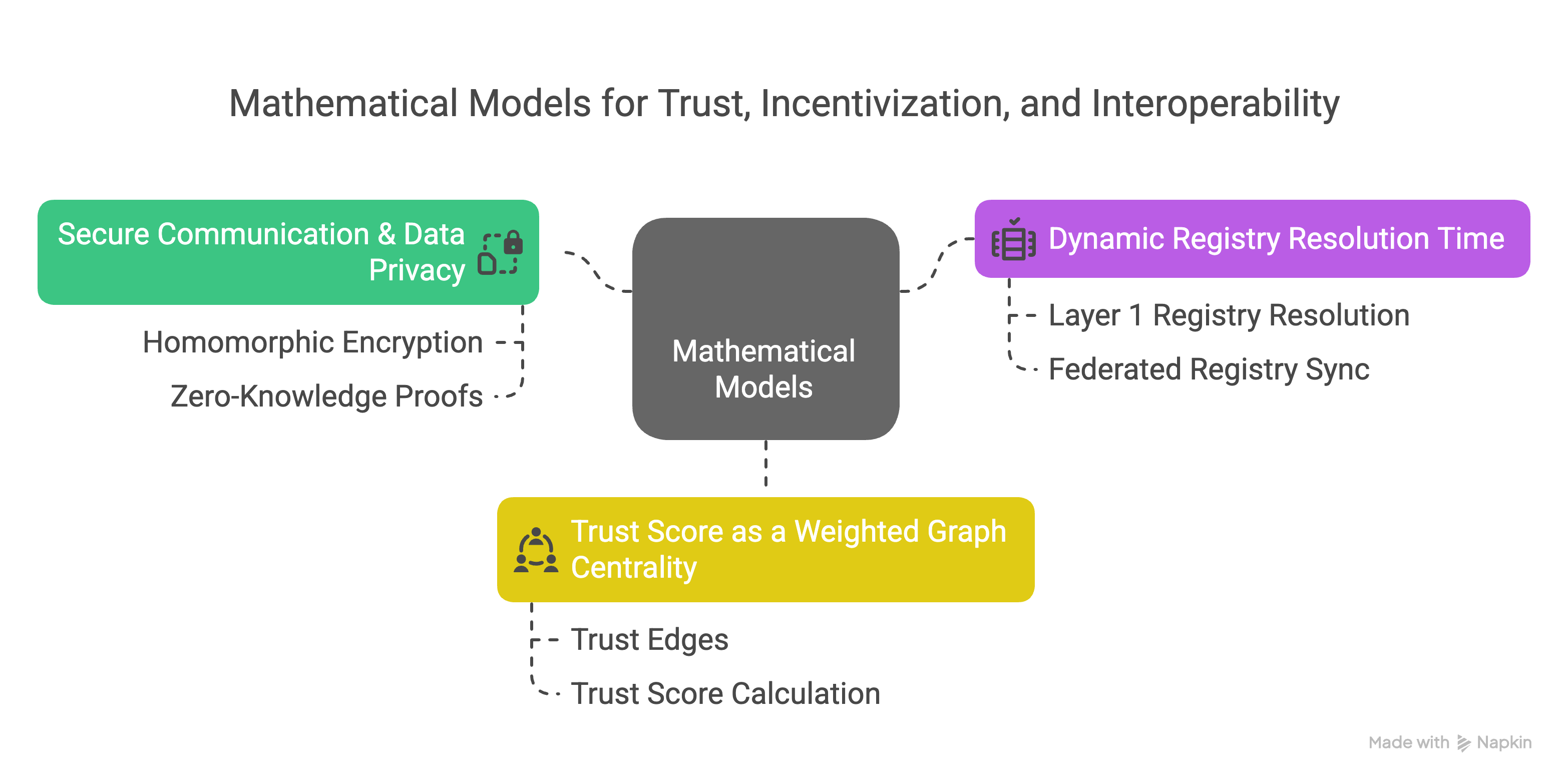
To ensure secure interoperability and trustworthy agent behavior, Nanda employs mathematical models for privacy, trust, and synchronization:
Incentivization via Microtransactions
The inclusion of microtransactions is crucial to functional decentralization. Protocols like X42/H42 enable real-time atomic transactions, allowing agents to autonomously compensate each other for various services like computational tasks and API access. This mechanism fosters a dynamic environment where agents can efficiently and securely monetize interactions.
Implications for The Future
The research illuminates a future where agents are not only interoperable but economically aligned, operating across a globally distributed mesh of registries and trust layers. By enabling decentralized identity and economically rationale behavior, the architecture positions agents for extensive collaboration and secure communication across multiple domains, including critical areas like healthcare, finance, and defense.
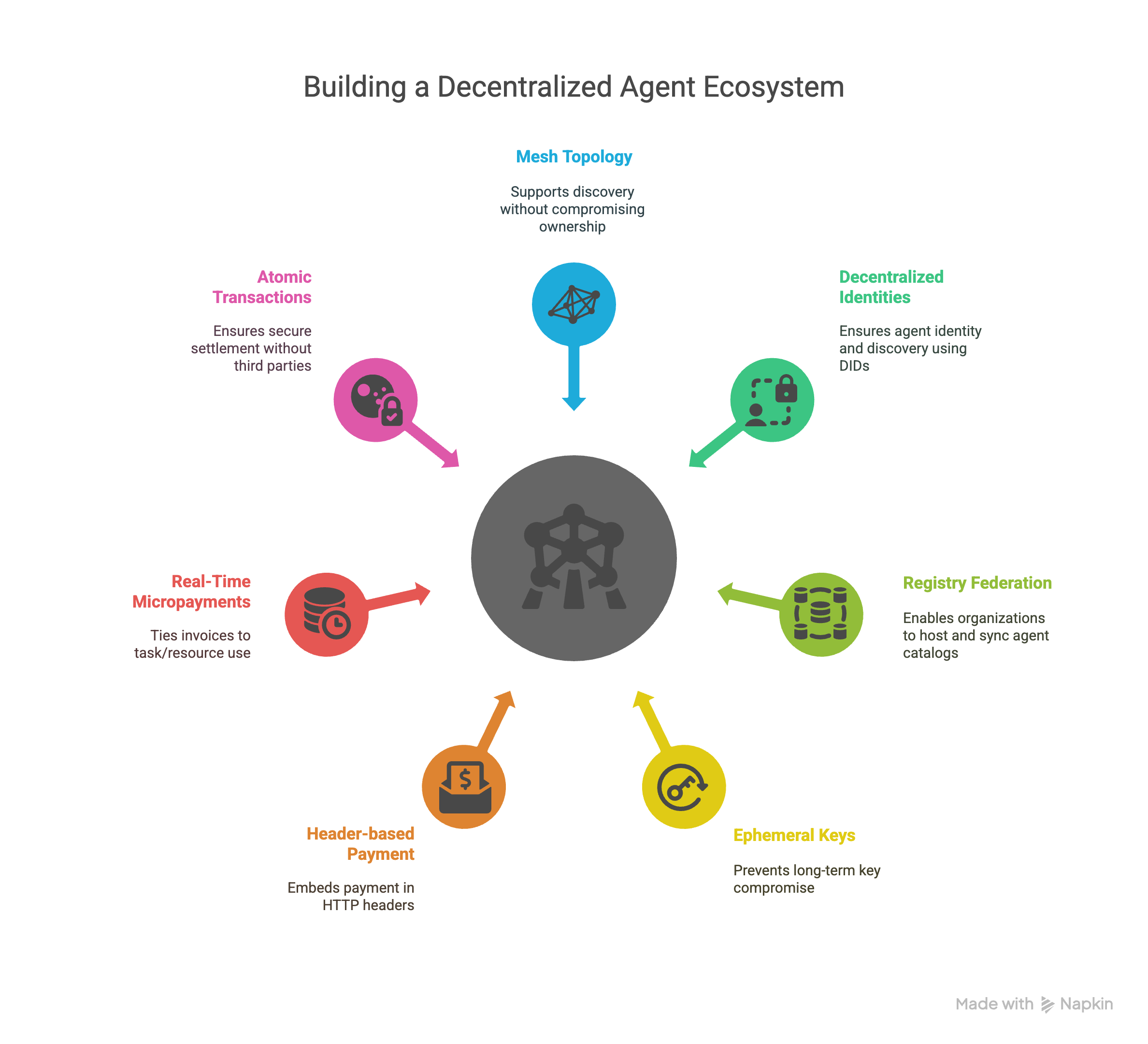
Figure 5: Building a Decentralized Agent Ecosystem.
Conclusion
The "Trust Fabric" paper presents a compelling case for a decentralized framework tailored to address interoperability, trust, and economic coordination within the agentic web. Through pioneering integrations and real-world implementations, the architecture proves its potential to catalyze a secure, economically viable ecosystem where trust becomes a native currency. This framework sets the stage for agents to transition from isolated units to integral components in a globally interconnected economy, ensuring that trust and coordination are foundational rather than peripheral concerns. The strategic collaboration between academic research and industrial production promises a transformational impact on the future of autonomous agent systems.