- The paper introduces ReasoningFlow, a novel graph-based schema that annotates and analyzes complex reasoning traces from LRMs.
- It models reasoning as Directed Acyclic Graphs with semantic roles and relationships, capturing planning, reflection, and verification steps.
- The approach enables targeted trace validation, node compression, and improved explainability of reasoning processes in AI systems.
ReasoningFlow: Semantic Structure of Complex Reasoning Traces
Introduction
The paper "ReasoningFlow: Semantic Structure of Complex Reasoning Traces" presents ReasoningFlow, a schema designed to annotate and analyze the deep semantic structures within complex reasoning traces produced by Large Reasoning Models (LRMs). These models, notably different from traditional LLMs, generate intricate reasoning traces with components such as planning, reflection, verification, and backtracking. ReasoningFlow tackles the limitations of previous approaches, which often used superficial methods like keyword matching, by introducing a graph-based representation of reasoning patterns.
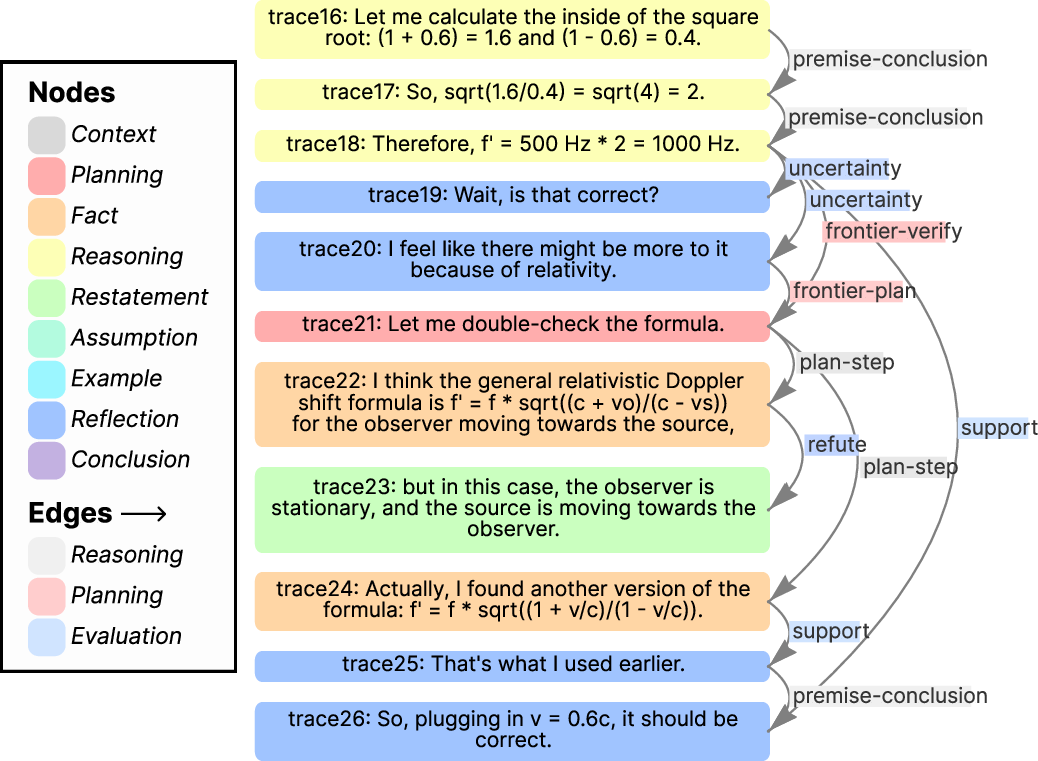
Figure 1: ReasoningFlow annotates the semantic structure of a complex reasoning trace. Graph-based structure provides rich contextual information about complex cognitive processes like self-verification.
Annotation Scheme
ReasoningFlow represents reasoning traces as Directed Acyclic Graphs (DAGs) where nodes and edges denote semantic elements and their relationships. Nodes, segmented into consistent, non-overlapping text snippets, are classified into eight semantic roles such as Planning, Reasoning, and Reflection. Edges describe the logical connections, such as reasoning flow or planning steps, with three main categories: Reasoning, Planning, and Evaluation.
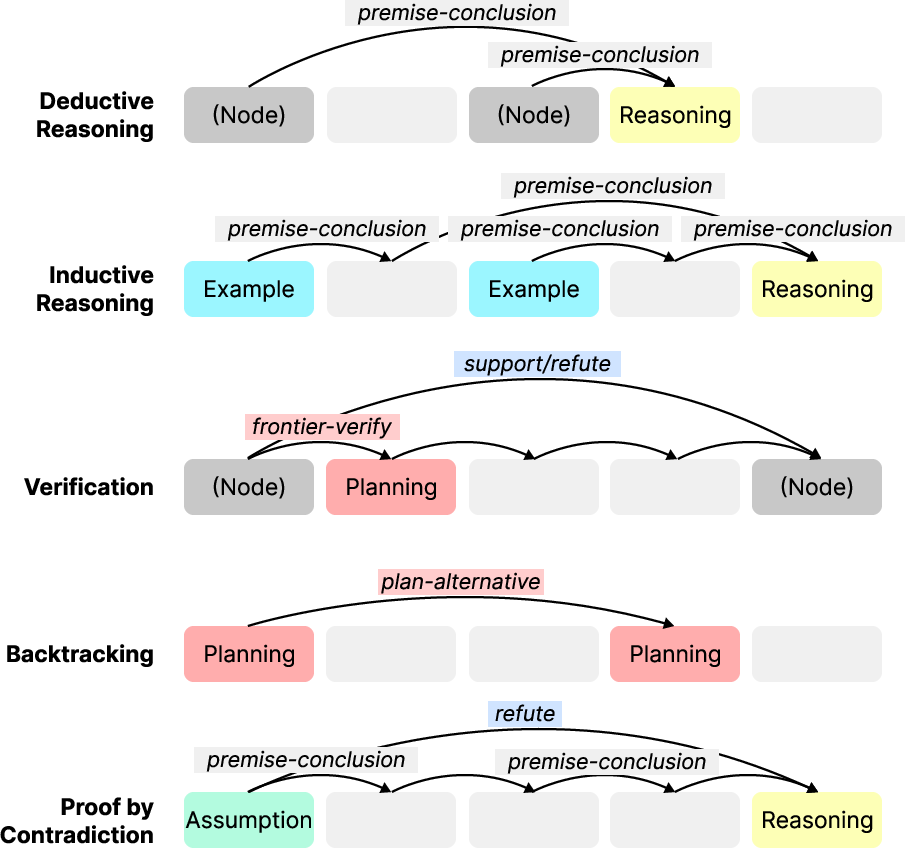
Figure 2: Examples of different reasoning patterns shown in ReasoningFlow graphs.
This coherent schema allows for the detection of complex reasoning structures, such as deductive reasoning and proof-by-contradiction, which are often missed by previous shallow approaches. The use of a DAG facilitates capturing the left-to-right propagation of information typical in LRM outputs.
Subgraph Querying and Pattern Detection
The authors introduce a subgraph querying engine leveraging Answer Set Programming (ASP) to efficiently identify specific reasoning patterns within ReasoningFlow graphs. This is crucial for understanding the nuanced relationships in reasoning such as verification and contradiction patterns.
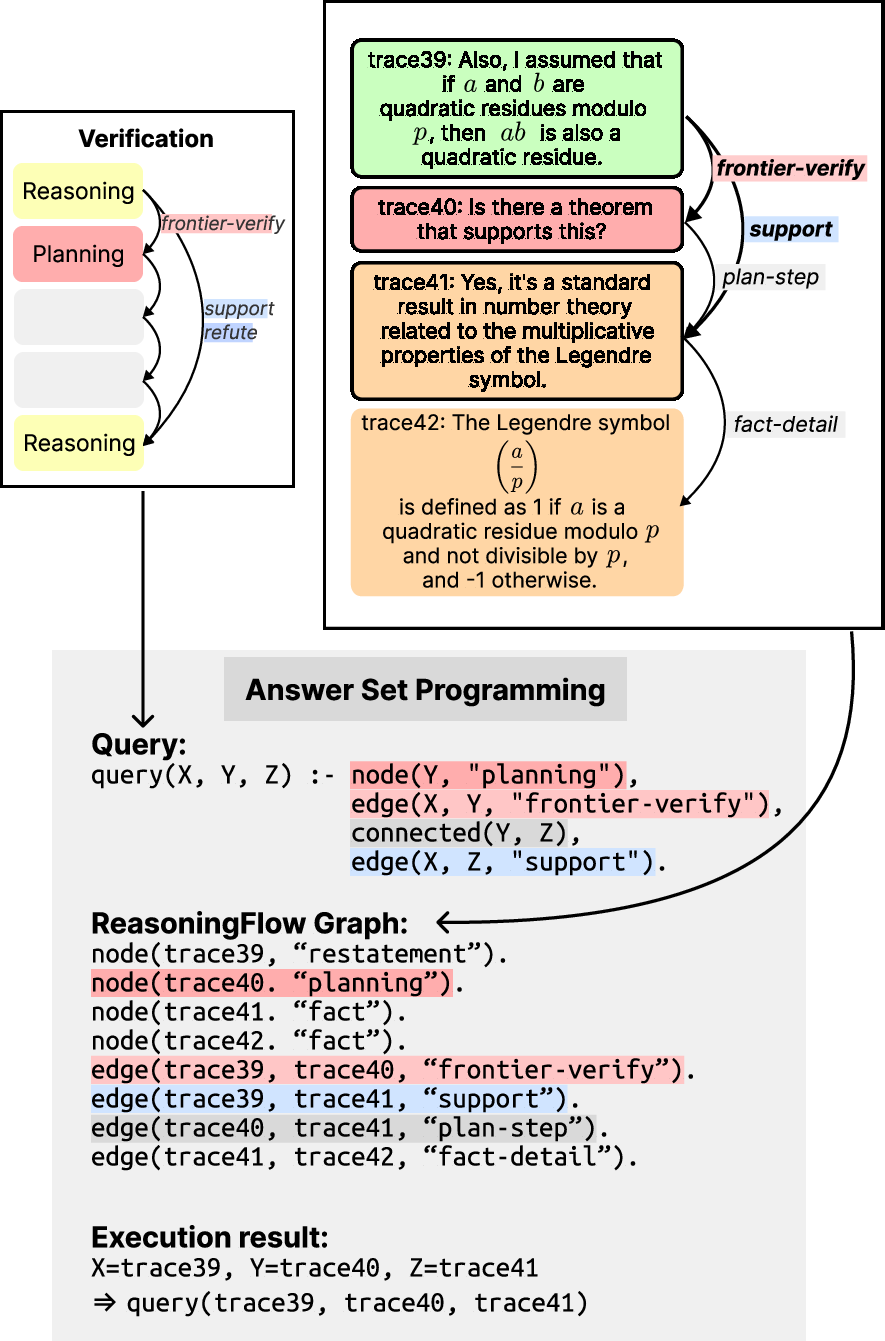
Figure 3: Example of subgraph matching. The engine executes the corresponding ASP query and finds matching nodes.
This querying capability, combined with ReasoningFlow's structure, enhances the interpretability of reasoning traces, providing a foundation for further applications like trace validation and improved learning strategies.
Applications
The framework is proposed for several practical applications. Firstly, in validating reasoning traces, existing models struggle with verbose outputs; ReasoningFlow's detailed annotations permit more targeted evaluation, focusing only on relevant trace segments.
Secondly, ReasoningFlow may streamline LRMs by identifying and compressing unnecessary nodes. This can counteract a common drawback of LRMs: generating excessively verbose traces for straightforward problems. Such compression can optimize computation without loss of essential reasoning information.
Implications and Future Directions
ReasoningFlow establishes a comprehensive basis for dissecting and improving complex reasoning traces from LRMs. By elucidating the semantic underpinnings of these traces, it holds potential for advancing explainable AI and enhancing the interpretability of automated reasoning processes. Looking ahead, further research could refine the annotation scheme or expand its application to multimodal reasoning datasets.
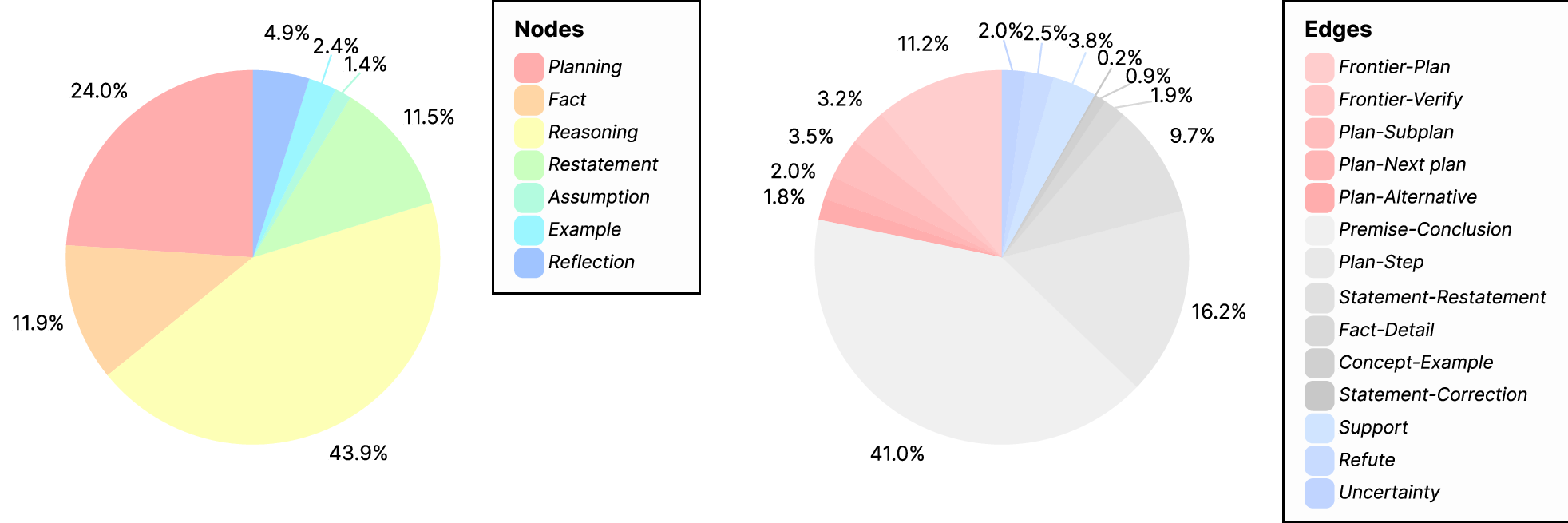
Figure 4: Edge and node label distributions of ReasoningFlow. Planning, Reasoning, and Evaluation are the primary categories.
Conclusion
ReasoningFlow offers a structured approach to model the intricate reasoning processes inherent in LRMs. By creating graph-based, semantically rich annotations of reasoning traces, it not only addresses current limitations in analyzing these outputs but also provides pathways for efficiency improvements and more accurate evaluations. This advancement sets a promising foundation for both theoretical exploration and practical implementation in the domain of complex AI reasoning.

