- The paper introduces a decoupled three-layer architecture that separates application, protocol, and hardware layers for scalable and interoperable LLM applications.
- It demonstrates enhanced security and efficiency using decentralized identifiers, distributed computing, and specialized AI hardware integration.
- The study highlights opportunities in federated inference and automated validation to overcome challenges in testing, privacy, and secure plugin execution.
The Next Frontier of LLM Applications: Open Ecosystems and Hardware Synergy
Introduction
LLMs are key drivers in the current landscape of artificial intelligence, powering diverse applications from conversational agents to decision support systems. However, the existing ecosystem for deploying these applications is hampered by silos, fragmented hardware integration, and non-standard interoperability. Current paradigms include centralized LLM app stores and more modular agent-based LLM frameworks. Each offers distinct advantages, yet both remain limited by architectural fragmentation, affecting scalability and reuse.
A Three-Layer Decoupled Architecture
To address these limitations, this paper introduces a three-layer decoupled architecture inspired by established software engineering (SE) principles such as layered system design and service-oriented architectures. This architecture decouples application logic, protocol handling, and hardware execution into distinct layers to improve modularity, cross-platform compatibility, and hardware-software synergy.
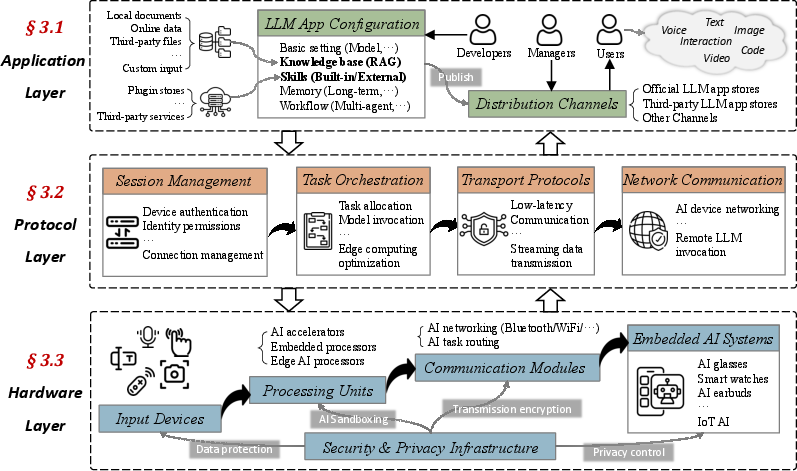
Figure 1: A Three-Layer Decoupled Architecture for LLM Applications.
Application Layer
This layer serves as the user and developer interface, allowing seamless design, configuration, and deployment of LLM applications across platforms. By abstracting lower-layer complexities, it manages app configuration, and multi-modal interaction support, and enables distribution through various channels. The decoupling from protocol and hardware layers enables scalable, flexible applications.
Protocol Layer
The Protocol Layer establishes a structured communication framework across platforms and hardware environments. It includes session management via decentralized identifiers (DID) and mutual authentication techniques, ensuring a secure bridge for component interaction. Task orchestration uses distributed computing concepts to balance workloads dynamically, while transport protocols enhance communication efficiency.
Hardware Layer
At the base, this layer ensures optimized execution using specialized processors and secure communication modules. Features include privacy-preserving input data processing and AI accelerator integration to support scalable and responsive LLM application execution across cloud, edge, and local devices.
Challenges and Opportunities
Challenges
- Secure Plugin Execution: Securely isolating dynamically updated LLM plugins poses challenges with traditional sandboxing methods, which introduce performance overhead.
- Privacy Preservation: Privacy-preserving task orchestration into the cloud, edge, and embedded systems faces hurdles like data leakage protection without compromising real-time efficiency.
- Testing Complexity: The architecture's layered design enhances scalability but complicates end-to-end testing and debugging, especially in ensuring security against sophisticated threats.
Opportunities
- LLM Plugin Security Frameworks: Adaptive security models that balance granular access control against functionality restrictions provide promising research avenues.
- Federated Inference: Adapting federated learning concepts to LLMs for task execution minimizes raw data exposure, increasing compliance with privacy regulations.
- Automated Validation: Self-learning test frameworks that employ reinforcement learning could advance security validation consistency across architectural boundaries.
- Hardware Security: Secure AI hardware coupled with endpoint protection mechanisms like tamper-resistant accelerators strengthens overall deployment tenure.
Conclusion
The paper advocates for a structured, interoperable paradigm to overcome the integration challenges that limit current LLM applications. By proposing a three-layer architecture, it underscores the need for open, secure ecosystems that enable modular, efficient, and scalable AI deployment. These foundations aim to guide future advancements in AI applications, facilitating a collaborative and interconnected landscape. This architecture can be pivotal for evolving LLM application ecosystems to meet the demands of diverse and dynamic user needs.

