The Belief-Desire-Intention Ontology for modelling mental reality and agency
This presentation introduces a modular Ontology Design Pattern that brings the foundational Belief-Desire-Intention model of rational agency into structured, semantically interoperable knowledge representations. It explores how this ontology bridges declarative and procedural intelligence, enabling cognitively grounded and explainable AI systems through alignment with Semantic Web standards and integration with large language models.Script
How do you teach a machine to think like a rational agent, complete with beliefs about the world, desires for certain outcomes, and intentions to act? The Belief-Desire-Intention model has long captured this structure in cognitive science, but it's never been fully integrated into the semantic architectures that modern AI systems need.
Despite decades of success in agent-based systems, the BDI model has remained isolated from the semantic technologies that could make it truly scalable. The authors recognized that explainable, human-aligned AI requires bridging this gap between how we model rational thought and how machines process knowledge.
Their answer is an Ontology Design Pattern that makes mental states machine-readable.
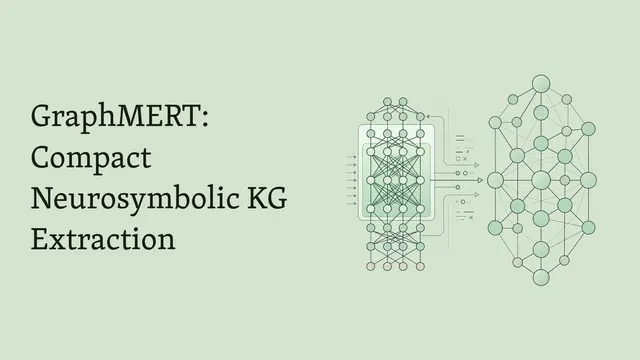
The ontology itself is modular and precise, encoding beliefs, desires, and intentions as structured entities with formal relationships. But the real innovation lies in how they coupled it with large language models through Logic Augmented Generation and a novel Triples-to-Beliefs-to-Triples mechanism that translates between knowledge graphs and mental state representations.
The experiments revealed something striking: when large language models reason through this ontology, they gain inferential coherence and consistency that raw statistical learning cannot provide. The ontology acts as a cognitive scaffold, turning opaque neural predictions into traceable chains of belief, desire, and intention.
We've built AI systems that can predict and generate, but we struggle to understand why they choose what they choose. This ontology offers a formal vocabulary for mental reality itself, making agent reasoning auditable and alignable with human intentions. The real question is whether we'll use it.
The Belief-Desire-Intention Ontology transforms an elegant cognitive model into a machine-readable bridge between symbolic thought and statistical intelligence. Visit EmergentMind.com to explore this paper further and create your own AI research videos.