Rust vs C on Microcontrollers: An Industrial Reality Check
This presentation examines a rigorous industrial comparison between Rust and C firmware for microcontrollers, where parallel teams at STMicroelectronics implemented identical sensor logging systems using Ariel OS. We explore surprising findings on memory footprint, code size, real-time performance, and portability that challenge conventional assumptions about high-level language overhead in deeply embedded systems.Script
Can a modern language like Rust truly match bare-metal C firmware on resource-constrained microcontrollers, or does safety come at a performance cost? STMicroelectronics put this question to the test by having two teams build identical sensor logging systems, one in C and one in Rust with Ariel OS, on the same industrial hardware.
The Rust implementation achieved a 45 percent reduction in RAM usage compared to C, consuming just 24,640 bytes versus 44,656 bytes. This advantage stems from Ariel OS's strictly bounded heapless memory model, which eliminates fragmentation risks entirely through compile-time allocation guarantees.
Defying conventional wisdom, the Rust firmware with its portable runtime produced binaries roughly 10 percent smaller than bare-metal C. The team eliminated bloat from async state machines by minimizing heapless container usage and replacing async drivers with synchronous equivalents where true concurrency wasn't needed.
Both implementations serviced sensor interrupts at the hardware maximum of 7680 hertz with identical throughput. While Rust's async model introduced 1.7 to 4.0 microsecond task switching latency, careful architectural tuning and peripheral configuration delivered the same 120 microsecond streaming task duration as the C baseline, with zero compromise to real-time guarantees.
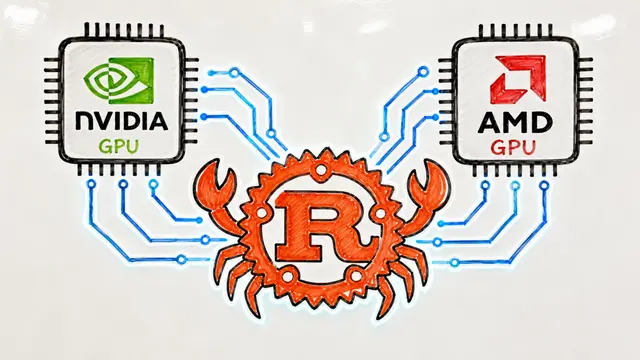
Portability revealed the starkest contrast: retargeting the Rust firmware to different boards required only configuration changes and build command updates, while the C approach demanded labor-intensive STM32CubeMX regeneration and manual peripheral setup for each platform. This superior maintainability came without sacrificing performance or inflating binary size, contradicting the assumption that portable abstractions impose prohibitive overhead.
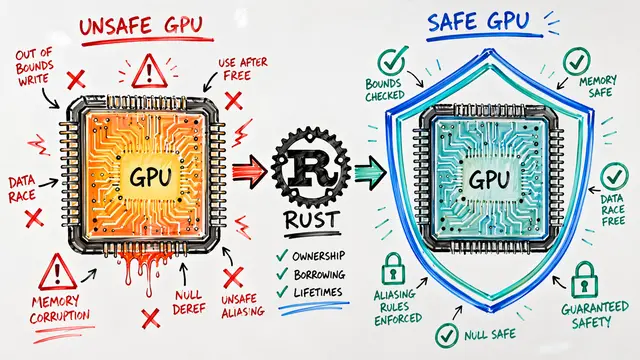
This industrial case validates embedded Rust as a practical, safe alternative for mission-critical microcontroller firmware, especially under emerging regulatory pressures like the Cyber Resilience Act. The findings demonstrate that with mature ecosystems like Ariel OS and judicious architectural choices, Rust delivers C-level performance with vastly improved code safety and maintainability. Explore more research like this and create your own technical videos at EmergentMind.com.