Hakken: Predicting Tomorrow's Science Today
Hakken is a system designed to predict future scientific discoveries before they appear in published literature. By combining temporal knowledge graphs, language models, and calibrated multi-label prediction, it forecasts biomedical relationships that have not yet been documented. The system also provides structured graph evidence to help researchers evaluate and prioritize predictions. Two of three expert-selected hypotheses were experimentally validated in wet-lab tests, demonstrating that computational forecasting can generate actionable biological candidates.Script
Can we predict which biological relationships scientists will discover next year, before a single experiment is published? Hakken attempts exactly that, forecasting future knowledge by learning temporal patterns in the biomedical literature.
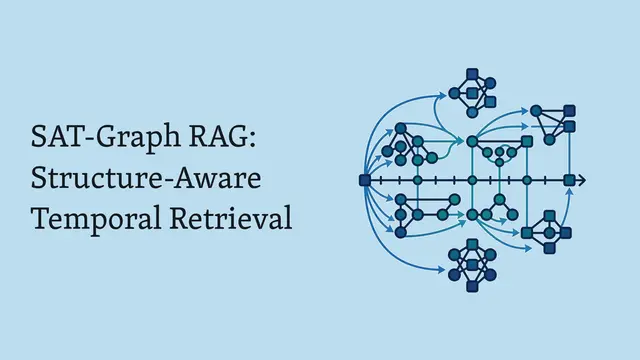
The system treats prediction as a temporal multi-label problem over a biomedical knowledge graph containing more than 7 million facts. Each relationship carries a publication year, and models are trained only on facts known before a cutoff, then evaluated on relations that appeared afterward. This design shifts the task from retrieval to genuine forecasting.
THiGERLLM fuses two sources of evidence: temporal graph structure and publication-derived text. Graph snapshots are aggregated across time using a hierarchical Transformer, while sentences mentioning each entity separately are processed by a language model. The combined representations produce calibrated confidence scores for 23 relation types, allowing the system to rank predictions by empirical probability of correctness.
The textual branch produces a 14 percentage point gain in macro recall, recovering rare relation types that graph structure alone misses. But this broader coverage trades off precision: THiGER remains sharper on frequent relations and ranking metrics. The tension reflects a deeper question: under incomplete labels, is a false positive actually an undiscovered truth?
Three expert-selected predictions were tested in cell-based assays. TP53 activation increased BAMBI expression by up to 38 percent. RAF inhibition raised TNF transcripts, though protein levels remained undetectable. The SOAT1 to STAT3 hypothesis, despite 84 percent confidence, showed no phosphorylation response. Two of three candidates confirmed: actionable, but not infallible.
Hakken demonstrates that tomorrow's discoveries leave faint signals in today's literature, recoverable through temporal modeling and language fusion. Whether these signals scale beyond curated aging genes and whether confidence translates to mechanistic truth remain open questions. Explore the full architecture and create your own research videos at EmergentMind.com.