When Higher-Order Truth Breaks Free: The Unrealizability of F₂
This lightning talk explores a striking result in topos theory and intuitionistic logic: the free Heyting algebra on two generators cannot be realized as the lattice of truth values in any elementary topos. We examine how the authors construct an infinitary antichain obstruction in Bellissima's universal Kripke model, then use impredicative higher-order quantification to define an internal truth value that simultaneously must and cannot belong to the propositional algebra. The proof reveals a fundamental gap between propositional and higher-order intuitionistic logic, showing that topos-internal truth is constrained by definability structure invisible to finite algebraic operations alone.Script
Every elementary topos comes with a lattice of truth values, and every such lattice is a Heyting algebra. But can every Heyting algebra arise this way? The authors prove the answer is no, by showing that the free Heyting algebra on just two generators is impossible to realize as the truth structure of any topos.
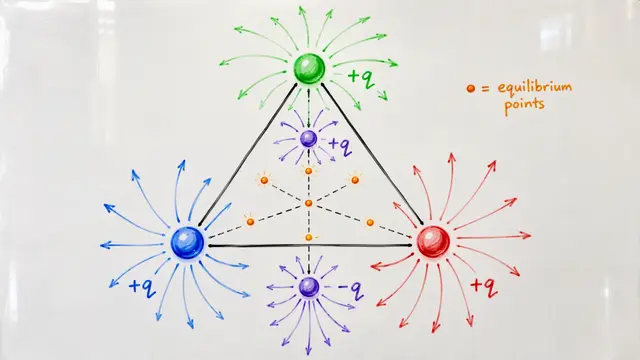
The key obstruction lives inside Bellissima's universal Kripke model. The authors define three recursively interlocking sequences of points, which at each stage generate a new node z_n. These z_n form an infinite antichain, meaning no point in the sequence lies below any other. The upward closure of this antichain is the spoiler: it's a well-defined upward-closed subset, but it cannot be expressed by any propositional formula in F₂.
Why can't this subset belong to F₂? The proof uses a beautiful indirect argument. Elements of a free Heyting algebra are finite joins of join-irreducible formulas, and each join-irreducible is downward filtered. If the antichain-generated set were definable, finitely many filtered pieces would have to cover infinitely many incomparable points, forcing two antichain elements into the same piece. That contradiction is impossible, so the set must lie outside F₂.
Now the authors assume, for contradiction, that some topos realizes F₂ as its lattice of truth values. Inside that topos, they define a higher-order proposition theta by quantifying over all predicates closed under the recursive step function. This impredicative construction captures exactly the reachable points and forms the union of all the z_n sets. But theta is a global truth value, so it must belong to F₂. That gives the contradiction: theta equals the antichain-generated set, which provably does not belong to F₂.
The result reveals a fundamental asymmetry. The free Heyting algebra embeds into the lattice of upward-closed sets of its universal Kripke model, but that lattice is strictly larger. Higher-order quantification in a topos can define truth values corresponding to these extra elements, creating an internal obstruction. Topos-realizability is therefore a genuine constraint: not every Heyting algebra can serve as the truth structure of a topos.
The lesson is both surprising and elegant: intuitionistic propositional logic and higher-order intuitionistic logic impose different structural constraints on truth. The authors isolate a concrete example where impredicative quantification generates a truth value that finite propositional syntax cannot reach, proving that the internal language of a topos carries definability structure invisible to the underlying algebra. If you'd like to explore more results like this or create your own video explainers, visit EmergentMind.com.