On the Dynamics of Local Hidden-Variable Models
This presentation explores a fundamental question in quantum mechanics: can hidden variables that explain quantum correlations also capture how those correlations evolve over time? The authors introduce the concept of dynamical Local Hidden-Variable models and reveal surprising limitations. While noninteracting quantum systems permit consistent hidden-variable dynamics, interacting systems—even simple two-qubit interactions—fundamentally resist this classical description. These findings deepen our understanding of quantum nonlocality and suggest that quantum dynamics may be inherently incompatible with certain classical interpretations.Script
Bell's theorem tells us that hidden variables cannot explain all quantum correlations. But for some quantum states, the local ones, hidden-variable models might genuinely describe the physics. The deeper question is this: if hidden variables explain correlations at one moment, can they also explain how those correlations change over time?
To answer that, we first need to understand what it means for hidden variables to evolve consistently with quantum dynamics.
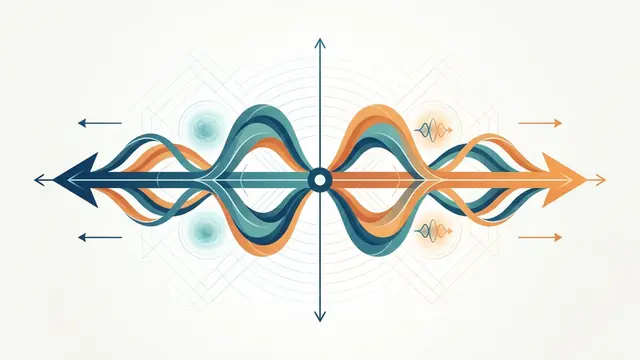
A Local Hidden-Variable model proposes that unseen parameters, lambda, determine measurement outcomes. For local quantum states, these models can reproduce all observed correlations. The new challenge is dynamics: can we define how lambda evolves so that it tracks the quantum state's evolution through time?
This diagram captures the core problem. The grey region represents all possible quantum states, while the orange subset contains the local states that admit hidden-variable descriptions. As quantum states evolve over time under some Hamiltonian, the local states trace out paths within this space. For dynamical hidden-variable models to work, the hidden parameters must evolve along trajectories that mirror this quantum evolution and preserve the measurement statistics at every instant.
The results split sharply. For noninteracting quantum evolution, where particles evolve independently through separable unitaries, the authors show that consistent hidden-variable dynamics exist. A single velocity field can guide the hidden parameters through time while preserving quantum correlations. But for interacting systems, even a simple two-qubit Heisenberg interaction, this framework collapses. No state-independent rule can evolve the hidden variables to match the quantum dynamics. The incompatibility is not a technical limitation but appears fundamental.
These findings reveal something profound about quantum mechanics. Nonlocality is not just about measurement correlations frozen in time. It manifests in the evolution itself. When quantum systems interact, their dynamics cannot be captured by evolving hidden variables, even when the states remain local. This suggests that quantum evolution carries information or structure that classical trajectories, no matter how cleverly defined, fundamentally cannot encode.
Quantum mechanics resists the hidden-variable story not just in space, but in time. To explore more research like this and create your own video presentations, visit EmergentMind.com.