Dynamic Probabilistic Decision Networks
This presentation introduces a new framework for modeling human decision-making that treats randomness as fundamental rather than incidental. Unlike traditional approaches that assume people deterministically maximize utility, Dynamic Probabilistic Decision Networks combine rational utility with emotional attraction in a principled way, propose the quarter-law predicting aggregate affective deviations, and show how information exchange between agents can either suppress or amplify these emotional influences over time.Script
Every time you face the same choice, you might decide differently. The authors of this paper argue that randomness is not noise in decision-making; it is the decision-making process itself.
The model decomposes each choice probability into a utility factor, derived from rational evaluation, plus an attraction factor representing emotions and biases. The attraction factors sum to zero across all options, redistributing probability rather than creating it.
When individual affective information is unavailable, the authors propose the quarter law: the average magnitude of attraction factors equals one quarter. Reanalysis of 152 lottery problems from Kahneman and Tversky yields aggregate values of 0.27 and 0.22, closely matching the predicted 0.25.
In the Allais paradox, most people prefer a certain payoff over a risky lottery, then reverse their preference when both options are scaled down by the same probability. The model resolves this by assigning positive attraction to the certain outcome and negative attraction to the risky one, overriding the utility ranking without violating any axiom of the probability calculus.
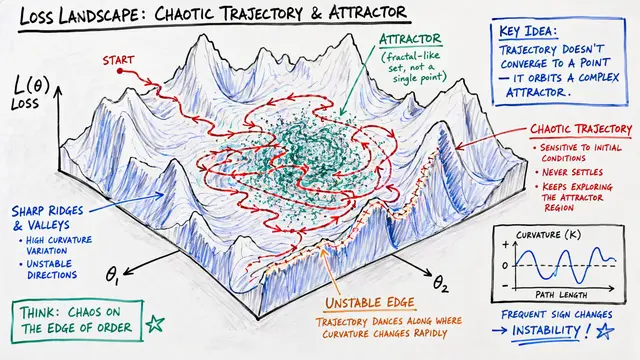
When agents exchange information, those with long-term memory shed their emotional biases and converge toward rational utility. But under strong imitation and asymmetric memory structures, the model predicts permanent oscillations: the population never settles, exhibiting persistent indecision instead of consensus.
The framework demonstrates that external controllers using gradient descent can steer entire populations toward prescribed choice probabilities by adjusting utility parameters. The capability is powerful but raises a sharp question: who decides what people should decide? If you want to explore how probabilistic networks might model your own decisions or design talks like this one, visit EmergentMind.com.