Why is AI-generated language so hard to understand?
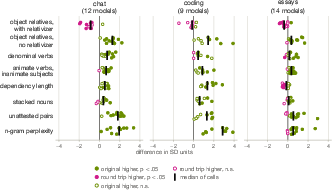
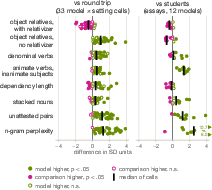
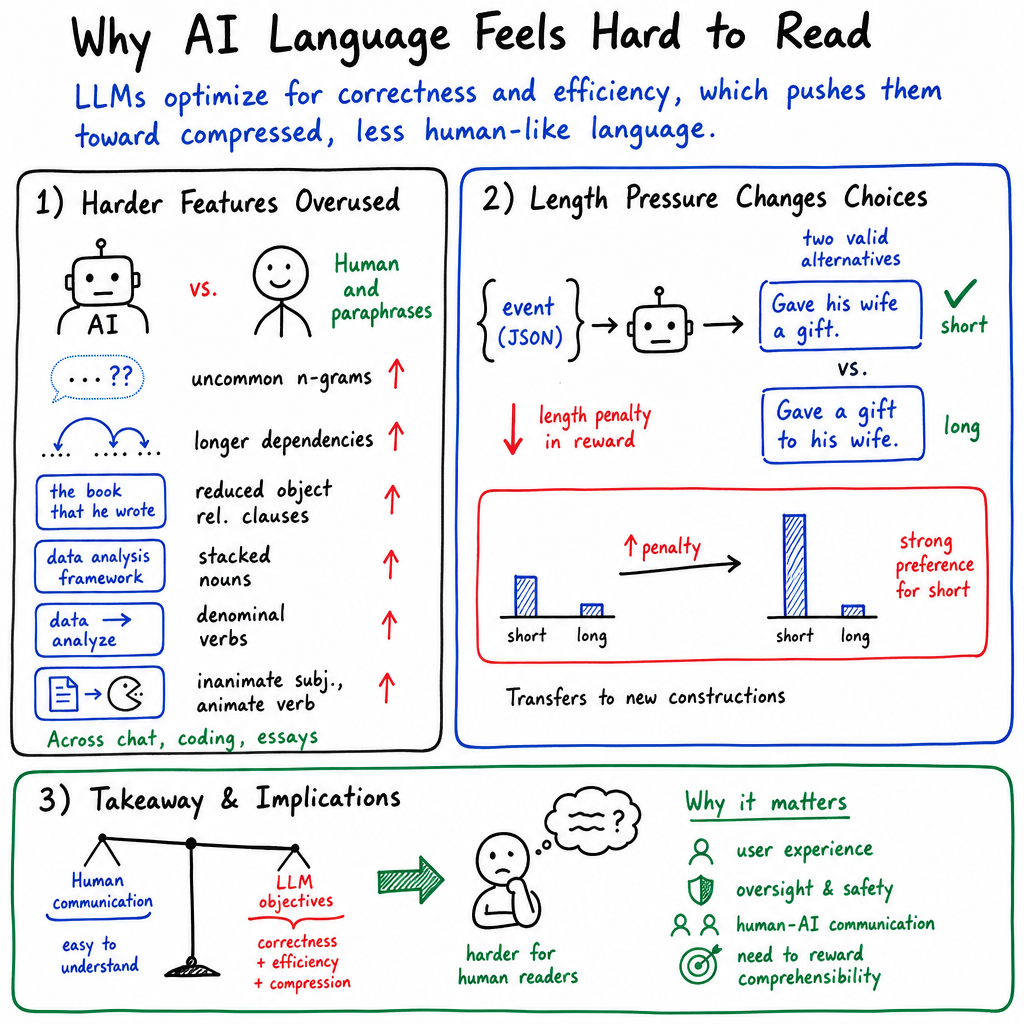
Abstract: There is a widespread sense that AI-generated text has recently become harder to understand. In this study, we investigate a set of psycholinguistic features that are known to correlate with human processing difficulty (e.g., object relative clauses, long syntactic dependencies, low-frequency n-grams). Using a novel corpus of AI-generated text across diverse domains, we find that AI models use these difficult features more often than paraphrases generated by round-trip translation. Compared with human writing, all nine frontier and near-frontier models use more inanimate subjects with animate verbs and more low-frequency n-grams, and most also use longer dependencies, more stacked nouns, and more reduced object relatives in conversation; we also demonstrate substantial variation across model families. We propose and test a hypothesis as to why: while human language is optimized for successful communication, AI-generated text is increasingly optimized for other goals like math, code, and reasoning, in which there is a pressure for \textit{information density} rather than successful communication. We provide a proof-of-concept for this hypothesis by fine-tuning a LLM under a length penalty, which leads to a divergence from human-like linguistic behavior. Our findings highlight the axes of misalignment between linguistic processing demands in humans and LLMs, and point toward possible remedies.
Paper Prompts
Sign up for free to create and run prompts on this paper.
Top Community Prompts
Explain it Like I'm 14
1. What is this paper about?
This paper asks a simple question:
Why does AI-written language sometimes feel strangely difficult to understand, even when the sentences are grammatically correct?
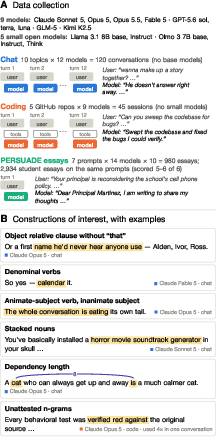
The researchers studied text produced by many modern LLMs, such as chatbots and coding assistants. They compared this writing with human writing and with simpler versions created by translating the AI text into another language and back again.
Their main idea is that AI systems may be learning to make language shorter and more information-packed, especially when they are trained to solve mathematics, write code, or reason through difficult problems. This can help the AI complete tasks, but it may make the writing harder for people to read.
2. What did the researchers want to find out?
The paper focused on two main questions:
- Do modern AI models use language patterns that are known to be difficult for humans to understand?
- Could training AI to use fewer words cause it to prefer language that is less natural or less clear to people?
The researchers looked at several language features that can make sentences harder to process. For example:
- Rare word combinations: Words that do not often appear together.
- Long-distance connections: Parts of a sentence that belong together but are far apart.
- Object-relative clauses: Sentence structures such as “The book that the student read was interesting.”
- Stacked nouns: Several nouns placed together, such as “school science project funding plan.”
- Unusual verbs made from nouns: For example, saying “calendar the meeting” instead of “put the meeting on the calendar.”
- Objects acting like people: For example, “The computer swallowed the file” or “The program refuses to cooperate.”
These forms are not always wrong. However, they can make readers pause and work harder to understand the sentence.
3. How did the researchers study this?
Comparing AI writing with human writing
The researchers collected writing from 14 LLMs in three situations:
- Normal conversations
- Coding tasks
- School-style essays
They then compared the AI writing with human examples, including online conversations, programming discussions, Wikipedia articles, and essays written by students.
They measured how often each type of writing used the difficult language features.
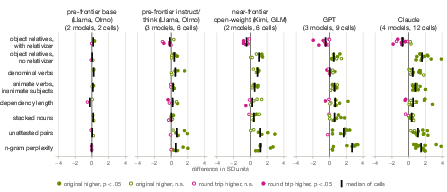
Using round-trip translation
The researchers also used a method called round-trip translation.
This means they:
- Took an AI-written sentence in English.
- Translated it into Japanese.
- Translated it back into English.
The meaning would usually stay similar, but the wording would change. This is like asking someone to explain the same idea in a different way.
This method helped the researchers separate:
- The meaning of what the AI said
- The AI's particular choice of wording
If a difficult feature disappeared after translation, that suggested the AI had chosen that difficult form even though an easier alternative was available.
Testing a word-count penalty
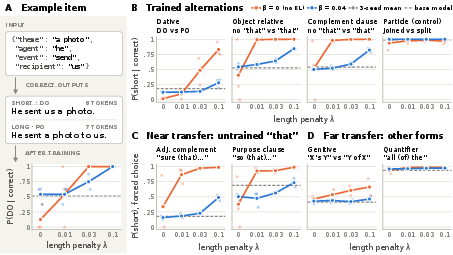
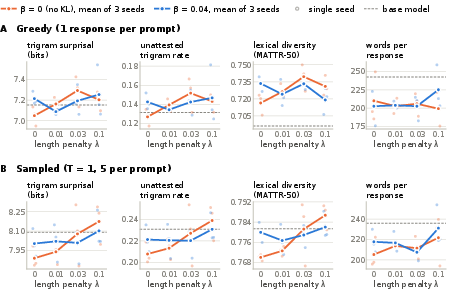
In a second experiment, the researchers trained a smaller AI model to turn structured information into English sentences. They gave the model a penalty for using too many words.
This was similar to telling the model:
“Give the correct answer, but try to use as few words as possible.”
The researchers then checked whether the model began choosing shorter sentence structures, even when people would normally choose between short and long versions depending on the situation.
4. What did they find?
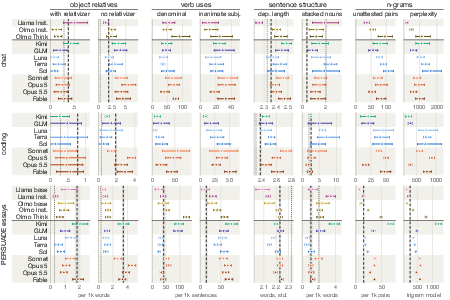
AI models often used harder-to-process language
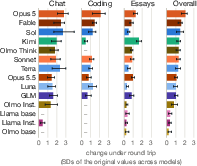
Many of the newer and more powerful models used more of the difficult language features than human writing did. In particular, they often produced:
- Less common word combinations
- More unusual noun-based verbs
- More objects described as if they were people
- More shortened relative clauses
- Longer connections between words
- More groups of several nouns
- More compressed expressions
For example, instead of using a longer and clearer phrase, a model might choose a shorter phrase that packs several ideas together.
The difficult patterns were usually choices, not requirements
The round-trip translation experiment showed that many of these features disappeared when the text was translated and translated back.
This suggests that the AI could have expressed the same meaning more simply. The harder wording was often a specific choice made by the model.
Models differed from one another
Not all AI models behaved in exactly the same way.
Some models were closer to human writing, while others used more difficult or compressed language. The researchers also found that different versions of the same model family could behave differently.
For example, one newer version of a model was less difficult to read than an older version. This suggests that developers may be able to improve AI writing if they specifically train models to communicate clearly.
A word-count penalty pushed the model toward shorter language
In the second experiment, the model increasingly preferred shorter sentence forms when it was punished for being verbose.
This preference sometimes appeared even in sentence patterns that the model had not seen during training. In other words, the model learned a general rule:
“When there are two correct ways to say something, choose the shorter one.”
Humans do not always do this. People may choose a longer version if it makes the sentence easier to understand or if the reader might otherwise become confused.
5. Why are these findings important?
Human languages have developed under strong pressure to help people communicate successfully. People have limited attention and memory, so languages tend to develop patterns that make understanding easier.
AI systems have different pressures. They may be rewarded for:
- Getting the correct answer
- Solving a math problem
- Fixing code
- Using fewer tokens
- Fitting more information into a limited context window
These goals do not always require the AI to communicate in a way that feels natural to people. If the reward is based only on correctness, the AI may discover that a dense, unusual sentence is just as successful as a clear one.
For instance, an AI might learn that leaving out a small word does not affect whether its answer is marked correct. It may then leave out that word even when including it would help a human reader.
Conclusion: What could this mean for the future?
The paper suggests that some AI-generated writing is becoming less humanlike because AI systems are being trained for goals other than conversation. A model may be excellent at mathematics or programming while still producing language that is tiring or confusing to read.
This does not mean that all AI writing is bad or that every unusual sentence is a serious problem. It means that correctness and readability are different skills.
In the future, AI developers could train models to consider both:
- Whether an answer is correct
- Whether a human can understand it easily
Possible solutions include rewarding clear explanations, testing how easily people can follow AI responses, and teaching models to avoid unnecessary compression.
The larger lesson is that AI does not automatically write like a person simply because it learned from human-written text. The goals used during training strongly influence the kind of language it produces.
Knowledge Gaps
Knowledge gaps, limitations, and open questions
- The study does not directly measure whether the identified features actually reduce human comprehension in AI-generated text; it relies on psycholinguistic associations established in other contexts.
- The relative contribution of individual features remains unresolved: the experiments do not determine whether rare n-grams, long dependencies, stacked nouns, reduced object relatives, denominal verbs, and animacy mismatches independently impair comprehension or interact cumulatively.
- The causal source of the linguistic patterns is not identified. The study cannot distinguish effects of RLHF, RLVR, supervised fine-tuning, prompting, decoding, model scale, data composition, or other stages of model development.
- The proposed link between information-density optimization and difficult language is indirect in Experiment 1; the models’ actual training objectives, reward functions, and post-training data are not available for controlled comparison.
- Experiment 2 establishes effects of an explicit length penalty, but does not show that the same mechanism operates in the frontier models examined in Experiment 1.
- The length-penalty intervention uses a single 1.5B
Qwen2.5-Instructmodel and a narrowly defined JSON-to-English task, leaving its relevance to larger frontier models, open-ended generation, reasoning, coding, and dialogue uncertain. - The study does not systematically compare models trained with RLHF, RLVR, supervised fine-tuning, or no post-training under otherwise matched conditions, preventing a direct test of which training regime produces the observed linguistic shifts.
- The experiments do not evaluate whether length penalties improve task efficiency without harming factual accuracy, reasoning quality, robustness, or communicative success in realistic tasks.
- Human language is represented primarily by genre-matched corpora, but the comparisons are not fully matched for topic, sentence length, author expertise, audience, discourse structure, register, or publication conditions.
- The student-essay baseline contains only high-scoring essays from US students in grades 6–12, so it may not represent adult expert writing, everyday communication, professional prose, or the full distribution of human language.
- The simulated users and agent harness may substantially shape model outputs; the extent to which results generalize to direct user interactions, vendor-native interfaces, different system prompts, and different tool environments is unknown.
- The study uses only a small number of chat topics and repositories, limiting conclusions about domain generality and making seed-specific effects difficult to rule out.
- Coding outputs are evaluated only through turn-final text, excluding text between tool calls and potentially omitting linguistic behavior that occurs during important parts of agentic interaction.
- Generation settings are not standardized across providers, including temperature, reasoning configuration, token limits, chat templates, and decoding defaults; observed model differences may therefore partly reflect inference conditions rather than model properties.
- The analysis does not quantify how much of the observed variation is attributable to model family, model size, release date, instruction tuning, reasoning mode, or sampling randomness.
- The study reports substantial model-family variation but does not explain why models such as Claude Opus 5.5, Olmo Think, Llama, and Olmo Base differ, leaving the relevant architectural or training factors unresolved.
- The automated detection of denominal verbs and inanimate-subject constructions may introduce systematic classification errors, but the paper does not provide comprehensive human validation, error rates, or analyses of whether errors differ across model outputs and human corpora.
- Dependency parses, sentence segmentation, placeholder replacement, and code/markup removal may behave differently on AI-generated text than on human reference text; the impact of these preprocessing choices is not fully quantified.
- The n-gram measures depend on selected reference corpora and a particular trigram model, so it is unclear whether the findings persist with larger, contemporary, domain-balanced, multilingual, or neural language-model baselines.
- Round-trip translation is not a fully semantics-preserving control: translation through Japanese may alter syntax, discourse structure, lexical choice, ambiguity, and content, so reductions in a feature cannot be attributed solely to the original model’s stylistic preference.
- The study uses only one pivot language and one translation system (
NLLB-200), leaving the robustness of the round-trip findings across pivot languages, translation models, and paraphrasing methods unknown. - The claim that round-trip translation isolates available alternative formulations is not tested against human-written texts or independently controlled paraphrase sets.
- The analysis treats linguistic features associated with processing difficulty as evidence of reduced intelligibility, but does not examine whether readers adapt to, reinterpret, or successfully understand these constructions with sufficient context.
- It remains unknown whether exposure to AI-generated language changes human processing over time, including adaptation, habituation, increased reading effort, or changes in judgments of naturalness.
- The paper does not test comprehension across reader populations, such as experts versus novices, native versus non-native English speakers, children versus adults, or readers with different working-memory capacities.
- The effects are analyzed mainly at the aggregate corpus level; the study does not identify which discourse contexts, task demands, or conversational positions trigger difficult constructions.
- The proposed information-compression account does not explain why some features change strongly in chat and coding but weakly in essays, beyond a speculative appeal to interaction length.
- The role of context-window pressure is hypothesized but not experimentally manipulated; models with different context lengths or controlled conversation histories are not compared.
- The study does not determine whether difficult constructions increase information density in a measurable way, since token length, semantic content, surprisal, redundancy, and task-relevant information are not jointly analyzed.
- The intervention produces near-categorical preferences for shorter variants, but the paper does not establish whether this behavior reflects a general loss of contextual sensitivity or a task-specific reward-hacking strategy.
- Far transfer in Experiment 2 is weak and inconsistent, occurring for only one of four tested alternations without KL regularization; the breadth and mechanisms of generalization therefore remain uncertain.
- The relationship between linguistic compression and factual or logical correctness is not evaluated, leaving open whether more humanlike language trades off against reasoning performance or whether both can be optimized simultaneously.
- The study does not test proposed remedies, such as communication-based rewards, readability objectives, human comprehension feedback, uniform-information-density objectives, constrained decoding, or post-generation rewriting.
- It remains unknown whether models can be trained to avoid the identified constructions while preserving useful domain-specific shorthand in coding, mathematics, and technical communication.
- The findings are limited to English, and it is unresolved whether comparable divergences occur in languages with different morphology, word-order flexibility, case marking, relativization strategies, or writing conventions.
- The paper does not establish whether the observed patterns are stable across model updates and deployment versions, which is especially important given the rapid release cycle of the evaluated systems.
- The reproducibility of the results may be limited because several evaluated models are proprietary, provider defaults can change, and the exact post-training data and reward specifications are unavailable.
- The study does not assess downstream consequences in real-world settings, such as misunderstanding in education, software maintenance, safety-critical communication, accessibility, or human oversight of autonomous agents.
- The paper leaves unresolved whether the identified features are genuinely “non-humanlike” or represent emerging technical registers that may become conventionalized among frequent users of AI systems.
Practical Applications
Immediate Applications
The paper’s findings can be translated into deployable interventions for improving the intelligibility, monitoring, and evaluation of LLM outputs. These applications rely primarily on existing parsing, language-modeling, translation, and post-processing tools rather than on new model architectures.
- Human-readability auditing for LLM products (software, enterprise AI, customer support)
- long syntactic dependencies;
- stacked noun compounds;
- reduced object-relative clauses;
- unusual denominal verbs;
- inanimate subjects paired with animate verbs; and
- rare or unattested n-grams.
A product team could use these metrics in pre-release evaluations, regression testing, or model-vendor comparisons. Outputs that exceed genre-specific human baselines could be flagged for revision or routed to a rewriting model.
Dependencies: reliable dependency parsing, domain-matched human reference corpora, and thresholds calibrated for genre. The paper does not establish that every occurrence of these features is objectively incomprehensible; the metrics should therefore be treated as risk indicators rather than absolute quality judgments.
- Clarity-focused rewriting and post-processing (writing assistants, search, documentation, productivity software)
- replace rare n-grams with familiar alternatives;
- expand compressed denominal verbs into explicit phrases;
- convert stacked nouns into prepositional or adjectival constructions;
- restore optional complementizers such as that when they improve parsing;
- shorten long dependencies; and
- replace figurative or semantically unusual inanimate-subject constructions with explicit causal wording.
This workflow could be particularly useful for automatically generated documentation, legal or administrative text, technical support responses, and educational materials.
Dependencies: semantic preservation must be verified, especially in legal, medical, and technical contexts. Round-trip translation can inspire this workflow, but translation itself may introduce errors or remove legitimate domain-specific style.
- Readability-aware model evaluation benchmarks (AI research and model procurement)
Extend standard benchmarks for factuality, coding, and reasoning with human-comprehension tests. Evaluation suites could compare:
- raw model outputs;
- human-written references;
- round-trip translations or controlled paraphrases; and
- outputs rewritten by a clarity-oriented system.
Organizations purchasing or deploying models could include intelligibility scores alongside accuracy, latency, cost, and safety metrics.
Dependencies: larger and more representative prompt sets are needed. The paper uses English and a limited number of seeds, so results should not be generalized directly to all languages, domains, or user populations.
- Monitoring communication quality in coding agents (software engineering and developer tools) Coding-agent platforms can automatically inspect the agent’s explanations, bug reports, and change summaries for compression-related problems. A tool could detect statements such as “the configuration bites the parser” or dense multi-noun descriptions and suggest clearer alternatives.
This is especially relevant because the study found stronger effects in multi-turn coding and chat settings than in single-turn essays. Developer-facing agents could therefore be required to produce: - a concise technical summary; - a plain-language explanation; - explicit assumptions and risks; and - a structured list of files changed and tests performed.
Dependencies: clarity checks should not be applied to source code syntax itself, where compactness may be desirable. The intervention should target natural-language communication surrounding the code.
- Model-card and vendor reporting of linguistic behavior (AI governance and procurement policy)
- base, instruction-tuned, and reasoning variants;
- single-turn and multi-turn use;
- coding, mathematical, conversational, and expository settings; and
- raw output versus output after a clarity pass.
This would make the paper’s observed variation across model families operationally useful for buyers and regulators.
Dependencies: reporting standards would need agreed definitions, shared reference corpora, and controls for prompting, temperature, context length, and output formatting.
- Human-in-the-loop review prioritization (healthcare, finance, law, public administration) Risk-sensitive systems can use linguistic-difficulty scores to prioritize outputs for human review. For example, a medical or financial assistant could escalate responses containing unusually long dependencies, ambiguous noun stacks, or rare constructions before they are shown to a patient or customer.
The system should not reject outputs solely because they are linguistically unusual; instead, the score can determine review priority or trigger a request for a clearer explanation.
Dependencies: linguistic difficulty is not equivalent to factual error or safety risk. Domain experts must validate whether flagged outputs actually create misunderstanding in the relevant population.
- Educational tools for AI literacy and writing instruction (education and academia)
- hidden ambiguity in noun compounds;
- omitted function words;
- overly compressed alternatives;
- unusual verb-noun conversions; and
- sentences that require reanalysis.
Students could compare an LLM response with a human reference and a round-trip paraphrase, making the distinction between semantic correctness and processing ease concrete.
Dependencies: instructional examples should avoid presenting all model-specific tendencies as universal properties of AI text. Model behavior changes rapidly and varies substantially by family.
- Prompt and system-instruction interventions (consumer assistants and enterprise applications) Developers can immediately instruct models to optimize for human comprehension rather than token minimization, for example:
1 2 3 4 |
Prefer familiar wording and explicit grammatical relationships. Avoid unnecessary noun stacks, rare expressions, compressed relative clauses, and ambiguous metaphors. When two phrasings are equally accurate, choose the one that is easiest for a human reader to parse. |
Additional controls can require explanations to be written for a specified reading level or to include a plain-language version.
Dependencies: prompting may improve surface style but is unlikely to fully counteract a model’s training-time preferences, particularly in long reasoning or agentic workflows. It may also increase output length and cost.
- Policy guidance for public-facing automated communication (government and public services) Agencies can require that AI-generated notices, eligibility explanations, and service responses pass a human-readability review. Procurement contracts could specify minimum performance on comprehension tests rather than relying only on generic readability formulas.
Dependencies: policies should account for accessibility, multilingual communication, disability-related needs, and the possibility that conventional readability scores fail to detect the specific syntactic issues identified in the paper.
Long-Term Applications
The paper also suggests broader research and engineering directions. These applications require new training methods, larger multilingual datasets, causal experiments, or evidence that linguistic improvements generalize to real-world comprehension.
- Communication-aligned post-training objectives (foundation-model development)
- human comprehension accuracy;
- paraphrase agreement;
- successful completion of instructions after reading;
- identification of referents and relations;
- reduced ambiguity; and
- context-sensitive use of optional words and syntactic alternatives.
This could produce models that preserve the reasoning benefits of post-training while reducing the tendency toward categorical compression.
Dependencies: human judgments are expensive and may be inconsistent. Reward design must avoid encouraging excessive verbosity, generic simplification, or loss of technical precision.
- Uniform-information-density and comprehension-aware RL (LLM alignment and NLP research)
- token efficiency;
- predictable information flow;
- dependency-length minimization;
- lexical familiarity;
- context-appropriate redundancy; and
- task correctness.
A practical product could expose separate “token-efficient,” “expert,” and “human-readable” modes rather than forcing a single output style.
Dependencies: the optimal balance is context-dependent. A surgeon, programmer, child, and legal professional may require different levels of explicitness and terminology.
- Causal ablation studies of RLHF, RLVR, and reasoning training (academia and model science)
- supervised fine-tuning;
- RLHF;
- reinforcement learning with verifiable rewards;
- length penalties;
- long-context training; and
- tool-use or agentic training.
The resulting evidence could identify which optimization choices cause specific comprehension costs.
Dependencies: access to training checkpoints, controlled compute, matched datasets, and consistent evaluation protocols. Without these controls, model-family differences may be confounded with data, architecture, or prompting differences.
- Human-comprehension simulators for model training and testing (psycholinguistics and AI) Eye-tracking, reading-time, recall, and question-answering data could be used to train evaluators that estimate how difficult an output will be for people to process. Such evaluators might score sentences incrementally, reflecting working-memory limitations rather than only document-level readability.
A future generation pipeline could generate multiple candidate answers and select the one that maximizes both task success and predicted human comprehension.
Dependencies: psycholinguistic models must generalize across readers, expertise levels, languages, and accessibility needs. Automated proxies should be validated against behavioral experiments rather than assumed to measure comprehension directly.
- Adaptive explanation systems (healthcare, finance, education, accessibility)
- a plain-language summary for a customer;
- a detailed technical explanation for an analyst; or
- a structured compliance record for an auditor.
The underlying content would remain constant while the system changes dependency length, redundancy, terminology, and explicitness.
Dependencies: personalization requires privacy-preserving user modeling and must avoid inferring sensitive traits incorrectly. High-stakes applications would still require human review and factual validation.
- Clarity-aware agent architectures (robotics, software agents, and autonomous systems) Agentic systems could separate internal communication from external communication. A model may use dense representations or compressed intermediate messages internally, but produce a human-readable account when interacting with operators.
A future architecture could include: 1. an internal reasoning or planning channel; 2. a semantic representation of actions and evidence; 3. a human-facing language generator optimized for clarity; and 4. a monitor that checks whether the explanation faithfully reflects the underlying action.
This would be useful for robotics, autonomous driving, industrial control, and coding agents where operator monitorability is essential.
Dependencies: the human-facing explanation must be faithful rather than merely plausible. Compression inside the system may also make it difficult to reconstruct why a decision was made.
- Multilingual and cross-cultural research on AI-specific difficulty (linguistics and localization) The study focuses on English, but analogous effects may appear differently in languages with richer morphology, freer word order, or different conventions for omission and information packaging. Research could build language-specific difficulty inventories and evaluate whether translation, multilingual pretraining, or reasoning post-training produces comparable shifts.
Dependencies: psycholinguistic features are not directly transferable across languages. Native-speaker experiments and language-specific parsers are necessary.
- Standards for intelligibility in regulated AI systems (policy, healthcare, law, and finance)
- task-based comprehension tests;
- linguistic-difficulty measures;
- demographic and expertise-group analysis;
- disclosure of model version and generation mode; and
- auditability of rewriting or simplification stages.
Dependencies: regulation must distinguish acceptable specialist terminology from avoidable complexity and must define responsibility when a model’s technically correct wording causes misunderstanding.
- Longitudinal study of human adaptation to AI-generated language (society and cognitive science) The paper notes that repeated exposure could acclimate readers to unusual constructions. Long-term studies could test whether users become better at processing AI-style language, whether comprehension costs persist, and whether widespread exposure changes professional or everyday writing norms.
Dependencies: adaptation may differ by age, education, occupation, language background, and frequency of AI use. Increased familiarity should not be assumed to eliminate ambiguity or reduce risks in high-stakes settings.
- Specialized “human communication” model products (commercial AI platforms)
- an API parameter such as
communication_mode="human-readable"; - a documentation-generation model;
- a clinical explanation model;
- a public-sector plain-language service; or
- a developer-agent mode that produces concise but explicit change reports.
- an API parameter such as
Dependencies: such products need evidence that clarity improvements do not reduce factual accuracy, coding performance, reasoning reliability, or transparency about uncertainty. Cost and latency may also increase if candidate generation and human-readability evaluation are used.
Glossary
- Agent harness: Software infrastructure that manages an AI agent’s interactions, tools, sessions, and execution environment. “Every call to a chat-trained model, including the simulated user's, goes through Pi (@earendil-works/pi-coding-agent, pinned to version 0.84.4), an open-source agent harness.”
- Animacy: The linguistic distinction between entities understood as living or capable of intentional action and inanimate entities. “Readers use animacy as a cue during parsing.”
- Bilingual pivoting: A paraphrasing method that translates text through an intermediate language and back into the original language. “We employ round-trip translation (bilingual pivoting), an established paraphrasing method that preserves meaning at scale.”
- Bootstrap interval: A statistical confidence interval estimated by repeatedly resampling observed data. “Bars: 95\% bootstrap intervals.”
- Center embedding: A construction in which one clause is inserted inside another clause, increasing processing demands. “Memory-based accounts explain the difficulty of center-embedded sentences.”
- Communicative efficiency: The pressure for language to convey information effectively while limiting production and comprehension costs. “Various pressures have been identified, such as those for dependency length minimization, communicative efficiency, and uniform information density.”
- Context window: The maximum amount of preceding text or other input that a LLM can use when generating an output. “We hypothesize that optimization for these goals, alongside a limit on the context window available to models, leads to information compression in a way that competes with intelligibility.”
- Dependency length: The distance between words linked by a syntactic dependency relation. “Long-distance dependencies are known to be difficult to process for humans, due to the additional strain they place on working memory.”
- Dependency parse: A representation of a sentence that identifies syntactic relationships between words. “All features are identified from spaCy dependency parses.”
- Denominal verb: A verb formed directly from a noun. “Verbs which are formed directly from nouns, such as in the phrase bottle the whiskey are known as denominal verbs.”
- Emergent preference: A behavior that arises from training or optimization without being explicitly specified. “Rather, the penalty resulted in an emergent preference for shorter members of syntactic alternations.”
- Far transfer: Generalization of a learned behavior to substantially different structures or contexts. “Finally, far transfer denotes unrelated alternations (genitive, quantifier, passive and purpose-clause alternations; \Cref{tab:alts}), where a model could in theory choose to conserve tokens by choosing the shorter alternation.”
- Frontier model: A highly capable, state-of-the-art AI model near the current leading edge of performance. “Here, we study a set of features known to correlate with linguistic processing difficulty and find that they are overrepresented in text generated from recent LLMs, including both closed and open-weight models.”
- Garden-path sentence: A sentence that initially encourages an incorrect syntactic interpretation, requiring later reanalysis. “Temporary ambiguity can derail comprehension in garden-path sentences.”
- GRPO: A reinforcement-learning method used to optimize LLMs with group-based relative outcome comparisons. “We apply fine-tuning via reinforcement learning with GRPO.”
- Information density: The amount of communicative information conveyed per unit of linguistic signal. “We propose and test a hypothesis as to why: while human language is optimized for successful communication, AI-generated text is increasingly optimized for other goals like math, code, and reasoning, in which there is a pressure for information density rather than successful communication.”
- Information-theoretic: Relating to the mathematical analysis of information, uncertainty, and probability. “From an information-theoretic perspective, a word with a very high n-gram probability is more redundant than one with a low n-gram probability.”
- Inanimate subject: A grammatically active subject that refers to a nonliving entity. “We count the instances of inanimate subjects used with active verbs that typically take only animate subjects.”
- Incremental processing: The interpretation of language as it unfolds sequentially, before the entire sentence is available. “Meanwhile, psycholinguistic evidence also supports a pressure based on cognitive availability during incremental production.”
- KL divergence: A measure of how different one probability distribution is from another. “, the KL divergence regularization term which penalizes a model for drifting from the base model's next-token distribution.”
- Lexical richness: The degree of variety and specificity in the words used in a text. “Translation normalizes the output to frequent forms, reducing lexical and syntactical richness.”
- Long-distance dependency: A syntactic relationship between words separated by a substantial amount of intervening material. “Long-distance dependencies are known to be difficult to process for humans, due to the additional strain they place on working memory.”
- Low-frequency n-gram: A sequence of n words that occurs relatively rarely in a reference corpus. “Compared with human writing, all nine frontier and near-frontier models use more inanimate subjects with animate verbs and more low-frequency n-grams.”
- Metonymy: A figure of speech in which one concept is referred to using a related concept. “They can be understood as personification or metonymy.”
- N-gram perplexity: A measure of how poorly a LLM predicts sequences of n words; higher values indicate less predictable sequences. “These effects are absent or small for the Llama models and the Olmo base model, but Olmo Think shows effects as large as those of the frontier models.”
- Object relative clause: A relative clause in which the relativized noun functions as the object of the embedded verb. “We measure the rate of object relative clauses (ORCs) in the language output of LLMs.”
- Open-weight model: A model whose learned parameters are publicly available for use or modification. “The purpose of Experiment 2 is to test H2 -- the hypothesis that models trained under a pressure for information density are more likely to shift their linguistic output toward difficult and non-humanlike linguistic features.”
- Part-of-speech conversion: The use of a word from one grammatical category as another category. “Part-of-speech conversion triggers syntactic re-evaluation.”
- Personification: The attribution of human properties or actions to nonhuman entities. “They can be understood as personification or metonymy.”
- Psycholinguistics: The interdisciplinary study of how language is produced, understood, and represented in the mind. “The field of psycholinguistics has extensively studied the linguistic features that drive comprehension difficulty.”
- P600 response: An event-related brain-potential component associated with syntactic revision or reanalysis during language comprehension. “A mismatch may elicit a P600 response associated with reanalysis.”
- Quantized weights: Neural-network parameters represented with reduced numerical precision to decrease memory and computational requirements. “The smaller open models were run locally on an Apple M4 Max with mlx-lm 0.32.0, from 8-bit quantized weights.”
- Reduced relative clause: A relative clause whose relativizer or auxiliary verb has been omitted. “We predict object relative clauses will be over-represented, because they tend to replace a (longer) passive construction.”
- Reinforcement learning from human feedback (RLHF): Training in which a model is optimized using reward signals derived from human preferences. “These idiosyncrasies may emerge during the post-training process of modern LLMs, including rewards during reinforcement learning from human feedback (RLHF.”
- Reinforcement learning with verifiable rewards (RLVR): Reinforcement learning in which rewards are computed from objectively checkable outcomes. “These idiosyncrasies may emerge during the post-training process of modern LLMs, including rewards during reinforcement learning with verifiable rewards (RLVR.”
- Round-trip translation: Translation from one language into another and then back again, used to produce meaning-preserving paraphrases. “We employ round-trip translation (bilingual pivoting), an established paraphrasing method that preserves meaning at scale.”
- Selectional restriction: A linguistic constraint specifying which semantic types of words can appropriately fill a syntactic role. “Such sentences violate a selectional restriction on which verbs typically take which subjects.”
- Syntactic alternation: A pair of grammatical constructions that express substantially the same meaning using different forms. “Each event seen during training or testing can be expressed using either member of a syntactic alternation where one alternative is shorter by a known number of tokens.”
- Syntactic dependency: A grammatical relationship linking words within a sentence. “Words in a sentence relate to each other via syntactic dependency relations.”
- Syntactic re-evaluation: The mental reassessment of a word’s grammatical role or sentence structure during comprehension. “Part-of-speech conversion triggers syntactic re-evaluation.”
- Syntactic structure: The arrangement of words and phrases into grammatical constituents and relations. “Translation normalizes the output to frequent forms, reducing lexical and syntactical richness.”
- Token: A unit of text processed by a LLM, such as a word, subword, or punctuation mark. “The model learns to succeed at the task using fewer tokens by leveraging syntactic alternations.”
- Uniform information density (UID): The hypothesis that speakers distribute information relatively evenly across an utterance to reduce comprehension difficulty. “One purported pressure on human language production is uniform information density (UID) --- the idea that speakers spread information evenly across the signal to avoid overloading comprehenders.”
- Working memory: A limited-capacity cognitive system used to temporarily store and manipulate information. “Long-distance dependencies are known to be difficult to process for humans, due to the additional strain they place on working memory.”

